Antihistamines
Presented by
Maj Nawaz
Trainee Officer
Depertment of Dermatology and venerelogy
Histidine
Histamine
histidine
decarboxylase
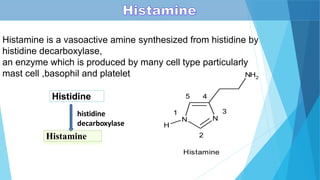
Histamine is a vasoactive amine synthesized from histidine by
histidine decarboxylase,
an enzyme which is produced by many cell type particularly
mast cell ,basophil and platelet
N N
NH2
H
1
2
3
4
5
Histamine
Functions of Histamine
 Embryonic development
 Cellular growth and proliferation
 Hematopoiesis
 Immunity, inflammation,and wound healing
 Act as a neurotransmitter for the brain, spinal cord, and uterus.
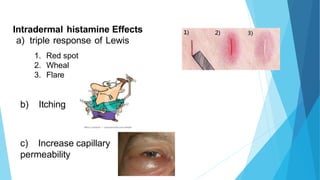
Intradermal histamine Effects
a) triple response of Lewis
1. Red spot
2. Wheal
3. Flare
c) Increase capillary
permeability
b) Itching
Mast cell production of Histamine
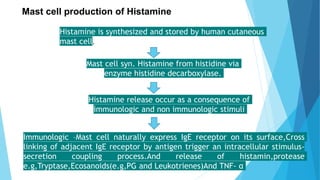
Histamine is synthesized and stored by human cutaneous
mast cell.
Mast cell syn. Histamine from histidine via
enzyme histidine decarboxylase.
Histamine release occur as a consequence of
immunologic and non immunologic stimuli
Immunologic –Mast cell naturally express IgE receptor on its surface,Cross
linking of adjacent IgE receptor by antigen trigger an intracellular stimulus-
secretion coupling process.And release of histamin,protease
e.g,Tryptase,Ecosanoids(e.g,PG and Leukotrienes)And TNF- α
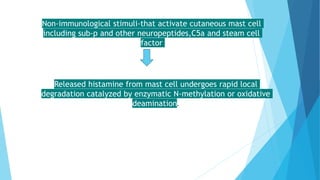
Non-immunological stimuli-that activate cutaneous mast cell
including sub-p and other neuropeptides,C5a and steam cell
factor
Released histamine from mast cell undergoes rapid local
degradation catalyzed by enzymatic N-methylation or oxidative
deamination.
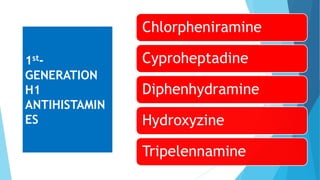
1st-
GENERATION
H1
ANTIHISTAMIN
ES
Chlorpheniramine
Cyproheptadine
Diphenhydramine
Hydroxyzine
Tripelennamine
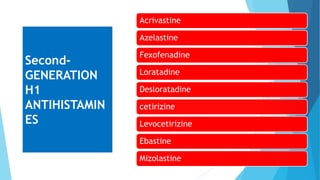
Second-
GENERATION
H1
ANTIHISTAMIN
ES
Acrivastine
Azelastine
Fexofenadine
Loratadine
Desloratadine
cetirizine
Levocetirizine
Ebastine
Mizolastine
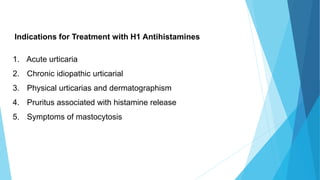
Indications for Treatment with H1 Antihistamines
1. Acute urticaria
2. Chronic idiopathic urticarial
3. Physical urticarias and dermatographism
4. Pruritus associated with histamine release
5. Symptoms of mastocytosis
Factors for Risk-to-Benefit Assessment of
First-generation H1 Antihistamine Therapy
Risks
 History of cardiac arrhythmias, particularly ventricular
arrythmias
 First trimester of pregnancy
 Prostatic hypertrophy
Contraindications
 Narrow-angle glaucoma
 Concomitant use of monoamine oxidase inhibitors
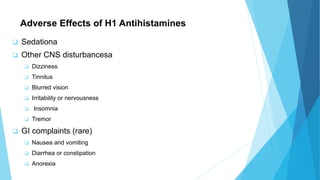
Adverse Effects of H1 Antihistamines
 Sedationa
 Other CNS disturbancesa
 Dizziness
 Tinnitus
 Blurred vision
 Irritability or nervousness
 Insomnia
 Tremor
 GI complaints (rare)
 Nausea and vomiting
 Diarrhea or constipation
 Anorexia
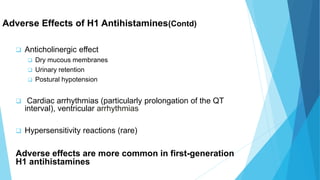
Adverse Effects of H1 Antihistamines(Contd)
 Anticholinergic effect
 Dry mucous membranes
 Urinary retention
 Postural hypotension
 Cardiac arrhythmias (particularly prolongation of the QT
interval), ventricular arrhythmias
 Hypersensitivity reactions (rare)
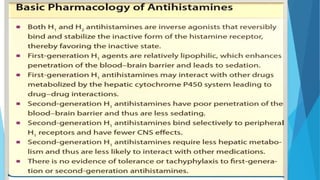
Adverse effects are more common in first-generation
H1 antihistamines
.
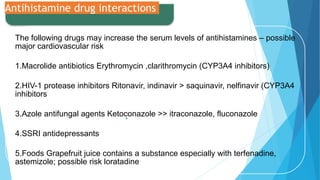
Antihistamine drug interactions
The following drugs may increase the serum levels of antihistamines – possible
major cardiovascular risk
1.Macrolide antibiotics Erythromycin ,clarithromycin (CYP3A4 inhibitors)
2.HIV-1 protease inhibitors Ritonavir, indinavir > saquinavir, nelfinavir (CYP3A4
inhibitors
3.Azole antifungal agents Ketoconazole >> itraconazole, fluconazole
4.SSRI antidepressants
5.Foods Grapefruit juice contains a substance especially with terfenadine,
astemizole; possible risk loratadine
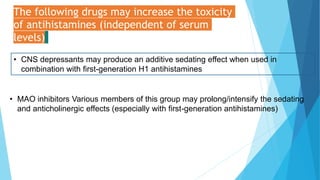
The following drugs may increase the toxicity
of antihistamines (independent of serum
levels)
• CNS depressants may produce an additive sedating effect when used in
combination with first-generation H1 antihistamines
• MAO inhibitors Various members of this group may prolong/intensify the sedating
and anticholinergic effects (especially with first-generation antihistamines)
OTHER THERAPEUTIC AGENTS WITH
ANTIHISTAMINIC ACTIVITY
Ketotifen
• A benzocycloheptathiophene derivative,
• H1-type antihistamine with additional mast cell- and basophil-stabilizing
properties.
Indication
• Chronic idiopathic urticaria,
• Physical urticaria, and
• Urticaria pigmentosa
• pain of neurofibromatosis but also slows the growth of neurofibromas
DOXEPIN
 Doxepin is a tricyclic antidepressant drug with potent H1- and H2-
antihistamine activity. 800 times more potent than diphenhydramine.
 Oral doxepin has been used successfully in the treatment of refractory CIU,
physical urticarials, and pruritus associated with systemic conditions
 Doxepin should not be administered topically or systemically concurrently
with other antidepressants. Doxepin should not be administered in the
presence of severe heart disease, and should not be abruptly withdrawn.
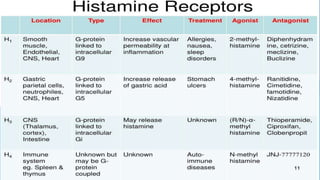
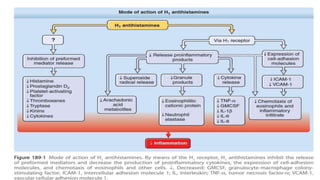
H2 ANTIHISTAMINES
H2 antihistamines are inverse agonists that
bind H2 receptors located throughout the
body, including epithelial and endothelial
cells.
More recently, there is evidence that H2
receptors are expressed on mast cells and
dermal dendritic cells as well.
Through binding of these receptors, H2
antihistamines may mediate cutaneous vascular
permeability, local release of inflammatory
mediators and cellular recruitment, and antigen
presentation,
DERMATOLOGIC INDICATIONS FOR
TREATMENT WITH H2 -ANTIHISTAMINE
Acute allergic reactions
Chronic urticaria
Urticaria pigmentosa and systemic
mastocytosis
 Pruritus associated with other conditions
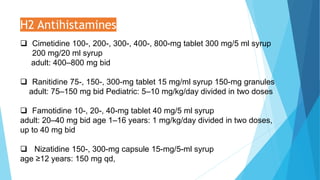
H2 Antihistamines
 Cimetidine 100-, 200-, 300-, 400-, 800-mg tablet 300 mg/5 ml syrup
200 mg/20 ml syrup
adult: 400–800 mg bid
 Ranitidine 75-, 150-, 300-mg tablet 15 mg/ml syrup 150-mg granules
adult: 75–150 mg bid Pediatric: 5–10 mg/kg/day divided in two doses
 Famotidine 10-, 20-, 40-mg tablet 40 mg/5 ml syrup
adult: 20–40 mg bid age 1–16 years: 1 mg/kg/day divided in two doses,
up to 40 mg bid
 Nizatidine 150-, 300-mg capsule 15-mg/5-ml syrup
age ≥12 years: 150 mg qd,
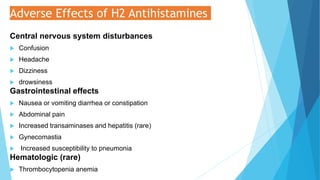
Adverse Effects of H2 Antihistamines
Central nervous system disturbances
 Confusion
 Headache
 Dizziness
 drowsiness
Gastrointestinal effects
 Nausea or vomiting diarrhea or constipation
 Abdominal pain
 Increased transaminases and hepatitis (rare)
 Gynecomastia
 Increased susceptibility to pneumonia
Hematologic (rare)
 Thrombocytopenia anemia
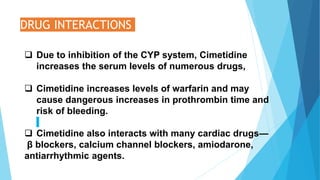
DRUG INTERACTIONS
 Due to inhibition of the CYP system, Cimetidine
increases the serum levels of numerous drugs,
 Cimetidine increases levels of warfarin and may
cause dangerous increases in prothrombin time and
risk of bleeding.
 Cimetidine also interacts with many cardiac drugs—
β blockers, calcium channel blockers, amiodarone,
antiarrhythmic agents.
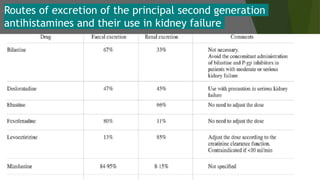
Routes of excretion of the principal second generation
antihistamines and their use in kidney failure
Why is ranitidine banned?
Bangladesh’s drug regulatory authority issued a ban on sales of popular heartburn
drug ranitidine while it investigates a potential cancer-causing substance in the
drug.
The move comes after the U.S. Food and Drug Administration (FDA) warned that
some of the pills contained small amounts N-nitrosodimethylamine (NDMA), which
the regulator says is a “probable human carcinogen.
“We have banned the import of raw materials, production and sale of ranitidine until
further notice,” said Khandaker Sagir Ahmed, a director of Bangladesh’s drug
regulatory authority, adding that the decision was taken a precautionary measure.
Drug manufacturers across the world have begun recalling the widely taken
heartburn drug, which is sold under the trade name Zantac among others, while the
FDA and European drug regulators review whether low levels of NDMA in ranitidine
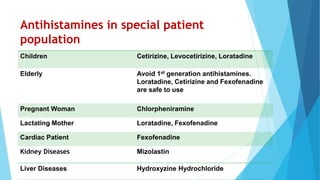
Antihistamines in special patient
population
Children Cetirizine, Levocetirizine, Loratadine
Elderly Avoid 1st generation antihistamines.
Loratadine, Cetirizine and Fexofenadine
are safe to use
Pregnant Woman Chlorpheniramine
Lactating Mother Loratadine, Fexofenadine
Cardiac Patient Fexofenadine
Kidney Diseases Mizolastin
Liver Diseases Hydroxyzine Hydrochloride
Thank You

Antihistamine

  • 1.
    Antihistamines Presented by Maj Nawaz TraineeOfficer Depertment of Dermatology and venerelogy
  • 2.
    Histidine Histamine histidine decarboxylase Histamine is avasoactive amine synthesized from histidine by histidine decarboxylase, an enzyme which is produced by many cell type particularly mast cell ,basophil and platelet N N NH2 H 1 2 3 4 5 Histamine
  • 3.
    Functions of Histamine Embryonic development  Cellular growth and proliferation  Hematopoiesis  Immunity, inflammation,and wound healing  Act as a neurotransmitter for the brain, spinal cord, and uterus.
  • 4.
    Intradermal histamine Effects a)triple response of Lewis 1. Red spot 2. Wheal 3. Flare c) Increase capillary permeability b) Itching
  • 6.
    Mast cell productionof Histamine Histamine is synthesized and stored by human cutaneous mast cell. Mast cell syn. Histamine from histidine via enzyme histidine decarboxylase. Histamine release occur as a consequence of immunologic and non immunologic stimuli Immunologic –Mast cell naturally express IgE receptor on its surface,Cross linking of adjacent IgE receptor by antigen trigger an intracellular stimulus- secretion coupling process.And release of histamin,protease e.g,Tryptase,Ecosanoids(e.g,PG and Leukotrienes)And TNF- α
  • 7.
    Non-immunological stimuli-that activatecutaneous mast cell including sub-p and other neuropeptides,C5a and steam cell factor Released histamine from mast cell undergoes rapid local degradation catalyzed by enzymatic N-methylation or oxidative deamination.
  • 10.
  • 11.
  • 12.
    Indications for Treatmentwith H1 Antihistamines 1. Acute urticaria 2. Chronic idiopathic urticarial 3. Physical urticarias and dermatographism 4. Pruritus associated with histamine release 5. Symptoms of mastocytosis
  • 13.
    Factors for Risk-to-BenefitAssessment of First-generation H1 Antihistamine Therapy Risks  History of cardiac arrhythmias, particularly ventricular arrythmias  First trimester of pregnancy  Prostatic hypertrophy Contraindications  Narrow-angle glaucoma  Concomitant use of monoamine oxidase inhibitors
  • 14.
    Adverse Effects ofH1 Antihistamines  Sedationa  Other CNS disturbancesa  Dizziness  Tinnitus  Blurred vision  Irritability or nervousness  Insomnia  Tremor  GI complaints (rare)  Nausea and vomiting  Diarrhea or constipation  Anorexia
  • 15.
    Adverse Effects ofH1 Antihistamines(Contd)  Anticholinergic effect  Dry mucous membranes  Urinary retention  Postural hypotension  Cardiac arrhythmias (particularly prolongation of the QT interval), ventricular arrhythmias  Hypersensitivity reactions (rare) Adverse effects are more common in first-generation H1 antihistamines
  • 16.
    . Antihistamine drug interactions Thefollowing drugs may increase the serum levels of antihistamines – possible major cardiovascular risk 1.Macrolide antibiotics Erythromycin ,clarithromycin (CYP3A4 inhibitors) 2.HIV-1 protease inhibitors Ritonavir, indinavir > saquinavir, nelfinavir (CYP3A4 inhibitors 3.Azole antifungal agents Ketoconazole >> itraconazole, fluconazole 4.SSRI antidepressants 5.Foods Grapefruit juice contains a substance especially with terfenadine, astemizole; possible risk loratadine
  • 17.
    The following drugsmay increase the toxicity of antihistamines (independent of serum levels) • CNS depressants may produce an additive sedating effect when used in combination with first-generation H1 antihistamines • MAO inhibitors Various members of this group may prolong/intensify the sedating and anticholinergic effects (especially with first-generation antihistamines)
  • 18.
    OTHER THERAPEUTIC AGENTSWITH ANTIHISTAMINIC ACTIVITY Ketotifen • A benzocycloheptathiophene derivative, • H1-type antihistamine with additional mast cell- and basophil-stabilizing properties. Indication • Chronic idiopathic urticaria, • Physical urticaria, and • Urticaria pigmentosa • pain of neurofibromatosis but also slows the growth of neurofibromas
  • 19.
    DOXEPIN  Doxepin isa tricyclic antidepressant drug with potent H1- and H2- antihistamine activity. 800 times more potent than diphenhydramine.  Oral doxepin has been used successfully in the treatment of refractory CIU, physical urticarials, and pruritus associated with systemic conditions  Doxepin should not be administered topically or systemically concurrently with other antidepressants. Doxepin should not be administered in the presence of severe heart disease, and should not be abruptly withdrawn.
  • 20.
    H2 ANTIHISTAMINES H2 antihistaminesare inverse agonists that bind H2 receptors located throughout the body, including epithelial and endothelial cells. More recently, there is evidence that H2 receptors are expressed on mast cells and dermal dendritic cells as well. Through binding of these receptors, H2 antihistamines may mediate cutaneous vascular permeability, local release of inflammatory mediators and cellular recruitment, and antigen presentation,
  • 21.
    DERMATOLOGIC INDICATIONS FOR TREATMENTWITH H2 -ANTIHISTAMINE Acute allergic reactions Chronic urticaria Urticaria pigmentosa and systemic mastocytosis  Pruritus associated with other conditions
  • 22.
    H2 Antihistamines  Cimetidine100-, 200-, 300-, 400-, 800-mg tablet 300 mg/5 ml syrup 200 mg/20 ml syrup adult: 400–800 mg bid  Ranitidine 75-, 150-, 300-mg tablet 15 mg/ml syrup 150-mg granules adult: 75–150 mg bid Pediatric: 5–10 mg/kg/day divided in two doses  Famotidine 10-, 20-, 40-mg tablet 40 mg/5 ml syrup adult: 20–40 mg bid age 1–16 years: 1 mg/kg/day divided in two doses, up to 40 mg bid  Nizatidine 150-, 300-mg capsule 15-mg/5-ml syrup age ≥12 years: 150 mg qd,
  • 23.
    Adverse Effects ofH2 Antihistamines Central nervous system disturbances  Confusion  Headache  Dizziness  drowsiness Gastrointestinal effects  Nausea or vomiting diarrhea or constipation  Abdominal pain  Increased transaminases and hepatitis (rare)  Gynecomastia  Increased susceptibility to pneumonia Hematologic (rare)  Thrombocytopenia anemia
  • 24.
    DRUG INTERACTIONS  Dueto inhibition of the CYP system, Cimetidine increases the serum levels of numerous drugs,  Cimetidine increases levels of warfarin and may cause dangerous increases in prothrombin time and risk of bleeding.  Cimetidine also interacts with many cardiac drugs— β blockers, calcium channel blockers, amiodarone, antiarrhythmic agents.
  • 25.
    Routes of excretionof the principal second generation antihistamines and their use in kidney failure
  • 26.
    Why is ranitidinebanned? Bangladesh’s drug regulatory authority issued a ban on sales of popular heartburn drug ranitidine while it investigates a potential cancer-causing substance in the drug. The move comes after the U.S. Food and Drug Administration (FDA) warned that some of the pills contained small amounts N-nitrosodimethylamine (NDMA), which the regulator says is a “probable human carcinogen. “We have banned the import of raw materials, production and sale of ranitidine until further notice,” said Khandaker Sagir Ahmed, a director of Bangladesh’s drug regulatory authority, adding that the decision was taken a precautionary measure. Drug manufacturers across the world have begun recalling the widely taken heartburn drug, which is sold under the trade name Zantac among others, while the FDA and European drug regulators review whether low levels of NDMA in ranitidine
  • 27.
    Antihistamines in specialpatient population Children Cetirizine, Levocetirizine, Loratadine Elderly Avoid 1st generation antihistamines. Loratadine, Cetirizine and Fexofenadine are safe to use Pregnant Woman Chlorpheniramine Lactating Mother Loratadine, Fexofenadine Cardiac Patient Fexofenadine Kidney Diseases Mizolastin Liver Diseases Hydroxyzine Hydrochloride
  • 28.