A Level Media Studies
Imperialism  im·pe·ri·al·ism  Noun: A policy of extending a country's power and influence through diplomacy or military force.
Cultural Imperialism An important  function of the media is in winning the support of people to the interests of the dominant classes . The media can also be a potential  tool for control: dominant Western cultures try to control developing countries . The Western way of life and its economic/political systems can be imposed on other societies as its lifestyle is sold through media products such as film and television. The most dominant culture exporting media products is the USA . Eg Hollywood cinema This is know as CULTURAL IMPERIALISM.
Post-colonialism Most European countries, including the UK have a history of  military imperialism. They would conquer less developed countries and impose their rule on them . This was usually to ensure a supply of cheap materials from that country to help support the economy. Former British colonies include India, South Africa, Australia, Jamaica and the USA – at one point, GB ruled half the world.
Post-colonialism These  colonies eventually became independent  and set up their own governments. However, it can be argued that  much of the culture of the imperial countries (eg. Their language) still lingers on in the former colonies  as a reminder of colonial rule. Also, the process of  decolonisation has not prevented the Western powers from tightening their economic grip  on the rest of the world. The wealth of economically developed countries increasingly depends on the cheap labour and raw materials supplied by the Third World.
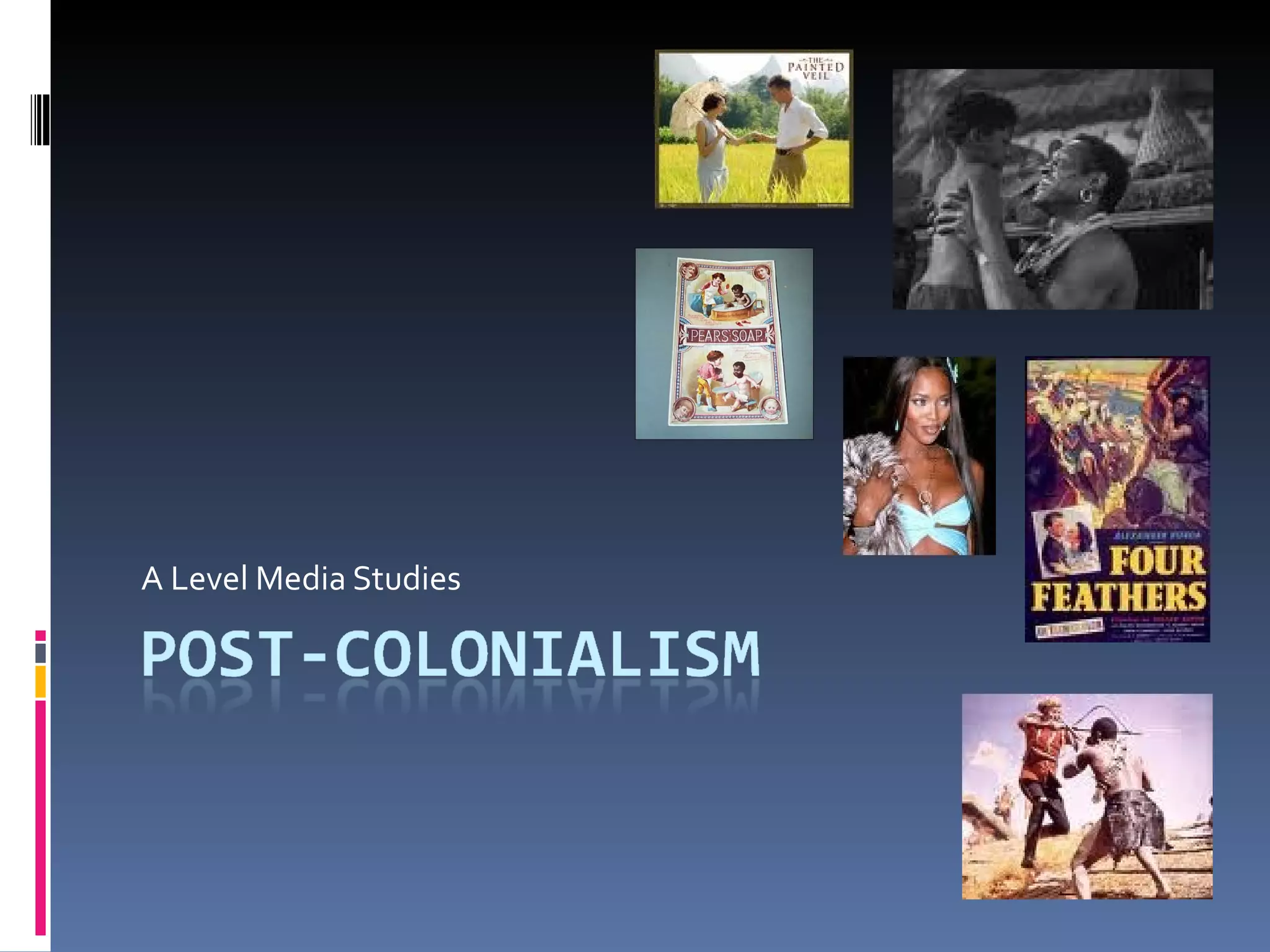
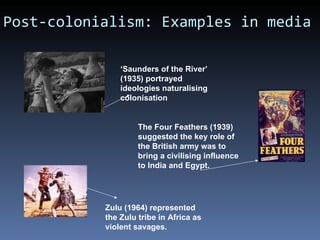
Post-colonialism: Examples in media ‘ Saunders of the River’ (1935) portrayed ideologies naturalising colonisation The Four Feathers (1939) suggested the key role of the British army was to bring a civilising influence to India and Egypt. Zulu (1964) represented the Zulu tribe in Africa as violent savages.
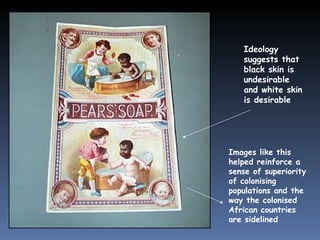
Ideology suggests that black skin is undesirable and white skin is desirable Images like this helped reinforce a sense of superiority of colonising populations and the way the colonised African countries   are sidelined
Post-Colonialism Post-colonialism does not emphasise a new, technologically advanced media world… It emphasises the importance of the cultural, economic, political and military dominance of the past. The absence of non-white images in the media visually suggests a dominance of white culture.
 
Orientalism Edward Said (1978) – a key text. Critique of Western representations of Eastern culture. It can be argued that whenever Islam is represented, it is shown through a Western perspective that usually fails to understand the nature and complexity of Islamic belief and culture. Instead, it reduces it to a few stereotypical characteristics. In this way, the sense of oppression is just as great as if the colonies still existed.
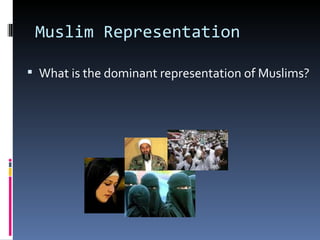
Muslim Representation What is the dominant representation of Muslims?
September 11th Post-colonialism has a particular relevance following the events of 9/11 and the subsequent invasions of Afghanistan and Iraq. This is an example of military imperialism in which the Western powers are intent on imposing ‘democracy’ on Islamic countries in the belief that it is in their best interests.
Representations Cultural stereotypes Western culture has often defined itself in relation to the ‘other’ of non-Western cultures. The ‘other’ are seen as exotic…exciting…dangerous…romantic…mysterious…threatening. Complex, sophisticated cultures are reduced to a few simple components   EG. Advertisers offer consumers a “taste of the East” or “the mysteries of the Orient”.
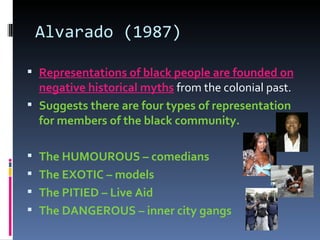
Alvarado (1987) Representations of black people are founded on negative historical myths  from the colonial past. Suggests there are four types of representation for members of the black community. The HUMOUROUS – comedians The EXOTIC – models The PITIED – Live Aid The DANGEROUS – inner city gangs
Stereotypes Positive and negative stereotypes are often seen in contemporary British media. Musicians – jazz, hip-hop and soul Sportsmen and women Comedians Criminals Socially dysfunctional Prostitute/sexually promiscuous The stud/pimp
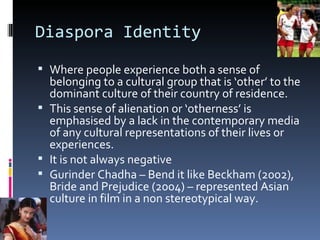
Diaspora Identity Where people experience both a sense of belonging to a cultural group that is ‘other’ to the dominant culture of their country of residence. This sense of alienation or ‘otherness’ is emphasised by a lack in the contemporary media of any cultural representations of their lives or experiences. It is not always negative Gurinder Chadha – Bend it like Beckham (2002), Bride and Prejudice (2004) – represented Asian culture in film in a non stereotypical way.
Key questions to consider in your Critical Investigation Within your key texts, are ethnic stereotypes challenged or reinforced? Do your examples of contemporary media represent the ethnic diversity of modern society?

Post colonialism

  • 1.
  • 2.
    Imperialism im·pe·ri·al·ism Noun: A policy of extending a country's power and influence through diplomacy or military force.
  • 3.
    Cultural Imperialism Animportant function of the media is in winning the support of people to the interests of the dominant classes . The media can also be a potential tool for control: dominant Western cultures try to control developing countries . The Western way of life and its economic/political systems can be imposed on other societies as its lifestyle is sold through media products such as film and television. The most dominant culture exporting media products is the USA . Eg Hollywood cinema This is know as CULTURAL IMPERIALISM.
  • 4.
    Post-colonialism Most Europeancountries, including the UK have a history of military imperialism. They would conquer less developed countries and impose their rule on them . This was usually to ensure a supply of cheap materials from that country to help support the economy. Former British colonies include India, South Africa, Australia, Jamaica and the USA – at one point, GB ruled half the world.
  • 5.
    Post-colonialism These colonies eventually became independent and set up their own governments. However, it can be argued that much of the culture of the imperial countries (eg. Their language) still lingers on in the former colonies as a reminder of colonial rule. Also, the process of decolonisation has not prevented the Western powers from tightening their economic grip on the rest of the world. The wealth of economically developed countries increasingly depends on the cheap labour and raw materials supplied by the Third World.
  • 6.
    Post-colonialism: Examples inmedia ‘ Saunders of the River’ (1935) portrayed ideologies naturalising colonisation The Four Feathers (1939) suggested the key role of the British army was to bring a civilising influence to India and Egypt. Zulu (1964) represented the Zulu tribe in Africa as violent savages.
  • 7.
    Ideology suggests thatblack skin is undesirable and white skin is desirable Images like this helped reinforce a sense of superiority of colonising populations and the way the colonised African countries are sidelined
  • 8.
    Post-Colonialism Post-colonialism doesnot emphasise a new, technologically advanced media world… It emphasises the importance of the cultural, economic, political and military dominance of the past. The absence of non-white images in the media visually suggests a dominance of white culture.
  • 9.
  • 10.
    Orientalism Edward Said(1978) – a key text. Critique of Western representations of Eastern culture. It can be argued that whenever Islam is represented, it is shown through a Western perspective that usually fails to understand the nature and complexity of Islamic belief and culture. Instead, it reduces it to a few stereotypical characteristics. In this way, the sense of oppression is just as great as if the colonies still existed.
  • 11.
    Muslim Representation Whatis the dominant representation of Muslims?
  • 12.
    September 11th Post-colonialismhas a particular relevance following the events of 9/11 and the subsequent invasions of Afghanistan and Iraq. This is an example of military imperialism in which the Western powers are intent on imposing ‘democracy’ on Islamic countries in the belief that it is in their best interests.
  • 13.
    Representations Cultural stereotypesWestern culture has often defined itself in relation to the ‘other’ of non-Western cultures. The ‘other’ are seen as exotic…exciting…dangerous…romantic…mysterious…threatening. Complex, sophisticated cultures are reduced to a few simple components EG. Advertisers offer consumers a “taste of the East” or “the mysteries of the Orient”.
  • 14.
    Alvarado (1987) Representationsof black people are founded on negative historical myths from the colonial past. Suggests there are four types of representation for members of the black community. The HUMOUROUS – comedians The EXOTIC – models The PITIED – Live Aid The DANGEROUS – inner city gangs
  • 15.
    Stereotypes Positive andnegative stereotypes are often seen in contemporary British media. Musicians – jazz, hip-hop and soul Sportsmen and women Comedians Criminals Socially dysfunctional Prostitute/sexually promiscuous The stud/pimp
  • 16.
    Diaspora Identity Wherepeople experience both a sense of belonging to a cultural group that is ‘other’ to the dominant culture of their country of residence. This sense of alienation or ‘otherness’ is emphasised by a lack in the contemporary media of any cultural representations of their lives or experiences. It is not always negative Gurinder Chadha – Bend it like Beckham (2002), Bride and Prejudice (2004) – represented Asian culture in film in a non stereotypical way.
  • 17.
    Key questions toconsider in your Critical Investigation Within your key texts, are ethnic stereotypes challenged or reinforced? Do your examples of contemporary media represent the ethnic diversity of modern society?