American Literature
Realism and Naturalism
(1850-1914 [1900])

“
True religion is real living; living with all one's soul, w
-Albert Einstein

“Character is like a tree and reputation like a shadow
-Abraham Lincoln
Historical Context
• Population of the United States is growing rapidly.
(1865 -1915)
• Science, industry and transportation are expanding.
• Literature also was growing, but most new writers were
not Romantics or Transcendentalists. They are Realists.
• The “Frontier” did not exist as before; its legacy changed
and impacted Realists in its new form.
• The aftermath of the Civil War meant that Americans
were less certain and optimistic about the future.
• The idealism of the Romantics and philosophy of
2
Transcendentalists seemed out of date and irrelevant to
many readers.
Literary Movements
• The writing of this period steered away
from the Romantic, highly imaginative
fiction from the early 1800’s.
• The four main movements are known as:
– Realism
– Naturalism
– “Literature of Discontent”
– Regionalism
π
Realism
•

•

literary movement that developed
towards the end of the Civil War
and stressed the actual (reality) as
opposed to the imagined or fanciful.
Remember transcendentalism and
how it dealt with spirituality...
Why did this literary movement
come about?
• A reaction against Romanticism
– rejected heroic, adventurous, or unfamiliar
subjects

• The harsh reality of frontier life and the
Civil War shattered the nation’s idealism
Realism - Characteristics
• objective writing about ordinary characters in
ordinary situations; “real life”
• Character is more important than action and
plot; complex ethical choices are often the
subject.
• Characters appear in their real complexity of
temperament and motive; they are in reasonable
relation to nature, to each other, to their social
class, to their own past.
Realism - Characteristics
• Class is important; the novel has
traditionally served the interests and
aspirations of an insurgent middle class.
• Diction is natural vernacular, not
heightened or poetic; tone may be comic,
satiric, or matter-of-fact.
Romance and Realism: Taste and
Class
Romance
• Aspired to the ideal
• Thought to be more
genteel since it did
not show the vulgar
details of life

Realism
• Thought to be more
democratic
• Critics stressed the
potential for vulgarity
and its emphasis on
the commonplace
• Potential “poison” for
the pure of mind
How did this
literary movement prevail?
• The Industrial Revolution
– economic, social, and political changes that
took place in post-war life allowed American
Realism to succeed.
– Upton Sinclair’s The Jungle (overlaps with
modernism)
Naturalism
• Naturalism is NOT “hippie-fiction.”
• It is more pessimistic than Realism,
primarily.
• The Naturalist writers believed that larger
forces were at work: Nature, Fate, and
Heredity.
• Their writing was inspired by hardships,
whether it was war, the frontier, or
urbanization.
Naturalism
•
•

Literary movement that was an
extension of Realism
Depicted real people in real situations
like realism, but believed that forces
larger than the individual – nature, fate,
heredity – shaped individual destiny
Naturalism - Characteristics
• characters:
– usually ill-educated or lower-class
– lives governed by the forces of heredity,
instinct, passion, or the environment
– the criminal, the fallen, the down-and-out
Naturalism - Characteristics
• Themes
– Survival (man against nature, man against
himself)
– Determinism (nature as an indifferent force on
the lives of human beings)
– Violence
“Literature of Discontent”
• Along the lines of Naturalism, the social
problems of this period were seen as a
force to deal with.
• Many groups, from women to freed slaves,
started expressing their discontent with
the way things were.
• They started addressing these issues in
their writing.
Regionalism
• Regionalism is all about “local flavor” or
“local color.”
• “Local Color” means a reliance on minor
details and dialects.
• They usually wrote about the South or the
West.
• More often than not, these stories were full
of humor and small-town characters.
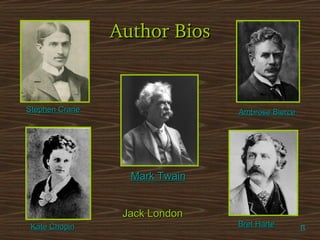
Author Bios

Stephen Crane

Ambrose Bierce

Mark Twain
Jack London
Kate Chopin

Bret Harte

π
Some Writers from Realism
• Stephen Crane
– The Red Badge of Courage

• Willa Cather
– O Pioneers!
– My Antonia

• Bret Harte “Outcasts of Poker Flats”
• Jack London
– The Call of the Wild

• Kate Chopin!
– Story of an Hour

• Mark Twain
– Life on the Mississippi
– The Adventures of Tom Sawyer
– The Adventures of Huckleberry Finn

24
The Culture of the Time:
Slavery
• Slavery was a reality throughout America
since it was founded, despite the hot
debate as to whether or not we should
have slaves.

• The issue hinged on two different
Americas: The Urban, Industrial North
and the Agrarian South.
π
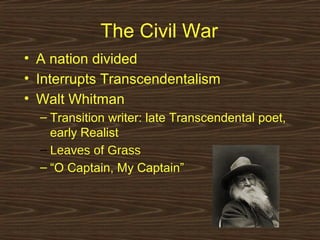
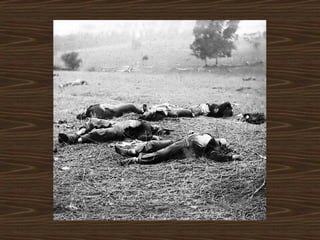
The Civil War
• A nation divided
• Interrupts Transcendentalism
• Walt Whitman
– Transition writer: late Transcendental poet,
early Realist
– Leaves of Grass
– “O Captain, My Captain”

27
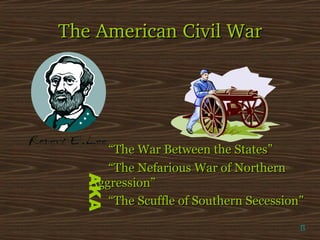
The American Civil War

AKA

“The War Between the States”
“The Nefarious War of Northern
Aggression”
“The Scuffle of Southern Secession”
π
Other Ideologies
•
•
•
•
•

God
Government
Education
Man’s Purpose in Life
American Dream (moves us into
modernism)
• Evidence of Influence
30

Realism introduction

  • 1.
    American Literature Realism andNaturalism (1850-1914 [1900]) “ True religion is real living; living with all one's soul, w -Albert Einstein “Character is like a tree and reputation like a shadow -Abraham Lincoln
  • 2.
    Historical Context • Populationof the United States is growing rapidly. (1865 -1915) • Science, industry and transportation are expanding. • Literature also was growing, but most new writers were not Romantics or Transcendentalists. They are Realists. • The “Frontier” did not exist as before; its legacy changed and impacted Realists in its new form. • The aftermath of the Civil War meant that Americans were less certain and optimistic about the future. • The idealism of the Romantics and philosophy of 2 Transcendentalists seemed out of date and irrelevant to many readers.
  • 3.
    Literary Movements • The writingof this period steered away from the Romantic, highly imaginative fiction from the early 1800’s. • The four main movements are known as: – Realism – Naturalism – “Literature of Discontent” – Regionalism π
  • 4.
    Realism • • literary movement thatdeveloped towards the end of the Civil War and stressed the actual (reality) as opposed to the imagined or fanciful. Remember transcendentalism and how it dealt with spirituality...
  • 5.
    Why did thisliterary movement come about? • A reaction against Romanticism – rejected heroic, adventurous, or unfamiliar subjects • The harsh reality of frontier life and the Civil War shattered the nation’s idealism
  • 6.
    Realism - Characteristics •objective writing about ordinary characters in ordinary situations; “real life” • Character is more important than action and plot; complex ethical choices are often the subject. • Characters appear in their real complexity of temperament and motive; they are in reasonable relation to nature, to each other, to their social class, to their own past.
  • 7.
    Realism - Characteristics •Class is important; the novel has traditionally served the interests and aspirations of an insurgent middle class. • Diction is natural vernacular, not heightened or poetic; tone may be comic, satiric, or matter-of-fact.
  • 8.
    Romance and Realism:Taste and Class Romance • Aspired to the ideal • Thought to be more genteel since it did not show the vulgar details of life Realism • Thought to be more democratic • Critics stressed the potential for vulgarity and its emphasis on the commonplace • Potential “poison” for the pure of mind
  • 9.
    How did this literarymovement prevail? literary movement prevail? • The Industrial Revolution – economic, social, and political changes that took place in post-war life allowed American Realism to succeed. – Upton Sinclair’s The Jungle (overlaps with modernism)
  • 10.
    Naturalism • Naturalism isNOT “hippie-fiction.” • It is more pessimistic than Realism, primarily. • The Naturalist writers believed that larger forces were at work: Nature, Fate, and Heredity. • Their writing was inspired by hardships, whether it was war, the frontier, or urbanization.
  • 11.
    Naturalism • • Literary movement thatwas an extension of Realism Depicted real people in real situations like realism, but believed that forces larger than the individual – nature, fate, heredity – shaped individual destiny
  • 12.
    Naturalism - Characteristics •characters: – usually ill-educated or lower-class – lives governed by the forces of heredity, instinct, passion, or the environment – the criminal, the fallen, the down-and-out
  • 14.
    Naturalism - Characteristics •Themes – Survival (man against nature, man against himself) – Determinism (nature as an indifferent force on the lives of human beings) – Violence
  • 15.
    “Literature of Discontent” • Along thelines of Naturalism, the social problems of this period were seen as a force to deal with. • Many groups, from women to freed slaves, started expressing their discontent with the way things were. • They started addressing these issues in their writing.
  • 16.
    Regionalism • Regionalism isall about “local flavor” or “local color.” • “Local Color” means a reliance on minor details and dialects. • They usually wrote about the South or the West. • More often than not, these stories were full of humor and small-town characters.
  • 23.
    Author Bios Stephen Crane Ambrose Bierce MarkTwain Jack London Kate Chopin Bret Harte π
  • 24.
    Some Writers fromRealism • Stephen Crane – The Red Badge of Courage • Willa Cather – O Pioneers! – My Antonia • Bret Harte “Outcasts of Poker Flats” • Jack London – The Call of the Wild • Kate Chopin! – Story of an Hour • Mark Twain – Life on the Mississippi – The Adventures of Tom Sawyer – The Adventures of Huckleberry Finn 24
  • 25.
    The Culture ofthe Time:
  • 26.
    Slavery • Slavery wasa reality throughout America since it was founded, despite the hot debate as to whether or not we should have slaves. • The issue hinged on two different Americas: The Urban, Industrial North and the Agrarian South. π
  • 27.
    The Civil War •A nation divided • Interrupts Transcendentalism • Walt Whitman – Transition writer: late Transcendental poet, early Realist – Leaves of Grass – “O Captain, My Captain” 27
  • 28.
    The American Civil War AKA “The War Betweenthe States” “The Nefarious War of Northern Aggression” “The Scuffle of Southern Secession” π
  • 30.
    Other Ideologies • • • • • God Government Education Man’s Purposein Life American Dream (moves us into modernism) • Evidence of Influence 30

Editor's Notes

  • #9 A common complaint is that realistic works forced readers into proximity with people whom they would never invite for dinner.
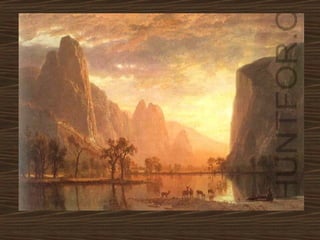
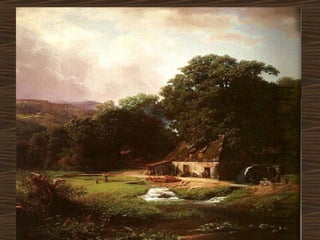
  • #18 romanticism
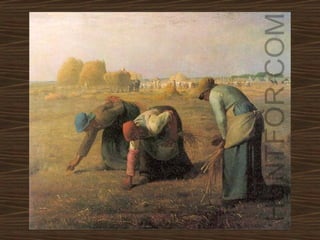
  • #19 Jean-François Millet (millet1.jpg) Painting :The Gleaners
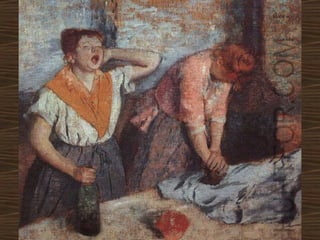
  • #21 Edgar DegasWomen Ironing
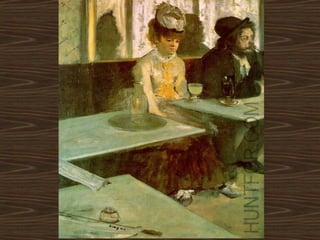
  • #23 In a Cafe (The Absinthe Drinker)Edgar Degas