Start-Up  If there are 50 alligators in a swamp that measures  10 km 2 , what is the alligator’s population density?
Population Growth
There are currently  6,819,500,000  people on the planet and  319,213,000  in the US. -US Census Bureus, How many people have been added during this class period? Remind me to come back at the end. Population Ticker
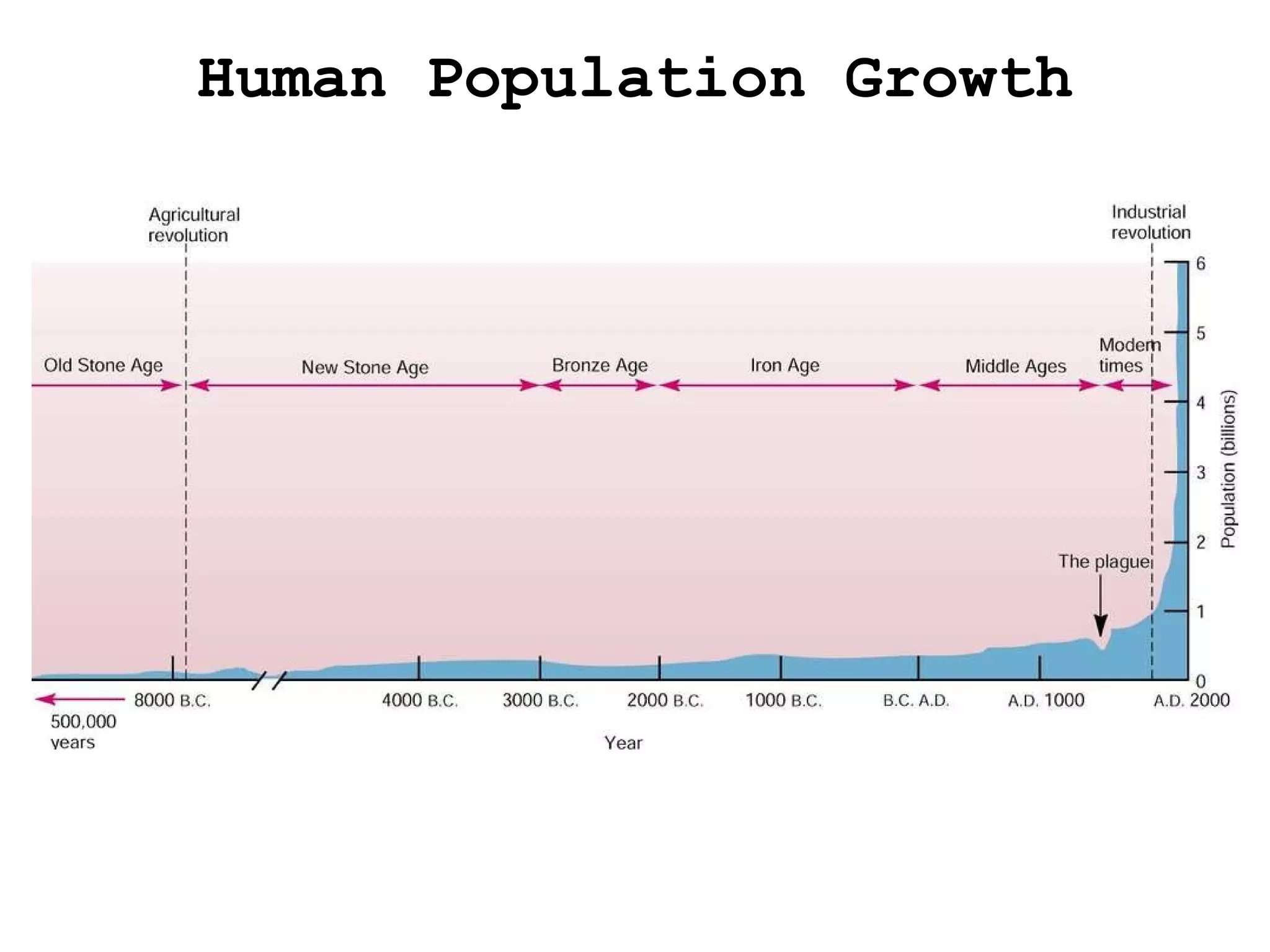
History of Human Population Growth Video Questions: 1. What events led to an increase in population? 2. What events led to a decrease in population?
Population Growth The  size  of a population is the result of a balance between two major opposing forces: 1.  Biotic potential  - max rate population could increase  assuming ideal conditions 2.  Environmental resistance :  limits  to growth determined  by biotic and abiotic  factors such as -availability of food & space -competition -predation -climate
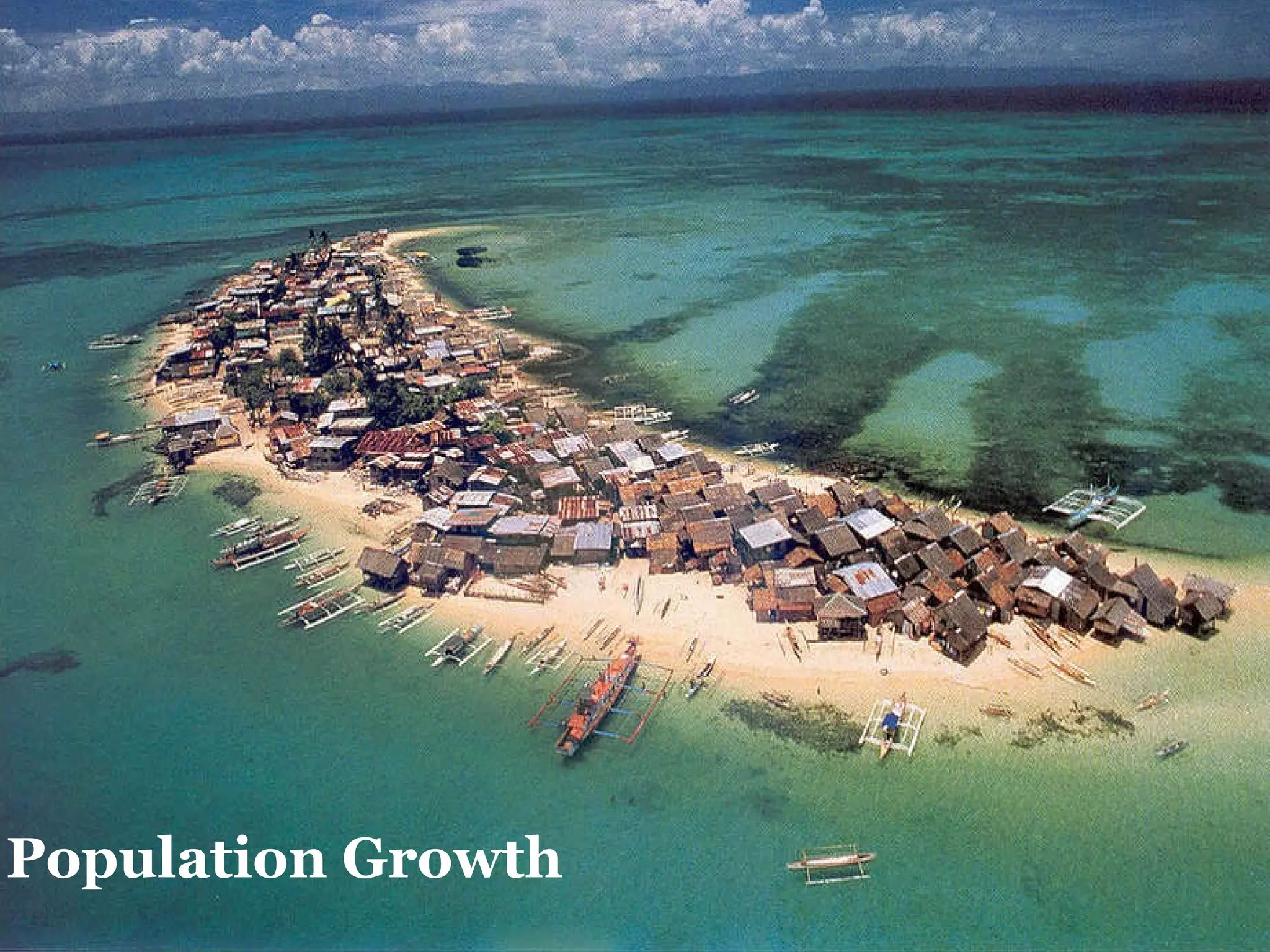
Exponential growth Limitations on growth (environmental resistance) lead to a: carrying capacity –  maximum number of individuals in a  population that the environment can  support
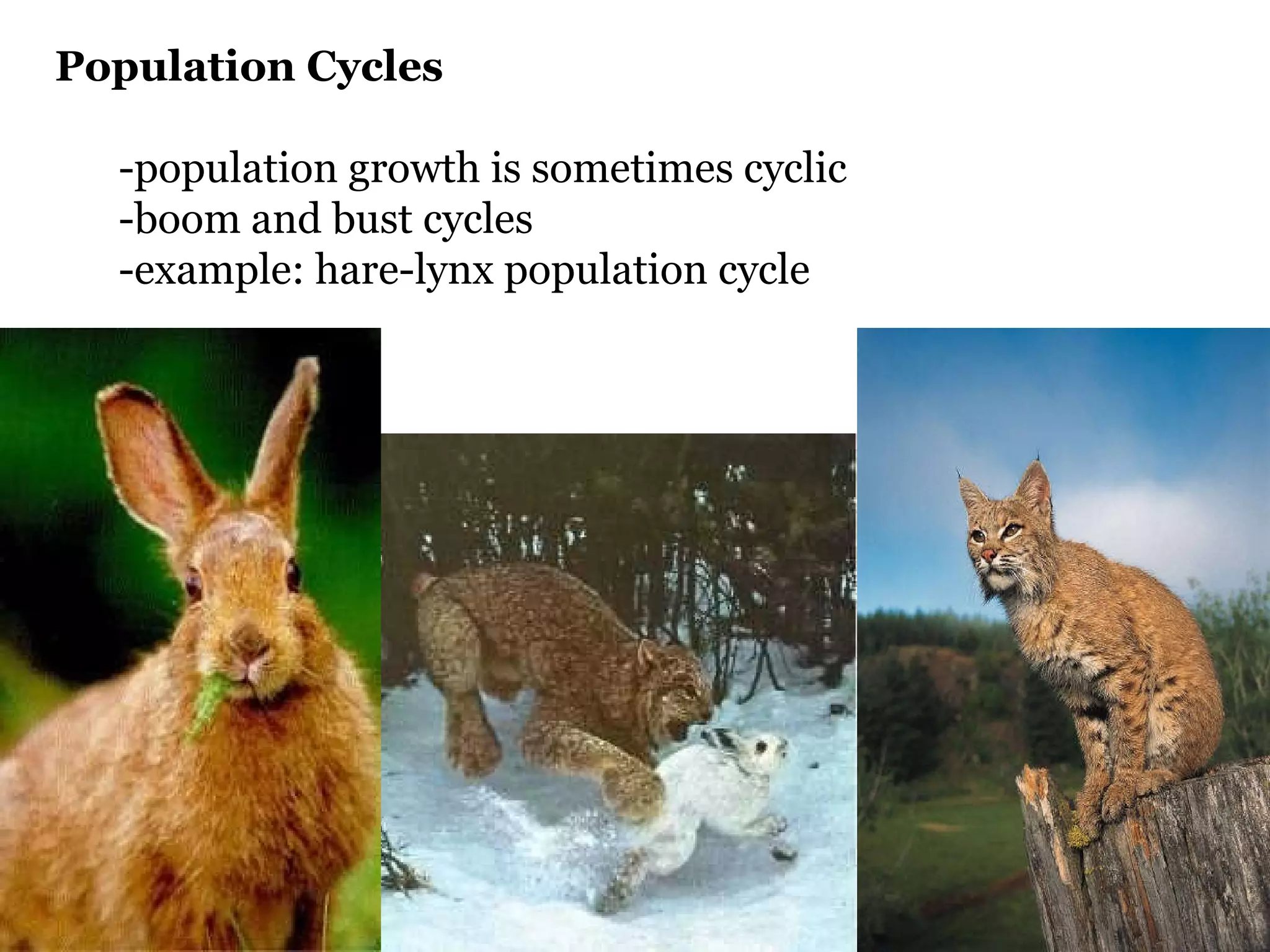
Population Cycles -population growth is sometimes cyclic -boom and bust cycles -example: hare-lynx population cycle
Hare-Lynx population cycles
Competitive exclusion principle  – 2 species with similar needs for  the  same  limiting resource  cannot coexist in the same place Placed two Paramecium species in the same culture P. aurelia P. caudatum One always drove the other to extinction!
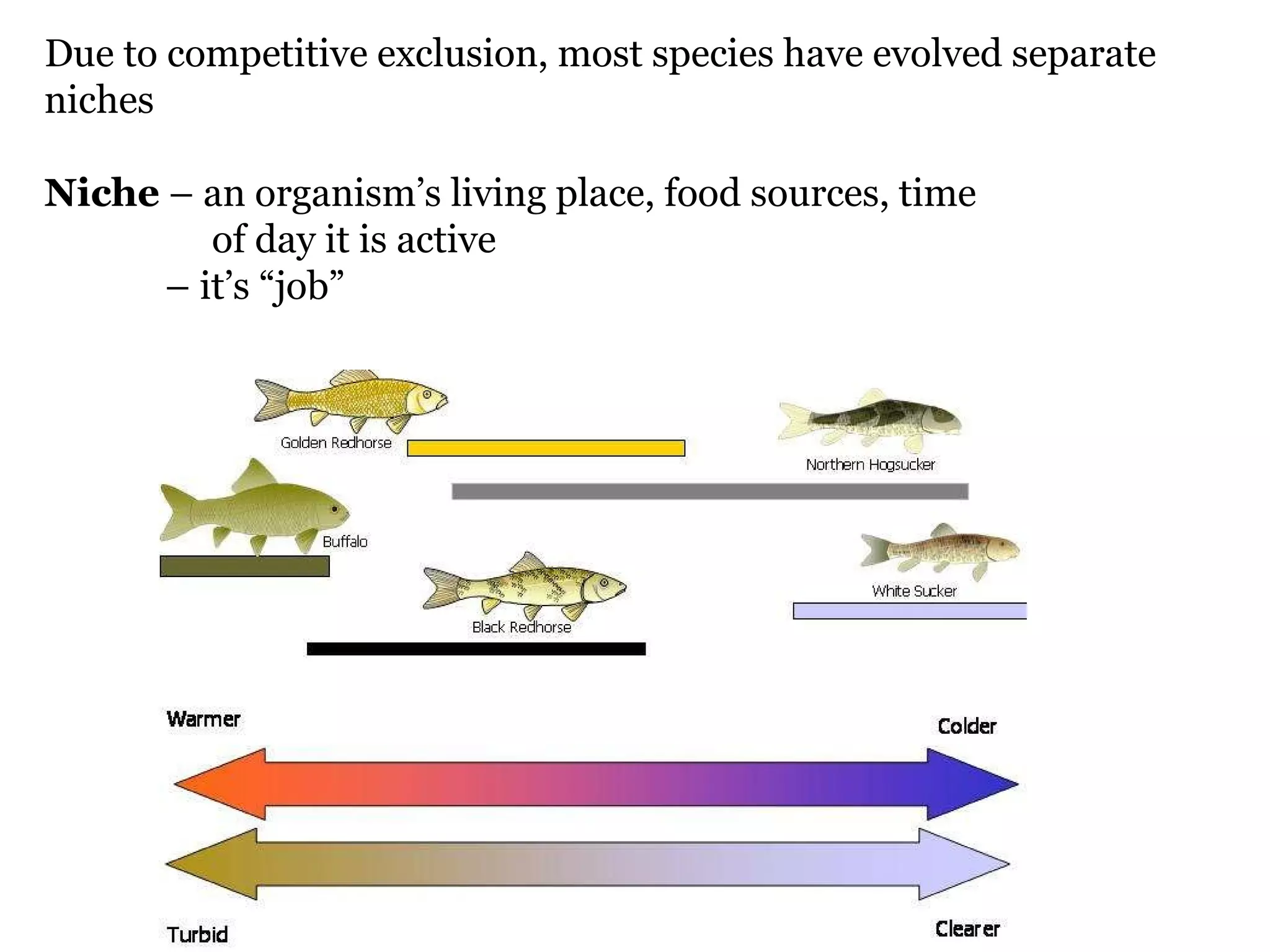
Due to competitive exclusion, most species have evolved separate niches Niche  – an organism’s living place, food sources, time  of day it is active –  it’s “job”
HUMAN POPULATION GROWTH
Human Population Growth
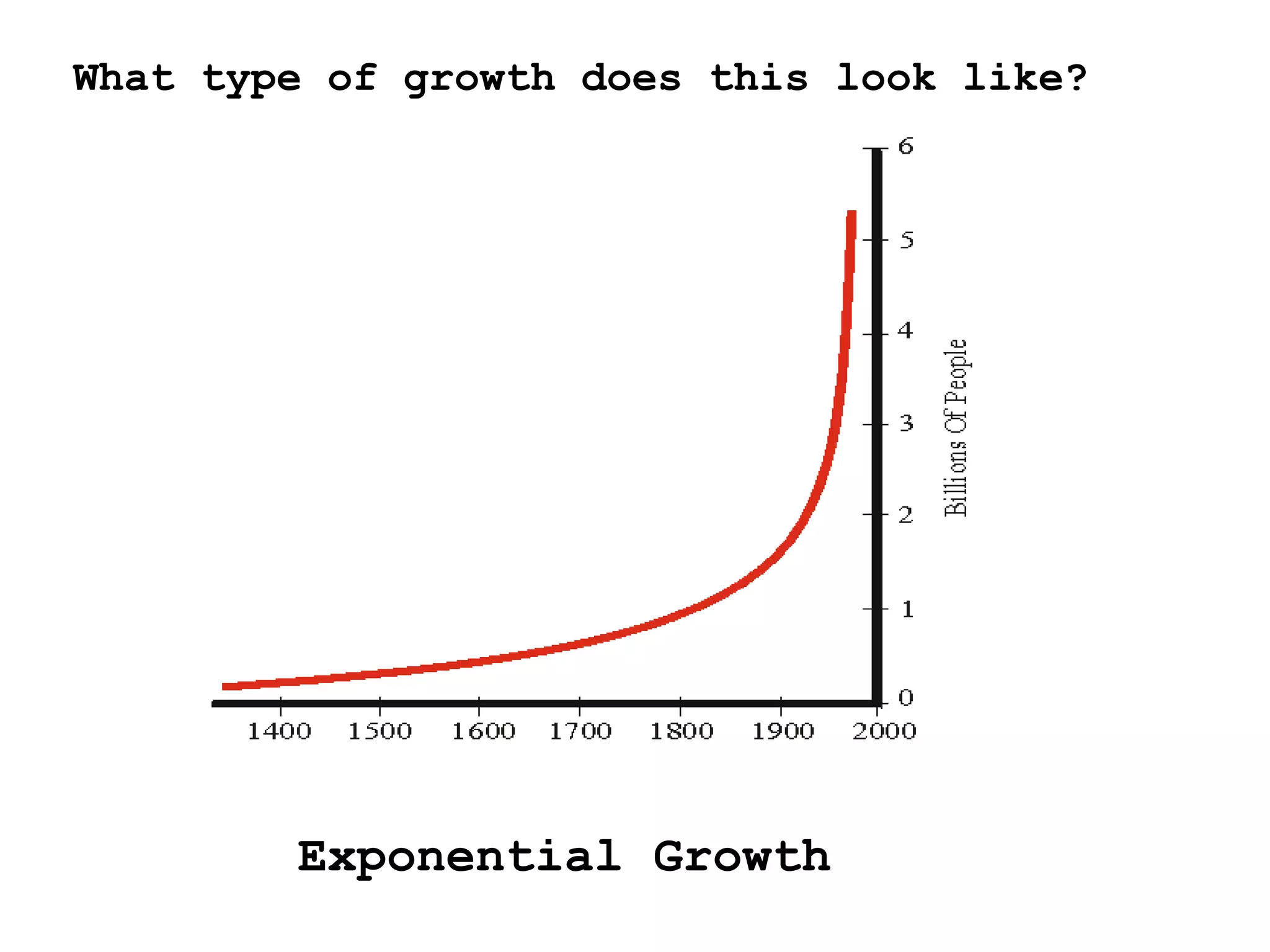
What type of growth does this look like? Exponential Growth
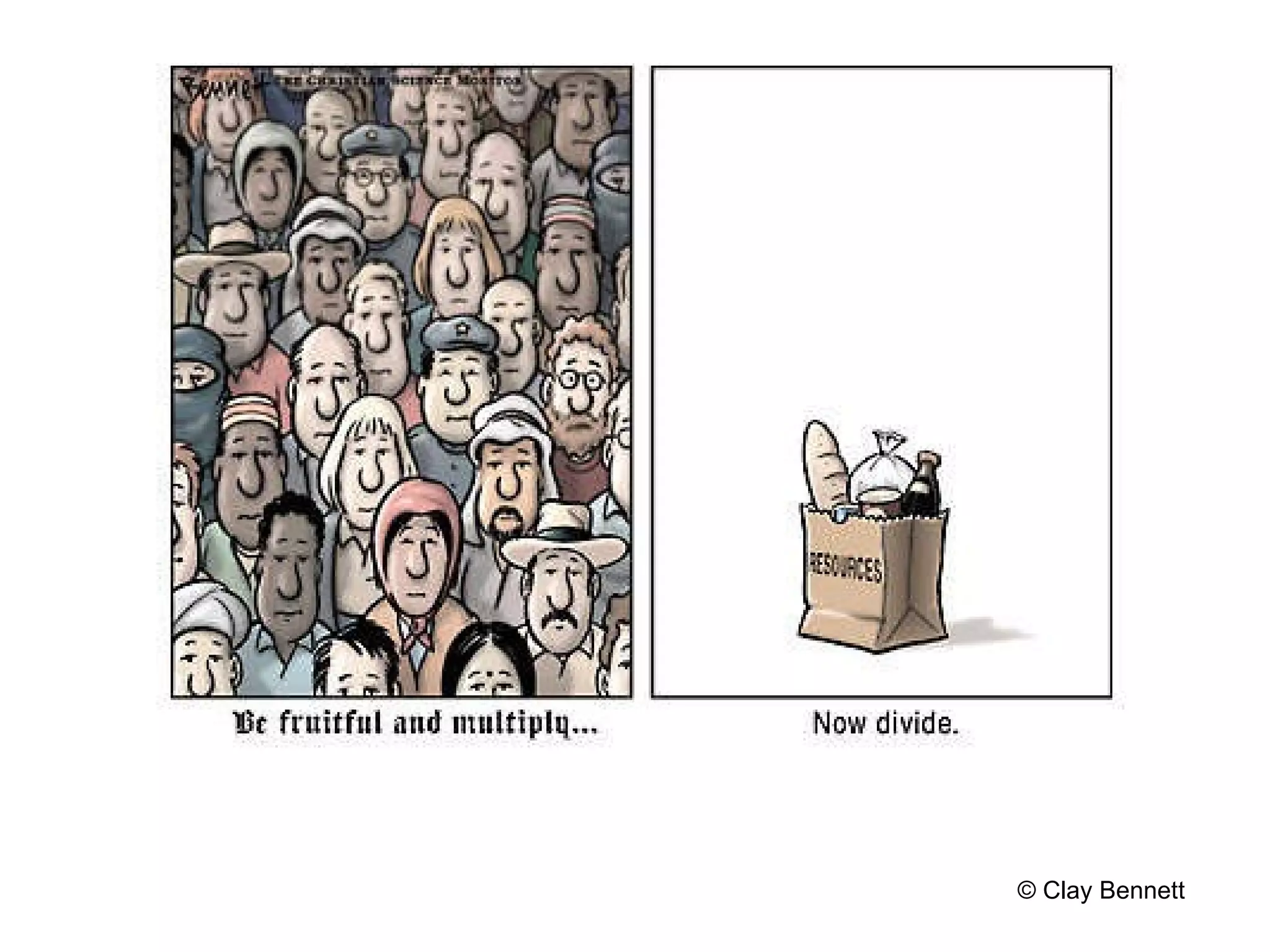
© Clay Bennett
Thomas Malthus British economist (1766-1834) ‏ In 1798, published  On Population  in which he made the prediction that population would outrun food supply, leading to famine, war, and the collapse of society.

Population Growth

  • 1.
    Start-Up Ifthere are 50 alligators in a swamp that measures 10 km 2 , what is the alligator’s population density?
  • 2.
  • 3.
    There are currently 6,819,500,000 people on the planet and 319,213,000 in the US. -US Census Bureus, How many people have been added during this class period? Remind me to come back at the end. Population Ticker
  • 4.
    History of HumanPopulation Growth Video Questions: 1. What events led to an increase in population? 2. What events led to a decrease in population?
  • 5.
    Population Growth The size of a population is the result of a balance between two major opposing forces: 1. Biotic potential - max rate population could increase assuming ideal conditions 2. Environmental resistance : limits to growth determined by biotic and abiotic factors such as -availability of food & space -competition -predation -climate
  • 6.
    Exponential growth Limitationson growth (environmental resistance) lead to a: carrying capacity – maximum number of individuals in a population that the environment can support
  • 7.
    Population Cycles -populationgrowth is sometimes cyclic -boom and bust cycles -example: hare-lynx population cycle
  • 8.
  • 9.
    Competitive exclusion principle – 2 species with similar needs for the same limiting resource cannot coexist in the same place Placed two Paramecium species in the same culture P. aurelia P. caudatum One always drove the other to extinction!
  • 10.
    Due to competitiveexclusion, most species have evolved separate niches Niche – an organism’s living place, food sources, time of day it is active – it’s “job”
  • 11.
  • 12.
  • 13.
    What type ofgrowth does this look like? Exponential Growth
  • 14.
  • 15.
    Thomas Malthus Britisheconomist (1766-1834) ‏ In 1798, published On Population in which he made the prediction that population would outrun food supply, leading to famine, war, and the collapse of society.