Population Density and 
Distribution
Human Population 
In the last lesson you learned how 
to be a demographer. A 
demographer looks statistically at 
how people are distributed spatially 
and by age, gender, occupation, 
and so on.
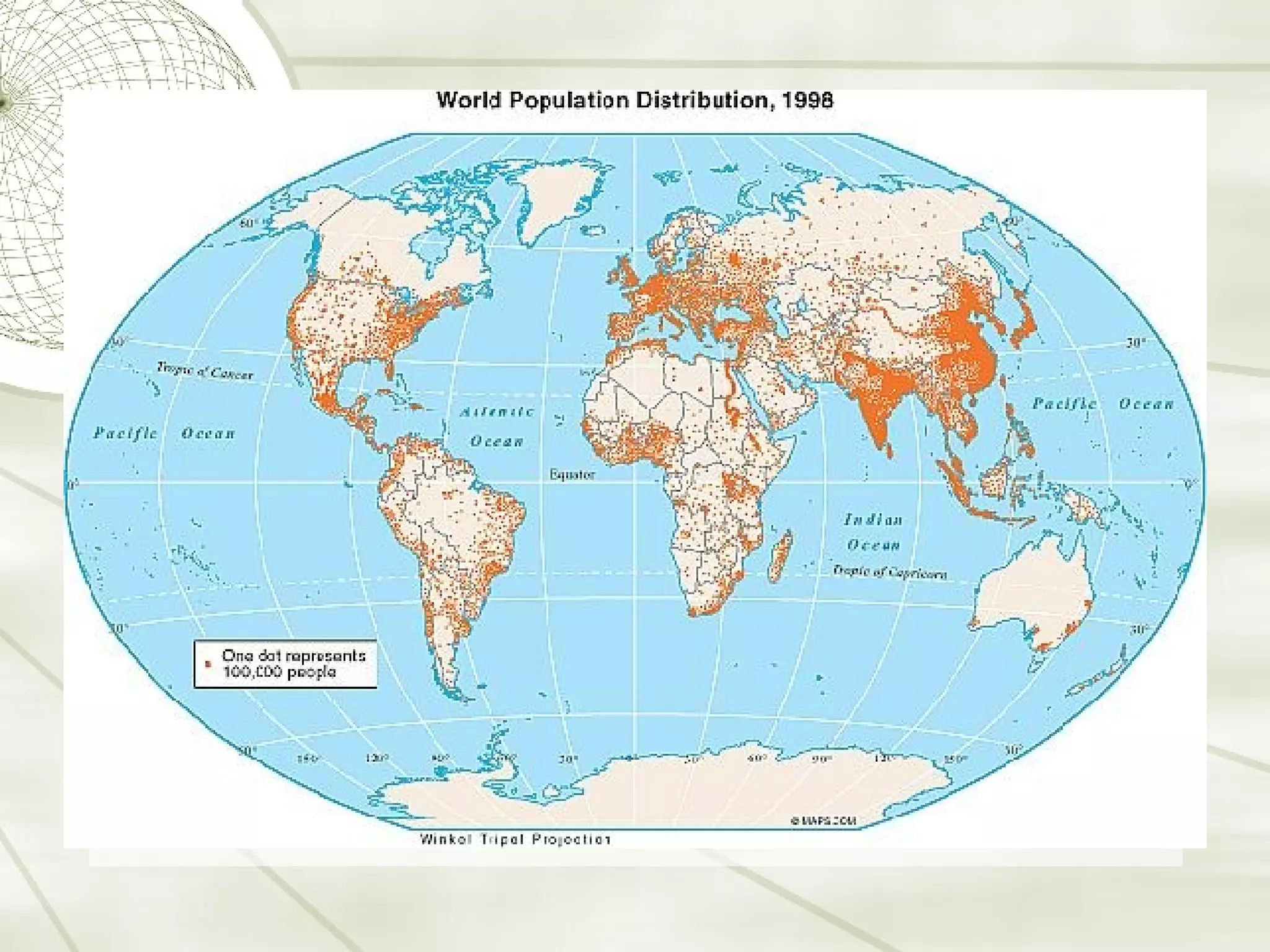
Population Distribution 
Population distribution refers to 
where people live around the 
world. For instance, in the United 
States most people live on the 
coasts or near major waterways. 
Population is not evenly 
distributed around the earth’s 
surface.
Natural Resources 
People live closer to valuable 
resources such as oil, arable land, 
and fresh water. Most people in 
the world live near the coast or 
along a major waterway and they 
live on flat ground that is easy to 
farm.
Climate 
There are parts of the earth 
where people cannot live or it is 
very difficult to live because it is 
too cold. People don’t live in 
Antarctica and very few people 
live in the arctic.
Climate 
Wet climates can also be a problem 
such as tropical rainforests. The 
Amazon rainforest is sparsely 
populated because the soil is not 
very fertile.
Economic Development 
People don’t live in areas where 
there are no jobs. This is one 
reason why people migrate to 
other countries or to cities. We 
will discuss this in a later lesson.
Government Policy 
In the United States people are 
free to live wherever they want, 
however, in countries such as 
China or the former Soviet Union 
the government forced people to 
live in certain areas.
Rural/Urban Settlement 
The location of cities affects 
population distribution. Think 
about the United States. Most of 
the major cities are on the coasts 
or near the Great Lakes. These 
are also the most heavily 
populated areas.
Capital Resources 
Areas that have good 
transportation networks such as 
roads, trains, subways, or busses 
are more heavily populated.
Conflicts 
Wars have a major impact on 
population distribution because 
people flee areas that have 
conflicts. Some examples are the 
Sudan, Rwanda, and the Former 
Yugoslavia.
Population Density 
Population density is the number 
of people occupying an area of 
land. In this course we will use 
the number of people who live per 
square mile or kilometer. 
However, there are other ways of 
computing population density.
Population Growth 
China is the most populated 
country in the world. 
In the next 50 years India will 
have more people than China. 
Asia has over 1/3 of the earth’s 
population.
Population Growth 
 The factors that influence population 
growth are: 
A. Modern medicine and hygiene 
B. Education 
C. Industrialization and urbanization 
D. Economic development 
E. Government policy 
F. Role of women in society
Education 
 Population will decrease in countries 
with many educated people because: 
A. More people have careers so they 
decide not to have as many children 
B. Fewer people are farming so they 
don’t want children
Industrialization 
Population growth will decrease as a 
country becomes more developed. 
Countries that are highly industrialized 
have low population growth rates.
Government Policy 
The government of China has a one 
child policy. Families can only have 
one child otherwise the population 
would grow too rapidly. If a family has 
more than one child they must pay a 
fine.
Role of Women in Society 
A. Countries with low population growth 
rates have more women working in 
the labor force. 
B. Countries where women are expected 
to stay at home and be housewives 
will have high population growth 
rates.
Pop. distribution _grade_7

Pop. distribution _grade_7

  • 3.
  • 4.
    Human Population Inthe last lesson you learned how to be a demographer. A demographer looks statistically at how people are distributed spatially and by age, gender, occupation, and so on.
  • 5.
    Population Distribution Populationdistribution refers to where people live around the world. For instance, in the United States most people live on the coasts or near major waterways. Population is not evenly distributed around the earth’s surface.
  • 7.
    Natural Resources Peoplelive closer to valuable resources such as oil, arable land, and fresh water. Most people in the world live near the coast or along a major waterway and they live on flat ground that is easy to farm.
  • 8.
    Climate There areparts of the earth where people cannot live or it is very difficult to live because it is too cold. People don’t live in Antarctica and very few people live in the arctic.
  • 9.
    Climate Wet climatescan also be a problem such as tropical rainforests. The Amazon rainforest is sparsely populated because the soil is not very fertile.
  • 10.
    Economic Development Peopledon’t live in areas where there are no jobs. This is one reason why people migrate to other countries or to cities. We will discuss this in a later lesson.
  • 11.
    Government Policy Inthe United States people are free to live wherever they want, however, in countries such as China or the former Soviet Union the government forced people to live in certain areas.
  • 12.
    Rural/Urban Settlement Thelocation of cities affects population distribution. Think about the United States. Most of the major cities are on the coasts or near the Great Lakes. These are also the most heavily populated areas.
  • 13.
    Capital Resources Areasthat have good transportation networks such as roads, trains, subways, or busses are more heavily populated.
  • 14.
    Conflicts Wars havea major impact on population distribution because people flee areas that have conflicts. Some examples are the Sudan, Rwanda, and the Former Yugoslavia.
  • 15.
    Population Density Populationdensity is the number of people occupying an area of land. In this course we will use the number of people who live per square mile or kilometer. However, there are other ways of computing population density.
  • 16.
    Population Growth Chinais the most populated country in the world. In the next 50 years India will have more people than China. Asia has over 1/3 of the earth’s population.
  • 17.
    Population Growth The factors that influence population growth are: A. Modern medicine and hygiene B. Education C. Industrialization and urbanization D. Economic development E. Government policy F. Role of women in society
  • 18.
    Education  Populationwill decrease in countries with many educated people because: A. More people have careers so they decide not to have as many children B. Fewer people are farming so they don’t want children
  • 19.
    Industrialization Population growthwill decrease as a country becomes more developed. Countries that are highly industrialized have low population growth rates.
  • 20.
    Government Policy Thegovernment of China has a one child policy. Families can only have one child otherwise the population would grow too rapidly. If a family has more than one child they must pay a fine.
  • 21.
    Role of Womenin Society A. Countries with low population growth rates have more women working in the labor force. B. Countries where women are expected to stay at home and be housewives will have high population growth rates.