POST OPERATIVE
NAUSEA & VOMITING
SPEAKER :- DR. RAMESH V
MODERATOR :- PROF. DR. KH.MANIRAM SINGH
PONV
Why is it Important?
 Patients rank PONV as one of the most
unpleasant memories associated with their
hospital stay.
 Patient satisfaction with their anaesthetic is highly
linked to their experience (or lack of ) of PONV. In
surveys, many state they prefer to experience pain
than N&V.
 When severe it can lead to increased length of
hospital stay, increased bleeding, incisional
hernias and even life threatening aspiration
pneumonia.

 Despite decades of progress in surgical and
anaesthetic techniques, effective prevention and
PONV
Incidence!!!
 A very common problem in the ambulatory surgery patient
population, occurring in an estimated 35% of all patients. If high-risk
patients are considered as a separate group, then as much as 70%
of these patients will experience PONV.
 Before the 1960s, when older inhalational anesthetic agents such as
ether and cyclopropane were widely used, the incidence of vomiting
in general population was as high as 60%.
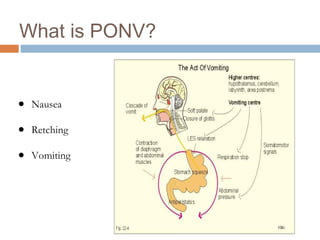
What is PONV?
● Nausea
● Retching
● Vomiting
Classification
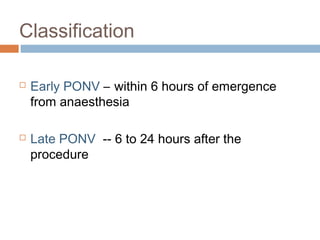
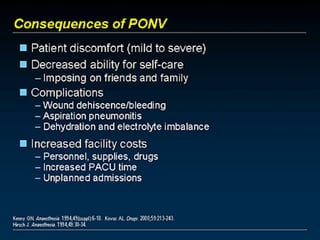
 Early PONV – within 6 hours of emergence
from anaesthesia
 Late PONV -- 6 to 24 hours after the
procedure
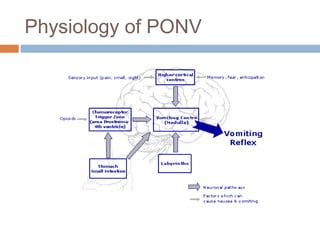
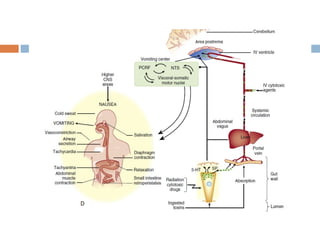
Physiology of PONV
Risk Stratification
 Postoperative nausea and vomiting is a
multifactorial entity, comprising patient, surgical,
and anesthetic factors.
 Due to the cost of pharmacological Tx of
emesis, risk stratification is important.
 By focusing attention (and resources) on those
groups of patients most likely to develop PONV,
the overall cost of dealing with PONV is
reduced.
 A number of studies have looked into PONV risk
factors and risk stratification.
Risk Stratification
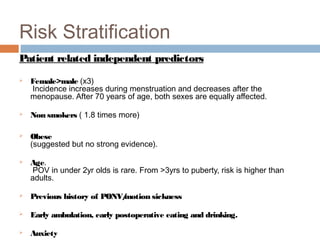
Patient related independent predictors
 Female>male (x3)
Incidence increases during menstruation and decreases after the
menopause. After 70 years of age, both sexes are equally affected.
 Non smokers ( 1.8 times more)
 Obese
(suggested but no strong evidence).
 Age.
POV in under 2yr olds is rare. From >3yrs to puberty, risk is higher than
adults.
 Previous history of PONV/motion sickness
 Early ambulation, early postoperative eating and drinking.
 Anxiety
Risk Stratification
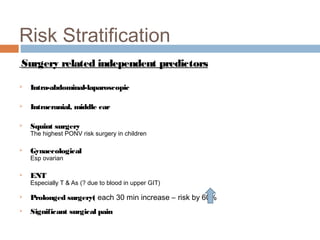
Surgery related independent predictors
 Intra-abdominal-laparoscopic
 Intracranial, middle ear
 Squint surgery
The highest PONV risk surgery in children
 Gynaecological
Esp ovarian
 ENT
Especially T & As (? due to blood in upper GIT)
 Prolonged surgery( each 30 min increase – risk by 60%
 Significant surgical pain
Risk Stratification
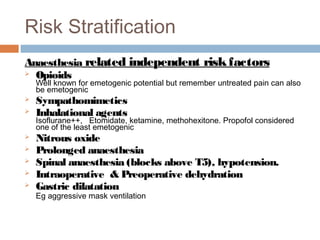
Anaesthesia related independent riskfactors
 Opioids
Well known for emetogenic potential but remember untreated pain can also
be emetogenic
 Sympathomimetics
 Inhalational agents
Isoflurane++, Etomidate, ketamine, methohexitone. Propofol considered
one of the least emetogenic
 Nitrous oxide
 Prolonged anaesthesia
 Spinal anaesthesia (blocks above T5), hypotension.
 Intraoperative & Preoperative dehydration
 Gastric dilatation
Eg aggressive mask ventilation
Risk Stratification
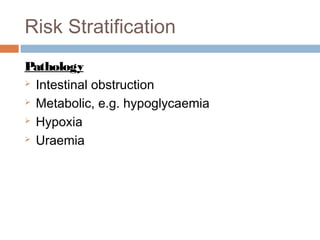
Pathology
 Intestinal obstruction
 Metabolic, e.g. hypoglycaemia
 Hypoxia
 Uraemia
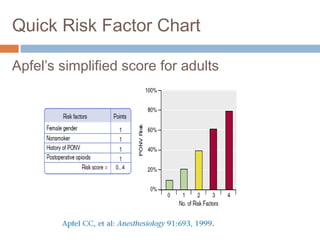
Quick Risk Factor Chart
Apfel’s simplified score for adults
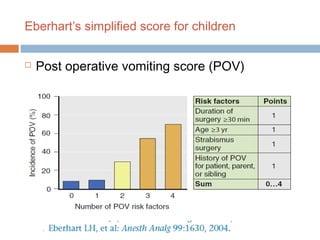
Eberhart’s simplified score for children
 Post operative vomiting score (POV)
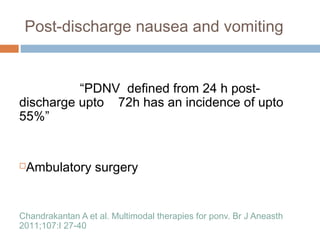
Post-discharge nausea and vomiting
“PDNV defined from 24 h post-
discharge upto 72h has an incidence of upto
55%”
Ambulatory surgery
Chandrakantan A et al. Multimodal therapies for ponv. Br J Aneasth
2011;107:I 27-40
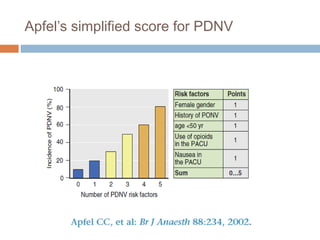
Apfel’s simplified score for PDNV
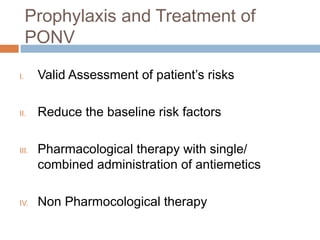
Prophylaxis and Treatment of
PONV
I. Valid Assessment of patient’s risks
II. Reduce the baseline risk factors
III. Pharmacological therapy with single/
combined administration of antiemetics
IV. Non Pharmocological therapy
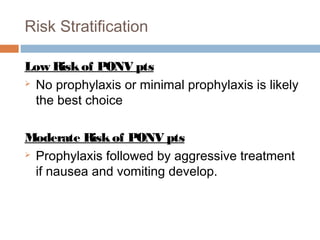
Risk Stratification
Low Riskof PONV pts
 No prophylaxis or minimal prophylaxis is likely
the best choice
Moderate Riskof PONV pts
 Prophylaxis followed by aggressive treatment
if nausea and vomiting develop.
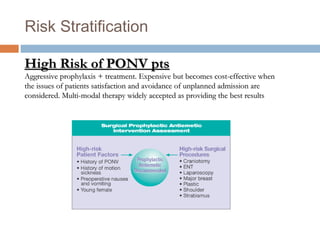
High Risk of PONV ptsHigh Risk of PONV pts
Aggressive prophylaxis + treatment. Expensive but becomes cost-effective whenAggressive prophylaxis + treatment. Expensive but becomes cost-effective when
the issues of patients satisfaction and avoidance of unplanned admission arethe issues of patients satisfaction and avoidance of unplanned admission are
considered. Multi-modal therapy widely accepted as providing the best resultsconsidered. Multi-modal therapy widely accepted as providing the best results
Risk Stratification
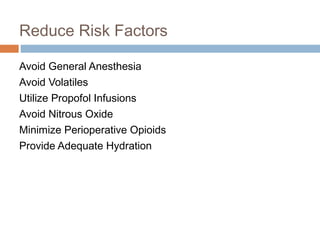
Reduce Risk Factors
Avoid General Anesthesia
Avoid Volatiles
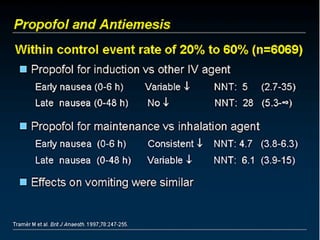
Utilize Propofol Infusions
Avoid Nitrous Oxide
Minimize Perioperative Opioids
Provide Adequate Hydration
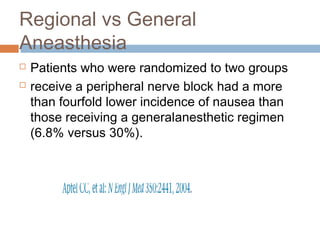
Regional vs General
Aneasthesia
 Patients who were randomized to two groups
 receive a peripheral nerve block had a more
than fourfold lower incidence of nausea than
those receiving a generalanesthetic regimen
(6.8% versus 30%).
Servizio di Anestesia e Rianimazione Ospedale di
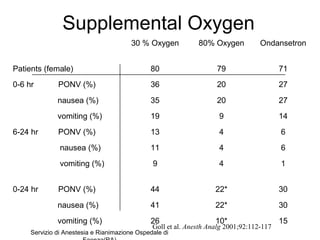
Supplemental Oxygen
30 % Oxygen 80% Oxygen Ondansetron
Patients (female) 80 79 71
0-6 hr PONV (%) 36 20 27
nausea (%) 35 20 27
vomiting (%) 19 9 14
6-24 hr PONV (%) 13 4 6
nausea (%) 11 4 6
vomiting (%) 9 4 1
0-24 hr PONV (%) 44 22* 30
nausea (%) 41 22* 30
vomiting (%) 26 10* 15
Goll et al. Anesth Analg 2001;92:112-117
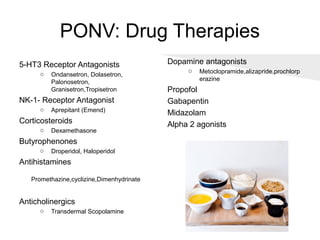
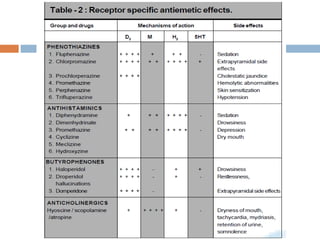
PONV: Drug Therapies
5-HT3 Receptor Antagonists
o Ondansetron, Dolasetron,
Palonosetron,
Granisetron,Tropisetron
NK-1- Receptor Antagonist
o Aprepitant (Emend)
Corticosteroids
o Dexamethasone
Butyrophenones
o Droperidol, Haloperidol
Antihistamines
Promethazine,cyclizine,Dimenhydrinate
Anticholinergics
o Transdermal Scopolamine
Dopamine antagonists
o Metoclopramide,alizapride,prochlorp
erazine
Propofol
Gabapentin
Midazolam
Alpha 2 agonists
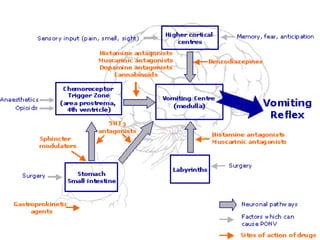
Figure 6 summarises the sites of actions of the drugs that influence PONV.
                                                                                                                                                            
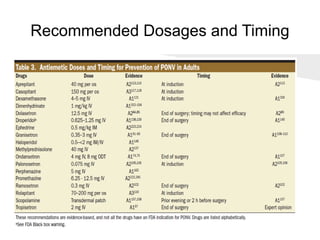
Recommended Dosages and Timing
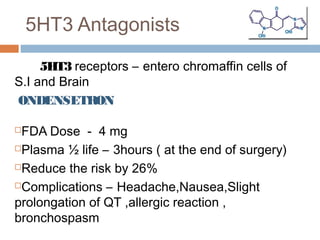
5HT3 Antagonists
5HT3 receptors – entero chromaffin cells of
S.I and Brain
ONDENSETRON
FDA Dose - 4 mg
Plasma ½ life – 3hours ( at the end of surgery)
Reduce the risk by 26%
Complications – Headache,Nausea,Slight
prolongation of QT ,allergic reaction ,
bronchospasm
5HT3 Antagonists
DOLASETRON
FDA Dose – 12-50 mg
IV-12.5 mg
Oral- 25- 30mg
Plasma ½ life – 7hours( at induction)
GRANISETRON
FDA Dose – 1mg( 20-40micg/kg)
Plasma ½ life – 9hours(at induction)
5HT3 Antagonists
TROPISETRON
It s an indole acetic acid ester of tropine
FDA Dose – 2mg
Plasma ½ life – 7hours
PALANOSETRON
Most effective antiemetic in this group with NK1
antagonism
FDA Dose – 0.075mg
Reduce the risk by 30% with ½ life of 40 hours
Most useful in PDNV
Pharmacology
Dexamethasone
MOA – Inhibition of NTS
Central inhibition of prostaglandins
FDA Dose – 10mg
Slower in onset
Administer at the induction
Complication – Perioperative hyperglycemia in
DM and obese patients
.
Scopolamine
Transdermal formulations
FDA Dose – 1.5 mg(5micg/hr) with 72 hours ½
life
Night before surgery(44%) or morning(59%)
Most useful in PDNV
Complications- visual disturbances(24 to
48hrs), central anticholinergic syndrome, dry
mouth,tachycardia, dry skin, urinary retention
Anticholinergics
Pharmacology
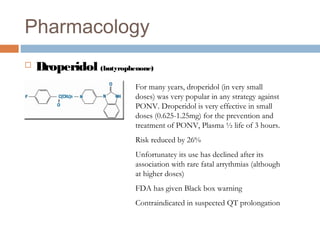
 Droperidol (butyrophenone)
For many years, droperidol (in very small
doses) was very popular in any strategy against
PONV. Droperidol is very effective in small
doses (0.625-1.25mg) for the prevention and
treatment of PONV, Plasma ½ life of 3 hours.
Risk reduced by 26%
Unfortunatey its use has declined after its
association with rare fatal arrythmias (although
at higher doses)
FDA has given Black box warning
Contraindicated in suspected QT prolongation
Dopamine Antagonists
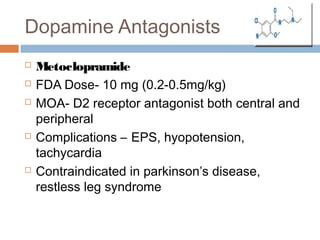
 Metoclopramide
 FDA Dose- 10 mg (0.2-0.5mg/kg)
 MOA- D2 receptor antagonist both central and
peripheral
 Complications – EPS, hyopotension,
tachycardia
 Contraindicated in parkinson’s disease,
restless leg syndrome
NK1 Antagonists
 Aprepitant
 NK1 receptors- GIT
 Substance P in vagal afferents
 FDA Dose- 40 mg orally (at induction)
 Risk reduced by 69%
 High cost
Mirtazapine
Mirtazapine is a noradrenergic and specific
serotonergic
antidepressant.
Mirtazapine 30 mg per os plus dexamethasone
8 mg reduces the incidence of late PONV by
>50% compared with dexamethasone8 mg
alone.
Gabapentin
Gabapentin doses of 600 mg per os given 2
hours before surgery effectively decreases
PONV.
Gabapentin Given 1 hoursbefore surgery,
gabapentin 800 mg per os is as effective as
dexamethasone 8 mg IV, and the combination
is better than either drug alone
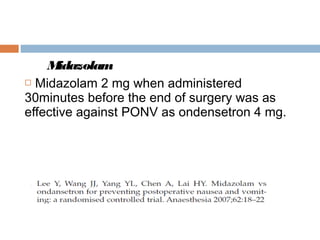
Midazolam
 Midazolam 2 mg when administered
30minutes before the end of surgery was as
effective against PONV as ondensetron 4 mg.
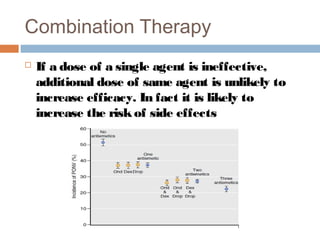
Combination Therapy
 If a dose of a single agent is ineffective,
additional dose of same agent is unlikely to
increase efficacy. In fact it is likely to
increase the riskof side effects
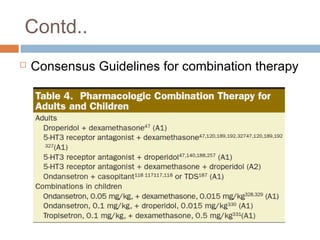
Contd..
 Consensus Guidelines for combination therapy
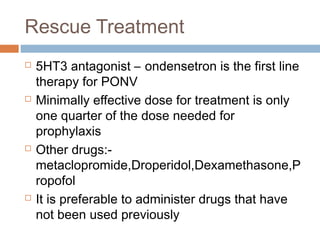
Rescue Treatment
 5HT3 antagonist – ondensetron is the first line
therapy for PONV
 Minimally effective dose for treatment is only
one quarter of the dose needed for
prophylaxis
 Other drugs:-
metaclopromide,Droperidol,Dexamethasone,P
ropofol
 It is preferable to administer drugs that have
not been used previously
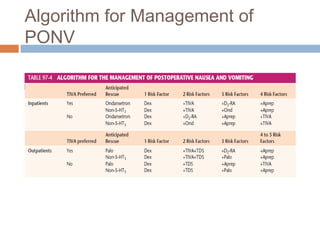
Algorithm for Management of
PONV
Non Pharmacological Therapy
 Non-pharmacological Treatments:
 P6 Acupuncture and acupressure
 Hydration
 20ml/kg of crystalloid
 Hypnosis/therapeutic suggestion
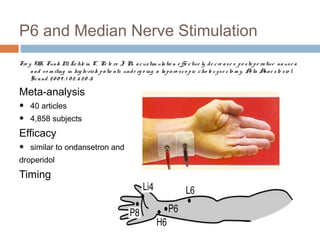
P6 and Median Nerve Stimulation
Fre y UH, Funk M, Lo hle in C, Pe te rs J. P6 acustim ulatio n e ffe ctive ly de cre ase s po sto pe rative nause a
and vo m iting in hig h-risk patie nts unde rg o ing a laparo sco pic cho le cyse cto m y. Acta Anae ste sio l
Scand 20 0 9 ; 1 0 2: 6 20 -5
Meta-analysis
• 40 articles
• 4,858 subjects
Efficacy
• similar to ondansetron and
droperidol
Timing
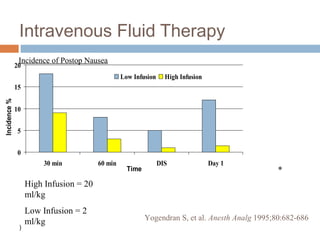
Intravenous Fluid Therapy
0
5
10
15
20
30 min 60 min DIS Day 1
Time
Incidence%
Low Infusion High Infusion
)
*
Yogendran S, et al. Anesth Analg 1995;80:682-686
High Infusion = 20
ml/kg
Low Infusion = 2
ml/kg
Incidence of Postop Nausea
Contd..
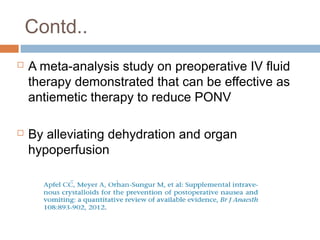
 A meta-analysis study on preoperative IV fluid
therapy demonstrated that can be effective as
antiemetic therapy to reduce PONV
 By alleviating dehydration and organ
hypoperfusion
In Summary..
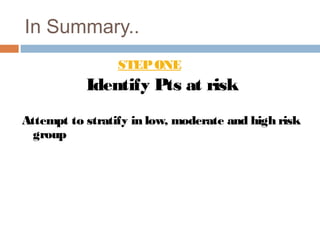
STEPONE
Identify Pts at risk
Attempt to stratify in low, moderate and high risk
group
In Summary..
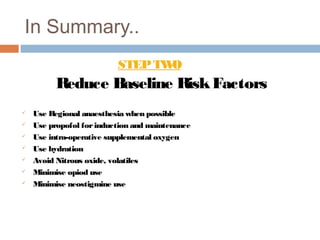
STEPTWO
Reduce Baseline RiskFactors
 Use Regional anaesthesia when possible
 Use propofol forinduction and maintenance
 Use intra-operative supplemental oxygen
 Use hydration
 Avoid Nitrous oxide, volatiles
 Minimise opiod use
 Minimise neostigmine use
In Summary..
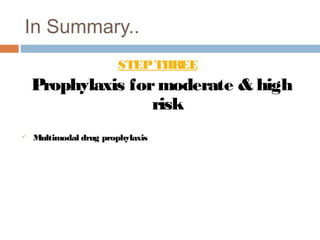
STEPTHREE
Prophylaxis formoderate & high
risk
 Multimodal drug prophylaxis
In Summary..
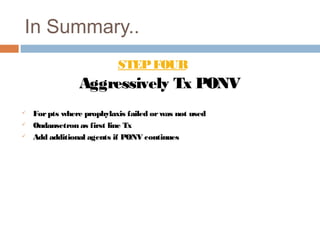
STEPFOUR
Aggressively Tx PONV
 Forpts where prophylaxis failed orwas not used
 Ondansetron as first line Tx
 Add additional agents if PONV continues
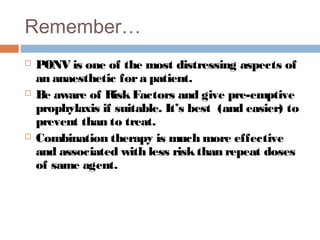
Remember…
 PONV is one of the most distressing aspects of
an anaesthetic fora patient.
 Be aware of RiskFactors and give pre-emptive
prophylaxis if suitable. It’s best (and easier) to
prevent than to treat.
 Combination therapy is much more effective
and associated with less riskthan repeat doses
of same agent.
PONV
 To date, more than 3000 articles on PONV
have been published,
 with more than 300 articles added yearly. Most
are reports of randomized controlled trials for
the prevention of PONV
 yet it is apparent that the elusive “holy grail”
 PONV prevention has yet to be found
Thank you….

Ponv

  • 1.
    POST OPERATIVE NAUSEA &VOMITING SPEAKER :- DR. RAMESH V MODERATOR :- PROF. DR. KH.MANIRAM SINGH
  • 2.
    PONV Why is itImportant?  Patients rank PONV as one of the most unpleasant memories associated with their hospital stay.  Patient satisfaction with their anaesthetic is highly linked to their experience (or lack of ) of PONV. In surveys, many state they prefer to experience pain than N&V.  When severe it can lead to increased length of hospital stay, increased bleeding, incisional hernias and even life threatening aspiration pneumonia.   Despite decades of progress in surgical and anaesthetic techniques, effective prevention and
  • 3.
    PONV Incidence!!!  A verycommon problem in the ambulatory surgery patient population, occurring in an estimated 35% of all patients. If high-risk patients are considered as a separate group, then as much as 70% of these patients will experience PONV.  Before the 1960s, when older inhalational anesthetic agents such as ether and cyclopropane were widely used, the incidence of vomiting in general population was as high as 60%.
  • 4.
    What is PONV? ●Nausea ● Retching ● Vomiting
  • 5.
    Classification  Early PONV– within 6 hours of emergence from anaesthesia  Late PONV -- 6 to 24 hours after the procedure
  • 6.
  • 8.
    Risk Stratification  Postoperativenausea and vomiting is a multifactorial entity, comprising patient, surgical, and anesthetic factors.  Due to the cost of pharmacological Tx of emesis, risk stratification is important.  By focusing attention (and resources) on those groups of patients most likely to develop PONV, the overall cost of dealing with PONV is reduced.  A number of studies have looked into PONV risk factors and risk stratification.
  • 9.
    Risk Stratification Patient relatedindependent predictors  Female>male (x3) Incidence increases during menstruation and decreases after the menopause. After 70 years of age, both sexes are equally affected.  Non smokers ( 1.8 times more)  Obese (suggested but no strong evidence).  Age. POV in under 2yr olds is rare. From >3yrs to puberty, risk is higher than adults.  Previous history of PONV/motion sickness  Early ambulation, early postoperative eating and drinking.  Anxiety
  • 10.
    Risk Stratification Surgery relatedindependent predictors  Intra-abdominal-laparoscopic  Intracranial, middle ear  Squint surgery The highest PONV risk surgery in children  Gynaecological Esp ovarian  ENT Especially T & As (? due to blood in upper GIT)  Prolonged surgery( each 30 min increase – risk by 60%  Significant surgical pain
  • 11.
    Risk Stratification Anaesthesia relatedindependent riskfactors  Opioids Well known for emetogenic potential but remember untreated pain can also be emetogenic  Sympathomimetics  Inhalational agents Isoflurane++, Etomidate, ketamine, methohexitone. Propofol considered one of the least emetogenic  Nitrous oxide  Prolonged anaesthesia  Spinal anaesthesia (blocks above T5), hypotension.  Intraoperative & Preoperative dehydration  Gastric dilatation Eg aggressive mask ventilation
  • 12.
    Risk Stratification Pathology  Intestinalobstruction  Metabolic, e.g. hypoglycaemia  Hypoxia  Uraemia
  • 13.
    Quick Risk FactorChart Apfel’s simplified score for adults
  • 14.
    Eberhart’s simplified scorefor children  Post operative vomiting score (POV)
  • 15.
    Post-discharge nausea andvomiting “PDNV defined from 24 h post- discharge upto 72h has an incidence of upto 55%” Ambulatory surgery Chandrakantan A et al. Multimodal therapies for ponv. Br J Aneasth 2011;107:I 27-40
  • 16.
  • 18.
    Prophylaxis and Treatmentof PONV I. Valid Assessment of patient’s risks II. Reduce the baseline risk factors III. Pharmacological therapy with single/ combined administration of antiemetics IV. Non Pharmocological therapy
  • 19.
    Risk Stratification Low RiskofPONV pts  No prophylaxis or minimal prophylaxis is likely the best choice Moderate Riskof PONV pts  Prophylaxis followed by aggressive treatment if nausea and vomiting develop.
  • 20.
    High Risk ofPONV ptsHigh Risk of PONV pts Aggressive prophylaxis + treatment. Expensive but becomes cost-effective whenAggressive prophylaxis + treatment. Expensive but becomes cost-effective when the issues of patients satisfaction and avoidance of unplanned admission arethe issues of patients satisfaction and avoidance of unplanned admission are considered. Multi-modal therapy widely accepted as providing the best resultsconsidered. Multi-modal therapy widely accepted as providing the best results Risk Stratification
  • 21.
    Reduce Risk Factors AvoidGeneral Anesthesia Avoid Volatiles Utilize Propofol Infusions Avoid Nitrous Oxide Minimize Perioperative Opioids Provide Adequate Hydration
  • 22.
    Regional vs General Aneasthesia Patients who were randomized to two groups  receive a peripheral nerve block had a more than fourfold lower incidence of nausea than those receiving a generalanesthetic regimen (6.8% versus 30%).
  • 24.
    Servizio di Anestesiae Rianimazione Ospedale di Supplemental Oxygen 30 % Oxygen 80% Oxygen Ondansetron Patients (female) 80 79 71 0-6 hr PONV (%) 36 20 27 nausea (%) 35 20 27 vomiting (%) 19 9 14 6-24 hr PONV (%) 13 4 6 nausea (%) 11 4 6 vomiting (%) 9 4 1 0-24 hr PONV (%) 44 22* 30 nausea (%) 41 22* 30 vomiting (%) 26 10* 15 Goll et al. Anesth Analg 2001;92:112-117
  • 25.
    PONV: Drug Therapies 5-HT3Receptor Antagonists o Ondansetron, Dolasetron, Palonosetron, Granisetron,Tropisetron NK-1- Receptor Antagonist o Aprepitant (Emend) Corticosteroids o Dexamethasone Butyrophenones o Droperidol, Haloperidol Antihistamines Promethazine,cyclizine,Dimenhydrinate Anticholinergics o Transdermal Scopolamine Dopamine antagonists o Metoclopramide,alizapride,prochlorp erazine Propofol Gabapentin Midazolam Alpha 2 agonists
  • 26.
    Figure 6 summarisesthe sites of actions of the drugs that influence PONV.                                                                                                                                                             
  • 27.
  • 28.
    5HT3 Antagonists 5HT3 receptors– entero chromaffin cells of S.I and Brain ONDENSETRON FDA Dose - 4 mg Plasma ½ life – 3hours ( at the end of surgery) Reduce the risk by 26% Complications – Headache,Nausea,Slight prolongation of QT ,allergic reaction , bronchospasm
  • 29.
    5HT3 Antagonists DOLASETRON FDA Dose– 12-50 mg IV-12.5 mg Oral- 25- 30mg Plasma ½ life – 7hours( at induction) GRANISETRON FDA Dose – 1mg( 20-40micg/kg) Plasma ½ life – 9hours(at induction)
  • 30.
    5HT3 Antagonists TROPISETRON It san indole acetic acid ester of tropine FDA Dose – 2mg Plasma ½ life – 7hours PALANOSETRON Most effective antiemetic in this group with NK1 antagonism FDA Dose – 0.075mg Reduce the risk by 30% with ½ life of 40 hours Most useful in PDNV
  • 31.
    Pharmacology Dexamethasone MOA – Inhibitionof NTS Central inhibition of prostaglandins FDA Dose – 10mg Slower in onset Administer at the induction Complication – Perioperative hyperglycemia in DM and obese patients .
  • 32.
    Scopolamine Transdermal formulations FDA Dose– 1.5 mg(5micg/hr) with 72 hours ½ life Night before surgery(44%) or morning(59%) Most useful in PDNV Complications- visual disturbances(24 to 48hrs), central anticholinergic syndrome, dry mouth,tachycardia, dry skin, urinary retention Anticholinergics
  • 33.
    Pharmacology  Droperidol (butyrophenone) Formany years, droperidol (in very small doses) was very popular in any strategy against PONV. Droperidol is very effective in small doses (0.625-1.25mg) for the prevention and treatment of PONV, Plasma ½ life of 3 hours. Risk reduced by 26% Unfortunatey its use has declined after its association with rare fatal arrythmias (although at higher doses) FDA has given Black box warning Contraindicated in suspected QT prolongation
  • 34.
    Dopamine Antagonists  Metoclopramide FDA Dose- 10 mg (0.2-0.5mg/kg)  MOA- D2 receptor antagonist both central and peripheral  Complications – EPS, hyopotension, tachycardia  Contraindicated in parkinson’s disease, restless leg syndrome
  • 35.
    NK1 Antagonists  Aprepitant NK1 receptors- GIT  Substance P in vagal afferents  FDA Dose- 40 mg orally (at induction)  Risk reduced by 69%  High cost
  • 37.
    Mirtazapine Mirtazapine is anoradrenergic and specific serotonergic antidepressant. Mirtazapine 30 mg per os plus dexamethasone 8 mg reduces the incidence of late PONV by >50% compared with dexamethasone8 mg alone.
  • 38.
    Gabapentin Gabapentin doses of600 mg per os given 2 hours before surgery effectively decreases PONV. Gabapentin Given 1 hoursbefore surgery, gabapentin 800 mg per os is as effective as dexamethasone 8 mg IV, and the combination is better than either drug alone
  • 39.
    Midazolam  Midazolam 2mg when administered 30minutes before the end of surgery was as effective against PONV as ondensetron 4 mg.
  • 40.
    Combination Therapy  Ifa dose of a single agent is ineffective, additional dose of same agent is unlikely to increase efficacy. In fact it is likely to increase the riskof side effects
  • 41.
    Contd..  Consensus Guidelinesfor combination therapy
  • 42.
    Rescue Treatment  5HT3antagonist – ondensetron is the first line therapy for PONV  Minimally effective dose for treatment is only one quarter of the dose needed for prophylaxis  Other drugs:- metaclopromide,Droperidol,Dexamethasone,P ropofol  It is preferable to administer drugs that have not been used previously
  • 43.
  • 44.
    Non Pharmacological Therapy Non-pharmacological Treatments:  P6 Acupuncture and acupressure  Hydration  20ml/kg of crystalloid  Hypnosis/therapeutic suggestion
  • 45.
    P6 and MedianNerve Stimulation Fre y UH, Funk M, Lo hle in C, Pe te rs J. P6 acustim ulatio n e ffe ctive ly de cre ase s po sto pe rative nause a and vo m iting in hig h-risk patie nts unde rg o ing a laparo sco pic cho le cyse cto m y. Acta Anae ste sio l Scand 20 0 9 ; 1 0 2: 6 20 -5 Meta-analysis • 40 articles • 4,858 subjects Efficacy • similar to ondansetron and droperidol Timing
  • 46.
    Intravenous Fluid Therapy 0 5 10 15 20 30min 60 min DIS Day 1 Time Incidence% Low Infusion High Infusion ) * Yogendran S, et al. Anesth Analg 1995;80:682-686 High Infusion = 20 ml/kg Low Infusion = 2 ml/kg Incidence of Postop Nausea
  • 47.
    Contd..  A meta-analysisstudy on preoperative IV fluid therapy demonstrated that can be effective as antiemetic therapy to reduce PONV  By alleviating dehydration and organ hypoperfusion
  • 48.
    In Summary.. STEPONE Identify Ptsat risk Attempt to stratify in low, moderate and high risk group
  • 49.
    In Summary.. STEPTWO Reduce BaselineRiskFactors  Use Regional anaesthesia when possible  Use propofol forinduction and maintenance  Use intra-operative supplemental oxygen  Use hydration  Avoid Nitrous oxide, volatiles  Minimise opiod use  Minimise neostigmine use
  • 50.
    In Summary.. STEPTHREE Prophylaxis formoderate& high risk  Multimodal drug prophylaxis
  • 51.
    In Summary.. STEPFOUR Aggressively TxPONV  Forpts where prophylaxis failed orwas not used  Ondansetron as first line Tx  Add additional agents if PONV continues
  • 52.
    Remember…  PONV isone of the most distressing aspects of an anaesthetic fora patient.  Be aware of RiskFactors and give pre-emptive prophylaxis if suitable. It’s best (and easier) to prevent than to treat.  Combination therapy is much more effective and associated with less riskthan repeat doses of same agent.
  • 53.
    PONV  To date,more than 3000 articles on PONV have been published,  with more than 300 articles added yearly. Most are reports of randomized controlled trials for the prevention of PONV  yet it is apparent that the elusive “holy grail”  PONV prevention has yet to be found
  • 54.

Editor's Notes

  • #5 Postoperative nausea and vomiting or PONV is one of the most common postoperative complaints by patients who undergo general anesthesia. This is an umbrella term that is used by providers to describe 3 distinct symptoms and physiologic events that can occur either independently or in combination. Nausea is a subjective experience of the the need to vomit and may be accompanied by autonomic symptoms such as tachycardia, diaphoresis, pallor and salivation. Retching is the result of rhythmic contractions of the diaphragm, abdominal and chest wall muscles. Vomiting is the reflexive rapid and forceful oral expulsion of gastric contents that results from sustained contractions of the abdominal and thoracic musculature.
  • #22 Avoid general anesthesia by use of regional anesthesia: PONV occurrence is 9xs less with regional anesthesia Avoid volatiles: TIVA with propofol decreased PONV risk by 25% Propofol infusions Avoid N20: However, studies showed that N20 had little effect in low risk patient Minimize perioperative opioids: perioperative NSAIDS (inhibit cox-1 and 2 aspirin, ibuprofen and naproxen) cox-2 inhibitors (celebrex), and intraoperative ketamine may have a morphine-sparing effect in the postoperative period Adequate hydration *We can use our knowledge on risk factors to help determine which ingredients will make our cake taste best!!
  • #25 Single center trial. 240 patients (female undergoing gynecological laparoscopy with expected duration > 1 hr. Patients were randomized to receive 30% oxygen balance nitrogen, 80% oxygen balance nitrogen, or Ondansetron 8 mg after induction with 30% oxygen balance nitrogen. Standard anesthetic included thiopental induction, vecuronium, fentanyl, isoflurane, oxygen, and nitrogen. NMB antagonized with glycopyrrolate and neostigmine. Postoperatively all patients received oxygen at 2 l/min by face mask for 2 hr. Ondansetron 4 mg for rescue for any vomiting or nausea lasting more than 15-20 min.
  • #26 These are some of the most popular recommended pharmacologic antiemetics for PONV prophylaxis. So I’m going to briefly hit each of these drug classes and update you all on the latest research and recommendations on these drugs. As far as 5-HT3 Receptor Antagonists...They have a favorable side effect profile, and all except Palonsosetron affect the QTc interval. For Ondansetron (which involves more of the research in this class), FDA suggests NOT TO EXCEED 16mg in a single dose. And just as a reminder, zofran has GREATER ANTI VOMITING than ANTI NAUSEA effect which is why it is recommended to give it at the end of surgery. It is Just as effective as other 5-HT3 receptor antagonists and also as effective as Decadron, and Haldol….however, it is LESS EFFECTIVE than Emend for reducing emesis and Palonosetron for reducing PONV. Palonosetron is a second generation 5HT3 receptor antagonist with a half-life of 40 hours, so it is given at the START of surgery and is helpful with PDNV as well. In December of 2010, the FDA announced that IV dolasetron should no longer be used for chemo-induced nausea and vomiting in adults and children because of concerns with QT prolongation and Torsades...At present it is NO LONGER MARKETED in the US. Neurokinin-1 receptor antagonists, I’m going to focus of Emend, since it is the only one approved for use thus far. It has a 40-hour half life and is given in a 40mg or 80mg dose, PO before induction. In 2 RCTS, Emend was significantly more effective than zofran for preventing vomiting 24-48 hours after surgery and in reducing nausea severity in the first 48 hours after surgery. Decadron, is recommended after induction and is AS EFFECTIVE as zofran and droperidol. Other benefits have shown enhanced post discharge quality of recovery, less opioid requirements, less nausea, pain, and fatigue. Concerns have been made on whether or not decadron increases the risk of wound infection, but in MOST STUDIES, a single dose of periop decadron DOES NOT appear to increase this risk. However, recent studies showed significant increases in blood glucose (which is not too surprising)...so the use of decadron in labile diabetics in relatively contraindicated. So I’m sure most of you know that Droperidol has been on back-order all winter with no release date in site… Prophylactically, it’s efficacy is similar to Zofran and is most effective at the end of surgery. In one clinical study, the combination of droperidol plus zofran was more effective than either drug alone. In 2001, the FDA posted “black box” restrictions on Droperidol, but at the low dosages used in PONV prophylaxis are unlikely to be associated with these cardiovascular events. HALDOL has been investgated as an alternative to droperidol at much lower doses than those used to treat psychiatric disorders. Dosages of 0.5-2mg IV or IM have effectively reduced PONV risk….sedation does not occur at these dosages and cardiac arrhythmias are not reported. It may be used as an alternative to Droperidol, which would be a consideration now that Droperidol is not available!! Just to note though that the use of Haldol as an antiemetic is not an FDA-approved indication. Dimenhydrinate (Dramamine), is an antihistamine with antiemetic effects. Placebo-controlled trials suggest that its antiemetic efficacy may be similar to the 5HT3 receptor antagonists, decadron, and droperidol...but NOT ENOUGH DATA is available to establish timing, dose response, or side effect profile for its use in PONV. A systematic review of transdermal scopolamine showed that it IS useful as an adjunt to other antiemetic therapies. The patch worked up to 24 hours postoperatively. Its onset of effect is 2-4 hours, so it is best placed either the evening before surgery or 2-4 hours before the start of anesthesia. Adverse events are generally mild and most commonly visual disturbances, dry mouth, and dizziness. NEW DATA show EQUAL EFFECTIVENESS with SINGLE drug therapy using transdermal scopolamine, zofran, or droperidol. Metoclopramide is a WEAK antiemetic and is NOT EFFECTIVE in reducing the incidence of nausea and vomiting alone. It is somewhat more effective, however, when given with decadron….but look at all of the better options we have! Propofol... numerous studies have shown its antiemetic properties at SUBhypnotic dose ranges. Unfortunately, the antiemetic effect with low doses of propofol is likely brief, due to its short duration of action. Gabapentin doses of 600-800 mg PO, 1-2 hours before surgery effectively decrease PONV. It is as effective as 8mg of Decadron and the combination is better than either drug alone. And finally, 2 mg of Versed, when administered 30 minutes before the end of surgery, as AS EFFECTIVE against PONV as 4mg of Zofran...and again, the combination provided a more favorable effect than either drug alone.
  • #28 These are the prophylactic doses and timing for antiemetics in adults. Just note...these recommendations are all evidence-based, but not all the drugs are FDA approved for PONV use!
  • #46 A new meta-analysis of 40 article including 4,858 subjects concluded that P6 stimulation reduces nausea, vomiting, and the need for rescue antiemetics. The efficacy was shown to be similar to ondansetron and droperidol. The timing on stimulation DOES NOT impact PONV….Similar reductions were achieved when stimulation was initiated both before or after induction of anesthesia. Stimulation over the median nerve also reduced PONV in the early post-op period, particularly when tetanic stimulation was used.
  • #47 200 ( m=15, f=185) patients undergoing outpatient surgical procedures (gyn: laparoscopy=6, D&C=172; orthopedic 15; gen surgery 7) randomized to receive 20 ml/kg or 2 ml/kg IV fluid in the perioperative period.