PONV
 PONV: postoperative nausea and vomiting
 Most common problem in PACU
 In 30% of patient; mostly in general anesthesia
 Neurotransmitter/receptor involved:
1) muscarinic receptor 1 (M1)
2) dopamine receptor 2 (D2)
3) histamine 1 (H1)
4) 5-HT3R
5) neurokinin 1 (NK1) receptor - substance P
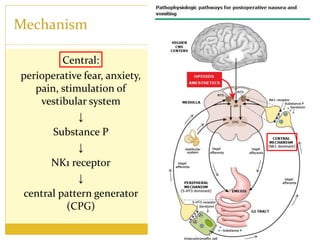
Mechanism
Central:
perioperative fear, anxiety,
pain, stimulation of
vestibular system
↓
Substance P
↓
NK1 receptor
↓
central pattern generator
(CPG)
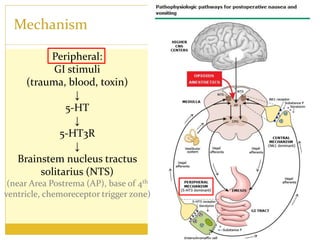
Mechanism
Peripheral:
GI stimuli
(trauma, blood, toxin)
↓
5-HT
↓
5-HT3R
↓
Brainstem nucleus tractus
solitarius (NTS)
(near Area Postrema (AP), base of 4th
ventricle, chemoreceptor trigger zone)
Mechanism
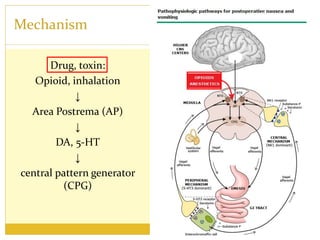
Drug, toxin:
Opioid, inhalation
↓
Area Postrema (AP)
↓
DA, 5-HT
↓
central pattern generator
(CPG)
Risk factors
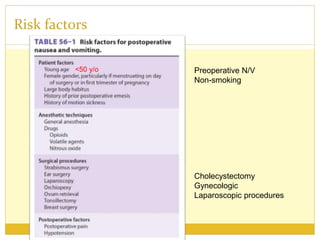
Preoperative N/V
Non-smoking
<50 y/o
Cholecystectomy
Gynecologic
Laparoscopic procedures
Risk factors
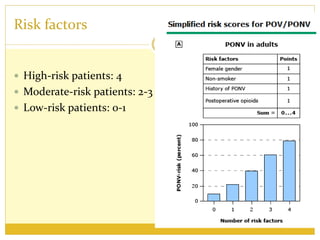
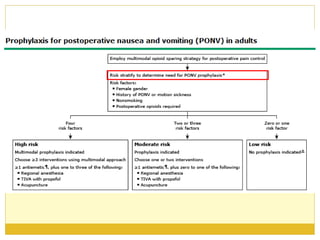
 High-risk patients: 4
 Moderate-risk patients: 2-3
 Low-risk patients: 0-1
Prophylaxis
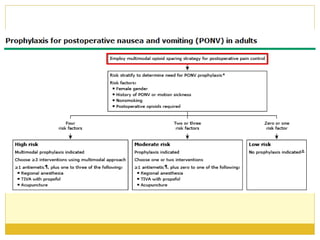
1. Reduce baseline risk:
 Adequate hydration (20 ml/kg)
 Multimodal post-OP pain control:
 Regional anesthesia, acetaminophen, NSAID, etc.
 Modification of anesthesia:
 Regional anesthesia or TIVA with propofol
Prophylaxis
1. Reduce baseline risk:
 Adequate hydration (20ml/kg)
 Multimodal post-OP pain control:
 Regional anesthesia, acetaminophen, NSAID, etc.
 Modification of anesthesia:
 Regional anesthesia or TIVA with propofol
Prophylaxis
2. Antiemetics (↓ 25% of PONV)
1) 5-HT3 receptor antagonist
 Ondansetron: 4 mg, onset: immediately; use at the end of surgery
 Granisetron: 1 mg
 Dolasetron: 12.5 mg, onset: 15 min
 Palonosetron: 0.075 mg; use at the end of surgery
2) Glucocorticoid - dexamethasone: 4-10 mg
 Antiemetics and analgesic
 Use after induction
Prophylaxis
3) Anticholinergics: transdermal scopolamine
 Long-acting: several hours
 Use 2hrs before induction
 Side effect: sedation, dysphoria, dry mouth, blurred vision, urinary
retention, glaucoma
4) Dopamine receptor antagonist
 Butyrophenone
 Droperidol: 0.625-1.25 mg
 SE: QT prolong
Prophylaxis
5) Neurokinin 1 (NK1) receptor antagonist:
 Aprepitant: oral, 40 mg
 Use 3 hrs before induction
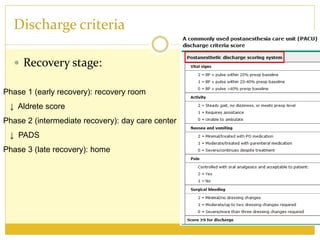
Discharge criteria
 Recovery stage:
Phase 1 (early recovery): recovery room
↓ Aldrete score
Phase 2 (intermediate recovery): day care center
↓ PADS
Phase 3 (late recovery): home
Reference
 Morgan & Mikhail’s Clinical Anesthesiology, 5th
edition.
 Uptodate

PONV

  • 1.
    PONV  PONV: postoperativenausea and vomiting  Most common problem in PACU  In 30% of patient; mostly in general anesthesia  Neurotransmitter/receptor involved: 1) muscarinic receptor 1 (M1) 2) dopamine receptor 2 (D2) 3) histamine 1 (H1) 4) 5-HT3R 5) neurokinin 1 (NK1) receptor - substance P
  • 2.
    Mechanism Central: perioperative fear, anxiety, pain,stimulation of vestibular system ↓ Substance P ↓ NK1 receptor ↓ central pattern generator (CPG)
  • 3.
    Mechanism Peripheral: GI stimuli (trauma, blood,toxin) ↓ 5-HT ↓ 5-HT3R ↓ Brainstem nucleus tractus solitarius (NTS) (near Area Postrema (AP), base of 4th ventricle, chemoreceptor trigger zone)
  • 4.
    Mechanism Drug, toxin: Opioid, inhalation ↓ AreaPostrema (AP) ↓ DA, 5-HT ↓ central pattern generator (CPG)
  • 5.
    Risk factors Preoperative N/V Non-smoking <50y/o Cholecystectomy Gynecologic Laparoscopic procedures
  • 6.
    Risk factors  High-riskpatients: 4  Moderate-risk patients: 2-3  Low-risk patients: 0-1
  • 8.
    Prophylaxis 1. Reduce baselinerisk:  Adequate hydration (20 ml/kg)  Multimodal post-OP pain control:  Regional anesthesia, acetaminophen, NSAID, etc.  Modification of anesthesia:  Regional anesthesia or TIVA with propofol
  • 10.
    Prophylaxis 1. Reduce baselinerisk:  Adequate hydration (20ml/kg)  Multimodal post-OP pain control:  Regional anesthesia, acetaminophen, NSAID, etc.  Modification of anesthesia:  Regional anesthesia or TIVA with propofol
  • 11.
    Prophylaxis 2. Antiemetics (↓25% of PONV) 1) 5-HT3 receptor antagonist  Ondansetron: 4 mg, onset: immediately; use at the end of surgery  Granisetron: 1 mg  Dolasetron: 12.5 mg, onset: 15 min  Palonosetron: 0.075 mg; use at the end of surgery 2) Glucocorticoid - dexamethasone: 4-10 mg  Antiemetics and analgesic  Use after induction
  • 12.
    Prophylaxis 3) Anticholinergics: transdermalscopolamine  Long-acting: several hours  Use 2hrs before induction  Side effect: sedation, dysphoria, dry mouth, blurred vision, urinary retention, glaucoma 4) Dopamine receptor antagonist  Butyrophenone  Droperidol: 0.625-1.25 mg  SE: QT prolong
  • 13.
    Prophylaxis 5) Neurokinin 1(NK1) receptor antagonist:  Aprepitant: oral, 40 mg  Use 3 hrs before induction
  • 14.
    Discharge criteria  Recoverystage: Phase 1 (early recovery): recovery room ↓ Aldrete score Phase 2 (intermediate recovery): day care center ↓ PADS Phase 3 (late recovery): home
  • 15.
    Reference  Morgan &Mikhail’s Clinical Anesthesiology, 5th edition.  Uptodate