POND
•A Pond is a body of standing water ,either natural or
artificial ,that is usually smaller than a lake.
•They may arise naturally in floodplains as part of a river
system, or they may be somewhat isolated depressions.
•Usually they contain shallow water with marsh and
aquatic plants and animals.
TYPES OF PONDS
There are three basic types of ponds
1. Sunken pond
2. Barrage pond
3. Diversion pond
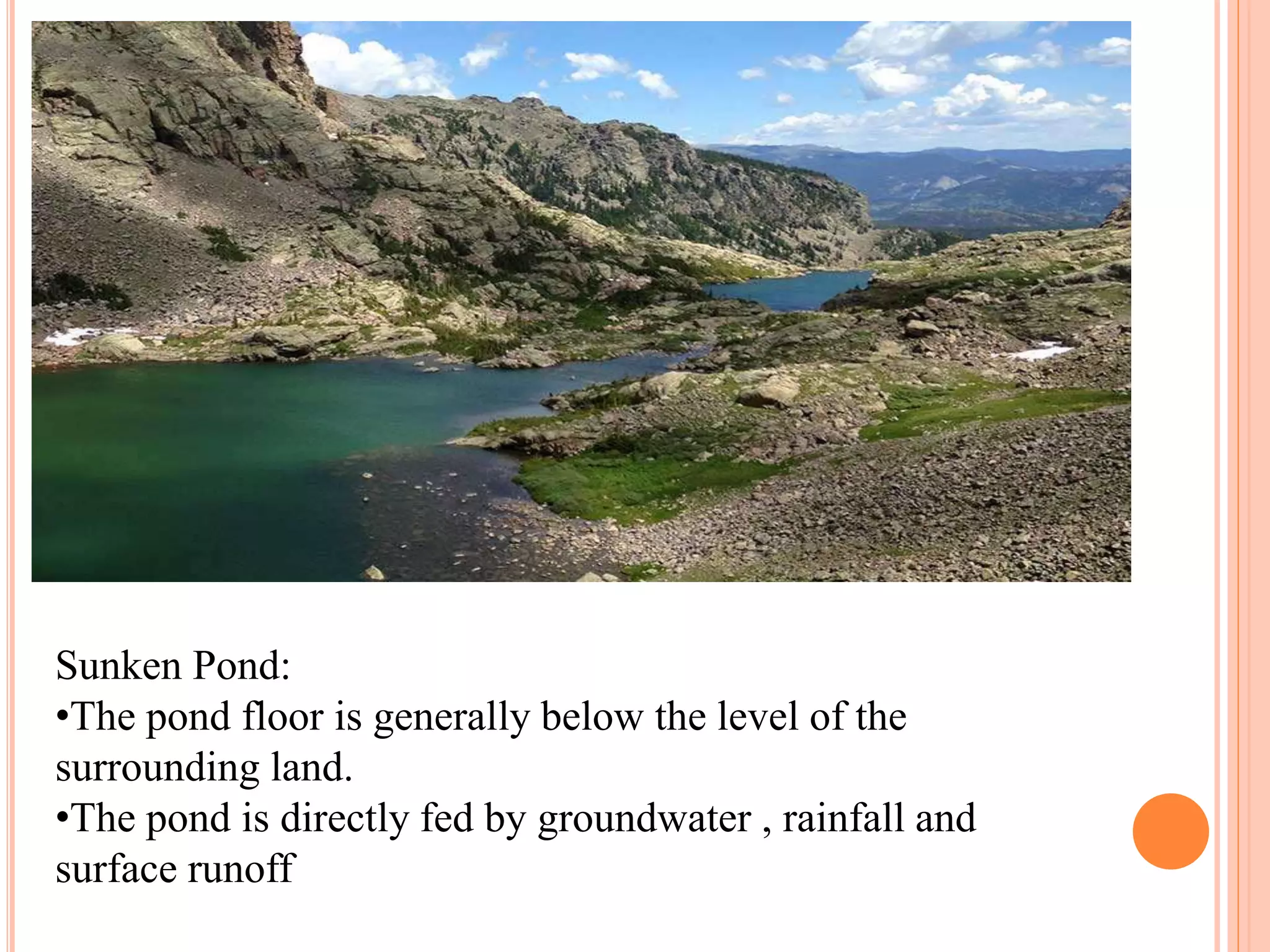
Sunken Pond:
•The pond floor is generally below the level of the
surrounding land.
•The pond is directly fed by groundwater , rainfall and
surface runoff
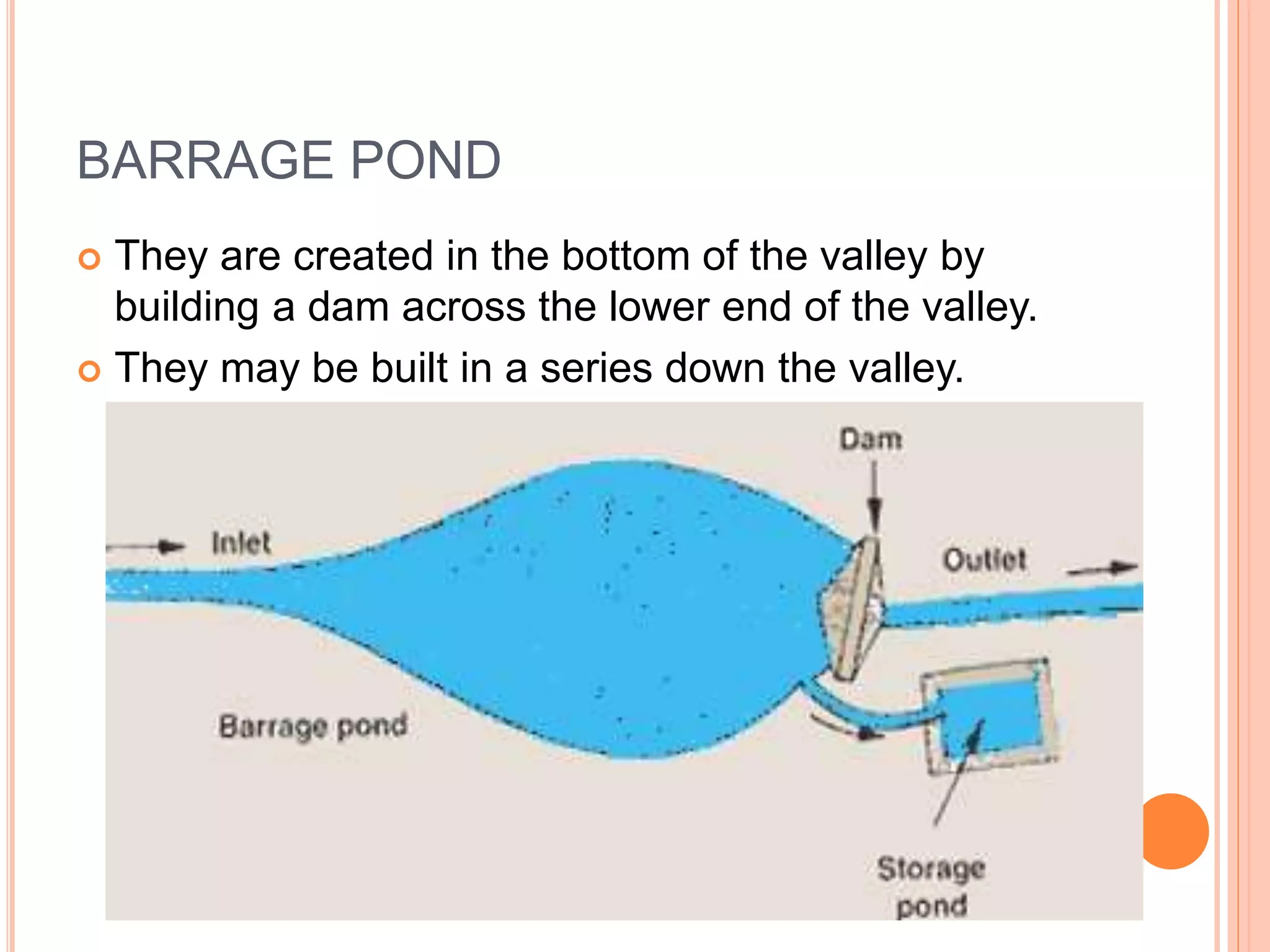
BARRAGE POND
 They are created in the bottom of the valley by
building a dam across the lower end of the valley.
 They may be built in a series down the valley.
DIVERSION POND
 The diversion pond is fed indirectly by gravity or by
pumping through a diversion canal from a spring
,stream, lake or reservoir.
 The water flow is controlled through a water intake
 There will be an inlet and outlet for each pond.
ACCORDING TO CONSTRUCTION MATERIALS
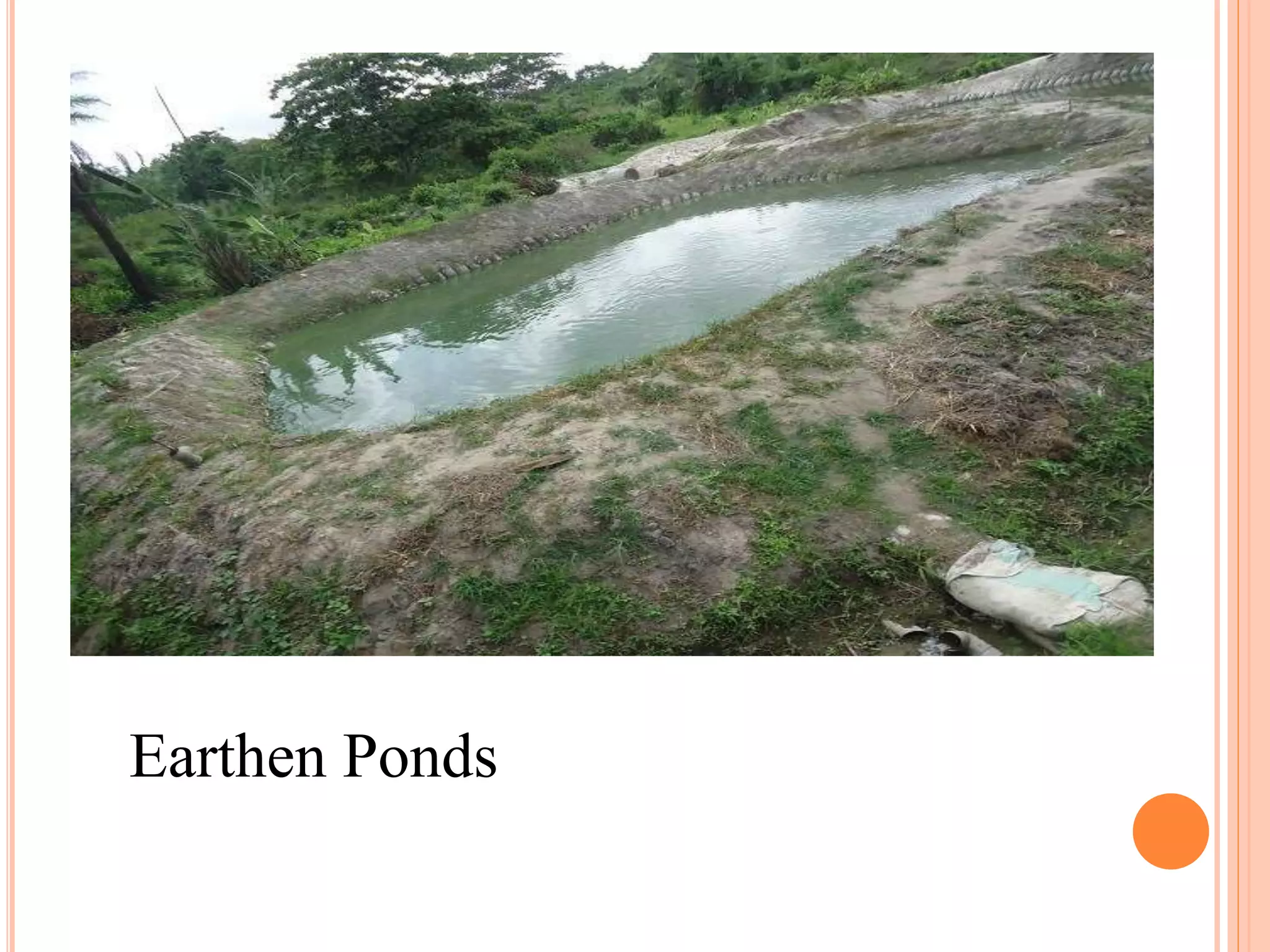
 Earthen ponds:
These are entirey constructed from soil materials.
They are the most common.
 Walled ponds:
These are usually surrounded by blocks,bricks or
concrete walls. Sometimes wooden planking or
corrugated metal is used
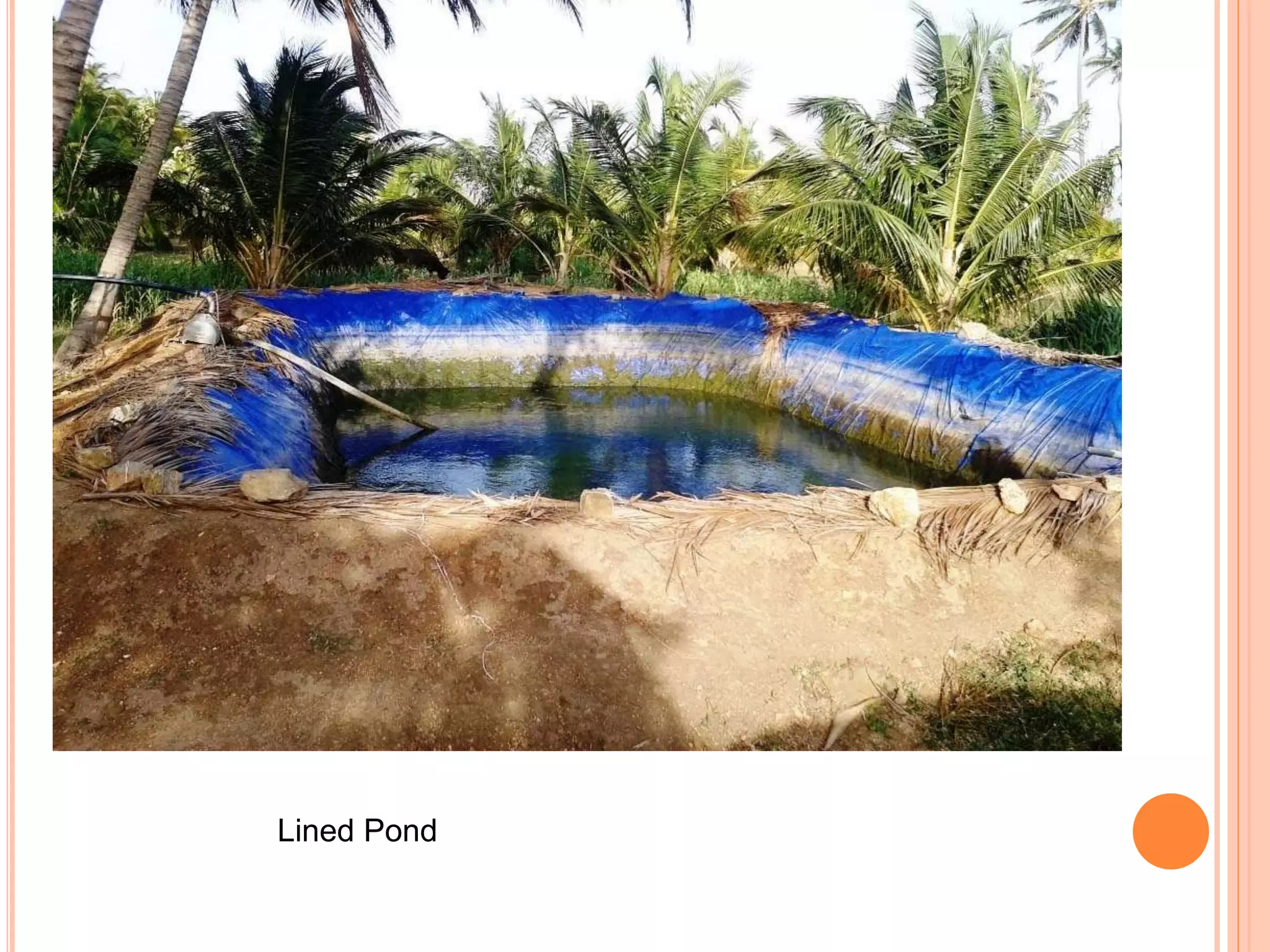
 Lined ponds:
These are earthen ponds lined with an imperviious
materials such as a plastic or rubber sheet.
Earthen Ponds
Walled pond
Lined Pond
ACCORDING TO CONSTRUCTION METHOD
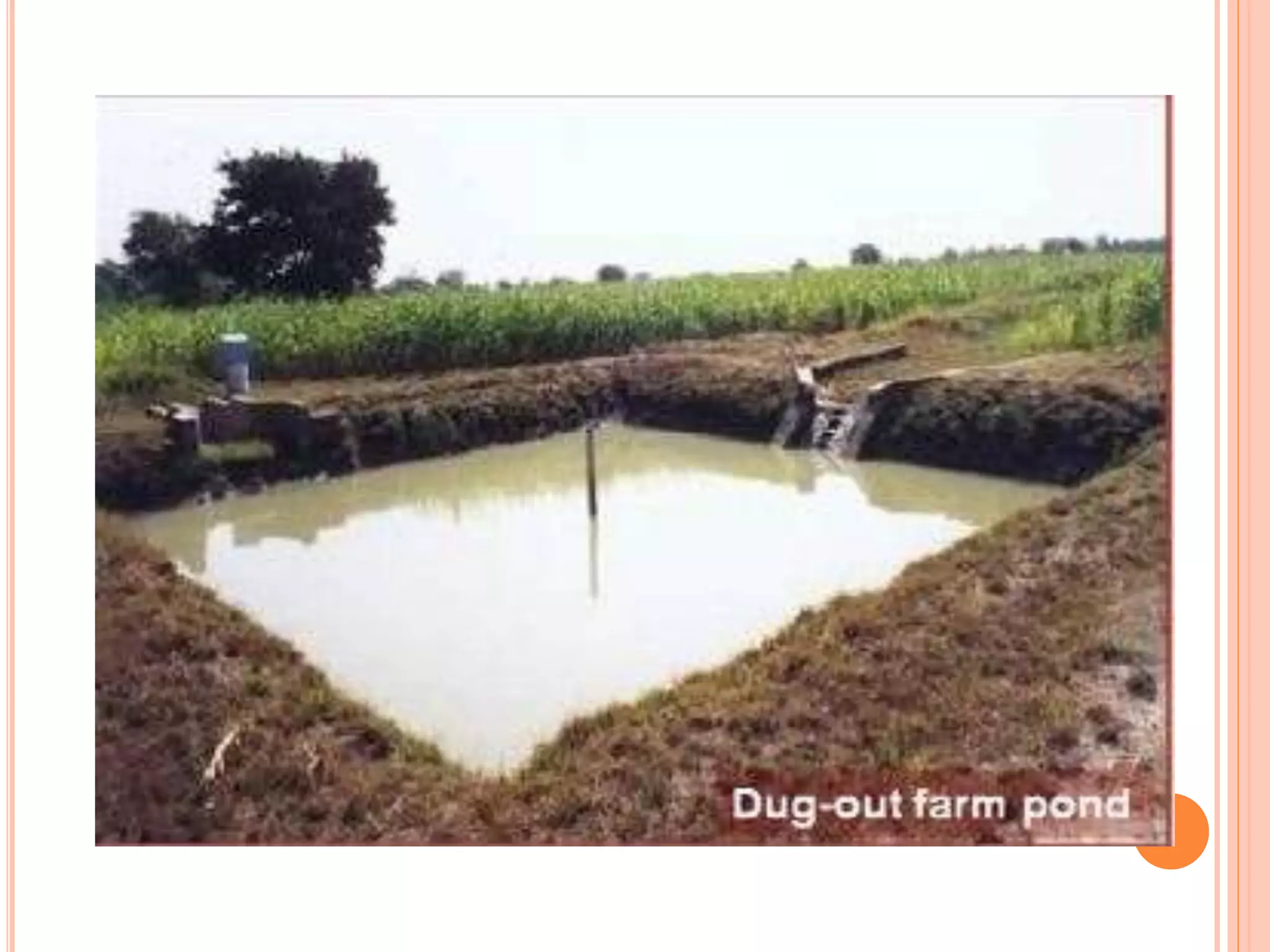
Dug out (excavated pond) pond:
These are constructed by excavating soil from an
area to form a hole which is then filled with water
These are usually undrainable and fed by rainfall,
surface runoff or groundwater
 Embankment pond:
These are formed without excavation by building one
or more dikes above ground level to imppound
water
These are usually drainable and fed by gravity flow of
water or by pumping.
Cut and fill pond:
 These ponds are built by a mix of excavation and
embankment on sloping ground
 They are usually drainable and water which is
impounded within the dikes is fed by gravity or by
pumping.
Cut and fill pond
Retaining wall
Retaining wall
New Flat Space
fill
Cut

Ponds

  • 1.
  • 2.
    •A Pond isa body of standing water ,either natural or artificial ,that is usually smaller than a lake. •They may arise naturally in floodplains as part of a river system, or they may be somewhat isolated depressions. •Usually they contain shallow water with marsh and aquatic plants and animals.
  • 3.
    TYPES OF PONDS Thereare three basic types of ponds 1. Sunken pond 2. Barrage pond 3. Diversion pond
  • 4.
    Sunken Pond: •The pondfloor is generally below the level of the surrounding land. •The pond is directly fed by groundwater , rainfall and surface runoff
  • 5.
    BARRAGE POND  Theyare created in the bottom of the valley by building a dam across the lower end of the valley.  They may be built in a series down the valley.
  • 6.
    DIVERSION POND  Thediversion pond is fed indirectly by gravity or by pumping through a diversion canal from a spring ,stream, lake or reservoir.  The water flow is controlled through a water intake  There will be an inlet and outlet for each pond.
  • 8.
    ACCORDING TO CONSTRUCTIONMATERIALS  Earthen ponds: These are entirey constructed from soil materials. They are the most common.  Walled ponds: These are usually surrounded by blocks,bricks or concrete walls. Sometimes wooden planking or corrugated metal is used  Lined ponds: These are earthen ponds lined with an imperviious materials such as a plastic or rubber sheet.
  • 9.
  • 10.
  • 11.
  • 12.
    ACCORDING TO CONSTRUCTIONMETHOD Dug out (excavated pond) pond: These are constructed by excavating soil from an area to form a hole which is then filled with water These are usually undrainable and fed by rainfall, surface runoff or groundwater
  • 14.
     Embankment pond: Theseare formed without excavation by building one or more dikes above ground level to imppound water These are usually drainable and fed by gravity flow of water or by pumping.
  • 15.
    Cut and fillpond:  These ponds are built by a mix of excavation and embankment on sloping ground  They are usually drainable and water which is impounded within the dikes is fed by gravity or by pumping.
  • 16.
    Cut and fillpond Retaining wall Retaining wall New Flat Space fill Cut