ENVIRONMENTAL ENGINEERING
AQUATIC ECOSYSTEM
PRESENTED BY:
Shilpa konte
AQUATIC ECOSYSTEM
An aquatic ecosystem is an ecosystem in a body of
water. Communities of organism that are dependent on each
other and on their environment live in aquatic ecosystems.
The nature of an aquatic ecosystem is shaped, as on land, by
the availability of food, oxygen, and the prevailing
temperature.
Aquatic ecosystems in shallow waters, where there is plenty of
sunlight, generally tend to be the most productive.
Water pollution, generally coming from human activities, comprises
the greatest pressure on aquatic ecosystems.
For instance, fish can be killed by acid rain in lakes or lack of oxygen
where excess nutrients have been dumped in an estuary.
TYPES OF AQUATIC ECOSYSTEM
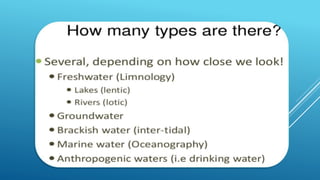
The two main types of aquatic ecosystems are:
 Marine ecosystem
 Freshwater ecosystem
 MARINE ECOSYSTEM:
• Marine ecosystems, the largest of all ecosystems, cover
approximately 71% of the Earth surface’s and contain
approximately 97% of the planet's water.
• They are distinguished from freshwater ecosystems by the presence
of dissolved compounds, especially salts.
• The oceanic zone is the vast open part of the ocean where animals
such as whales, sharks, and tuna live.
 FRESHWATER ECOSYSTEM
• Freshwater ecosystems are a subset of Earth's aquatic ecosystem.
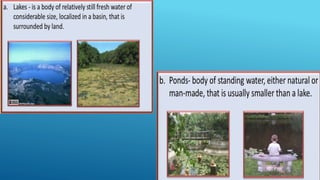
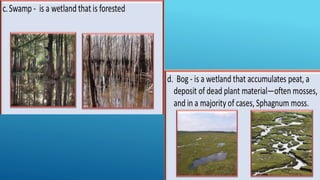
• They include lakes, ponds, rivers, streams, springs, bogs,
and wetlands.
• Freshwater habitats can be classified by different factors, including
temperature, light penetration, nutrients, and vegetation.
• Freshwater ecosystems have undergone substantial
transformations over time, which has impacted various
characteristics of the ecosystems.
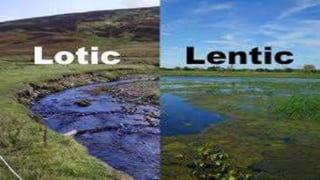
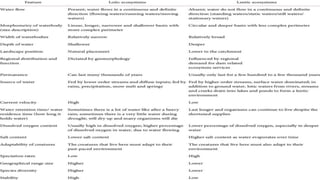
• Freshwater ecosystems can be divided into lentic ecosystems (still
water) and lotic ecosystems (flowing water).
LENTIC SYSTEM
A lentic ecosystem entails a body of standing water, ranging
from ditches, seeps, ponds, seasonal pools, basin marshes
and lakes. Deeper waters, such as lakes, may have layers of
ecosystems, influenced by light. Ponds, due to their having
more light penetration, are able to support a diverse range of
water plants.
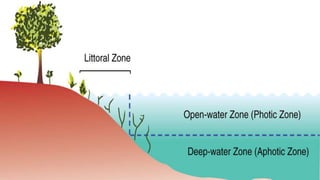
LENTIC SYSTEM CAN BE DIVIDED INTO THREE ZONES:
Littoral zone
 Photic zone
 Aphotic zone
 Littoral zone, is the shallow zone near the shore.
 This is where rooted wetland plants occur.
 The offshore is divided into two further zones, an open water zone
and a deep water zone.
 Open water zone (or photic zone) sunlight supports photosynthetic
algae, and the species that feed upon them.
 In the deep water zone, sunlight is not available and the food web
is based on detritus entering from the littoral and photic zones.
 The off shore areas may be called the pelagic zone, the photic
zone may be called the limnetic zone and the aphotic zone may be
called the profundal zone.
LOTICSYSTEM
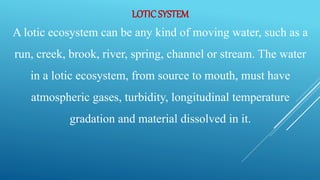
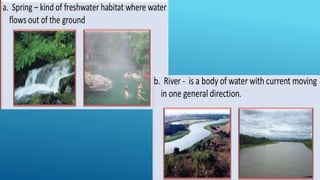
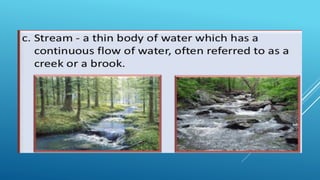
A lotic ecosystem can be any kind of moving water, such as a
run, creek, brook, river, spring, channel or stream. The water
in a lotic ecosystem, from source to mouth, must have
atmospheric gases, turbidity, longitudinal temperature
gradation and material dissolved in it.
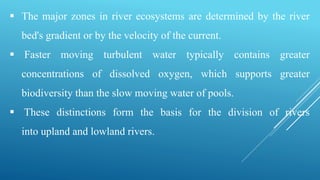
 The major zones in river ecosystems are determined by the river
bed's gradient or by the velocity of the current.
 Faster moving turbulent water typically contains greater
concentrations of dissolved oxygen, which supports greater
biodiversity than the slow moving water of pools.
 These distinctions form the basis for the division of rivers
into upland and lowland rivers.
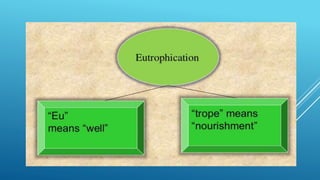
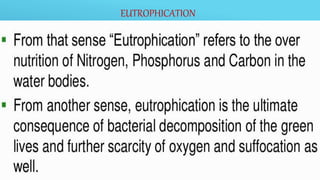
EUTROPHICATION
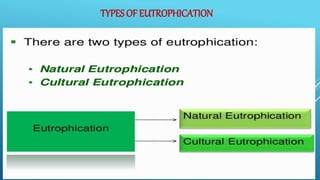
TYPES OF EUTROPHICATION
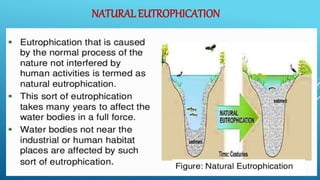
NATURAL EUTROPHICATION
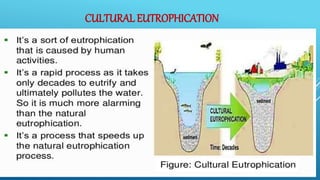
CULTURAL EUTROPHICATION
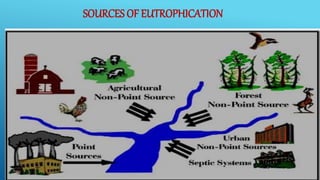
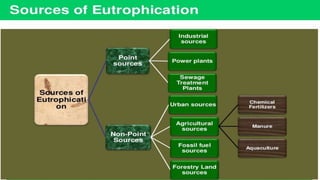
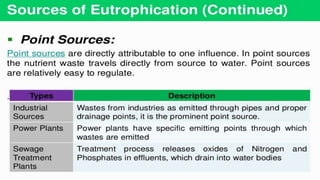
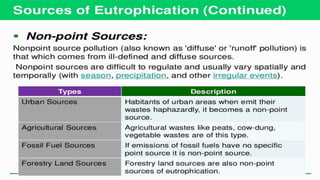
SOURCES OF EUTROPHICATION
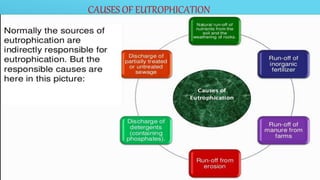
CAUSES OF EUTROPHICATION
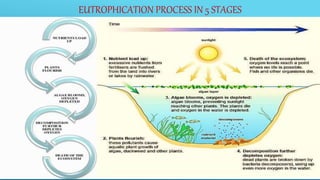
EUTROPHICATION PROCESS IN 5 STAGES
Aquatic environment

Aquatic environment

  • 1.
  • 2.
    AQUATIC ECOSYSTEM An aquaticecosystem is an ecosystem in a body of water. Communities of organism that are dependent on each other and on their environment live in aquatic ecosystems. The nature of an aquatic ecosystem is shaped, as on land, by the availability of food, oxygen, and the prevailing temperature.
  • 3.
    Aquatic ecosystems inshallow waters, where there is plenty of sunlight, generally tend to be the most productive. Water pollution, generally coming from human activities, comprises the greatest pressure on aquatic ecosystems. For instance, fish can be killed by acid rain in lakes or lack of oxygen where excess nutrients have been dumped in an estuary.
  • 5.
    TYPES OF AQUATICECOSYSTEM The two main types of aquatic ecosystems are:  Marine ecosystem  Freshwater ecosystem
  • 6.
     MARINE ECOSYSTEM: •Marine ecosystems, the largest of all ecosystems, cover approximately 71% of the Earth surface’s and contain approximately 97% of the planet's water. • They are distinguished from freshwater ecosystems by the presence of dissolved compounds, especially salts. • The oceanic zone is the vast open part of the ocean where animals such as whales, sharks, and tuna live.
  • 8.
     FRESHWATER ECOSYSTEM •Freshwater ecosystems are a subset of Earth's aquatic ecosystem. • They include lakes, ponds, rivers, streams, springs, bogs, and wetlands. • Freshwater habitats can be classified by different factors, including temperature, light penetration, nutrients, and vegetation. • Freshwater ecosystems have undergone substantial transformations over time, which has impacted various characteristics of the ecosystems. • Freshwater ecosystems can be divided into lentic ecosystems (still water) and lotic ecosystems (flowing water).
  • 11.
    LENTIC SYSTEM A lenticecosystem entails a body of standing water, ranging from ditches, seeps, ponds, seasonal pools, basin marshes and lakes. Deeper waters, such as lakes, may have layers of ecosystems, influenced by light. Ponds, due to their having more light penetration, are able to support a diverse range of water plants.
  • 12.
    LENTIC SYSTEM CANBE DIVIDED INTO THREE ZONES: Littoral zone  Photic zone  Aphotic zone
  • 14.
     Littoral zone,is the shallow zone near the shore.  This is where rooted wetland plants occur.  The offshore is divided into two further zones, an open water zone and a deep water zone.  Open water zone (or photic zone) sunlight supports photosynthetic algae, and the species that feed upon them.  In the deep water zone, sunlight is not available and the food web is based on detritus entering from the littoral and photic zones.  The off shore areas may be called the pelagic zone, the photic zone may be called the limnetic zone and the aphotic zone may be called the profundal zone.
  • 17.
    LOTICSYSTEM A lotic ecosystemcan be any kind of moving water, such as a run, creek, brook, river, spring, channel or stream. The water in a lotic ecosystem, from source to mouth, must have atmospheric gases, turbidity, longitudinal temperature gradation and material dissolved in it.
  • 18.
     The majorzones in river ecosystems are determined by the river bed's gradient or by the velocity of the current.  Faster moving turbulent water typically contains greater concentrations of dissolved oxygen, which supports greater biodiversity than the slow moving water of pools.  These distinctions form the basis for the division of rivers into upland and lowland rivers.
  • 23.
  • 24.
  • 25.
  • 26.
  • 27.
  • 31.
  • 32.