•Polymers: A polymer is a long molecule formed by joining together of thousands
of small molecular units by chemical bonds.
•Monomers: Small molecules which combine together to formpolymermolecules
are known as Monomers.
•Polymerization: The chemical process leading to the formation of polymer is
known as Polymerization.
Poly=many,
Mere = parts or units
mono =single
Mere = parts or units.
Definition: Basic concepts
Plastic
28-02-2021 2
•Plastic is a synthetic material made from a wide
range of organic polymers such as polyethylene,
PVC, nylon, etc.
•That can be molded into shape while soft, and
then set into a rigid or slightly elastic form.
Properties of Plastic
28-02-2021 3
•Less brittle than glass ,hence can be made
transparent and smooth.
• Corrosion resistance
•Low electrical and thermal conductivity, insulator
•Easily formed into complex shapes, can be formed,
casted and joined.
•Wide choice of appearance, colors and
transparencies
•Light weight but posses good strength and rigidity.
•Low moisture absorption.
•Heat resistance.
Polymers: A polymer is a long molecule formed by joining together of
thousands of small molecular units by chemical bonds
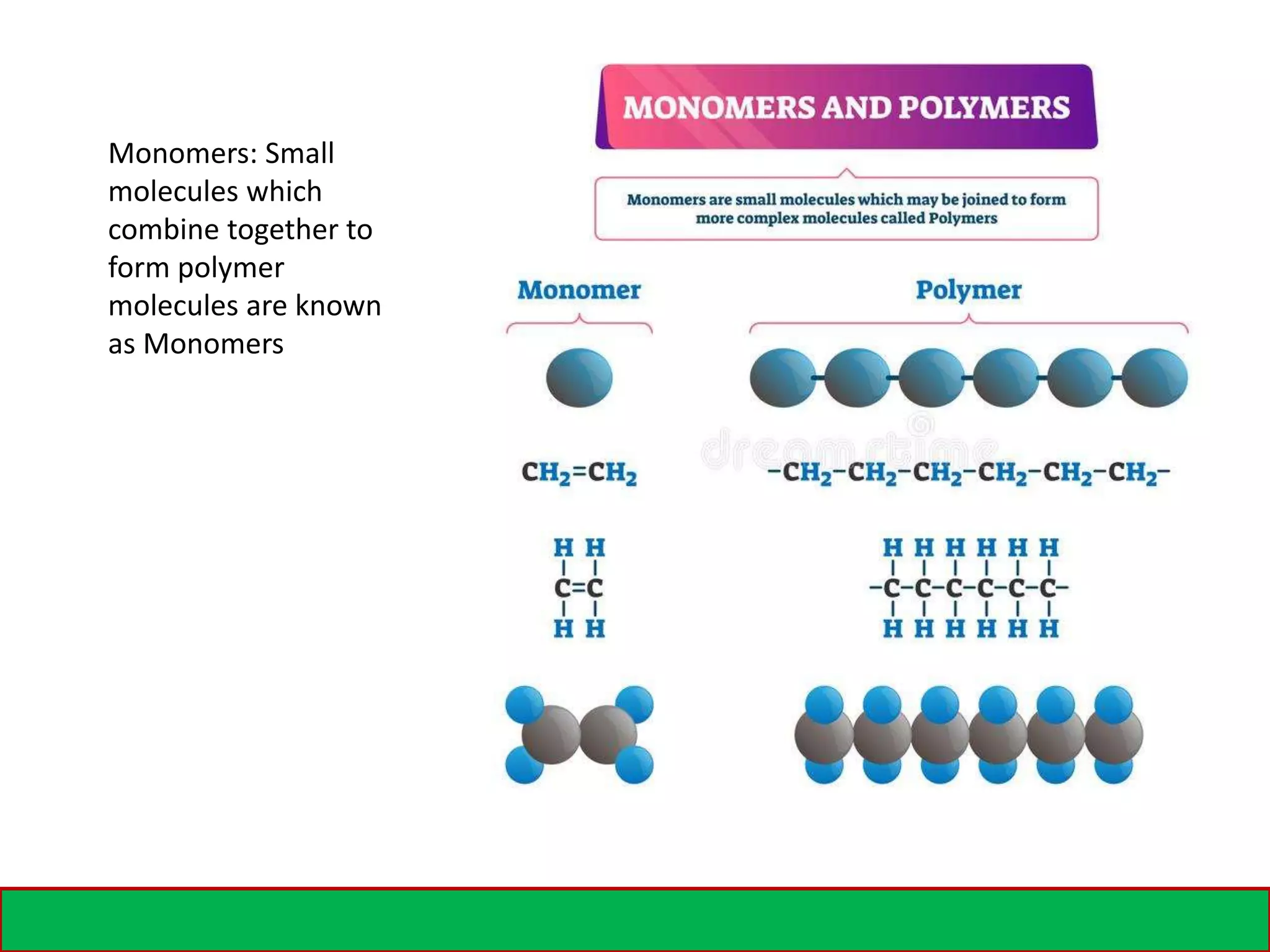
Monomers: Small
molecules which
combine together to
form polymer
molecules are known
as Monomers
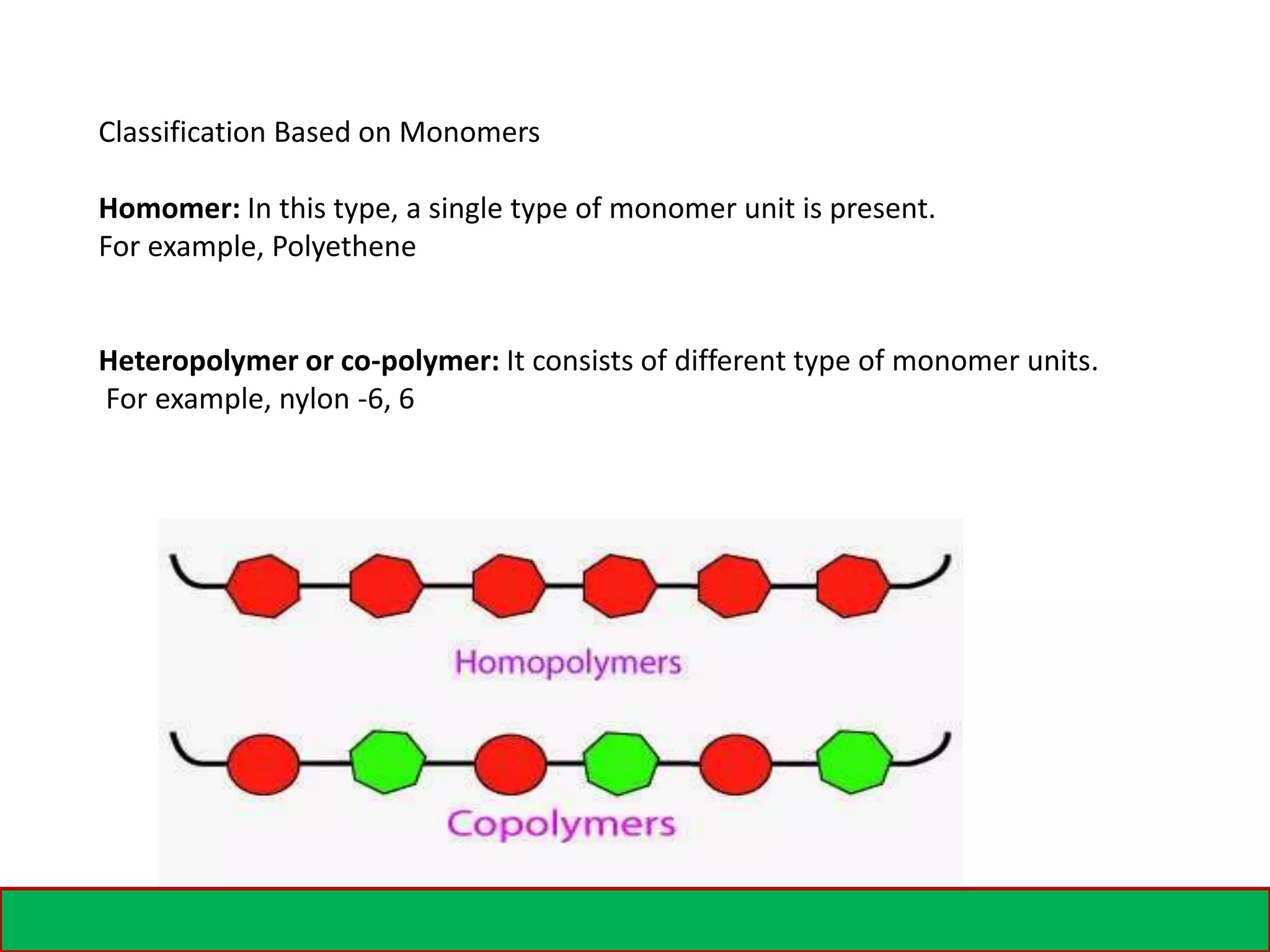
Classification Based on Monomers
Homomer: In this type, a single type of monomer unit is present.
For example, Polyethene
Heteropolymer or co-polymer: It consists of different type of monomer units.
For example, nylon -6, 6
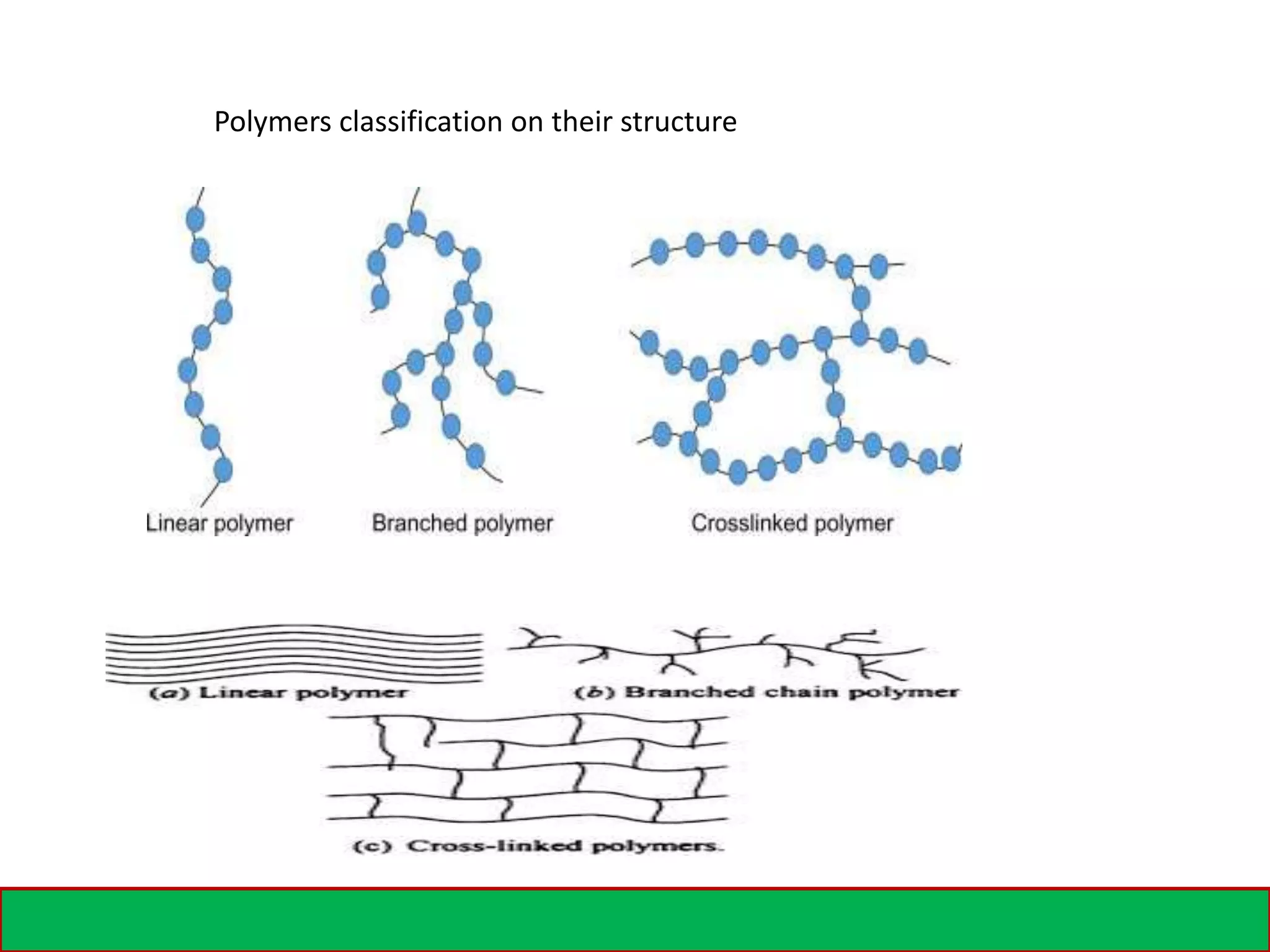
Polymers classification on their structure
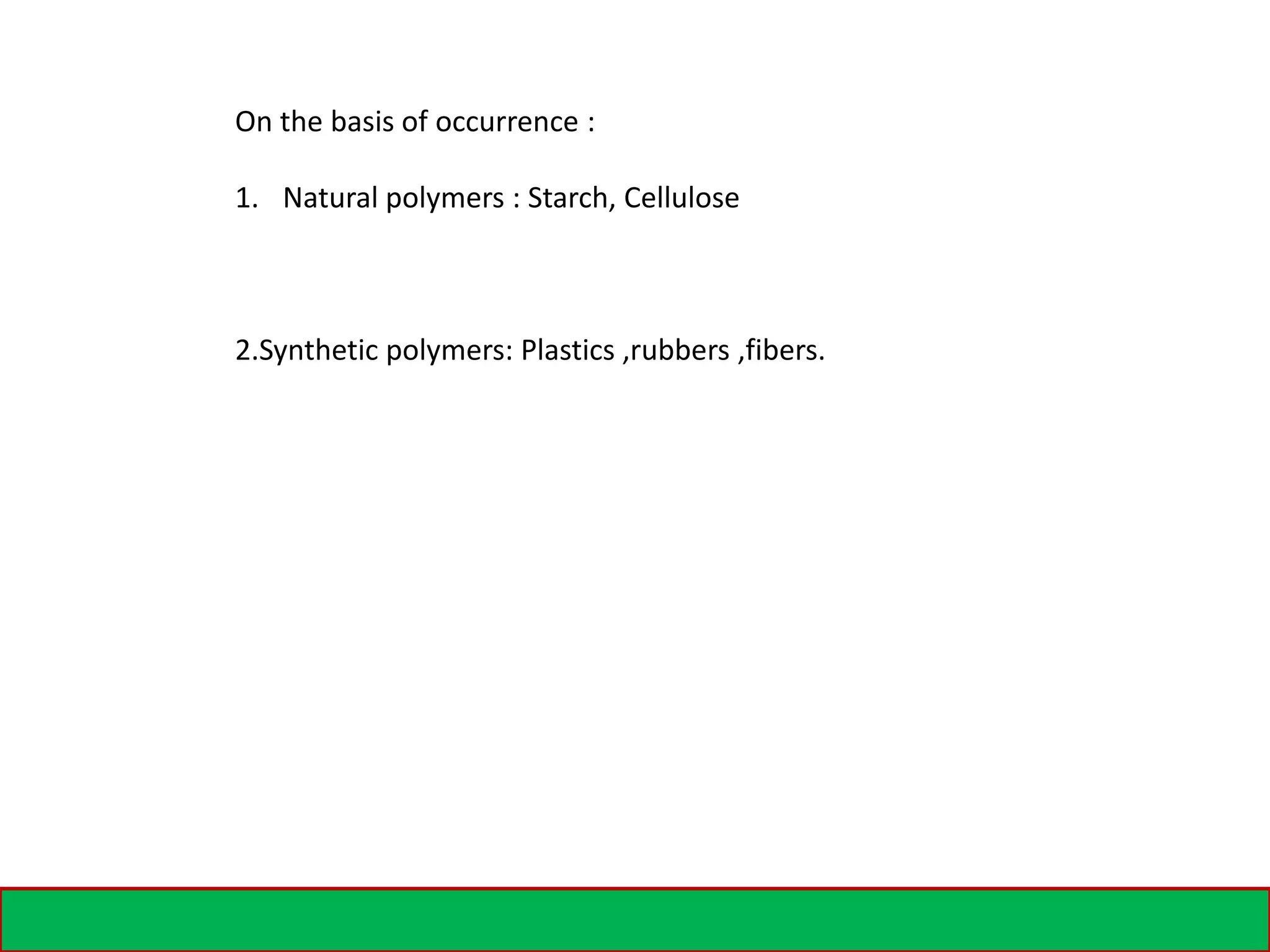
On the basis of occurrence :
1. Natural polymers : Starch, Cellulose
2.Synthetic polymers: Plastics ,rubbers ,fibers.
1.Thermoplastics:
are the polymers that become soft on heating and hard on cooling and the process
can be repeated for a number of times.
They undergo reversible changes on heating.
Examples: Polythene (PE), polypropylene (PP), polyvinyl- chloride (PVC),
Thermoplastics –
• are formed by addition polymerisation
• consists of linear polymer chains with negligible cross-linking
• are soft and less brittle.
• are soluble in organic solvents.
• soften on heating and hence are enable for moulding into any shape in the hot
condition on cooling, the resin becomes hard and rigid and retains the moulded
shape.
• can be reheated and moulded into any other shape reversibly any number of
times without any change in the chemical nature.
28-02-2021 11
Polyethylene
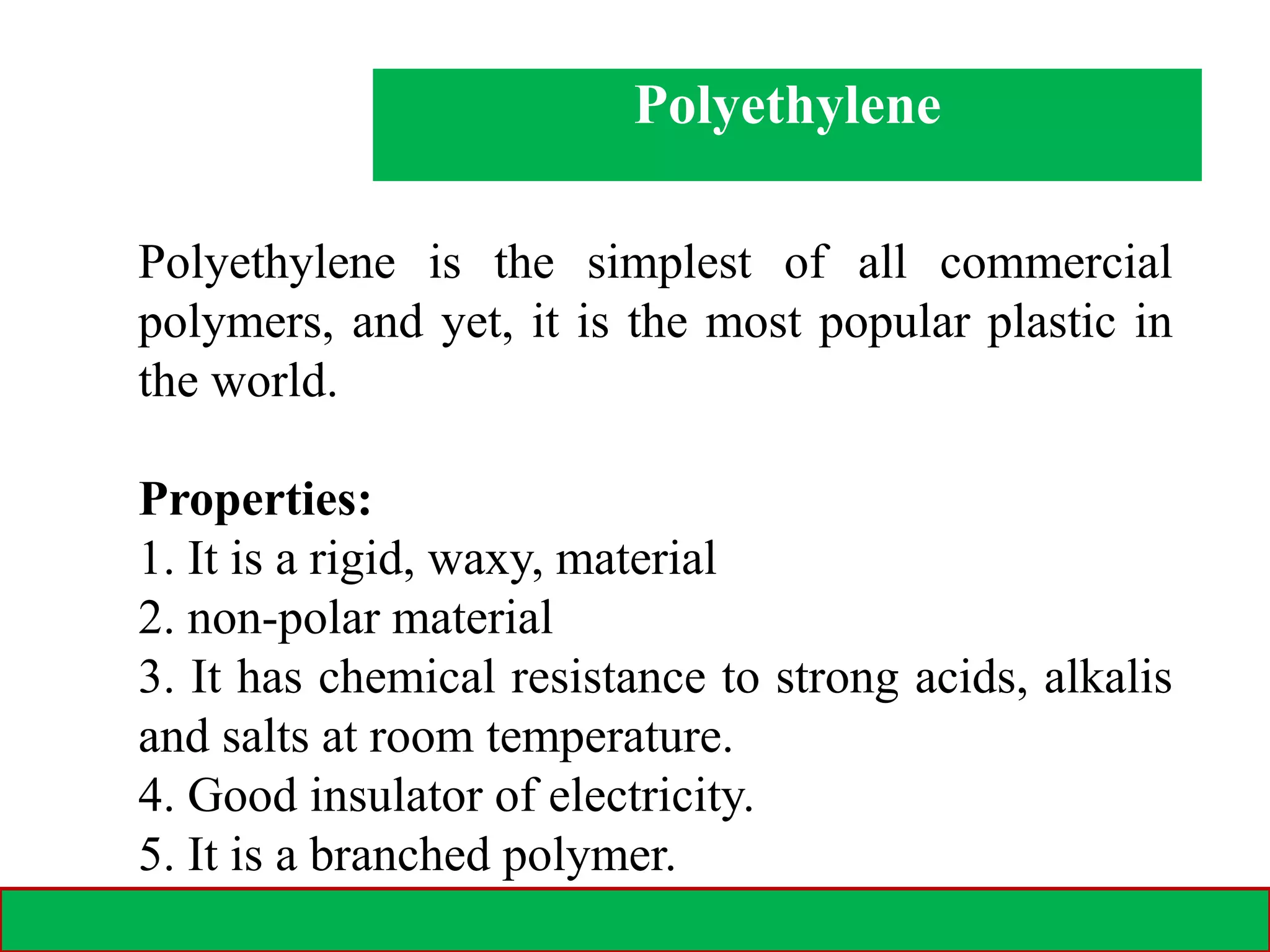
Polyethylene is the simplest of all commercial
polymers, and yet, it is the most popular plastic in
the world.
Properties:
1. It is a rigid, waxy, material
2. non-polar material
3. It has chemical resistance to strong acids, alkalis
and salts at room temperature.
4. Good insulator of electricity.
5. It is a branched polymer.
28-02-2021 12
Polyethylene
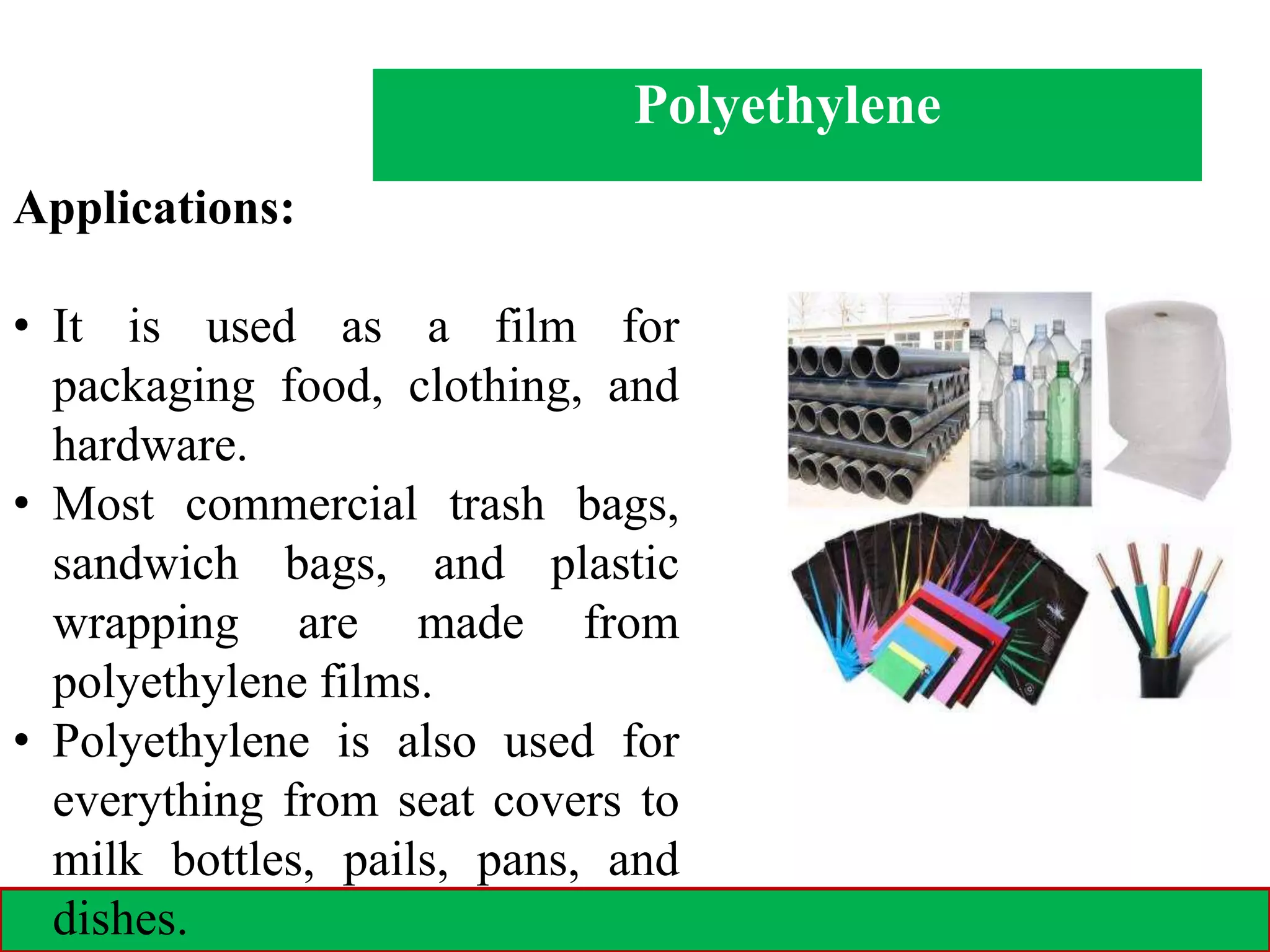
Applications:
• It is used as a film for
packaging food, clothing, and
hardware.
• Most commercial trash bags,
sandwich bags, and plastic
wrapping are made from
polyethylene films.
• Polyethylene is also used for
everything from seat covers to
milk bottles, pails, pans, and
dishes.
28-02-2021 13
Polyvinyl chloride (PVC)
Preparation:
28-02-2021 14
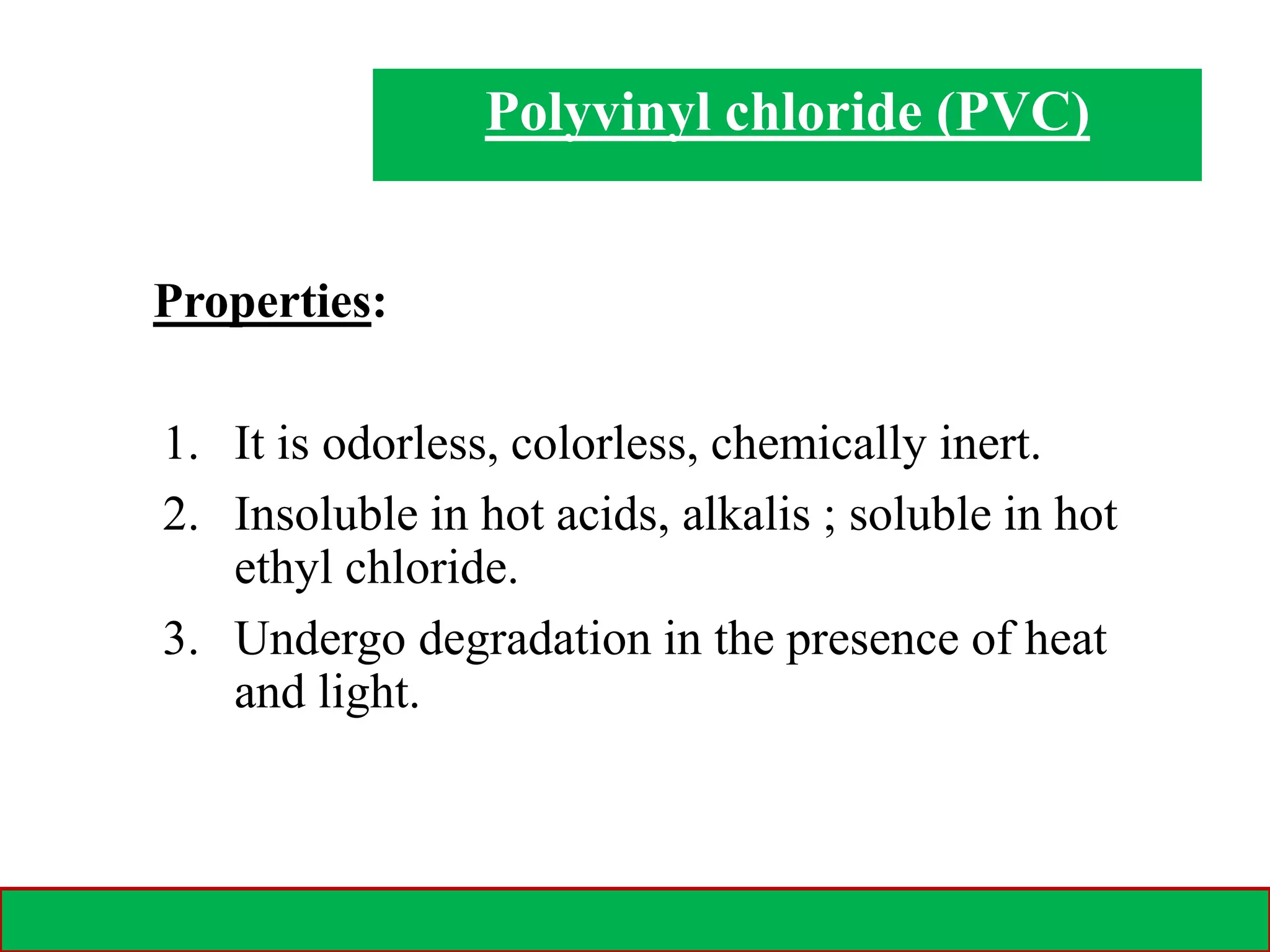
Properties:
1. It is odorless, colorless, chemically inert.
2. Insoluble in hot acids, alkalis ; soluble in hot
ethyl chloride.
3. Undergo degradation in the presence of heat
and light.
Polyvinyl chloride (PVC)
28-02-2021 15
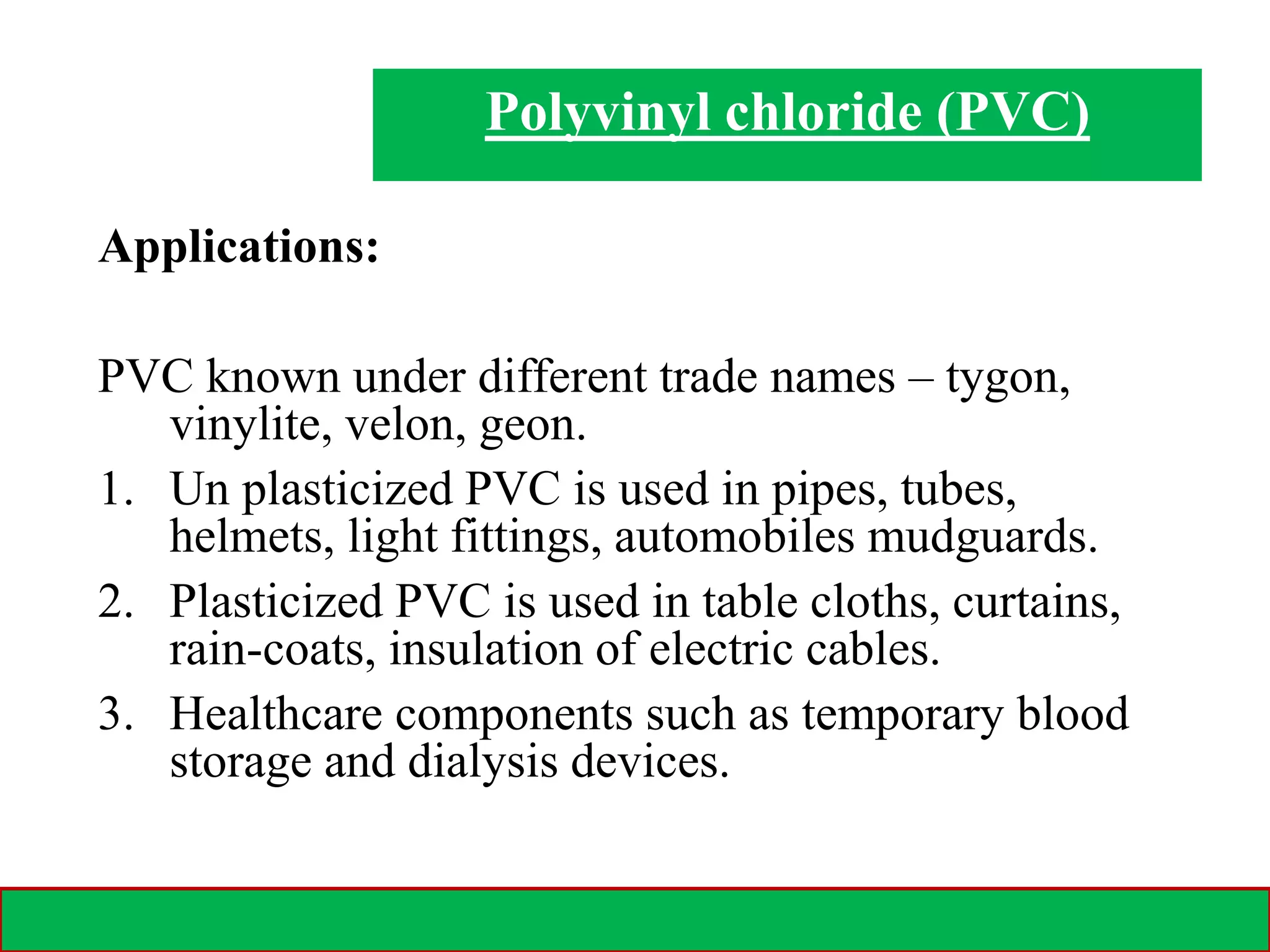
Applications:
PVC known under different trade names – tygon,
vinylite, velon, geon.
1. Un plasticized PVC is used in pipes, tubes,
helmets, light fittings, automobiles mudguards.
2. Plasticized PVC is used in table cloths, curtains,
rain-coats, insulation of electric cables.
3. Healthcare components such as temporary blood
storage and dialysis devices.
Polyvinyl chloride (PVC)
28-02-2021 16
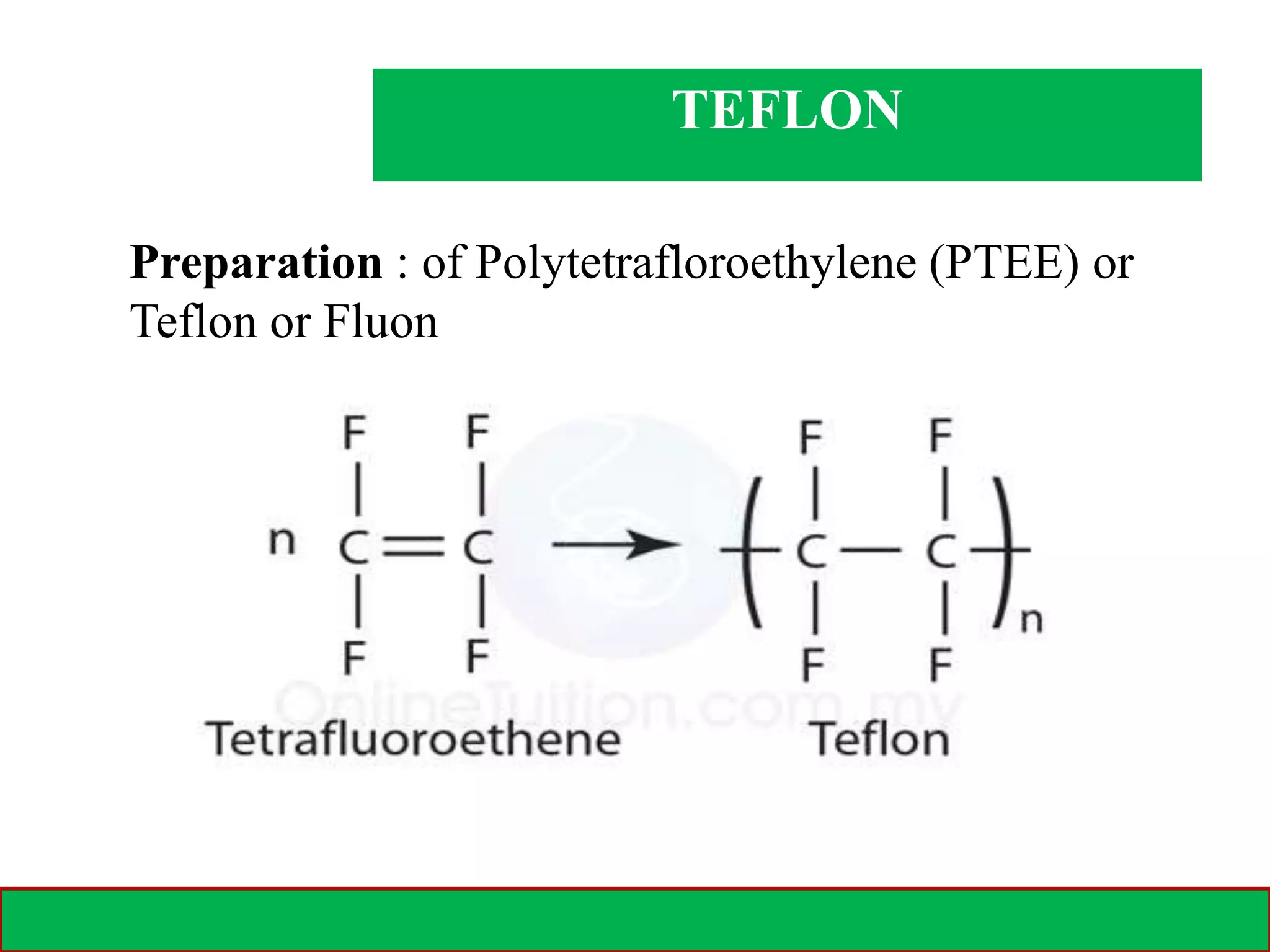
TEFLON
Preparation : of Polytetrafloroethylene (PTEE) or
Teflon or Fluon
28-02-2021 17
Properties of Teflon:
1. High softening point (about 350̊ C)
2. High density
3. High thermal stability
4. High chemical resistance
5. Good electrical insulators
6. Mechanical properties do not change over prolonged
periods even at high temperature.
28-02-2021 18
Applications of Teflon
Applications:
1. Used for electrical insulation of wires and cables
2. Used in the making of non-stick frying pans,
stop cock for burettes.
3. Used as solid lubrication film.
28-02-2021 19
Epoxy resin
•Epoxy resin is defined as a molecule
containing more than one epoxide groups.
•The epoxide group also termed as, oxirane or
ethoxyline group.
•There are two main categories of epoxy
resins, namely the glycidyl epoxy, and non-
glycidyl epoxy resins.
•The glycidyl epoxies are further classified as
glycidyl-ether, glycidyl-ester and glycidyl-
amine.
28-02-2021 20
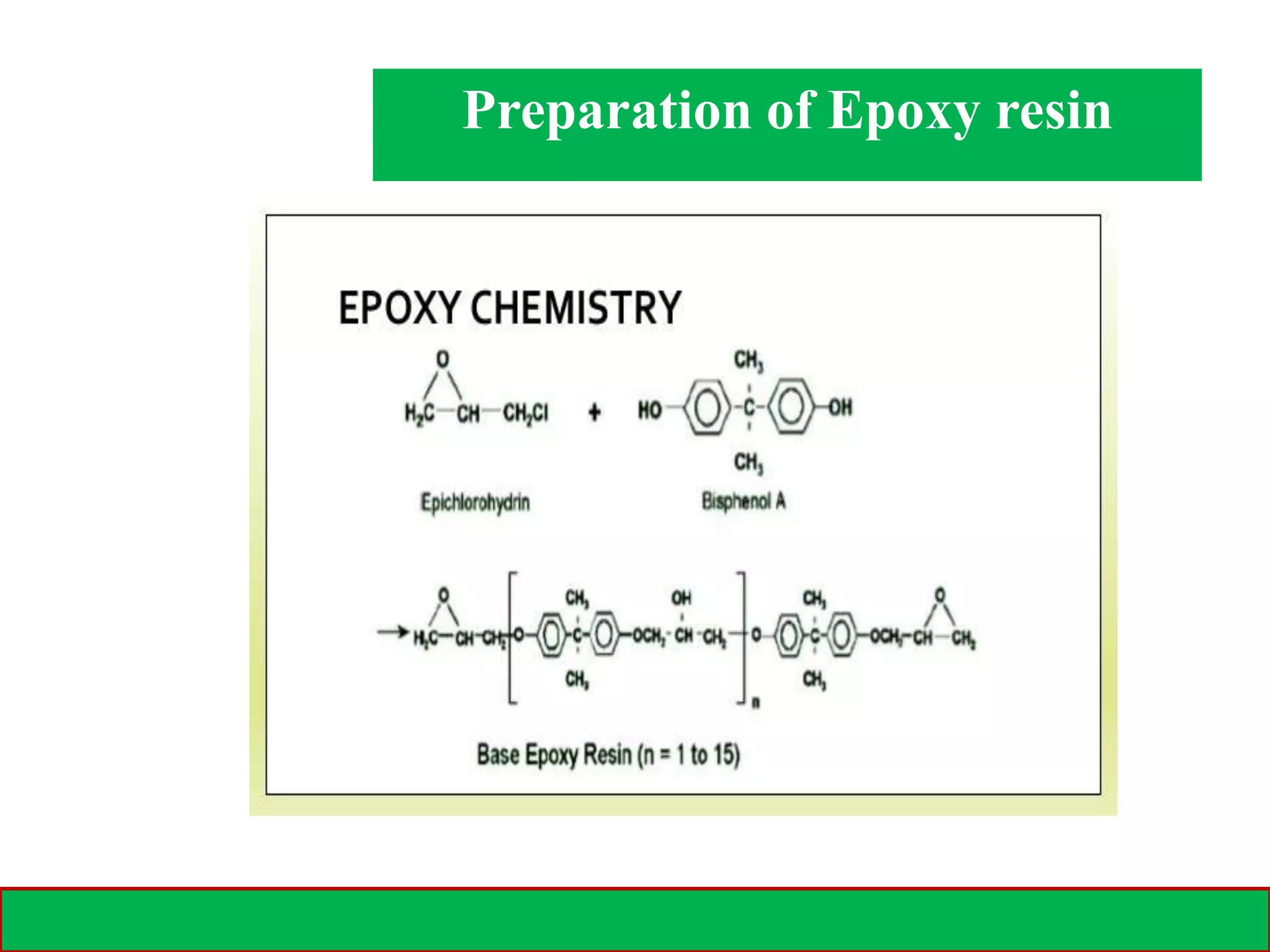
Preparation of Epoxy resin
28-02-2021 21
Properties of Epoxy resin
•They have excellent resistance to wear, they
are also tough and heat resistant.
•Being polar, they have excellent adhesive
characteristics.
• Low water absorption tendency, dimensional
stability, good heat and electrical resistance
28-02-2021 22
Applications of Epoxy resin
•Used for surface coating particularly for
making skid resistant surfaces for
highways, road junctions.
•Used as adhesives for glass, metals etc.
and popularly known as araldite.
•It is good material for electronic
applications.

Polymers (2)

  • 1.
    •Polymers: A polymeris a long molecule formed by joining together of thousands of small molecular units by chemical bonds. •Monomers: Small molecules which combine together to formpolymermolecules are known as Monomers. •Polymerization: The chemical process leading to the formation of polymer is known as Polymerization. Poly=many, Mere = parts or units mono =single Mere = parts or units. Definition: Basic concepts
  • 2.
    Plastic 28-02-2021 2 •Plastic isa synthetic material made from a wide range of organic polymers such as polyethylene, PVC, nylon, etc. •That can be molded into shape while soft, and then set into a rigid or slightly elastic form.
  • 3.
    Properties of Plastic 28-02-20213 •Less brittle than glass ,hence can be made transparent and smooth. • Corrosion resistance •Low electrical and thermal conductivity, insulator •Easily formed into complex shapes, can be formed, casted and joined. •Wide choice of appearance, colors and transparencies •Light weight but posses good strength and rigidity. •Low moisture absorption. •Heat resistance.
  • 4.
    Polymers: A polymeris a long molecule formed by joining together of thousands of small molecular units by chemical bonds
  • 5.
    Monomers: Small molecules which combinetogether to form polymer molecules are known as Monomers
  • 7.
    Classification Based onMonomers Homomer: In this type, a single type of monomer unit is present. For example, Polyethene Heteropolymer or co-polymer: It consists of different type of monomer units. For example, nylon -6, 6
  • 8.
  • 9.
    On the basisof occurrence : 1. Natural polymers : Starch, Cellulose 2.Synthetic polymers: Plastics ,rubbers ,fibers.
  • 10.
    1.Thermoplastics: are the polymersthat become soft on heating and hard on cooling and the process can be repeated for a number of times. They undergo reversible changes on heating. Examples: Polythene (PE), polypropylene (PP), polyvinyl- chloride (PVC), Thermoplastics – • are formed by addition polymerisation • consists of linear polymer chains with negligible cross-linking • are soft and less brittle. • are soluble in organic solvents. • soften on heating and hence are enable for moulding into any shape in the hot condition on cooling, the resin becomes hard and rigid and retains the moulded shape. • can be reheated and moulded into any other shape reversibly any number of times without any change in the chemical nature.
  • 11.
    28-02-2021 11 Polyethylene Polyethylene isthe simplest of all commercial polymers, and yet, it is the most popular plastic in the world. Properties: 1. It is a rigid, waxy, material 2. non-polar material 3. It has chemical resistance to strong acids, alkalis and salts at room temperature. 4. Good insulator of electricity. 5. It is a branched polymer.
  • 12.
    28-02-2021 12 Polyethylene Applications: • Itis used as a film for packaging food, clothing, and hardware. • Most commercial trash bags, sandwich bags, and plastic wrapping are made from polyethylene films. • Polyethylene is also used for everything from seat covers to milk bottles, pails, pans, and dishes.
  • 13.
  • 14.
    28-02-2021 14 Properties: 1. Itis odorless, colorless, chemically inert. 2. Insoluble in hot acids, alkalis ; soluble in hot ethyl chloride. 3. Undergo degradation in the presence of heat and light. Polyvinyl chloride (PVC)
  • 15.
    28-02-2021 15 Applications: PVC knownunder different trade names – tygon, vinylite, velon, geon. 1. Un plasticized PVC is used in pipes, tubes, helmets, light fittings, automobiles mudguards. 2. Plasticized PVC is used in table cloths, curtains, rain-coats, insulation of electric cables. 3. Healthcare components such as temporary blood storage and dialysis devices. Polyvinyl chloride (PVC)
  • 16.
    28-02-2021 16 TEFLON Preparation :of Polytetrafloroethylene (PTEE) or Teflon or Fluon
  • 17.
    28-02-2021 17 Properties ofTeflon: 1. High softening point (about 350̊ C) 2. High density 3. High thermal stability 4. High chemical resistance 5. Good electrical insulators 6. Mechanical properties do not change over prolonged periods even at high temperature.
  • 18.
    28-02-2021 18 Applications ofTeflon Applications: 1. Used for electrical insulation of wires and cables 2. Used in the making of non-stick frying pans, stop cock for burettes. 3. Used as solid lubrication film.
  • 19.
    28-02-2021 19 Epoxy resin •Epoxyresin is defined as a molecule containing more than one epoxide groups. •The epoxide group also termed as, oxirane or ethoxyline group. •There are two main categories of epoxy resins, namely the glycidyl epoxy, and non- glycidyl epoxy resins. •The glycidyl epoxies are further classified as glycidyl-ether, glycidyl-ester and glycidyl- amine.
  • 20.
  • 21.
    28-02-2021 21 Properties ofEpoxy resin •They have excellent resistance to wear, they are also tough and heat resistant. •Being polar, they have excellent adhesive characteristics. • Low water absorption tendency, dimensional stability, good heat and electrical resistance
  • 22.
    28-02-2021 22 Applications ofEpoxy resin •Used for surface coating particularly for making skid resistant surfaces for highways, road junctions. •Used as adhesives for glass, metals etc. and popularly known as araldite. •It is good material for electronic applications.