Anoop S. Nair
Assistant Professor
Department of Chemistry
NSS College
Nemmara, Palakkad - 678508
Polymers
1
Contents
• Introduction
• Classification
• Applications of Various Polymers
• Polymer Recycling
2
• ‘Polymer’ is coined from two Greek words: poly means many and mer means unit
• Defined as very large molecules having high molecular mass (103-107u), also referred as
MACROMOLECULES
• Formed by joining of repeating structural units on a large scale, derived from simple and
reactive molecules (Monomers), linked to each other by covalent bonds
• The process of formation of polymers from respective monomers is called polymerisation.
Introduction
What is a POLYMER???
3
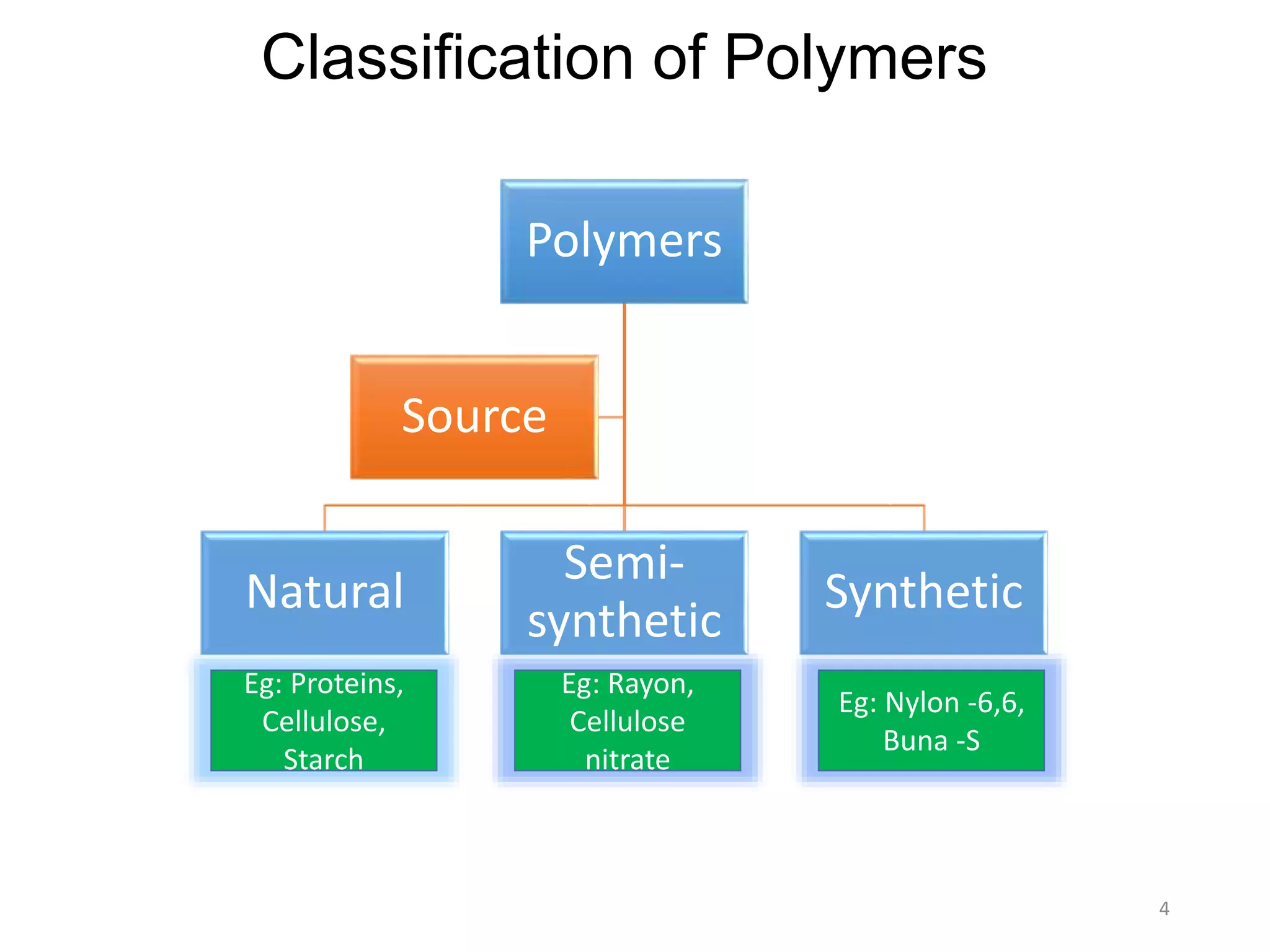
Classification of Polymers
Polymers
Natural
Semi-
synthetic
Synthetic
Source
Eg: Proteins,
Cellulose,
Starch
Eg: Rayon,
Cellulose
nitrate
Eg: Nylon -6,6,
Buna -S
4
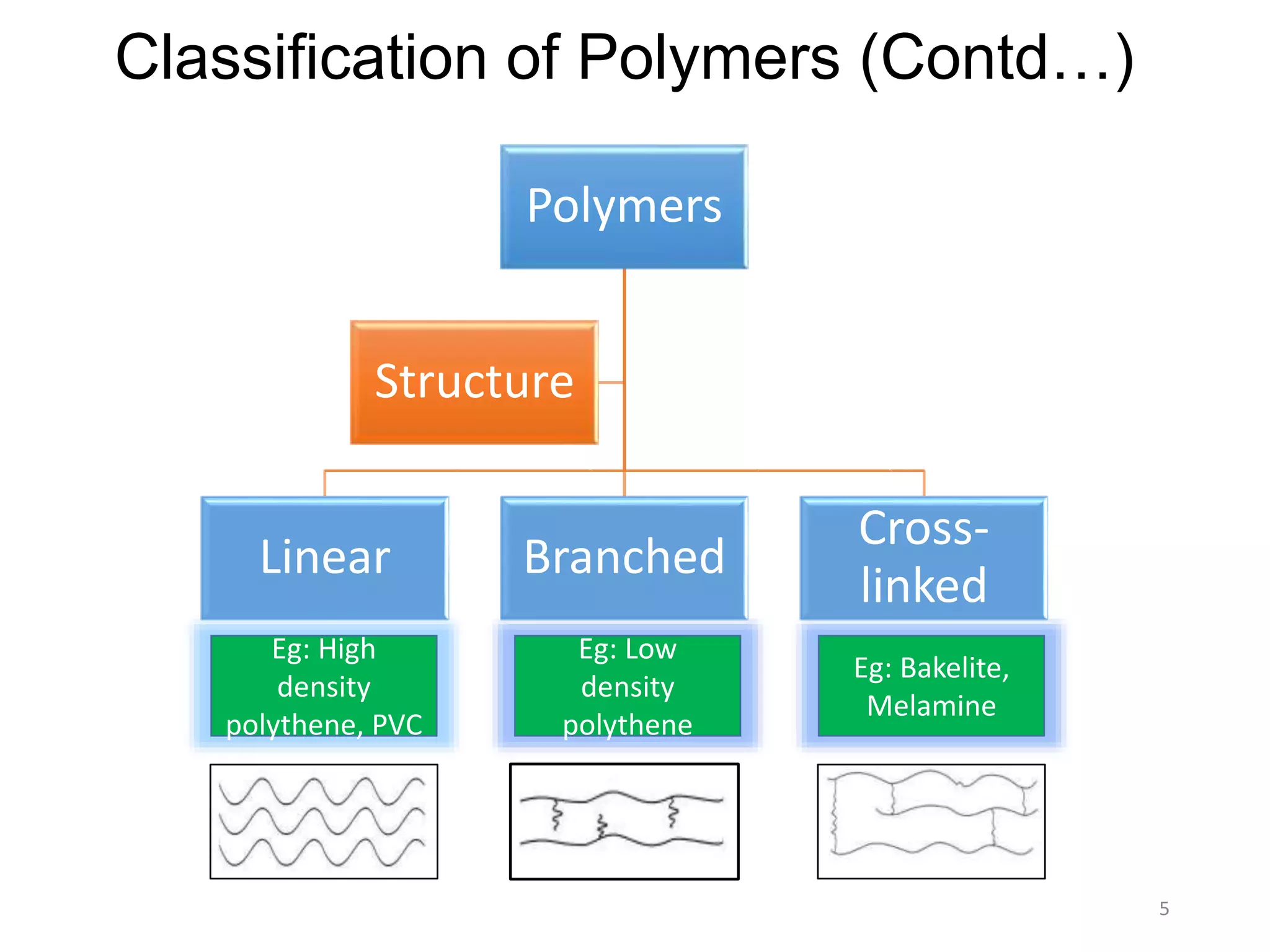
Classification of Polymers (Contd…)
Polymers
Linear Branched
Cross-
linked
Structure
Eg: High
density
polythene, PVC
Eg: Low
density
polythene
Eg: Bakelite,
Melamine
5
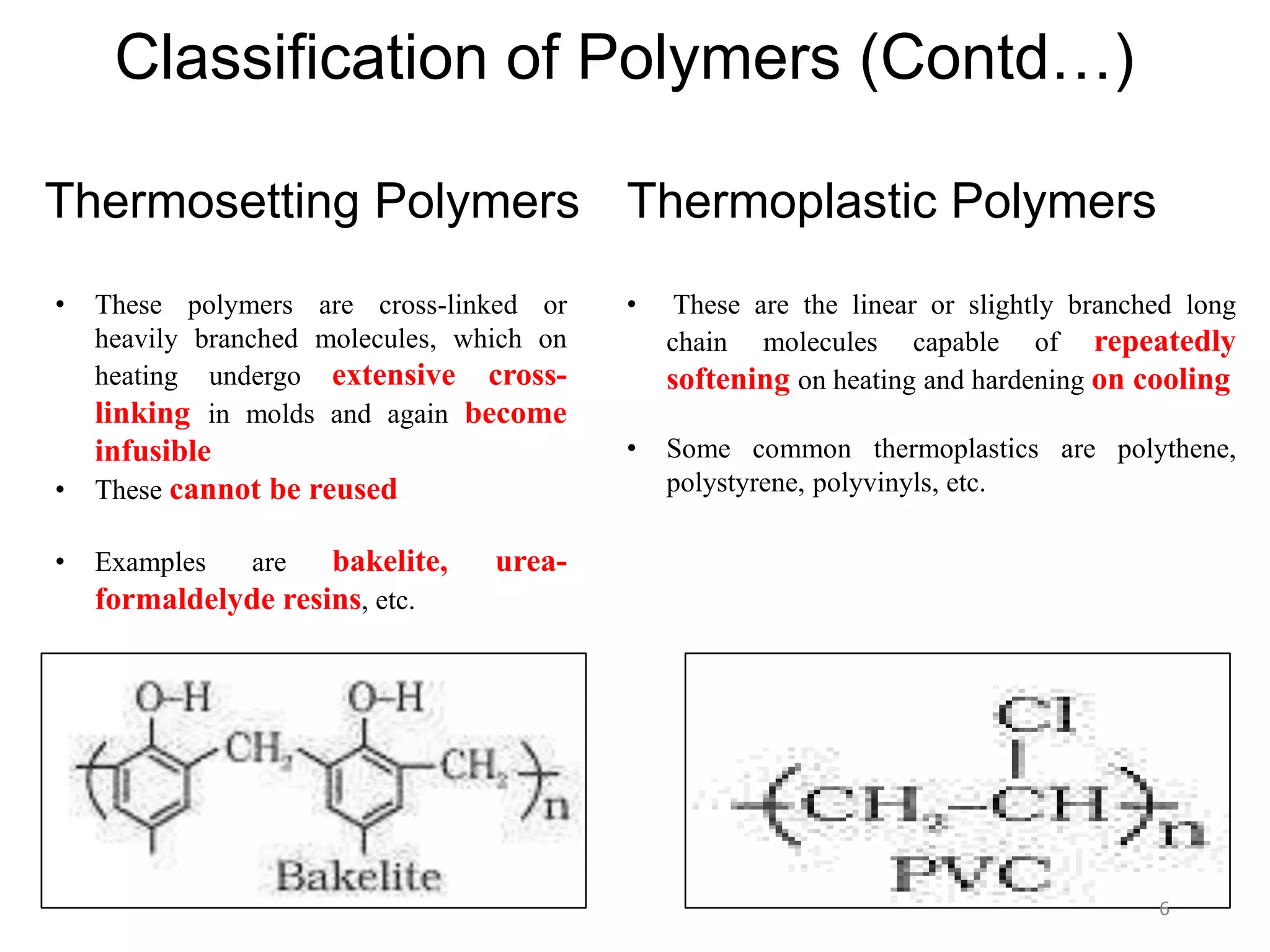
• These are the linear or slightly branched long
chain molecules capable of repeatedly
softening on heating and hardening on cooling
• Some common thermoplastics are polythene,
polystyrene, polyvinyls, etc.
Classification of Polymers (Contd…)
Thermosetting Polymers Thermoplastic Polymers
• These polymers are cross-linked or
heavily branched molecules, which on
heating undergo extensive cross-
linking in molds and again become
infusible
• These cannot be reused
• Examples are bakelite, urea-
formaldelyde resins, etc.
6
Applications of Polyethene
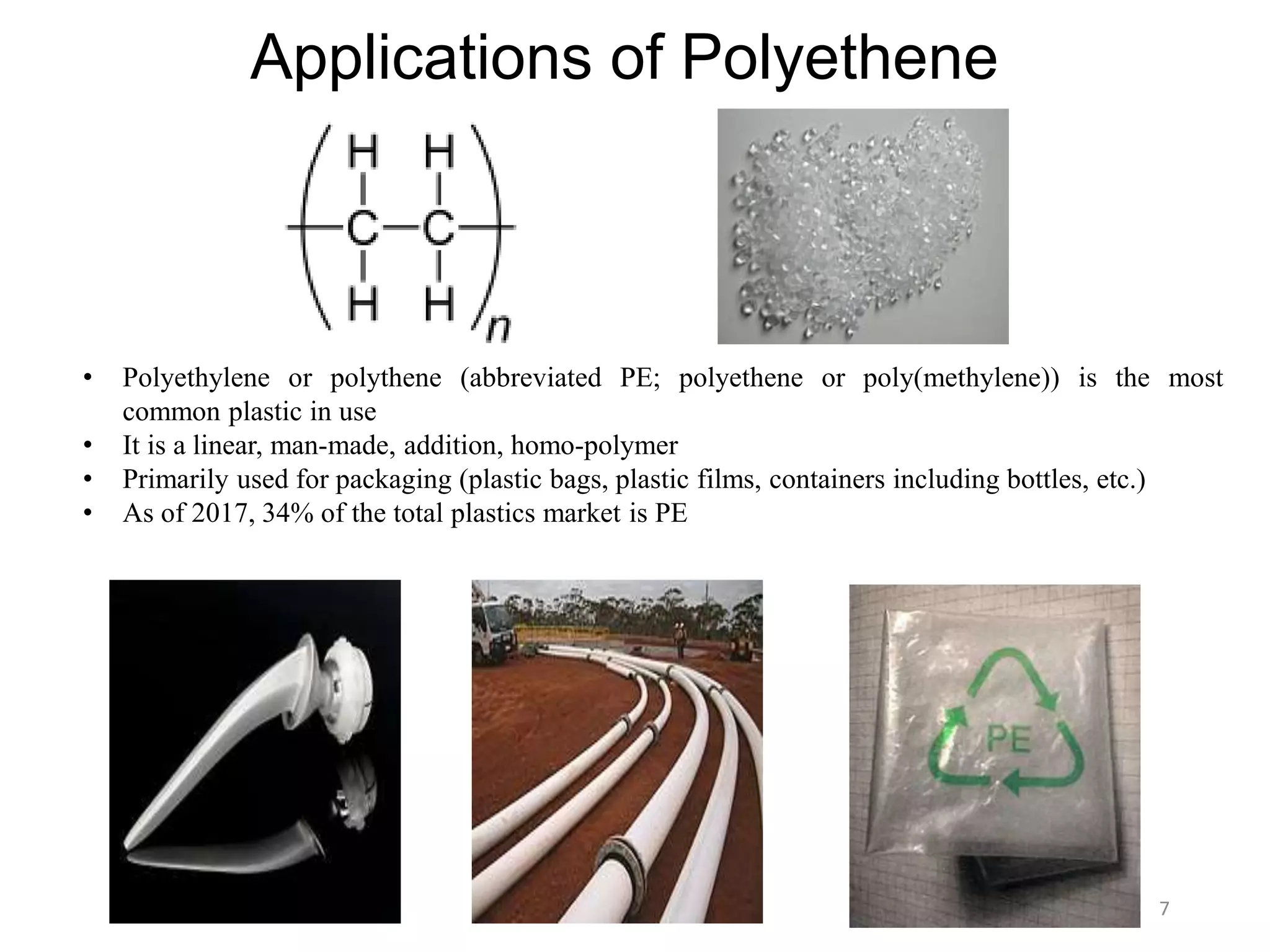
• Polyethylene or polythene (abbreviated PE; polyethene or poly(methylene)) is the most
common plastic in use
• It is a linear, man-made, addition, homo-polymer
• Primarily used for packaging (plastic bags, plastic films, containers including bottles, etc.)
• As of 2017, 34% of the total plastics market is PE
7
Applications of Polypropene
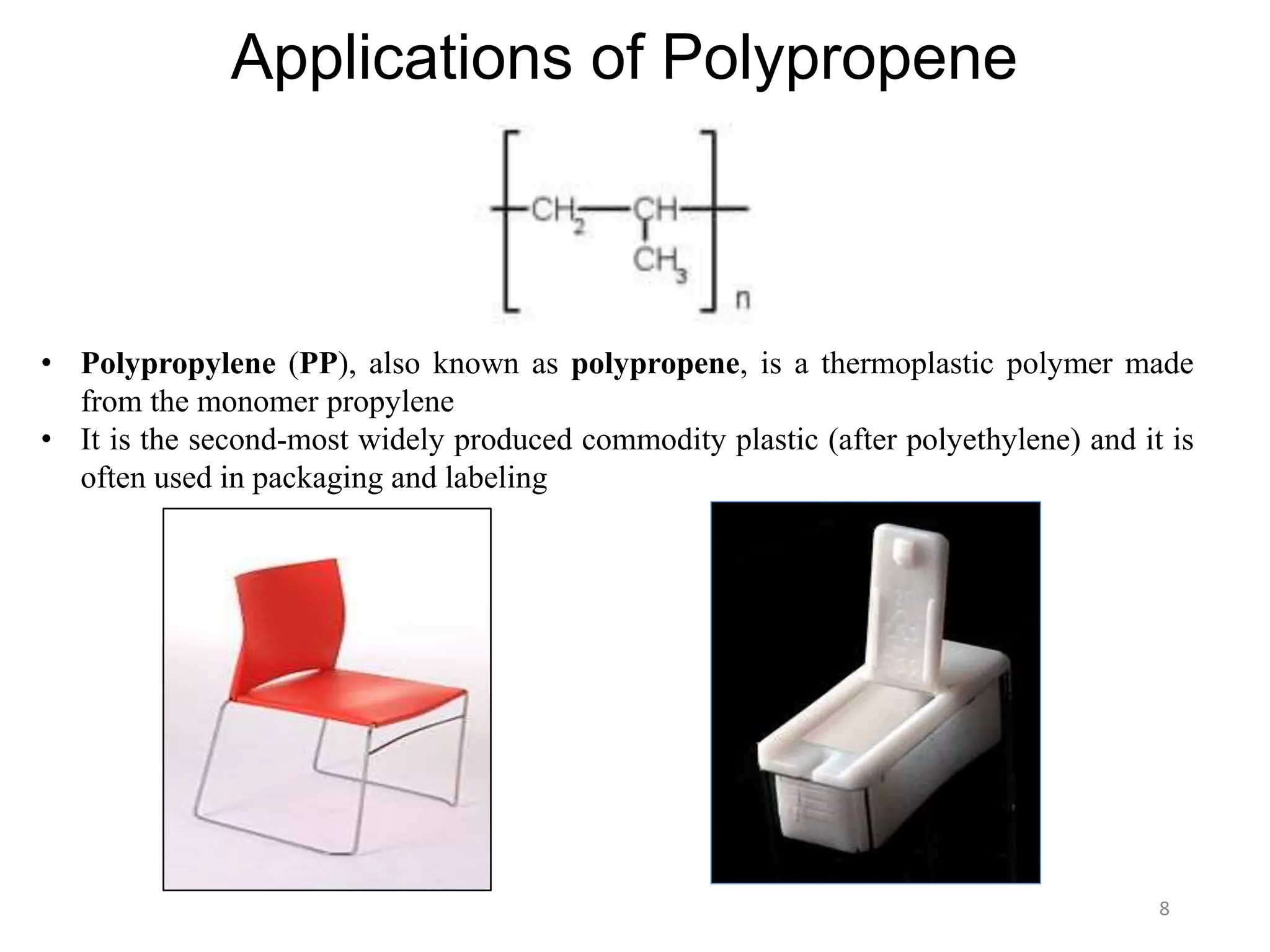
• Polypropylene (PP), also known as polypropene, is a thermoplastic polymer made
from the monomer propylene
• It is the second-most widely produced commodity plastic (after polyethylene) and it is
often used in packaging and labeling
8
9
Applications of Polystyrene
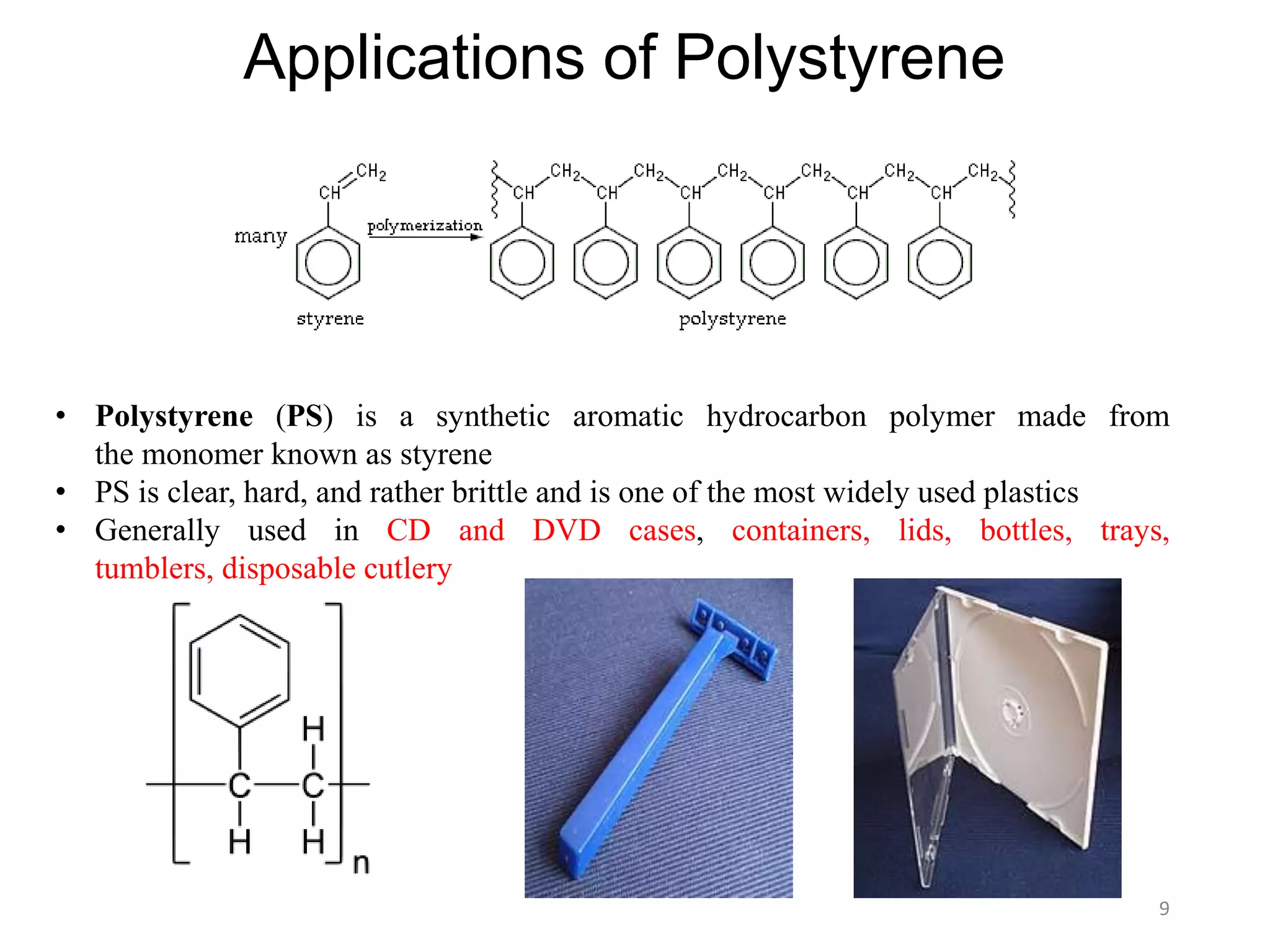
• Polystyrene (PS) is a synthetic aromatic hydrocarbon polymer made from
the monomer known as styrene
• PS is clear, hard, and rather brittle and is one of the most widely used plastics
• Generally used in CD and DVD cases, containers, lids, bottles, trays,
tumblers, disposable cutlery
10

Introduction to Polymers

  • 1.
    Anoop S. Nair AssistantProfessor Department of Chemistry NSS College Nemmara, Palakkad - 678508 Polymers 1
  • 2.
    Contents • Introduction • Classification •Applications of Various Polymers • Polymer Recycling 2
  • 3.
    • ‘Polymer’ iscoined from two Greek words: poly means many and mer means unit • Defined as very large molecules having high molecular mass (103-107u), also referred as MACROMOLECULES • Formed by joining of repeating structural units on a large scale, derived from simple and reactive molecules (Monomers), linked to each other by covalent bonds • The process of formation of polymers from respective monomers is called polymerisation. Introduction What is a POLYMER??? 3
  • 4.
    Classification of Polymers Polymers Natural Semi- synthetic Synthetic Source Eg:Proteins, Cellulose, Starch Eg: Rayon, Cellulose nitrate Eg: Nylon -6,6, Buna -S 4
  • 5.
    Classification of Polymers(Contd…) Polymers Linear Branched Cross- linked Structure Eg: High density polythene, PVC Eg: Low density polythene Eg: Bakelite, Melamine 5
  • 6.
    • These arethe linear or slightly branched long chain molecules capable of repeatedly softening on heating and hardening on cooling • Some common thermoplastics are polythene, polystyrene, polyvinyls, etc. Classification of Polymers (Contd…) Thermosetting Polymers Thermoplastic Polymers • These polymers are cross-linked or heavily branched molecules, which on heating undergo extensive cross- linking in molds and again become infusible • These cannot be reused • Examples are bakelite, urea- formaldelyde resins, etc. 6
  • 7.
    Applications of Polyethene •Polyethylene or polythene (abbreviated PE; polyethene or poly(methylene)) is the most common plastic in use • It is a linear, man-made, addition, homo-polymer • Primarily used for packaging (plastic bags, plastic films, containers including bottles, etc.) • As of 2017, 34% of the total plastics market is PE 7
  • 8.
    Applications of Polypropene •Polypropylene (PP), also known as polypropene, is a thermoplastic polymer made from the monomer propylene • It is the second-most widely produced commodity plastic (after polyethylene) and it is often used in packaging and labeling 8
  • 9.
    9 Applications of Polystyrene •Polystyrene (PS) is a synthetic aromatic hydrocarbon polymer made from the monomer known as styrene • PS is clear, hard, and rather brittle and is one of the most widely used plastics • Generally used in CD and DVD cases, containers, lids, bottles, trays, tumblers, disposable cutlery
  • 10.