Air, water and soil pollution - major pollutants, their source,
permissible limits - and control methods
Pollution
 Pollution is an undesirable change in the physical, chemical
or biological characteristics of our air, land (soil) and water
that can harmfully affect human life or that of other
species, our industrial processes, living condition and cultural
assets.
 In Environmental Protection Act, 1986 of India, environmental
Pollutant means “any solid, liquid, or gaseous substance
present in such concentration as may be or tend to be
injurious to environment; and the environmental pollution
means the presence in the environment of any
environmental pollutant”
 According to Odum (1971), from the ecological view point,
these pollutants can be bio-degradable and non-degradable
pollutants.
1. Non-degradable Pollutants: The materials that do not
degrade or degrade very slowly in the natural
environmental conditions are called non-degradable
pollutants. Eg - mercurial salts, aluminium cans, DDT
and long chain Phenolic chemicals.
2. Bio-degradable Pollutants: These pollutants are natural
organic compounds which are degraded by biological or
microbial action. e.g., domestic sewage, cloth, paper,
wood, etc
Air Pollution
 Air pollution may be defined as the contamination of
earth’s atmosphere generally resulting from the human
activities which adversely affects the living organisms,
plants and causes damage to the property.
 In other words, air Pollution is the introduction of
chemicals, particulate matter, or biological materials
that cause harm or endanger to humans or other living
organisms or cause damage to the natural environment.
 There are two types of Air Pollutants -
1. Primary Pollutant: Primary pollutants are directly
released into the atmosphere e.g., CO2, CO are directly
emitted from burning of fossil fuel.
2. Secondary Pollutant: Secondary Pollutant is formed in
the atmosphere when primary pollutants react or interact.
e.g., formation of Peroxy Acetyl Nitrate (PAN-Nitrogen
oxides react with unsaturated hydrocarbons and produce
Peroxy acetyl nitrate called PAN).
 The six major types of primary pollutants are nitrogen
oxides, hydrocarbons, carbon monoxide, particulates,
photochemical oxidants, sulphur dioxide.
 Sulphur dioxide (SO2)
 Coal and Petroleum often contain sulphur compounds, and
their combustion generates sulphur dioxide.
 Sulphur dioxide (SO2) is also released from smelters, oil
refineries, fertilizer industries, sulphuric acid manufacturing
industries, paper and pulp industries etc.
 In the atmosphere, sulphur dioxide reacts with moisture to form
sulphuric acid (H2SO4) which causes many respiratory diseases
and produce acid rainfall over the Earth.
 Acid rainfall reduces forest growth.
 Nitrogen oxides (NO2)
 Oxides of nitrogen are the second most abundant atmospheric
pollutants.
 Nitrogen oxides are formed when fuel is burnt at very high
temperature, such as transportation (automobiles), industrial
plants (power).
 Nitrogen oxides contribute to a number of problems as direct
exposure to nitrogen oxides irritates the eyes and lungs,
poisonous to plant.
 Carbon monoxide (CO)
 Carbon monoxide is a colourless, odourless, toxic yet non-
irritating gas.
 Carbon monoxide is an incomplete combustion of fuel such as
natural gas, coal and wood and accounts for more than 50
percent of total weight of pollutants added to the atmosphere.
 Volatile organic compounds
 VOCs are organic chemicals, easily vaporize at room
temperature, contain the element carbon in their molecular
structures, have no colour, taste or smell.
 They are found in everyday household items such as, craft kits,
paints, varnishes, fuels, dry cleaned clothes, pesticides,
cigarette smoke, etc.
 Particulates
 Particulate air pollutants may be solid or liquid suspended in a
gas, solid particulate air pollutants are heavy metals, pesticides,
photochemical smog, smoke, radioactive elements etc.
 Particulates of liquid nature are liquid aerosols, sprays; some
particulates occur naturally, as forest fires, volcanoes, dust
storms.
 Burning of fossils fuels in vehicles, domestic hearths, factory
chimneys also generate aerosols.
 Radioactive Pollutants
 A large number of radioactive elements are released in the
atmosphere from cooled powder reactors, atomic explosions,
testing of nuclear weapons
Effects of Air pollution
Effects on humans
 Pollutants have a serious effect
on human health. Inhaling
carbon monoxide combines
with the blood haemoglobin
and reduces the oxygen
carrying capacity of
haemoglobin causes
headaches, dizziness, hard
breathing and irritation of
mucous membranes.
 Lead can damage the brain of
young children, Nitrogen
dioxide.
 Particulate air pollution causes
respiratory problems
worldwide, people suffering
from asthma, bronchitis.
Effects on Building materials
 Air pollution damages building materials.
 Smoke, dust, fog, grit and oxides of
sulphur cause erosion of building
materials. SO2, Nitrogen oxide,
hydrocarbons formed during combustion
of coal and petroleum.
 They produce acids in the rain water or
may remain in the atmosphere.
 Acid rain corrodes monuments,
buildings, furnishing Worldwide famous
Taj Mahal is greatly affected by the acid
deposition and facing corrosive problem
from the SO2 fumes released from
Mathura refinery.
Change of climate
 Climate change refers to
changes in the climate of the
earth caused by human
activities.
 Air pollution causes
contamination of the upper
atmosphere and the change of
climate.
 Air pollutants like dust, smoke,
CO2, oxides of N2 and SO2
when present in higher
concentration causes scattering
of light, bringing about climate
changes.
Effects of Air pollution
 Certain gaseous pollutants and aerosols such as
ammonium sulphate mists and sulphuric acid mists reach
the atmosphere where they have effects on the absorption
and penetration of sunlight.
 The concentration of aerosols, SO2, ammonium acid
fumes affects the pH of rain water.
Permissible limits of Air pollutants
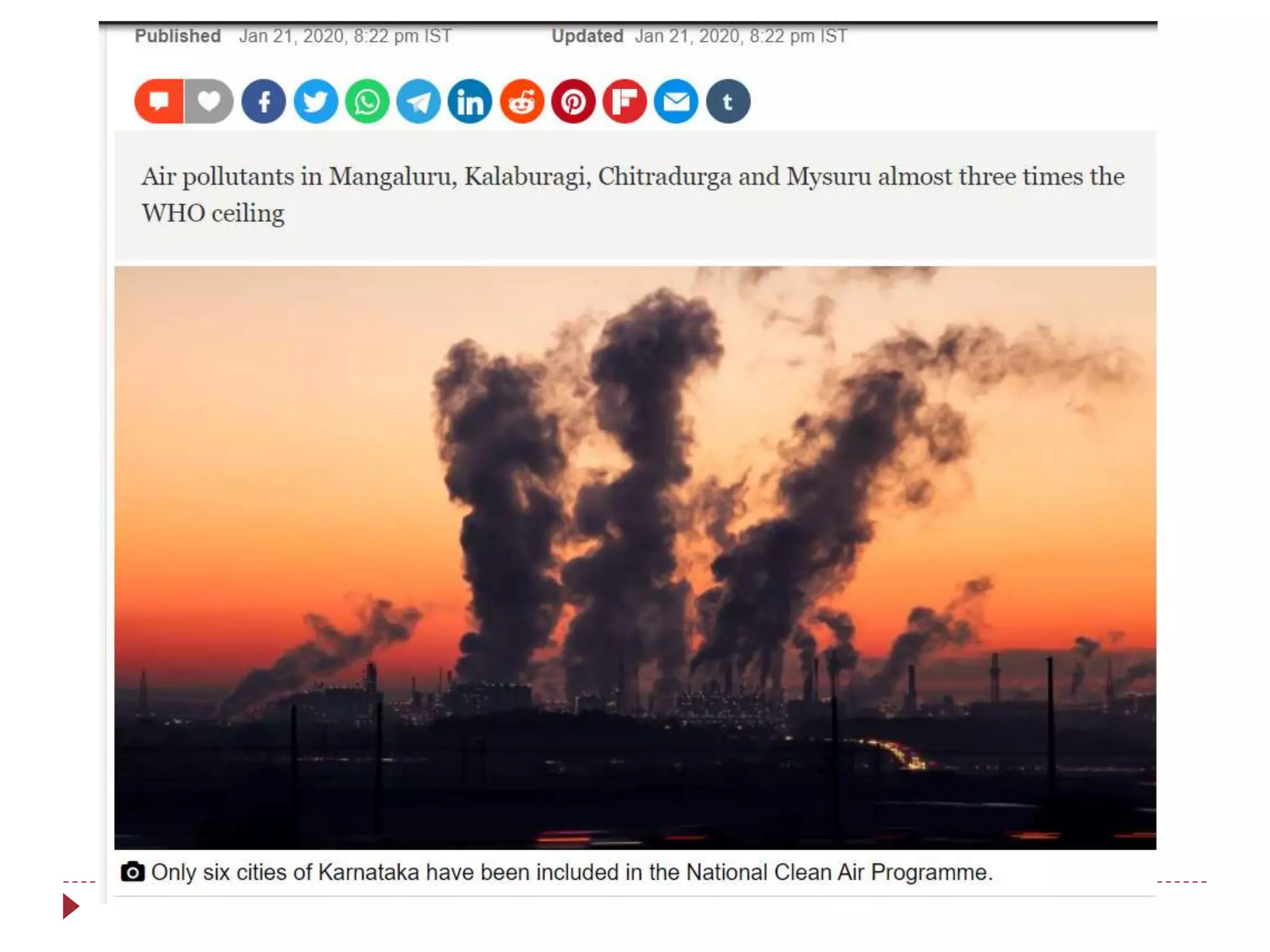
 Air pollution is a major environmental risk to health. By
reducing air pollution levels, countries can reduce the
burden of disease from stroke, heart disease, lung cancer,
and both chronic and acute respiratory diseases, including
asthma.
 The lower the levels of air pollution, the better the
cardiovascular and respiratory health of the population
will be, both long- and short-term.
 The WHO Air Quality Guidelines: Global Update 2005
provide an assessment of health effects of air pollution
and thresholds for health–harmful pollution levels.
Management control of Air Pollution
 Air pollution can be better controlled by Environment management aims at controlling
pollution problems and improvement of the atmosphere. To control and reducing air pollution
few steps are as follows-
1. Environmental education should be given to everyone.
2. Unleaded gasoline is supplied.
3. Change from high-sulphur coal to low-sulphur coal.
4. Regular pollution control checks on the vehicles.
5. Factories should be situated far from the city.
6. The chimneys of factories should be fitted with filters like cyclone, separators, scrubbers or
electric precipitators.
7. Gobar gas for domestic use should be encouraged.
8. For purifying the environment encourage plantation.
9. Non-conventional energy such as solar energy, wind energy should be adopted.
10. Transport systems must have an antismog device.
11. Proper arrangements for recycling of wastes and sewage should be done.
12. Smoking should be banned. It is noticed that there is 50, 00,000 tones tobacco pollution per
year.
13. Cyclone collectors and electrostatic precipitators can be used to remove particulate matters.
Water pollution
Water pollution
 Water pollution has reached alarming
proportions.
 Water pollution may be defined as
“the adverse change in composition
or condition of the water such that it
degrades the quality of the water”.
 Water pollution affects the biotic and
abiotic factors and its ultimate effect
on man remains quite drastic.
Sources of water pollution
Domestic sewage and
domestic wastes
 Domestic sewage contains
kitchen and bathroom,
washing and human fecal
matter.
 Discharge of untreated
sewage into water bodies
are degraded by oxygen
requiring microorganisms.
Domestic sewage and domestic wastes
 Untreated sewage into rivers
causes depletion of O2
content.
 Oxygen depletion causes
decreases of algae and clean
water fauna may cause
floating scums, algal
obnoxious blooms.
 Bacteria and viruses are
present in certain sewage
wastes which may responsible
for water borne diseases such
as typhoid, poliomyelitis,
amoebic dysentery (loose
motions).
Industrial wastes
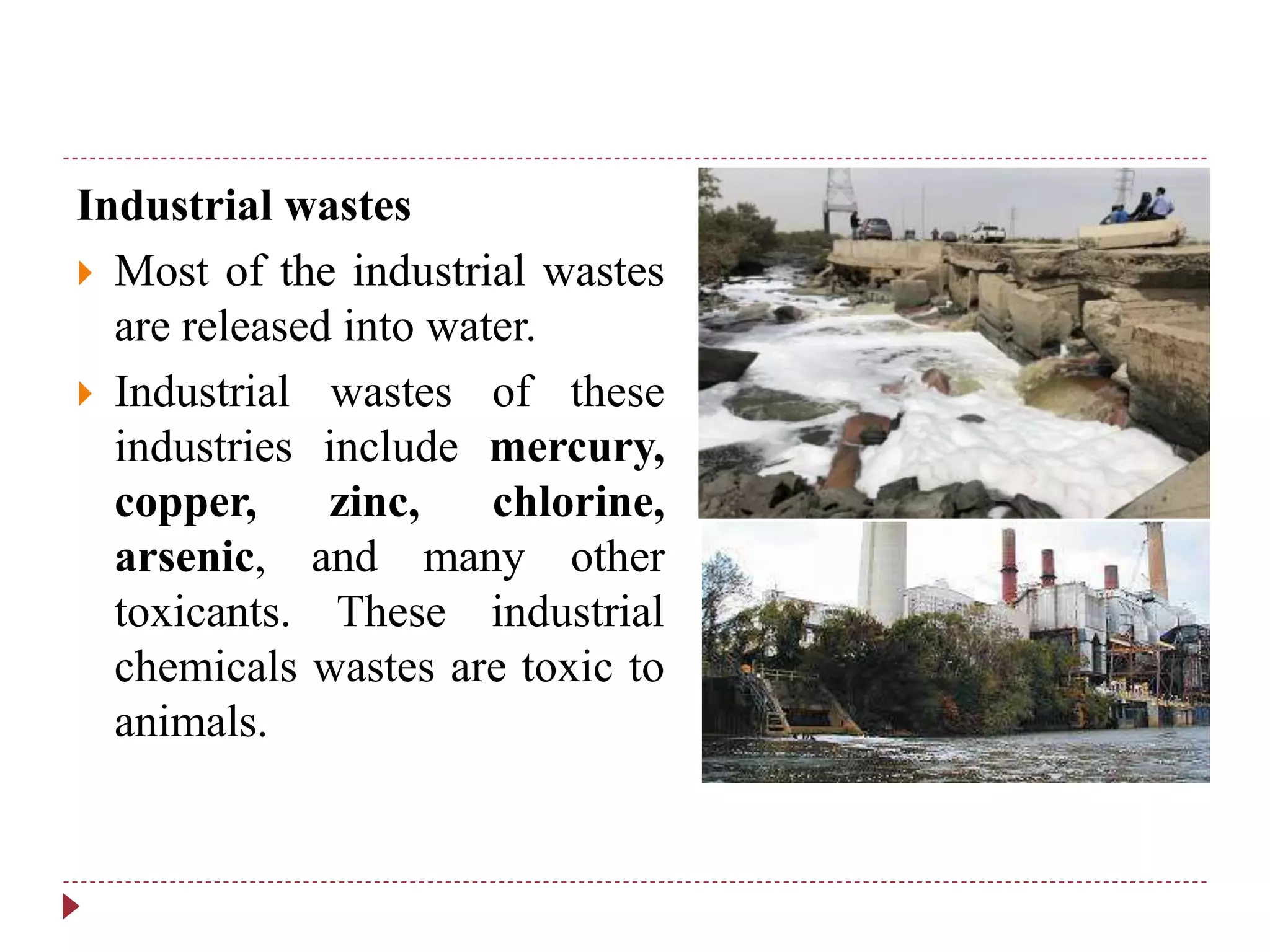
 Most of the industrial wastes
are released into water.
 Industrial wastes of these
industries include mercury,
copper, zinc, chlorine,
arsenic, and many other
toxicants. These industrial
chemicals wastes are toxic to
animals.
Marine pollution
 Marine pollution is caused by
discharge of sewage and
rubbish from ships and
tankers, oil and petroleum
products, pollution of coastal
water due to the dumping of
domestic and industrial
wastes, oil drilling in coastal
waters.
Thermal water pollution
 Thermal pollution is pollution due to release of excessive
amounts of heated water.
 Thermal pollution may be defined as “the warming up of
an aquatic ecosystem to the point where desirable
organisms are adversely affected”.
 A large number of industrial plants like coal or oil-fired
generators thermal, nuclear, atomic etc. use cold water for
cooling purposes and resultant warmed water has often
been discharged into ponds or rivers.
 Waste heat causes thermal
pollution.
 Thermal pollution causes
reduction in DO (dissolved
oxygen) content of water
which can kill fish and alter
food chain composition.
 It changes the physical and
chemical properties of water.
With rising temperatures fresh
water fauna populations
decline and reduce species
biodiversity.
Effects of water pollution
Eutrophication (Biological effects)
 According to Hutchinson (1970), Eutrophication is a natural
state in ponds and lakes which have a rich supply of nutrients
and also occurs as a part of the aging procession ponds and
lakes, as nutrients accumulate through natural succession.
 The process of eutrophication is accelerated or speeded up by
domestic wastes, industrial wastes, fertilizers, animal
wastes, urban drainage, detergents, sediments etc.
 With the addition of nutrients, the growth of micro-organisms
and aquatic vegetation increase in large number.
 Excessive growth of algae occupying the entire area in
water causes the phenomenon of water bloom, which
produce certain toxins that are responsible for the death of
fish, birds and other aquatic animals.
 Decomposition of algal bloom leads to oxygen depletion
in water due to oxygen depletion aquatic organisms begins
to die.
 Bacterial decomposition of organic wastes too requires
oxygen and they with heavy loads the oxygen depletion
contents of water may reduce causes below the point
where most fish cannot survive.
Effects on humans
 Water pollution causes a number of water-borne diseases such
as jaundice, typhoid, cholera, diarrhoea, amoebic dysentery.
 Arsenic poisoning through water can cause liver and nervous
system damage, skin cancer and vascular diseases.
 Pesticides in water can damage the nervous system due to the
carbonates and organophosphate that they contain.
 Chlorides can be harmful for reproductive and endocrinal.
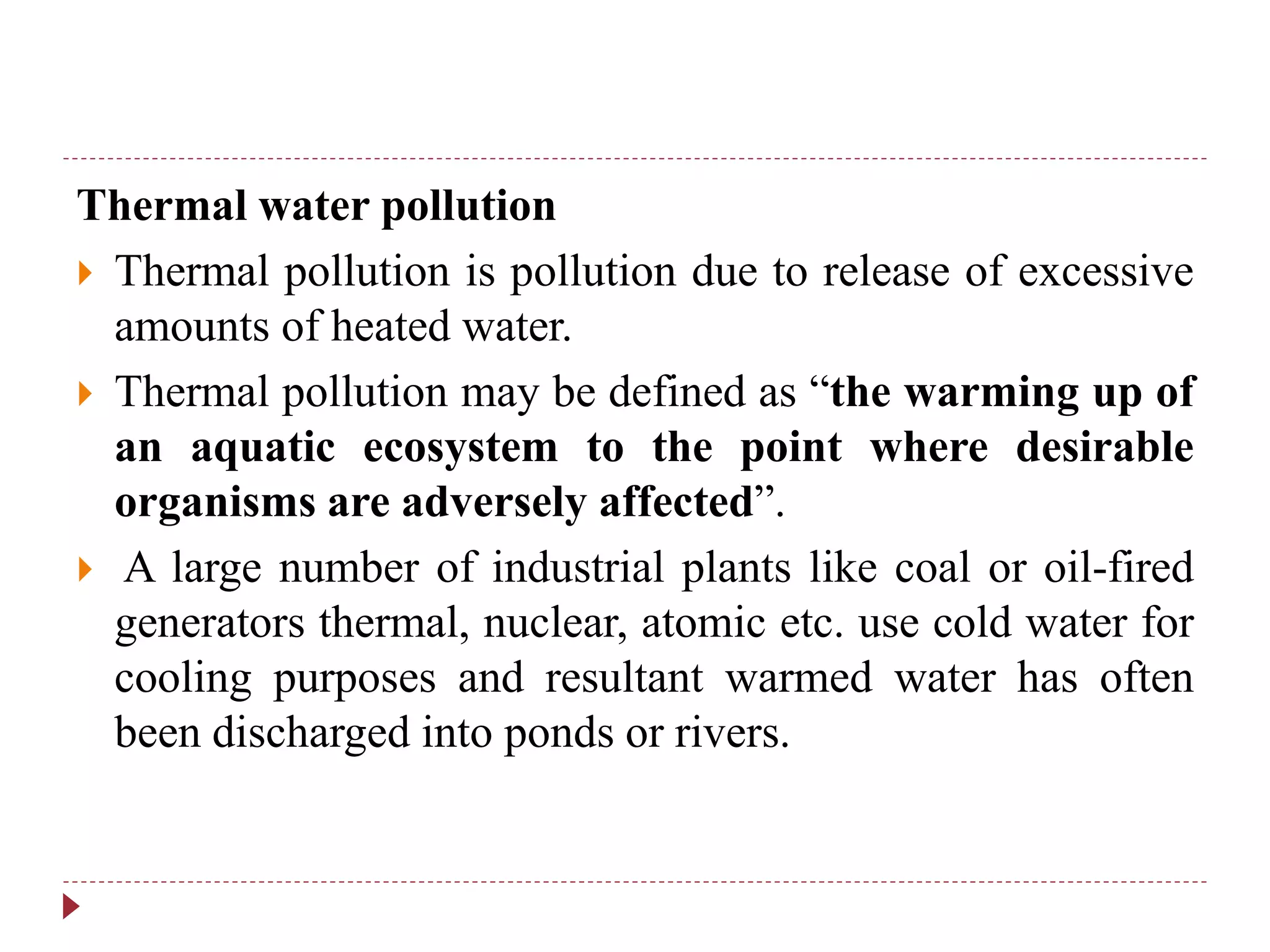
 Nitrates are dangerous to babies that
drink formula milk as it restricts the
amount of oxygen that reaches the
brain. It causes the “blue baby”
syndrome. It causes algae to bloom
resulting in eutrophication in surface
water
 Lead: Accumulation of lead in the
body can damage the central nervous
system. Children and women are most
at risk.
 Fluoride: Excess fluorides can cause
yellowing of the teeth and damage to
the spinal cord.
 Chlorinated solvents
 These are linked to reproduction disorder and skin
cancer.
 Water pollution could even indirectly affect people through
the food chain.
 Toxic substances that are deposited in water may be
consumed by aquatic organisms, such as fish.
 When people consume contaminated fishes, some toxic
effects are passed on to them.
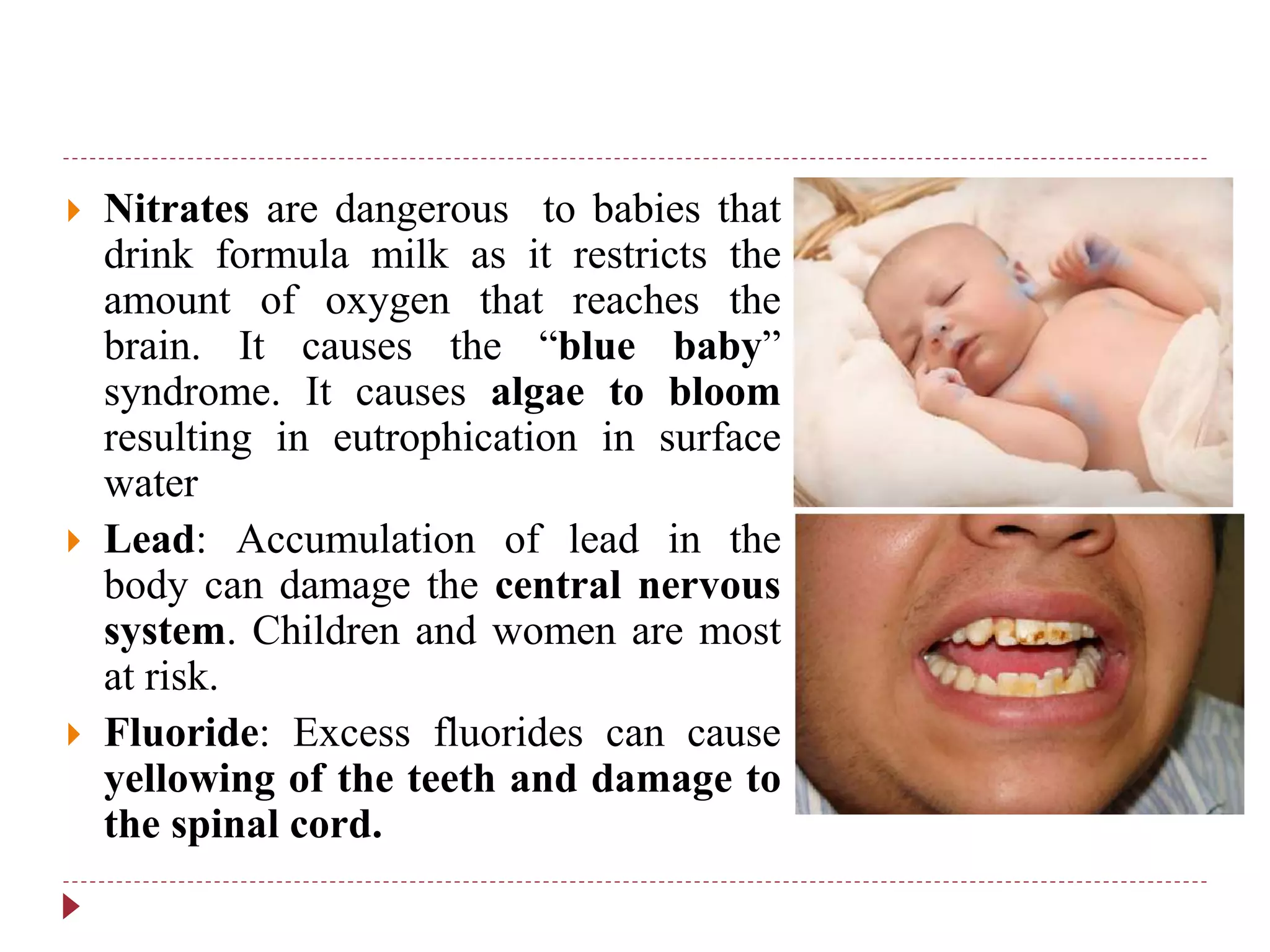
 Arsenic is absorbed through
skin and lung.
 It causes cancer of skin and
lung.
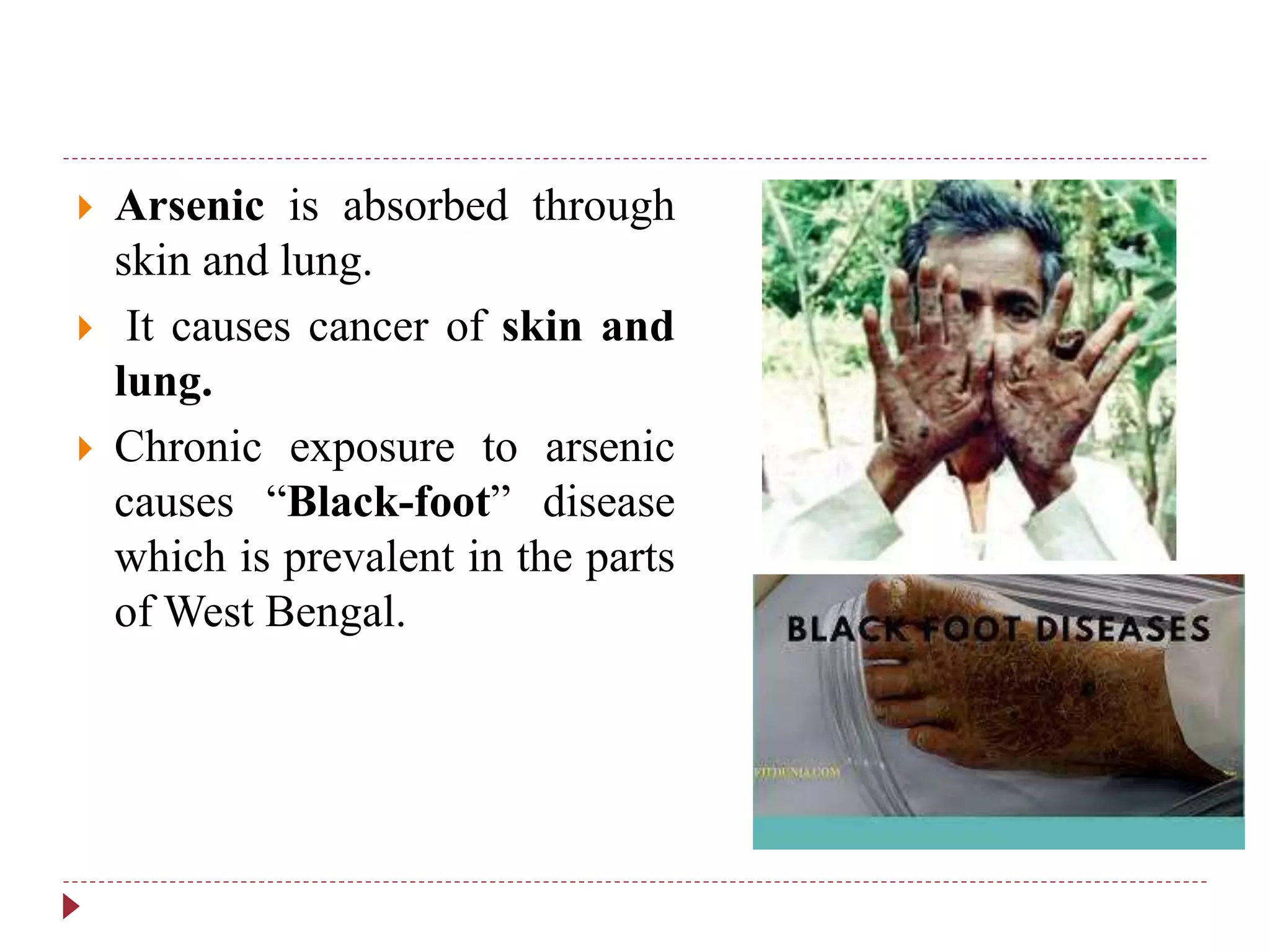
 Chronic exposure to arsenic
causes “Black-foot” disease
which is prevalent in the parts
of West Bengal.
Effects on Aquatic ecosystem
 Thermal pollution causes reduction in dissolved oxygen,
fasten the process of Eutrophication, increase in
Biochemical oxygen demand (BOD) indicates intense
level of microbial pollution.
 Thermal pollution causes change in the physical and
chemical properties of water, increase in toxicity.
 The vapour pressure increases, and solubility of gases in
water decreases.
 Aquatic food supply is affected due to rapid setting of
sediment load in water.
Physiochemical effects of Water Pollution
 The pollutants adversely affect the colour, taste and odour
of water.
 Chemical pollution of water causes in alkalinity, acidity,
dissolved oxygen in water.
Water pollution control
 Proper management of water resources has become the
need of today’s world.
 1. Don’t throw litter in the ocean.
 2. Don’t dispose of chemicals, point in water supplies.
 3. Tree plantation is very effective to check excessive
run off of polluted agricultural water.
 4. Proper disposal of municipal sewage so as to avoid
contamination of ground water reserves.
SOIL POLLUTION
SOIL POLLUTION
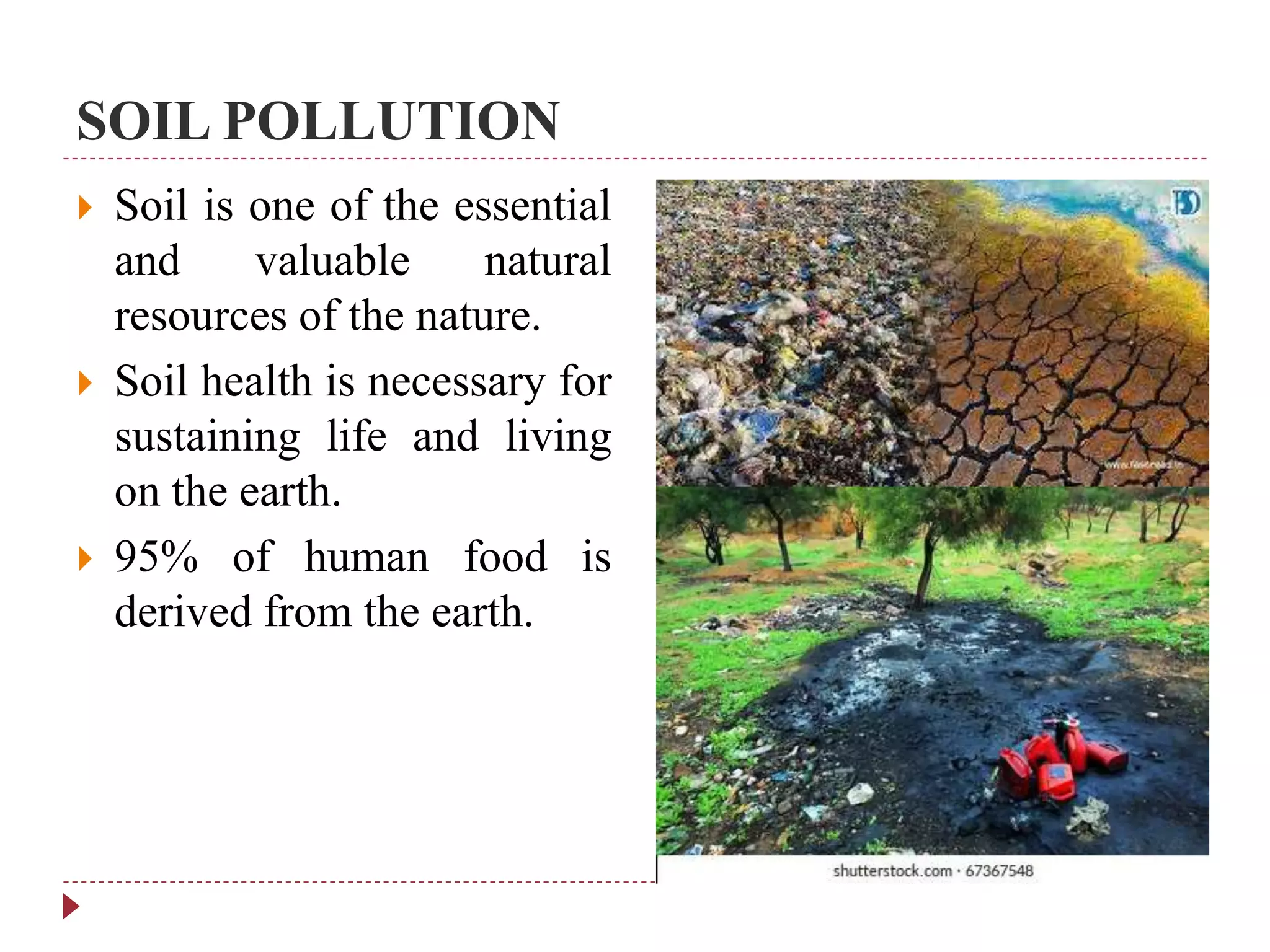
 Soil is one of the essential
and valuable natural
resources of the nature.
 Soil health is necessary for
sustaining life and living
on the earth.
 95% of human food is
derived from the earth.
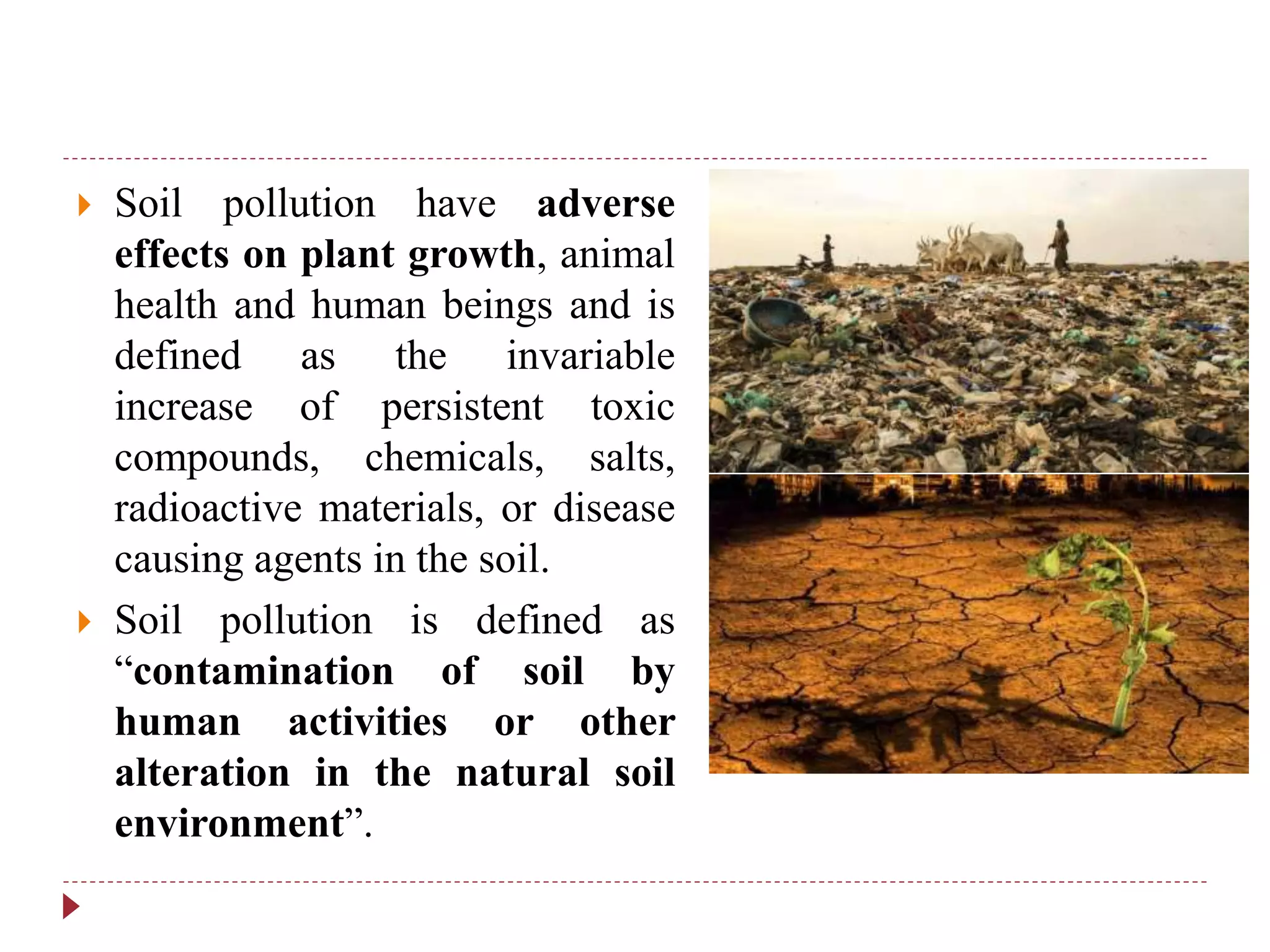
 Soil pollution have adverse
effects on plant growth, animal
health and human beings and is
defined as the invariable
increase of persistent toxic
compounds, chemicals, salts,
radioactive materials, or disease
causing agents in the soil.
 Soil pollution is defined as
“contamination of soil by
human activities or other
alteration in the natural soil
environment”.
Sources of Soil pollution
Discharge of Industrial waste into the soil
 Improper disposal of industrial waste contaminates the soil with
harmful chemicals.
 Wastes from industries such as mercurial salts, cans, DDT, garbage,
leather, rubber do not degrade or degrade very slowly.
 Most industries do require large amount of raw materials to make
them into finished products. This requires extraction of minerals
from the earth.
 The extracted minerals can cause soil pollution when spilled on the
earth.
 Whether it is iron ore or coal, the by-products are contaminated and
they are not properly disposed.
 As a result, the industrial waste lingers in the soil surface and
contaminates the soil environment.
Agricultural activities
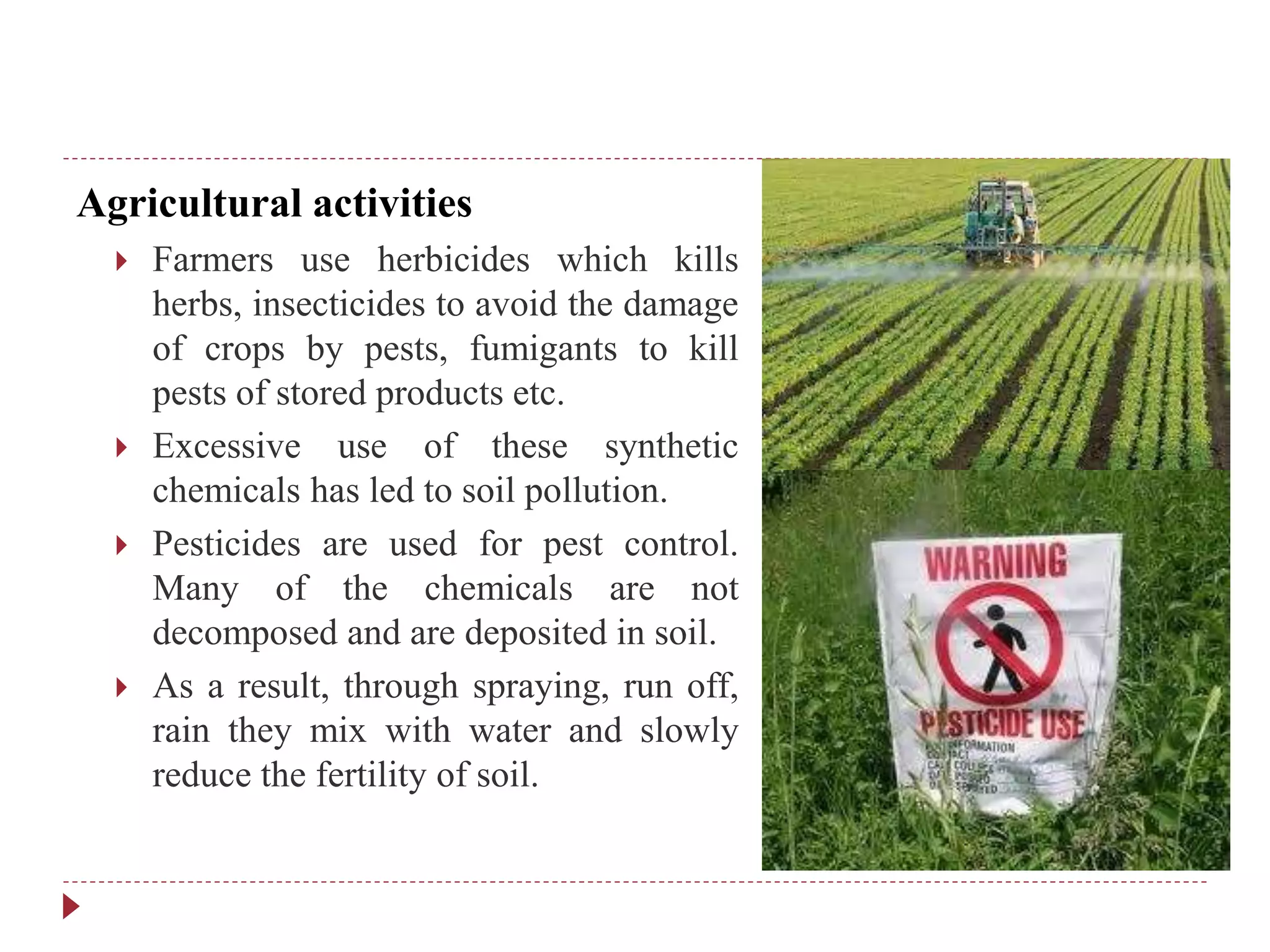
 Farmers use herbicides which kills
herbs, insecticides to avoid the damage
of crops by pests, fumigants to kill
pests of stored products etc.
 Excessive use of these synthetic
chemicals has led to soil pollution.
 Pesticides are used for pest control.
Many of the chemicals are not
decomposed and are deposited in soil.
 As a result, through spraying, run off,
rain they mix with water and slowly
reduce the fertility of soil.
Sewage and domestic waste
 Drainage of contaminated surface
water into the soil.
 Sewage sludge contains heavy
metals and, if applied in large
amounts, the treated soil may
accumulate heavy metals and
become unable to even support
plant life.
Acid rain
 Air borne SO2 and SO3 react with water or water vapour to
form H2SO4.
 Nitrogen oxides get dissolved into water vapour to form nitric
acid.
 These acids are dissolved in water falling down on earth in the
form of rain. This is known as acid rain.
 The acid rain water reaches on earth and pollutes the soil and
adversely affects the productivity of crops.
Nuclear explosions
 Nuclear explosions release
radioactive substances which
pollutes the natural quality of soil.
Effects of Soil pollution
The effects of soil pollution on humans
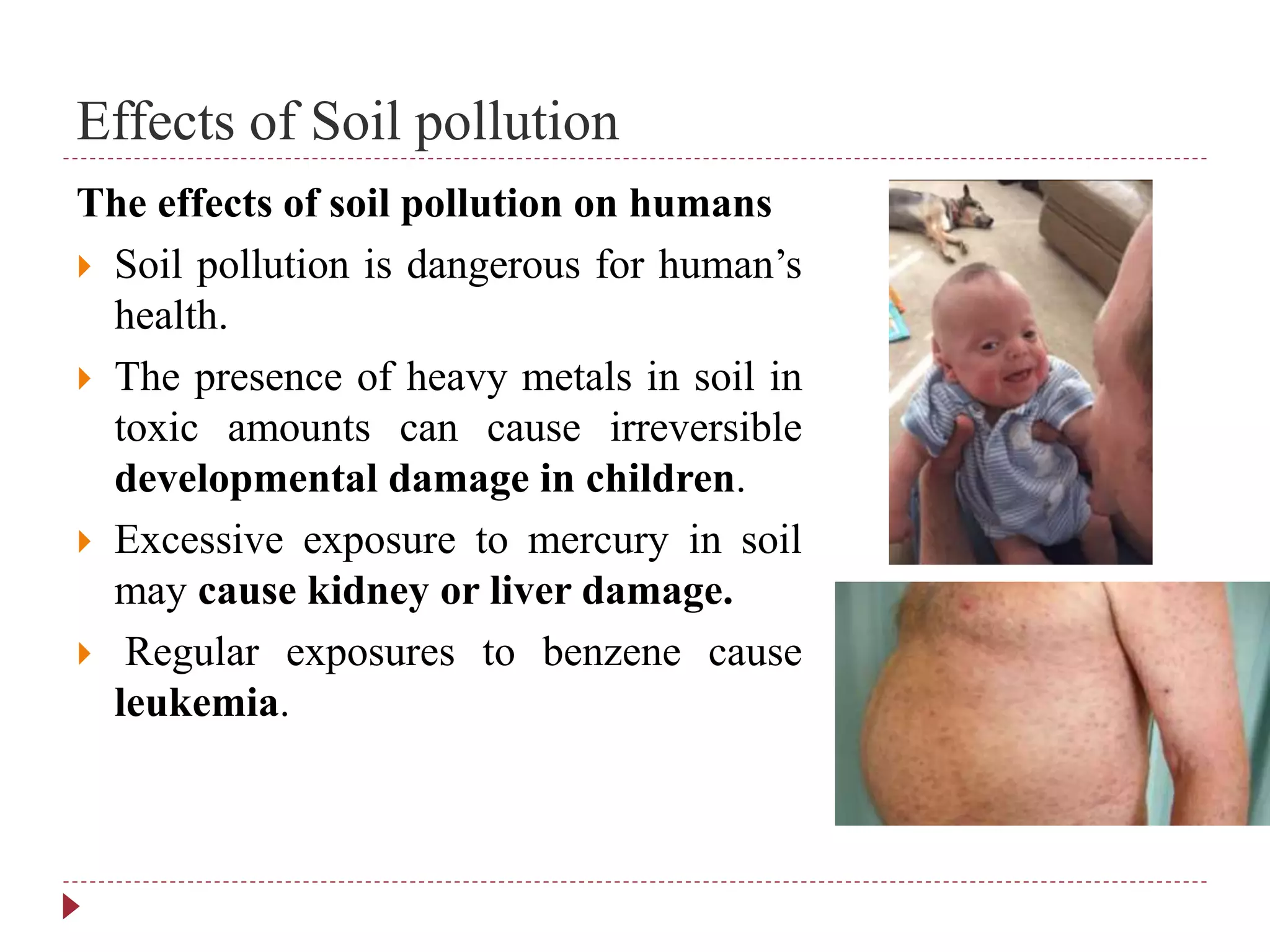
 Soil pollution is dangerous for human’s
health.
 The presence of heavy metals in soil in
toxic amounts can cause irreversible
developmental damage in children.
 Excessive exposure to mercury in soil
may cause kidney or liver damage.
 Regular exposures to benzene cause
leukemia.
Soil pollution reduce soil fertility
 Excess use of fertilizers and application of toxic
chemicals such as pesticides can decrease soil fertility.
 Decreasing the soil yield the contaminated soil may
produce fruits and vegetables which lacks nutrients and
may contain some poisonous substance to cause health
problems in human.
 Crops grown on polluted soil cause health problems on
consumption.
 Toxic dust
 Emissions of toxic gases from landfills pollute the environment.
 The unpleasant smell of foul odour causes inconvenience to
people.
 Effect on plant growth
 Due to the contamination of the soil the balance of ecological
system is affected.
 Mostly plants are unable to adapt to the change in the chemistry
of the soil in a short period of time.
 Bacteria and Fungi found in the soil that bind it together begin
to decline.
Steps to reduce Soil pollution
a) Bioremediation
 Bioremediation is a technique where microorganisms are used
to consume the pollution causing compounds and
electromechanical systems for extracting chemicals by paving
over the deposited area.
 Use and stimulate the growth of naturally occurring
microorganisms to break down contaminants.
b) Reuse and Recycle
 The NSDL reports that reusing and recycling products will help
conserve natural resources and save more land from
contamination.
 So glass, leaves made should be used. Solid wastes such as
plastic, Scrap metal should be recycled and then reused.
c) Proper solid waste treatment
 To avoid soil pollution waste should be disposed of properly.
 Acidic and alkaline waste be neutralized before they are
disposed of to avoid soil contamination.
d) Use soil additives:
 To maintain soil pH to sustainable levels use soil additives,
such as lime and organic matter from composting.
e) Crop rotation
 Crop rotation is a very effective system than recycling on
chemicals.
 Crop rotation prevents the build-up of pests and diseases.
 It helps to maintain soil fertility and soil organic matter levels
or structure
f) Organic manure: Organic fertilizers are derived from
human excreta, animal matter, vegetable matter etc.
g) Public awareness: Public awareness programs either
formal or informal should be introduced.
h) Ban on Toxic chemicals: Harmful chemicals and
pesticides like DDT, BHC, etc should be banned.
i) Control acid rain: To reduce acid rain the emission of
chemicals such as nitrogen oxides and sulphur dioxide from
industries that cause acid rain should be checked by
pollution controlling devices.
Permissible limits

POLLUTION.pptx

  • 1.
    Air, water andsoil pollution - major pollutants, their source, permissible limits - and control methods
  • 2.
    Pollution  Pollution isan undesirable change in the physical, chemical or biological characteristics of our air, land (soil) and water that can harmfully affect human life or that of other species, our industrial processes, living condition and cultural assets.  In Environmental Protection Act, 1986 of India, environmental Pollutant means “any solid, liquid, or gaseous substance present in such concentration as may be or tend to be injurious to environment; and the environmental pollution means the presence in the environment of any environmental pollutant”  According to Odum (1971), from the ecological view point, these pollutants can be bio-degradable and non-degradable pollutants.
  • 3.
    1. Non-degradable Pollutants:The materials that do not degrade or degrade very slowly in the natural environmental conditions are called non-degradable pollutants. Eg - mercurial salts, aluminium cans, DDT and long chain Phenolic chemicals. 2. Bio-degradable Pollutants: These pollutants are natural organic compounds which are degraded by biological or microbial action. e.g., domestic sewage, cloth, paper, wood, etc
  • 4.
    Air Pollution  Airpollution may be defined as the contamination of earth’s atmosphere generally resulting from the human activities which adversely affects the living organisms, plants and causes damage to the property.  In other words, air Pollution is the introduction of chemicals, particulate matter, or biological materials that cause harm or endanger to humans or other living organisms or cause damage to the natural environment.
  • 7.
     There aretwo types of Air Pollutants - 1. Primary Pollutant: Primary pollutants are directly released into the atmosphere e.g., CO2, CO are directly emitted from burning of fossil fuel. 2. Secondary Pollutant: Secondary Pollutant is formed in the atmosphere when primary pollutants react or interact. e.g., formation of Peroxy Acetyl Nitrate (PAN-Nitrogen oxides react with unsaturated hydrocarbons and produce Peroxy acetyl nitrate called PAN).
  • 9.
     The sixmajor types of primary pollutants are nitrogen oxides, hydrocarbons, carbon monoxide, particulates, photochemical oxidants, sulphur dioxide.  Sulphur dioxide (SO2)  Coal and Petroleum often contain sulphur compounds, and their combustion generates sulphur dioxide.  Sulphur dioxide (SO2) is also released from smelters, oil refineries, fertilizer industries, sulphuric acid manufacturing industries, paper and pulp industries etc.  In the atmosphere, sulphur dioxide reacts with moisture to form sulphuric acid (H2SO4) which causes many respiratory diseases and produce acid rainfall over the Earth.  Acid rainfall reduces forest growth.
  • 10.
     Nitrogen oxides(NO2)  Oxides of nitrogen are the second most abundant atmospheric pollutants.  Nitrogen oxides are formed when fuel is burnt at very high temperature, such as transportation (automobiles), industrial plants (power).  Nitrogen oxides contribute to a number of problems as direct exposure to nitrogen oxides irritates the eyes and lungs, poisonous to plant.
  • 11.
     Carbon monoxide(CO)  Carbon monoxide is a colourless, odourless, toxic yet non- irritating gas.  Carbon monoxide is an incomplete combustion of fuel such as natural gas, coal and wood and accounts for more than 50 percent of total weight of pollutants added to the atmosphere.
  • 12.
     Volatile organiccompounds  VOCs are organic chemicals, easily vaporize at room temperature, contain the element carbon in their molecular structures, have no colour, taste or smell.  They are found in everyday household items such as, craft kits, paints, varnishes, fuels, dry cleaned clothes, pesticides, cigarette smoke, etc.
  • 13.
     Particulates  Particulateair pollutants may be solid or liquid suspended in a gas, solid particulate air pollutants are heavy metals, pesticides, photochemical smog, smoke, radioactive elements etc.  Particulates of liquid nature are liquid aerosols, sprays; some particulates occur naturally, as forest fires, volcanoes, dust storms.  Burning of fossils fuels in vehicles, domestic hearths, factory chimneys also generate aerosols.
  • 15.
     Radioactive Pollutants A large number of radioactive elements are released in the atmosphere from cooled powder reactors, atomic explosions, testing of nuclear weapons
  • 16.
    Effects of Airpollution
  • 17.
    Effects on humans Pollutants have a serious effect on human health. Inhaling carbon monoxide combines with the blood haemoglobin and reduces the oxygen carrying capacity of haemoglobin causes headaches, dizziness, hard breathing and irritation of mucous membranes.  Lead can damage the brain of young children, Nitrogen dioxide.  Particulate air pollution causes respiratory problems worldwide, people suffering from asthma, bronchitis.
  • 18.
    Effects on Buildingmaterials  Air pollution damages building materials.  Smoke, dust, fog, grit and oxides of sulphur cause erosion of building materials. SO2, Nitrogen oxide, hydrocarbons formed during combustion of coal and petroleum.  They produce acids in the rain water or may remain in the atmosphere.  Acid rain corrodes monuments, buildings, furnishing Worldwide famous Taj Mahal is greatly affected by the acid deposition and facing corrosive problem from the SO2 fumes released from Mathura refinery.
  • 19.
    Change of climate Climate change refers to changes in the climate of the earth caused by human activities.  Air pollution causes contamination of the upper atmosphere and the change of climate.  Air pollutants like dust, smoke, CO2, oxides of N2 and SO2 when present in higher concentration causes scattering of light, bringing about climate changes.
  • 20.
    Effects of Airpollution  Certain gaseous pollutants and aerosols such as ammonium sulphate mists and sulphuric acid mists reach the atmosphere where they have effects on the absorption and penetration of sunlight.  The concentration of aerosols, SO2, ammonium acid fumes affects the pH of rain water.
  • 21.
    Permissible limits ofAir pollutants  Air pollution is a major environmental risk to health. By reducing air pollution levels, countries can reduce the burden of disease from stroke, heart disease, lung cancer, and both chronic and acute respiratory diseases, including asthma.  The lower the levels of air pollution, the better the cardiovascular and respiratory health of the population will be, both long- and short-term.  The WHO Air Quality Guidelines: Global Update 2005 provide an assessment of health effects of air pollution and thresholds for health–harmful pollution levels.
  • 24.
    Management control ofAir Pollution  Air pollution can be better controlled by Environment management aims at controlling pollution problems and improvement of the atmosphere. To control and reducing air pollution few steps are as follows- 1. Environmental education should be given to everyone. 2. Unleaded gasoline is supplied. 3. Change from high-sulphur coal to low-sulphur coal. 4. Regular pollution control checks on the vehicles. 5. Factories should be situated far from the city. 6. The chimneys of factories should be fitted with filters like cyclone, separators, scrubbers or electric precipitators. 7. Gobar gas for domestic use should be encouraged. 8. For purifying the environment encourage plantation. 9. Non-conventional energy such as solar energy, wind energy should be adopted. 10. Transport systems must have an antismog device. 11. Proper arrangements for recycling of wastes and sewage should be done. 12. Smoking should be banned. It is noticed that there is 50, 00,000 tones tobacco pollution per year. 13. Cyclone collectors and electrostatic precipitators can be used to remove particulate matters.
  • 25.
  • 26.
    Water pollution  Waterpollution has reached alarming proportions.  Water pollution may be defined as “the adverse change in composition or condition of the water such that it degrades the quality of the water”.  Water pollution affects the biotic and abiotic factors and its ultimate effect on man remains quite drastic.
  • 27.
    Sources of waterpollution Domestic sewage and domestic wastes  Domestic sewage contains kitchen and bathroom, washing and human fecal matter.  Discharge of untreated sewage into water bodies are degraded by oxygen requiring microorganisms.
  • 28.
    Domestic sewage anddomestic wastes  Untreated sewage into rivers causes depletion of O2 content.  Oxygen depletion causes decreases of algae and clean water fauna may cause floating scums, algal obnoxious blooms.  Bacteria and viruses are present in certain sewage wastes which may responsible for water borne diseases such as typhoid, poliomyelitis, amoebic dysentery (loose motions).
  • 29.
    Industrial wastes  Mostof the industrial wastes are released into water.  Industrial wastes of these industries include mercury, copper, zinc, chlorine, arsenic, and many other toxicants. These industrial chemicals wastes are toxic to animals.
  • 30.
    Marine pollution  Marinepollution is caused by discharge of sewage and rubbish from ships and tankers, oil and petroleum products, pollution of coastal water due to the dumping of domestic and industrial wastes, oil drilling in coastal waters.
  • 31.
    Thermal water pollution Thermal pollution is pollution due to release of excessive amounts of heated water.  Thermal pollution may be defined as “the warming up of an aquatic ecosystem to the point where desirable organisms are adversely affected”.  A large number of industrial plants like coal or oil-fired generators thermal, nuclear, atomic etc. use cold water for cooling purposes and resultant warmed water has often been discharged into ponds or rivers.
  • 32.
     Waste heatcauses thermal pollution.  Thermal pollution causes reduction in DO (dissolved oxygen) content of water which can kill fish and alter food chain composition.  It changes the physical and chemical properties of water. With rising temperatures fresh water fauna populations decline and reduce species biodiversity.
  • 33.
    Effects of waterpollution Eutrophication (Biological effects)  According to Hutchinson (1970), Eutrophication is a natural state in ponds and lakes which have a rich supply of nutrients and also occurs as a part of the aging procession ponds and lakes, as nutrients accumulate through natural succession.  The process of eutrophication is accelerated or speeded up by domestic wastes, industrial wastes, fertilizers, animal wastes, urban drainage, detergents, sediments etc.  With the addition of nutrients, the growth of micro-organisms and aquatic vegetation increase in large number.
  • 34.
     Excessive growthof algae occupying the entire area in water causes the phenomenon of water bloom, which produce certain toxins that are responsible for the death of fish, birds and other aquatic animals.  Decomposition of algal bloom leads to oxygen depletion in water due to oxygen depletion aquatic organisms begins to die.  Bacterial decomposition of organic wastes too requires oxygen and they with heavy loads the oxygen depletion contents of water may reduce causes below the point where most fish cannot survive.
  • 36.
    Effects on humans Water pollution causes a number of water-borne diseases such as jaundice, typhoid, cholera, diarrhoea, amoebic dysentery.  Arsenic poisoning through water can cause liver and nervous system damage, skin cancer and vascular diseases.  Pesticides in water can damage the nervous system due to the carbonates and organophosphate that they contain.  Chlorides can be harmful for reproductive and endocrinal.
  • 37.
     Nitrates aredangerous to babies that drink formula milk as it restricts the amount of oxygen that reaches the brain. It causes the “blue baby” syndrome. It causes algae to bloom resulting in eutrophication in surface water  Lead: Accumulation of lead in the body can damage the central nervous system. Children and women are most at risk.  Fluoride: Excess fluorides can cause yellowing of the teeth and damage to the spinal cord.
  • 38.
     Chlorinated solvents These are linked to reproduction disorder and skin cancer.  Water pollution could even indirectly affect people through the food chain.  Toxic substances that are deposited in water may be consumed by aquatic organisms, such as fish.  When people consume contaminated fishes, some toxic effects are passed on to them.
  • 39.
     Arsenic isabsorbed through skin and lung.  It causes cancer of skin and lung.  Chronic exposure to arsenic causes “Black-foot” disease which is prevalent in the parts of West Bengal.
  • 40.
    Effects on Aquaticecosystem  Thermal pollution causes reduction in dissolved oxygen, fasten the process of Eutrophication, increase in Biochemical oxygen demand (BOD) indicates intense level of microbial pollution.  Thermal pollution causes change in the physical and chemical properties of water, increase in toxicity.  The vapour pressure increases, and solubility of gases in water decreases.  Aquatic food supply is affected due to rapid setting of sediment load in water.
  • 41.
    Physiochemical effects ofWater Pollution  The pollutants adversely affect the colour, taste and odour of water.  Chemical pollution of water causes in alkalinity, acidity, dissolved oxygen in water.
  • 42.
    Water pollution control Proper management of water resources has become the need of today’s world.  1. Don’t throw litter in the ocean.  2. Don’t dispose of chemicals, point in water supplies.  3. Tree plantation is very effective to check excessive run off of polluted agricultural water.  4. Proper disposal of municipal sewage so as to avoid contamination of ground water reserves.
  • 43.
  • 44.
    SOIL POLLUTION  Soilis one of the essential and valuable natural resources of the nature.  Soil health is necessary for sustaining life and living on the earth.  95% of human food is derived from the earth.
  • 45.
     Soil pollutionhave adverse effects on plant growth, animal health and human beings and is defined as the invariable increase of persistent toxic compounds, chemicals, salts, radioactive materials, or disease causing agents in the soil.  Soil pollution is defined as “contamination of soil by human activities or other alteration in the natural soil environment”.
  • 47.
    Sources of Soilpollution Discharge of Industrial waste into the soil  Improper disposal of industrial waste contaminates the soil with harmful chemicals.  Wastes from industries such as mercurial salts, cans, DDT, garbage, leather, rubber do not degrade or degrade very slowly.  Most industries do require large amount of raw materials to make them into finished products. This requires extraction of minerals from the earth.  The extracted minerals can cause soil pollution when spilled on the earth.  Whether it is iron ore or coal, the by-products are contaminated and they are not properly disposed.  As a result, the industrial waste lingers in the soil surface and contaminates the soil environment.
  • 48.
    Agricultural activities  Farmersuse herbicides which kills herbs, insecticides to avoid the damage of crops by pests, fumigants to kill pests of stored products etc.  Excessive use of these synthetic chemicals has led to soil pollution.  Pesticides are used for pest control. Many of the chemicals are not decomposed and are deposited in soil.  As a result, through spraying, run off, rain they mix with water and slowly reduce the fertility of soil.
  • 49.
    Sewage and domesticwaste  Drainage of contaminated surface water into the soil.  Sewage sludge contains heavy metals and, if applied in large amounts, the treated soil may accumulate heavy metals and become unable to even support plant life.
  • 50.
    Acid rain  Airborne SO2 and SO3 react with water or water vapour to form H2SO4.  Nitrogen oxides get dissolved into water vapour to form nitric acid.  These acids are dissolved in water falling down on earth in the form of rain. This is known as acid rain.  The acid rain water reaches on earth and pollutes the soil and adversely affects the productivity of crops.
  • 51.
    Nuclear explosions  Nuclearexplosions release radioactive substances which pollutes the natural quality of soil.
  • 52.
    Effects of Soilpollution The effects of soil pollution on humans  Soil pollution is dangerous for human’s health.  The presence of heavy metals in soil in toxic amounts can cause irreversible developmental damage in children.  Excessive exposure to mercury in soil may cause kidney or liver damage.  Regular exposures to benzene cause leukemia.
  • 53.
    Soil pollution reducesoil fertility  Excess use of fertilizers and application of toxic chemicals such as pesticides can decrease soil fertility.  Decreasing the soil yield the contaminated soil may produce fruits and vegetables which lacks nutrients and may contain some poisonous substance to cause health problems in human.  Crops grown on polluted soil cause health problems on consumption.
  • 54.
     Toxic dust Emissions of toxic gases from landfills pollute the environment.  The unpleasant smell of foul odour causes inconvenience to people.  Effect on plant growth  Due to the contamination of the soil the balance of ecological system is affected.  Mostly plants are unable to adapt to the change in the chemistry of the soil in a short period of time.  Bacteria and Fungi found in the soil that bind it together begin to decline.
  • 55.
    Steps to reduceSoil pollution a) Bioremediation  Bioremediation is a technique where microorganisms are used to consume the pollution causing compounds and electromechanical systems for extracting chemicals by paving over the deposited area.  Use and stimulate the growth of naturally occurring microorganisms to break down contaminants. b) Reuse and Recycle  The NSDL reports that reusing and recycling products will help conserve natural resources and save more land from contamination.  So glass, leaves made should be used. Solid wastes such as plastic, Scrap metal should be recycled and then reused.
  • 56.
    c) Proper solidwaste treatment  To avoid soil pollution waste should be disposed of properly.  Acidic and alkaline waste be neutralized before they are disposed of to avoid soil contamination. d) Use soil additives:  To maintain soil pH to sustainable levels use soil additives, such as lime and organic matter from composting. e) Crop rotation  Crop rotation is a very effective system than recycling on chemicals.  Crop rotation prevents the build-up of pests and diseases.  It helps to maintain soil fertility and soil organic matter levels or structure
  • 57.
    f) Organic manure:Organic fertilizers are derived from human excreta, animal matter, vegetable matter etc. g) Public awareness: Public awareness programs either formal or informal should be introduced. h) Ban on Toxic chemicals: Harmful chemicals and pesticides like DDT, BHC, etc should be banned. i) Control acid rain: To reduce acid rain the emission of chemicals such as nitrogen oxides and sulphur dioxide from industries that cause acid rain should be checked by pollution controlling devices.
  • 58.