.
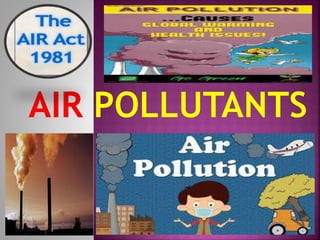
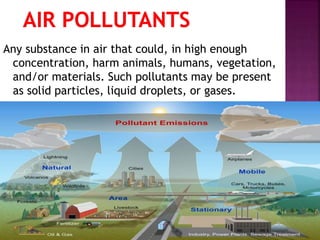
Any substance in air that could, in high enough
concentration, harm animals, humans, vegetation,
and/or materials. Such pollutants may be present
as solid particles, liquid droplets, or gases.
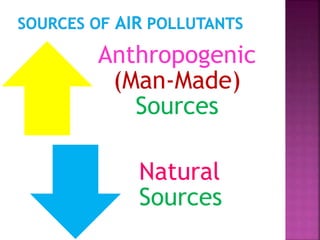
Anthropogenic
(Man-Made)
Sources
Natural
Sources
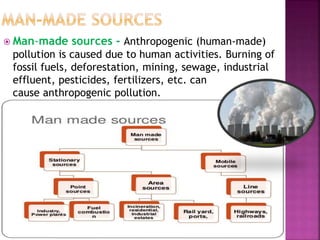
 Man-made sources - Anthropogenic (human-made)
pollution is caused due to human activities. Burning of
fossil fuels, deforestation, mining, sewage, industrial
effluent, pesticides, fertilizers, etc. can
cause anthropogenic pollution.
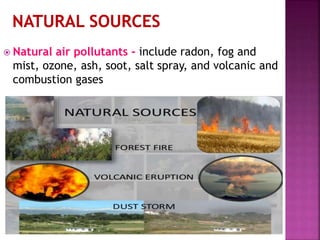
 Natural air pollutants - include radon, fog and
mist, ozone, ash, soot, salt spray, and volcanic and
combustion gases
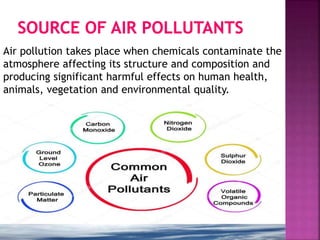
Air pollution takes place when chemicals contaminate the
atmosphere affecting its structure and composition and
producing significant harmful effects on human health,
animals, vegetation and environmental quality.
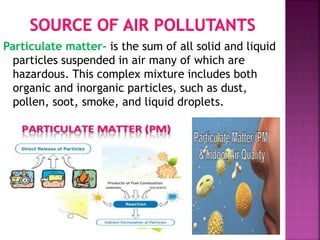
Particulate matter- is the sum of all solid and liquid
particles suspended in air many of which are
hazardous. This complex mixture includes both
organic and inorganic particles, such as dust,
pollen, soot, smoke, and liquid droplets.
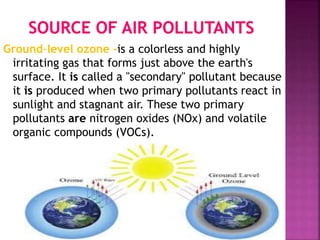
Ground-level ozone -is a colorless and highly
irritating gas that forms just above the earth's
surface. It is called a "secondary" pollutant because
it is produced when two primary pollutants react in
sunlight and stagnant air. These two primary
pollutants are nitrogen oxides (NOx) and volatile
organic compounds (VOCs).
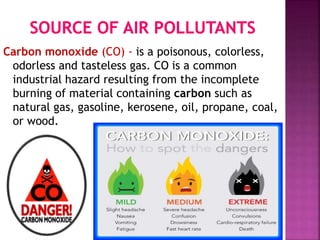
Carbon monoxide (CO) - is a poisonous, colorless,
odorless and tasteless gas. CO is a common
industrial hazard resulting from the incomplete
burning of material containing carbon such as
natural gas, gasoline, kerosene, oil, propane, coal,
or wood.
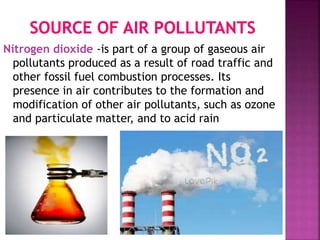
Nitrogen dioxide -is part of a group of gaseous air
pollutants produced as a result of road traffic and
other fossil fuel combustion processes. Its
presence in air contributes to the formation and
modification of other air pollutants, such as ozone
and particulate matter, and to acid rain
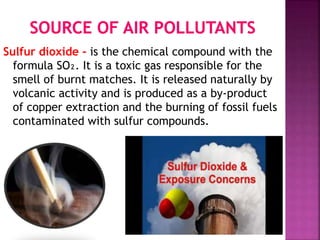
Sulfur dioxide - is the chemical compound with the
formula SO₂. It is a toxic gas responsible for the
smell of burnt matches. It is released naturally by
volcanic activity and is produced as a by-product
of copper extraction and the burning of fossil fuels
contaminated with sulfur compounds.
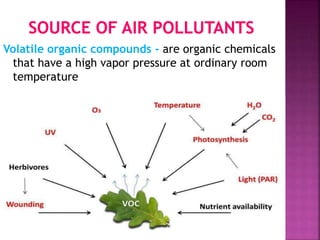
Volatile organic compounds - are organic chemicals
that have a high vapor pressure at ordinary room
temperature
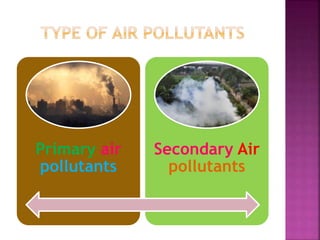
Primary air
pollutants
Secondary Air
pollutants
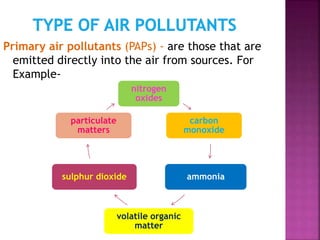
Primary air pollutants (PAPs) - are those that are
emitted directly into the air from sources. For
Example-
nitrogen
oxides
carbon
monoxide
ammonia
volatile organic
matter
sulphur dioxide
particulate
matters
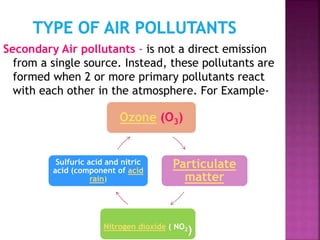
Secondary Air pollutants - is not a direct emission
from a single source. Instead, these pollutants are
formed when 2 or more primary pollutants react
with each other in the atmosphere. For Example-
Ozone (O3)
Particulate
matter
Nitrogen dioxide ( NO2)
Sulfuric acid and nitric
acid (component of acid
rain)
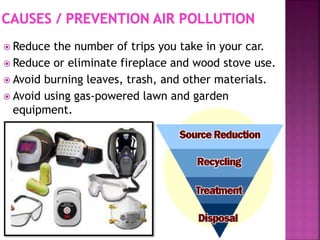
 Reduce the number of trips you take in your car.
 Reduce or eliminate fireplace and wood stove use.
 Avoid burning leaves, trash, and other materials.
 Avoid using gas-powered lawn and garden
equipment.
Air pollutants

Air pollutants

  • 1.
  • 2.
    Any substance inair that could, in high enough concentration, harm animals, humans, vegetation, and/or materials. Such pollutants may be present as solid particles, liquid droplets, or gases.
  • 4.
  • 5.
     Man-made sources- Anthropogenic (human-made) pollution is caused due to human activities. Burning of fossil fuels, deforestation, mining, sewage, industrial effluent, pesticides, fertilizers, etc. can cause anthropogenic pollution.
  • 6.
     Natural airpollutants - include radon, fog and mist, ozone, ash, soot, salt spray, and volcanic and combustion gases
  • 7.
    Air pollution takesplace when chemicals contaminate the atmosphere affecting its structure and composition and producing significant harmful effects on human health, animals, vegetation and environmental quality.
  • 8.
    Particulate matter- isthe sum of all solid and liquid particles suspended in air many of which are hazardous. This complex mixture includes both organic and inorganic particles, such as dust, pollen, soot, smoke, and liquid droplets.
  • 9.
    Ground-level ozone -isa colorless and highly irritating gas that forms just above the earth's surface. It is called a "secondary" pollutant because it is produced when two primary pollutants react in sunlight and stagnant air. These two primary pollutants are nitrogen oxides (NOx) and volatile organic compounds (VOCs).
  • 10.
    Carbon monoxide (CO)- is a poisonous, colorless, odorless and tasteless gas. CO is a common industrial hazard resulting from the incomplete burning of material containing carbon such as natural gas, gasoline, kerosene, oil, propane, coal, or wood.
  • 11.
    Nitrogen dioxide -ispart of a group of gaseous air pollutants produced as a result of road traffic and other fossil fuel combustion processes. Its presence in air contributes to the formation and modification of other air pollutants, such as ozone and particulate matter, and to acid rain
  • 12.
    Sulfur dioxide -is the chemical compound with the formula SO₂. It is a toxic gas responsible for the smell of burnt matches. It is released naturally by volcanic activity and is produced as a by-product of copper extraction and the burning of fossil fuels contaminated with sulfur compounds.
  • 13.
    Volatile organic compounds- are organic chemicals that have a high vapor pressure at ordinary room temperature
  • 14.
  • 15.
    Primary air pollutants(PAPs) - are those that are emitted directly into the air from sources. For Example- nitrogen oxides carbon monoxide ammonia volatile organic matter sulphur dioxide particulate matters
  • 16.
    Secondary Air pollutants- is not a direct emission from a single source. Instead, these pollutants are formed when 2 or more primary pollutants react with each other in the atmosphere. For Example- Ozone (O3) Particulate matter Nitrogen dioxide ( NO2) Sulfuric acid and nitric acid (component of acid rain)
  • 18.
     Reduce thenumber of trips you take in your car.  Reduce or eliminate fireplace and wood stove use.  Avoid burning leaves, trash, and other materials.  Avoid using gas-powered lawn and garden equipment.