OZONEDEPLETION
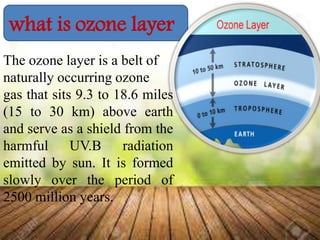
The ozone layer is a belt of
naturally occurring ozone
gas that sits 9.3 to 18.6 miles
(15 to 30 km) above earth
and serve as a shield from the
harmful UV.B radiation
emitted by sun. It is formed
slowly over the period of
2500 million years.
what is ozone layer
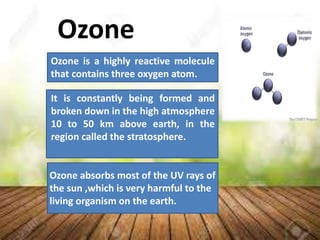
Ozone
Ozone is a highly reactive molecule
that contains three oxygen atom.
It is constantly being formed and
broken down in the high atmosphere
10 to 50 km above earth, in the
region called the stratosphere.
Ozone absorbs most of the UV rays of
the sun ,which is very harmful to the
living organism on the earth.
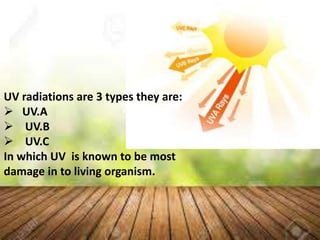
UV radiations are 3 types they are:
 UV.A
 UV.B
 UV.C
In which UV is known to be most
damage in to living organism.
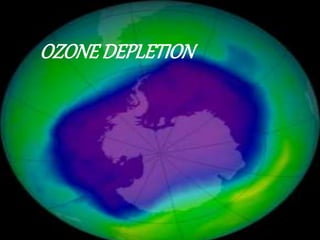
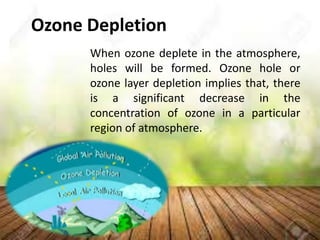
Ozone Depletion
When ozone deplete in the atmosphere,
holes will be formed. Ozone hole or
ozone layer depletion implies that, there
is a significant decrease in the
concentration of ozone in a particular
region of atmosphere.
Joseph Foreman and his
collegians first discovered ozone
layer depletion in 1985. They
found that there is a 40 % of
depletion of ozone layer. They
discovered that the ozone layer
depletion started since 1960s
and about 30 % of ozone layer
has been destroyed.
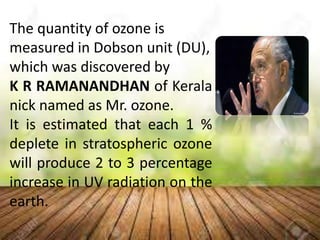
The quantity of ozone is
measured in Dobson unit (DU),
which was discovered by
K R RAMANANDHAN of Kerala
nick named as Mr. ozone.
It is estimated that each 1 %
deplete in stratospheric ozone
will produce 2 to 3 percentage
increase in UV radiation on the
earth.
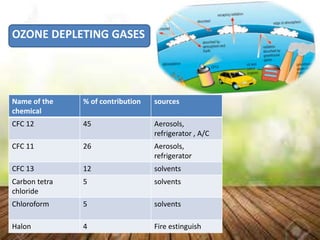
OZONE DEPLETING GASES
Name of the
chemical
% of contribution sources
CFC 12 45 Aerosols,
refrigerator , A/C
CFC 11 26 Aerosols,
refrigerator
CFC 13 12 solvents
Carbon tetra
chloride
5 solvents
Chloroform 5 solvents
Halon 4 Fire estinguish
EFFECTS OF OZONE
LAYER DEPLETION
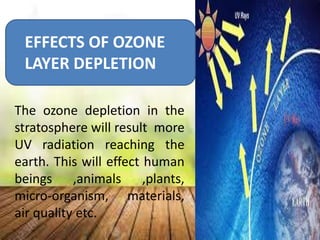
The ozone depletion in the
stratosphere will result more
UV radiation reaching the
earth. This will effect human
beings ,animals ,plants,
micro-organism, materials,
air quality etc.
EFFECTS ON CLIMATE
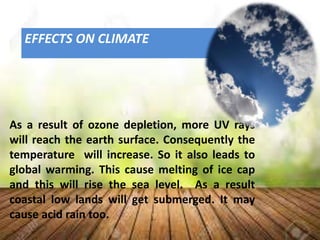
As a result of ozone depletion, more UV rays
will reach the earth surface. Consequently the
temperature will increase. So it also leads to
global warming. This cause melting of ice cap
and this will rise the sea level. As a result
coastal low lands will get submerged. It may
cause acid rain too.
EFFECTS ON HUMAN BEINGS
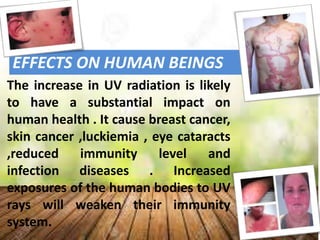
The increase in UV radiation is likely
to have a substantial impact on
human health . It cause breast cancer,
skin cancer ,luckiemia , eye cataracts
,reduced immunity level and
infection diseases . Increased
exposures of the human bodies to UV
rays will weaken their immunity
system.
EFFECTS ON ANIMALS
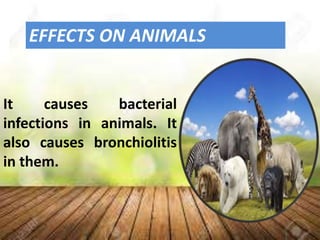
It causes bacterial
infections in animals. It
also causes bronchiolitis
in them.
EFFECT ON PLANT LIFE
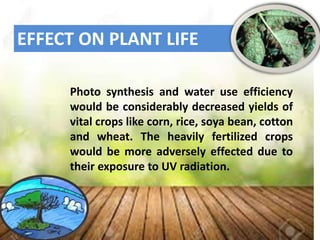
Photo synthesis and water use efficiency
would be considerably decreased yields of
vital crops like corn, rice, soya bean, cotton
and wheat. The heavily fertilized crops
would be more adversely effected due to
their exposure to UV radiation.
EFFECT ON ACQUATIC ECO SYSTEM
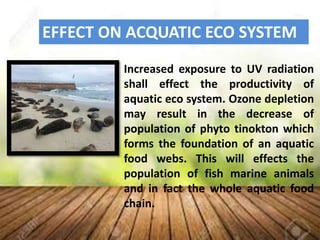
Increased exposure to UV radiation
shall effect the productivity of
aquatic eco system. Ozone depletion
may result in the decrease of
population of phyto tinokton which
forms the foundation of an aquatic
food webs. This will effects the
population of fish marine animals
and in fact the whole aquatic food
chain.
REMEDIAL MEASURES
1. To promote reduction in the production
and consumption of ozone depleting
gases
2. Alternative chemicals for CFC and other
ozone depleting gases
3. Follow the provisions included in the
MONTRIAL PROTOCOL.
MONTRIAL PROTOCOL
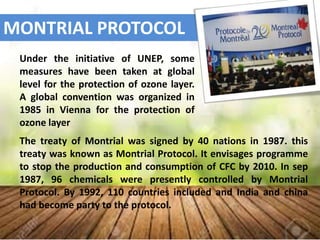
The treaty of Montrial was signed by 40 nations in 1987. this
treaty was known as Montrial Protocol. It envisages programme
to stop the production and consumption of CFC by 2010. In sep
1987, 96 chemicals were presently controlled by Montrial
Protocol. By 1992, 110 countries included and India and china
had become party to the protocol.
Under the initiative of UNEP, some
measures have been taken at global
level for the protection of ozone layer.
A global convention was organized in
1985 in Vienna for the protection of
ozone layer

Ozone layer depletion

  • 1.
  • 2.
    The ozone layeris a belt of naturally occurring ozone gas that sits 9.3 to 18.6 miles (15 to 30 km) above earth and serve as a shield from the harmful UV.B radiation emitted by sun. It is formed slowly over the period of 2500 million years. what is ozone layer
  • 3.
    Ozone Ozone is ahighly reactive molecule that contains three oxygen atom. It is constantly being formed and broken down in the high atmosphere 10 to 50 km above earth, in the region called the stratosphere. Ozone absorbs most of the UV rays of the sun ,which is very harmful to the living organism on the earth.
  • 4.
    UV radiations are3 types they are:  UV.A  UV.B  UV.C In which UV is known to be most damage in to living organism.
  • 5.
    Ozone Depletion When ozonedeplete in the atmosphere, holes will be formed. Ozone hole or ozone layer depletion implies that, there is a significant decrease in the concentration of ozone in a particular region of atmosphere.
  • 6.
    Joseph Foreman andhis collegians first discovered ozone layer depletion in 1985. They found that there is a 40 % of depletion of ozone layer. They discovered that the ozone layer depletion started since 1960s and about 30 % of ozone layer has been destroyed.
  • 7.
    The quantity ofozone is measured in Dobson unit (DU), which was discovered by K R RAMANANDHAN of Kerala nick named as Mr. ozone. It is estimated that each 1 % deplete in stratospheric ozone will produce 2 to 3 percentage increase in UV radiation on the earth.
  • 8.
    OZONE DEPLETING GASES Nameof the chemical % of contribution sources CFC 12 45 Aerosols, refrigerator , A/C CFC 11 26 Aerosols, refrigerator CFC 13 12 solvents Carbon tetra chloride 5 solvents Chloroform 5 solvents Halon 4 Fire estinguish
  • 9.
    EFFECTS OF OZONE LAYERDEPLETION The ozone depletion in the stratosphere will result more UV radiation reaching the earth. This will effect human beings ,animals ,plants, micro-organism, materials, air quality etc.
  • 10.
    EFFECTS ON CLIMATE Asa result of ozone depletion, more UV rays will reach the earth surface. Consequently the temperature will increase. So it also leads to global warming. This cause melting of ice cap and this will rise the sea level. As a result coastal low lands will get submerged. It may cause acid rain too.
  • 11.
    EFFECTS ON HUMANBEINGS The increase in UV radiation is likely to have a substantial impact on human health . It cause breast cancer, skin cancer ,luckiemia , eye cataracts ,reduced immunity level and infection diseases . Increased exposures of the human bodies to UV rays will weaken their immunity system.
  • 12.
    EFFECTS ON ANIMALS Itcauses bacterial infections in animals. It also causes bronchiolitis in them.
  • 13.
    EFFECT ON PLANTLIFE Photo synthesis and water use efficiency would be considerably decreased yields of vital crops like corn, rice, soya bean, cotton and wheat. The heavily fertilized crops would be more adversely effected due to their exposure to UV radiation.
  • 14.
    EFFECT ON ACQUATICECO SYSTEM Increased exposure to UV radiation shall effect the productivity of aquatic eco system. Ozone depletion may result in the decrease of population of phyto tinokton which forms the foundation of an aquatic food webs. This will effects the population of fish marine animals and in fact the whole aquatic food chain.
  • 15.
    REMEDIAL MEASURES 1. Topromote reduction in the production and consumption of ozone depleting gases 2. Alternative chemicals for CFC and other ozone depleting gases 3. Follow the provisions included in the MONTRIAL PROTOCOL.
  • 16.
    MONTRIAL PROTOCOL The treatyof Montrial was signed by 40 nations in 1987. this treaty was known as Montrial Protocol. It envisages programme to stop the production and consumption of CFC by 2010. In sep 1987, 96 chemicals were presently controlled by Montrial Protocol. By 1992, 110 countries included and India and china had become party to the protocol. Under the initiative of UNEP, some measures have been taken at global level for the protection of ozone layer. A global convention was organized in 1985 in Vienna for the protection of ozone layer