Y490 Politics of the Internet November 15, 2011
Some of our original concerns: Does the Internet make it possible for there to be more diversity in the political views expressed in the public sphere? How do we compare the media on the Internet to the media that were previously available? Does the greater amount of user-generated content in blogs and social networks result in stronger democracies?
User-Generated Content and Applications Blogs  and Vlogs Web 2.0 applications Facebook Other social networking sites Twitter eBay Amazon  reviews IMDB  reviews and other content Craigslist Wikipedia Flickr
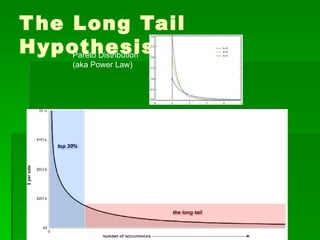
The Long Tail Hypothesis Pareto Distribution (aka Power Law)
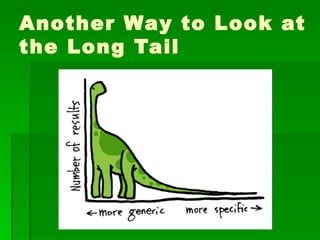
Another Way to Look at the Long Tail
Questions Will the people on the left side of the long curve be hurt by the people on the right side?  If so, what is gained and lost? Does bad behavior by the little guys ruin it for everybody? How can people protect themselves against network mischief?
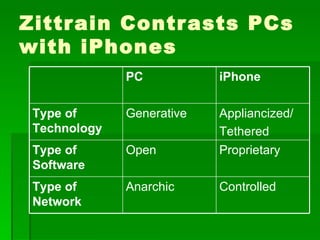
Zittrain Contrasts PCs with iPhones PC iPhone Type of  Technology Generative Appliancized/ Tethered Type of Software Open Proprietary Type of Network Anarchic Controlled
Definition of Generativity “…  a system’s capacity to produce unanticipated change through unfiltered contributions from broad and varied audiences…” (p. 70)
Features of a Generative System (pp. 71-73) Leverage Adaptability Ease of mastery Accessibiity Transferabiity
Basic Propositions (Zittrain, p. 64) The IT ecosystem functions best with generative technology at its core. Generativity instigates a pattern both within and beyond the technological layers of the IT ecosystem. Proponents of generative IT systems ignore the drawbacks attendant to generativity’s success at their peril.
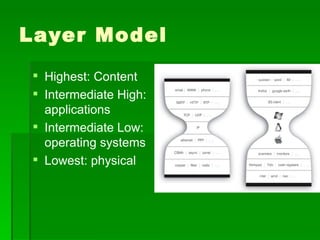
Layer Model Highest: Content Intermediate High: applications Intermediate Low: operating systems Lowest: physical
Advantages of Layers Engineers can tinker with one layer without necessarily affecting the other layers. The hourglass shape means that there is lots of room for innovation above and below the operating systems and protocols levels.
Problems with Generative Technologies and Anarchic Networks Malware: worms, viruses, trojan horses  Incompatibilities in hardware and software which create difficulties for beginners (steep learning curves) Use by criminals, political extremists, hate mongers, pornographers, child molesters, cyberstalkers Vulnerability to cyber attacks of various kinds that go beyond malware (e.g. denial of service attacks, identity theft)
Identity Theft The blanket term for any type of crime wherein the offender uses another individual’s legitimate personal information to commit acts of fraud or deception, typically for illicit financial gain   Where a person’s identification details are obtained through various covert methods, from rifling through the contents of household dustbins to “phishing.’  Phishing  is a form of fraud where the criminal pretends to be a reputable organization that needs information about some business you may have done with them
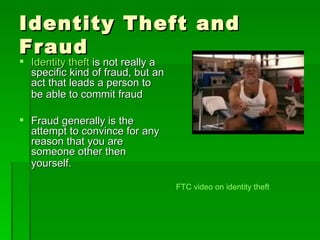
Identity Theft and Fraud Identity theft  is not really a specific kind of fraud, but an act that leads a person to be able to commit fraud   Fraud generally is the attempt to convince for any reason that you are someone other then yourself.   FTC video on identity theft
Examples of Hate Speech on the Internet Nazis and Neo-Nazis Sale of Nazi objects (involving EBay) French policies (involving Yahoo based sales of Nazi stuff) Hate groups Hate Watch
Dangers Inherent in Tethered Systems Network service can reprogram appliances at will (through their periodic updating of appliance software) Some appliances can record private information and make it available to those with access to the network (police for example) Tethered networks can be used for censorship Controversy over Amazon e-books
Examples of Censorship on Tethered Networks Skype in China is used to censor words like  Falun Gong  and  Dalai Lama Google.cn makes searches for Falun Gong and Tibet fail FBI can use  OnStar for surveillance Use of cameras in mobile phones? Flexispy software for cell phones
The News Corporation Scandal News of the World  tabloid in UK hacks into cell phones of Prince Harry and others to get sensational stories Photo of  Prince Harry wearing a Nazi uniform  to a fancy dress party 2002 kidnap and murder of a British schoolgirl,  Milly Dowler Exposure of  top level News Corporation approval of illegal phone hacking in 2011
Should Cell Phones Networks be more like the PC-Based Internet? Cell phone operators clearly are opposed to this Should “net neutrality” be extended to cell phone networks? Should we personally favor PC-like Google-Android platforms over more tethered platforms like Apple’s iTunes, iPod, iPhone, iPad?

Polinter11

  • 1.
    Y490 Politics ofthe Internet November 15, 2011
  • 2.
    Some of ouroriginal concerns: Does the Internet make it possible for there to be more diversity in the political views expressed in the public sphere? How do we compare the media on the Internet to the media that were previously available? Does the greater amount of user-generated content in blogs and social networks result in stronger democracies?
  • 3.
    User-Generated Content andApplications Blogs and Vlogs Web 2.0 applications Facebook Other social networking sites Twitter eBay Amazon reviews IMDB reviews and other content Craigslist Wikipedia Flickr
  • 4.
    The Long TailHypothesis Pareto Distribution (aka Power Law)
  • 5.
    Another Way toLook at the Long Tail
  • 6.
    Questions Will thepeople on the left side of the long curve be hurt by the people on the right side? If so, what is gained and lost? Does bad behavior by the little guys ruin it for everybody? How can people protect themselves against network mischief?
  • 7.
    Zittrain Contrasts PCswith iPhones PC iPhone Type of Technology Generative Appliancized/ Tethered Type of Software Open Proprietary Type of Network Anarchic Controlled
  • 8.
    Definition of Generativity“… a system’s capacity to produce unanticipated change through unfiltered contributions from broad and varied audiences…” (p. 70)
  • 9.
    Features of aGenerative System (pp. 71-73) Leverage Adaptability Ease of mastery Accessibiity Transferabiity
  • 10.
    Basic Propositions (Zittrain,p. 64) The IT ecosystem functions best with generative technology at its core. Generativity instigates a pattern both within and beyond the technological layers of the IT ecosystem. Proponents of generative IT systems ignore the drawbacks attendant to generativity’s success at their peril.
  • 11.
    Layer Model Highest:Content Intermediate High: applications Intermediate Low: operating systems Lowest: physical
  • 12.
    Advantages of LayersEngineers can tinker with one layer without necessarily affecting the other layers. The hourglass shape means that there is lots of room for innovation above and below the operating systems and protocols levels.
  • 13.
    Problems with GenerativeTechnologies and Anarchic Networks Malware: worms, viruses, trojan horses Incompatibilities in hardware and software which create difficulties for beginners (steep learning curves) Use by criminals, political extremists, hate mongers, pornographers, child molesters, cyberstalkers Vulnerability to cyber attacks of various kinds that go beyond malware (e.g. denial of service attacks, identity theft)
  • 14.
    Identity Theft Theblanket term for any type of crime wherein the offender uses another individual’s legitimate personal information to commit acts of fraud or deception, typically for illicit financial gain Where a person’s identification details are obtained through various covert methods, from rifling through the contents of household dustbins to “phishing.’ Phishing is a form of fraud where the criminal pretends to be a reputable organization that needs information about some business you may have done with them
  • 15.
    Identity Theft andFraud Identity theft is not really a specific kind of fraud, but an act that leads a person to be able to commit fraud Fraud generally is the attempt to convince for any reason that you are someone other then yourself. FTC video on identity theft
  • 16.
    Examples of HateSpeech on the Internet Nazis and Neo-Nazis Sale of Nazi objects (involving EBay) French policies (involving Yahoo based sales of Nazi stuff) Hate groups Hate Watch
  • 17.
    Dangers Inherent inTethered Systems Network service can reprogram appliances at will (through their periodic updating of appliance software) Some appliances can record private information and make it available to those with access to the network (police for example) Tethered networks can be used for censorship Controversy over Amazon e-books
  • 18.
    Examples of Censorshipon Tethered Networks Skype in China is used to censor words like Falun Gong and Dalai Lama Google.cn makes searches for Falun Gong and Tibet fail FBI can use OnStar for surveillance Use of cameras in mobile phones? Flexispy software for cell phones
  • 19.
    The News CorporationScandal News of the World tabloid in UK hacks into cell phones of Prince Harry and others to get sensational stories Photo of Prince Harry wearing a Nazi uniform to a fancy dress party 2002 kidnap and murder of a British schoolgirl, Milly Dowler Exposure of top level News Corporation approval of illegal phone hacking in 2011
  • 20.
    Should Cell PhonesNetworks be more like the PC-Based Internet? Cell phone operators clearly are opposed to this Should “net neutrality” be extended to cell phone networks? Should we personally favor PC-like Google-Android platforms over more tethered platforms like Apple’s iTunes, iPod, iPhone, iPad?