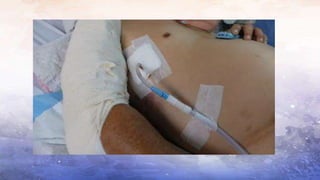
Pneumothorax
-HiteshRohit(3rd yearB.P.T.)
INTRODUCTION:-
• A collapsed lung.
• This condition occurs when air leaks into the space between the
lungs and chest wall(pleura).
• Approximately 40% of pneumothoraces are traumatic (due to
chest wall trauma or iatrogenic procedures).
• Spontaneous pneumothorax occurs without a precipitating
event in individuals with preexisting lung disease.
• The air pushes on the outside of your lung and makes it
collapse.
• Pneumothorax can be a complete lung collapse or a collapse
of only a portion of the lung.
CAUSES:-
• Chest injury-
• Any blunt or penetrating injury to the chest,
• Injuries during physical assaults or car crashes,
• Injuries during medical procedures,i.e. insertion of a needle
into the chest.
• Ruptured air blisters- Small air blisters (blebs) can develop on
the top of the lungs. These blebs sometimes burst-allowing air
to leak into the space that surrounds the lungs.
• Lung disease - COPD, pneumonia and cystic fibrosis
• Mechanical ventilation - A severe type of pneumothorax can
occur in people who need mechanical assistance to breathe.
• The ventilator can create an imbalance of air pressure within
the chest. The lung may collapse completely.
TYPESOFPNEUMOTHORAX:-
• There are three types of pneumothorax-
• 1)open pneumothorax
• 2)close pneumothorax
• 3)tension pneumothorax
• 1)Open pneumothorax
• Open pneumothorax occurs when air gets into the pleural
space from an injury to the chest.
• An open pneumothorax means the air in the pleural space
communicates freely with the outside environment.
• When air can move freely through the chest wall, into and out
of the pleural space, the patient is unable to maintain a
negative pleural space pressure.(plu. Pressure= atm. Pressure)
• Because an effective negative pleural space pressure cannot
be maintained in both the affected and unaffected hemithorax,
the patient’s ability to move air into the lungs is severely
diminished.
• Lung volumes are decreased, lung compliance is decreased,
ventilation–perfusion mismatching is increased, and gas
exchange is impaired.
• 2)Close pneumothorax:-
• Closed pneumothorax is when air or gas gets in the pleural
space without any outside wound.
• This sometimes happens when the lung is already injured
somehow, like from diseases such as cancer or cystic fibrosis.
• Pleural pressure is negative.
3) Tension pneumothorax:-
• Air trapped into pleura due to leak in pleuralspace.
• A tension pneumothorax means air can enter the pleural space
but cannot escape into the external environment.
• This is an acute life-threatening situation.
• As air continues to enter and become trapped in the pleural
space, the intrapleural pressure rapidly increases.
• This causes the lung on the involved side to collapse.
• The mediastinal structures are pushed away from the affected
side.
• The increased thoracic pressure causes a decrease in venous
return, cardiac output falls, and systemic hypotension and
shock are the result.
• Lung volumes are significantly reduced, lung compliance is
decreased, and the alveolar-capillary surface area available for
gas exchange is cut by more than 50%
CLINICALPRESENTATION:-
• A steady ache in the chest
• Shortness of breath/dyspnea
• Breaking out in a cold sweat
• Tightness in the chest
• Cyanosis
• Severe tachycardia
• Hypotension
DIAGNOSIS:-
• Possible deviation of mediastinum toward contralateral side
• Decreased or absent breath sounds with decreased or absent
vocal fremitus on the affected side
• Abnormal chest x-ray showing dense-appearing underlying lung
tissue; thin, fine line at periphery;
and uniform translucency with complete absence of lung markings in
area of pneumothorax;
possible overexpansion of the affected rib cage with
flattening of the hemidiaphragm if pneumothorax is large.
TREATMENT:-
• The definitive treatment of an open pneumothorax is the
application of an airtight, sterile dressing over the sucking
chest wound and the placement of a chest tube into the pleural
space of the affected hemithorax.
• The chest tube is connected to suction so that the air and any
fluid or blood within the pleural space can be evacuated.
• These measures will reexpand the collapsed lung.
• Mechanical ventilation and supplemental oxygen may be
required until the patient can maintain tissue oxygenation
independently.
• A tension pneumothorax is treated as an emergency by
inserting a needle into the pleural space to allow air to escape.
• This is immediately followed by placement of a chest tube
connected to suction so that air can be continuously evacuated
from the pleural space along with any blood or fluid.
• Pleurodesis in patients with repetitive pneumothorax
(a procedure which obliterates the pleural space to prevent
future pneumothoraces)
Pneumothorax.HR
Pneumothorax.HR

Pneumothorax.HR

  • 1.
  • 2.
    INTRODUCTION:- • A collapsedlung. • This condition occurs when air leaks into the space between the lungs and chest wall(pleura). • Approximately 40% of pneumothoraces are traumatic (due to chest wall trauma or iatrogenic procedures). • Spontaneous pneumothorax occurs without a precipitating event in individuals with preexisting lung disease.
  • 3.
    • The airpushes on the outside of your lung and makes it collapse. • Pneumothorax can be a complete lung collapse or a collapse of only a portion of the lung.
  • 5.
    CAUSES:- • Chest injury- •Any blunt or penetrating injury to the chest, • Injuries during physical assaults or car crashes, • Injuries during medical procedures,i.e. insertion of a needle into the chest. • Ruptured air blisters- Small air blisters (blebs) can develop on the top of the lungs. These blebs sometimes burst-allowing air to leak into the space that surrounds the lungs.
  • 6.
    • Lung disease- COPD, pneumonia and cystic fibrosis • Mechanical ventilation - A severe type of pneumothorax can occur in people who need mechanical assistance to breathe. • The ventilator can create an imbalance of air pressure within the chest. The lung may collapse completely.
  • 7.
    TYPESOFPNEUMOTHORAX:- • There arethree types of pneumothorax- • 1)open pneumothorax • 2)close pneumothorax • 3)tension pneumothorax
  • 8.
    • 1)Open pneumothorax •Open pneumothorax occurs when air gets into the pleural space from an injury to the chest. • An open pneumothorax means the air in the pleural space communicates freely with the outside environment. • When air can move freely through the chest wall, into and out of the pleural space, the patient is unable to maintain a negative pleural space pressure.(plu. Pressure= atm. Pressure)
  • 9.
    • Because aneffective negative pleural space pressure cannot be maintained in both the affected and unaffected hemithorax, the patient’s ability to move air into the lungs is severely diminished. • Lung volumes are decreased, lung compliance is decreased, ventilation–perfusion mismatching is increased, and gas exchange is impaired.
  • 10.
    • 2)Close pneumothorax:- •Closed pneumothorax is when air or gas gets in the pleural space without any outside wound. • This sometimes happens when the lung is already injured somehow, like from diseases such as cancer or cystic fibrosis. • Pleural pressure is negative.
  • 12.
    3) Tension pneumothorax:- •Air trapped into pleura due to leak in pleuralspace. • A tension pneumothorax means air can enter the pleural space but cannot escape into the external environment. • This is an acute life-threatening situation. • As air continues to enter and become trapped in the pleural space, the intrapleural pressure rapidly increases. • This causes the lung on the involved side to collapse. • The mediastinal structures are pushed away from the affected side.
  • 13.
    • The increasedthoracic pressure causes a decrease in venous return, cardiac output falls, and systemic hypotension and shock are the result. • Lung volumes are significantly reduced, lung compliance is decreased, and the alveolar-capillary surface area available for gas exchange is cut by more than 50%
  • 14.
    CLINICALPRESENTATION:- • A steadyache in the chest • Shortness of breath/dyspnea • Breaking out in a cold sweat • Tightness in the chest • Cyanosis • Severe tachycardia • Hypotension
  • 15.
    DIAGNOSIS:- • Possible deviationof mediastinum toward contralateral side • Decreased or absent breath sounds with decreased or absent vocal fremitus on the affected side • Abnormal chest x-ray showing dense-appearing underlying lung tissue; thin, fine line at periphery; and uniform translucency with complete absence of lung markings in area of pneumothorax; possible overexpansion of the affected rib cage with flattening of the hemidiaphragm if pneumothorax is large.
  • 18.
    TREATMENT:- • The definitivetreatment of an open pneumothorax is the application of an airtight, sterile dressing over the sucking chest wound and the placement of a chest tube into the pleural space of the affected hemithorax. • The chest tube is connected to suction so that the air and any fluid or blood within the pleural space can be evacuated. • These measures will reexpand the collapsed lung.
  • 19.
    • Mechanical ventilationand supplemental oxygen may be required until the patient can maintain tissue oxygenation independently. • A tension pneumothorax is treated as an emergency by inserting a needle into the pleural space to allow air to escape. • This is immediately followed by placement of a chest tube connected to suction so that air can be continuously evacuated from the pleural space along with any blood or fluid.
  • 20.
    • Pleurodesis inpatients with repetitive pneumothorax (a procedure which obliterates the pleural space to prevent future pneumothoraces)