


Pneumonia in Children
Classification, Epidemiology, Etiology, Pathology
Clinical Features, Complications, Management
Prognosis and Prevention
Prof. Imran Iqbal
Fellowship in Pediatric Neurology (Australia)
Prof of Paediatrics (2003-2018)
Prof of Pediatrics Emeritus, CHICH
Prof of Pediatrics, CIMS
Multan, Pakistan
(God speaking to Prophet Muhammad (PBUH)
And HE (Allah) raised the heavens and imposed the balance.
So that you do not transgress in the balance.
Keep the balance with justice and do not reduce the measure
Al Quran surah Al-Rehman 55:7-9
Case scenario
• A 12 months old baby presents in emergency with cough
and fever for the last 2 days. Mother says, he is having wet
cough which comes many times a day. Baby is feeding much
less than before.
• On examination, On examination, his temperature is 102.5
F. His respiration is 55 per minute and chest indrawing is
present. On auscultation of chest, and coarse inspiratory
crepitations are bilaterally audible.
• How will you classify this child in IMNCI ?
• What is your most likely diagnosis ?
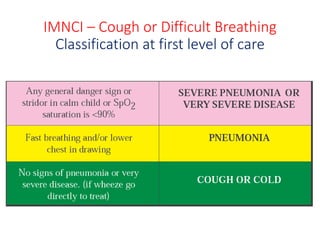
IMNCI – Cough or Difficult Breathing
Classification at first level of care
IMNCI
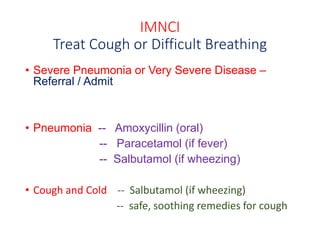
Treat Cough or Difficult Breathing
• Severe Pneumonia or Very Severe Disease –
Referral / Admit
• Pneumonia -- Amoxycillin (oral)
-- Paracetamol (if fever)
-- Salbutamol (if wheezing)
• Cough and Cold -- Salbutamol (if wheezing)
-- safe, soothing remedies for cough
Causes of Fast Breathing or Chest Indrawing
• Pneumonia
• Bronchiolitis
• Asthma
• Airway obstruction (causes stridor)
• Pleural effusion / empyema
• Congestive heart failure
• Renal failure
• Metabolic acidosis
Case scenario
• A 12 months old baby presents in emergency with cough
and fever for the last 2 days. Mother says, he is having wet
cough which comes many times a day. Baby is feeding much
less than before.
• On examination, On examination, his temperature is 102.5
F. His respiration is 55 per minute and chest indrawing is
present. On auscultation of chest, and coarse inspiratory
crepitations are bilaterally audible.
• What is your most likely diagnosis ?
• BRONCHOPNEUMONIA
Case Scenario
• A 9 years old child presents to OPD with cough and fever for
the last 3 days.
• On examination, child is having wet cough. His temperature
is 103 F. His respiration is 35 per minute.
• Examination of chest shows dull percussion note at left
infra-scapular region. On auscultation of chest, at the same
area, intensity of breath sounds is decreased and breathing
is bronchial. His temperature is 103 F.
• What is your most likely diagnosis ?
Case Scenario
• A 9 years old child presents to OPD with cough and fever for
the last 3 days.
• On examination, child is having wet cough. His temperature
is 103 F. His respiration is 35 per minute.
• Examination of chest shows dull percussion note at left
infra-scapular region. On auscultation of chest, at the same
area, intensity of breath sounds is decreased and breathing
is bronchial. His temperature is 103 F.
• What is your most likely diagnosis ?
• LOBAR PNEUMONIA
Pneumonia
• Pneumonia is inflammation of lung parenchyma
• Common cause of Pneumonia is a VIRAL or BACTERIAL
infection
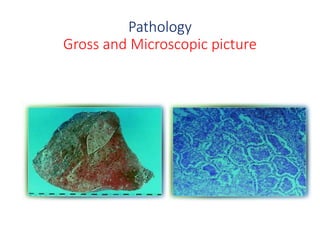
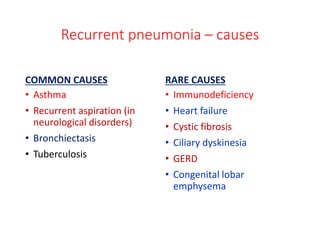
• Pathologically, there is consolidation of alveolar spaces with
fluid filled alveoli
Epidemiology
• It is the most common cause of deaths in children
less than 5 years of age
• Pneumonia is a common terminal illness before
death in many childhood diseases
• Respiratory tract contains many non-pathogenic
and few pathogenic bacteria even in healthy
children
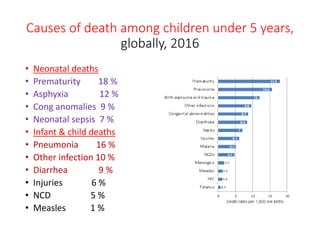
Causes of death among children under 5 years,
globally, 2016
• Neonatal deaths
• Prematurity 18 %
• Asphyxia 12 %
• Cong anomalies 9 %
• Neonatal sepsis 7 %
• Infant & child deaths
• Pneumonia 16 %
• Other infection 10 %
• Diarrhea 9 %
• Injuries 6 %
• NCD 5 %
• Measles 1 %
Etiology – Micro-organisms
• Newborn
• Klebsiella Pneumoniae
• Pseudomonas
• E. coli
• Staph aureus
• Viruses – RSV, Human
metapneumo virus
• Child
• Streptococcus
pneumoniae
• Haemophilus influenzae
• Staphylococcus aureus
• Mycoplasma pneumonia
• Viruses – measles, RSV,
influenza
• Mycobacterium
tuberculosis
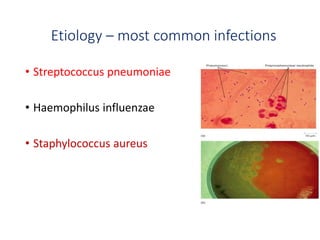
Etiology – most common infections
• Streptococcus pneumoniae
• Haemophilus influenzae
• Staphylococcus aureus
Etiology –
Other types / causes of Pneumonia
• Aspiration Pneumonia – inhalation of food contents,
common in preterm newborns
• Chemical Pneumonia – inhalation of hydrocarbons in
poisoning
• Eosinophilic pneumonia – due to allergy to bird or animal
antigens or worm infestations
• Nosocomial Pneumonia / Health-care associated pneumonia
– develops as a complication in sick admitted patients
• Interstitial Pneumonia – inflammation of interstitial tissues
associated with fibrosis usually due to non-infective causes
Pathogenesis
• Commonly, viral and bacterial Infections causing
pneumonia spread from infected individuals by
droplet infection
• Micro-organisms present in patient airways can
cause pneumonia when the immune mechanisms
are impaired
• Pneumonia can develop as a result of blood stream
infections
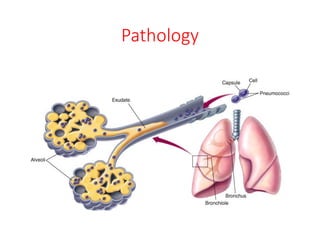
Pathology
Pathology
Gross and Microscopic picture
Recurrent pneumonia – causes
COMMON CAUSES
• Asthma
• Recurrent aspiration (in
neurological disorders)
• Bronchiectasis
• Tuberculosis
RARE CAUSES
• Immunodeficiency
• Heart failure
• Cystic fibrosis
• Ciliary dyskinesia
• GERD
• Congenital lobar
emphysema
Pneumonia - Clinical Features
• Symptoms
• Runny nose (viral infections)
• Cough – dry (viral infections), wet (bacterial infection)
• Wheeze (allergy)
• Fever (low to high)
• Chest / abdominal pains (pleural involvement)
• Signs on Examination
• Fast breathing
• Chest indrawing
• Nasal flaring, use of accessory muscles of respiration
• Crepitations on auscultation
• Bronchial breath sounds
Clinical DIAGNOSIS
PNEUMONIA can be clinically diagnosed in children
on the presence of
any of these clinical findings
• Fast breathing
• Lower Chest wall indrawing
• Inspiratory coarse crepitations
• Bronchial breath sounds
Investigations
• CBC
• CRP
• Chest X-ray
• HRCT chest
• USG chest
• Blood culture
• Lung aspirate cultures
• Pleural fluid examination
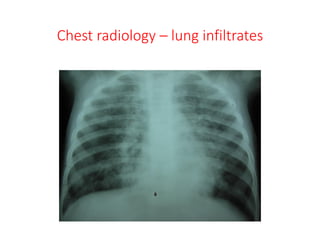
Chest radiology – lung infiltrates
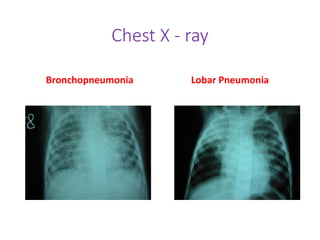
Chest X - ray
Bronchopneumonia Lobar Pneumonia
Complications
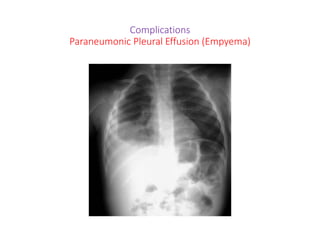
• Para-pneumonic Pleural Effusion
• Empyema
• Pneumothorax
• Lung abscess
• Bronchiectasis
• Respiratory failure
• Meningitis
• Septic shock
Complications
Paraneumonic Pleural Effusion (Empyema)
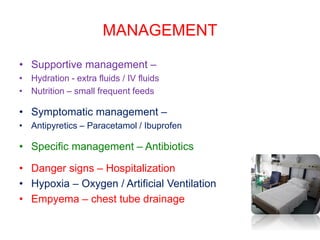
MANAGEMENT
• Supportive management –
• Hydration - extra fluids / IV fluids
• Nutrition – small frequent feeds
• Symptomatic management –
• Antipyretics – Paracetamol / Ibuprofen
• Specific management – Antibiotics
• Danger signs – Hospitalization
• Hypoxia – Oxygen / Artificial Ventilation
• Empyema – chest tube drainage
Choice of antibiotics in PNEUMONIA
• OPD / INITIAL / UNCOMPLICATED
= Amoxicillin (high dose),
= Co-amoxiclav
--- Azithromycin (in older children)
--- Moxifloxacin (in adolescents)
• HOSPITALIZED / UNRESPONSIVE / SEVERE
• 1st Line : Ampicillin + Gentamicin / Ceftriaxone
• 2nd Line : Co-amoxiclav and / or Moxifloxacin
• 3rd Line : Linezolid / Vancomycin (MRSA) and /or
Meropenem / Imipenem (newborns and infants)
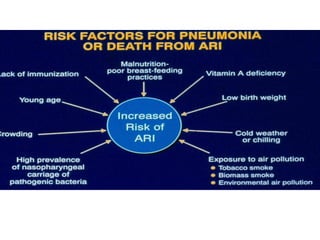
PREVENTION
Prevention of
Acute Respiratory Infections
• Vaccination –
Penta (DPT, Hib, Hep B),
Pneumococcal, Measles,
Influenza, Covid 19
• Breastfeeding, Nutrition, Micronutrients
• Masks and Social Distancing
• Hand washing,
• Control of smoking, air pollution, cold air
Thank You

Pneumonia in children 2021

  • 1.
    Pneumonia in Children Classification,Epidemiology, Etiology, Pathology Clinical Features, Complications, Management Prognosis and Prevention Prof. Imran Iqbal Fellowship in Pediatric Neurology (Australia) Prof of Paediatrics (2003-2018) Prof of Pediatrics Emeritus, CHICH Prof of Pediatrics, CIMS Multan, Pakistan
  • 2.
    (God speaking toProphet Muhammad (PBUH) And HE (Allah) raised the heavens and imposed the balance. So that you do not transgress in the balance. Keep the balance with justice and do not reduce the measure Al Quran surah Al-Rehman 55:7-9
  • 3.
    Case scenario • A12 months old baby presents in emergency with cough and fever for the last 2 days. Mother says, he is having wet cough which comes many times a day. Baby is feeding much less than before. • On examination, On examination, his temperature is 102.5 F. His respiration is 55 per minute and chest indrawing is present. On auscultation of chest, and coarse inspiratory crepitations are bilaterally audible. • How will you classify this child in IMNCI ? • What is your most likely diagnosis ?
  • 4.
    IMNCI – Coughor Difficult Breathing Classification at first level of care
  • 5.
    IMNCI Treat Cough orDifficult Breathing • Severe Pneumonia or Very Severe Disease – Referral / Admit • Pneumonia -- Amoxycillin (oral) -- Paracetamol (if fever) -- Salbutamol (if wheezing) • Cough and Cold -- Salbutamol (if wheezing) -- safe, soothing remedies for cough
  • 6.
    Causes of FastBreathing or Chest Indrawing • Pneumonia • Bronchiolitis • Asthma • Airway obstruction (causes stridor) • Pleural effusion / empyema • Congestive heart failure • Renal failure • Metabolic acidosis
  • 7.
    Case scenario • A12 months old baby presents in emergency with cough and fever for the last 2 days. Mother says, he is having wet cough which comes many times a day. Baby is feeding much less than before. • On examination, On examination, his temperature is 102.5 F. His respiration is 55 per minute and chest indrawing is present. On auscultation of chest, and coarse inspiratory crepitations are bilaterally audible. • What is your most likely diagnosis ? • BRONCHOPNEUMONIA
  • 8.
    Case Scenario • A9 years old child presents to OPD with cough and fever for the last 3 days. • On examination, child is having wet cough. His temperature is 103 F. His respiration is 35 per minute. • Examination of chest shows dull percussion note at left infra-scapular region. On auscultation of chest, at the same area, intensity of breath sounds is decreased and breathing is bronchial. His temperature is 103 F. • What is your most likely diagnosis ?
  • 9.
    Case Scenario • A9 years old child presents to OPD with cough and fever for the last 3 days. • On examination, child is having wet cough. His temperature is 103 F. His respiration is 35 per minute. • Examination of chest shows dull percussion note at left infra-scapular region. On auscultation of chest, at the same area, intensity of breath sounds is decreased and breathing is bronchial. His temperature is 103 F. • What is your most likely diagnosis ? • LOBAR PNEUMONIA
  • 10.
    Pneumonia • Pneumonia isinflammation of lung parenchyma • Common cause of Pneumonia is a VIRAL or BACTERIAL infection • Pathologically, there is consolidation of alveolar spaces with fluid filled alveoli
  • 11.
    Epidemiology • It isthe most common cause of deaths in children less than 5 years of age • Pneumonia is a common terminal illness before death in many childhood diseases • Respiratory tract contains many non-pathogenic and few pathogenic bacteria even in healthy children
  • 12.
    Causes of deathamong children under 5 years, globally, 2016 • Neonatal deaths • Prematurity 18 % • Asphyxia 12 % • Cong anomalies 9 % • Neonatal sepsis 7 % • Infant & child deaths • Pneumonia 16 % • Other infection 10 % • Diarrhea 9 % • Injuries 6 % • NCD 5 % • Measles 1 %
  • 13.
    Etiology – Micro-organisms •Newborn • Klebsiella Pneumoniae • Pseudomonas • E. coli • Staph aureus • Viruses – RSV, Human metapneumo virus • Child • Streptococcus pneumoniae • Haemophilus influenzae • Staphylococcus aureus • Mycoplasma pneumonia • Viruses – measles, RSV, influenza • Mycobacterium tuberculosis
  • 14.
    Etiology – mostcommon infections • Streptococcus pneumoniae • Haemophilus influenzae • Staphylococcus aureus
  • 15.
    Etiology – Other types/ causes of Pneumonia • Aspiration Pneumonia – inhalation of food contents, common in preterm newborns • Chemical Pneumonia – inhalation of hydrocarbons in poisoning • Eosinophilic pneumonia – due to allergy to bird or animal antigens or worm infestations • Nosocomial Pneumonia / Health-care associated pneumonia – develops as a complication in sick admitted patients • Interstitial Pneumonia – inflammation of interstitial tissues associated with fibrosis usually due to non-infective causes
  • 16.
    Pathogenesis • Commonly, viraland bacterial Infections causing pneumonia spread from infected individuals by droplet infection • Micro-organisms present in patient airways can cause pneumonia when the immune mechanisms are impaired • Pneumonia can develop as a result of blood stream infections
  • 17.
  • 18.
  • 19.
    Recurrent pneumonia –causes COMMON CAUSES • Asthma • Recurrent aspiration (in neurological disorders) • Bronchiectasis • Tuberculosis RARE CAUSES • Immunodeficiency • Heart failure • Cystic fibrosis • Ciliary dyskinesia • GERD • Congenital lobar emphysema
  • 20.
    Pneumonia - ClinicalFeatures • Symptoms • Runny nose (viral infections) • Cough – dry (viral infections), wet (bacterial infection) • Wheeze (allergy) • Fever (low to high) • Chest / abdominal pains (pleural involvement) • Signs on Examination • Fast breathing • Chest indrawing • Nasal flaring, use of accessory muscles of respiration • Crepitations on auscultation • Bronchial breath sounds
  • 21.
    Clinical DIAGNOSIS PNEUMONIA canbe clinically diagnosed in children on the presence of any of these clinical findings • Fast breathing • Lower Chest wall indrawing • Inspiratory coarse crepitations • Bronchial breath sounds
  • 22.
    Investigations • CBC • CRP •Chest X-ray • HRCT chest • USG chest • Blood culture • Lung aspirate cultures • Pleural fluid examination
  • 23.
    Chest radiology –lung infiltrates
  • 24.
    Chest X -ray Bronchopneumonia Lobar Pneumonia
  • 25.
    Complications • Para-pneumonic PleuralEffusion • Empyema • Pneumothorax • Lung abscess • Bronchiectasis • Respiratory failure • Meningitis • Septic shock
  • 26.
  • 27.
    MANAGEMENT • Supportive management– • Hydration - extra fluids / IV fluids • Nutrition – small frequent feeds • Symptomatic management – • Antipyretics – Paracetamol / Ibuprofen • Specific management – Antibiotics • Danger signs – Hospitalization • Hypoxia – Oxygen / Artificial Ventilation • Empyema – chest tube drainage
  • 28.
    Choice of antibioticsin PNEUMONIA • OPD / INITIAL / UNCOMPLICATED = Amoxicillin (high dose), = Co-amoxiclav --- Azithromycin (in older children) --- Moxifloxacin (in adolescents) • HOSPITALIZED / UNRESPONSIVE / SEVERE • 1st Line : Ampicillin + Gentamicin / Ceftriaxone • 2nd Line : Co-amoxiclav and / or Moxifloxacin • 3rd Line : Linezolid / Vancomycin (MRSA) and /or Meropenem / Imipenem (newborns and infants)
  • 29.
  • 31.
    Prevention of Acute RespiratoryInfections • Vaccination – Penta (DPT, Hib, Hep B), Pneumococcal, Measles, Influenza, Covid 19 • Breastfeeding, Nutrition, Micronutrients • Masks and Social Distancing • Hand washing, • Control of smoking, air pollution, cold air
  • 32.