Postmortem changes after death
 Immediate Changes
 Early Changes
 Late Changes
Immediate changes
• Permanent Cessation of Brain function
• Complete Cessation of Circulatory function
• Entire and permanent cessation of Respiratory
function
 Pallor and loss of elasticity of skin
 Changes in eye
 Primary flaccidity of muscles
 Cooling of the body
 Postmortem lividity
 Rigor mortis
 Putrefaction
 Adipocere formation
 Munmmification
Permanent Cessation of Brain function:
• Loss of Sensations; viz,
touch, pain and temperature
• Loss of reflexes
• Total loss of E.E.G. Rhythem
• Confirmation of Brain- stem death
Brain –stem death:
• The patient must be comatose state at least six
hours.
• No Abnormal Decorticate or decerebrate
postures should be present
• All brain-stem reflexes must be absent.
• Pupils should be fixed
• No Corneal reflex
• Absent of the oculo-cepralic reflex
• Absent vestibulo-ocular reflexes
• No Motor responses
• No Gag reflex
• No Respiratory movements
After disconnection of ventilator.
 Cessation of respiration
 Cessation of circulation
It is a condition in which the vital functions of the
body are at such a low level that they cannot be
appreciated by clinical examination
Apparent death
This may last few seconds to minutes.
Voluntary- by yogis
Involuntary – drowning, electrocution, heat
stroke, typhoid fever etc.
• Changes in the eye
• Changes in the skin
• Cooling of the body/Algor mortis
• Post mortem lividity/Hypostasis
• Rigor mortis/Cadaveric rigidity

Corneal Changes;
• Loss of Clear Glistening
• Dry, Cloudy and opaque
• Loss of reflexes
• Light reflex abolished
• Intra Ocular tension falls, eye balls become
flaccid and sink in the orbit
• Blood flow in the retina becomes dotted and
segmented look -. Kevorkian sign
• Optic disc looks pale.
• Pupils fully dilated in the early stage and
constict later due rigor mortis.
• Brownish discolouration of the sclera due to
cellular debris and dust
Taches Noires
• Loss of its translucency
• Pale and Ashy white appearance
• Loss of Elasticity
• Wounds will not gape if it is inflicted after
death
• Wounds caused during life will retain their
characteristic features.
• Imbalance between heat production and heat
loss.
• Loss of heat of body by means of conduction
convection and radiation, till it balances with
the temperature of surroundings.
• Rate of cooling is fast during first few hours
and later slows.
 Measurement of body temperature
 Rate of cooling
 Estimation of time since death
 Factors modifying cooling
• Temperature is recorded by Chemical
thermometer- Thanotometer 25 cms.
• Recording of temperature :
Normal temp. – Rectal temp.
Rate of temp. fall/hour
• Variation of body temperature
• Conditions in which heat may be retained or
increased.
The rate of cooling of the body is modified by the
following conditions;
• Age
• Condition of the body
• Mode of death
• Surroundings
• Environmental temperature
- Sun stroke and pontine haemorrhage,
disturbed heat regulating mechanism.
- Tetanus and strychnine poisoning, due to
increase in heat production in the muscle.
- Acute bacterial or viral infection, lobar
pneumonia, typhoid fever, encephalitis, etc.
- Intense asphyxial conditions- rise of temp by 2-
3 c at death
“ Postmortem Caloricity”
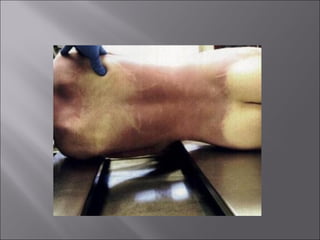
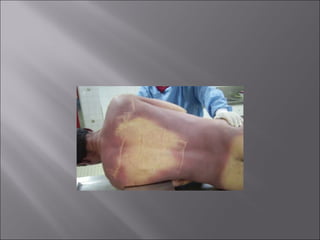
It means discolouration or staining of the skin and
organs after death due to accumulation of fluid
blood in the dependent parts of the body.
Post mortem staining/Hypostasis/Suggilation/
Vabices/ Livour mortis.
1- 3 hr. Starts
6-8 hr. Fixes.
• Commencement of Lividity
• Development of lividity
• Fixation of lividity
• Site of distribution
• Pattern
• Extent
• Difference between lividity and bruise.
• It is a reliable sign of death
• It gives the information about the position of
the body at the time of death
• Time since death can be estimated
• Colour suggest the cause of death
• Distribution of lividity may give the
information about the manner of death
• Primary relaxation/ Flaccidity
• Rigor mortis/Cadaveric rigidity
• Secondary relaxation
Starts immediately after death with generalised
relaxation of muscle tone:
• Drop of lower Jaw
• Eye balls lose their tension
• Pupils are dilated
• Joints are flabby
• Smooth relaxation- incontinence of Urine and
Faeces.
Rigor Mortis/ Cadaveric rigidity :
This phenomenon comes immediately after the
muscles have lost the power of contractility
and is irreversible changes in the muscles of the
body, both voluntary and involuntary.
Myofibrils
Myosin and Actin
Adenosine Triphosphate – A.T.P.
Time of Onset :
Temperate climates – 3-6 hours
Tropical climates – 1-2 hours
• Rigor mortis generally occurs when body is
cold.
• Not related to nerves action
• Develops in paralysed limbs also
• First appear in involuntary muscles
• Last to be affected finger and toes muscles.
* Temperate climate – lasts for 2-3 days.
• Tropical climate – 24 – 48 hours in winter
18 - 36 hours in summer
• In general – 1-2 hours sets on
for , 12 hours develops
for - 12 hours maintaines
and after 12 hours passes of
Circumstances modifying the Onset and
Duration of Rigor mortis.
Age- Rigor – Mortis is very rare in premature
infants.
Rigor –mortis is slow in adolescent
and healthy adults
Muscular conditon and activity before death.
Onset is slow and duration is longer in muscular
and healthy body at rest.
• In wasting disease and great exhaustion-
cholera, plague, typhoid, T.B. Cancer etc. the
onset is early and disappears soon.
• In diseases – Pneumonia, asphyxia and
nervous conditions- onset is delayed
Atmospheric condtions:
• In dry and cold air-onset slow and lost for long
time. Warm and moist air onset is rapid and
duration short.
• Heat Stiffening
• Cold Stiffening
• Cadaveric Spasm
Secondary Relaxation :
• Muscles become soft and Flaccid
• Do not respond to a mechnical and electrical
stimulus.
Pm changes

Pm changes

  • 2.
    Postmortem changes afterdeath  Immediate Changes  Early Changes  Late Changes
  • 3.
    Immediate changes • PermanentCessation of Brain function • Complete Cessation of Circulatory function • Entire and permanent cessation of Respiratory function
  • 4.
     Pallor andloss of elasticity of skin  Changes in eye  Primary flaccidity of muscles  Cooling of the body  Postmortem lividity  Rigor mortis
  • 5.
     Putrefaction  Adipocereformation  Munmmification
  • 6.
    Permanent Cessation ofBrain function: • Loss of Sensations; viz, touch, pain and temperature • Loss of reflexes • Total loss of E.E.G. Rhythem • Confirmation of Brain- stem death
  • 7.
    Brain –stem death: •The patient must be comatose state at least six hours. • No Abnormal Decorticate or decerebrate postures should be present • All brain-stem reflexes must be absent.
  • 8.
    • Pupils shouldbe fixed • No Corneal reflex • Absent of the oculo-cepralic reflex • Absent vestibulo-ocular reflexes • No Motor responses • No Gag reflex • No Respiratory movements After disconnection of ventilator.
  • 9.
     Cessation ofrespiration  Cessation of circulation
  • 10.
    It is acondition in which the vital functions of the body are at such a low level that they cannot be appreciated by clinical examination Apparent death This may last few seconds to minutes. Voluntary- by yogis Involuntary – drowning, electrocution, heat stroke, typhoid fever etc.
  • 11.
    • Changes inthe eye • Changes in the skin • Cooling of the body/Algor mortis • Post mortem lividity/Hypostasis • Rigor mortis/Cadaveric rigidity
  • 12.
     Corneal Changes; • Lossof Clear Glistening • Dry, Cloudy and opaque • Loss of reflexes • Light reflex abolished • Intra Ocular tension falls, eye balls become flaccid and sink in the orbit • Blood flow in the retina becomes dotted and segmented look -. Kevorkian sign
  • 13.
    • Optic disclooks pale. • Pupils fully dilated in the early stage and constict later due rigor mortis. • Brownish discolouration of the sclera due to cellular debris and dust Taches Noires
  • 14.
    • Loss ofits translucency • Pale and Ashy white appearance • Loss of Elasticity • Wounds will not gape if it is inflicted after death • Wounds caused during life will retain their characteristic features.
  • 15.
    • Imbalance betweenheat production and heat loss. • Loss of heat of body by means of conduction convection and radiation, till it balances with the temperature of surroundings. • Rate of cooling is fast during first few hours and later slows.
  • 16.
     Measurement ofbody temperature  Rate of cooling  Estimation of time since death  Factors modifying cooling
  • 17.
    • Temperature isrecorded by Chemical thermometer- Thanotometer 25 cms. • Recording of temperature : Normal temp. – Rectal temp. Rate of temp. fall/hour • Variation of body temperature • Conditions in which heat may be retained or increased.
  • 18.
    The rate ofcooling of the body is modified by the following conditions; • Age • Condition of the body • Mode of death • Surroundings • Environmental temperature
  • 19.
    - Sun strokeand pontine haemorrhage, disturbed heat regulating mechanism. - Tetanus and strychnine poisoning, due to increase in heat production in the muscle. - Acute bacterial or viral infection, lobar pneumonia, typhoid fever, encephalitis, etc. - Intense asphyxial conditions- rise of temp by 2- 3 c at death “ Postmortem Caloricity”
  • 20.
    It means discolourationor staining of the skin and organs after death due to accumulation of fluid blood in the dependent parts of the body. Post mortem staining/Hypostasis/Suggilation/ Vabices/ Livour mortis. 1- 3 hr. Starts 6-8 hr. Fixes.
  • 21.
    • Commencement ofLividity • Development of lividity • Fixation of lividity • Site of distribution • Pattern • Extent • Difference between lividity and bruise.
  • 22.
    • It isa reliable sign of death • It gives the information about the position of the body at the time of death • Time since death can be estimated • Colour suggest the cause of death • Distribution of lividity may give the information about the manner of death
  • 25.
    • Primary relaxation/Flaccidity • Rigor mortis/Cadaveric rigidity • Secondary relaxation
  • 26.
    Starts immediately afterdeath with generalised relaxation of muscle tone: • Drop of lower Jaw • Eye balls lose their tension • Pupils are dilated • Joints are flabby • Smooth relaxation- incontinence of Urine and Faeces.
  • 27.
    Rigor Mortis/ Cadavericrigidity : This phenomenon comes immediately after the muscles have lost the power of contractility and is irreversible changes in the muscles of the body, both voluntary and involuntary. Myofibrils Myosin and Actin Adenosine Triphosphate – A.T.P.
  • 28.
    Time of Onset: Temperate climates – 3-6 hours Tropical climates – 1-2 hours • Rigor mortis generally occurs when body is cold. • Not related to nerves action • Develops in paralysed limbs also • First appear in involuntary muscles • Last to be affected finger and toes muscles.
  • 29.
    * Temperate climate– lasts for 2-3 days. • Tropical climate – 24 – 48 hours in winter 18 - 36 hours in summer • In general – 1-2 hours sets on for , 12 hours develops for - 12 hours maintaines and after 12 hours passes of
  • 30.
    Circumstances modifying theOnset and Duration of Rigor mortis. Age- Rigor – Mortis is very rare in premature infants. Rigor –mortis is slow in adolescent and healthy adults Muscular conditon and activity before death. Onset is slow and duration is longer in muscular and healthy body at rest.
  • 31.
    • In wastingdisease and great exhaustion- cholera, plague, typhoid, T.B. Cancer etc. the onset is early and disappears soon. • In diseases – Pneumonia, asphyxia and nervous conditions- onset is delayed Atmospheric condtions: • In dry and cold air-onset slow and lost for long time. Warm and moist air onset is rapid and duration short.
  • 32.
    • Heat Stiffening •Cold Stiffening • Cadaveric Spasm Secondary Relaxation : • Muscles become soft and Flaccid • Do not respond to a mechnical and electrical stimulus.