Post Mortem Changes
Dr. Satrajit Roy
Department FSM
Medical College, Kolkata
Changes after death
Immediate Changes
Early Changes
Late Changes
Immediate Changes
•Permanent Cessation of Brain function leading to
insensibility and loss of voluntary power
•Complete Cessation of Circulatory function.
•Entire and permanent cessation of Respiratory function.
Immediate Changes
•Permanent Cessation of Brain function : No sense. Loss of reflexes.
No response. No tonicity of muscles.
• Complete Cessation of Circulatory function: Pulse, auscultation of
heart sounds, ECG
Diaphanous test, Magnus’s test, Icard’s test, Pressure test, Heat test,
Cut test…..HISTORICAL IMPORTANCE
•Complete cessation of Respiratory function: Inspection, Palpation,
Auscultation
Feather test, Mirror’s Test, Winslow test …..HISTORICAL IMPORTANCE
Early Changes
•Changes in the skin
•Changes in the eye
•Algor mortis
•Livor mortis
•Rigor mortis
Early changes: Changes in Skin
•Loss of Elasticity
•Loss of its translucency
•Pale and Ashy white appearance
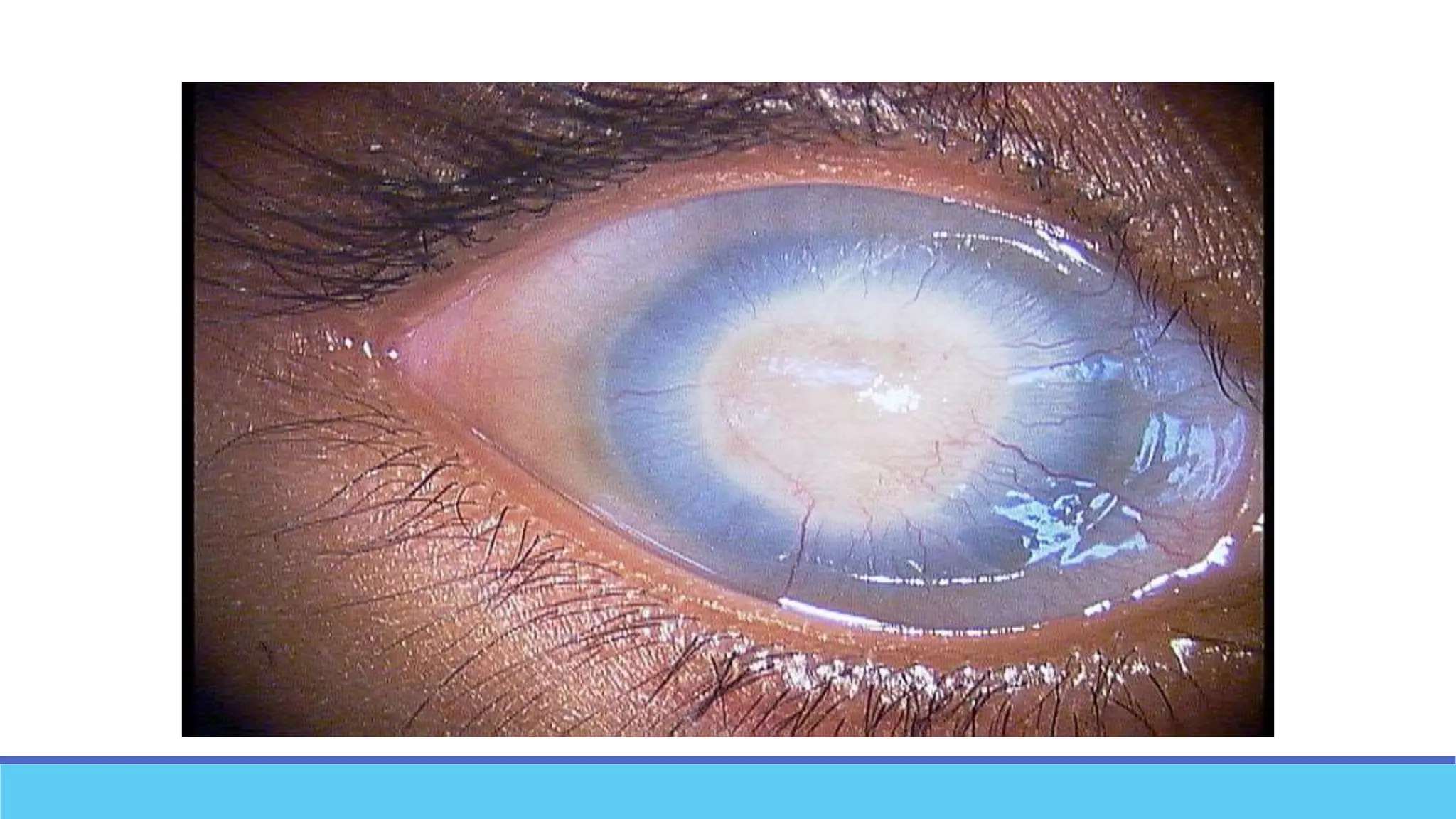
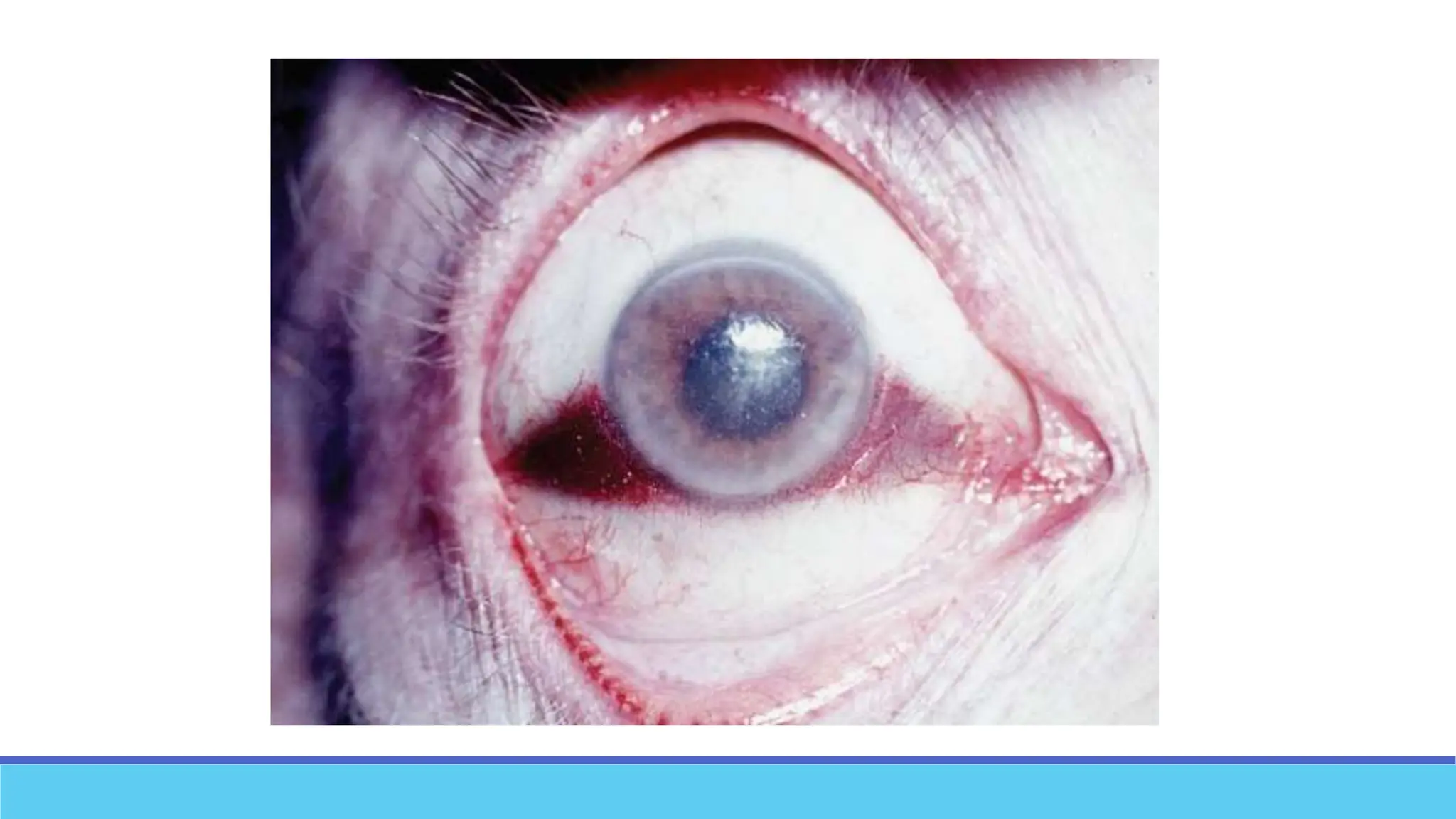
Early changes: Changes in Eyes
•Corneal changes
•Opacity of Cornea
•Shape of pupil
•Loss of ocular tension
•Taches noire Scleroitique
•Retinal Changes
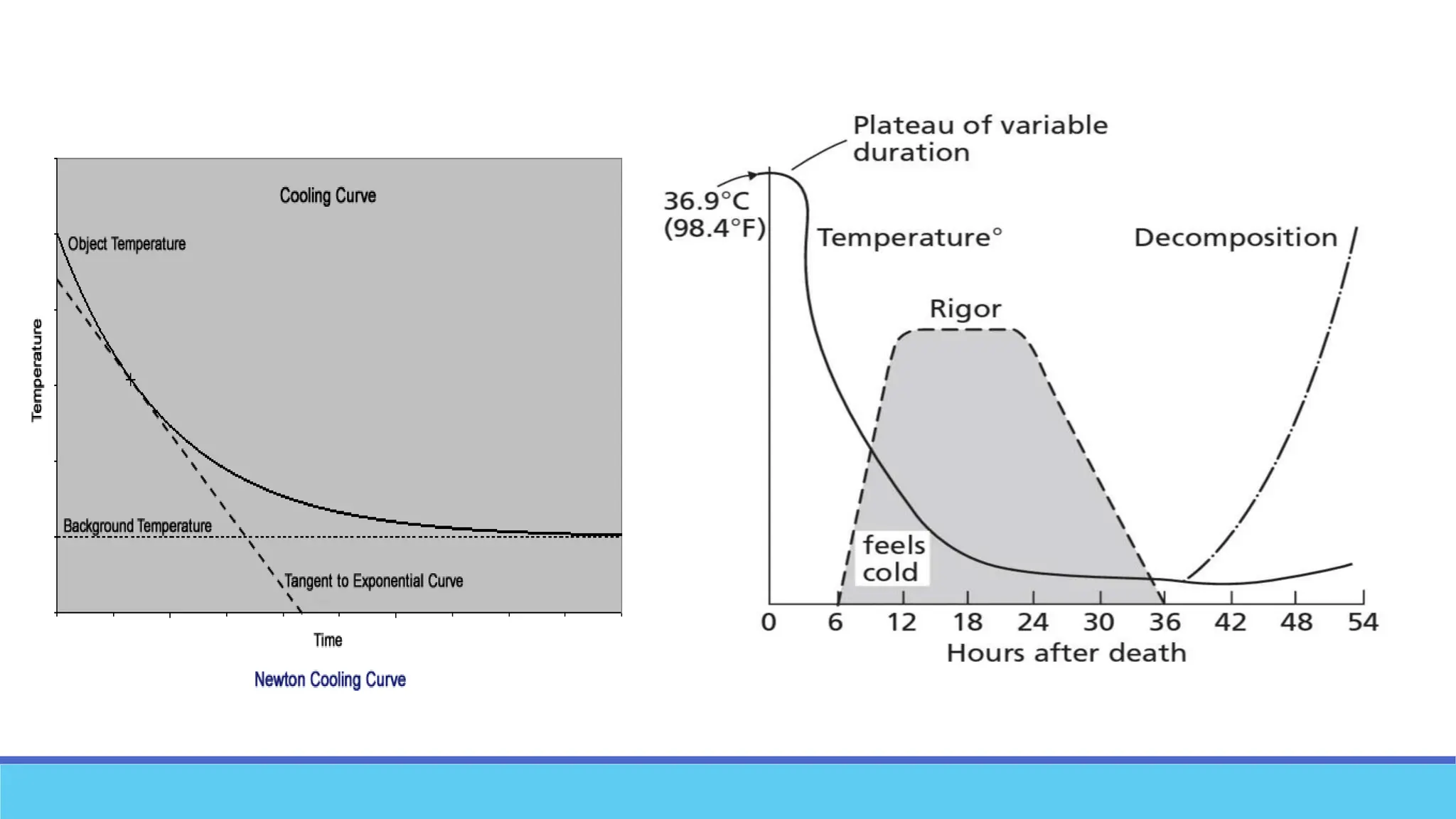
Algor Mortis: Cooling of dead body
•1st medico legal use of recoding of body temperature made by
Dowler in 1950 for confirmation of death.
• At present, recoding of temperature of the dead bodies is done, the
purpose being ‘estimation of time of death’.
•Heat loss from the body : conduction /convection /radiation /
evaporation
•Rate of fall 0.75°F/h-1.5°F/h
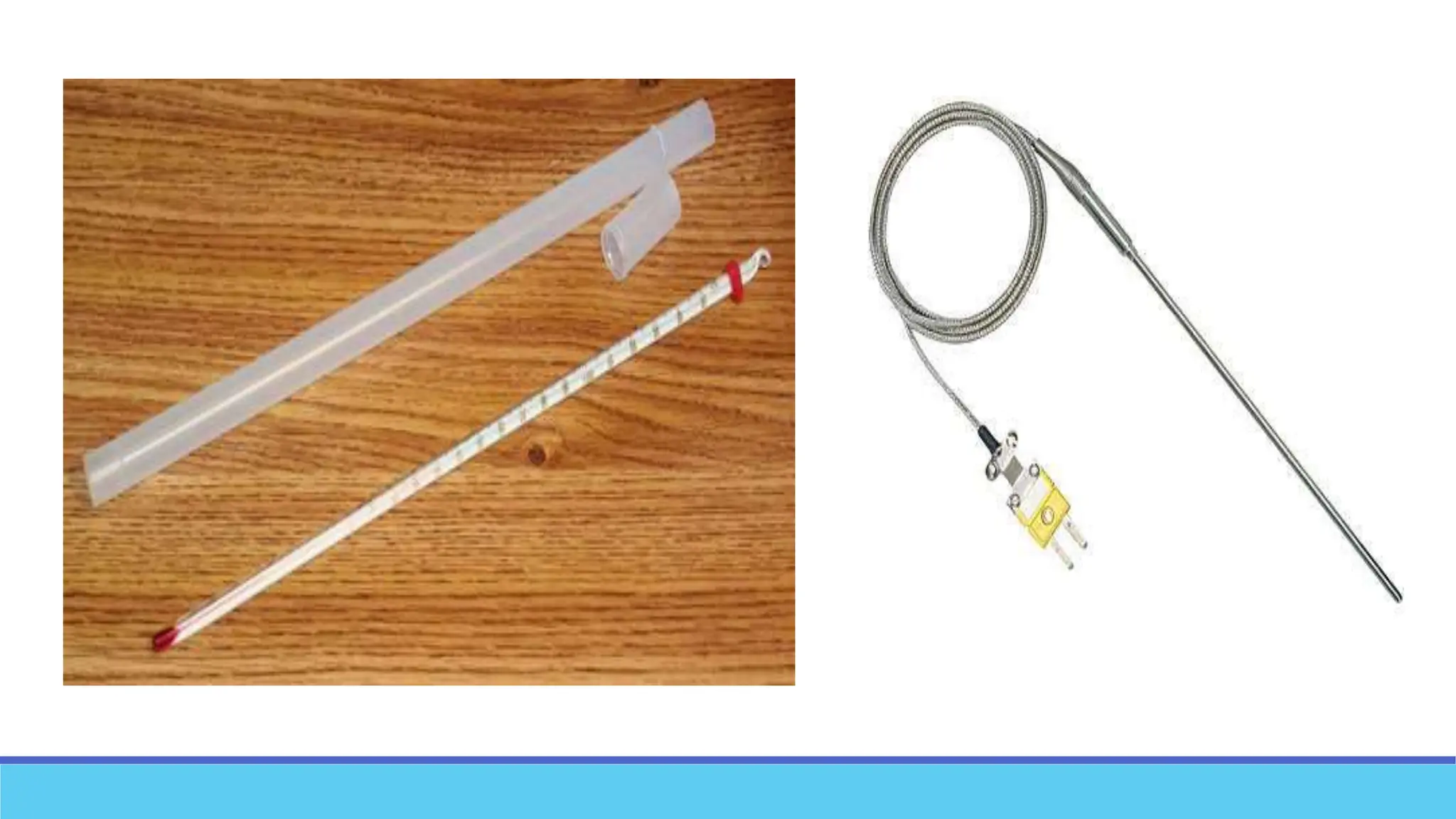
•Sites to take temperature from
Algor Mortis: Factors influencing cooling
1. Atmospheric temp
2. Media of disposal of dead
body.
3. Body weight.
4. Sex
5. Age
6. Clothing and coverings
7. Air movements
8. Dry weather.
9. Position and posture of the
dead body.
10. Post mortem caloricity
Livor Mortis
Synonyms: Post mortem Lividity/ Post mortem staining
/Hypostasis /Suggilation / Vibices
Bluish-purple or purplish-red discolouration which appears
after death on the most dependant parts of the skin due to
collection of blood in the capillaries and small veins (rete
mucosum) of the most superficial layers of the dermis due
to gravity.
Livor Mortis: Formation & Theories
In undisturbed position of the dead body, starts appearing in small
patches on the dependent parts by the end of one hour.
Gradually small patches increase in size and coalesce with each
other and completion of spreading takes 5-6 hours.
If undisturbed the position staining gets fixed and for that it takes
another 5-6 hours.
Livor Mortis:Features
1. Occurs externally on the dependent part, also occurs on the
dependant parts of internal organs.
2. Becomes discolored when decomposition started.
3. It is an intra vascular phenomenon and no extravasations of
blood.
4. Contact pallor.
5. Post mortem staining in drowning cases..
Livor Mortis: Colour in some poisoning
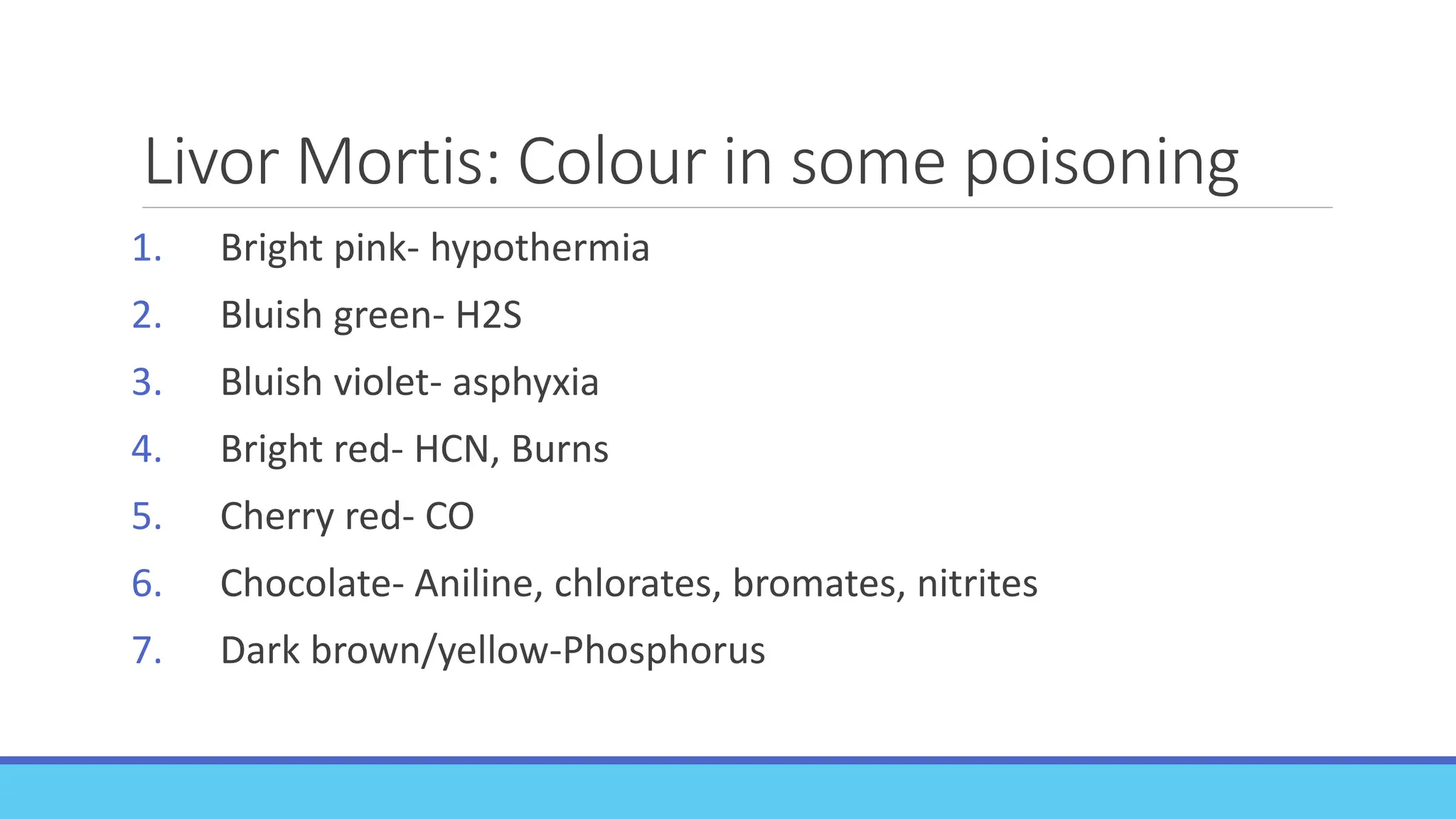
1. Bright pink- hypothermia
2. Bluish green- H2S
3. Bluish violet- asphyxia
4. Bright red- HCN, Burns
5. Cherry red- CO
6. Chocolate- Aniline, chlorates, bromates, nitrites
7. Dark brown/yellow-Phosphorus
Livor Mortis: Medico-legal importance
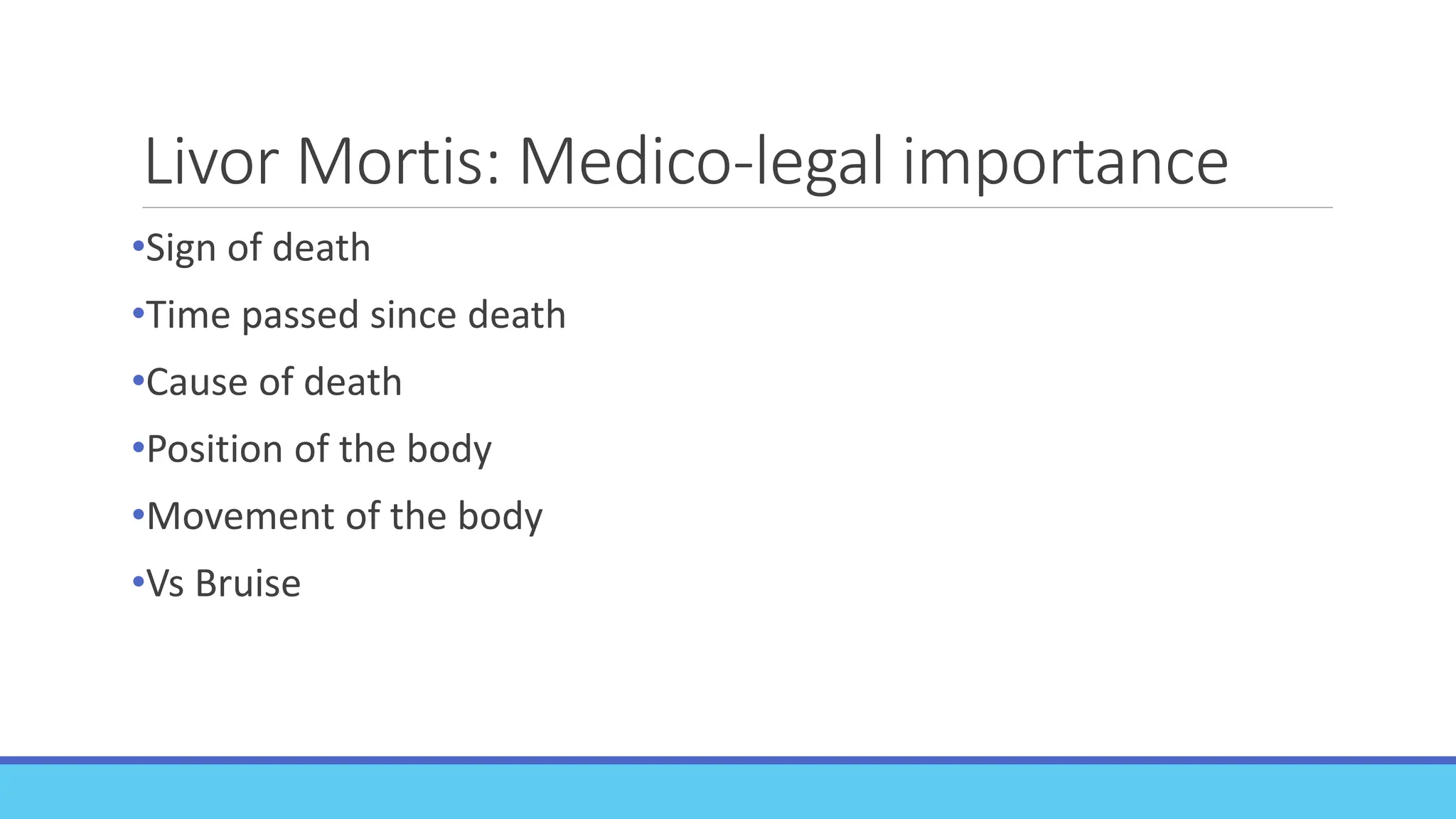
•Sign of death
•Time passed since death
•Cause of death
•Position of the body
•Movement of the body
•Vs Bruise
Changes in the muscles
•Primary relaxation/ Flaccidity
•Rigor mortis/Cadaveric rigidity
•Secondary relaxation
Primary Relaxation
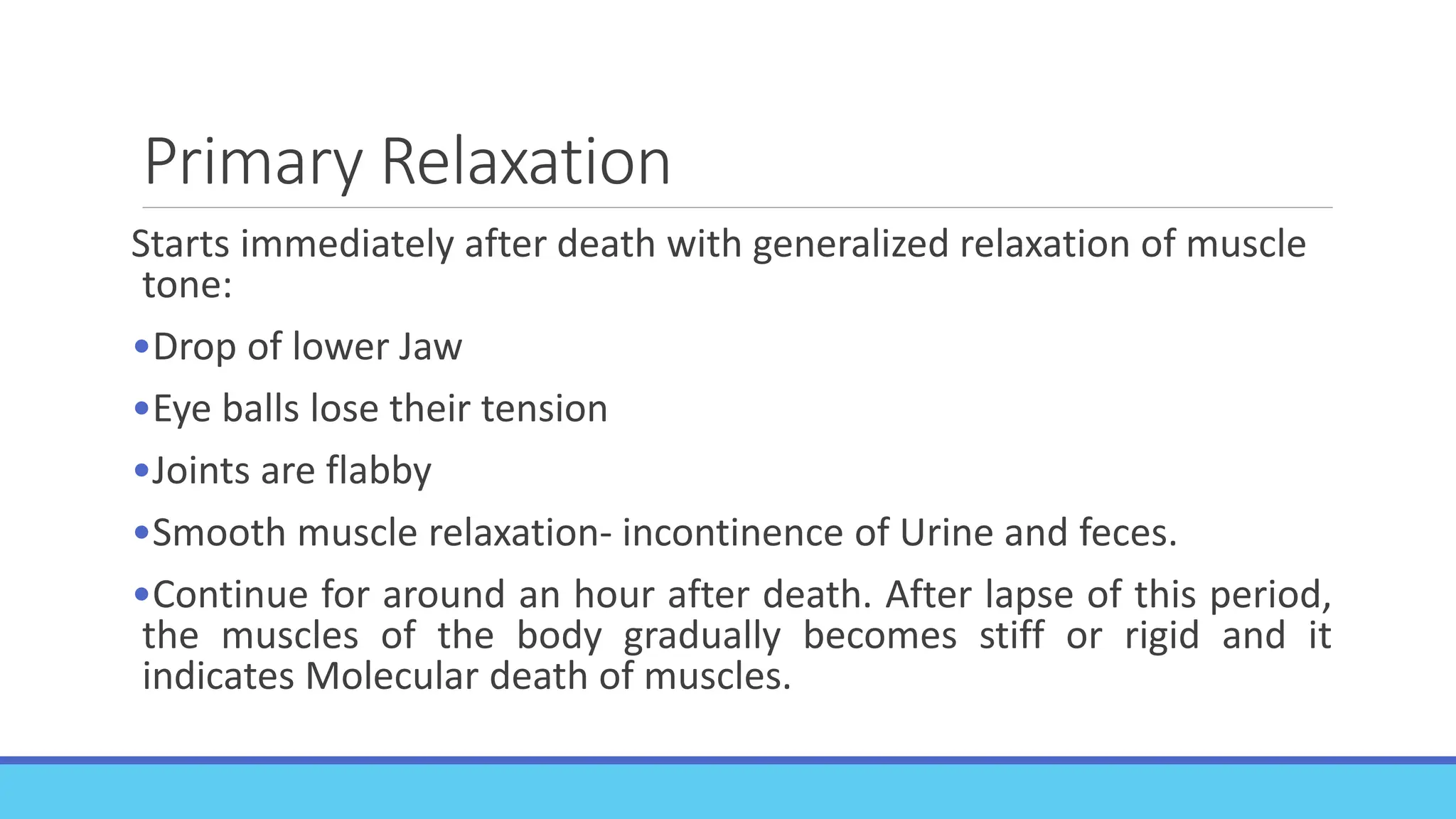
Starts immediately after death with generalized relaxation of muscle
tone:
•Drop of lower Jaw
•Eye balls lose their tension
•Joints are flabby
•Smooth muscle relaxation- incontinence of Urine and feces.
•Continue for around an hour after death. After lapse of this period,
the muscles of the body gradually becomes stiff or rigid and it
indicates Molecular death of muscles.
Rigor Mortis
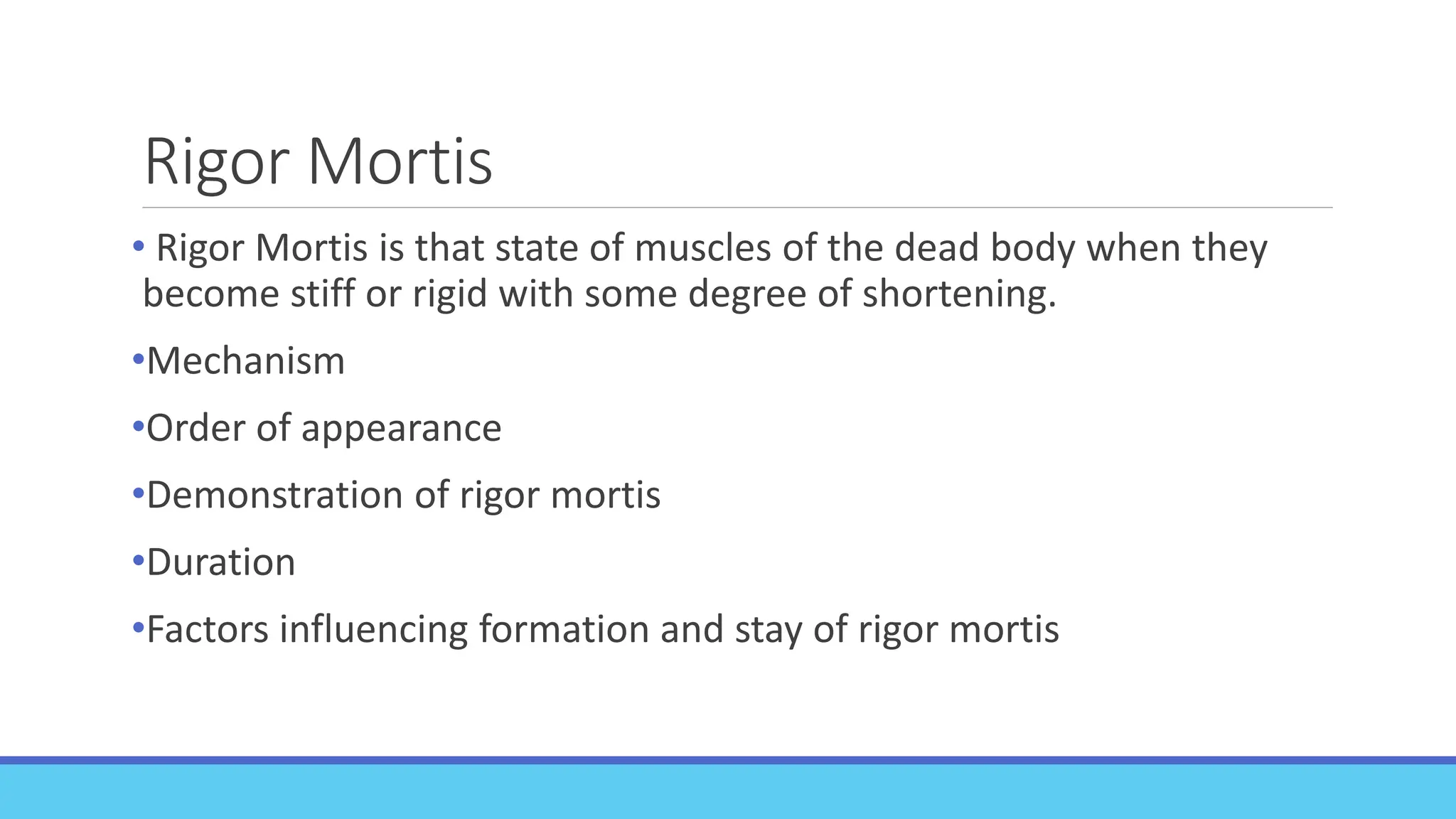
• Rigor Mortis is that state of muscles of the dead body when they
become stiff or rigid with some degree of shortening.
•Mechanism
•Order of appearance
•Demonstration of rigor mortis
•Duration
•Factors influencing formation and stay of rigor mortis
Conditions mimicking Rigor Mortis
i. Cadaveric spam
ii. Heat stiffening
iii. Cold Stiffening
iv. Gas stiffening
Cadaveric spasm
 Cataleptic rigidity, instantaneous rigidity/rigor, postmortem spasm
is a condition where the muscles that were in contraction at the
moment of death, remain in contraction after death without passing
through the stage of primary relaxation.
Predisposing factors
Last action
Mechanism
Cannot be simulated
Disappearance
Heat Stiffening
•If death occurs due to second or third degree of burn injuries or the
dead body is exposed to a temperature above 65 degree centigrade,
heat stiffening occurs due to coagulation of muscle protein---- body
becomes stiff.
•Flexor muscles take upper hand giving rise to a condition which is
known as Pugilistic/ Boxer’s or Fencing attitude of the body.
Cold Stiffening
This occurs when body remains in extreme cold atmosphere for a
reasonable period due to fridging of the body fluids at the tissue
level and in the synovial sacs of the joints and hardening of
subcutaneous fatty tissue.
Gas Stiffening
During the stage of decomposition, when the cause of
stiffening is very obvious from the discoloration, swelling
and foul smell.
Secondary relaxation
Alkali on muscle
Acid on myosin
Autodigestion
Late changes after death
• Decomposition : Autolysis and Putrefaction
•Adipocere Formation / Saponification
•Mummification
Autolysis
It is the breakdown of cells and organs through an aseptic chemical
process caused by intracellular enzymes.
Accelerated by heat and slowed by cold.
Occurs first in pancreas.
Dead foetus in utero – MACERATION.
Gastric mucosa may show autolysis even in living in cases of head
injury etc
Putrefaction
It is a process by which the complex organic body tissues breakdown
to simpler inorganic compounds or elements, due to the action of
fermentation produced by saprophytic micro-organisms.
There is decomposition of body proteins by anaerobic
microorganism-----leading to production of ptoamines( Putrescine &
Cadaverine—have putrid odour).
Gases produced during decomposition are hydrogen sulphide,
carbon di oxide, carbon mono oxide, ammonia, marcaptans etc
Microorganisms involved
• Anaerobic spore forming bacilli.
• Coliform organism.
• Micrococci.
• Cl. Welchii, B.Coli, Staphylococcus, Non hemolytic Streptococcus,
Diptheroids and Proteus are important ones.
• Some of these are natural inhabitants of GI & Respiratory tract.
• Increase in hydrogen ion and rapid decrease of oxygen favors
growth of anaerobic organisms.
External signs of putrefaction
• Colour changes
•Gas formation
•Liquefaction
•FIRST EXTERNAL SIGN: GREENISH DISCOLOURATION occurs over
right iliac fossa. [Summer – about 12 hours, Winter – 36 to 48 hours]
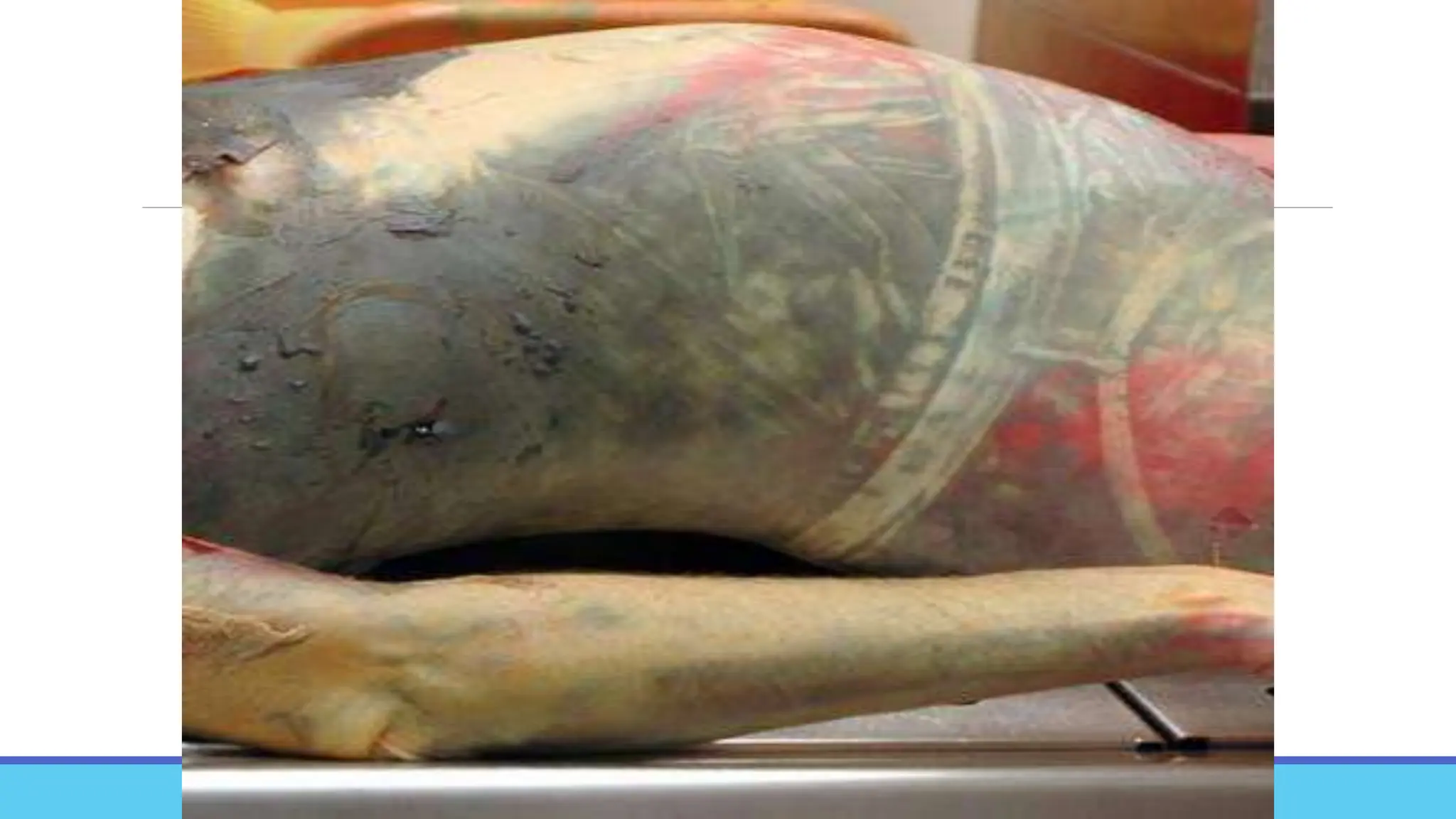
Marbling
• Invasion of blood vessels by organisms and production of H2S gas
and formation of Sulphmethaemoglobin, causes greenish brown
staining of the inner walls of the vessels.
•This makes the superficial veins prominent producing a marbled
appearance of the skin of the area.
• Marbling becomes prominent in 36 to 48 hours in summer.
Gas formation
• 12 to 24 hours: Abdomen tensed due to gas accumulation, blood
tinged froth from mouth, natural orifices
• 24 to 48 hours: Subcutaneous tissue emphysematous, bloated,
breasts in female, scrotum and penis in males are swollen, tongue
protrusion, denudation of cuticle due to blister rupture
• 48 to 72 hours: Prolapse of uterus (including gravid) and anus,
eyeballs protrude, face is extremely swollen, discolored, subject is
not identifiable from face and hairs and nails become loose and may
be taken out easily.
Gas formation
• Between 3 to 5 days: Abdomen bursts, teeth becomes loose,
swelling decreases due to escape of gases, skull separates in case of
infants with liquefaction of brain
• Between 5 to 10 days: Liquefaction occurs, soft firm tissues change
to thick semisolid black mass, decomposition starts in cartilages and
ligaments
Others..
Skin slippage
Sutural separation
Crepitant soft tissues
Loosening of appendages(H3N4T5)
Postmortem luminescence(P.fischerii, A.mellea)
Fissures, splits and dehiscence
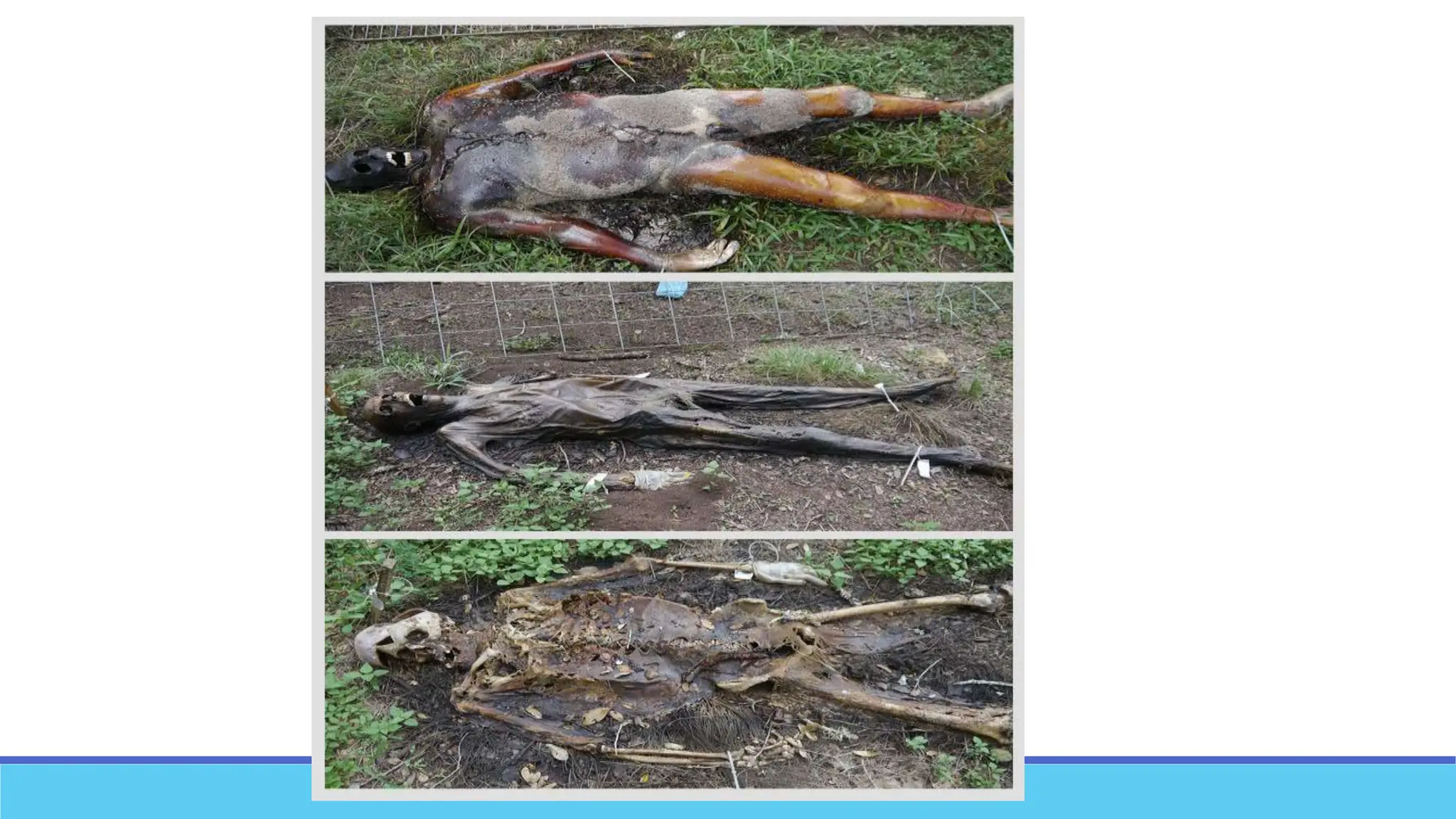
Skeletonization:
Time required
Factors affecting rate of skeletonization
• In air
• In water
• Buried bodies
 Without coffins(shallow vs deep grave)
 With coffins
 Mass burials
Skeletonization v/s
mummification
Internal changes due to decomposition
• Larynx and trachea:- 12-24 hrs; brownish red-greenish-softened
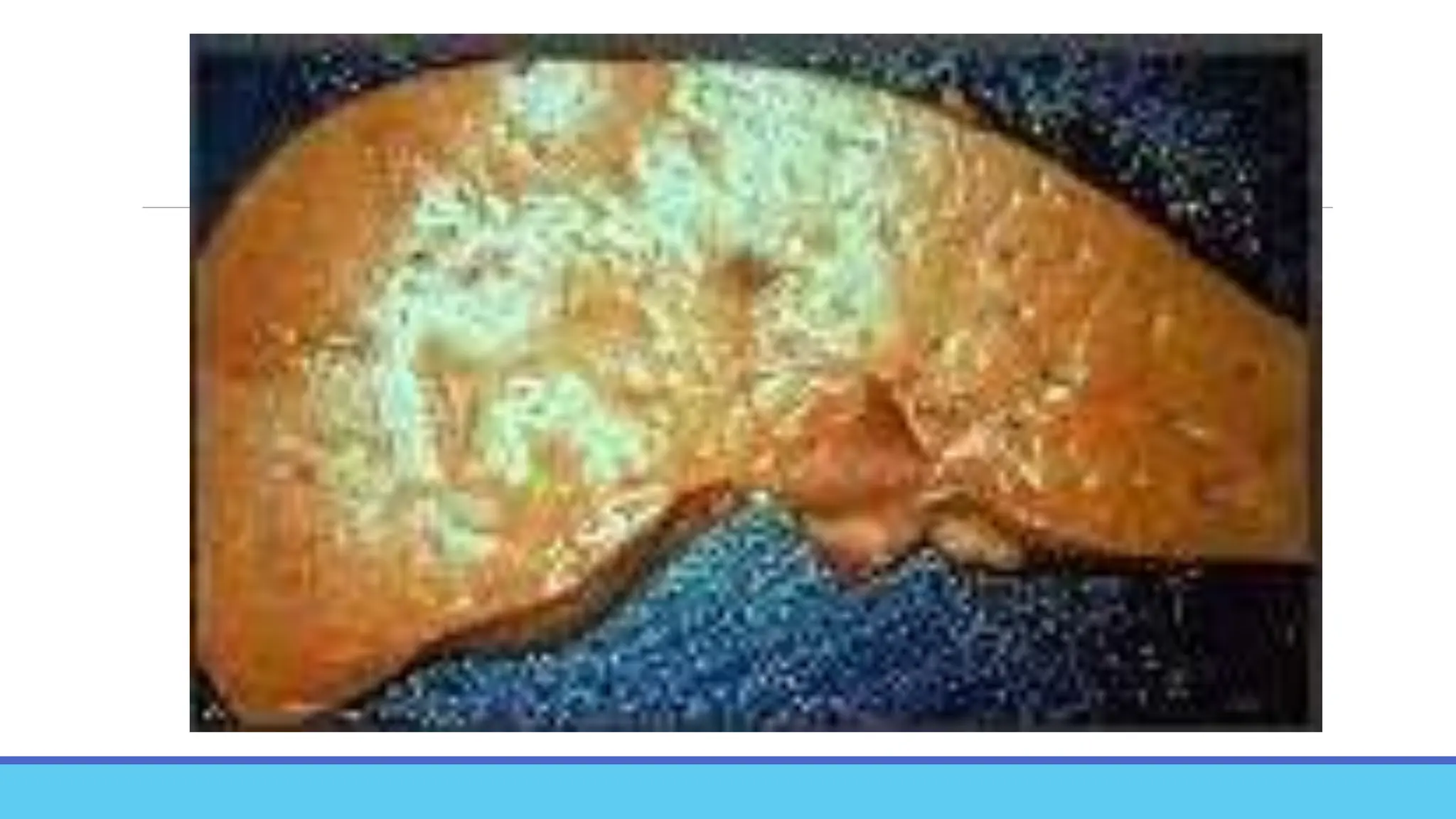
• Liver:- soft and flabby>multiple blisters>honeycomb liver
• Brain:- soft and pulpy>grayish fluid
• Stomach and intestines, spleen, heart, lungs, kidneys
• Diaphragm: putrifies late(?strength of muscular and aponeurotic
structures)
• Prostrate, uterus
Factors influencing decomposition
A. EXTERNAL FACTORS
1. Temperature
2. Moisture/recovered
from water
3. Air
4. Clothing
5. Place of burial
B.INTERNAL FACTORS
1. Age
2. Sex
3. Condition of the body
4. Cause of death
5. Mutilated body parts
Delay putrefaction:
Carbolic acid
Heavy metal
Strychnine
Zinc chloride
Resist putrefaction:
Barbiturates
Corrosives
Cyanide
Dhatura
OP
Strychnine
Destroyed by putrefaction:
Aconitine
Morphine
Succinylcholine
Appear due to putrefaction:
Alcohol
Cyanide
CO
Hasten putrefaction:
H2S
Strychnine
Casper’s Dictum
The time taken for the same amount of putrefaction
to occur when the body is in air, water and buried
earth is in the ratio of 1:2:8.
Adipocere formation
Modified form of
putrefaction in which a
friable, crumbly, water
insoluble greyish white to
brown wax like material is
produced in the dead
body by the breakdown
and conversion of body
fats to fatty acids, mainly
oleic, palmitic and stearic
acids.
Mummification
Modification of
putrefaction in which
the skin becomes
brittle, contracted,
dried, firm, leathery
tough, parchment like,
shrunken and
wrinkled, turning
yellow-brown to black
in colour.
Estimation of post mortem interval
• By analysing immediate, early and late changes after death
• By analysing food in the stomach
• By state of urinary bladder
• Post-mortem chemistry/ Thanatochemistry
• Entomology of cadaver
• Scene of death
Thanatochemistry
• BLOOD: Carbohydrates, Lactic acid, Nitrogenous compounds, other
organic compounds, electrolytes, enzymes
• CSF
•Vitreous
• Pericardial fluid
• Synovial fluid
Entomology of cadavers
• Usually 3 types of flies namely Common house fly, Green Bottle fly,
Blue Bottle fly. Green and Blue bottle flies deposit or lay eggs over
moist areas of dead body or nearby.
• Lays eggs within minutes.
• 1st instar larva hatches from eggs within 8 hours
• 2nd instar within next 24 hours, 2nd to 3rd instar within next 24 hours.
• 3rd instar to pupa within next 3 days.
• Pupa to adults in next 5 days.
Presumption of survivorship (S.107 IEA)
When the question is whether a man is alive or dead, and it is shown
that he was alive within THIRTY years, the burden of proving that he
is dead is on the person who affirms it.
Presumption of Death (S.108 IEA)
When the question is whether a man is alive or dead and it is
proved that he has not been heard of for seven years by those
who would naturally have heard of him if he had been alive, the
burden of proving that he is alive is shifted to the person who
affirms it.
THANK YOU

Post Mortem Changes in Forensic Medicine.new.pptx

  • 1.
    Post Mortem Changes Dr.Satrajit Roy Department FSM Medical College, Kolkata
  • 2.
    Changes after death ImmediateChanges Early Changes Late Changes
  • 3.
    Immediate Changes •Permanent Cessationof Brain function leading to insensibility and loss of voluntary power •Complete Cessation of Circulatory function. •Entire and permanent cessation of Respiratory function.
  • 4.
    Immediate Changes •Permanent Cessationof Brain function : No sense. Loss of reflexes. No response. No tonicity of muscles. • Complete Cessation of Circulatory function: Pulse, auscultation of heart sounds, ECG Diaphanous test, Magnus’s test, Icard’s test, Pressure test, Heat test, Cut test…..HISTORICAL IMPORTANCE •Complete cessation of Respiratory function: Inspection, Palpation, Auscultation Feather test, Mirror’s Test, Winslow test …..HISTORICAL IMPORTANCE
  • 5.
    Early Changes •Changes inthe skin •Changes in the eye •Algor mortis •Livor mortis •Rigor mortis
  • 6.
    Early changes: Changesin Skin •Loss of Elasticity •Loss of its translucency •Pale and Ashy white appearance
  • 7.
    Early changes: Changesin Eyes •Corneal changes •Opacity of Cornea •Shape of pupil •Loss of ocular tension •Taches noire Scleroitique •Retinal Changes
  • 11.
    Algor Mortis: Coolingof dead body •1st medico legal use of recoding of body temperature made by Dowler in 1950 for confirmation of death. • At present, recoding of temperature of the dead bodies is done, the purpose being ‘estimation of time of death’. •Heat loss from the body : conduction /convection /radiation / evaporation •Rate of fall 0.75°F/h-1.5°F/h •Sites to take temperature from
  • 13.
    Algor Mortis: Factorsinfluencing cooling 1. Atmospheric temp 2. Media of disposal of dead body. 3. Body weight. 4. Sex 5. Age 6. Clothing and coverings 7. Air movements 8. Dry weather. 9. Position and posture of the dead body. 10. Post mortem caloricity
  • 15.
    Livor Mortis Synonyms: Postmortem Lividity/ Post mortem staining /Hypostasis /Suggilation / Vibices Bluish-purple or purplish-red discolouration which appears after death on the most dependant parts of the skin due to collection of blood in the capillaries and small veins (rete mucosum) of the most superficial layers of the dermis due to gravity.
  • 16.
    Livor Mortis: Formation& Theories In undisturbed position of the dead body, starts appearing in small patches on the dependent parts by the end of one hour. Gradually small patches increase in size and coalesce with each other and completion of spreading takes 5-6 hours. If undisturbed the position staining gets fixed and for that it takes another 5-6 hours.
  • 17.
    Livor Mortis:Features 1. Occursexternally on the dependent part, also occurs on the dependant parts of internal organs. 2. Becomes discolored when decomposition started. 3. It is an intra vascular phenomenon and no extravasations of blood. 4. Contact pallor. 5. Post mortem staining in drowning cases..
  • 18.
    Livor Mortis: Colourin some poisoning 1. Bright pink- hypothermia 2. Bluish green- H2S 3. Bluish violet- asphyxia 4. Bright red- HCN, Burns 5. Cherry red- CO 6. Chocolate- Aniline, chlorates, bromates, nitrites 7. Dark brown/yellow-Phosphorus
  • 19.
    Livor Mortis: Medico-legalimportance •Sign of death •Time passed since death •Cause of death •Position of the body •Movement of the body •Vs Bruise
  • 25.
    Changes in themuscles •Primary relaxation/ Flaccidity •Rigor mortis/Cadaveric rigidity •Secondary relaxation
  • 26.
    Primary Relaxation Starts immediatelyafter death with generalized relaxation of muscle tone: •Drop of lower Jaw •Eye balls lose their tension •Joints are flabby •Smooth muscle relaxation- incontinence of Urine and feces. •Continue for around an hour after death. After lapse of this period, the muscles of the body gradually becomes stiff or rigid and it indicates Molecular death of muscles.
  • 27.
    Rigor Mortis • RigorMortis is that state of muscles of the dead body when they become stiff or rigid with some degree of shortening. •Mechanism •Order of appearance •Demonstration of rigor mortis •Duration •Factors influencing formation and stay of rigor mortis
  • 30.
    Conditions mimicking RigorMortis i. Cadaveric spam ii. Heat stiffening iii. Cold Stiffening iv. Gas stiffening
  • 31.
    Cadaveric spasm  Catalepticrigidity, instantaneous rigidity/rigor, postmortem spasm is a condition where the muscles that were in contraction at the moment of death, remain in contraction after death without passing through the stage of primary relaxation. Predisposing factors Last action Mechanism Cannot be simulated Disappearance
  • 34.
    Heat Stiffening •If deathoccurs due to second or third degree of burn injuries or the dead body is exposed to a temperature above 65 degree centigrade, heat stiffening occurs due to coagulation of muscle protein---- body becomes stiff. •Flexor muscles take upper hand giving rise to a condition which is known as Pugilistic/ Boxer’s or Fencing attitude of the body.
  • 36.
    Cold Stiffening This occurswhen body remains in extreme cold atmosphere for a reasonable period due to fridging of the body fluids at the tissue level and in the synovial sacs of the joints and hardening of subcutaneous fatty tissue.
  • 37.
    Gas Stiffening During thestage of decomposition, when the cause of stiffening is very obvious from the discoloration, swelling and foul smell.
  • 38.
    Secondary relaxation Alkali onmuscle Acid on myosin Autodigestion
  • 39.
    Late changes afterdeath • Decomposition : Autolysis and Putrefaction •Adipocere Formation / Saponification •Mummification
  • 40.
    Autolysis It is thebreakdown of cells and organs through an aseptic chemical process caused by intracellular enzymes. Accelerated by heat and slowed by cold. Occurs first in pancreas. Dead foetus in utero – MACERATION. Gastric mucosa may show autolysis even in living in cases of head injury etc
  • 41.
    Putrefaction It is aprocess by which the complex organic body tissues breakdown to simpler inorganic compounds or elements, due to the action of fermentation produced by saprophytic micro-organisms. There is decomposition of body proteins by anaerobic microorganism-----leading to production of ptoamines( Putrescine & Cadaverine—have putrid odour). Gases produced during decomposition are hydrogen sulphide, carbon di oxide, carbon mono oxide, ammonia, marcaptans etc
  • 42.
    Microorganisms involved • Anaerobicspore forming bacilli. • Coliform organism. • Micrococci. • Cl. Welchii, B.Coli, Staphylococcus, Non hemolytic Streptococcus, Diptheroids and Proteus are important ones. • Some of these are natural inhabitants of GI & Respiratory tract. • Increase in hydrogen ion and rapid decrease of oxygen favors growth of anaerobic organisms.
  • 43.
    External signs ofputrefaction • Colour changes •Gas formation •Liquefaction •FIRST EXTERNAL SIGN: GREENISH DISCOLOURATION occurs over right iliac fossa. [Summer – about 12 hours, Winter – 36 to 48 hours]
  • 47.
    Marbling • Invasion ofblood vessels by organisms and production of H2S gas and formation of Sulphmethaemoglobin, causes greenish brown staining of the inner walls of the vessels. •This makes the superficial veins prominent producing a marbled appearance of the skin of the area. • Marbling becomes prominent in 36 to 48 hours in summer.
  • 51.
    Gas formation • 12to 24 hours: Abdomen tensed due to gas accumulation, blood tinged froth from mouth, natural orifices • 24 to 48 hours: Subcutaneous tissue emphysematous, bloated, breasts in female, scrotum and penis in males are swollen, tongue protrusion, denudation of cuticle due to blister rupture • 48 to 72 hours: Prolapse of uterus (including gravid) and anus, eyeballs protrude, face is extremely swollen, discolored, subject is not identifiable from face and hairs and nails become loose and may be taken out easily.
  • 52.
    Gas formation • Between3 to 5 days: Abdomen bursts, teeth becomes loose, swelling decreases due to escape of gases, skull separates in case of infants with liquefaction of brain • Between 5 to 10 days: Liquefaction occurs, soft firm tissues change to thick semisolid black mass, decomposition starts in cartilages and ligaments
  • 53.
    Others.. Skin slippage Sutural separation Crepitantsoft tissues Loosening of appendages(H3N4T5) Postmortem luminescence(P.fischerii, A.mellea) Fissures, splits and dehiscence
  • 61.
    Skeletonization: Time required Factors affectingrate of skeletonization • In air • In water • Buried bodies  Without coffins(shallow vs deep grave)  With coffins  Mass burials Skeletonization v/s mummification
  • 62.
    Internal changes dueto decomposition • Larynx and trachea:- 12-24 hrs; brownish red-greenish-softened • Liver:- soft and flabby>multiple blisters>honeycomb liver • Brain:- soft and pulpy>grayish fluid • Stomach and intestines, spleen, heart, lungs, kidneys • Diaphragm: putrifies late(?strength of muscular and aponeurotic structures) • Prostrate, uterus
  • 64.
    Factors influencing decomposition A.EXTERNAL FACTORS 1. Temperature 2. Moisture/recovered from water 3. Air 4. Clothing 5. Place of burial B.INTERNAL FACTORS 1. Age 2. Sex 3. Condition of the body 4. Cause of death 5. Mutilated body parts
  • 65.
    Delay putrefaction: Carbolic acid Heavymetal Strychnine Zinc chloride Resist putrefaction: Barbiturates Corrosives Cyanide Dhatura OP Strychnine Destroyed by putrefaction: Aconitine Morphine Succinylcholine Appear due to putrefaction: Alcohol Cyanide CO Hasten putrefaction: H2S Strychnine
  • 66.
    Casper’s Dictum The timetaken for the same amount of putrefaction to occur when the body is in air, water and buried earth is in the ratio of 1:2:8.
  • 68.
    Adipocere formation Modified formof putrefaction in which a friable, crumbly, water insoluble greyish white to brown wax like material is produced in the dead body by the breakdown and conversion of body fats to fatty acids, mainly oleic, palmitic and stearic acids.
  • 69.
    Mummification Modification of putrefaction inwhich the skin becomes brittle, contracted, dried, firm, leathery tough, parchment like, shrunken and wrinkled, turning yellow-brown to black in colour.
  • 70.
    Estimation of postmortem interval • By analysing immediate, early and late changes after death • By analysing food in the stomach • By state of urinary bladder • Post-mortem chemistry/ Thanatochemistry • Entomology of cadaver • Scene of death
  • 71.
    Thanatochemistry • BLOOD: Carbohydrates,Lactic acid, Nitrogenous compounds, other organic compounds, electrolytes, enzymes • CSF •Vitreous • Pericardial fluid • Synovial fluid
  • 72.
    Entomology of cadavers •Usually 3 types of flies namely Common house fly, Green Bottle fly, Blue Bottle fly. Green and Blue bottle flies deposit or lay eggs over moist areas of dead body or nearby. • Lays eggs within minutes. • 1st instar larva hatches from eggs within 8 hours • 2nd instar within next 24 hours, 2nd to 3rd instar within next 24 hours. • 3rd instar to pupa within next 3 days. • Pupa to adults in next 5 days.
  • 77.
    Presumption of survivorship(S.107 IEA) When the question is whether a man is alive or dead, and it is shown that he was alive within THIRTY years, the burden of proving that he is dead is on the person who affirms it. Presumption of Death (S.108 IEA) When the question is whether a man is alive or dead and it is proved that he has not been heard of for seven years by those who would naturally have heard of him if he had been alive, the burden of proving that he is alive is shifted to the person who affirms it.
  • 78.

Editor's Notes