Plot Structure

Using Freytag’s Pyramid
Plot Structure
Plot is the literary element that describes
the structure of a story. It shows the
causal arrangement of events and actions
within a story.
It’s like the framework that the story is
built around. The better the framework,
the better the story.
Where does conflict fit?

• Plot structure is formed around
  conflict.

• Plot introduces the conflict, develops
  it, and finally resolves it.
Freytag’s Pyramid


Freytag’s Pyramid uses a five-part system to
describe a story’s plot.
This graphic organizer matches the way stories
are constructed: The climax is the high point, and
it’s surrounded by rising and falling action.
Modified Freytag Pyramid


Freytag’s Pyramid is often modified so that it
extends slightly before and after the primary
rising and falling action.
You might think of this part of the chart as
similar to the warm-up and cool-down for the
story.
Plot Structure Components
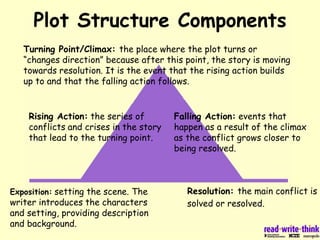
   Turning Point/Climax: the place where the plot turns or
   “changes direction” because after this point, the story is moving
   towards resolution. It is the event that the rising action builds
   up to and that the falling action follows.


    Rising Action: the series of        Falling Action: events that
    conflicts and crises in the story   happen as a result of the climax
    that lead to the turning point.     as the conflict grows closer to
                                        being resolved.


Exposition: setting the scene. The         Resolution: the main conflict is
writer introduces the characters           solved or resolved.
and setting, providing description
and background.
Two more parts
  We are going to include two additional parts to
  Freytag’s pyramid.

• Inciting incident – tied to the exposition, it is something happens
  to begin the action. A single event usually signals the beginning of
  the main conflict. The inciting incident is sometimes called 'the
  complication'. On the pyramid, it is after exposition, before
  rising action.

• Denouement - (a French term, pronounced: day-noo-mon) the
  ending. At this point, any remaining secrets, questions or
  mysteries which remain after the resolution are solved by the
  characters or explained by the author. Sometimes the author
  leaves us to think about the THEME or future possibilities for
  the characters. It’s next to resolution on the pyramid.

Plot structure from readwritethink

  • 1.
  • 2.
    Plot Structure Plot isthe literary element that describes the structure of a story. It shows the causal arrangement of events and actions within a story. It’s like the framework that the story is built around. The better the framework, the better the story.
  • 3.
    Where does conflictfit? • Plot structure is formed around conflict. • Plot introduces the conflict, develops it, and finally resolves it.
  • 4.
    Freytag’s Pyramid Freytag’s Pyramiduses a five-part system to describe a story’s plot. This graphic organizer matches the way stories are constructed: The climax is the high point, and it’s surrounded by rising and falling action.
  • 5.
    Modified Freytag Pyramid Freytag’sPyramid is often modified so that it extends slightly before and after the primary rising and falling action. You might think of this part of the chart as similar to the warm-up and cool-down for the story.
  • 6.
    Plot Structure Components Turning Point/Climax: the place where the plot turns or “changes direction” because after this point, the story is moving towards resolution. It is the event that the rising action builds up to and that the falling action follows. Rising Action: the series of Falling Action: events that conflicts and crises in the story happen as a result of the climax that lead to the turning point. as the conflict grows closer to being resolved. Exposition: setting the scene. The Resolution: the main conflict is writer introduces the characters solved or resolved. and setting, providing description and background.
  • 7.
    Two more parts We are going to include two additional parts to Freytag’s pyramid. • Inciting incident – tied to the exposition, it is something happens to begin the action. A single event usually signals the beginning of the main conflict. The inciting incident is sometimes called 'the complication'. On the pyramid, it is after exposition, before rising action. • Denouement - (a French term, pronounced: day-noo-mon) the ending. At this point, any remaining secrets, questions or mysteries which remain after the resolution are solved by the characters or explained by the author. Sometimes the author leaves us to think about the THEME or future possibilities for the characters. It’s next to resolution on the pyramid.