The Structure of Plot
• Plot
– the author’s arrangement of incidents in
the story
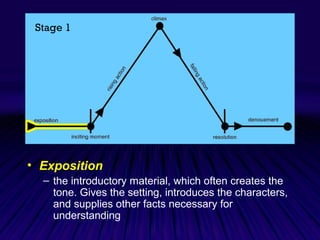
• Freytag’s Pyramid
– a diagram of the structure of a five-act
tragedy, given by Gustav Freytag
– widely accepted (and sometimes adapted)
as a means of analyzing the structure of
many kinds of fiction in addition to drama.
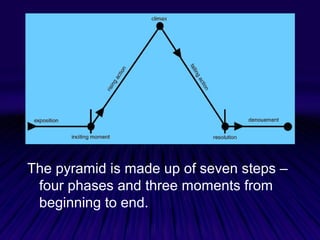
The pyramid is made up of seven steps –
four phases and three moments from
beginning to end.
• Exposition
– the introductory material, which often creates the
tone. Gives the setting, introduces the characters,
and supplies other facts necessary for
understanding
Stage 1
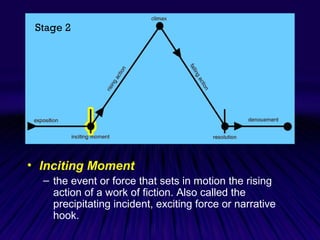
• Inciting Moment
– the event or force that sets in motion the rising
action of a work of fiction. Also called the
precipitating incident, exciting force or narrative
hook.
Stage 2
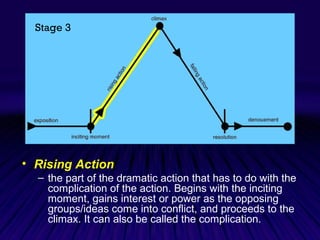
• Rising Action
– the part of the dramatic action that has to do with the
complication of the action. Begins with the inciting
moment, gains interest or power as the opposing
groups/ideas come into conflict, and proceeds to the
climax. It can also be called the complication.
Stage 3
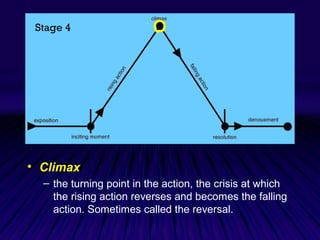
• Climax
– the turning point in the action, the crisis at which
the rising action reverses and becomes the falling
action. Sometimes called the reversal.
Stage 4
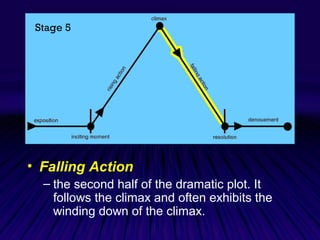
• Falling Action
– the second half of the dramatic plot. It
follows the climax and often exhibits the
winding down of the climax.
Stage 5
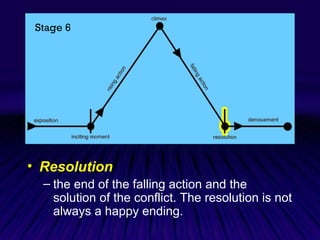
• Resolution
– the end of the falling action and the
solution of the conflict. The resolution is not
always a happy ending.
Stage 6
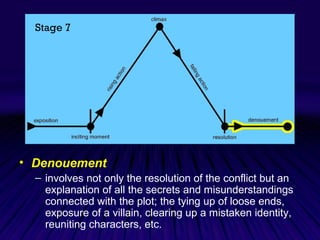
• Denouement
– involves not only the resolution of the conflict but an
explanation of all the secrets and misunderstandings
connected with the plot; the tying up of loose ends,
exposure of a villain, clearing up a mistaken identity,
reuniting characters, etc.
Stage 7

Freytags pyramid

  • 1.
  • 2.
    • Plot – theauthor’s arrangement of incidents in the story • Freytag’s Pyramid – a diagram of the structure of a five-act tragedy, given by Gustav Freytag – widely accepted (and sometimes adapted) as a means of analyzing the structure of many kinds of fiction in addition to drama.
  • 3.
    The pyramid ismade up of seven steps – four phases and three moments from beginning to end.
  • 4.
    • Exposition – theintroductory material, which often creates the tone. Gives the setting, introduces the characters, and supplies other facts necessary for understanding Stage 1
  • 5.
    • Inciting Moment –the event or force that sets in motion the rising action of a work of fiction. Also called the precipitating incident, exciting force or narrative hook. Stage 2
  • 6.
    • Rising Action –the part of the dramatic action that has to do with the complication of the action. Begins with the inciting moment, gains interest or power as the opposing groups/ideas come into conflict, and proceeds to the climax. It can also be called the complication. Stage 3
  • 7.
    • Climax – theturning point in the action, the crisis at which the rising action reverses and becomes the falling action. Sometimes called the reversal. Stage 4
  • 8.
    • Falling Action –the second half of the dramatic plot. It follows the climax and often exhibits the winding down of the climax. Stage 5
  • 9.
    • Resolution – theend of the falling action and the solution of the conflict. The resolution is not always a happy ending. Stage 6
  • 10.
    • Denouement – involvesnot only the resolution of the conflict but an explanation of all the secrets and misunderstandings connected with the plot; the tying up of loose ends, exposure of a villain, clearing up a mistaken identity, reuniting characters, etc. Stage 7