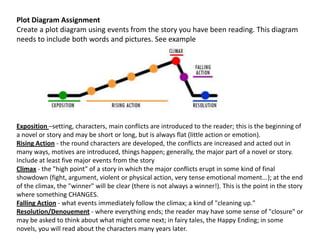
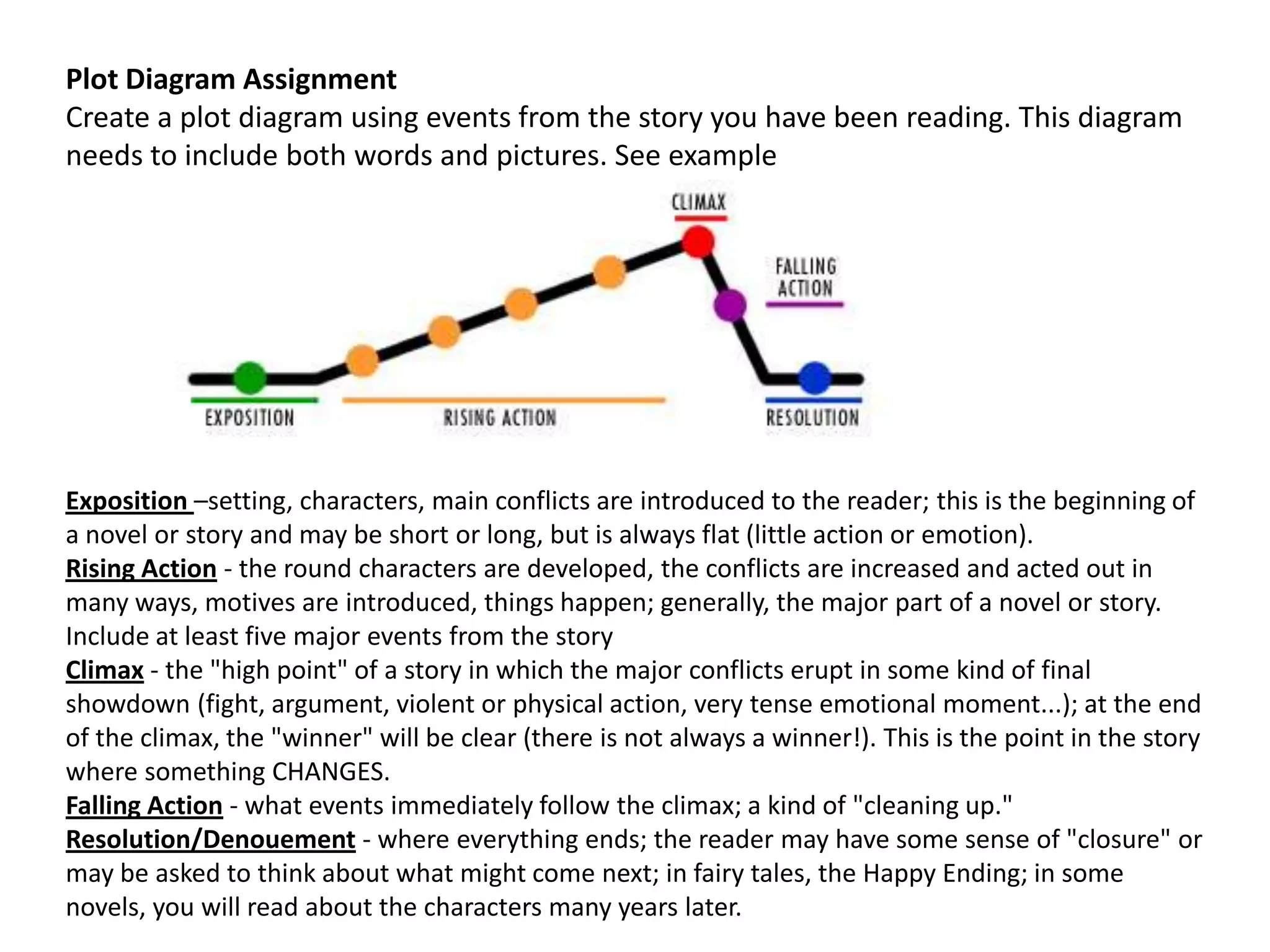
Plot Diagram AssignmentCreate a plot diagram using events from the story you have been reading. This diagram needs to include both words and pictures. See exampleExposition –setting, characters, main conflicts are introduced to the reader; this is the beginning of a novel or story and may be short or long, but is always flat (little action or emotion).Rising Action - the round characters are developed, the conflicts are increased and acted out in many ways, motives are introduced, things happen; generally, the major part of a novel or story. Include at least five major events from the storyClimax - the "high point" of a story in which the major conflicts erupt in some kind of final showdown (fight, argument, violent or physical action, very tense emotional moment...); at the end of the climax, the "winner" will be clear (there is not always a winner!). This is the point in the story where something CHANGES.Falling Action - what events immediately follow the climax; a kind of "cleaning up."Resolution/Denouement - where everything ends; the reader may have some sense of "closure" or may be asked to think about what might come next; in fairy tales, the Happy Ending; in some novels, you will read about the characters many years later.  
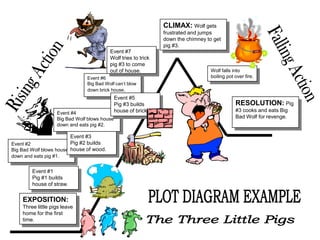
CLIMAX: Wolf gets frustrated and jumps down the chimney to get pig #3.Event #7Wolf tries to trick pig #3 to come out of house.Falling ActionWolf falls into boiling pot over fire.Rising ActionEvent #6Big Bad Wolf can’t blow down brick house.Event #5Pig #3 builds house of bricks.RESOLUTION: Pig #3 cooks and eats Big Bad Wolf for revenge.Event #4Big Bad Wolf blows house down and eats pig #2.Event #3Pig #2 builds house of wood.Event #2Big Bad Wolf blows house down and eats pig #1.Event #1Pig #1 builds house of straw.PLOT DIAGRAM EXAMPLEEXPOSITION: Three little pigs leave home for the first time.The Three Little Pigs

Plot diagram assignment

  • 1.
    Plot Diagram AssignmentCreatea plot diagram using events from the story you have been reading. This diagram needs to include both words and pictures. See exampleExposition –setting, characters, main conflicts are introduced to the reader; this is the beginning of a novel or story and may be short or long, but is always flat (little action or emotion).Rising Action - the round characters are developed, the conflicts are increased and acted out in many ways, motives are introduced, things happen; generally, the major part of a novel or story. Include at least five major events from the storyClimax - the "high point" of a story in which the major conflicts erupt in some kind of final showdown (fight, argument, violent or physical action, very tense emotional moment...); at the end of the climax, the "winner" will be clear (there is not always a winner!). This is the point in the story where something CHANGES.Falling Action - what events immediately follow the climax; a kind of "cleaning up."Resolution/Denouement - where everything ends; the reader may have some sense of "closure" or may be asked to think about what might come next; in fairy tales, the Happy Ending; in some novels, you will read about the characters many years later.  
  • 2.
    CLIMAX: Wolf getsfrustrated and jumps down the chimney to get pig #3.Event #7Wolf tries to trick pig #3 to come out of house.Falling ActionWolf falls into boiling pot over fire.Rising ActionEvent #6Big Bad Wolf can’t blow down brick house.Event #5Pig #3 builds house of bricks.RESOLUTION: Pig #3 cooks and eats Big Bad Wolf for revenge.Event #4Big Bad Wolf blows house down and eats pig #2.Event #3Pig #2 builds house of wood.Event #2Big Bad Wolf blows house down and eats pig #1.Event #1Pig #1 builds house of straw.PLOT DIAGRAM EXAMPLEEXPOSITION: Three little pigs leave home for the first time.The Three Little Pigs