Elements of Literature
Protagonist Is the main character in a work of literature. Narrator
Antagonist The character in a work of literature who opposes the main character.
conflict A struggle between opposing forces; conflicts can be  external  or  internal .
External Conflict Man-vs-man Man-vs-nature Man-vs-animal Struggle with outside forces.
Internal Conflict Takes place in the character’s mind.
Point Of View The vantage point in which the story is told. First Person- ‘I’ Third Person- ‘He, she it” Omniscient -having infinite awareness, understanding, and insight possessed of universal or complete knowledge
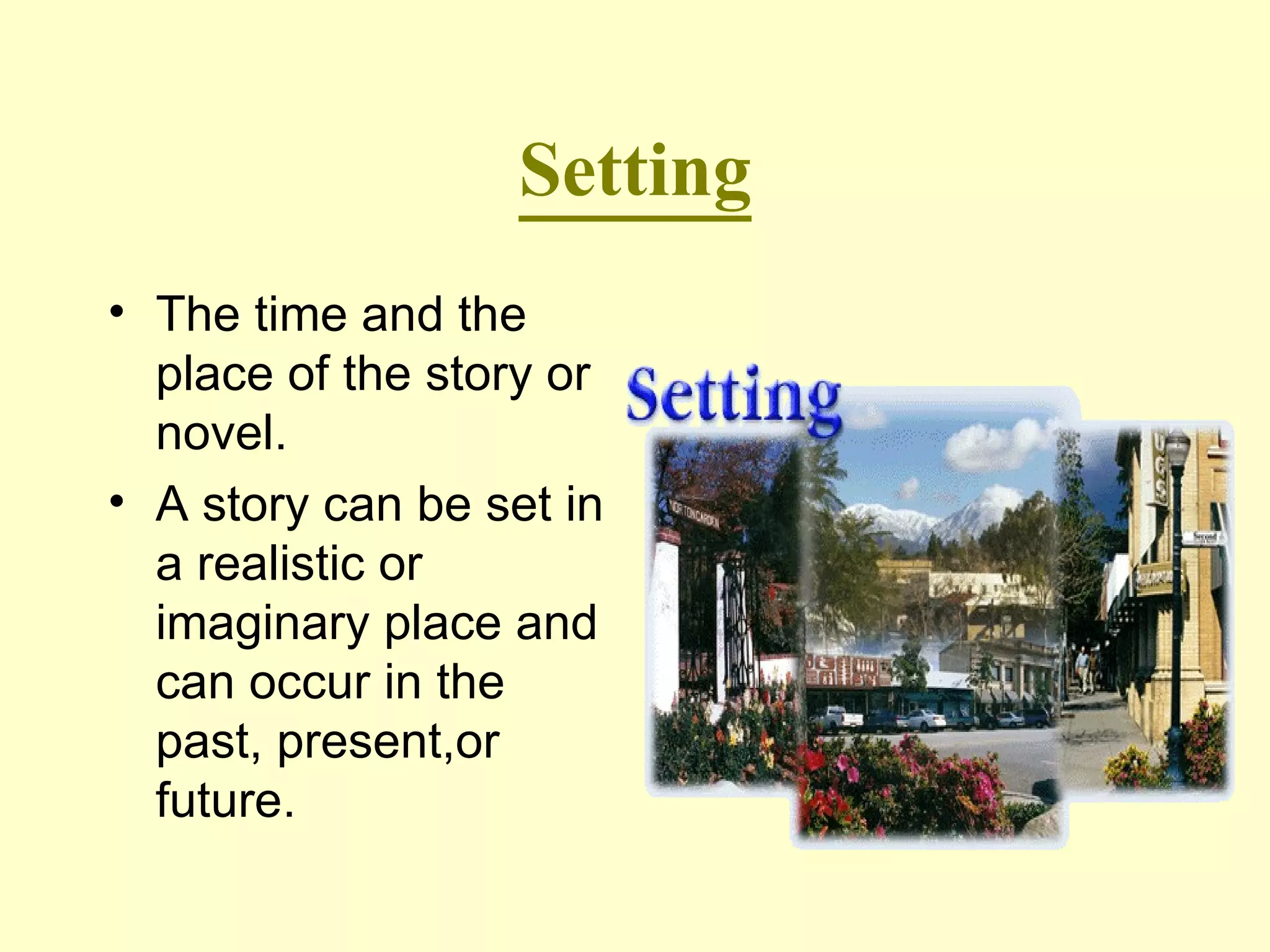
Setting The time and the place of the story or novel. A story can be set in a realistic or imaginary place and can occur in the past, present,or future.
Foreshadowing An author’s way of hinting to the reader of what is to come in the story.
Plot The series of events in sequential order. What happens 1 st , 2 nd , 3 rd , and so on. The plot centers on at least one major problem called a  conflict . Exposition Rising Action CLIMAX! Falling Action Resolution
Five Main Parts of the Plot Not all stories fit this pattern.  The exposition may appear in the middle of the story instead of the beginning.  A story can end with a climax, leaving no falling action. Climax Resolution Rising Action Falling Action Exposition
Exposition The opening of a short story or novel.  It provides background information that the reader needs to know. It introduces the characters, describes the setting, and may recap important events before the action of the story.
Rising Action The chain of events becomes more complex.  The actions and feelings of the characters intensify as their problems become more complicated. Rising Action
Climax The highest point of interest Where most action takes place in the store Involves an important event,decision, or discovery that affects the final outcome.
Falling Action Following the climax, the intensity of the story may subside. The falling action describes the results of the major events as the action winds down. Falling  action
Resolution The final part of the story. It tells how the story ends.  All the loose ends are tied up.
Theme The main idea that the author wishes to share with the reader. A writer rarely states the theme directly; but after reading the selection, the reader should be able to infer the theme. It can be Universal;applying to you and the world
Mood A feeling or emotions that a writing or piece of literature stirs in the reader.

Literary elements

  • 1.
  • 2.
    Protagonist Is themain character in a work of literature. Narrator
  • 3.
    Antagonist The characterin a work of literature who opposes the main character.
  • 4.
    conflict A strugglebetween opposing forces; conflicts can be external or internal .
  • 5.
    External Conflict Man-vs-manMan-vs-nature Man-vs-animal Struggle with outside forces.
  • 6.
    Internal Conflict Takesplace in the character’s mind.
  • 7.
    Point Of ViewThe vantage point in which the story is told. First Person- ‘I’ Third Person- ‘He, she it” Omniscient -having infinite awareness, understanding, and insight possessed of universal or complete knowledge
  • 8.
    Setting The timeand the place of the story or novel. A story can be set in a realistic or imaginary place and can occur in the past, present,or future.
  • 9.
    Foreshadowing An author’sway of hinting to the reader of what is to come in the story.
  • 10.
    Plot The seriesof events in sequential order. What happens 1 st , 2 nd , 3 rd , and so on. The plot centers on at least one major problem called a conflict . Exposition Rising Action CLIMAX! Falling Action Resolution
  • 11.
    Five Main Partsof the Plot Not all stories fit this pattern. The exposition may appear in the middle of the story instead of the beginning. A story can end with a climax, leaving no falling action. Climax Resolution Rising Action Falling Action Exposition
  • 12.
    Exposition The openingof a short story or novel. It provides background information that the reader needs to know. It introduces the characters, describes the setting, and may recap important events before the action of the story.
  • 13.
    Rising Action Thechain of events becomes more complex. The actions and feelings of the characters intensify as their problems become more complicated. Rising Action
  • 14.
    Climax The highestpoint of interest Where most action takes place in the store Involves an important event,decision, or discovery that affects the final outcome.
  • 15.
    Falling Action Followingthe climax, the intensity of the story may subside. The falling action describes the results of the major events as the action winds down. Falling action
  • 16.
    Resolution The finalpart of the story. It tells how the story ends. All the loose ends are tied up.
  • 17.
    Theme The mainidea that the author wishes to share with the reader. A writer rarely states the theme directly; but after reading the selection, the reader should be able to infer the theme. It can be Universal;applying to you and the world
  • 18.
    Mood A feelingor emotions that a writing or piece of literature stirs in the reader.