Priyanka Rana
M.Sc Nursing
Scon,Dehradun
 Play therapy is based upon the fact that play is
the child’s natural medium of self-expression.
 Play therapy is generally employed with
children aged 3 through 11 and provides a way
for them to express their experiences and
feeling.
 Children dealing with parental conflict , separation or
divorce.
 Sexual , physical or emotional abuse.
 Children who have been adopted or are in foster care.
 Dealing with issues of loss.
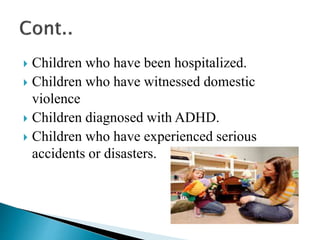
 Children who have been hospitalized.
 Children who have witnessed domestic
violence
 Children diagnosed with ADHD.
 Children who have experienced serious
accidents or disasters.
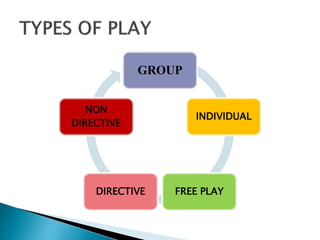
GROUP
INDIVIDUAL
FREE PLAY
DIRECTIVE
NON
DIRECTIVE
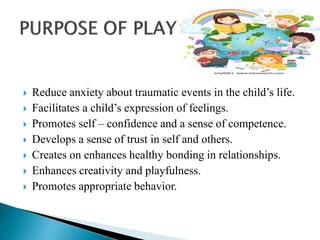
 Reduce anxiety about traumatic events in the child’s life.
 Facilitates a child’s expression of feelings.
 Promotes self – confidence and a sense of competence.
 Develops a sense of trust in self and others.
 Creates on enhances healthy bonding in relationships.
 Enhances creativity and playfulness.
 Promotes appropriate behavior.
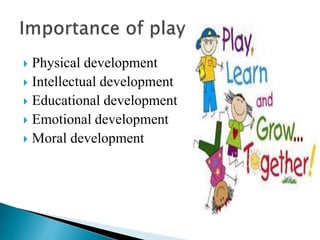
 Physical development
 Intellectual development
 Educational development
 Emotional development
 Moral development
 Play therapy gives the therapist a chance
to explore family relationship of the child
and discover what difficulties are
contributing to the child’s problems.
 Play therapy allows studying hidden
aspects of the child’s personality.
 It is possible to obtain a good idea of the
intelligence level of the child.
 Organize play activities.
 Play materials should be placed in separate room.
 Age appropriate play articles should be provided.
 Involve all members for play.
 Observe & record child’s behavior.
 Protect & guide children when aggressive.
 Participate with the children during play.
Music therapy is a interpersonal process in
which the trained music therapist uses
music and all of its facets ; physical ,
emotional, mental ,social & spiritual to
help the client to improve and maintain
their health.
 Music therapy is non threating form of
intervention. It helps people open up. We have
seen many people benefit, including those
suffering from forms of dementia such as
Alzheimer’s.
 We have also seen evidence of music therapy
in neurological rehabilitation as people relearn
a gait and learn to speak after a stroke.
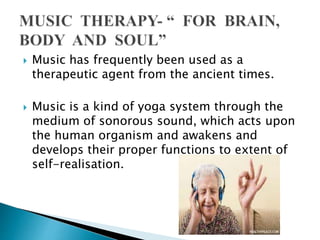
 Music has frequently been used as a
therapeutic agent from the ancient times.
 Music is a kind of yoga system through the
medium of sonorous sound, which acts upon
the human organism and awakens and
develops their proper functions to extent of
self-realisation.
 One obvious use of music is that of a sedative.
 It can replace the administration of tranquilizers, or at
least reduce the dosage of tranquilizers.
 Music increases the metabolic activities with in the
human body.
 It accelerates the respiration , influences the internal
secretion , improves the muscular activities and as such
affects the central nervous system of the listener.
Aphasia.
Developmental disorder.
 Elderly clients.
Confusion.
Agitation.
Affective , cognitive and sensory disorder.
Terminally ill patient.
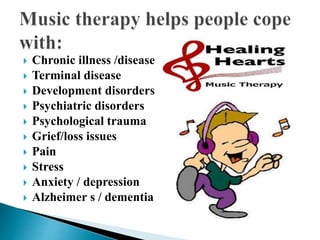
 Chronic illness /disease
 Terminal disease
 Development disorders
 Psychiatric disorders
 Psychological trauma
 Grief/loss issues
 Pain
 Stress
 Anxiety / depression
 Alzheimer s / dementia
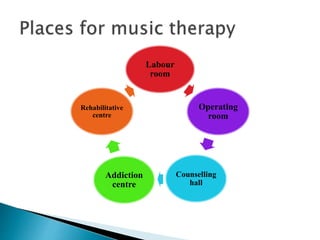
Labour
room
Operating
room
Counselling
hall
Addiction
centre
Rehabilitative
centre
 Music acts on our mind before being
transformed into thought and feeling.
 Music influences the lower and higher
cerebral of the brain.
 Use of music as a therapy helps search of an
individuals personal harmony.
 It is an important tool in the treatment of
both psychological and psychosomatic
disorder.
 it stimulates good vibrations in the nerves of
the listeners.
 Music brings about a sense of mental well
being in individuals.
 Music therapy helps leads to have positive
frame of mind.
 Music therapy enhances the concentration
level of children.
 Music training helps to express refined
exhibition of emotions and clarity in
cognition too.
 It is the psychotherapeutic use of movement
and dance through which a person can
engage creatively in a person to further their
emotional, cognitive, physical ,and social
integration.
 It is the functional application of varied forms
of dance by usage of group of muscles to
bring certain effect to modify the client’s
behaviour or altering emotions.
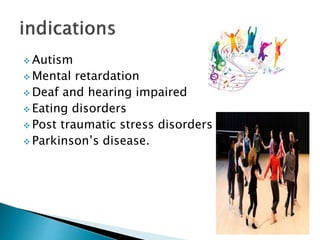
 Autism
 Mental retardation
 Deaf and hearing impaired
 Eating disorders
 Post traumatic stress disorders
 Parkinson’s disease.
 Promotes psychotherapeutic usage of body
movements.
 Clients will learn to express his ideas ,
thoughts and feelings through their motor
activity.
 Enhances interaction and communication
pattern.
 Relieves tension , stress , anxiety and worries.
 Serves as a sort of enjoyment and
entertainment.
 Exhibits talents and abilities of the clients.
 Improves self confidence and contentment.
 Channelizes the emotional experience into
expression of body movements.
Play,music and dance therapy

Play,music and dance therapy

  • 2.
  • 3.
     Play therapyis based upon the fact that play is the child’s natural medium of self-expression.  Play therapy is generally employed with children aged 3 through 11 and provides a way for them to express their experiences and feeling.
  • 4.
     Children dealingwith parental conflict , separation or divorce.  Sexual , physical or emotional abuse.  Children who have been adopted or are in foster care.  Dealing with issues of loss.
  • 5.
     Children whohave been hospitalized.  Children who have witnessed domestic violence  Children diagnosed with ADHD.  Children who have experienced serious accidents or disasters.
  • 6.
  • 7.
     Reduce anxietyabout traumatic events in the child’s life.  Facilitates a child’s expression of feelings.  Promotes self – confidence and a sense of competence.  Develops a sense of trust in self and others.  Creates on enhances healthy bonding in relationships.  Enhances creativity and playfulness.  Promotes appropriate behavior.
  • 8.
     Physical development Intellectual development  Educational development  Emotional development  Moral development
  • 9.
     Play therapygives the therapist a chance to explore family relationship of the child and discover what difficulties are contributing to the child’s problems.  Play therapy allows studying hidden aspects of the child’s personality.  It is possible to obtain a good idea of the intelligence level of the child.
  • 10.
     Organize playactivities.  Play materials should be placed in separate room.  Age appropriate play articles should be provided.  Involve all members for play.  Observe & record child’s behavior.  Protect & guide children when aggressive.  Participate with the children during play.
  • 12.
    Music therapy isa interpersonal process in which the trained music therapist uses music and all of its facets ; physical , emotional, mental ,social & spiritual to help the client to improve and maintain their health.
  • 13.
     Music therapyis non threating form of intervention. It helps people open up. We have seen many people benefit, including those suffering from forms of dementia such as Alzheimer’s.  We have also seen evidence of music therapy in neurological rehabilitation as people relearn a gait and learn to speak after a stroke.
  • 14.
     Music hasfrequently been used as a therapeutic agent from the ancient times.  Music is a kind of yoga system through the medium of sonorous sound, which acts upon the human organism and awakens and develops their proper functions to extent of self-realisation.
  • 15.
     One obvioususe of music is that of a sedative.  It can replace the administration of tranquilizers, or at least reduce the dosage of tranquilizers.  Music increases the metabolic activities with in the human body.  It accelerates the respiration , influences the internal secretion , improves the muscular activities and as such affects the central nervous system of the listener.
  • 16.
    Aphasia. Developmental disorder.  Elderlyclients. Confusion. Agitation. Affective , cognitive and sensory disorder. Terminally ill patient.
  • 17.
     Chronic illness/disease  Terminal disease  Development disorders  Psychiatric disorders  Psychological trauma  Grief/loss issues  Pain  Stress  Anxiety / depression  Alzheimer s / dementia
  • 18.
  • 19.
     Music actson our mind before being transformed into thought and feeling.  Music influences the lower and higher cerebral of the brain.  Use of music as a therapy helps search of an individuals personal harmony.
  • 20.
     It isan important tool in the treatment of both psychological and psychosomatic disorder.  it stimulates good vibrations in the nerves of the listeners.  Music brings about a sense of mental well being in individuals.
  • 21.
     Music therapyhelps leads to have positive frame of mind.  Music therapy enhances the concentration level of children.  Music training helps to express refined exhibition of emotions and clarity in cognition too.
  • 23.
     It isthe psychotherapeutic use of movement and dance through which a person can engage creatively in a person to further their emotional, cognitive, physical ,and social integration.
  • 24.
     It isthe functional application of varied forms of dance by usage of group of muscles to bring certain effect to modify the client’s behaviour or altering emotions.
  • 25.
     Autism  Mentalretardation  Deaf and hearing impaired  Eating disorders  Post traumatic stress disorders  Parkinson’s disease.
  • 26.
     Promotes psychotherapeuticusage of body movements.  Clients will learn to express his ideas , thoughts and feelings through their motor activity.  Enhances interaction and communication pattern.  Relieves tension , stress , anxiety and worries.
  • 27.
     Serves asa sort of enjoyment and entertainment.  Exhibits talents and abilities of the clients.  Improves self confidence and contentment.  Channelizes the emotional experience into expression of body movements.