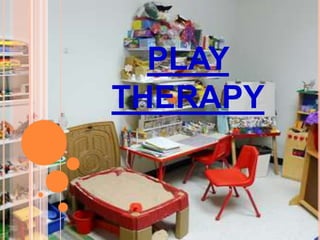
PLAY
THERAPY
DEFINITION

 "PlayTherapy is based upon the fact that
 play is the child's natural medium of self-
 expression.

 Play therapy is generally employed
 with children aged 3 through 11 and
 provides a way for them to express their
 experiences and feelings
INDICATIONS

 Children dealing with parental conflict, separation or
  divorce
 Traumatized children (sexual, physical or emotional
  abuse)
 Children who have been adopted or are in foster care

 dealing with issues of loss

 Children who have been hospitalized

 Children who have witnessed domestic violence

 Children diagnosed with Attention Deficit Disorder
  (ADD/ADHD)
 Children who have experienced serious accidents or
  disasters.
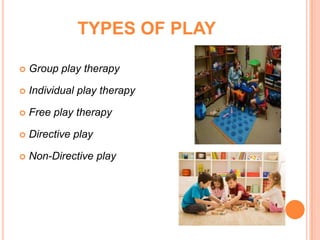
TYPES OF PLAY

   Group play therapy

   Individual play therapy

   Free play therapy

   Directive play

   Non-Directive play
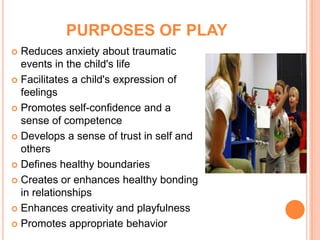
PURPOSES OF PLAY
 Reduces anxiety about traumatic
  events in the child's life
 Facilitates a child's expression of
  feelings
 Promotes self-confidence and a
  sense of competence
 Develops a sense of trust in self and
  others
 Defines healthy boundaries

 Creates or enhances healthy bonding
  in relationships
 Enhances creativity and playfulness

 Promotes appropriate behavior
DEFINTION
 Music      therapy     is      a
 interpersonal process in which
 the trained music therapist
 uses music and all of its
 facets- physical, emotional,
 mental, social, aesthetic and
 spiritual – to help the client to
 improve and maintain their
 health.
INDICATIONS


   Aphasia
   Developmental disorders
   Elderly clients
   Confusion
   Terminally ill clients
   Depression
   Affective, cognitive & sensory disorders
   Agitation
FUNCTIONS OF MUSIC

 Enhances relaxation of mind.
 Client’s needs are directly addressed through music.

 Improves in learning & helps in building self-esteem

 Reduces stress and support physical exercise.

 Diverts mind in stressful situation

 Reduces anxiety, tension and fear

 Induces sleep

 Enhances cognitive skills.

 Stimulates social interaction

 Sharper concentration and more alert thinking

 Bring a positive state of mind
PLACES WHERE MUSIC THERAPY CAN
        BE CONDUCTED


   Labour room

   Operating room

   Massage therapy session room

   Counseling halls

   Addiction treatment halls
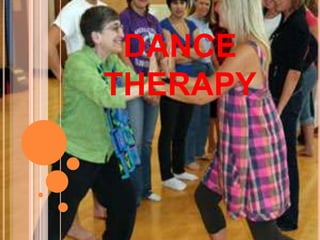
DANCE
THERAPY
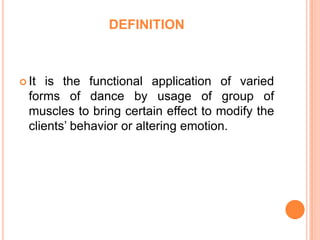
DEFINITION


 It  is the functional application of varied
  forms of dance by usage of group of
  muscles to bring certain effect to modify the
  clients’ behavior or altering emotion.
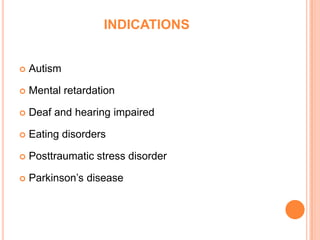
INDICATIONS


   Autism

   Mental retardation

   Deaf and hearing impaired

   Eating disorders

   Posttraumatic stress disorder

   Parkinson’s disease
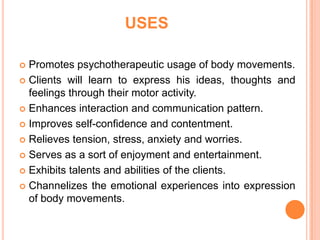
USES

 Promotes psychotherapeutic usage of body movements.
 Clients will learn to express his ideas, thoughts and
  feelings through their motor activity.
 Enhances interaction and communication pattern.

 Improves self-confidence and contentment.

 Relieves tension, stress, anxiety and worries.

 Serves as a sort of enjoyment and entertainment.

 Exhibits talents and abilities of the clients.

 Channelizes the emotional experiences into expression
  of body movements.

Play therapy, dance & music therapy

  • 1.
  • 2.
    DEFINITION  "PlayTherapy isbased upon the fact that play is the child's natural medium of self- expression.  Play therapy is generally employed with children aged 3 through 11 and provides a way for them to express their experiences and feelings
  • 3.
    INDICATIONS  Children dealingwith parental conflict, separation or divorce  Traumatized children (sexual, physical or emotional abuse)  Children who have been adopted or are in foster care  dealing with issues of loss  Children who have been hospitalized  Children who have witnessed domestic violence  Children diagnosed with Attention Deficit Disorder (ADD/ADHD)  Children who have experienced serious accidents or disasters.
  • 4.
    TYPES OF PLAY  Group play therapy  Individual play therapy  Free play therapy  Directive play  Non-Directive play
  • 5.
    PURPOSES OF PLAY Reduces anxiety about traumatic events in the child's life  Facilitates a child's expression of feelings  Promotes self-confidence and a sense of competence  Develops a sense of trust in self and others  Defines healthy boundaries  Creates or enhances healthy bonding in relationships  Enhances creativity and playfulness  Promotes appropriate behavior
  • 8.
    DEFINTION  Music therapy is a interpersonal process in which the trained music therapist uses music and all of its facets- physical, emotional, mental, social, aesthetic and spiritual – to help the client to improve and maintain their health.
  • 9.
    INDICATIONS  Aphasia  Developmental disorders  Elderly clients  Confusion  Terminally ill clients  Depression  Affective, cognitive & sensory disorders  Agitation
  • 10.
    FUNCTIONS OF MUSIC Enhances relaxation of mind.  Client’s needs are directly addressed through music.  Improves in learning & helps in building self-esteem  Reduces stress and support physical exercise.  Diverts mind in stressful situation  Reduces anxiety, tension and fear  Induces sleep  Enhances cognitive skills.  Stimulates social interaction  Sharper concentration and more alert thinking  Bring a positive state of mind
  • 11.
    PLACES WHERE MUSICTHERAPY CAN BE CONDUCTED  Labour room  Operating room  Massage therapy session room  Counseling halls  Addiction treatment halls
  • 12.
  • 13.
    DEFINITION  It is the functional application of varied forms of dance by usage of group of muscles to bring certain effect to modify the clients’ behavior or altering emotion.
  • 14.
    INDICATIONS  Autism  Mental retardation  Deaf and hearing impaired  Eating disorders  Posttraumatic stress disorder  Parkinson’s disease
  • 15.
    USES  Promotes psychotherapeuticusage of body movements.  Clients will learn to express his ideas, thoughts and feelings through their motor activity.  Enhances interaction and communication pattern.  Improves self-confidence and contentment.  Relieves tension, stress, anxiety and worries.  Serves as a sort of enjoyment and entertainment.  Exhibits talents and abilities of the clients.  Channelizes the emotional experiences into expression of body movements.