PLAYING THE
CAPSTONE
Anastasia Salter
@anasalter
University of Central Florida
Digital Media / Texts &
Technology
People know that there's something magical about
games. They don't always express that opinion
positively, but even condemnations of video games
acknowledge that they contain special power, power
to captivate us and draw us in, power to encourage
us to repeat things we've seemingly done before,
power to get us to spend money on things that seem
not to exist, and so forth. While not everyone agrees
that games are culture, or media, or art, everyone
seems to agree that games are powerful. And that
power is mysterious and wild, like black magic. You
don't have to like games to want a piece of it.
Ian Bogost
http://www.gamasutra.com/view/feature/134735/p
ersuasive_games_exploitationware.php?page=2
Video games don’t just carry the
potential to replicate a sophisticated
scientific way of thinking. They
actually externalize the way in which
the human mind works and thinks in a
better fashion than any other
technology we have.
James Paul Gee
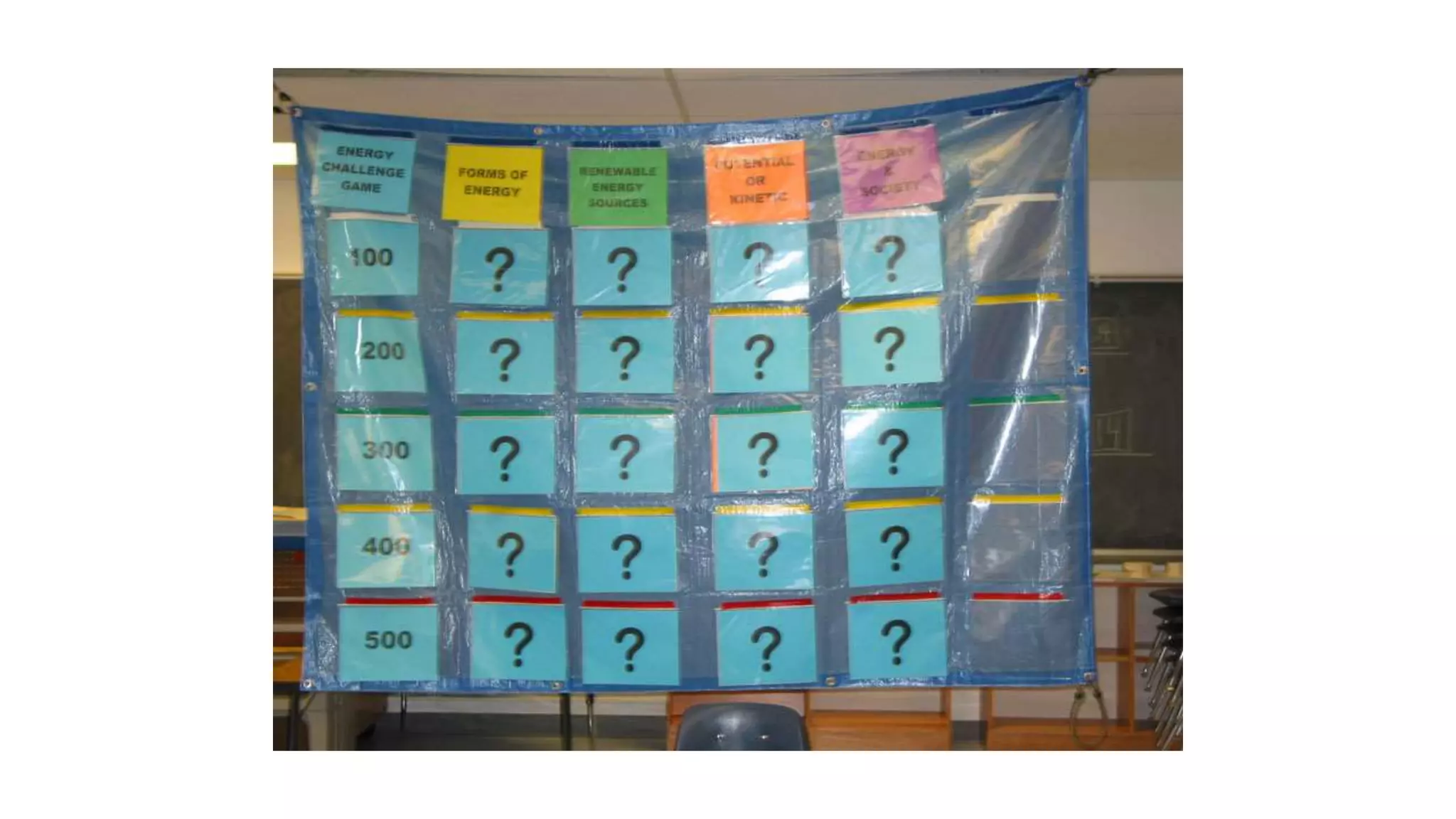
CAPSTONES AS GAMES Reimagining “High Impact”
The aim of project-based courses are for students
to autonomously synthesize the multi-disciplinary
knowledge gained during their undergraduate
career and relate it to a project that has practical
applications to their field.
Creative and logical decision-making will be
required of students, creating the conditions for
students to demonstrate leadership, teamwork,
decisiveness, goal-setting, problem-solving, and
critical thinking.
UCF Signature Experiences: Guide
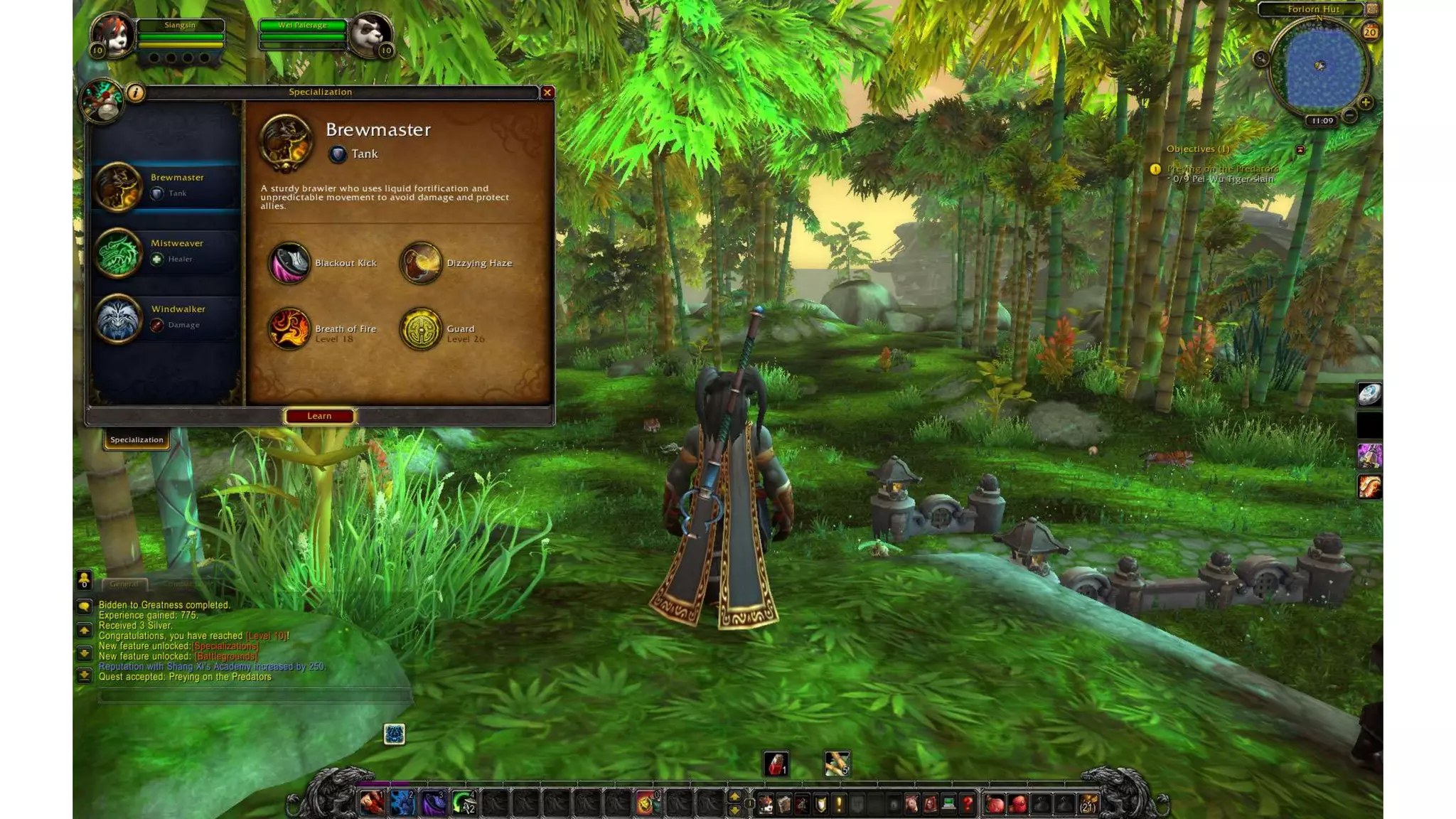
What makes World of Warcraft work for learners?
1. Provides multiple avenues of support and
communication
2. Uses a quest system that provides a deliberate
and ordered path to goals
3. Scaffolds both technological skill sets and
content knowledge
“The Acquisition of Skill and Expertise in
Massively Multiplayer Online Games,”
Educational Technology, Research and
PG Schrader
HOW DO WE MAKE A CAPSTONE
COURSE MORE LIKE A GAME?
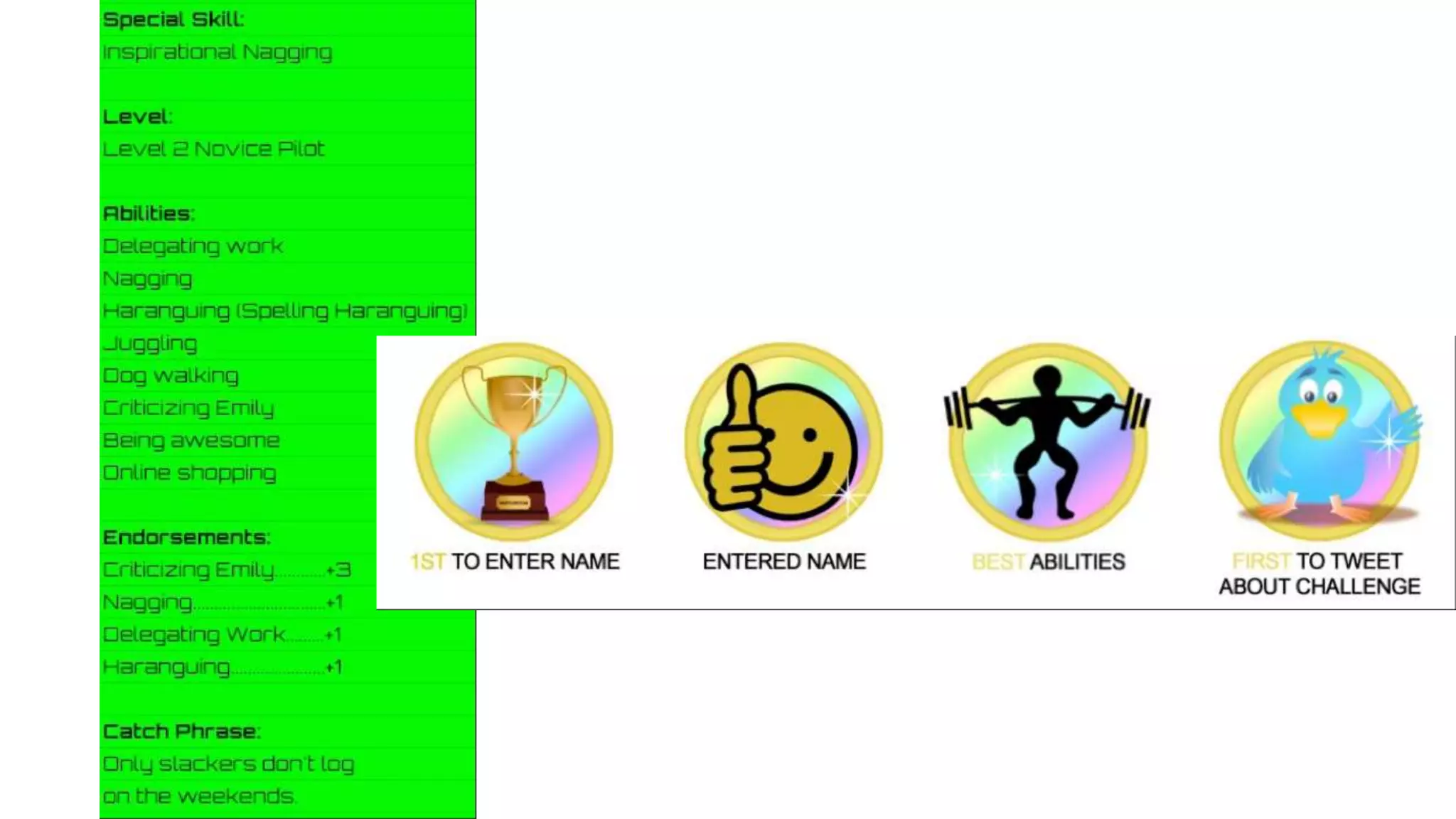
BADGES & GAMIFIED
COMMUNITY
Social Media and Games
(2011)
Games Research Group
(2016)
GAMES RESEARCH GROUP Designed and run by
Emily Johnson (2016)
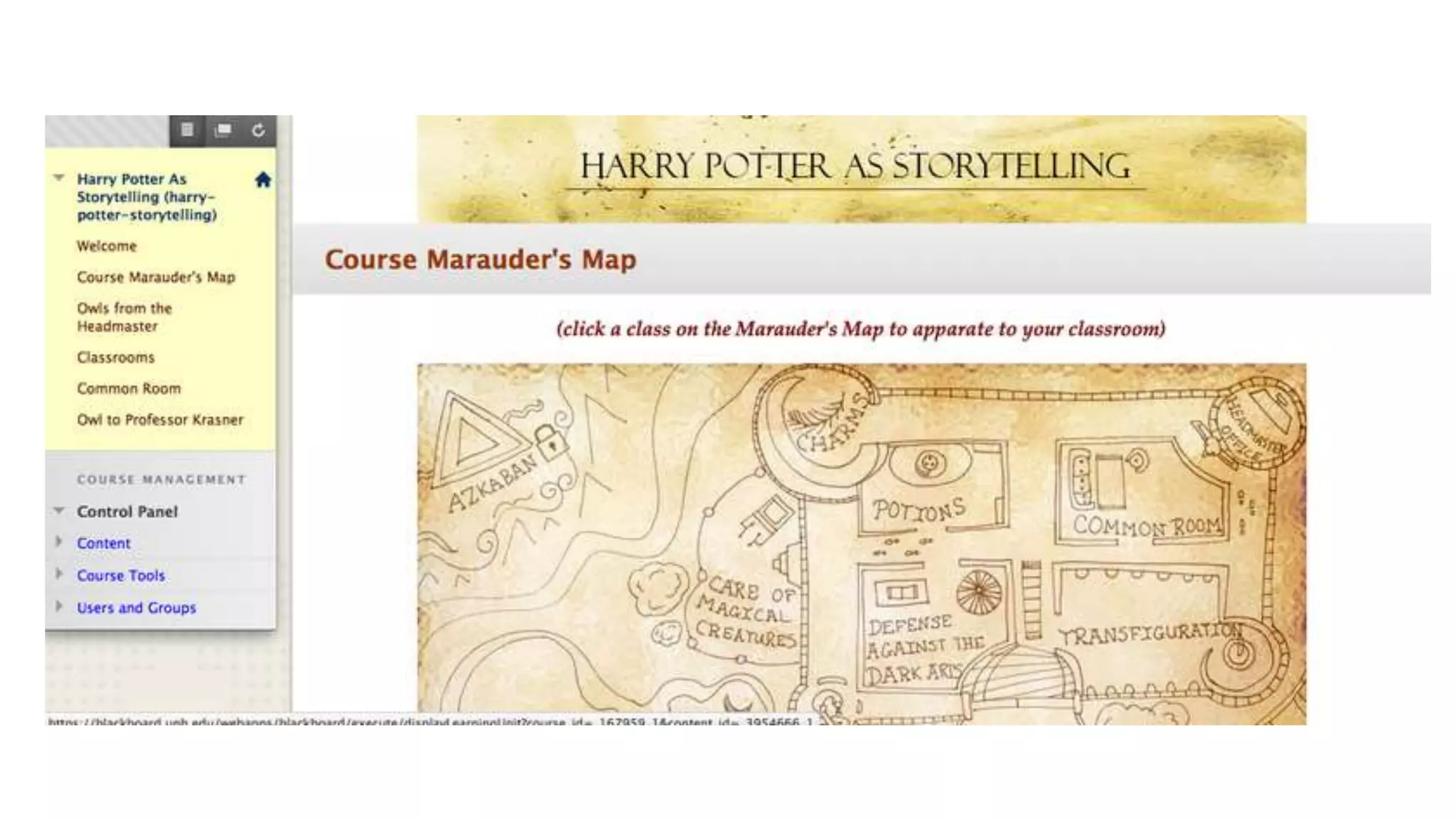
HARRY POTTER AS
STORYTELING
University of New
Hampshire: Consultant on
Developing Game Layer,
2013
GAMES INVASION Alternate Reality Game,
THATCamp Games 2012
THE GAMER SOCIETY Alternate Reality Game,
NASAGA 2014
RET SOCIETIES OF THE AVANT-
GARDE
With Keri Watson, 20th
Century Art History
Alternate Reality Game,
2014
Step One: Planning the Educational / Training
Objectives
• What knowledge do you want to apply or
disseminate?
• What skills do you want the learners to build?
(personal, team, technical, communication?)
• What are your learners’ experiences with games or
stories? What game-like elements from their
profession or scenarios can you harness for your
fiction?
Step Two: Building the Rabbit Hole
• What theme supports your learning objectives?
• How can you use your existing environment?
• How will users find their way down the rabbit hole?
Step Three: The Bread Crumb Trail
• How will you communicate with and respond to the
learners?
• What information do the learners need to understand
their task?
• Where will information be placed in physical or
virtual environments?
• How will the actions and choices of learners change
your story?
Step Four: The Final Obstacle
• How will you communicate with and respond to the
learners?
• What information do the learners need to understand
their task?
• How can you provide feedback and responsiveness
to their solution?
Step Five: Reflection and Transference of Skills
• What follow-up activities will help clarify your
outcomes?
• How can you assess and scaffold transference of
skills?
• Remember: any game can be a successful
educational experience with debriefing.
MPLES OF EDUCATIONAL ARGS
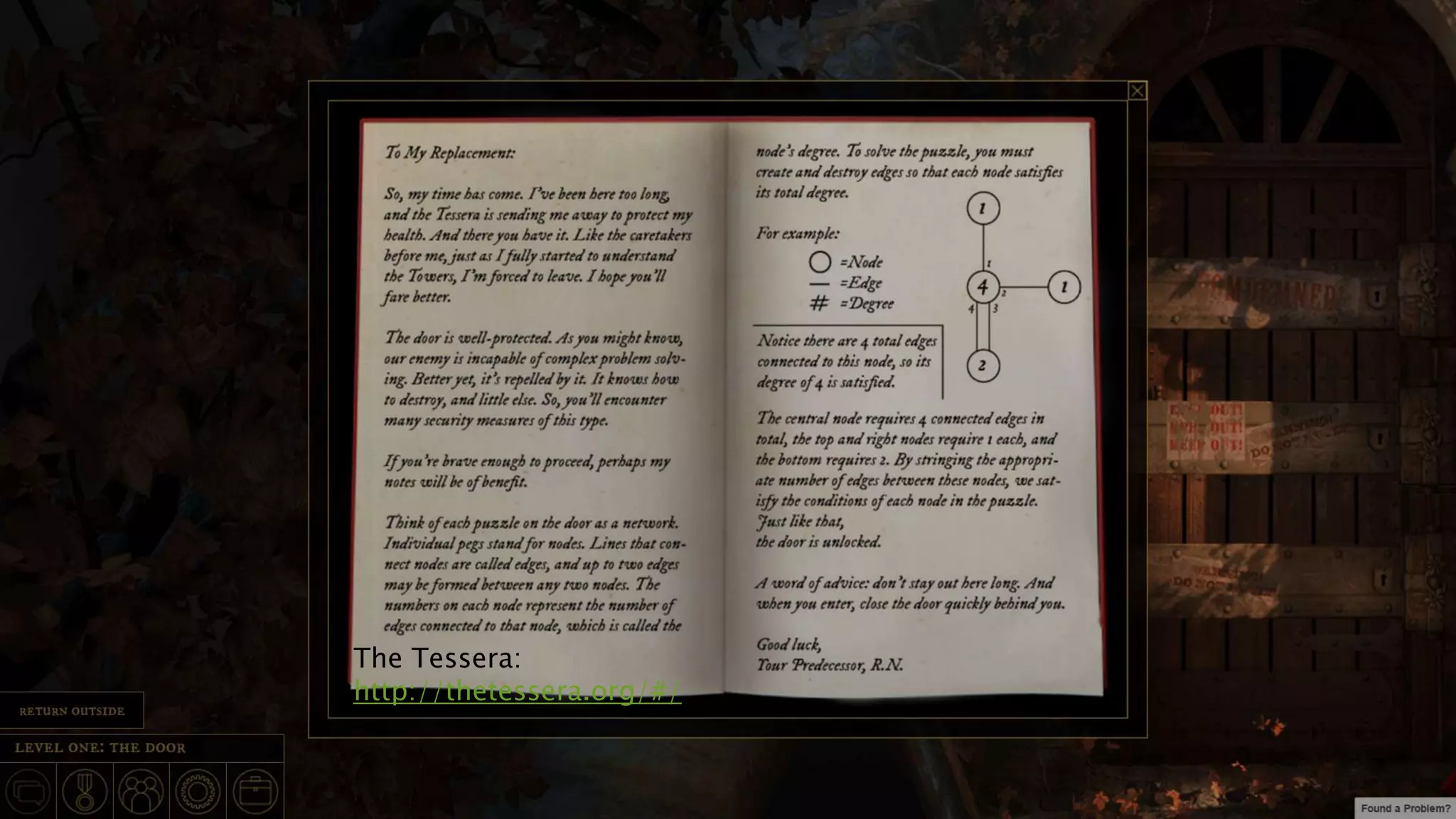
The Tessera:
http://thetessera.org/#/
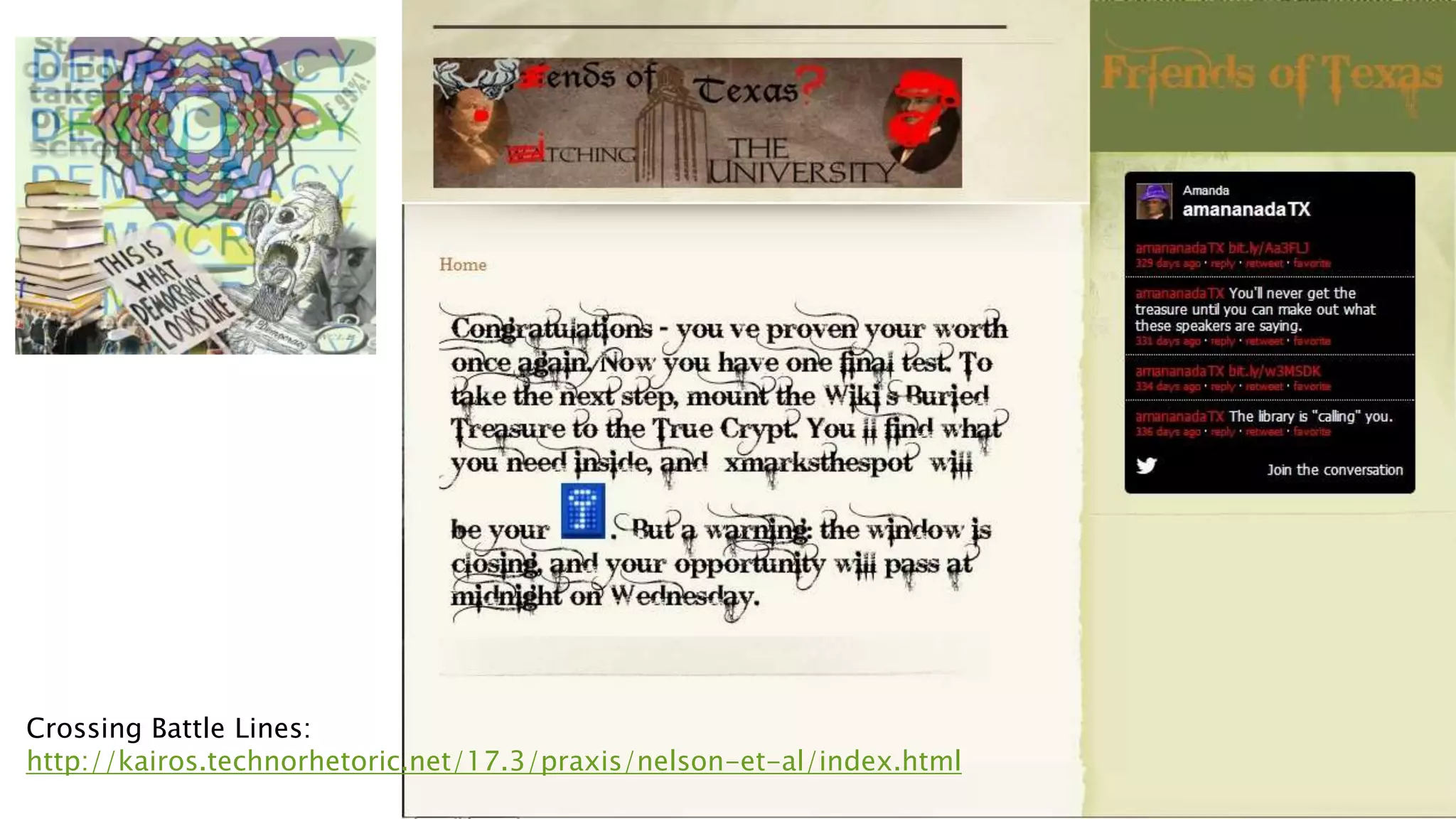
Crossing Battle Lines:
http://kairos.technorhetoric
.net/17.3/praxis/nelson-et-
al/index.html
The Tessera:
http://thetessera.org/#/
Crossing Battle Lines:
http://kairos.technorhetoric.net/17.3/praxis/nelson-et-al/index.html

Playing the Capstone

  • 1.
    PLAYING THE CAPSTONE Anastasia Salter @anasalter Universityof Central Florida Digital Media / Texts & Technology
  • 2.
    People know thatthere's something magical about games. They don't always express that opinion positively, but even condemnations of video games acknowledge that they contain special power, power to captivate us and draw us in, power to encourage us to repeat things we've seemingly done before, power to get us to spend money on things that seem not to exist, and so forth. While not everyone agrees that games are culture, or media, or art, everyone seems to agree that games are powerful. And that power is mysterious and wild, like black magic. You don't have to like games to want a piece of it. Ian Bogost http://www.gamasutra.com/view/feature/134735/p ersuasive_games_exploitationware.php?page=2
  • 8.
    Video games don’tjust carry the potential to replicate a sophisticated scientific way of thinking. They actually externalize the way in which the human mind works and thinks in a better fashion than any other technology we have. James Paul Gee
  • 12.
    CAPSTONES AS GAMESReimagining “High Impact”
  • 13.
    The aim ofproject-based courses are for students to autonomously synthesize the multi-disciplinary knowledge gained during their undergraduate career and relate it to a project that has practical applications to their field. Creative and logical decision-making will be required of students, creating the conditions for students to demonstrate leadership, teamwork, decisiveness, goal-setting, problem-solving, and critical thinking. UCF Signature Experiences: Guide
  • 18.
    What makes Worldof Warcraft work for learners? 1. Provides multiple avenues of support and communication 2. Uses a quest system that provides a deliberate and ordered path to goals 3. Scaffolds both technological skill sets and content knowledge “The Acquisition of Skill and Expertise in Massively Multiplayer Online Games,” Educational Technology, Research and PG Schrader
  • 19.
    HOW DO WEMAKE A CAPSTONE COURSE MORE LIKE A GAME?
  • 20.
    BADGES & GAMIFIED COMMUNITY SocialMedia and Games (2011) Games Research Group (2016)
  • 23.
    GAMES RESEARCH GROUPDesigned and run by Emily Johnson (2016)
  • 26.
    HARRY POTTER AS STORYTELING Universityof New Hampshire: Consultant on Developing Game Layer, 2013
  • 30.
    GAMES INVASION AlternateReality Game, THATCamp Games 2012
  • 35.
    THE GAMER SOCIETYAlternate Reality Game, NASAGA 2014
  • 38.
    RET SOCIETIES OFTHE AVANT- GARDE With Keri Watson, 20th Century Art History Alternate Reality Game, 2014
  • 39.
    Step One: Planningthe Educational / Training Objectives • What knowledge do you want to apply or disseminate? • What skills do you want the learners to build? (personal, team, technical, communication?) • What are your learners’ experiences with games or stories? What game-like elements from their profession or scenarios can you harness for your fiction?
  • 40.
    Step Two: Buildingthe Rabbit Hole • What theme supports your learning objectives? • How can you use your existing environment? • How will users find their way down the rabbit hole?
  • 44.
    Step Three: TheBread Crumb Trail • How will you communicate with and respond to the learners? • What information do the learners need to understand their task? • Where will information be placed in physical or virtual environments? • How will the actions and choices of learners change your story?
  • 47.
    Step Four: TheFinal Obstacle • How will you communicate with and respond to the learners? • What information do the learners need to understand their task? • How can you provide feedback and responsiveness to their solution?
  • 49.
    Step Five: Reflectionand Transference of Skills • What follow-up activities will help clarify your outcomes? • How can you assess and scaffold transference of skills? • Remember: any game can be a successful educational experience with debriefing.
  • 50.
    MPLES OF EDUCATIONALARGS The Tessera: http://thetessera.org/#/ Crossing Battle Lines: http://kairos.technorhetoric .net/17.3/praxis/nelson-et- al/index.html
  • 51.
  • 52.