Prof Ram Meghe College of Engg. & Management, Badnera 
USE OF WASTE PLASTICS IN 
ROAD PAVEMENT 
By Vezhoyi Ringa
CONTENT 
INTRODUCTION 
NEED OF STUDY 
PLASTIC ROAD 
MATERIAL USED 
METHOD OF MIXING 
ADVANTAGES 
DISADVANTAGES
 plastic waste is increasing due to 
increase in population, urbanization and 
development 
 Plastics can be divided in to two major 
categories: thermoset and 
thermoplastics. 
 The disposal of waste plastic has 
become a serious problem globally due 
to their non-biodegradability.
Plastic roads mainly use plastic carry 
bags, disposable cups and bottles that are 
collected from garbage dumps. 
When mixed with hot bitumen, plastics 
melt to form an oily coat over the 
aggregate and the mixture is laid on the 
road surface like a normal tar road.
NEED OF STUDY 
Intensity of the traffic is increasing 
Need of better quality of road pavement 
Disposal of waste plastic is a major 
problem. 
Waste plastic bags causes environmental 
pollution
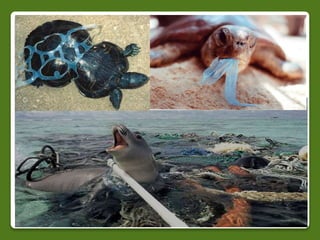
IMPACT OF PLASTIC WASTES ON 
OUR ENVIROMENT
POOR QUALITY OF ROAD
But we can minimize these problems 
by using plastic waste in road 
construction…
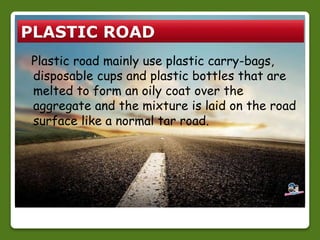
PLASTIC ROAD 
Plastic road mainly use plastic carry-bags, 
disposable cups and plastic bottles that are 
melted to form an oily coat over the 
aggregate and the mixture is laid on the road 
surface like a normal tar road.
MATERIAL USED 
1) AGGREGATES: 
The aggregate used for road work should 
be hard, tough, durable and hydrophobic 
for bituminous surface.
2) BITUMEN: 
Bitumen is used as binders in pavements 
constructions.
3) WASTE PLASTICS 
Plastic bags, plastic bottles, protective packing 
etc.
METHOD OF MIXING: 
1. DRY PROCESS 
2. WET PROCESS
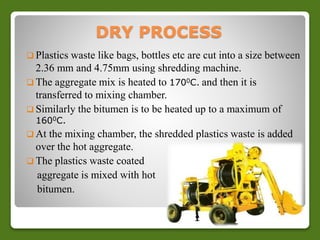
DRY PROCESS 
 Plastics waste like bags, bottles etc are cut into a size between 
2.36 mm and 4.75mm using shredding machine. 
 The aggregate mix is heated to 1700C. and then it is 
transferred to mixing chamber. 
 Similarly the bitumen is to be heated up to a maximum of 
1600C. 
 At the mixing chamber, the shredded plastics waste is added 
over the hot aggregate. 
 The plastics waste coated 
aggregate is mixed with hot 
bitumen.
WET PROCESS 
 Waste plastics by direct mixing with hot 
bitumen at 160°C. 
 Mechanical stirrer is needed. 
 Since the wet process require a lot of 
investment and bigger plants so not 
commonly used.
ADVANTAGES: 
1) The load withstanding property increases. 
2) Better resistance towards rain water and cold weather. 
3) No stripping and no potholes. 
4) Increase binding and better bonding of the mix. 
5) No leaching of plastics.
6) For 1km road, 1 ton of plastic (10 lakh carry bags) is 
used and 1 ton of bitumen is saved. 
7) The maintenance cost of road is almost nil. 
8) Disposal of waste plastic will no longer be a problem.
DISADVANTAGES 
1. Cleaning process 
Toxics present in the co-mingled plastic waste would 
start leaching. 
2. During the road laying process 
In the presence of chlorine will definitely release 
noxious HCL gas. 
3.After the road laying 
The components of the road, once it has been laid, 
are not inert.
DEVELOPMENTS 
 The office of the chief minister, New Delhi has a given a 
green signal to a private company for supply of bitumen 
mixed with plastic which is used for construction of roads. 
 The company has already constructed a two-km road in 
Bangalore with bitumen mixed with plastic. 
 The government of Karnataka was pleased by the success of 
the experiment and the state chief minister himself 
inaugurated the field test of construction 500 m of road in 
three places in and around Bangalore with the help of PWD 
using the innovative technology.
CONCLUSION 
 Roads laid with plastic waste mix are found to be better than 
the conventional ones. 
 Plastic will increase the melting point of the bitumen. 
 Rainwater will not seep through because of the plastic in the 
tar. So, this technology will result in lesser road repairs. 
 Use of the innovative technology not only strengthened the 
road construction but also increased the road life. 
 Help to improve the environment. 
 Plastic road would be a boon for India’s hot and extremely 
humid climate where durable and eco-friendly road is 
required.
Plastic Roads

Plastic Roads

  • 1.
    Prof Ram MegheCollege of Engg. & Management, Badnera USE OF WASTE PLASTICS IN ROAD PAVEMENT By Vezhoyi Ringa
  • 2.
    CONTENT INTRODUCTION NEEDOF STUDY PLASTIC ROAD MATERIAL USED METHOD OF MIXING ADVANTAGES DISADVANTAGES
  • 3.
     plastic wasteis increasing due to increase in population, urbanization and development  Plastics can be divided in to two major categories: thermoset and thermoplastics.  The disposal of waste plastic has become a serious problem globally due to their non-biodegradability.
  • 4.
    Plastic roads mainlyuse plastic carry bags, disposable cups and bottles that are collected from garbage dumps. When mixed with hot bitumen, plastics melt to form an oily coat over the aggregate and the mixture is laid on the road surface like a normal tar road.
  • 5.
    NEED OF STUDY Intensity of the traffic is increasing Need of better quality of road pavement Disposal of waste plastic is a major problem. Waste plastic bags causes environmental pollution
  • 6.
    IMPACT OF PLASTICWASTES ON OUR ENVIROMENT
  • 9.
  • 10.
    But we canminimize these problems by using plastic waste in road construction…
  • 11.
    PLASTIC ROAD Plasticroad mainly use plastic carry-bags, disposable cups and plastic bottles that are melted to form an oily coat over the aggregate and the mixture is laid on the road surface like a normal tar road.
  • 12.
    MATERIAL USED 1)AGGREGATES: The aggregate used for road work should be hard, tough, durable and hydrophobic for bituminous surface.
  • 13.
    2) BITUMEN: Bitumenis used as binders in pavements constructions.
  • 14.
    3) WASTE PLASTICS Plastic bags, plastic bottles, protective packing etc.
  • 15.
    METHOD OF MIXING: 1. DRY PROCESS 2. WET PROCESS
  • 16.
    DRY PROCESS Plastics waste like bags, bottles etc are cut into a size between 2.36 mm and 4.75mm using shredding machine.  The aggregate mix is heated to 1700C. and then it is transferred to mixing chamber.  Similarly the bitumen is to be heated up to a maximum of 1600C.  At the mixing chamber, the shredded plastics waste is added over the hot aggregate.  The plastics waste coated aggregate is mixed with hot bitumen.
  • 17.
    WET PROCESS Waste plastics by direct mixing with hot bitumen at 160°C.  Mechanical stirrer is needed.  Since the wet process require a lot of investment and bigger plants so not commonly used.
  • 18.
    ADVANTAGES: 1) Theload withstanding property increases. 2) Better resistance towards rain water and cold weather. 3) No stripping and no potholes. 4) Increase binding and better bonding of the mix. 5) No leaching of plastics.
  • 19.
    6) For 1kmroad, 1 ton of plastic (10 lakh carry bags) is used and 1 ton of bitumen is saved. 7) The maintenance cost of road is almost nil. 8) Disposal of waste plastic will no longer be a problem.
  • 20.
    DISADVANTAGES 1. Cleaningprocess Toxics present in the co-mingled plastic waste would start leaching. 2. During the road laying process In the presence of chlorine will definitely release noxious HCL gas. 3.After the road laying The components of the road, once it has been laid, are not inert.
  • 21.
    DEVELOPMENTS  Theoffice of the chief minister, New Delhi has a given a green signal to a private company for supply of bitumen mixed with plastic which is used for construction of roads.  The company has already constructed a two-km road in Bangalore with bitumen mixed with plastic.  The government of Karnataka was pleased by the success of the experiment and the state chief minister himself inaugurated the field test of construction 500 m of road in three places in and around Bangalore with the help of PWD using the innovative technology.
  • 22.
    CONCLUSION  Roadslaid with plastic waste mix are found to be better than the conventional ones.  Plastic will increase the melting point of the bitumen.  Rainwater will not seep through because of the plastic in the tar. So, this technology will result in lesser road repairs.  Use of the innovative technology not only strengthened the road construction but also increased the road life.  Help to improve the environment.  Plastic road would be a boon for India’s hot and extremely humid climate where durable and eco-friendly road is required.