
QIMPRO CHAMPIONS LEAGUE
PARETO ANALYSIS FOR
GARBAGE PILE UP IN CITY
CHALLENGE
4
PREPARED BY
• Huzaifa Khanjiwala
• Akshay Khairnar
• Hasmukh Dave
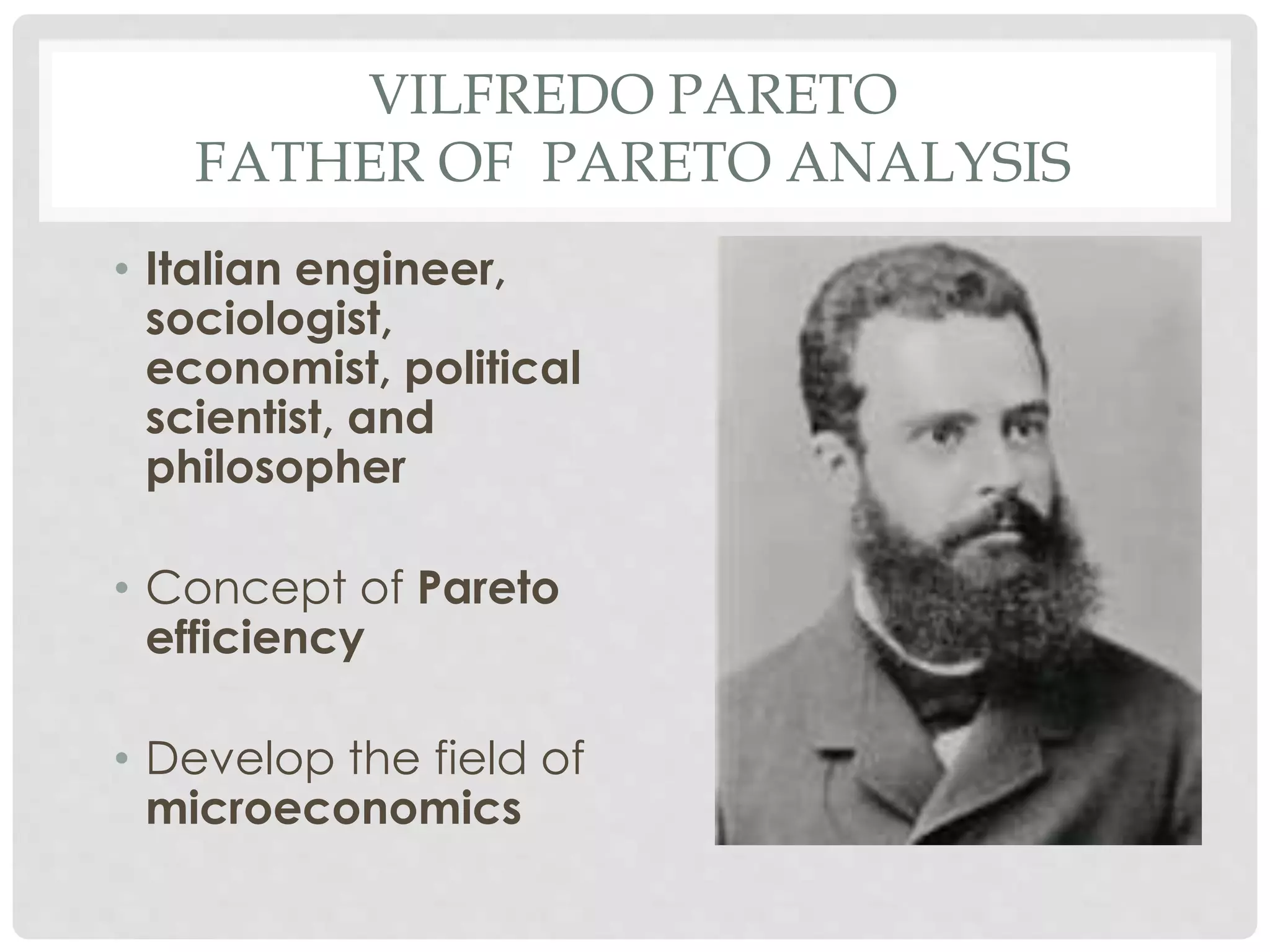
VILFREDO PARETO
FATHER OF PARETO ANALYSIS
• Italian engineer,
sociologist,
economist, political
scientist, and
philosopher
• Concept of Pareto
efficiency
• Develop the field of
microeconomics
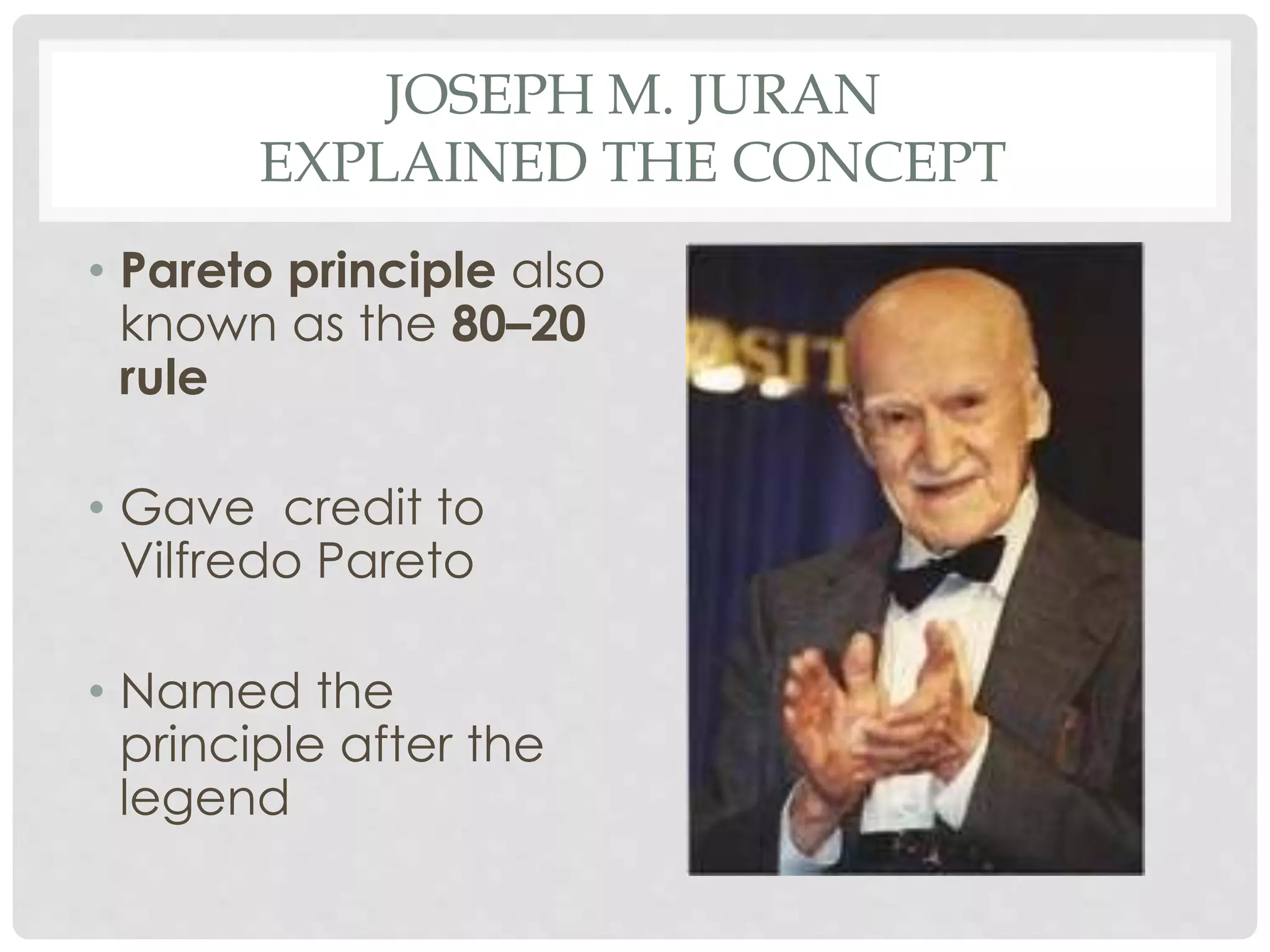
JOSEPH M. JURAN
EXPLAINED THE CONCEPT
• Pareto principle also
known as the 80–20
rule
• Gave credit to
Vilfredo Pareto
• Named the
principle after the
legend
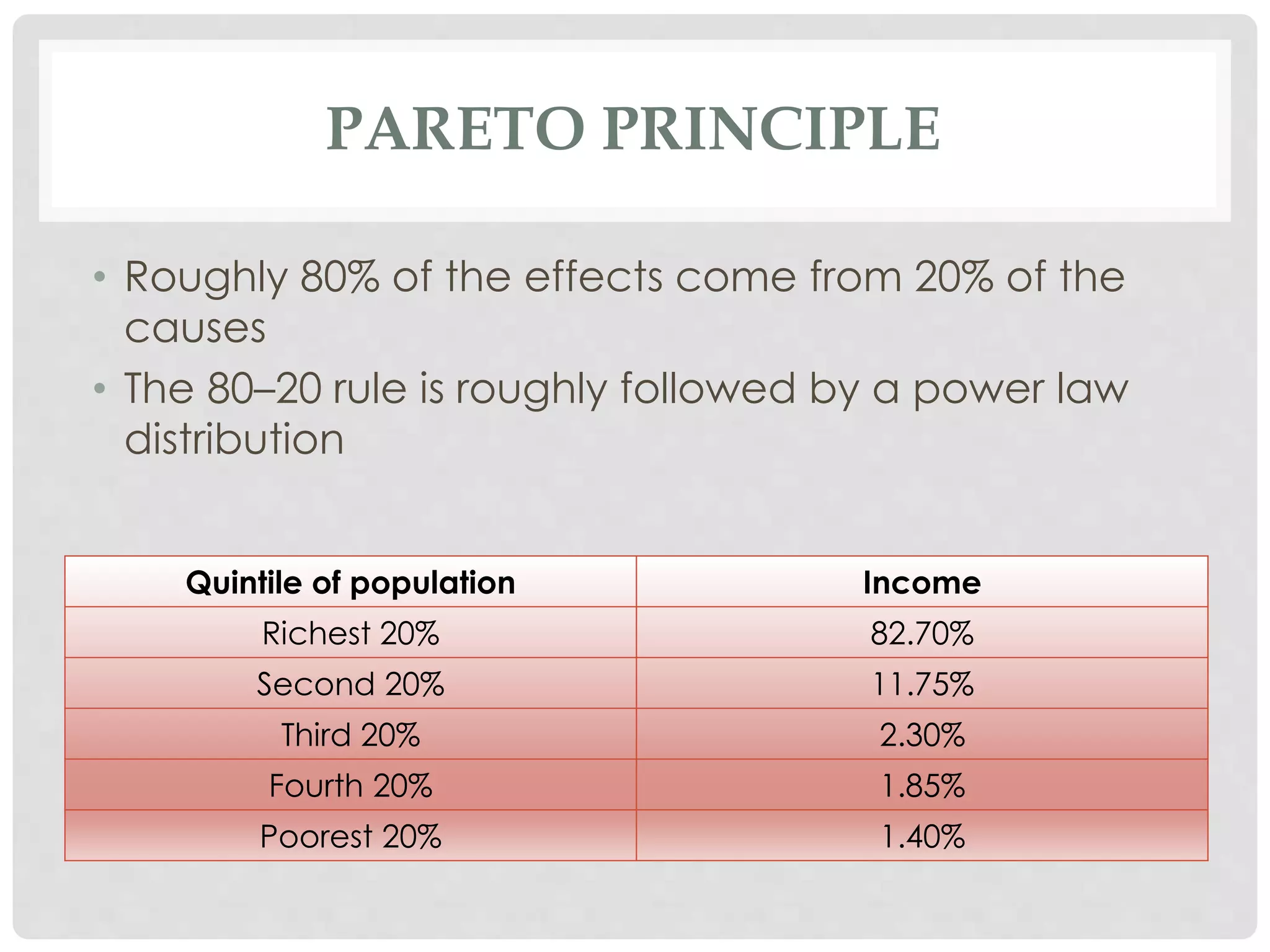
PARETO PRINCIPLE
• Roughly 80% of the effects come from 20% of the
causes
• The 80–20 rule is roughly followed by a power law
distribution
Quintile of population Income
Richest 20% 82.70%
Second 20% 11.75%
Third 20% 2.30%
Fourth 20% 1.85%
Poorest 20% 1.40%
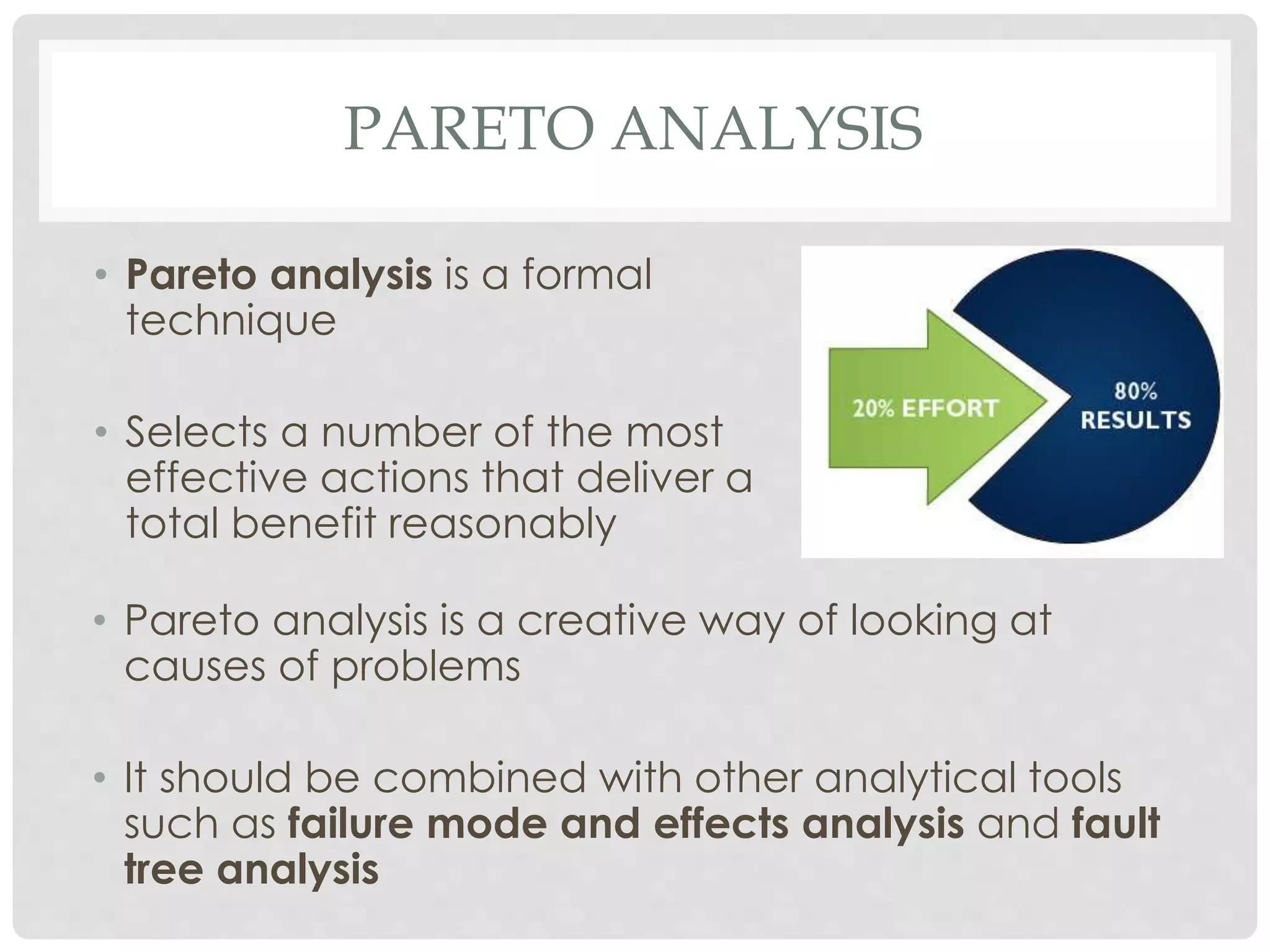
PARETO ANALYSIS
• Pareto analysis is a creative way of looking at
causes of problems
• It should be combined with other analytical tools
such as failure mode and effects analysis and fault
tree analysis
• Pareto analysis is a formal
technique
• Selects a number of the most
effective actions that deliver a
total benefit reasonably
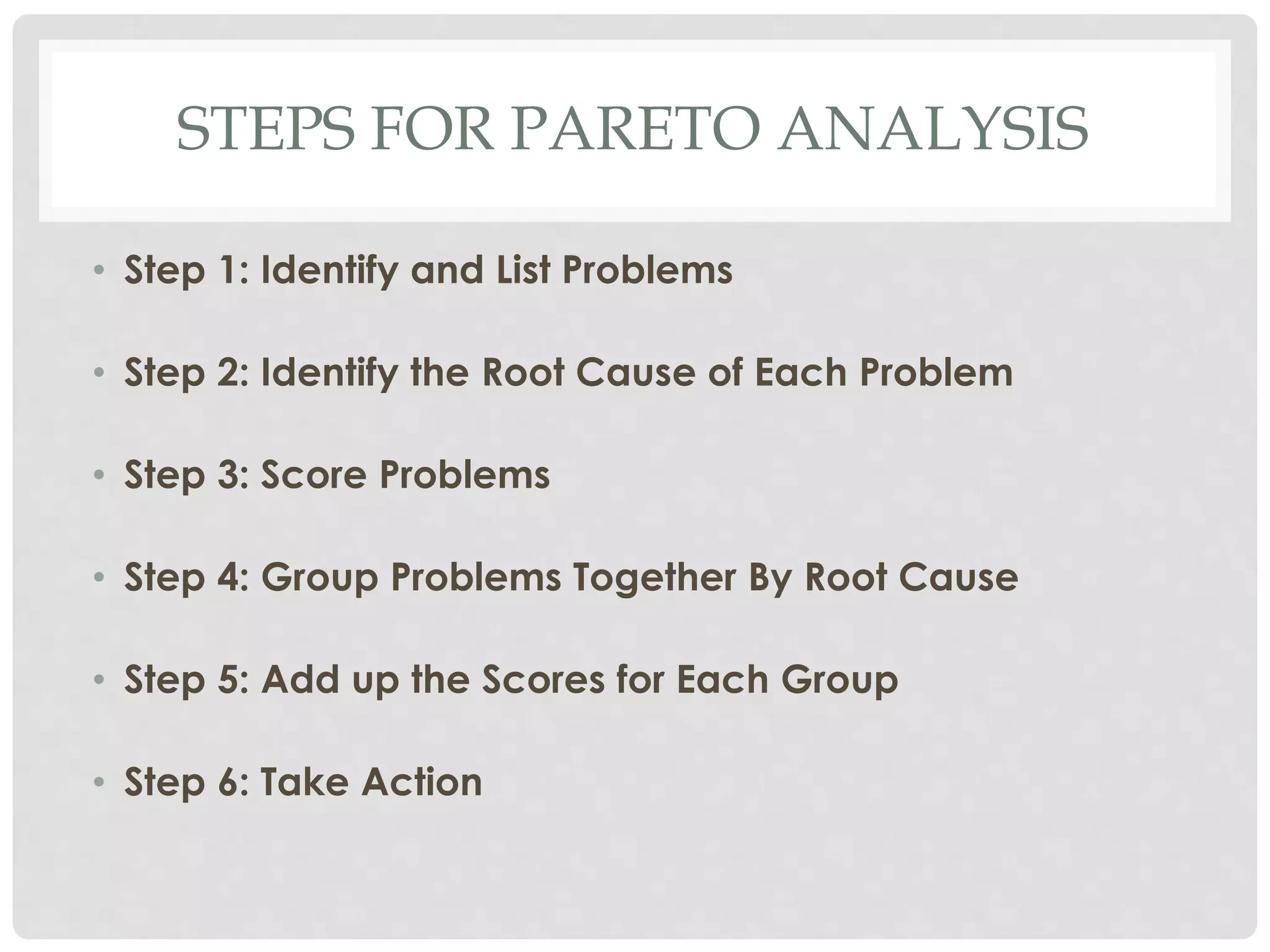
STEPS FOR PARETO ANALYSIS
• Step 1: Identify and List Problems
• Step 2: Identify the Root Cause of Each Problem
• Step 3: Score Problems
• Step 4: Group Problems Together By Root Cause
• Step 5: Add up the Scores for Each Group
• Step 6: Take Action
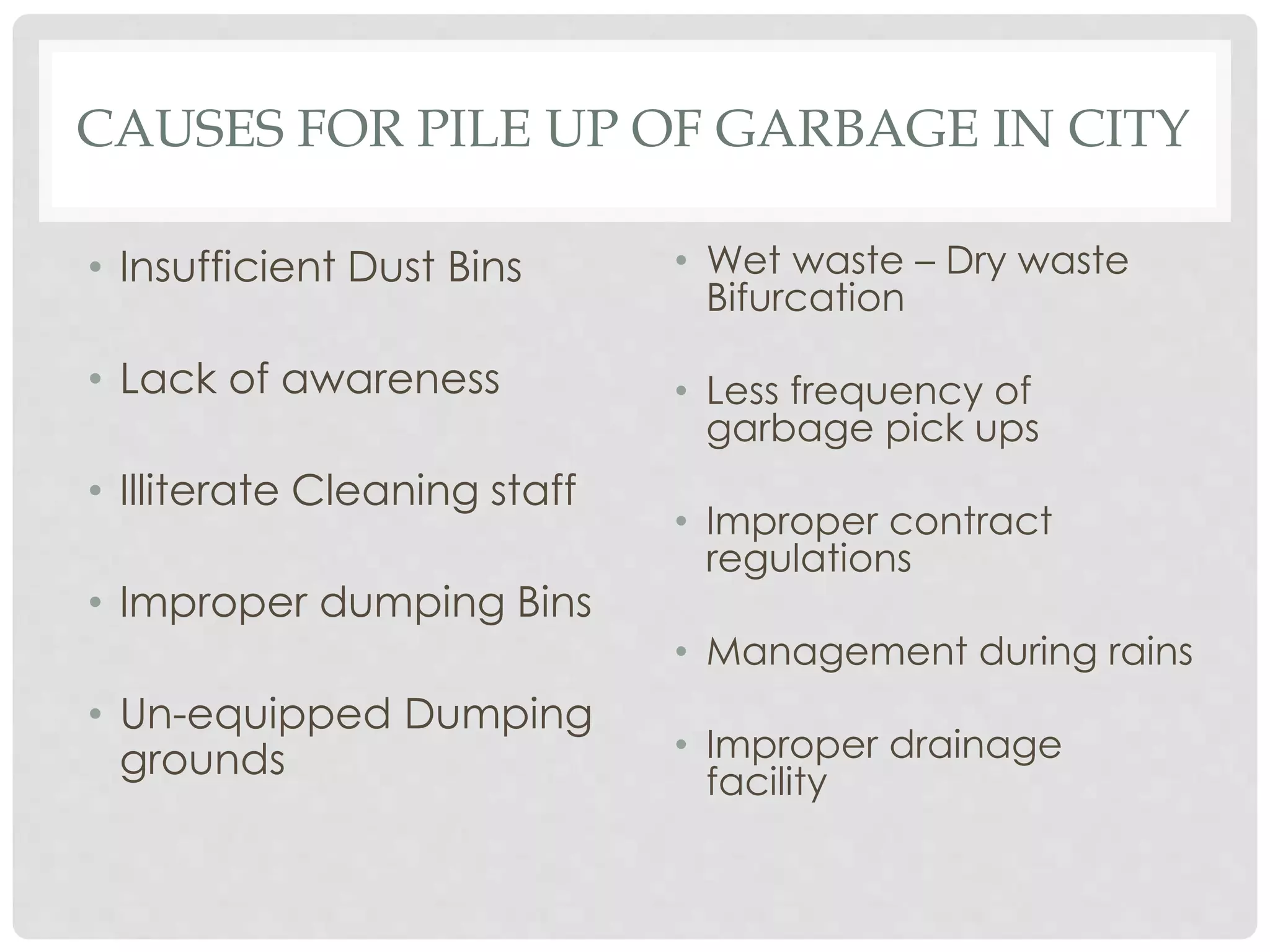
CAUSES FOR PILE UP OF GARBAGE IN CITY
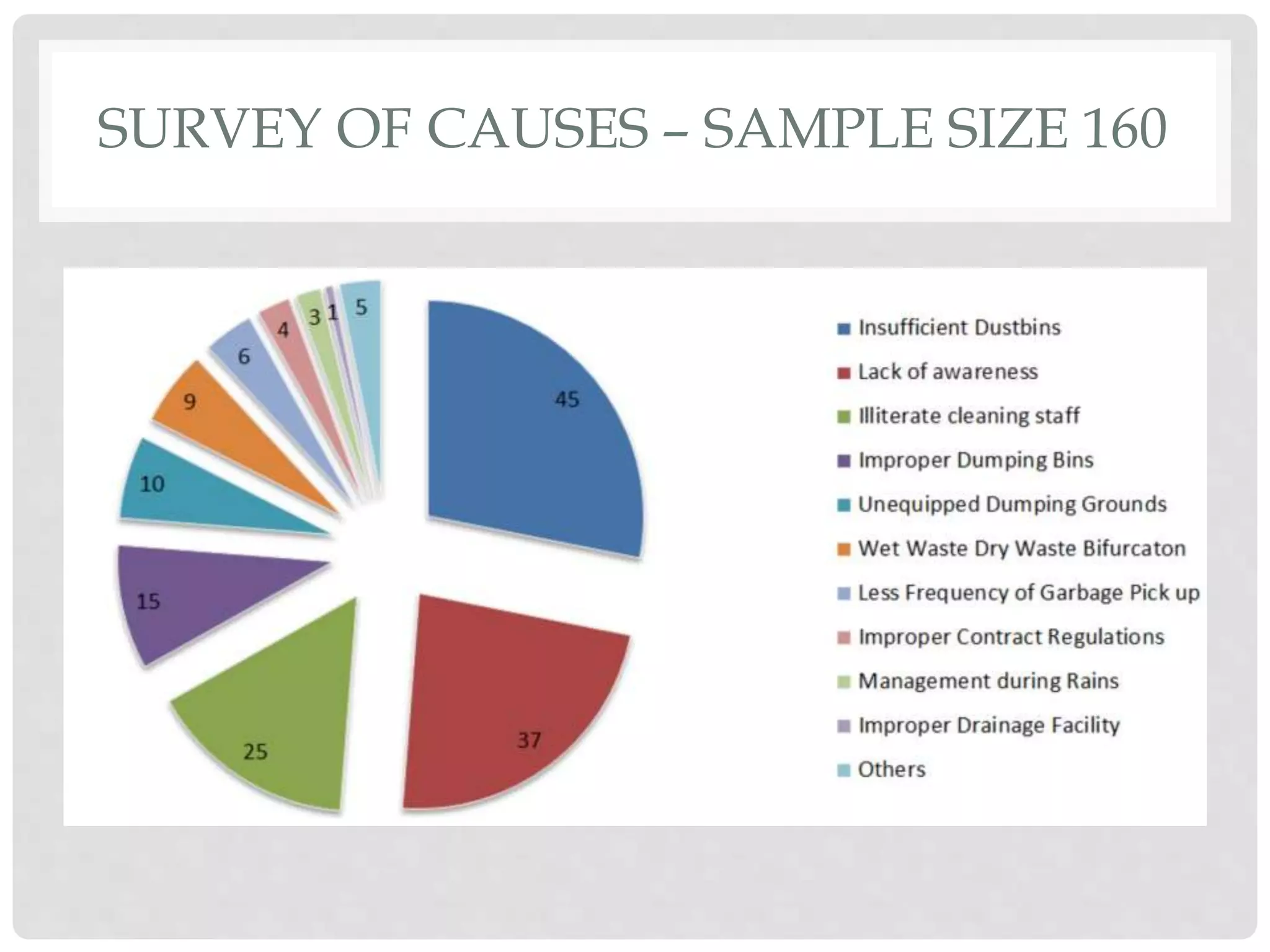
• Insufficient Dust Bins
• Lack of awareness
• Illiterate Cleaning staff
• Improper dumping Bins
• Un-equipped Dumping
grounds
• Wet waste – Dry waste
Bifurcation
• Less frequency of
garbage pick ups
• Improper contract
regulations
• Management during rains
• Improper drainage
facility
SURVEY OF CAUSES – SAMPLE SIZE 160
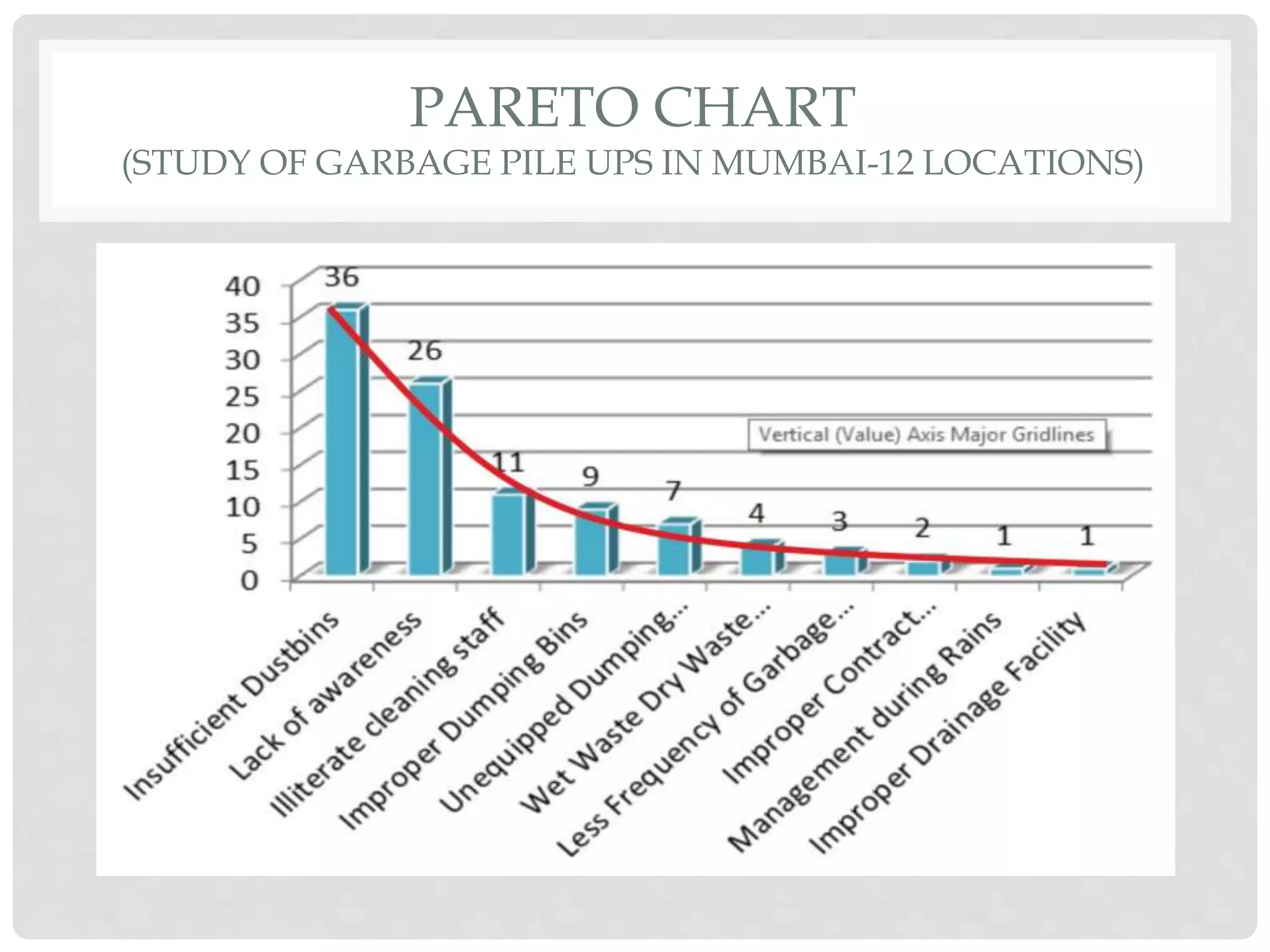
PARETO CHART
(STUDY OF GARBAGE PILE UPS IN MUMBAI-12 LOCATIONS)
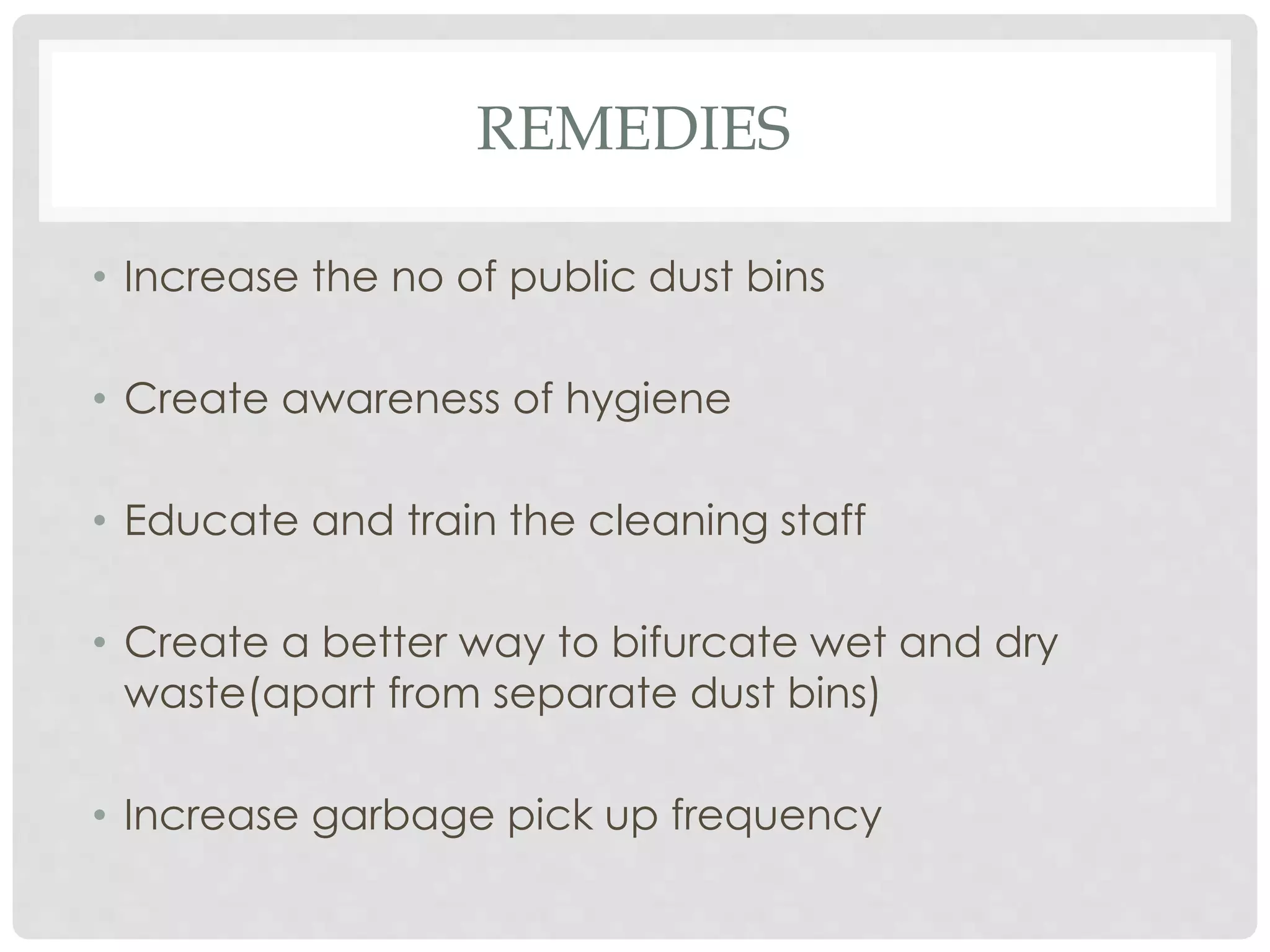
REMEDIES
• Increase the no of public dust bins
• Create awareness of hygiene
• Educate and train the cleaning staff
• Create a better way to bifurcate wet and dry
waste(apart from separate dust bins)
• Increase garbage pick up frequency
Pareto analysis for garbage pile up in city

Pareto analysis for garbage pile up in city

  • 1.
    QIMPRO CHAMPIONS LEAGUE PARETOANALYSIS FOR GARBAGE PILE UP IN CITY CHALLENGE 4
  • 2.
    PREPARED BY • HuzaifaKhanjiwala • Akshay Khairnar • Hasmukh Dave
  • 3.
    VILFREDO PARETO FATHER OFPARETO ANALYSIS • Italian engineer, sociologist, economist, political scientist, and philosopher • Concept of Pareto efficiency • Develop the field of microeconomics
  • 4.
    JOSEPH M. JURAN EXPLAINEDTHE CONCEPT • Pareto principle also known as the 80–20 rule • Gave credit to Vilfredo Pareto • Named the principle after the legend
  • 5.
    PARETO PRINCIPLE • Roughly80% of the effects come from 20% of the causes • The 80–20 rule is roughly followed by a power law distribution Quintile of population Income Richest 20% 82.70% Second 20% 11.75% Third 20% 2.30% Fourth 20% 1.85% Poorest 20% 1.40%
  • 6.
    PARETO ANALYSIS • Paretoanalysis is a creative way of looking at causes of problems • It should be combined with other analytical tools such as failure mode and effects analysis and fault tree analysis • Pareto analysis is a formal technique • Selects a number of the most effective actions that deliver a total benefit reasonably
  • 7.
    STEPS FOR PARETOANALYSIS • Step 1: Identify and List Problems • Step 2: Identify the Root Cause of Each Problem • Step 3: Score Problems • Step 4: Group Problems Together By Root Cause • Step 5: Add up the Scores for Each Group • Step 6: Take Action
  • 8.
    CAUSES FOR PILEUP OF GARBAGE IN CITY • Insufficient Dust Bins • Lack of awareness • Illiterate Cleaning staff • Improper dumping Bins • Un-equipped Dumping grounds • Wet waste – Dry waste Bifurcation • Less frequency of garbage pick ups • Improper contract regulations • Management during rains • Improper drainage facility
  • 9.
    SURVEY OF CAUSES– SAMPLE SIZE 160
  • 10.
    PARETO CHART (STUDY OFGARBAGE PILE UPS IN MUMBAI-12 LOCATIONS)
  • 11.
    REMEDIES • Increase theno of public dust bins • Create awareness of hygiene • Educate and train the cleaning staff • Create a better way to bifurcate wet and dry waste(apart from separate dust bins) • Increase garbage pick up frequency