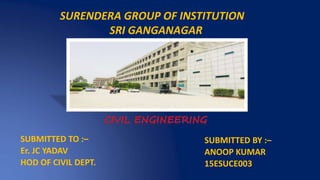

SURENDERA GROUP OF INSTITUTION
SRI GANGANAGAR
SUBMITTED BY :–
ANOOP KUMAR
15ESUCE003
SUBMITTED TO :–
Er. JC YADAV
HOD OF CIVIL DEPT.
• Introduction.
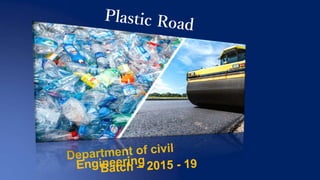
• What are waste plastic roads?
• Need for study
• How to use plastic
• Material Used
• Construction Process
• Advantages of plastic roads
• Disadvantages of plastic roads
• Conclusion
• Disposal of waste plastic is a major problem. It is non
densitybiodegradable and it mainly consists of low
polyethylene.
• Burning of these waste plastic bags causes environmental
pollution.
• To find its utility in bituminous mixes for road
construction, laboratory performance studies were conducted
on bituminous mixes.
• Laboratory studies proved that waste plastic enhances the
property of the mix.
• Plastic roads mainly use plastic carry bags, disposable cups
and bottles that are collected from garbage dumps as an
important ingredient of the construction material.
• Improvement in properties of bituminous mix provides
the solution for disposal in an useful way.
• When mixed with hot bitumen, plastics melt to form an oily
coat over the aggregate and the mixture is laid on the road
surface like a normal tar road.
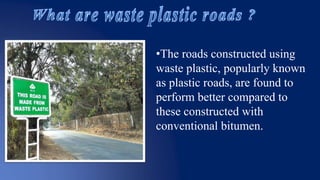
•The roads constructed using
waste plastic, popularly known
as plastic roads, are found to
perform better compared to
these constructed with
conventional bitumen.
7
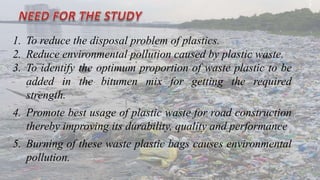
1. To reduce the disposal problem of plastics.
2. Reduce environmental pollution caused by plastic waste.
3. To identify the optimum proportion of waste plastic to be
added in the bitumen mix for getting the required
strength.
4. Promote best usage of plastic waste for road construction
thereby improving its durability, quality and performance
5. Burning of these waste plastic bags causes environmental
pollution.
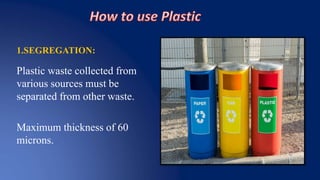
1.SEGREGATION:
Plastic waste collected from
various sources must be
separated from other waste.
Maximum thickness of 60
microns.
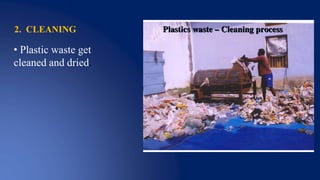
2. CLEANING
• Plastic waste get
cleaned and dried.
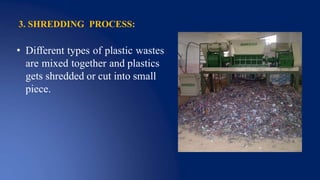
3. SHREDDING PROCESS:
• Different types of plastic wastes
are mixed together and plastics
gets shredded or cut into small
piece.
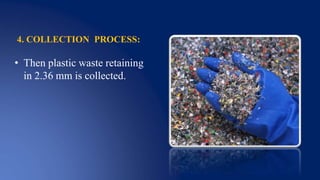
4. COLLECTION PROCESS:
• Then plastic waste retaining
in 2.36 mm is collected.
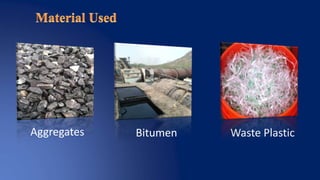
Aggregates Bitumen Waste Plastic
CONSTRUCTION OF PLASTIC ROADS
1. Plastic waste (bags,cups,bottles) etc cut into 2.66mm size by shredding
machine which is heated to165C .
2. Low bitumen, a petroleum waste product is heated to160C to have good
binding and prevent weak bonding.
3. At the mixing chamber the shredded plastic is mixed with bitumen and
within 30 sec it gives an oily look.
4. This resultant mix is now used for road construction. The road laying
temperature is 100C-110C and rollers are used of 8 tonne capacity.
•Strength of the road is increased.
•Better resistance to water and water stagnation.
•No stripping and have no potholes.
•Increased binding and better bonding of the mix.
•Maintenance cost of the road is almost nil.
•No effect of radiation like UV.
•For 1km X 3.75m road, 1 ton of plastic (10 lakhcarry bags) is used
and 1 ton of bitumen is saved.
•Disposal of waste plastic will no longer be a problem.
•Employment for unskilled labours will be generated.
• Cleaning process: Toxics present in the co-mingled plastic
waste would start leaching.
• During the road laying process: In the presence of chlorine
will definitely release HCL gas.
• After the road laying: It is opined that the first rain will
trigger leaching. as the plastic will merely from a sticky layer,
(mechanical abrasion).
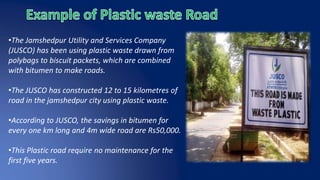
•The Jamshedpur Utility and Services Company
(JUSCO) has been using plastic waste drawn from
polybags to biscuit packets, which are combined
with bitumen to make roads.
•The JUSCO has constructed 12 to 15 kilometres of
road in the jamshedpur city using plastic waste.
•According to JUSCO, the savings in bitumen for
every one km long and 4m wide road are Rs50,000.
•This Plastic road require no maintenance for the
first five years.
1. The use of the innovative technology not only strengthened the road construction.
2. But also increased the road life as well as will help to improve the environment and
also creating a source of income.
3. Plastics will increase the melting point of the bitumen.
4. Plastic roads would be a boon for India’s hot and extremely humid climate, where
temperatures frequently cross 50°C and torrential rains create havoc, leaving most of
the roads with big potholes.
5. It is hoped that in near future we will have strong, durable and eco-friendly roads
which will relieve the earth from all type of plastic-waste .
Plastic Waste Road and its Construction

Plastic Waste Road and its Construction

  • 1.
    SURENDERA GROUP OFINSTITUTION SRI GANGANAGAR SUBMITTED BY :– ANOOP KUMAR 15ESUCE003 SUBMITTED TO :– Er. JC YADAV HOD OF CIVIL DEPT.
  • 3.
    • Introduction. • Whatare waste plastic roads? • Need for study • How to use plastic • Material Used • Construction Process • Advantages of plastic roads • Disadvantages of plastic roads • Conclusion
  • 4.
    • Disposal ofwaste plastic is a major problem. It is non densitybiodegradable and it mainly consists of low polyethylene. • Burning of these waste plastic bags causes environmental pollution. • To find its utility in bituminous mixes for road construction, laboratory performance studies were conducted on bituminous mixes. • Laboratory studies proved that waste plastic enhances the property of the mix.
  • 5.
    • Plastic roadsmainly use plastic carry bags, disposable cups and bottles that are collected from garbage dumps as an important ingredient of the construction material. • Improvement in properties of bituminous mix provides the solution for disposal in an useful way. • When mixed with hot bitumen, plastics melt to form an oily coat over the aggregate and the mixture is laid on the road surface like a normal tar road.
  • 6.
    •The roads constructedusing waste plastic, popularly known as plastic roads, are found to perform better compared to these constructed with conventional bitumen.
  • 7.
    7 1. To reducethe disposal problem of plastics. 2. Reduce environmental pollution caused by plastic waste. 3. To identify the optimum proportion of waste plastic to be added in the bitumen mix for getting the required strength. 4. Promote best usage of plastic waste for road construction thereby improving its durability, quality and performance 5. Burning of these waste plastic bags causes environmental pollution.
  • 8.
    1.SEGREGATION: Plastic waste collectedfrom various sources must be separated from other waste. Maximum thickness of 60 microns.
  • 9.
    2. CLEANING • Plasticwaste get cleaned and dried.
  • 10.
    3. SHREDDING PROCESS: •Different types of plastic wastes are mixed together and plastics gets shredded or cut into small piece.
  • 11.
    4. COLLECTION PROCESS: •Then plastic waste retaining in 2.36 mm is collected.
  • 12.
  • 13.
    CONSTRUCTION OF PLASTICROADS 1. Plastic waste (bags,cups,bottles) etc cut into 2.66mm size by shredding machine which is heated to165C . 2. Low bitumen, a petroleum waste product is heated to160C to have good binding and prevent weak bonding. 3. At the mixing chamber the shredded plastic is mixed with bitumen and within 30 sec it gives an oily look. 4. This resultant mix is now used for road construction. The road laying temperature is 100C-110C and rollers are used of 8 tonne capacity.
  • 14.
    •Strength of theroad is increased. •Better resistance to water and water stagnation. •No stripping and have no potholes. •Increased binding and better bonding of the mix. •Maintenance cost of the road is almost nil. •No effect of radiation like UV. •For 1km X 3.75m road, 1 ton of plastic (10 lakhcarry bags) is used and 1 ton of bitumen is saved. •Disposal of waste plastic will no longer be a problem. •Employment for unskilled labours will be generated.
  • 15.
    • Cleaning process:Toxics present in the co-mingled plastic waste would start leaching. • During the road laying process: In the presence of chlorine will definitely release HCL gas. • After the road laying: It is opined that the first rain will trigger leaching. as the plastic will merely from a sticky layer, (mechanical abrasion).
  • 16.
    •The Jamshedpur Utilityand Services Company (JUSCO) has been using plastic waste drawn from polybags to biscuit packets, which are combined with bitumen to make roads. •The JUSCO has constructed 12 to 15 kilometres of road in the jamshedpur city using plastic waste. •According to JUSCO, the savings in bitumen for every one km long and 4m wide road are Rs50,000. •This Plastic road require no maintenance for the first five years.
  • 17.
    1. The useof the innovative technology not only strengthened the road construction. 2. But also increased the road life as well as will help to improve the environment and also creating a source of income. 3. Plastics will increase the melting point of the bitumen. 4. Plastic roads would be a boon for India’s hot and extremely humid climate, where temperatures frequently cross 50°C and torrential rains create havoc, leaving most of the roads with big potholes. 5. It is hoped that in near future we will have strong, durable and eco-friendly roads which will relieve the earth from all type of plastic-waste .