 What is Plastic?
 Introduction.
 Materials used.
 Construction process.
 Field Trial.
 Advantages.
 Disadvantages.
 Comparison among Plastic and Ordinary Road.
 Conclusion.
 A material that contains one or more organic polymers of large molecular
weight, solid in its finished state and at some state while manufacturing or
processing into finished articles, can be shaped by its flow.
 Types of Plastic.
Thermoplastics.
Thermoset.
Elastomers.
Disposal of waste plastic is a major problem. It is non-biodegradable &
It mainly consists of low-density polyethylene.
Burning of these waste plastic bags causes environmental pollution.
To find its utility in bituminous mixes for road construction , Laboratory
performance studies were conducted on bituminous mixes .
Laboratory studies proved that waste plastic enhances the property of
the mix .
Improvement in properties of bituminous mix provides the solution for
disposal in an useful way.
Plastic roads mainly use plastic carry bags, disposable cups and bottles
that are collected from garbage dumps as an important ingredient of the
construction material.
When mixed with hot bitumen, plastics melt to form an oily coat over
the aggregate and the mixture is laid on the road surface like a normal
tar road.
 Aggregates.
The Aggregates used for road works should be
hard,tough,durable and hydrophobic for bituminous
surface.
 Bitumen.
Bitumen is used as binders in Pavements
Constructions.
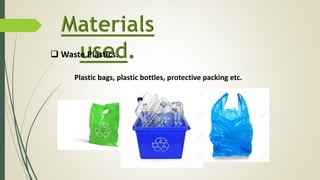
 Waste Plastics.
Plastic bags, plastic bottles, protective packing etc.
Plastics waste (bags ,cups , bottles ) made out 03
types and cut into a size between 2.36mm and
4.75mm using shredding machine.
The aggregate mix is heated to 165°c and
transferred to mixing chamber. Amount of
plastic to be added is at 8% of bitumen.
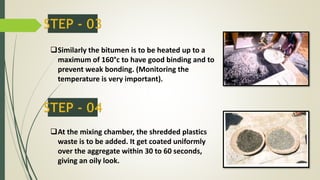
Similarly the bitumen is to be heated up to a
maximum of 160°c to have good binding and to
prevent weak bonding. (Monitoring the
temperature is very important).
At the mixing chamber, the shredded plastics
waste is to be added. It get coated uniformly
over the aggregate within 30 to 60 seconds,
giving an oily look.
The plastics waste coated aggregate is mixed
with got bitumen and the resulted mix is used
for road construction.
The road laying temperature is between 110°c to
120 °c. And the rollers are used have capacity 08
ton generally.
Plastics waste like bags, bottles etc are cut into a size between
2.36 mm and 4.75mm using shredding machine.
The aggregate mix is heated to 170°c and then it is transferred
to mixing chamber.
Similarly the bitumen is to be heated up to a maximum of
160°c At the mixing chamber, the shredded plastics waste is
added over the hot aggregate.
The plastics waste coated aggregate is mixed with hot
bitumen.
Waste plastics by direct mixing with hot bitumen at 160°C.
Mechanical stirrer is needed.
Addition of stabilizers and proper cooling.
Since the wet process require a lot of investment and bigger
plants.
Not commonly used.
Use higher percentage of plastic waste.
Reduce the need of bitumen by around 10%.
Increase the strength and performance of the road.
Reduce the cost to around Rs. 12000 per Km of single lane road.
Generate jobs for rag pickers.
Develop a technology, which is eco-friendly.
Improvement in fatigue life of roads.
Better resistance towards rain water and cold weather.
 Cleaning Process.
Toxics present in the co-mingled plastic waste would
start leaching.
During the Road Laying Process.
The presence of chlorine will definitely release
noxious HCL gas.
 After the Road Laying.
• The components of the road, once it has been laid, are not inert.
• It is opined that the first rain will trigger leaching. As the plastics
will merely form a sticky layer, (mechanical abrasion).
• once the road is started to be used will cause the release of fine
polymer particles.
• When air-borne, these will cause a particulate problem.
No. Properties Plastic Road Ordinary Road
1. MARSHALL STABILITY VALUE MORE LESS
2. BINDING PROPERTY BETTER GOOD
3. SOFTENING POINT LESS MORE
4. PENETRATION VALUE MORE LESS
5. TENSILE STRENGTH HIGH LESS
6. RUTTING LESS MORE
7. STRIPPING(POT HOLES) NO MORE
8. SEEPAGE OF WATER NO YES
9 DURABILITY OF THE ROADS BETTER GOOD
10. COST OF PAVEMENT LESS NORMAL
11. MAINTENANCE COST ALMOST NIL MORE
12. ENVIRONMENT FRIENDLY YES NO
 Roads laid with plastic waste mix are found to be better
than the conventional ones.
 Plastic will increase the melting point of the bitumen.
 Rainwater will not seep through because of the plastic in
the tar. So, this technology will result in less road repairs.
 Use of the innovative technology not only strengthened the
road construction but also increased the road life.
 Help to improve the environment.
 Plastic road would be a valuable for hot and extremely
humid climate where durable and eco-friendly road is
required.
Hasitha

Hasitha

  • 3.
     What isPlastic?  Introduction.  Materials used.  Construction process.  Field Trial.  Advantages.  Disadvantages.  Comparison among Plastic and Ordinary Road.  Conclusion.
  • 4.
     A materialthat contains one or more organic polymers of large molecular weight, solid in its finished state and at some state while manufacturing or processing into finished articles, can be shaped by its flow.  Types of Plastic. Thermoplastics. Thermoset. Elastomers.
  • 5.
    Disposal of wasteplastic is a major problem. It is non-biodegradable & It mainly consists of low-density polyethylene. Burning of these waste plastic bags causes environmental pollution. To find its utility in bituminous mixes for road construction , Laboratory performance studies were conducted on bituminous mixes . Laboratory studies proved that waste plastic enhances the property of the mix .
  • 6.
    Improvement in propertiesof bituminous mix provides the solution for disposal in an useful way. Plastic roads mainly use plastic carry bags, disposable cups and bottles that are collected from garbage dumps as an important ingredient of the construction material. When mixed with hot bitumen, plastics melt to form an oily coat over the aggregate and the mixture is laid on the road surface like a normal tar road.
  • 7.
     Aggregates. The Aggregatesused for road works should be hard,tough,durable and hydrophobic for bituminous surface.
  • 8.
     Bitumen. Bitumen isused as binders in Pavements Constructions.
  • 9.
     Waste Plastics. Plasticbags, plastic bottles, protective packing etc.
  • 10.
    Plastics waste (bags,cups , bottles ) made out 03 types and cut into a size between 2.36mm and 4.75mm using shredding machine. The aggregate mix is heated to 165°c and transferred to mixing chamber. Amount of plastic to be added is at 8% of bitumen.
  • 11.
    Similarly the bitumenis to be heated up to a maximum of 160°c to have good binding and to prevent weak bonding. (Monitoring the temperature is very important). At the mixing chamber, the shredded plastics waste is to be added. It get coated uniformly over the aggregate within 30 to 60 seconds, giving an oily look.
  • 12.
    The plastics wastecoated aggregate is mixed with got bitumen and the resulted mix is used for road construction. The road laying temperature is between 110°c to 120 °c. And the rollers are used have capacity 08 ton generally.
  • 13.
    Plastics waste likebags, bottles etc are cut into a size between 2.36 mm and 4.75mm using shredding machine. The aggregate mix is heated to 170°c and then it is transferred to mixing chamber. Similarly the bitumen is to be heated up to a maximum of 160°c At the mixing chamber, the shredded plastics waste is added over the hot aggregate. The plastics waste coated aggregate is mixed with hot bitumen.
  • 14.
    Waste plastics bydirect mixing with hot bitumen at 160°C. Mechanical stirrer is needed. Addition of stabilizers and proper cooling. Since the wet process require a lot of investment and bigger plants. Not commonly used.
  • 15.
    Use higher percentageof plastic waste. Reduce the need of bitumen by around 10%. Increase the strength and performance of the road. Reduce the cost to around Rs. 12000 per Km of single lane road. Generate jobs for rag pickers. Develop a technology, which is eco-friendly. Improvement in fatigue life of roads. Better resistance towards rain water and cold weather.
  • 16.
     Cleaning Process. Toxicspresent in the co-mingled plastic waste would start leaching. During the Road Laying Process. The presence of chlorine will definitely release noxious HCL gas.
  • 17.
     After theRoad Laying. • The components of the road, once it has been laid, are not inert. • It is opined that the first rain will trigger leaching. As the plastics will merely form a sticky layer, (mechanical abrasion). • once the road is started to be used will cause the release of fine polymer particles. • When air-borne, these will cause a particulate problem.
  • 18.
    No. Properties PlasticRoad Ordinary Road 1. MARSHALL STABILITY VALUE MORE LESS 2. BINDING PROPERTY BETTER GOOD 3. SOFTENING POINT LESS MORE 4. PENETRATION VALUE MORE LESS 5. TENSILE STRENGTH HIGH LESS 6. RUTTING LESS MORE 7. STRIPPING(POT HOLES) NO MORE 8. SEEPAGE OF WATER NO YES 9 DURABILITY OF THE ROADS BETTER GOOD 10. COST OF PAVEMENT LESS NORMAL 11. MAINTENANCE COST ALMOST NIL MORE 12. ENVIRONMENT FRIENDLY YES NO
  • 19.
     Roads laidwith plastic waste mix are found to be better than the conventional ones.  Plastic will increase the melting point of the bitumen.  Rainwater will not seep through because of the plastic in the tar. So, this technology will result in less road repairs.  Use of the innovative technology not only strengthened the road construction but also increased the road life.  Help to improve the environment.  Plastic road would be a valuable for hot and extremely humid climate where durable and eco-friendly road is required.