CONTENTS::
 INTRODUCTION TO PLASTIC ROADS
 CONCEPT OF PLASTIC ROADS
 MATERIALS USED
 CONSTRUCTION OF PLASTIC ROADS
 ADVANTAGES OF PLASTIC ROADS
 DISADVANTAGES OG PLASTIC ROADS
 CONCLUSION
INTRODUCTION TO PLASTIC
ROADS
.Plastics the world’s most and perhaps its major invention in
terms of creating a light weight,low cost maneuvering
substance.
. But one of the major setback that plastic industry have
always been jolted with is its of property of being non
biodegradable.
MAJOR IDEA:: USE ITS PROPERTY OF
NON BIODEGRADABILITY+WATER
REPELLANT PROPERTY=GREEN
EARTH
CONCEPT OF PLASTIC ROADS
 Ever thought why does roads have huge cracks or
holes formed after maybe six months of its
creation? Its because of India’s heavy monsoon
seasons.
 This is where plastic roads come into play
 The basic idea behind this whole process is that if
can use the water repellant property of plastics the
roads can last up to six or seven years.
 So basically it means if you have plastic
waste in your house hold it can be used to
make a good quality of road and eventually
MATERIALS
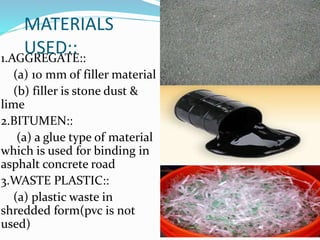
USED::1.AGGREGATE::
(a) 10 mm of filler material
(b) filler is stone dust &
lime
2.BITUMEN::
(a) a glue type of material
which is used for binding in
asphalt concrete road
3.WASTE PLASTIC::
(a) plastic waste in
shredded form(pvc is not
used)
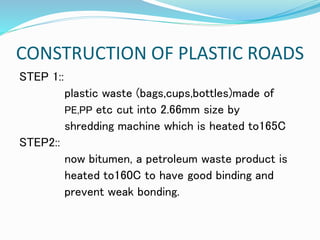
CONSTRUCTION OF PLASTIC ROADS
STEP 1::
plastic waste (bags,cups,bottles)made of
PE,PP etc cut into 2.66mm size by
shredding machine which is heated to165C
STEP2::
now bitumen, a petroleum waste product is
heated to160C to have good binding and
prevent weak bonding.
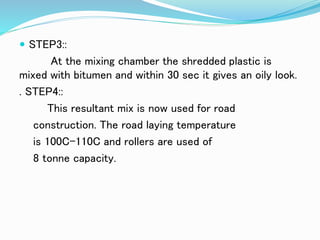
 STEP3::
At the mixing chamber the shredded plastic is
mixed with bitumen and within 30 sec it gives an oily look.
. STEP4::
This resultant mix is now used for road
construction. The road laying temperature
is 100C-110C and rollers are used of
8 tonne capacity.
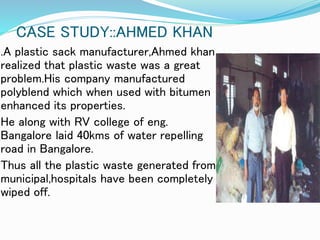
CASE STUDY::AHMED KHAN
.A plastic sack manufacturer,Ahmed khan
realized that plastic waste was a great
problem.His company manufactured
polyblend which when used with bitumen
enhanced its properties.
He along with RV college of eng.
Bangalore laid 40kms of water repelling
road in Bangalore.
Thus all the plastic waste generated from
municipal,hospitals have been completely
wiped off.
ADVANTAGES OF PLASTIC
ROADS
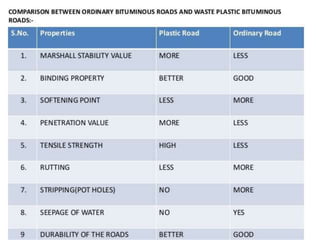
 Better resistance towards rain water and water
stagnation
 Reduction in pores in aggregate, thus less cracks for
water to seep in.
 Cost of construction of roads decreased by Rs5000 per
km
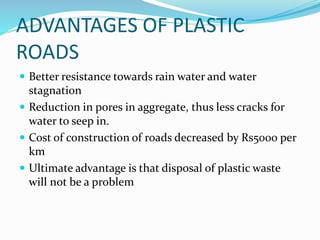
 Ultimate advantage is that disposal of plastic waste
will not be a problem
CONCLUSION
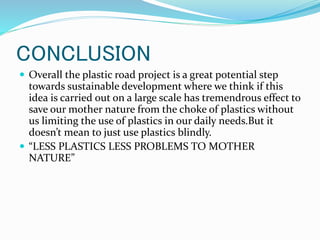
 Overall the plastic road project is a great potential step
towards sustainable development where we think if this
idea is carried out on a large scale has tremendrous effect to
save our mother nature from the choke of plastics without
us limiting the use of plastics in our daily needs.But it
doesn’t mean to just use plastics blindly.
 “LESS PLASTICS LESS PROBLEMS TO MOTHER
NATURE”
plastic roads

plastic roads

  • 2.
    CONTENTS::  INTRODUCTION TOPLASTIC ROADS  CONCEPT OF PLASTIC ROADS  MATERIALS USED  CONSTRUCTION OF PLASTIC ROADS  ADVANTAGES OF PLASTIC ROADS  DISADVANTAGES OG PLASTIC ROADS  CONCLUSION
  • 3.
    INTRODUCTION TO PLASTIC ROADS .Plasticsthe world’s most and perhaps its major invention in terms of creating a light weight,low cost maneuvering substance. . But one of the major setback that plastic industry have always been jolted with is its of property of being non biodegradable. MAJOR IDEA:: USE ITS PROPERTY OF NON BIODEGRADABILITY+WATER REPELLANT PROPERTY=GREEN EARTH
  • 4.
    CONCEPT OF PLASTICROADS  Ever thought why does roads have huge cracks or holes formed after maybe six months of its creation? Its because of India’s heavy monsoon seasons.  This is where plastic roads come into play  The basic idea behind this whole process is that if can use the water repellant property of plastics the roads can last up to six or seven years.  So basically it means if you have plastic waste in your house hold it can be used to make a good quality of road and eventually
  • 5.
    MATERIALS USED::1.AGGREGATE:: (a) 10 mmof filler material (b) filler is stone dust & lime 2.BITUMEN:: (a) a glue type of material which is used for binding in asphalt concrete road 3.WASTE PLASTIC:: (a) plastic waste in shredded form(pvc is not used)
  • 6.
    CONSTRUCTION OF PLASTICROADS STEP 1:: plastic waste (bags,cups,bottles)made of PE,PP etc cut into 2.66mm size by shredding machine which is heated to165C STEP2:: now bitumen, a petroleum waste product is heated to160C to have good binding and prevent weak bonding.
  • 7.
     STEP3:: At themixing chamber the shredded plastic is mixed with bitumen and within 30 sec it gives an oily look. . STEP4:: This resultant mix is now used for road construction. The road laying temperature is 100C-110C and rollers are used of 8 tonne capacity.
  • 9.
    CASE STUDY::AHMED KHAN .Aplastic sack manufacturer,Ahmed khan realized that plastic waste was a great problem.His company manufactured polyblend which when used with bitumen enhanced its properties. He along with RV college of eng. Bangalore laid 40kms of water repelling road in Bangalore. Thus all the plastic waste generated from municipal,hospitals have been completely wiped off.
  • 10.
    ADVANTAGES OF PLASTIC ROADS Better resistance towards rain water and water stagnation  Reduction in pores in aggregate, thus less cracks for water to seep in.  Cost of construction of roads decreased by Rs5000 per km  Ultimate advantage is that disposal of plastic waste will not be a problem
  • 13.
    CONCLUSION  Overall theplastic road project is a great potential step towards sustainable development where we think if this idea is carried out on a large scale has tremendrous effect to save our mother nature from the choke of plastics without us limiting the use of plastics in our daily needs.But it doesn’t mean to just use plastics blindly.  “LESS PLASTICS LESS PROBLEMS TO MOTHER NATURE”