PlasterboardVisual Dictionary
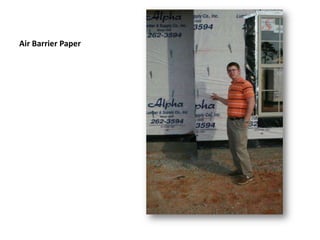
Air Barrier PaperA protective barrier to keep the elements out after you have already attached the sheathing
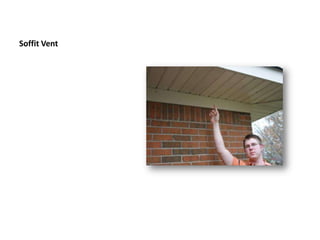
Soffit VentA vent on the eave of the roof to allow ventilation into the attic
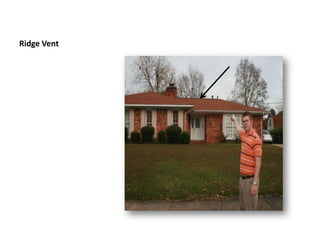
Ridge VentA vent located on the ridge of the roof to keep wind, rain, snow, and insects from entering the attic, all while providing ventilation
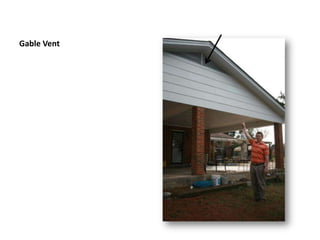
Gable VentAnother way to provide ventilation to the attic and found on the side of the house where the gable is found
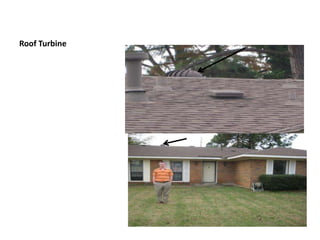
Roof TurbineWork with the wind to pull all the moist, hot air from your attic out into the air
BackhoeAn excavator that uses a large bucket to move the earth from one place to another.  The size of this bucket is 2’*2’
Batter boardsHorizontal boards used to outline where a building will be so that all the masons will have a place to work from.
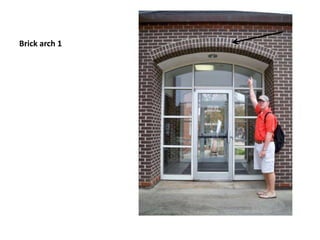
Brick arch 1
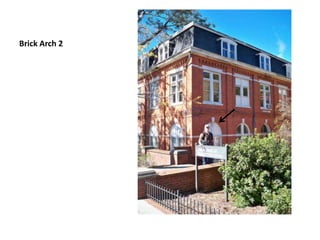
Brick Arch 2
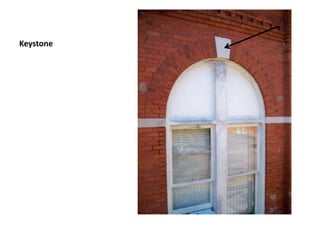
Keystone
CenteringTemporary framework used to build arches, vaults, and domes
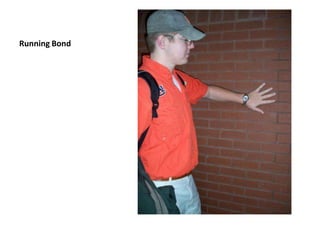
Running BondAll stretchers on every course
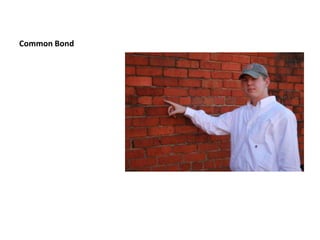
Common BondA header row every 6th course
Rowlocks
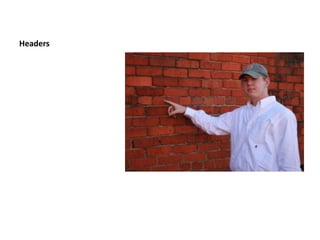
Headers
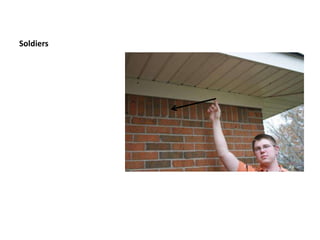
Soldiers
Sailors
Shiners
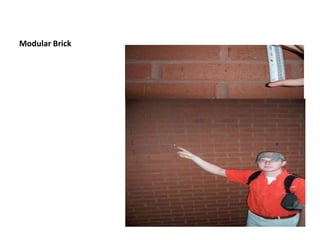
Modular BrickBrick that is most commonly usedNominal dimensions are 8”* 2 2/3”Actual dimensions are 7 5/8”* 2 ¼”
Standard BrickVery similar to Modular but has different actual dimensionsNominal 2 2/3”* 8”Actual 2 ¼”* 8”
BulldozerAnother large piece of equipment used on a jobsite to push around large amounts of earth
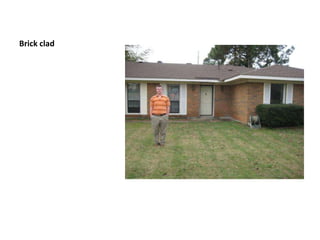
Brick cladBrick used strictly as a veneer wall, which means it is not needed for structural purposes
EIFS Structurestucco
Stone clad
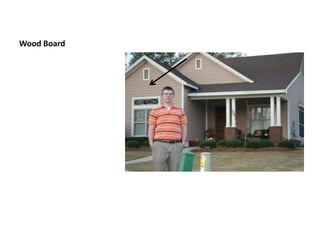
Wood Board
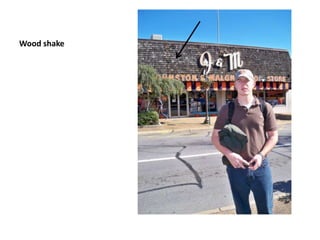
Wood shake
Egress WindowThis window meets requirements because it is less than 44”, the required height from the ground, and has greater than 5 sf.The dimensions of the window are 24”*36” which are more than the 20”*24” the IBC requires
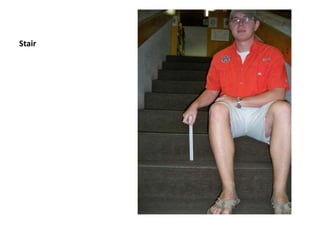
StairThese stairs meet code because their tread is 11” and their riser is 8”.  This is more than what is required and therefore does not meet code. The tread is ok, but the riser is ¼” too tall.The IBC requires that the tread be at least 10” and the riser be no more than 7 ¾”.
Control JointA joint in that allows cracking to occur so that it doesn’t occur in the middle of the slab, where it could do a lot of damageIsolation Joint- Isolate slabs from other parts of the structureCrack near a control jointSeparating two different slabs
CMUCMU stands for Concrete Masonry Unit, which is a block of hard concrete, and is used as a backup wall in larger size projects where wood would be too costlyNominal dimensions are 8”*8”*16”Actual are 7 5/8”* 7 5/8”* 15 5/8”Three courses of Brick for 1 CMU
CMU’s 2 sizesSplit blockRegular size
Split and Ribbed BlockSplitRibbed
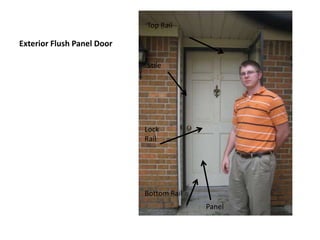
Panel Door and Exterior Flush DoorHas all the parts needed for a 6 panel doorFlush doorTop RailStileLock RailBottom RailPanel
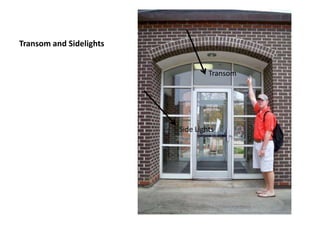
Transom and SidelightsTransom is the window above a door that allows light into the roomSidelights are windows on the side of the door that also allow light inTransomSide Lights
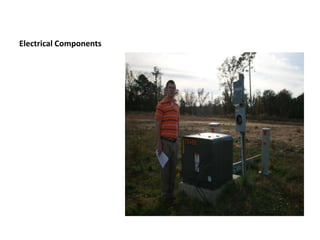
Electrical ComponentsReceptacle is like a regular outlet that allows you to plug electrical things upThis is an underground transformer that lowers the voltage before it enters your house or neighborhoodThe service head is where the electric company feeds your electrical wires into your meter boxYour meter box allows the power company to check to see your power usageA service panel allows you to turn on certain breakersReceptacleTransformerMeter boxService headService Panel
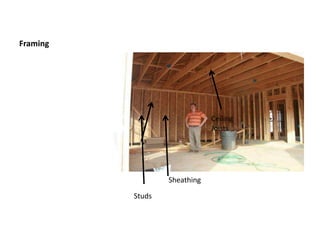
Framing#3 Floor Joist#4 Subflooring#1: Anchor Bolts#2 Sill Plate#5 Sole Plate
Framing# 6 Studs#7 Top Plate#8 Ceiling Joists
Framing#9 Rafter#10 Decking#11 Sheathing#12 Stringer
Front End LoaderIs almost like a bulldozer except a front end loader can pick up the dirt and materials to move it from place to place, rather than just push it like a bulldozer
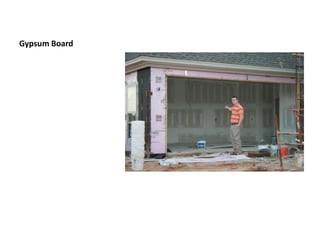
Gypsum BoardGypsum board is used as our wall and covers up the framing for our house
Heat Pump/ Air Handling Unit/ Compressor/CondenserOne advantage is that it is the most efficient.One disadvantage is that you might need a backup plan because it doesn’t always work at really low temperatures.The compressor/condenser works with the air handling unit to provide cool or warm air to your houseThe air handling unit send the warm or cool air into the house through the ducts
Batt and loose fill insulationBatt insulation is the most common and can be used between studs by friction or nailed to studsLoose fill insulation is used primarily in the attic and it can get in all the gaps better than batt insulation, giving you more insulation
Rigid Board Insulation
LintelA concrete or steel beam that transfers the forces above a window or door, around and down the window or door.
Mortar Joint 1Trowled and 1/8” wideUsed on Dudley Hall as exterior faceProbably S mortar
Mortar Joint 2Tooled because it was raked out.1/8” wide jointUsed on building on College St. as exterior veneer.Probably S type mortar
OSBOSB is a type of manufactured board that is a nonveneered panel product.It is made by compressing multiple strands of board together under pressure
PlumbingLavatoryWe use 1-1/2” piping to drain our lavatory, otherwise known of the sinkWe use 3” piping to drain our water closet, otherwise known as the toilet.Tub set in before gypsum board has been placedWater closet
Plumbing continuedThe plumbing roof vent allows air to enter the waste pipingThe sink here is a drop-in
PlywoodPlywood is manufactured by taking sheets of veneer and pressing them together with a lot of pressureVeneer is a thin sheet of wood usually glued together to form OSB or plywood
Radiant BarrierA radiant barrier prevents heat from entering the house.  It is usually is placed in the attic
RebarThe diameter of the rebar used in this project is 5/8”The purpose of the deformations is to keep a grip on the concrete to keep it from moving.
DrainageA gutter allows water to flow from the roof to the downspoutA downspout allows the flow of water from the gutter to the ground in a confined areaA splashblock diverts the water from to downspout into the ground and spreads it out so that it doesn’t puddle up right under the downspout

Plasterboard's Visual Dictionary

  • 1.
  • 2.
    Air Barrier PaperAprotective barrier to keep the elements out after you have already attached the sheathing
  • 3.
    Soffit VentA venton the eave of the roof to allow ventilation into the attic
  • 4.
    Ridge VentA ventlocated on the ridge of the roof to keep wind, rain, snow, and insects from entering the attic, all while providing ventilation
  • 5.
    Gable VentAnother wayto provide ventilation to the attic and found on the side of the house where the gable is found
  • 6.
    Roof TurbineWork withthe wind to pull all the moist, hot air from your attic out into the air
  • 7.
    BackhoeAn excavator thatuses a large bucket to move the earth from one place to another. The size of this bucket is 2’*2’
  • 8.
    Batter boardsHorizontal boardsused to outline where a building will be so that all the masons will have a place to work from.
  • 9.
  • 10.
  • 11.
  • 12.
    CenteringTemporary framework usedto build arches, vaults, and domes
  • 13.
  • 14.
    Common BondA headerrow every 6th course
  • 15.
  • 16.
  • 17.
  • 18.
  • 19.
  • 20.
    Modular BrickBrick thatis most commonly usedNominal dimensions are 8”* 2 2/3”Actual dimensions are 7 5/8”* 2 ¼”
  • 21.
    Standard BrickVery similarto Modular but has different actual dimensionsNominal 2 2/3”* 8”Actual 2 ¼”* 8”
  • 22.
    BulldozerAnother large pieceof equipment used on a jobsite to push around large amounts of earth
  • 23.
    Brick cladBrick usedstrictly as a veneer wall, which means it is not needed for structural purposes
  • 24.
  • 25.
  • 26.
  • 27.
  • 28.
    Egress WindowThis windowmeets requirements because it is less than 44”, the required height from the ground, and has greater than 5 sf.The dimensions of the window are 24”*36” which are more than the 20”*24” the IBC requires
  • 29.
    StairThese stairs meetcode because their tread is 11” and their riser is 8”. This is more than what is required and therefore does not meet code. The tread is ok, but the riser is ¼” too tall.The IBC requires that the tread be at least 10” and the riser be no more than 7 ¾”.
  • 30.
    Control JointA jointin that allows cracking to occur so that it doesn’t occur in the middle of the slab, where it could do a lot of damageIsolation Joint- Isolate slabs from other parts of the structureCrack near a control jointSeparating two different slabs
  • 31.
    CMUCMU stands forConcrete Masonry Unit, which is a block of hard concrete, and is used as a backup wall in larger size projects where wood would be too costlyNominal dimensions are 8”*8”*16”Actual are 7 5/8”* 7 5/8”* 15 5/8”Three courses of Brick for 1 CMU
  • 32.
    CMU’s 2 sizesSplitblockRegular size
  • 33.
    Split and RibbedBlockSplitRibbed
  • 34.
    Panel Door andExterior Flush DoorHas all the parts needed for a 6 panel doorFlush doorTop RailStileLock RailBottom RailPanel
  • 35.
    Transom and SidelightsTransomis the window above a door that allows light into the roomSidelights are windows on the side of the door that also allow light inTransomSide Lights
  • 36.
    Electrical ComponentsReceptacle islike a regular outlet that allows you to plug electrical things upThis is an underground transformer that lowers the voltage before it enters your house or neighborhoodThe service head is where the electric company feeds your electrical wires into your meter boxYour meter box allows the power company to check to see your power usageA service panel allows you to turn on certain breakersReceptacleTransformerMeter boxService headService Panel
  • 37.
    Framing#3 Floor Joist#4Subflooring#1: Anchor Bolts#2 Sill Plate#5 Sole Plate
  • 38.
    Framing# 6 Studs#7Top Plate#8 Ceiling Joists
  • 39.
    Framing#9 Rafter#10 Decking#11Sheathing#12 Stringer
  • 40.
    Front End LoaderIsalmost like a bulldozer except a front end loader can pick up the dirt and materials to move it from place to place, rather than just push it like a bulldozer
  • 41.
    Gypsum BoardGypsum boardis used as our wall and covers up the framing for our house
  • 42.
    Heat Pump/ AirHandling Unit/ Compressor/CondenserOne advantage is that it is the most efficient.One disadvantage is that you might need a backup plan because it doesn’t always work at really low temperatures.The compressor/condenser works with the air handling unit to provide cool or warm air to your houseThe air handling unit send the warm or cool air into the house through the ducts
  • 43.
    Batt and loosefill insulationBatt insulation is the most common and can be used between studs by friction or nailed to studsLoose fill insulation is used primarily in the attic and it can get in all the gaps better than batt insulation, giving you more insulation
  • 44.
  • 45.
    LintelA concrete orsteel beam that transfers the forces above a window or door, around and down the window or door.
  • 46.
    Mortar Joint 1Trowledand 1/8” wideUsed on Dudley Hall as exterior faceProbably S mortar
  • 47.
    Mortar Joint 2Tooledbecause it was raked out.1/8” wide jointUsed on building on College St. as exterior veneer.Probably S type mortar
  • 48.
    OSBOSB is atype of manufactured board that is a nonveneered panel product.It is made by compressing multiple strands of board together under pressure
  • 49.
    PlumbingLavatoryWe use 1-1/2”piping to drain our lavatory, otherwise known of the sinkWe use 3” piping to drain our water closet, otherwise known as the toilet.Tub set in before gypsum board has been placedWater closet
  • 50.
    Plumbing continuedThe plumbingroof vent allows air to enter the waste pipingThe sink here is a drop-in
  • 51.
    PlywoodPlywood is manufacturedby taking sheets of veneer and pressing them together with a lot of pressureVeneer is a thin sheet of wood usually glued together to form OSB or plywood
  • 52.
    Radiant BarrierA radiantbarrier prevents heat from entering the house. It is usually is placed in the attic
  • 53.
    RebarThe diameter ofthe rebar used in this project is 5/8”The purpose of the deformations is to keep a grip on the concrete to keep it from moving.
  • 54.
    DrainageA gutter allowswater to flow from the roof to the downspoutA downspout allows the flow of water from the gutter to the ground in a confined areaA splashblock diverts the water from to downspout into the ground and spreads it out so that it doesn’t puddle up right under the downspout