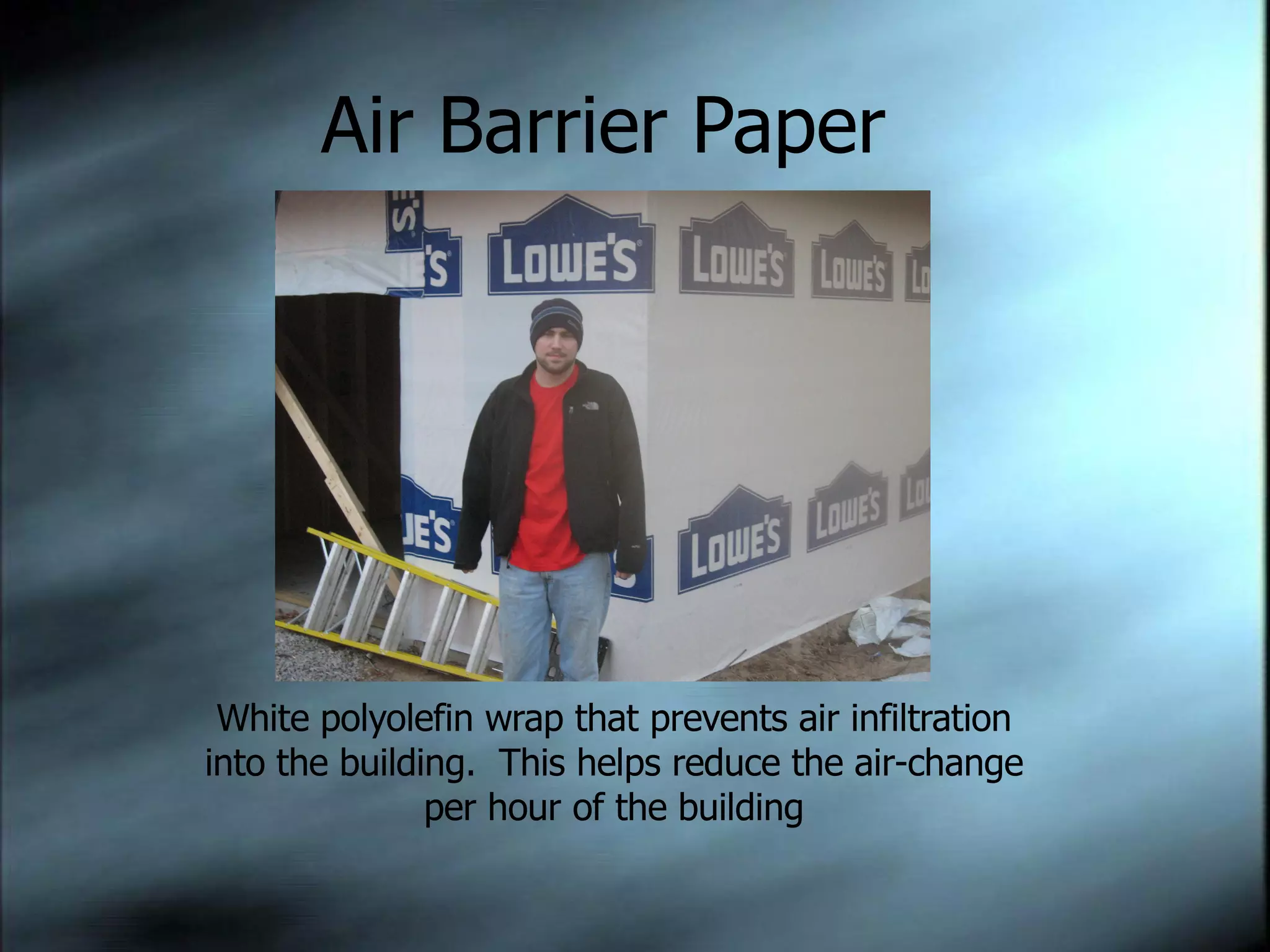
Air Barrier Paper White polyolefin wrap that prevents air infiltration into the building.  This helps reduce the air-change per hour of the building
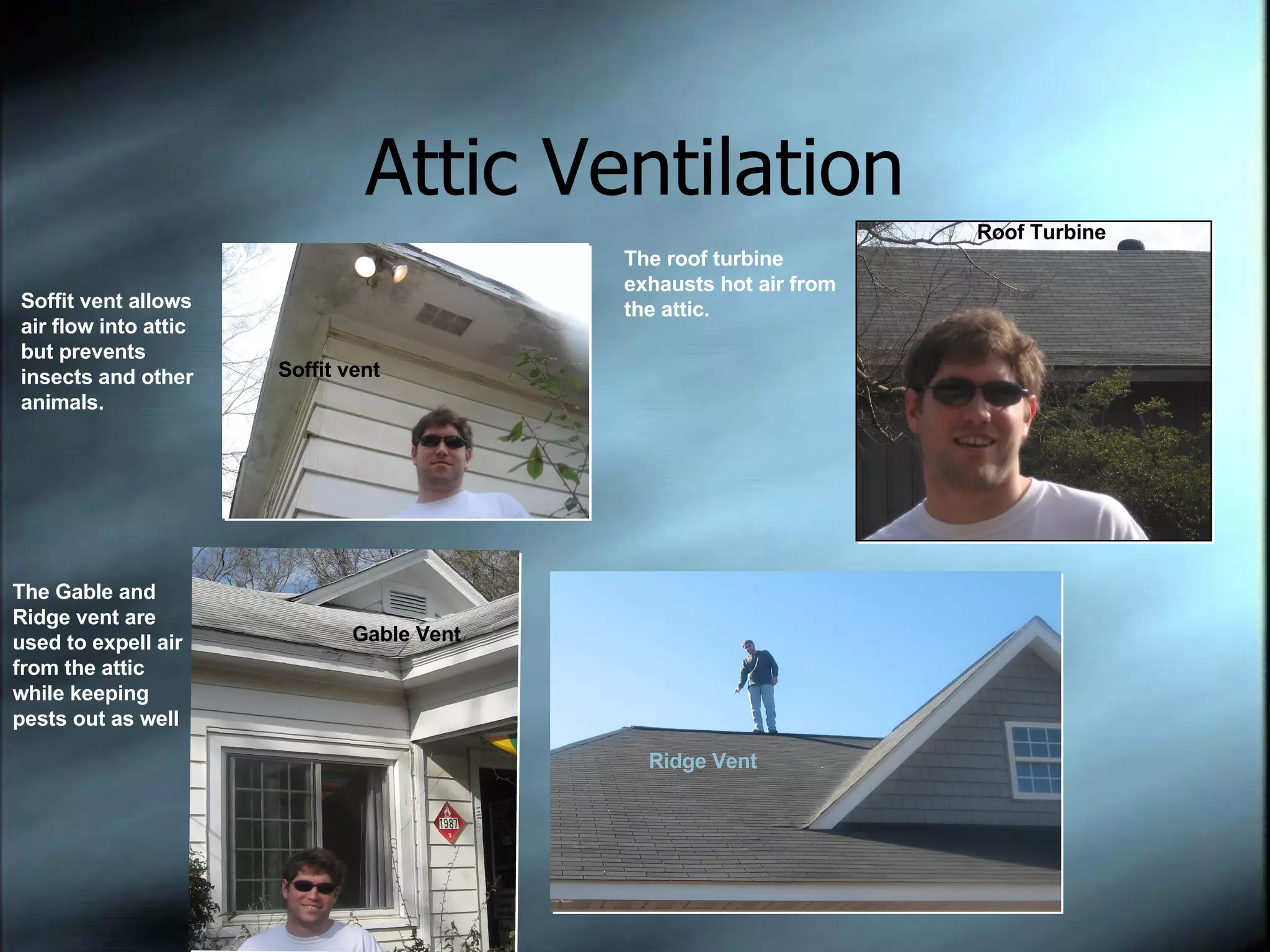
Attic Ventilation Soffit vent Ridge Vent Gable Vent Roof Turbine Soffit vent allows air flow into attic but prevents insects and other animals. The Gable and Ridge vent are used to expell air from the attic while keeping pests out as well The roof turbine exhausts hot air from the attic.
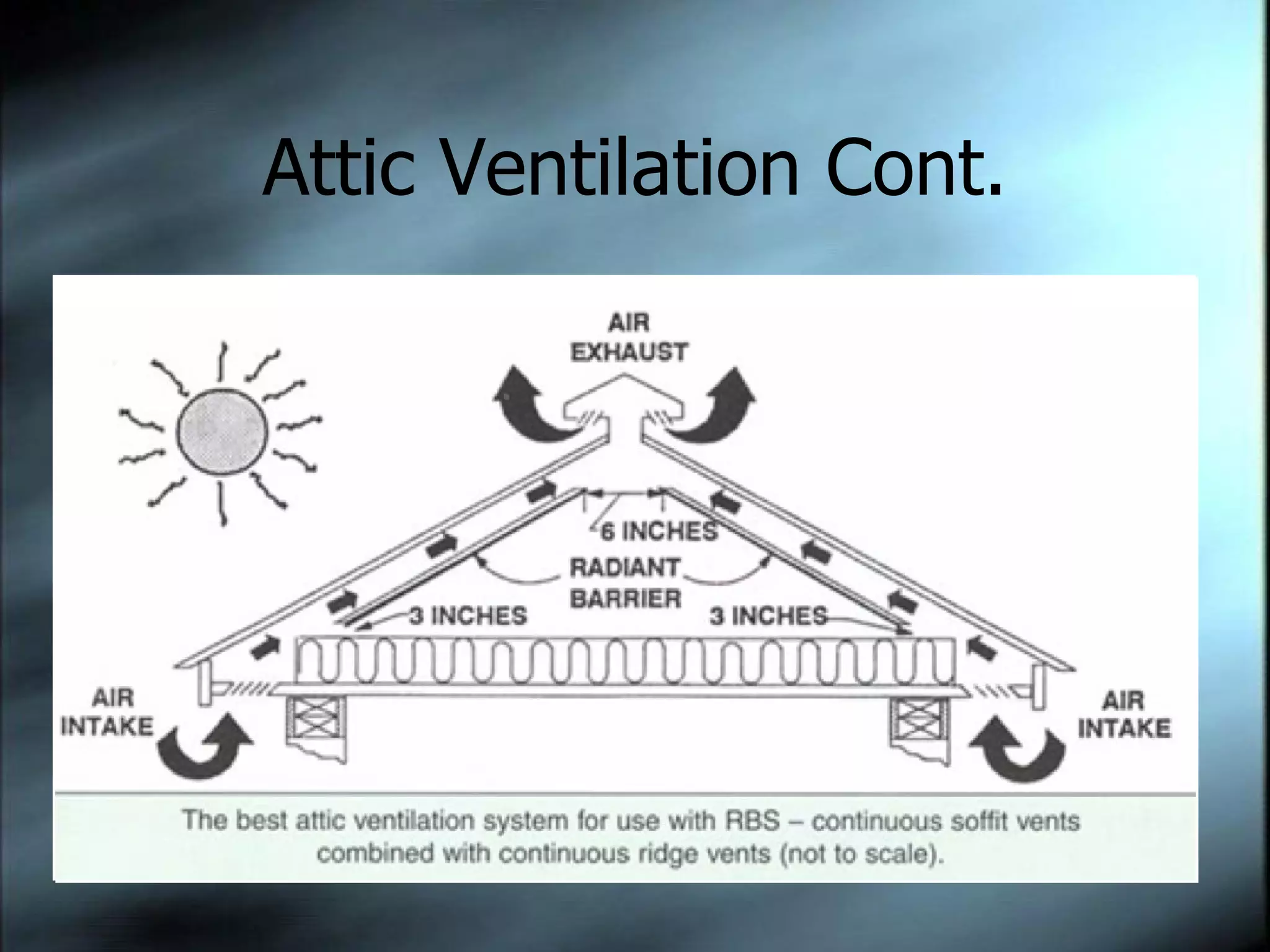
Attic Ventilation Cont.
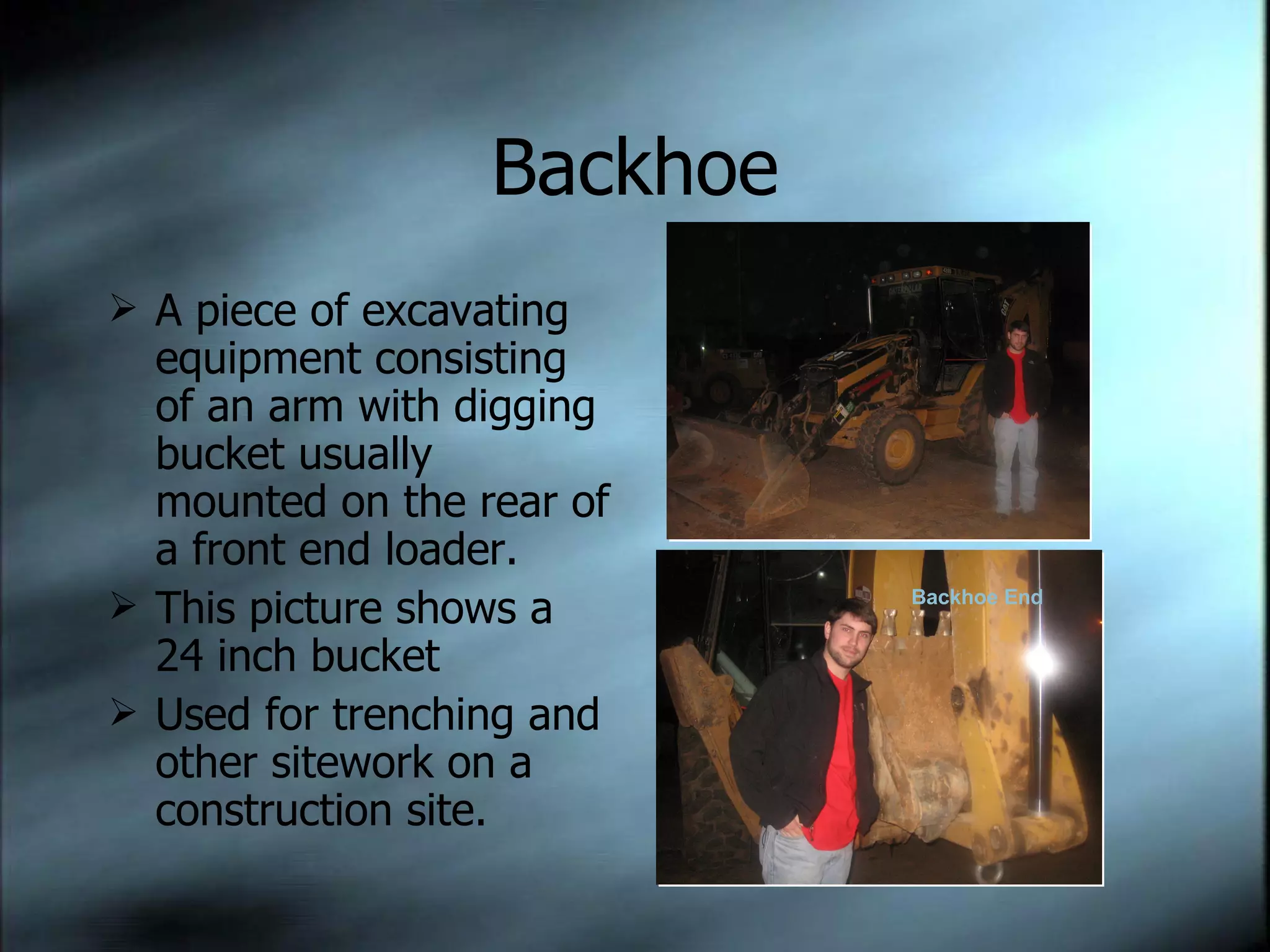
Backhoe A piece of excavating equipment consisting of an arm with digging bucket usually mounted on the rear of a front end loader. This picture shows a 24 inch bucket Used for trenching and other sitework on a construction site. Backhoe End
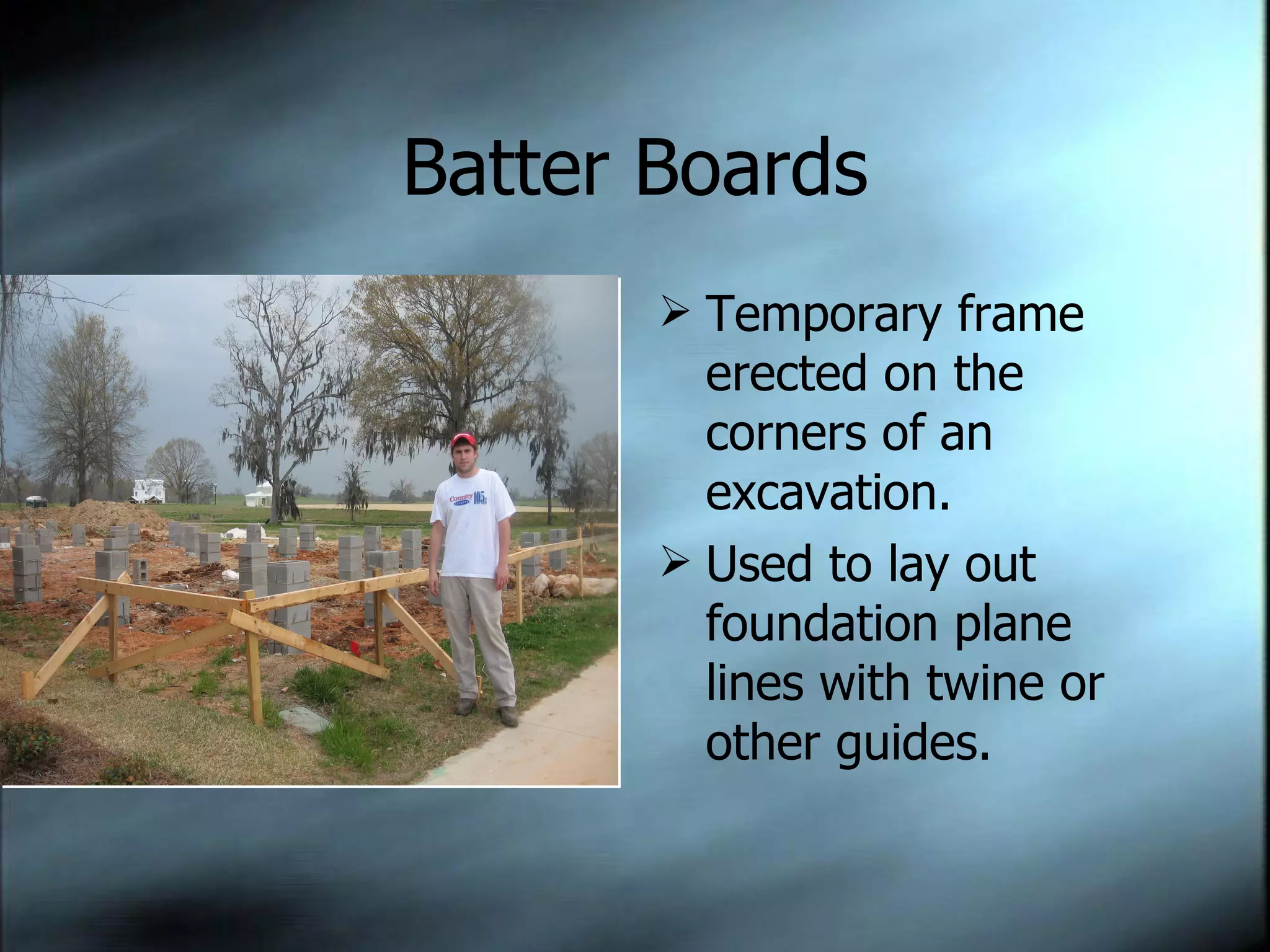
Batter Boards Temporary frame erected on the corners of an excavation. Used to lay out foundation plane lines with twine or other guides.
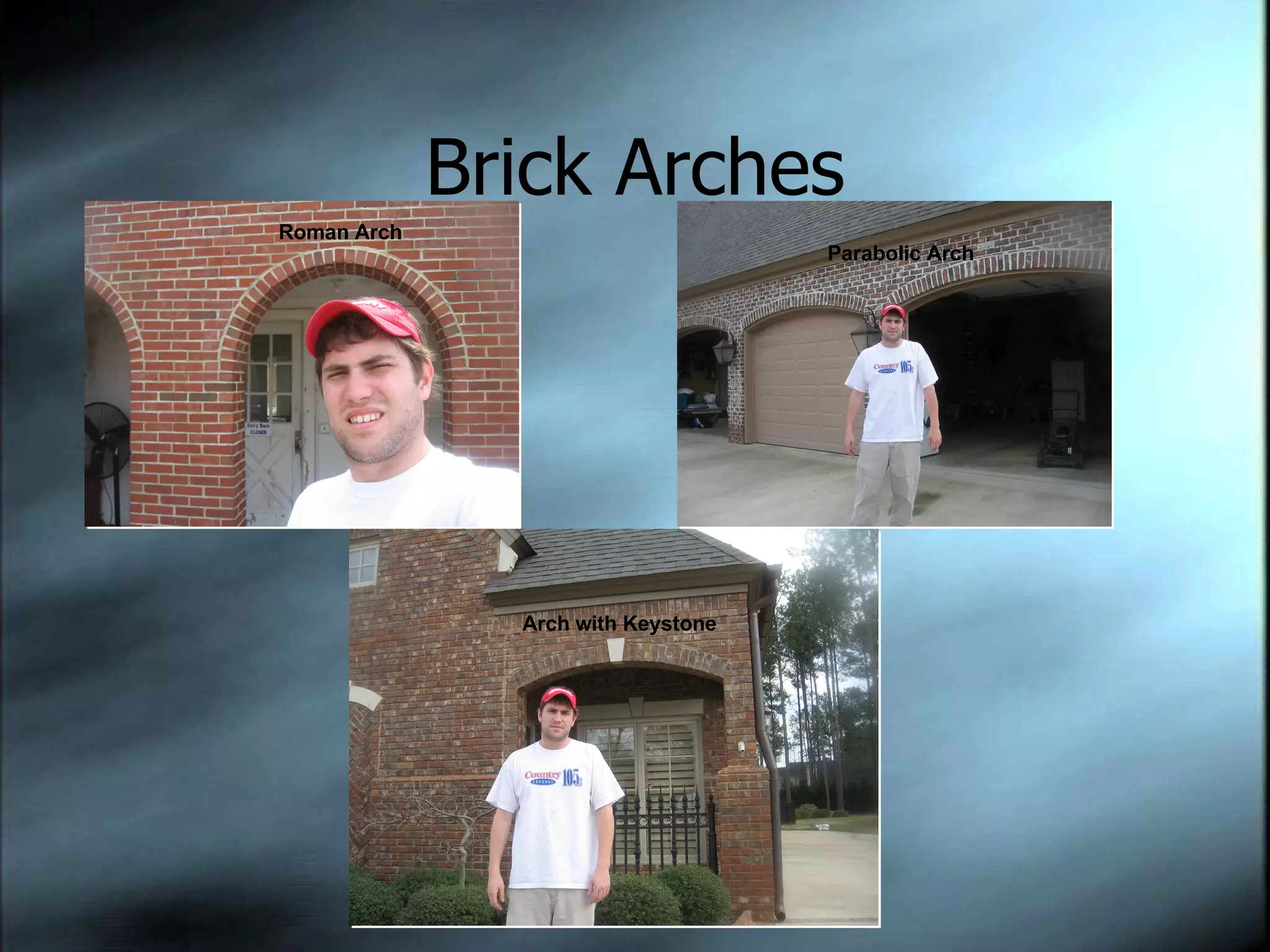
Brick Arches Roman Arch Parabolic Arch Arch with Keystone
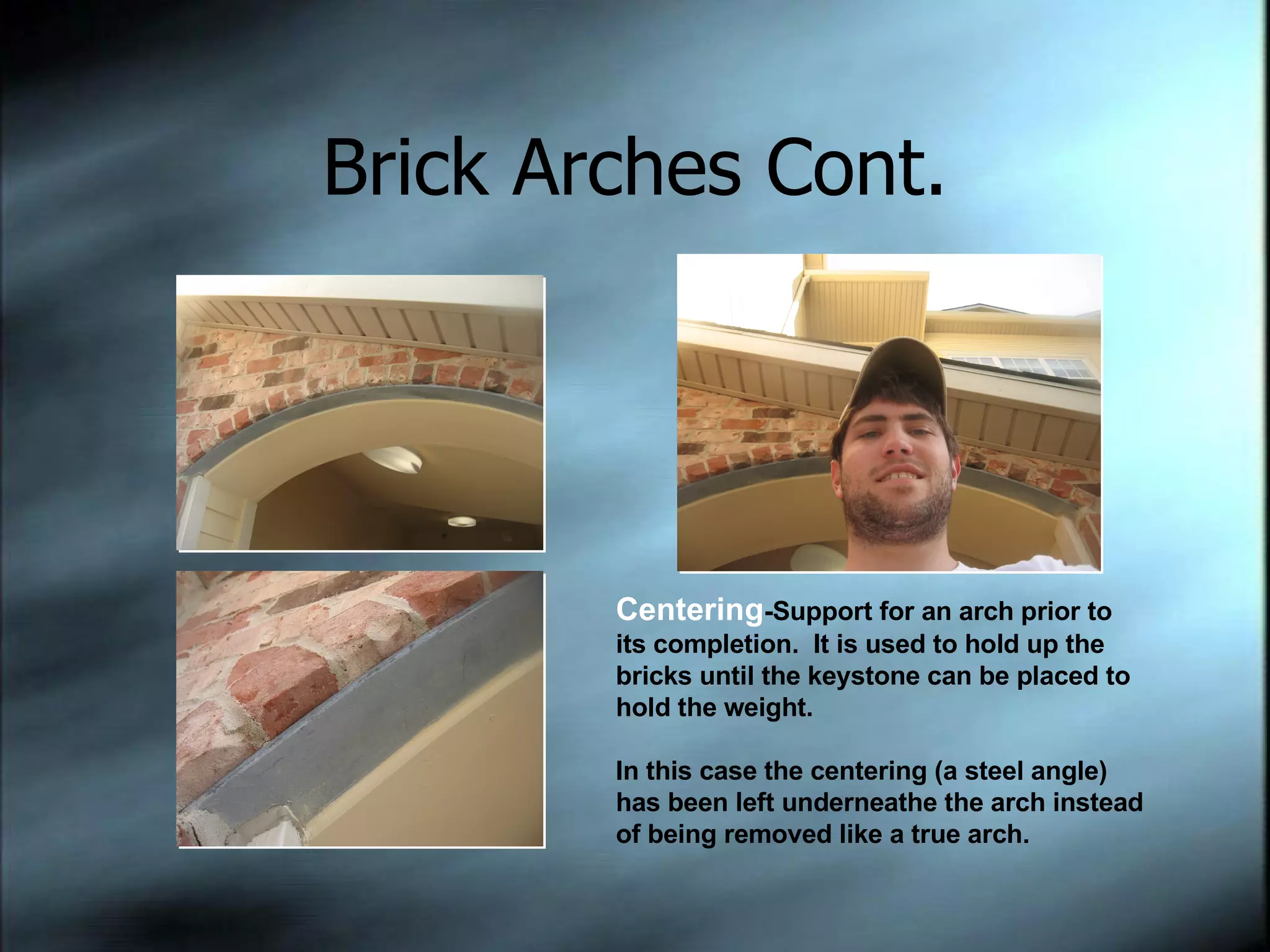
Brick Arches Cont. Centering -Support for an arch prior to its completion.  It is used to hold up the bricks until the keystone can be placed to hold the weight. In this case the centering (a steel angle) has been left underneathe the arch instead of being removed like a true arch.
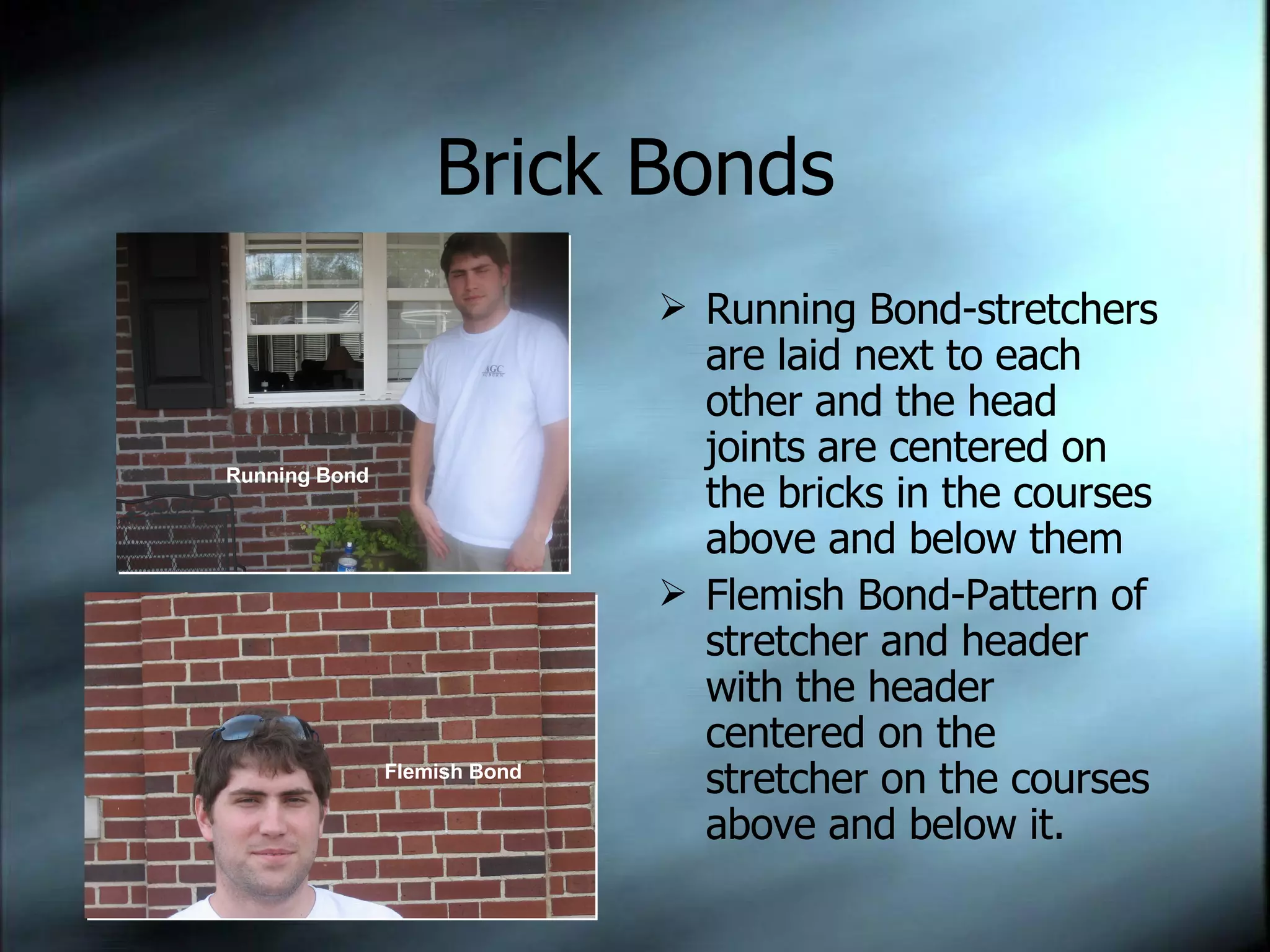
Brick Bonds Running Bond-stretchers are laid next to each other and the head joints are centered on the bricks in the courses above and below them Flemish Bond-Pattern of stretcher and header with the header centered on the stretcher on the courses above and below it.  Running Bond Flemish Bond
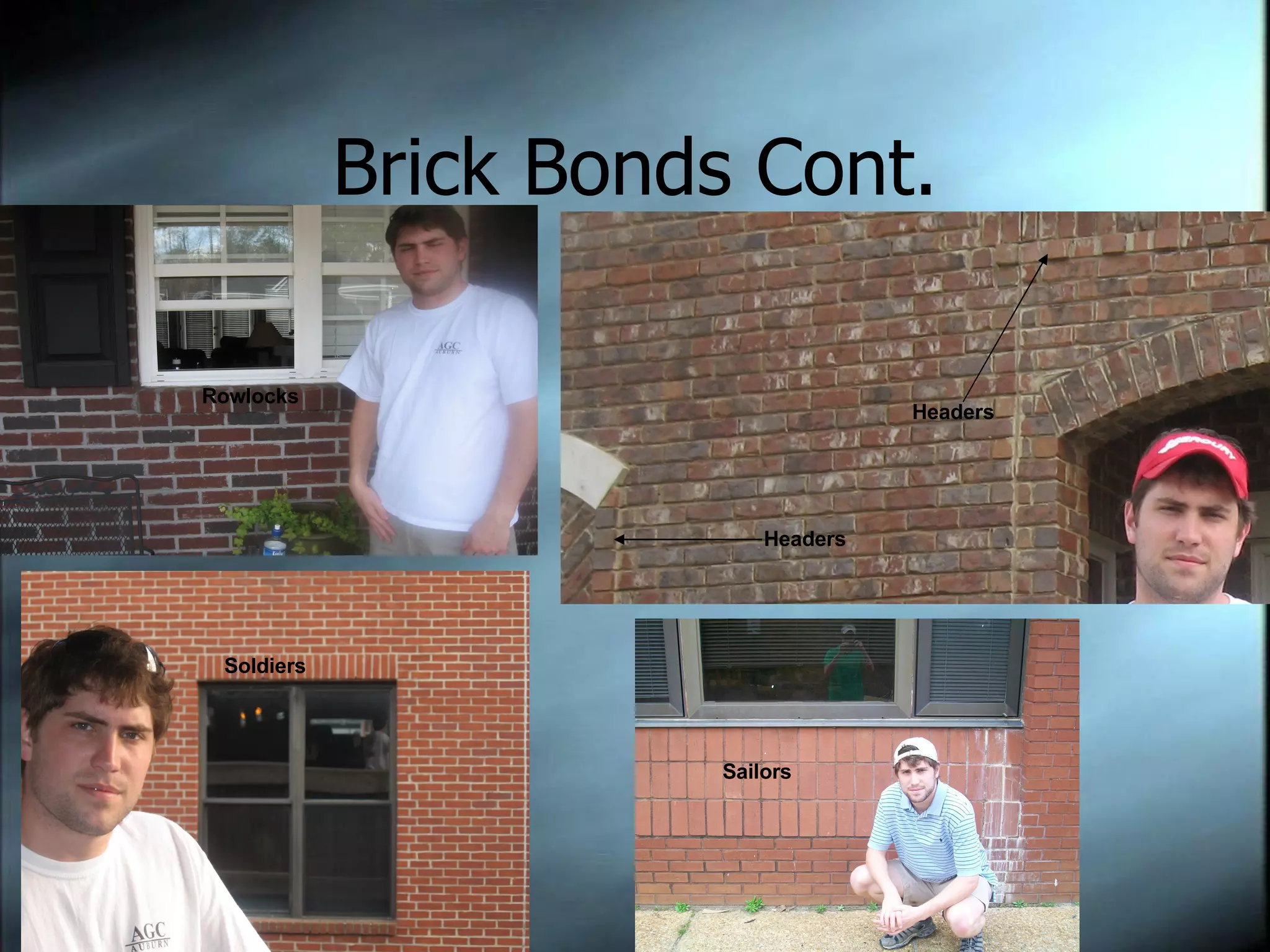
Brick Bonds Cont. Rowlocks Soldiers Headers Headers Sailors Sailors
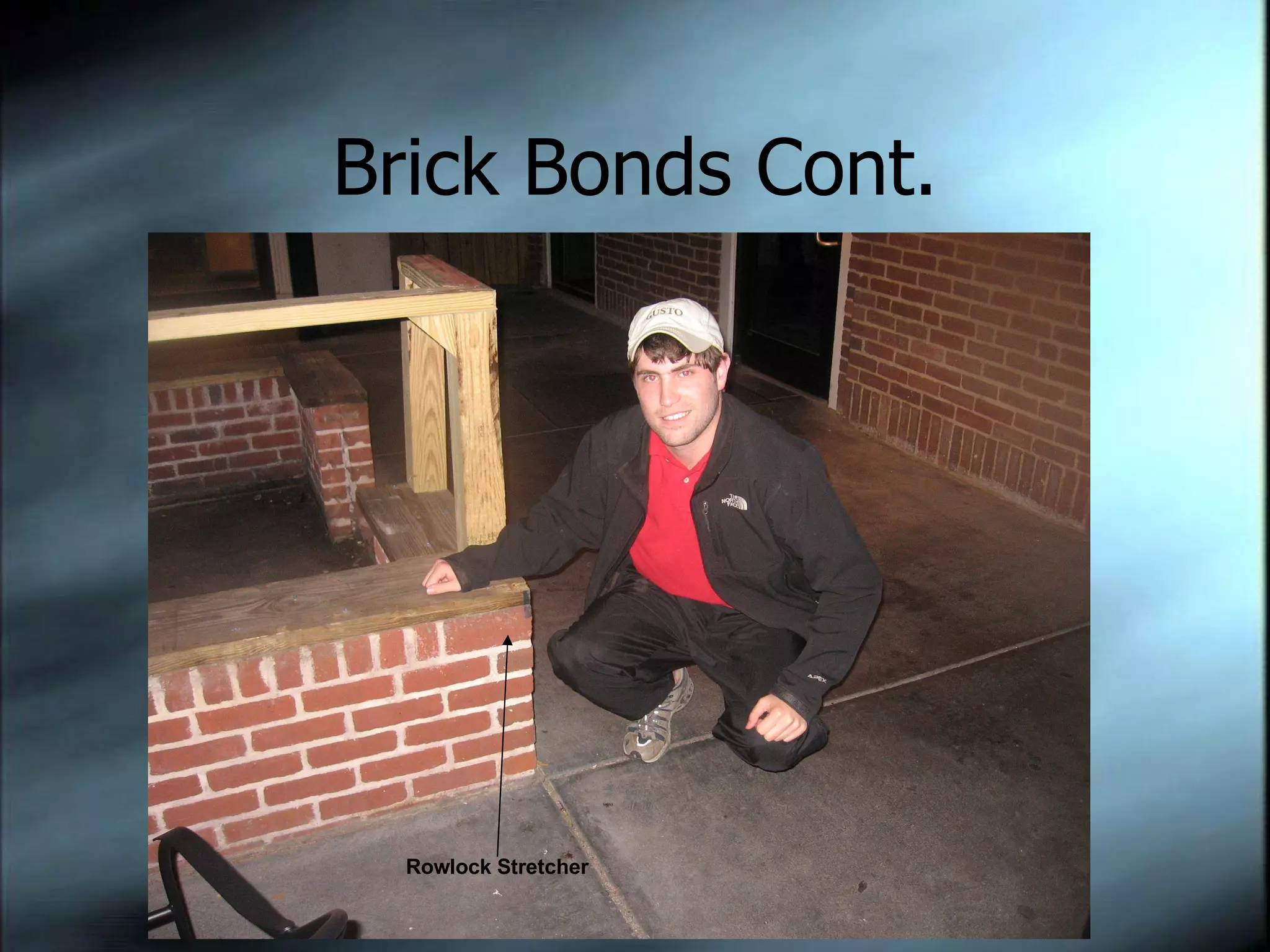
Brick Bonds Cont. Rowlock Stretcher
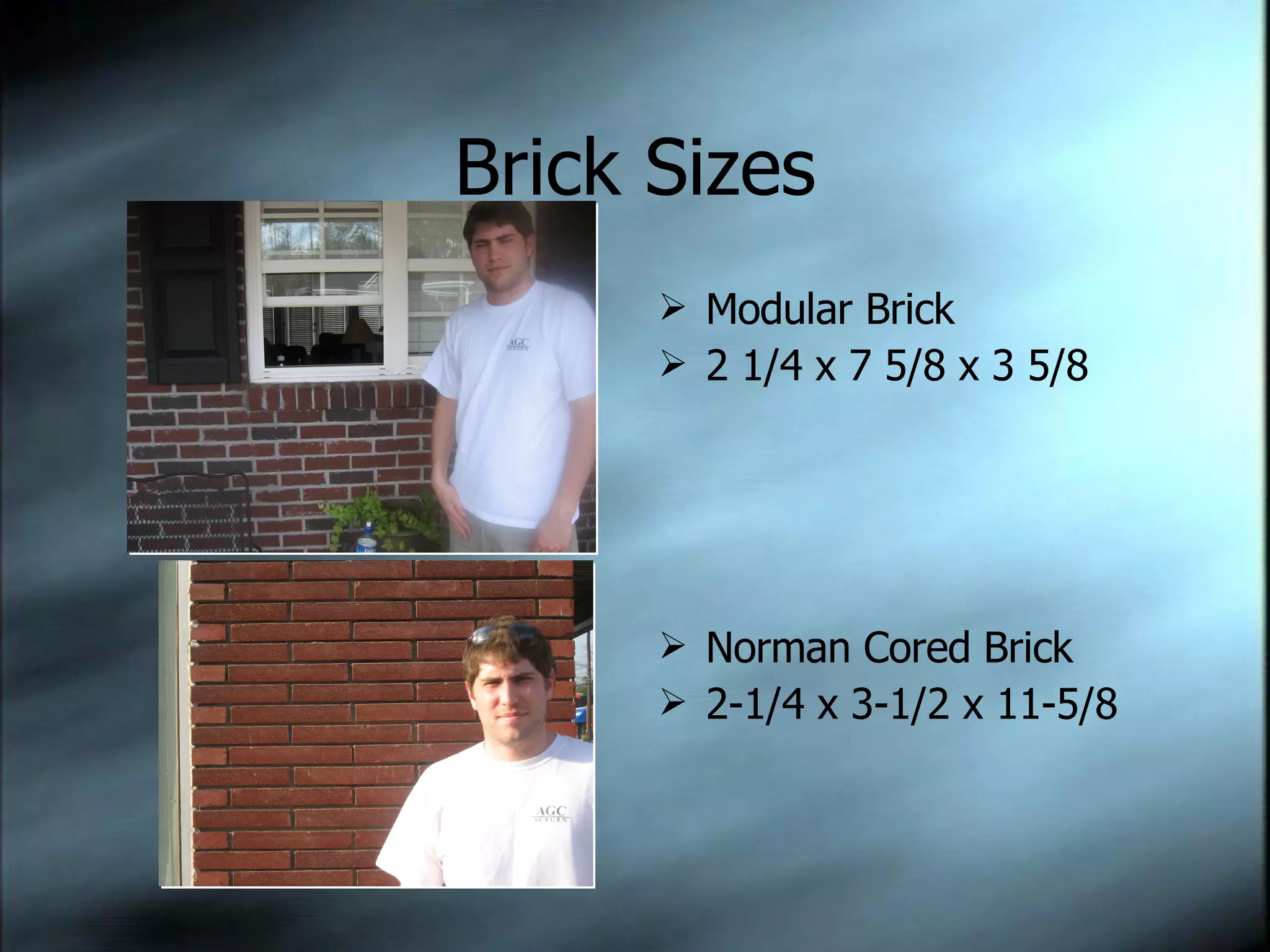
Brick Sizes Modular Brick 2 1/4 x 7 5/8 x 3 5/8 Norman Cored Brick 2-1/4 x 3-1/2 x 11-5/8
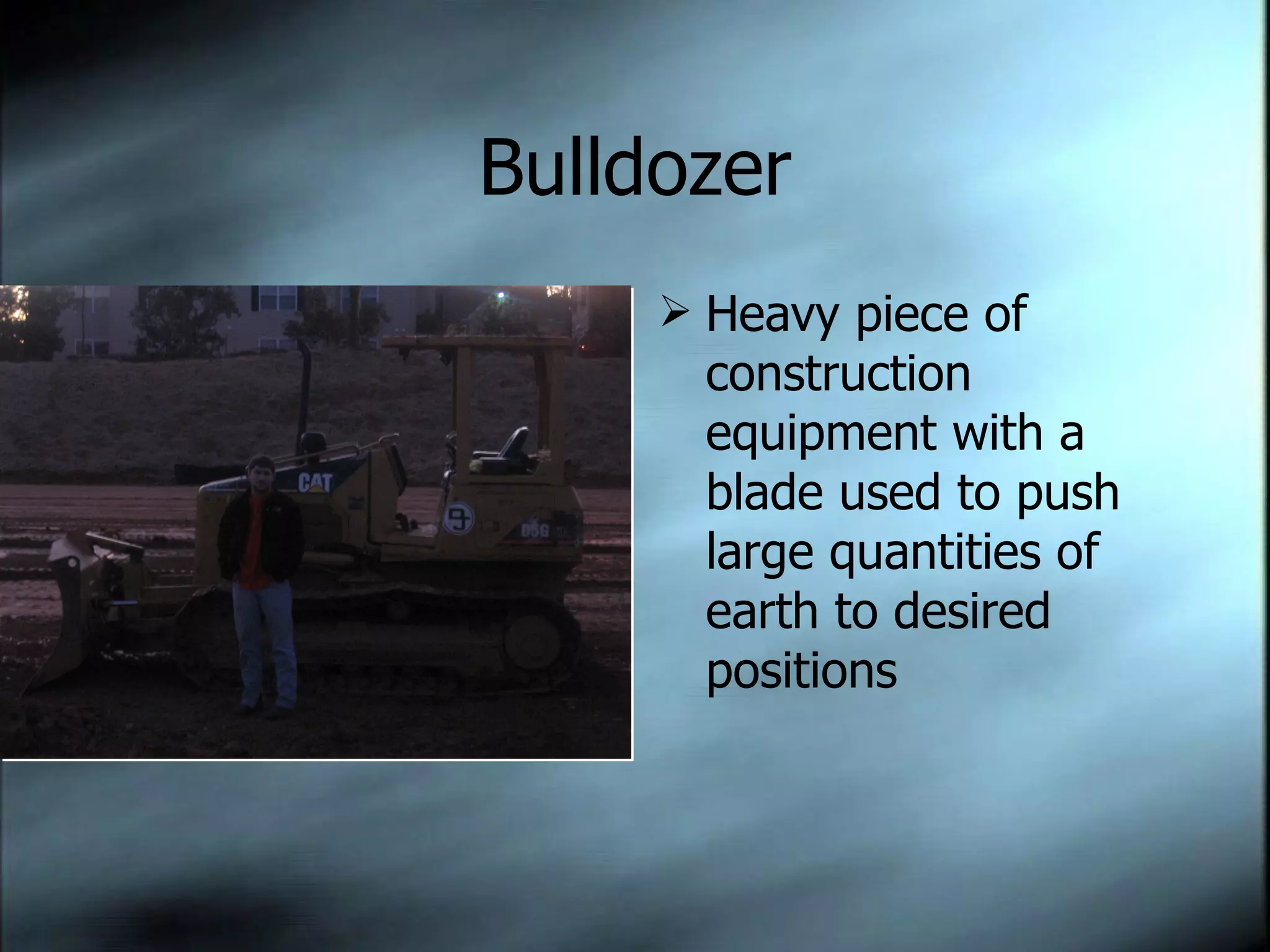
Bulldozer Heavy piece of construction equipment with a blade used to push large quantities of earth to desired positions
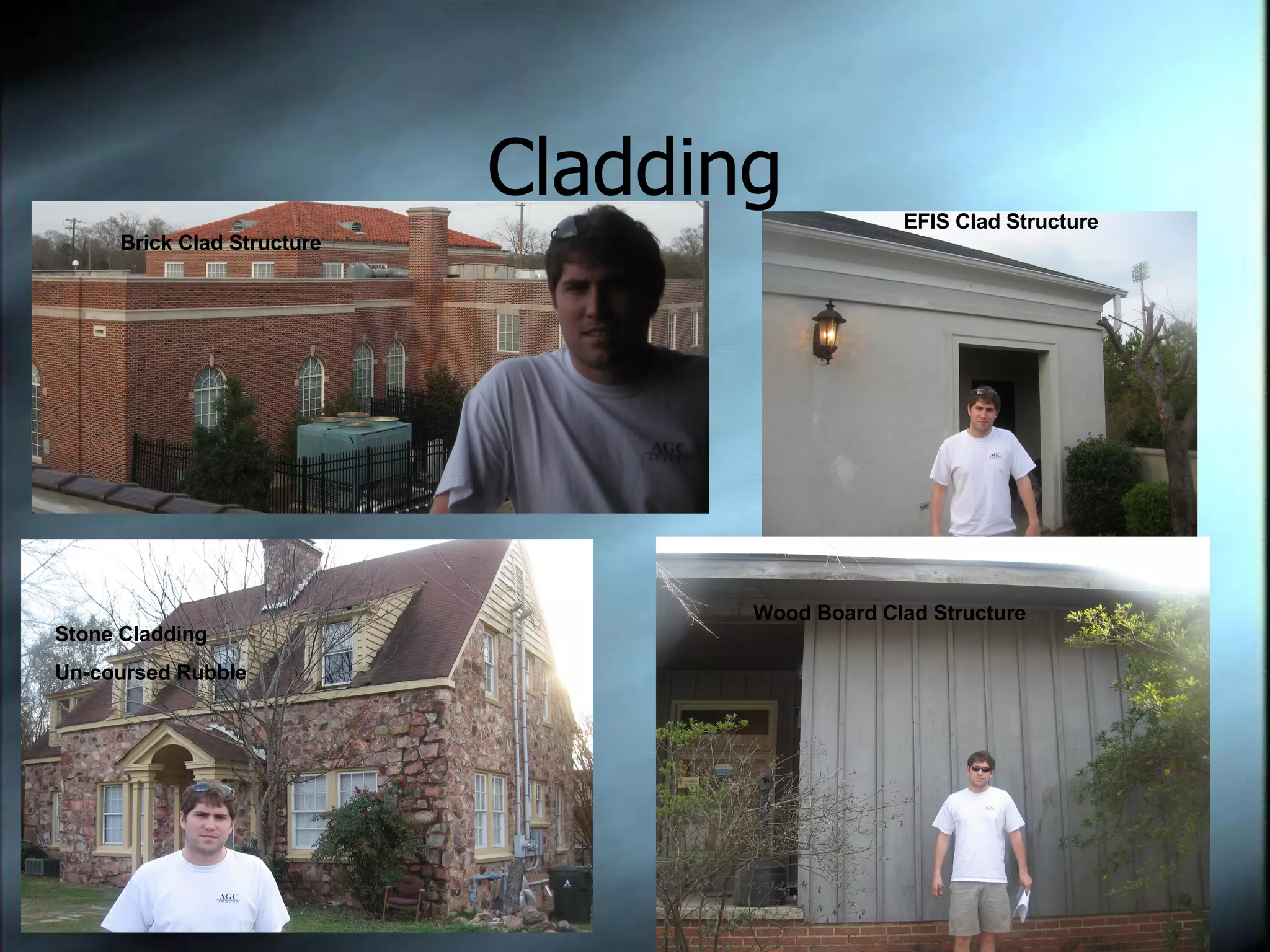
Cladding Brick Clad Structure EFIS Clad Structure Stone Cladding Un-coursed Rubble Wood Board Clad Structure
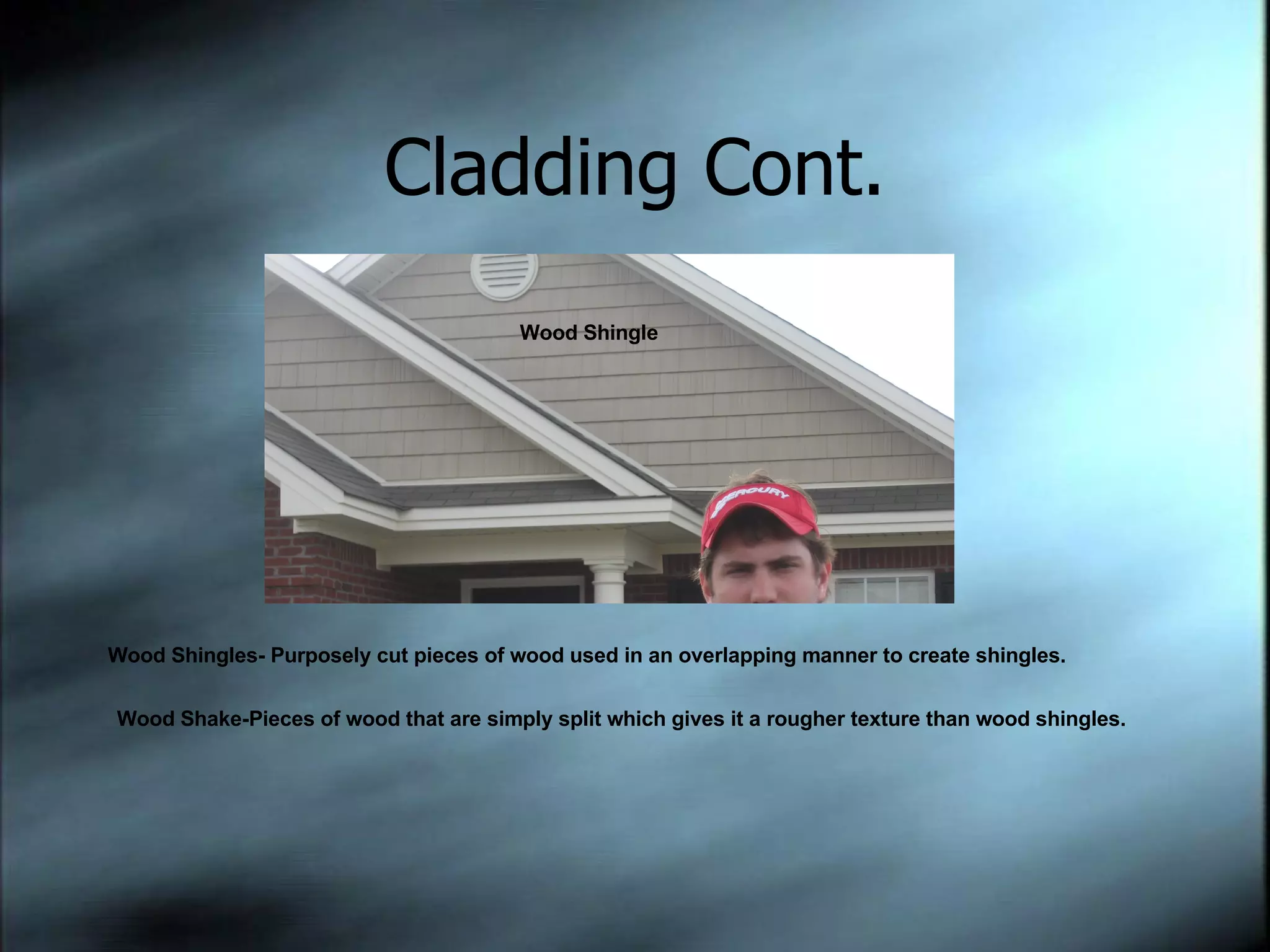
Cladding Cont. Wood Shingle Wood Shingles- Purposely cut pieces of wood used in an overlapping manner to create shingles. Wood Shake-Pieces of wood that are simply split which gives it a rougher texture than wood shingles.
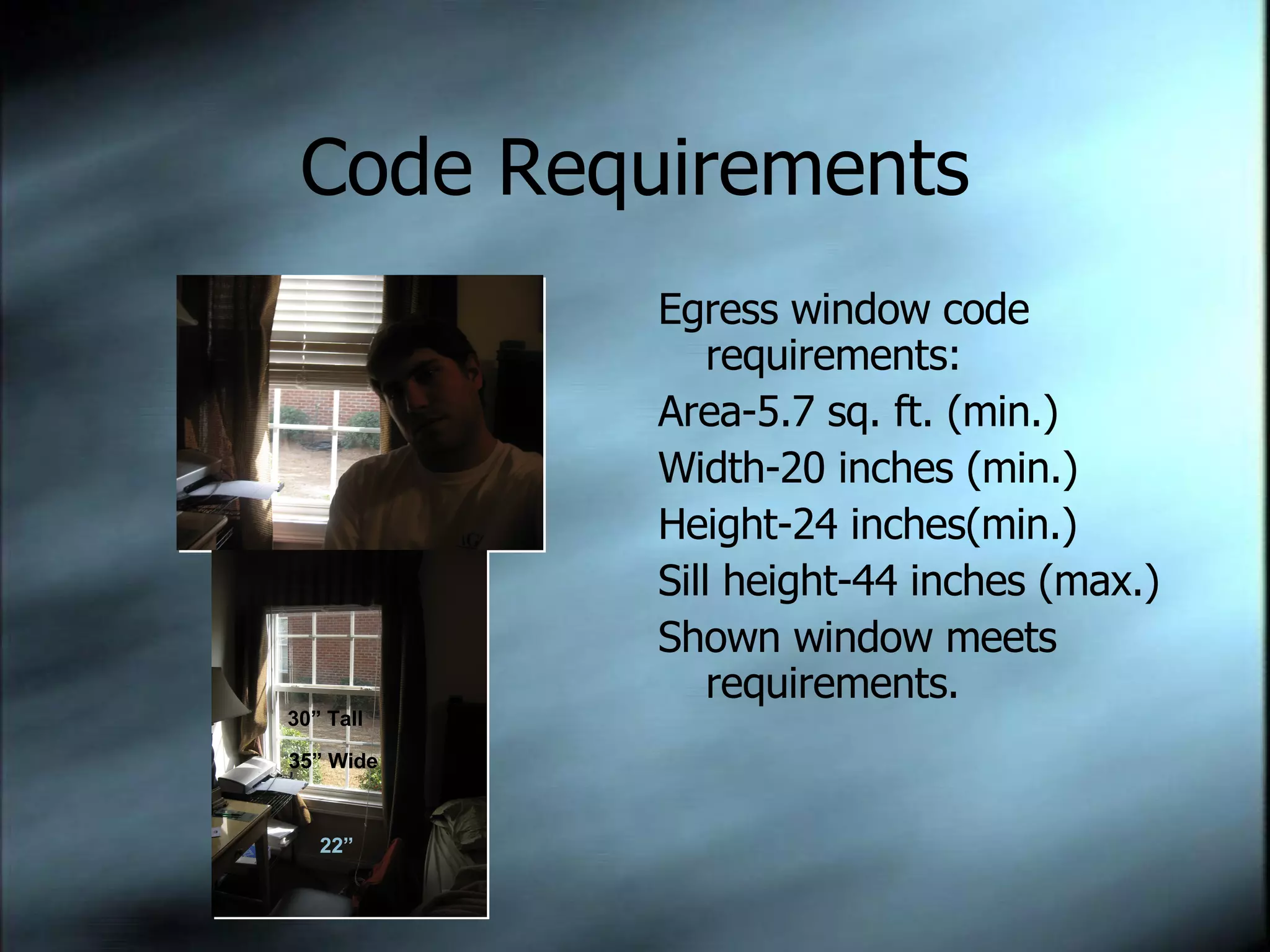
Code Requirements Egress window code requirements:  Area-5.7 sq. ft. (min.) Width-20 inches (min.) Height-24 inches(min.) Sill height-44 inches (max.) Shown window meets requirements. 22” 35” Wide 30” Tall
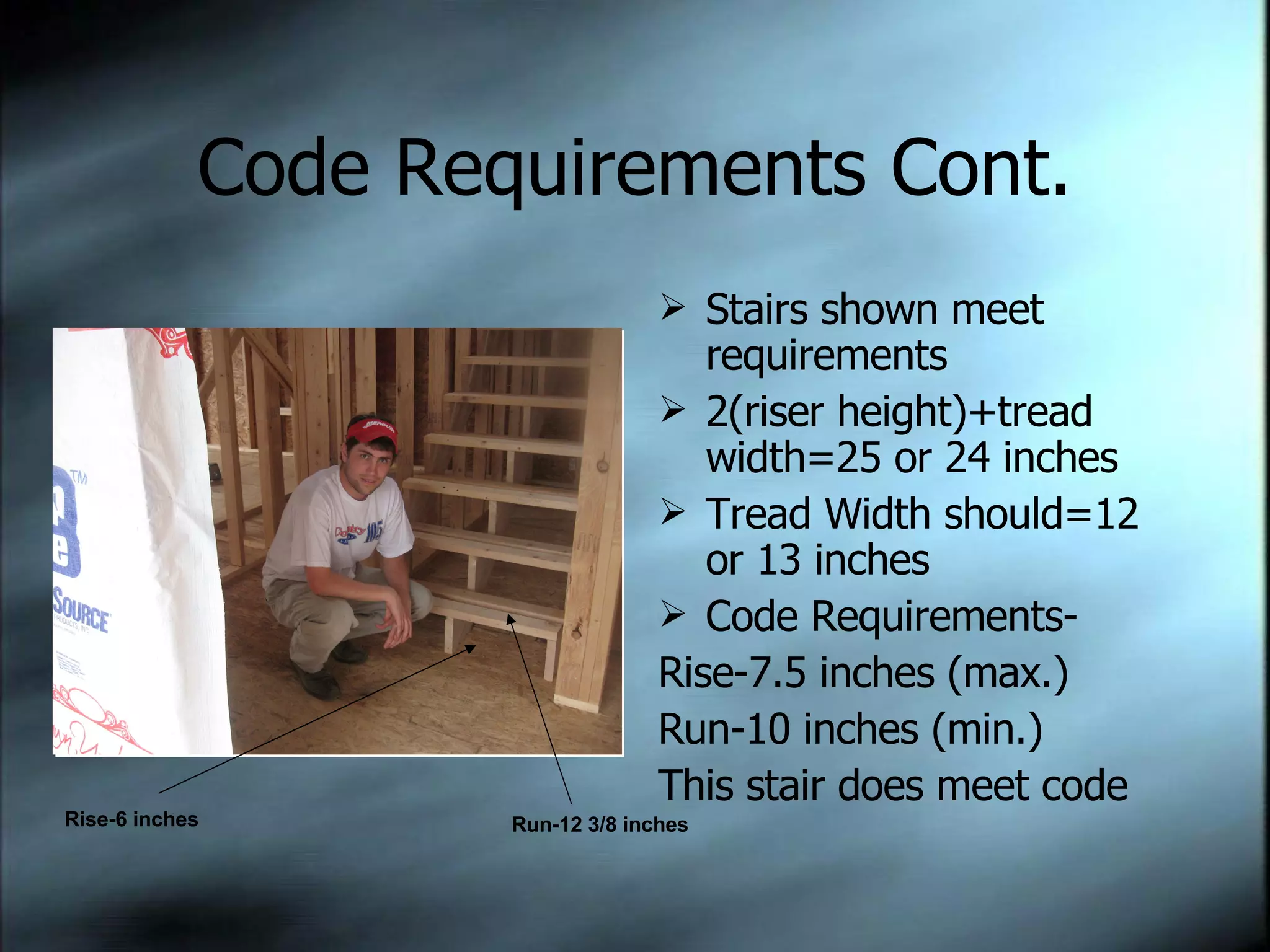
Code Requirements Cont. Stairs shown meet requirements 2(riser height)+tread width=25 or 24 inches Tread Width should=12 or 13 inches Code Requirements- Rise-7.5 inches (max.) Run-10 inches (min.) This stair does meet code Rise-6 inches Run-12 3/8 inches
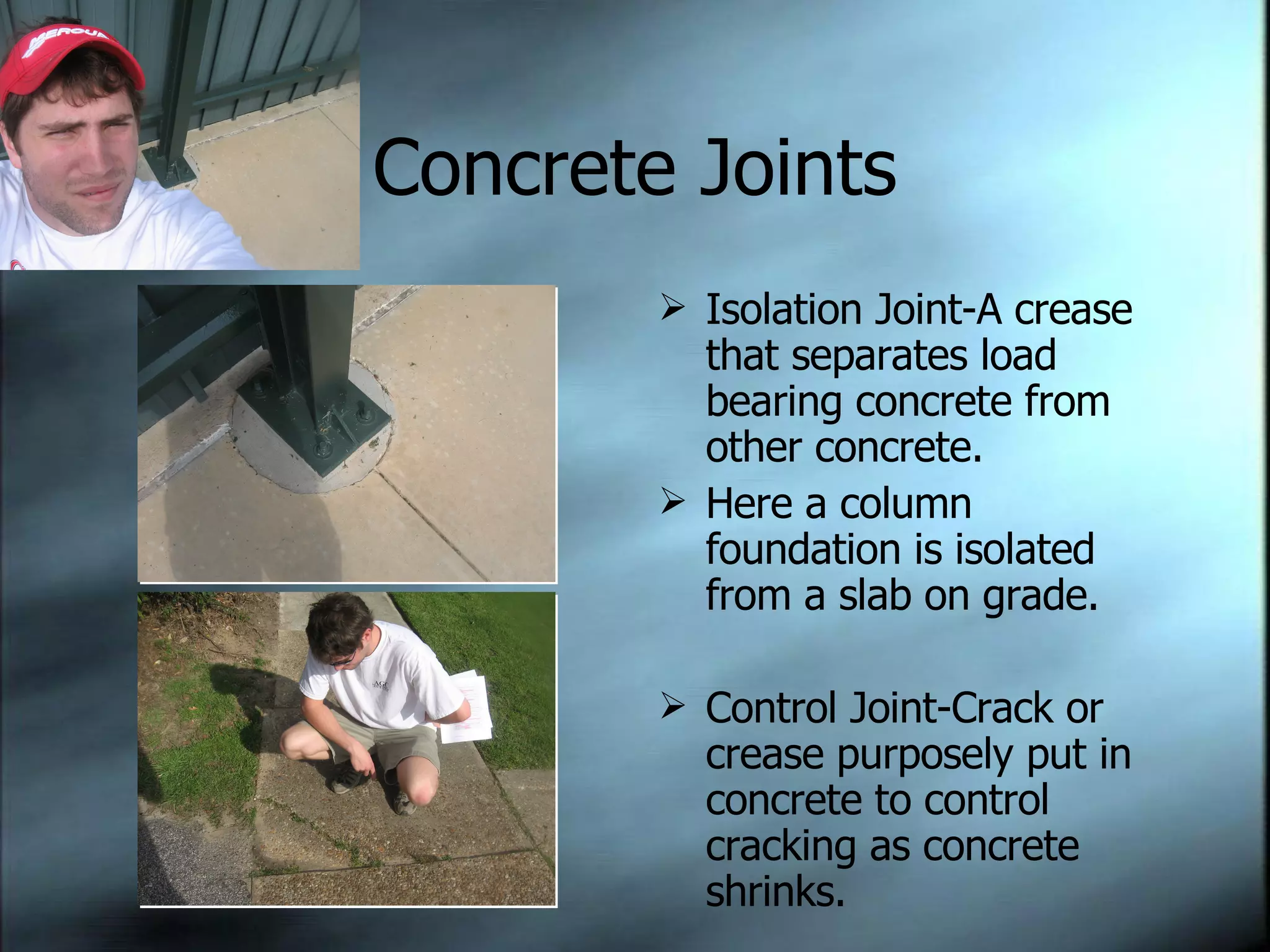
Concrete Joints Isolation Joint-A crease that separates load bearing concrete from other concrete. Here a column foundation is isolated from a slab on grade. Control Joint-Crack or crease purposely put in concrete to control cracking as concrete shrinks.
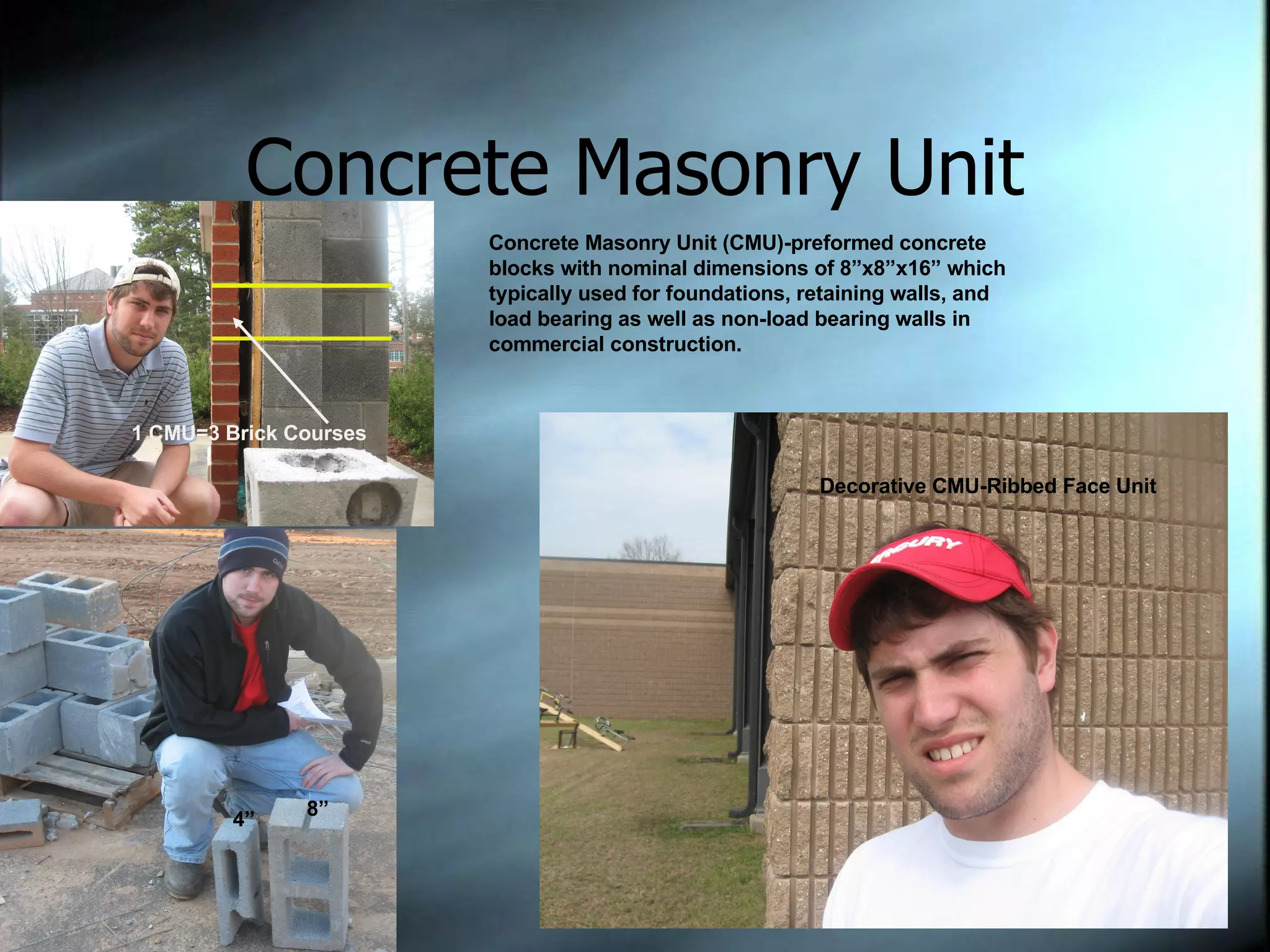
Concrete Masonry Unit 3 Brick courses Equal one CMU course 4” 8” Concrete Masonry Unit (CMU)-preformed concrete blocks with nominal dimensions of 8”x8”x16” which typically used for foundations, retaining walls, and load bearing as well as non-load bearing walls in commercial construction. Decorative CMU-Ribbed Face Unit 1 CMU=3 Brick Courses
Decorative Concrete Masonry Units Ribbed Split Faced Block Split Block
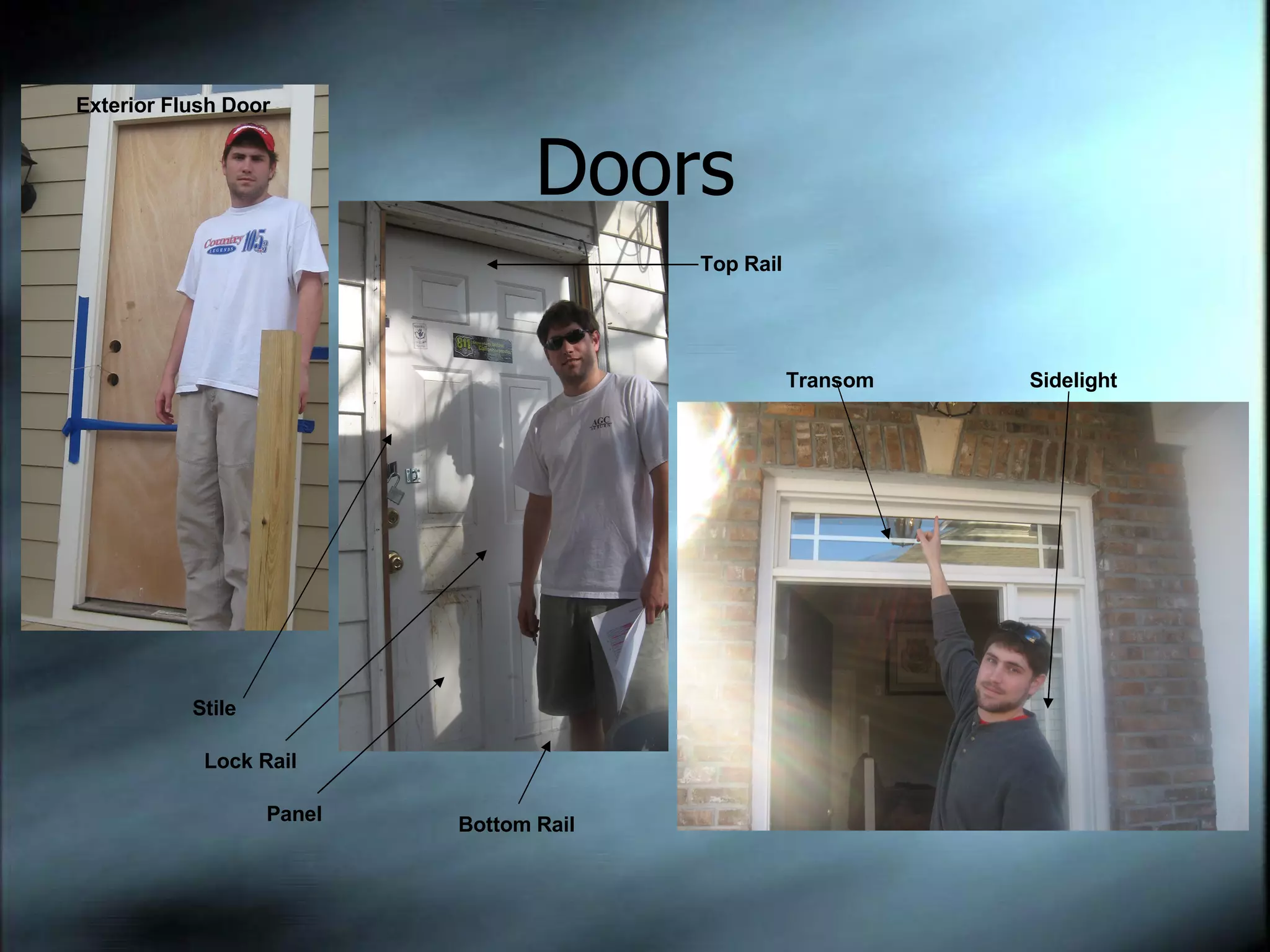
Doors Exterior Flush Door Top Rail Stile Panel Lock Rail Bottom Rail Transom Sidelight
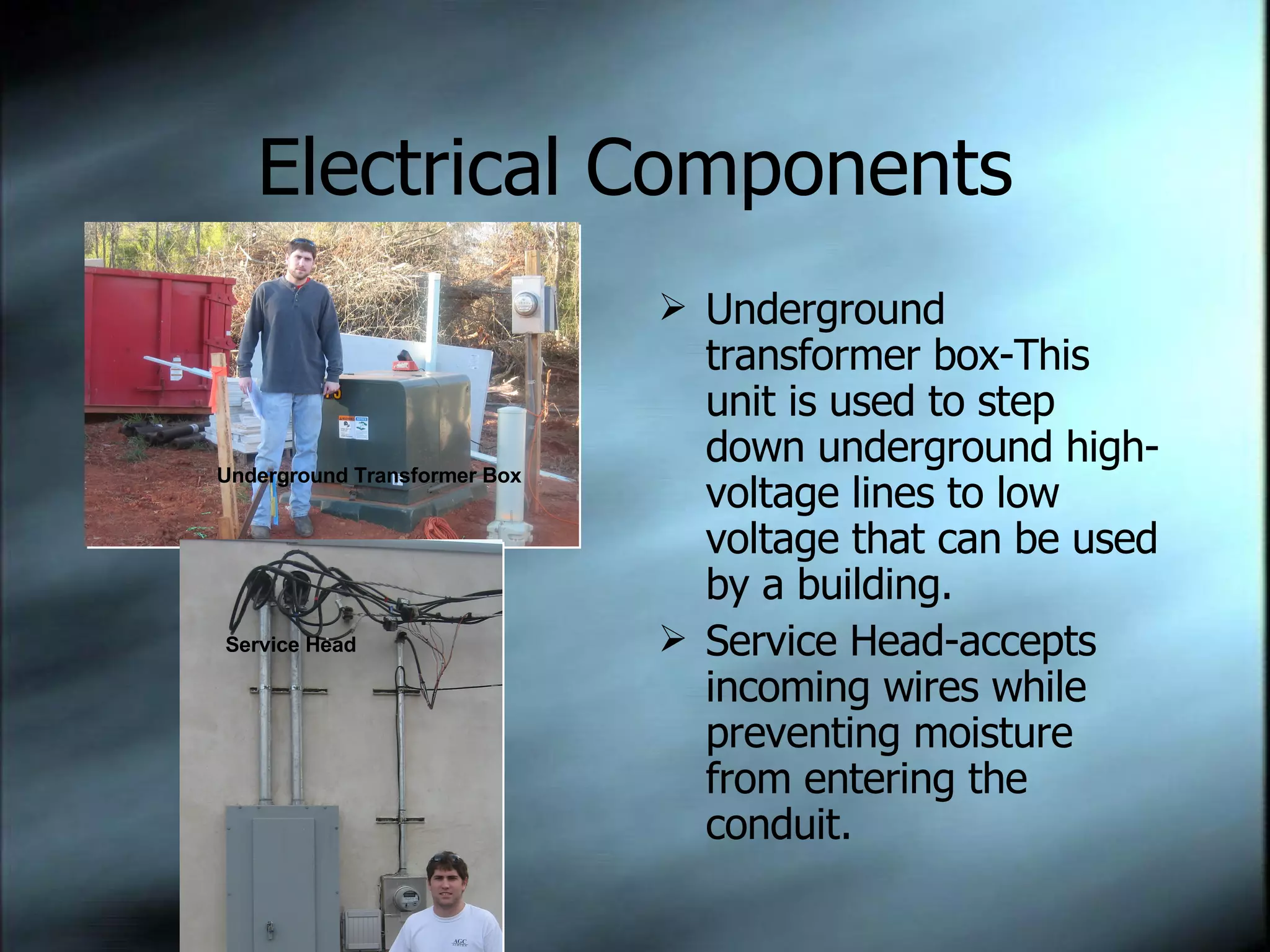
Electrical Components Underground transformer box-This unit is used to step down underground high-voltage lines to low voltage that can be used by a building. Service Head-accepts incoming wires while preventing moisture from entering the conduit. Underground Transformer Box Service Head
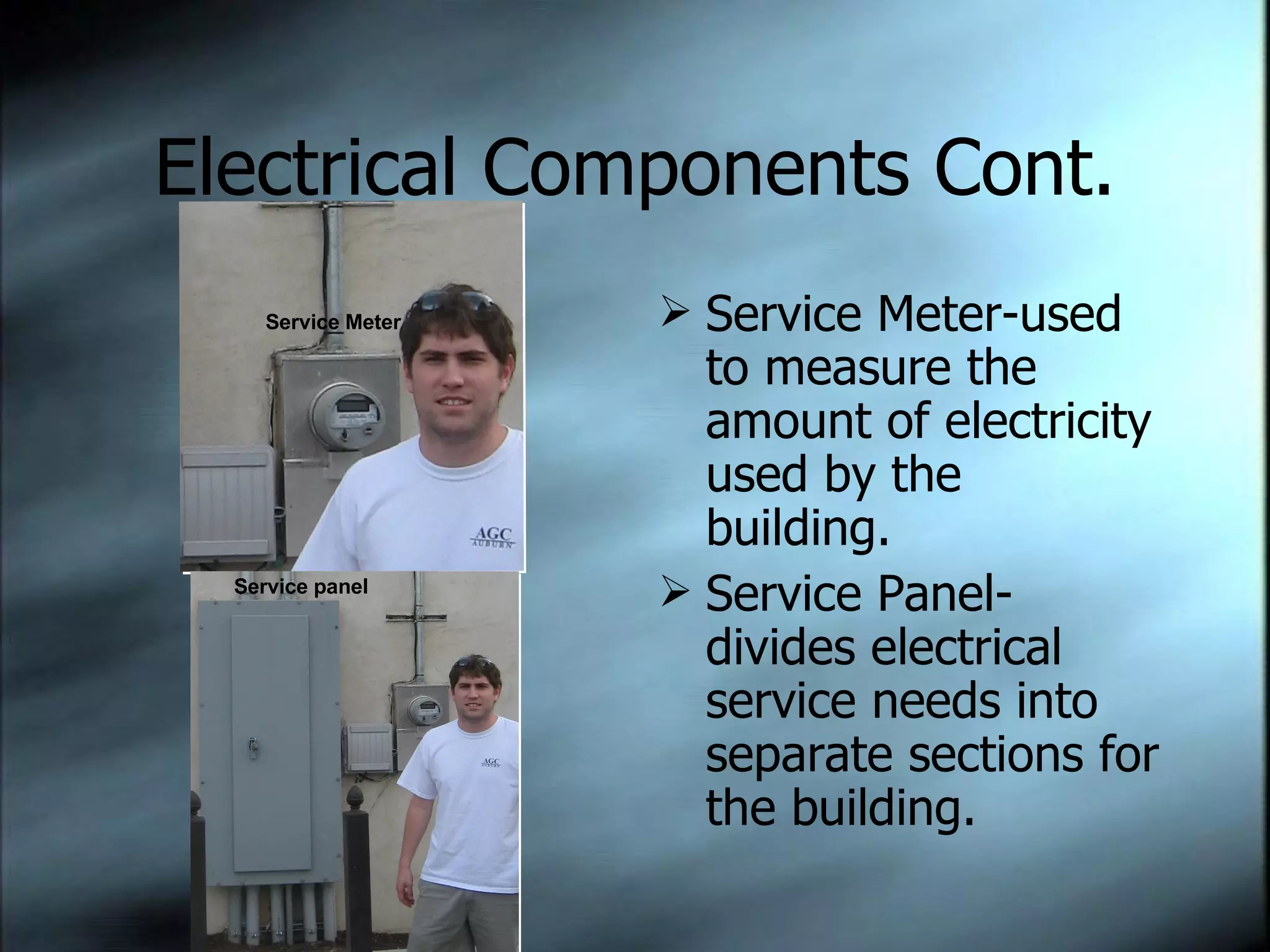
Electrical Components Cont. Service Meter-used to measure the amount of electricity used by the building. Service Panel-divides electrical service needs into separate sections for the building. Service panel Service Meter
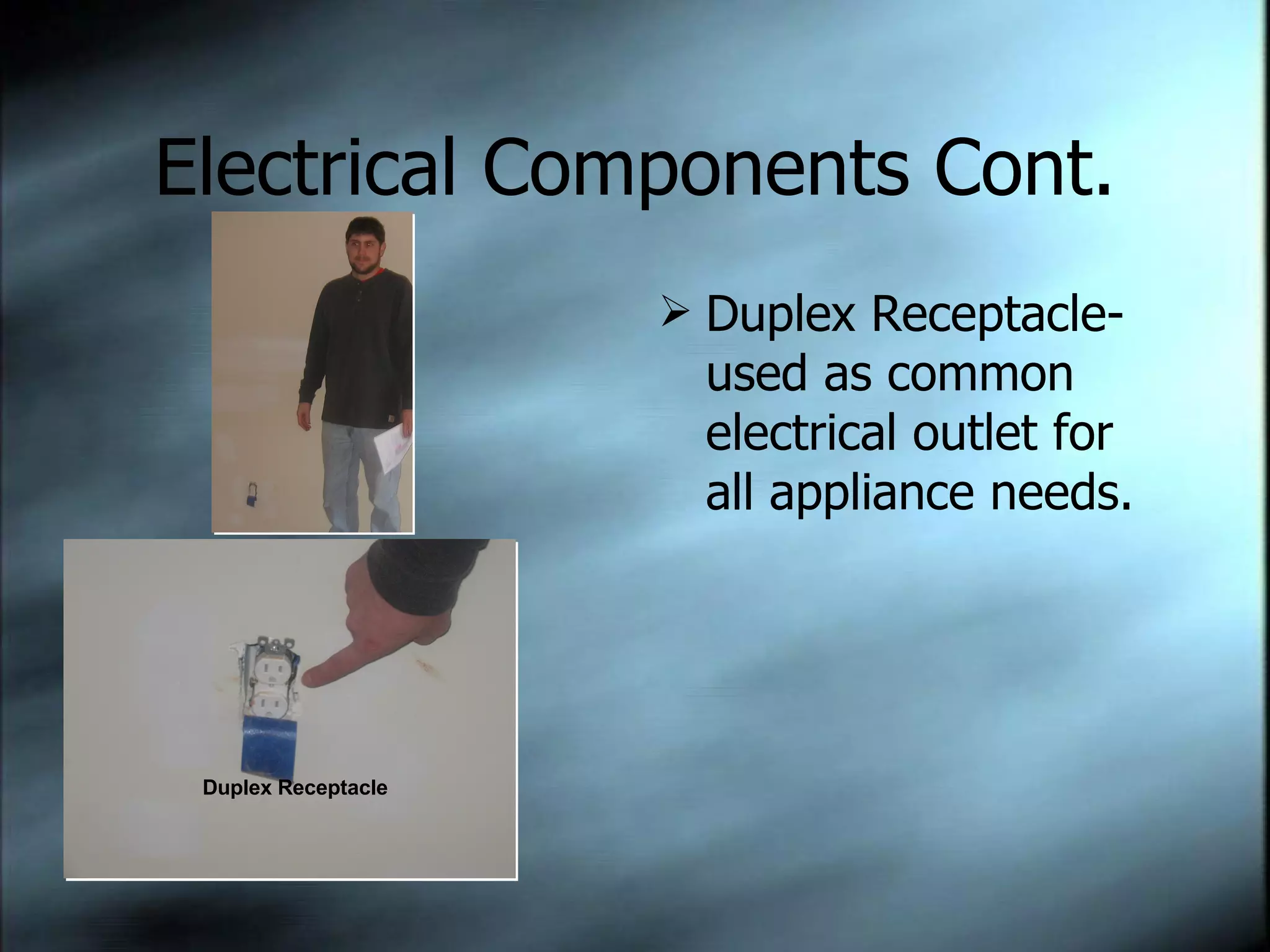
Electrical Components Cont. Duplex Receptacle-used as common electrical outlet for all appliance needs. Duplex Receptacle
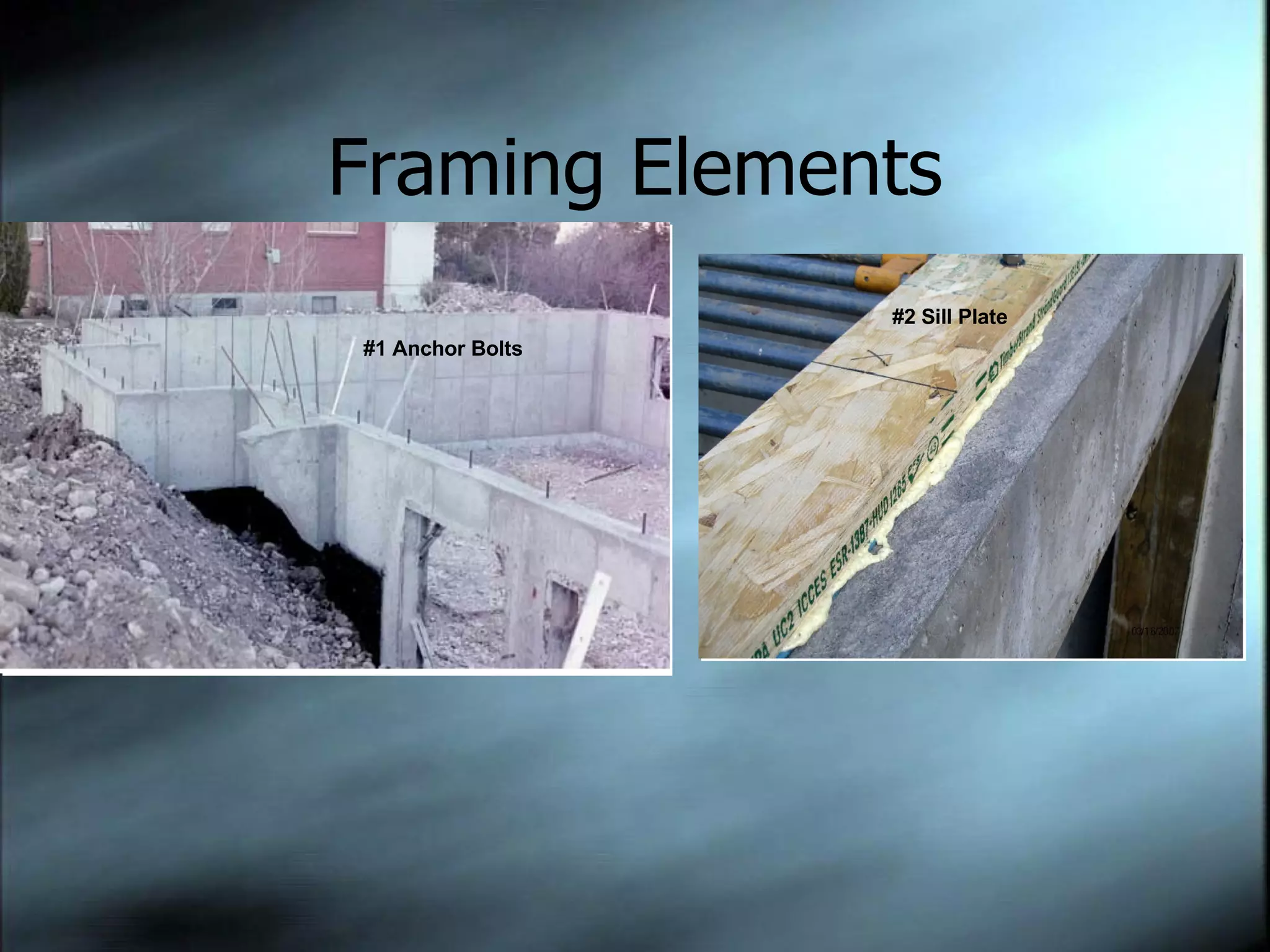
Framing Elements #1 Anchor Bolts #2 Sill Plate
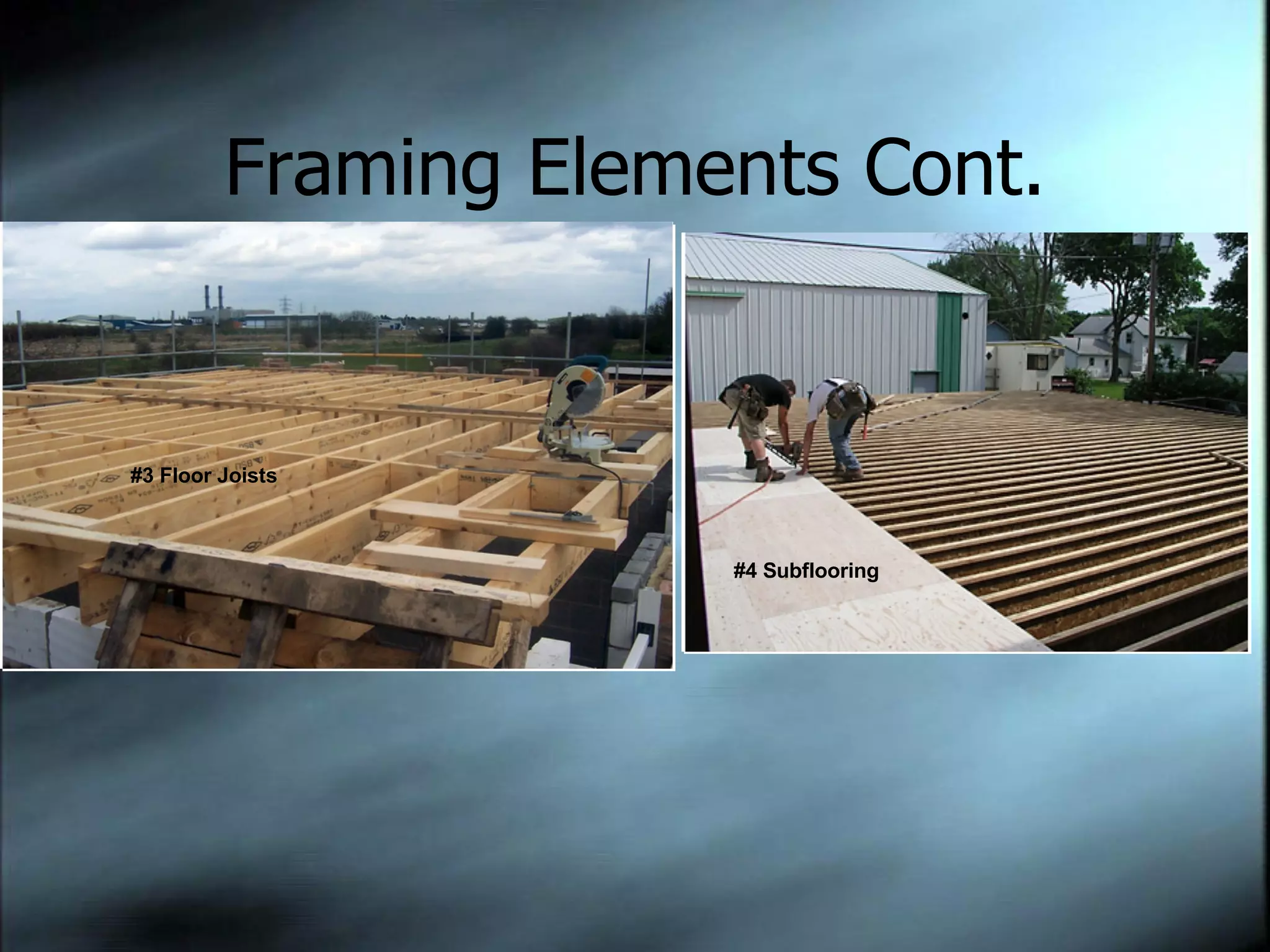
Framing Elements Cont. #3 Floor Joists #4 Subflooring
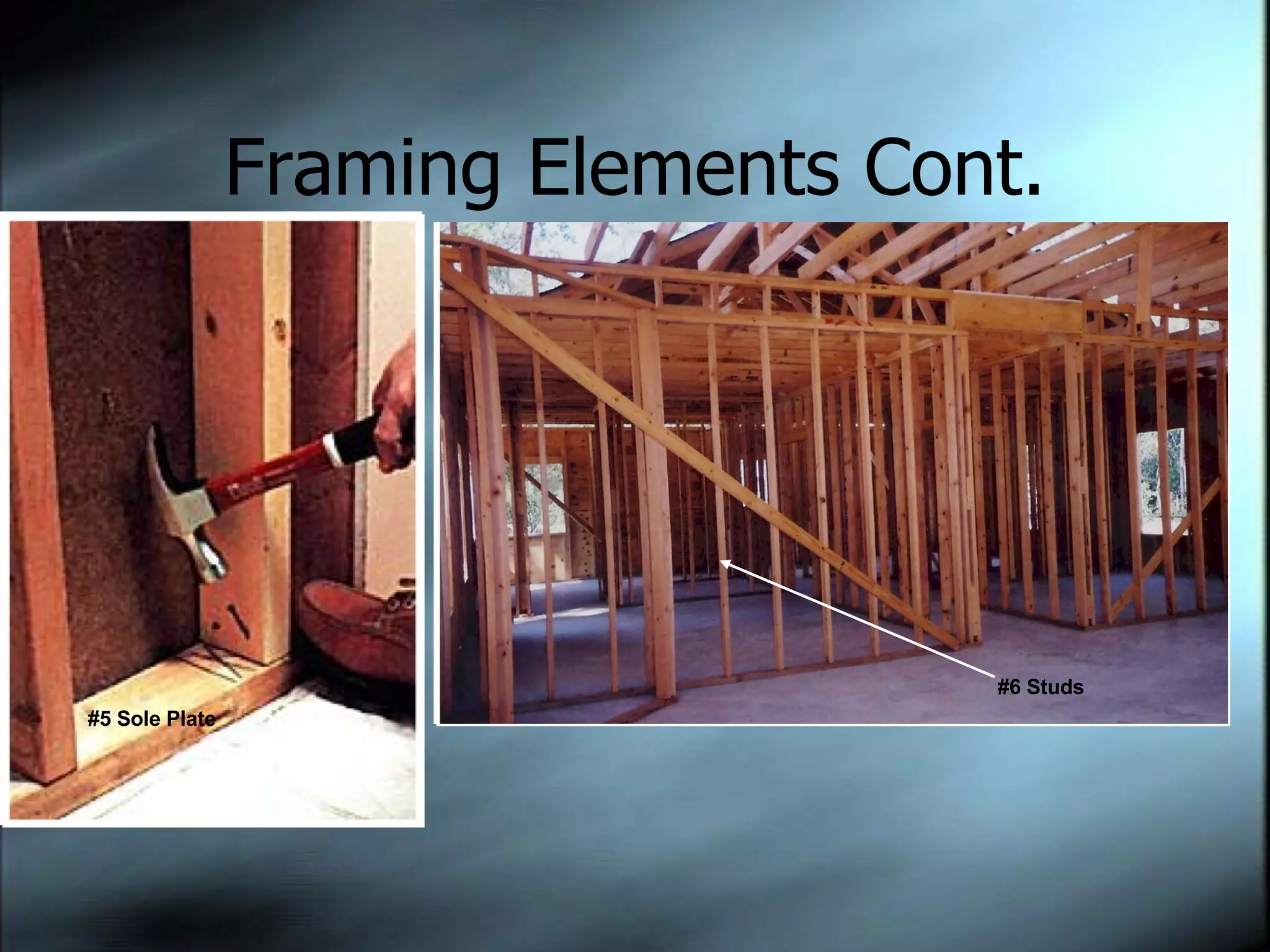
Framing Elements Cont. #5 Sole Plate #6 Studs
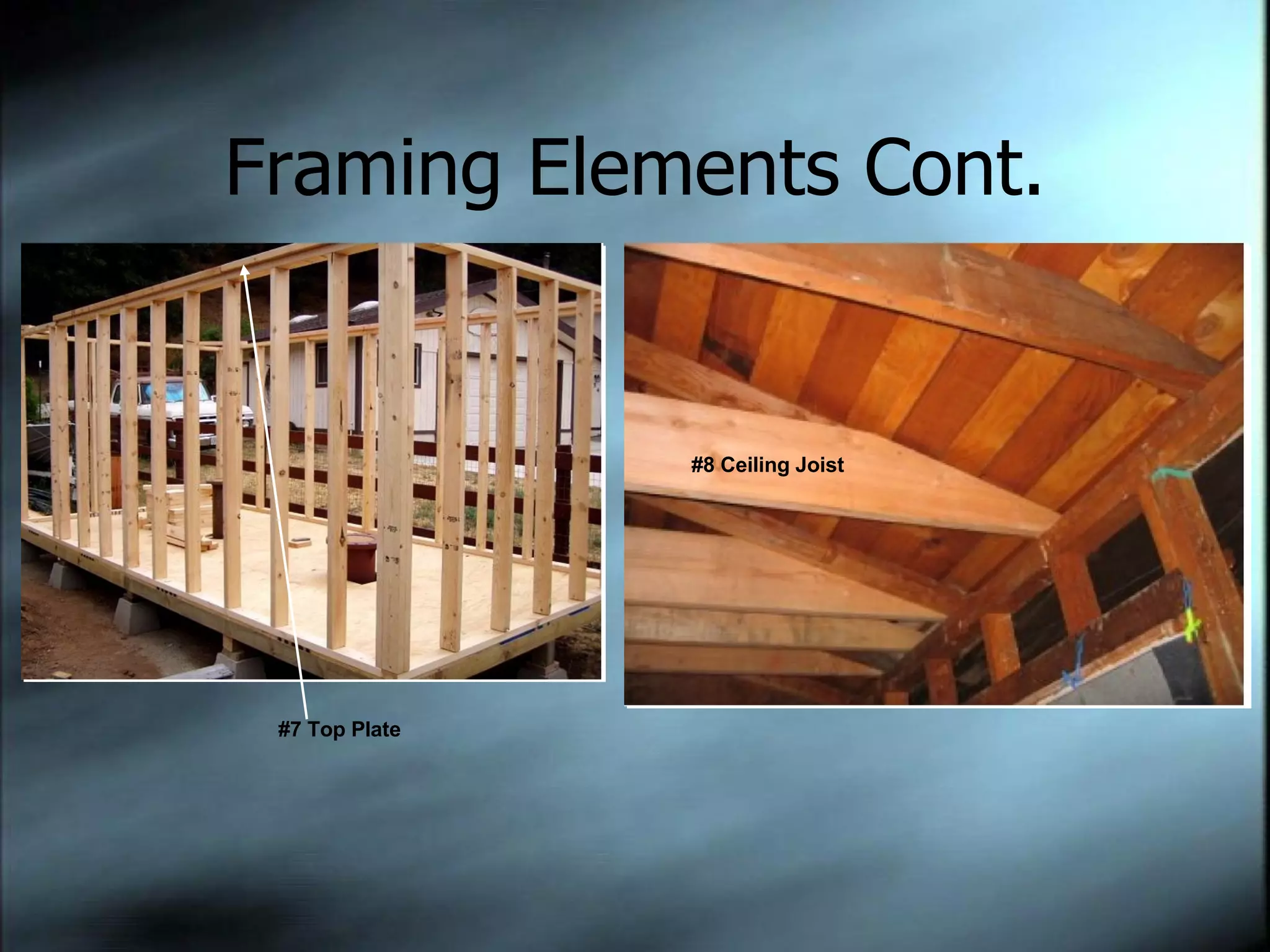
Framing Elements Cont. #7 Top Plate #8 Ceiling Joist
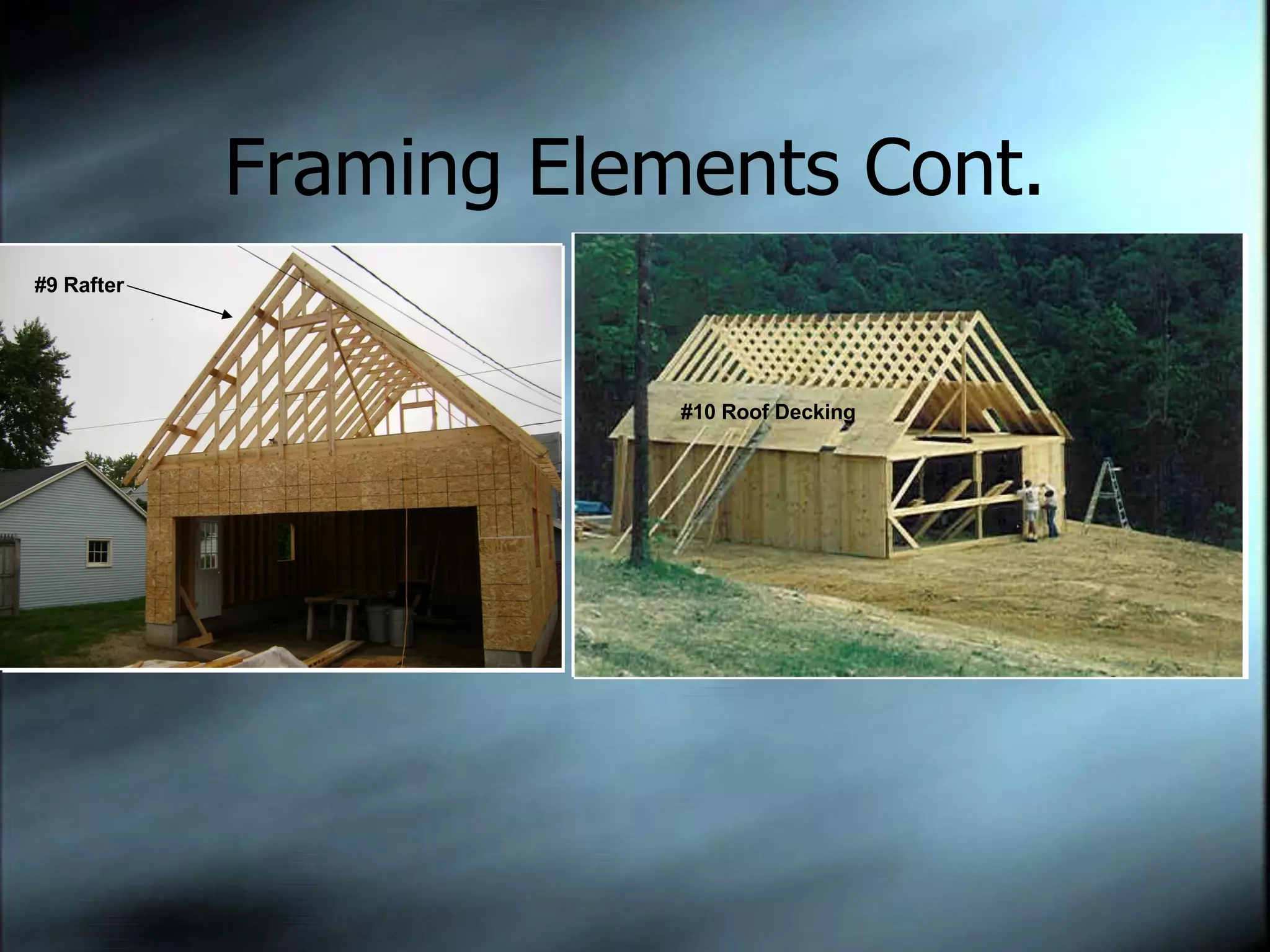
Framing Elements Cont. #9 Rafter #10 Roof Decking
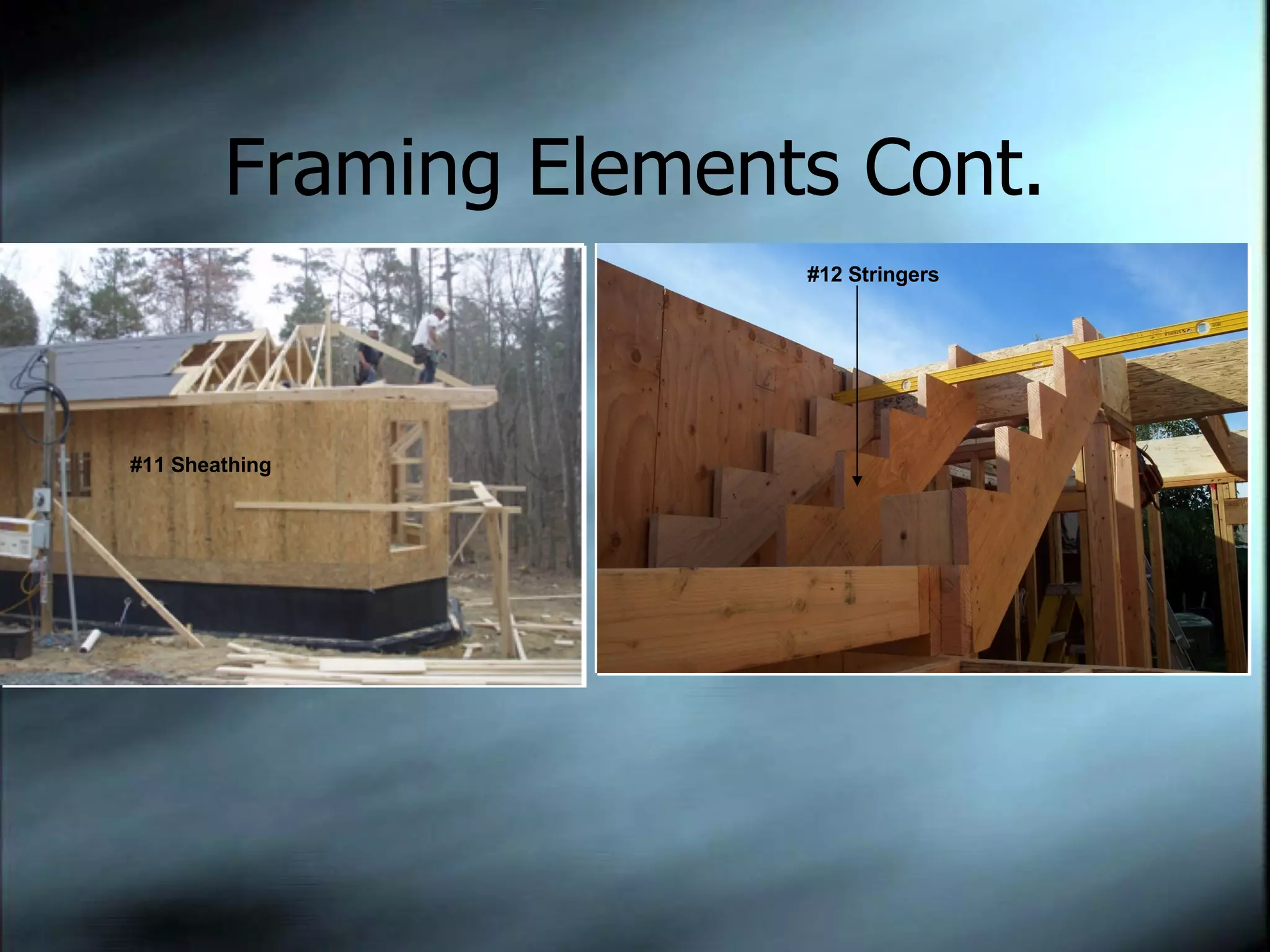
Framing Elements Cont. #11 Sheathing #12 Stringers
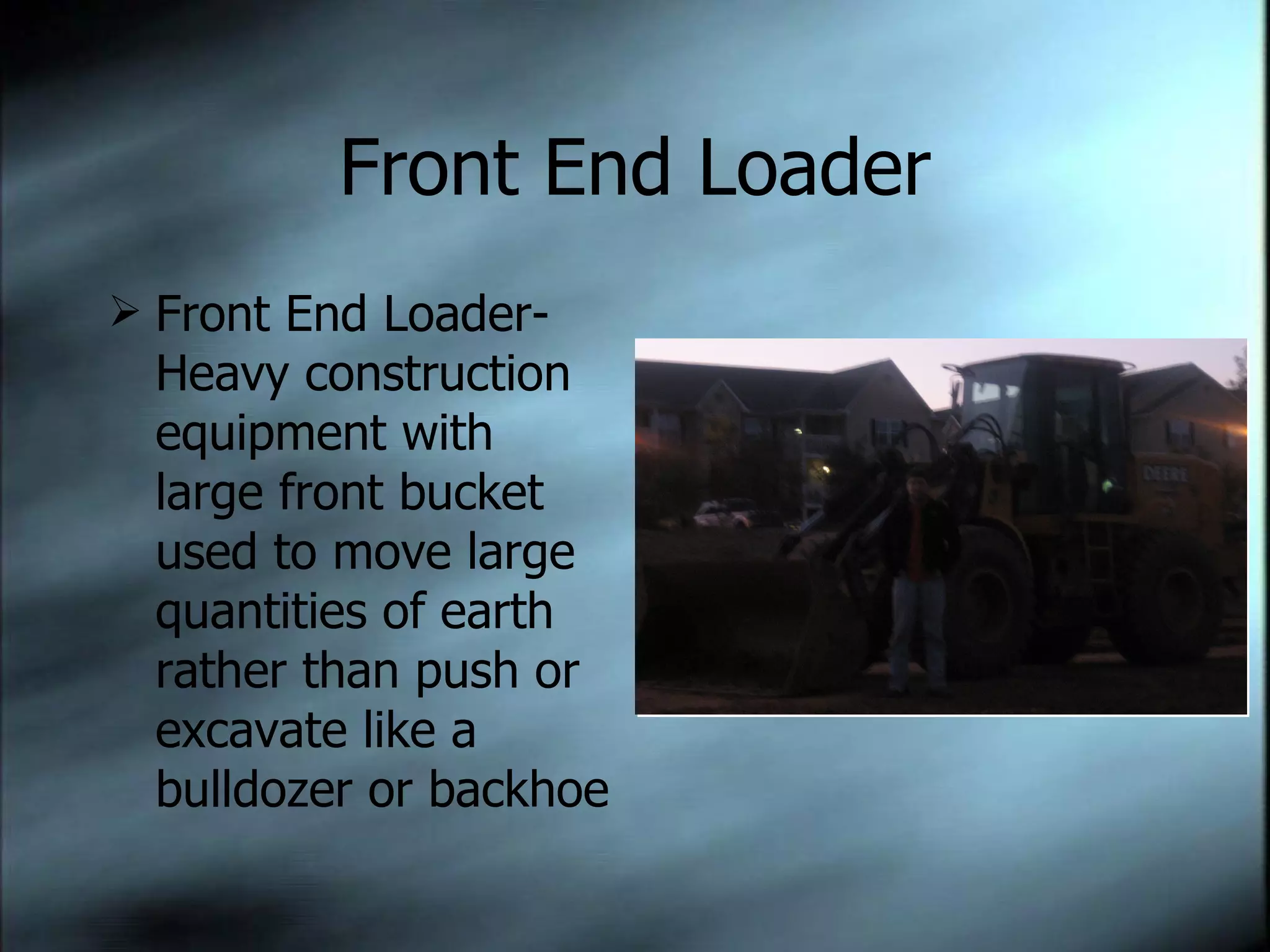
Front End Loader Front End Loader-Heavy construction equipment with large front bucket used to move large quantities of earth rather than push or excavate like a bulldozer or backhoe
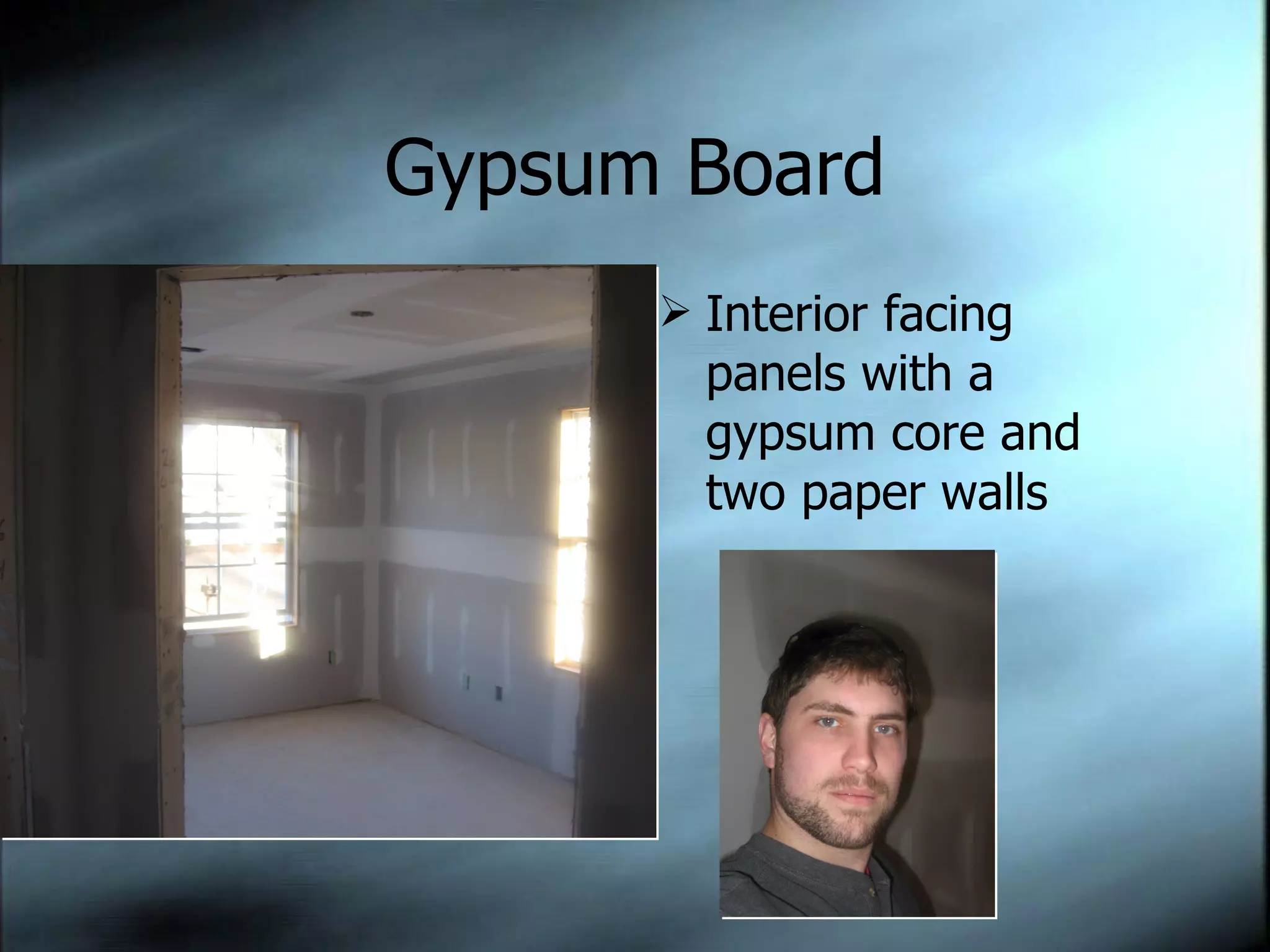
Gypsum Board Interior facing panels with a gypsum core and two paper walls
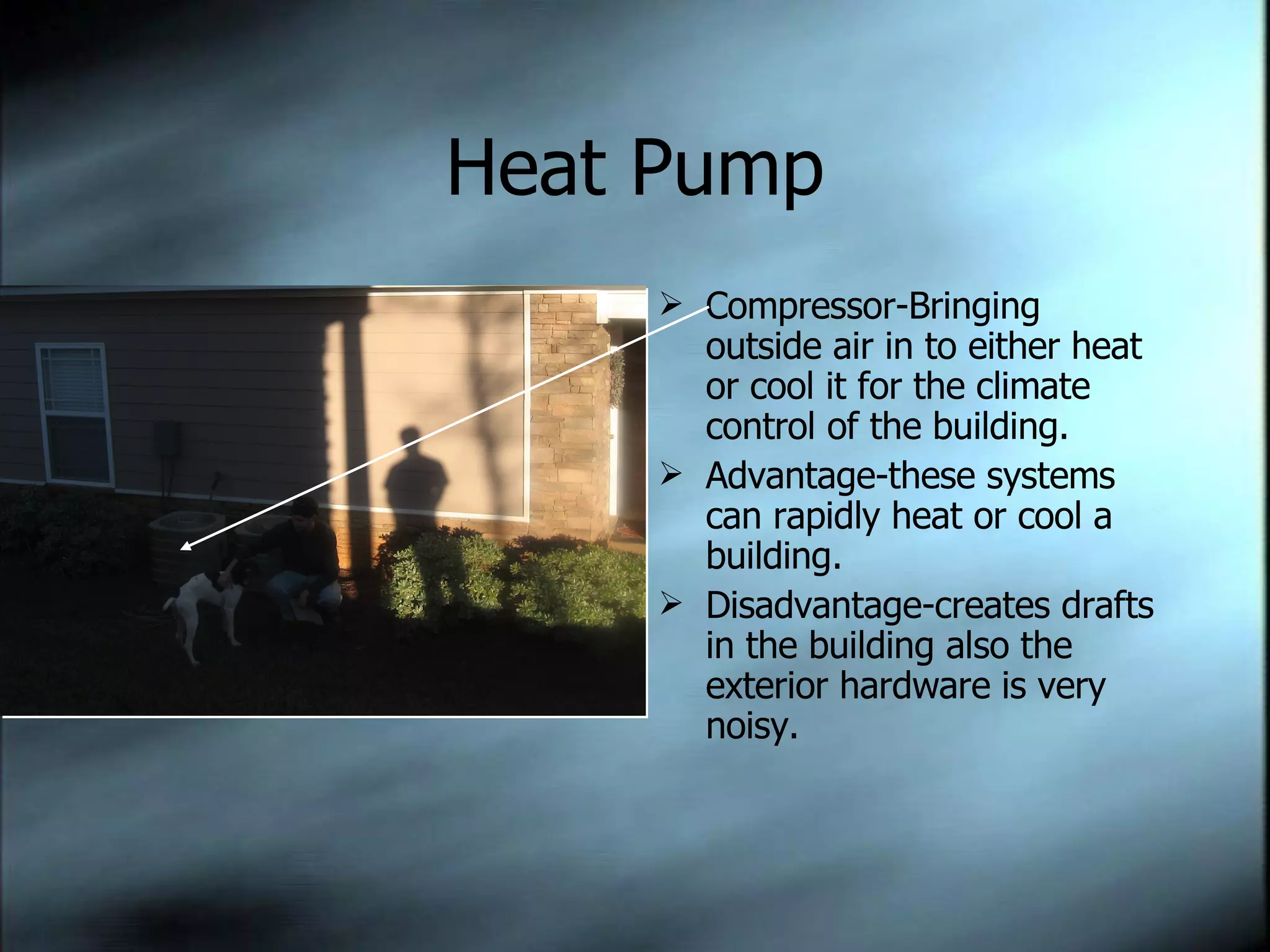
Heat Pump Compressor-Bringing outside air in to either heat or cool it for the climate control of the building. Advantage-these systems can rapidly heat or cool a building. Disadvantage-creates drafts in the building also the exterior hardware is very noisy.
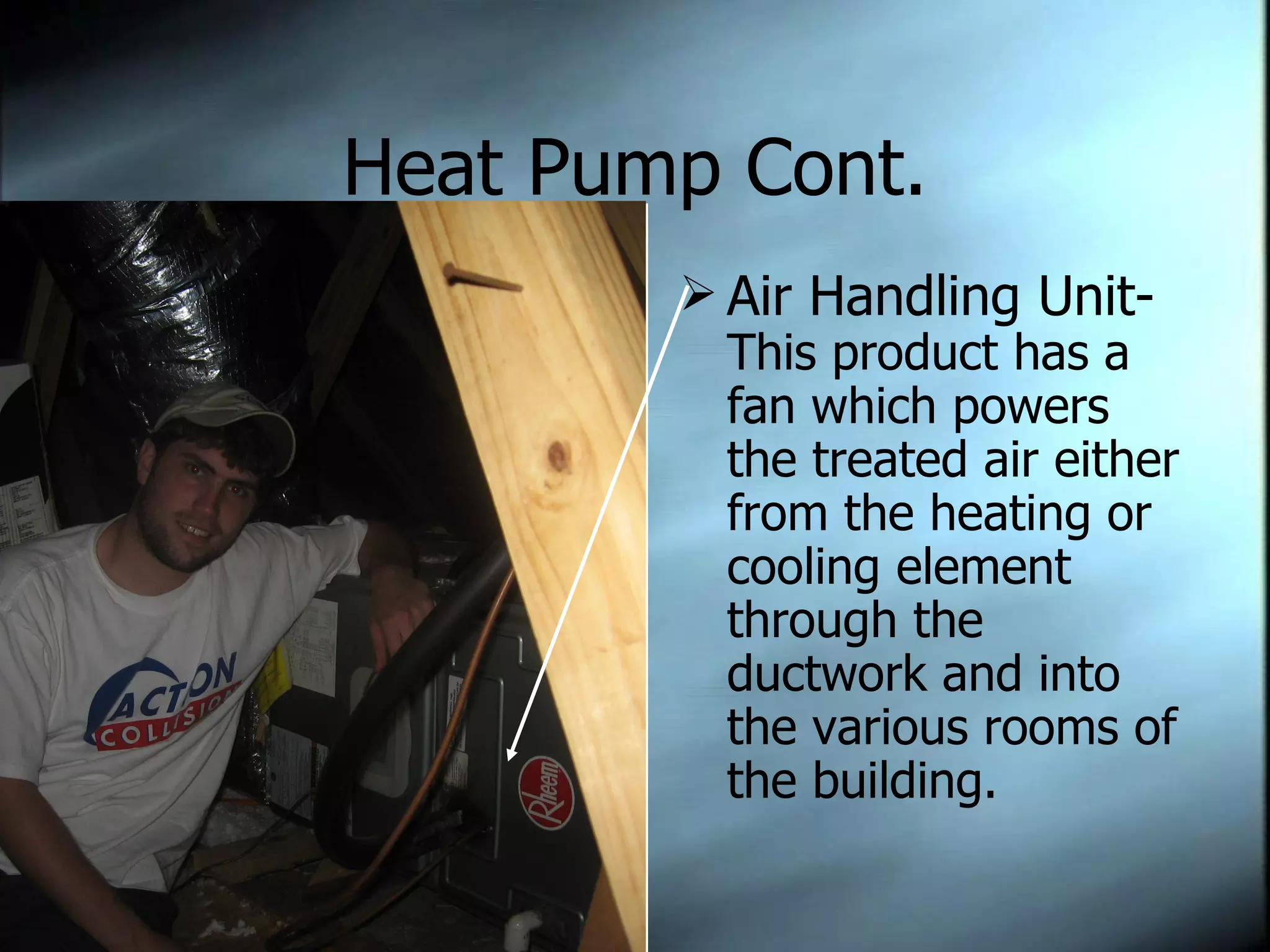
Heat Pump Cont. Air Handling Unit-  This product has a fan which powers the treated air either from the heating or cooling element through the ductwork and into the various rooms of the building.
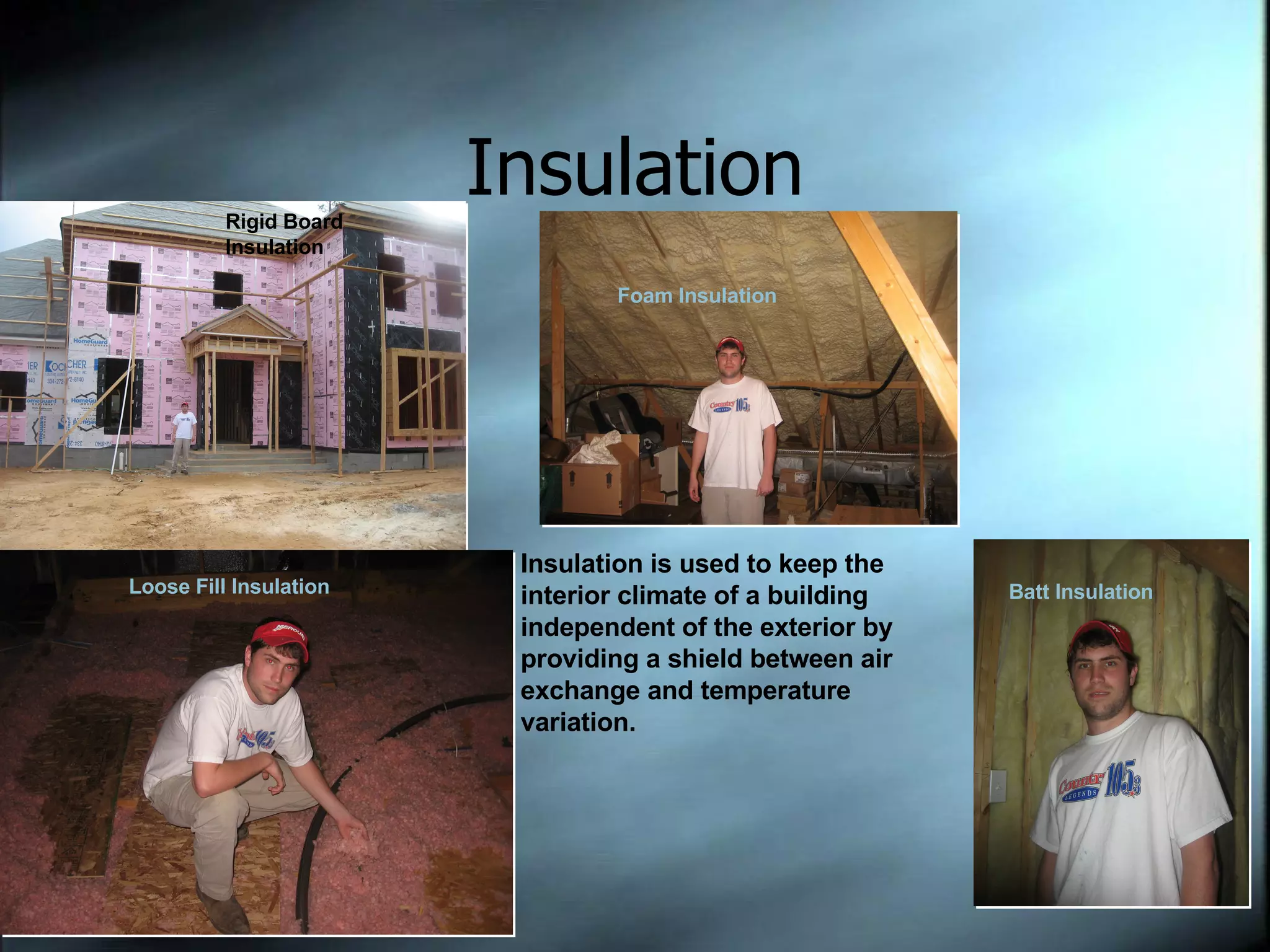
Insulation Rigid Board Insulation Foam Insulation Loose Fill Insulation Batt Insulation Insulation is used to keep the interior climate of a building independent of the exterior by providing a shield between air exchange and temperature variation.
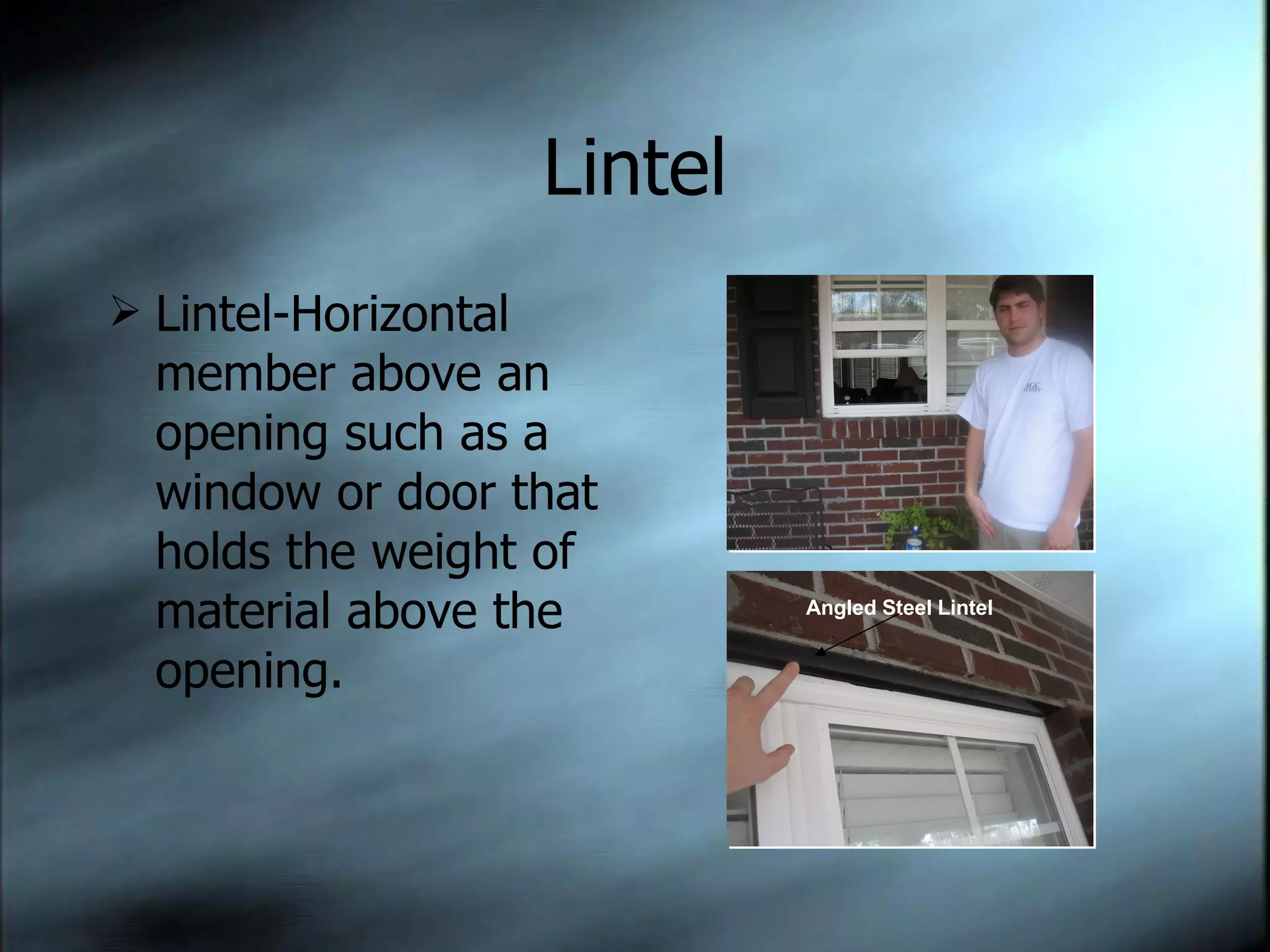
Lintel Lintel-Horizontal member above an opening such as a window or door that holds the weight of material above the opening. Angled Steel Lintel
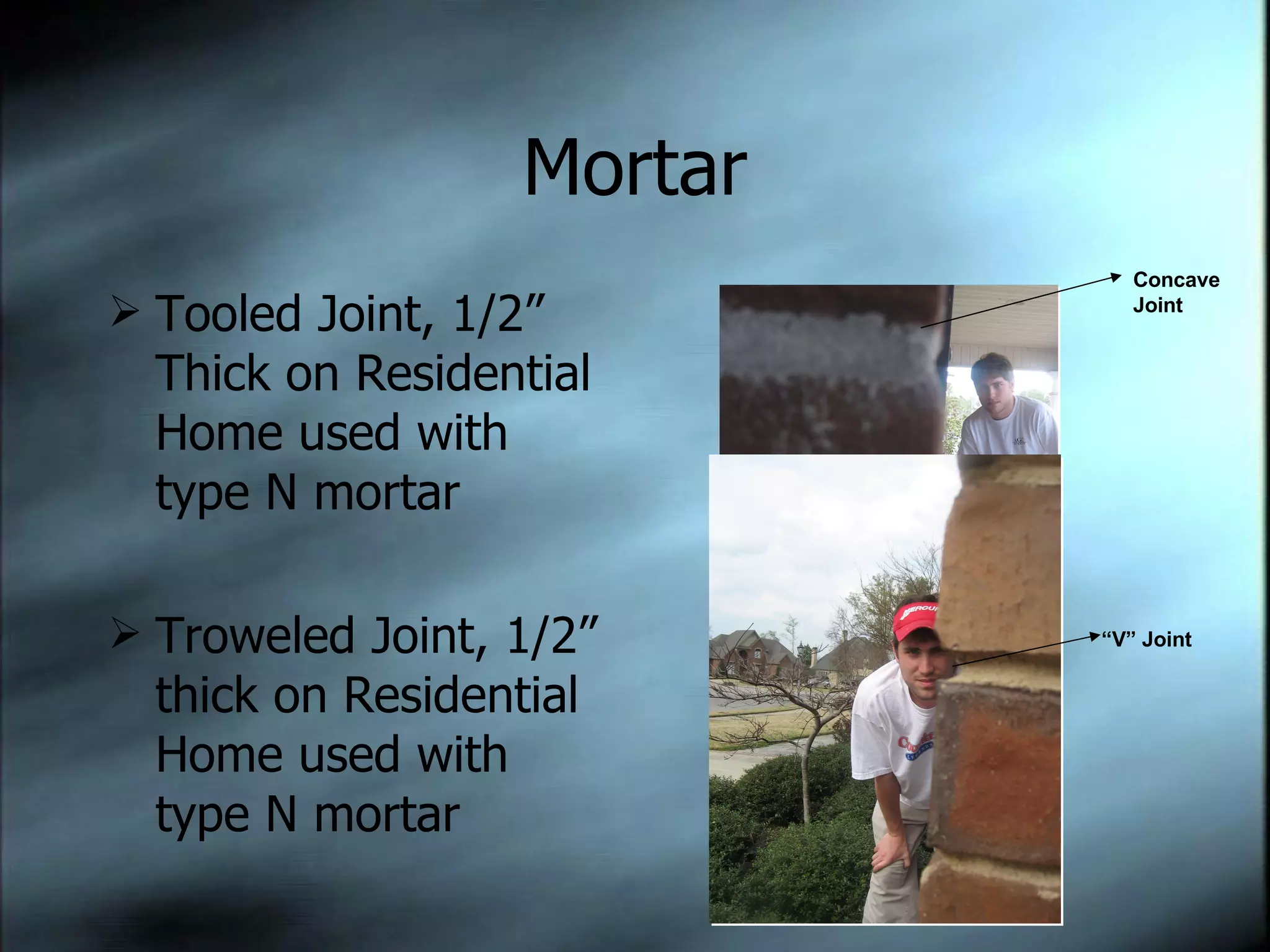
Mortar Tooled Joint, 1/2” Thick on Residential Home used with type N mortar Troweled Joint, 1/2” thick on Residential Home used with type N mortar Concave  Joint “ V” Joint
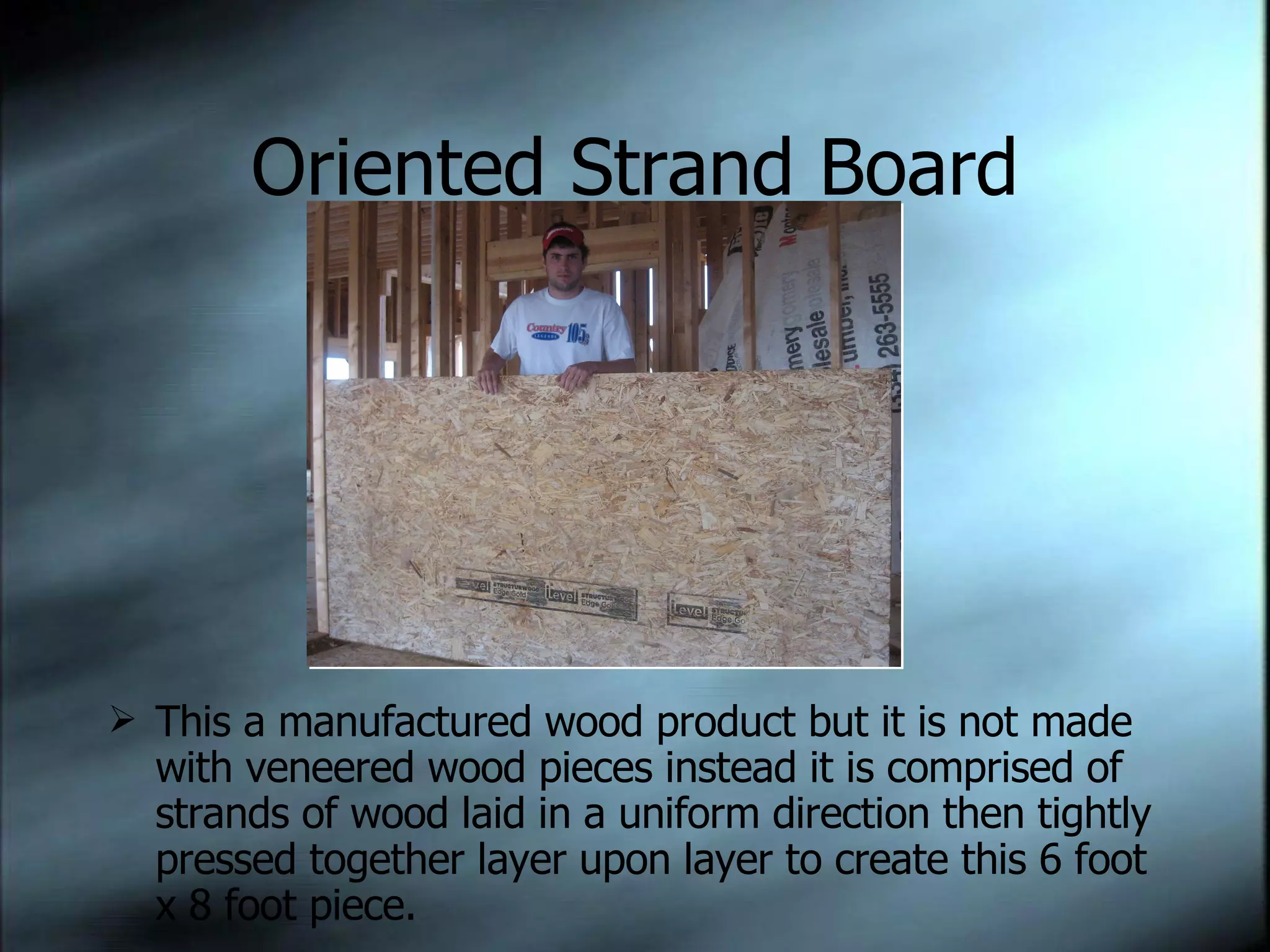
Oriented Strand Board This a manufactured wood product but it is not made with veneered wood pieces instead it is comprised of strands of wood laid in a uniform direction then tightly pressed together layer upon layer to create this 6 foot x 8 foot piece.
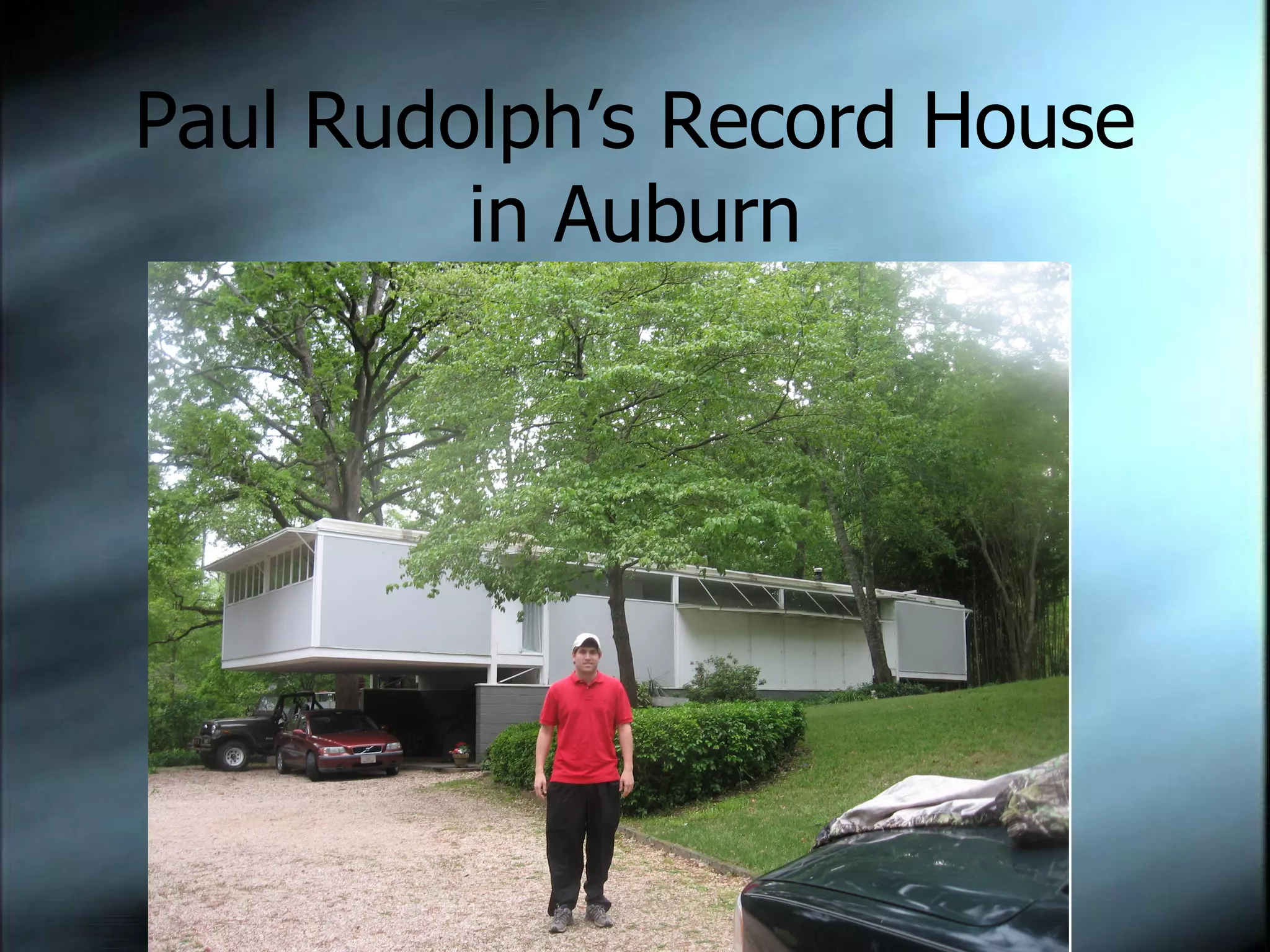
Paul Rudolph’s Record House in Auburn
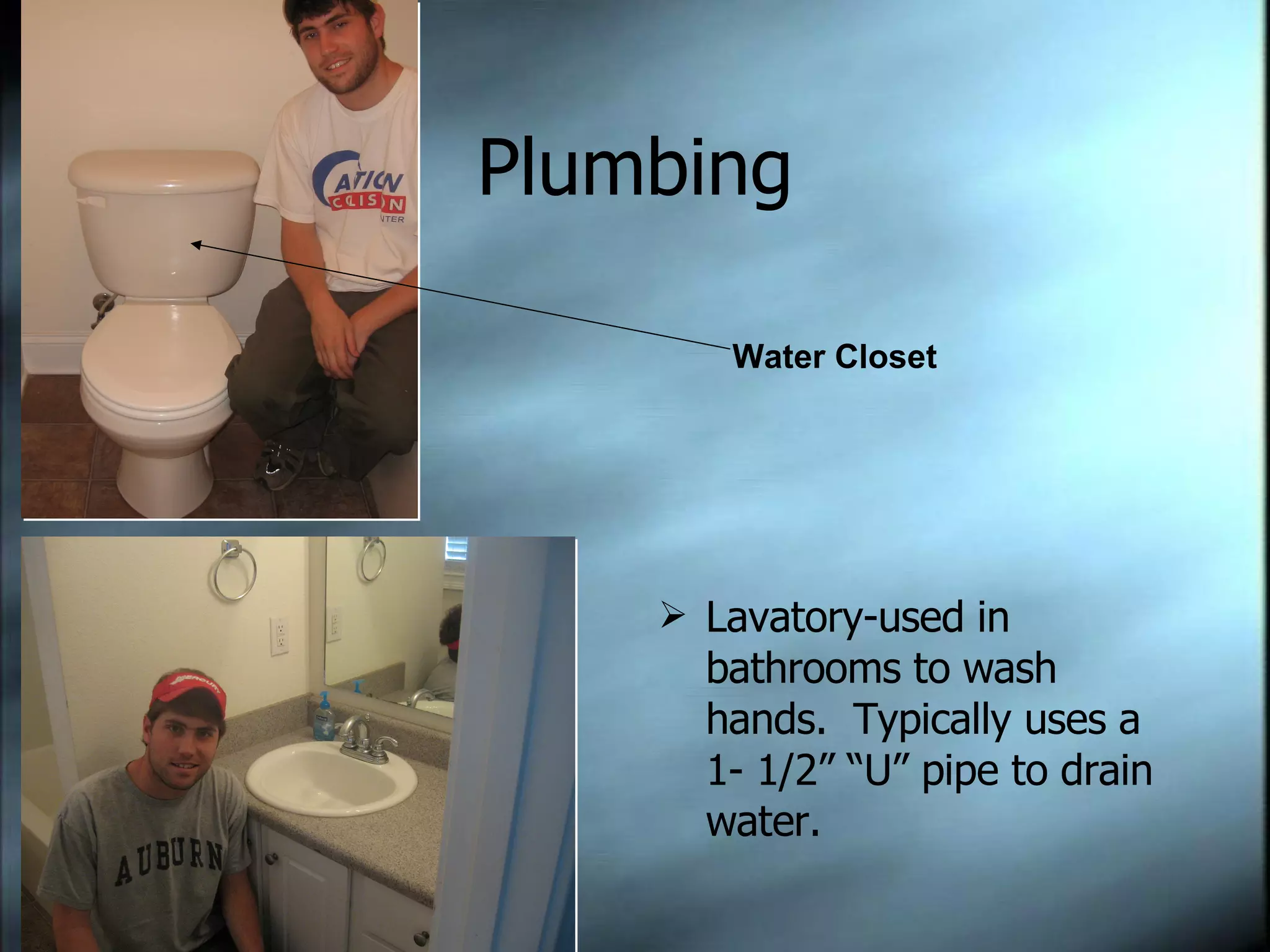
Plumbing Lavatory-used in bathrooms to wash hands.  Typically uses a 1- 1/2” “U” pipe to drain water. Water Closet
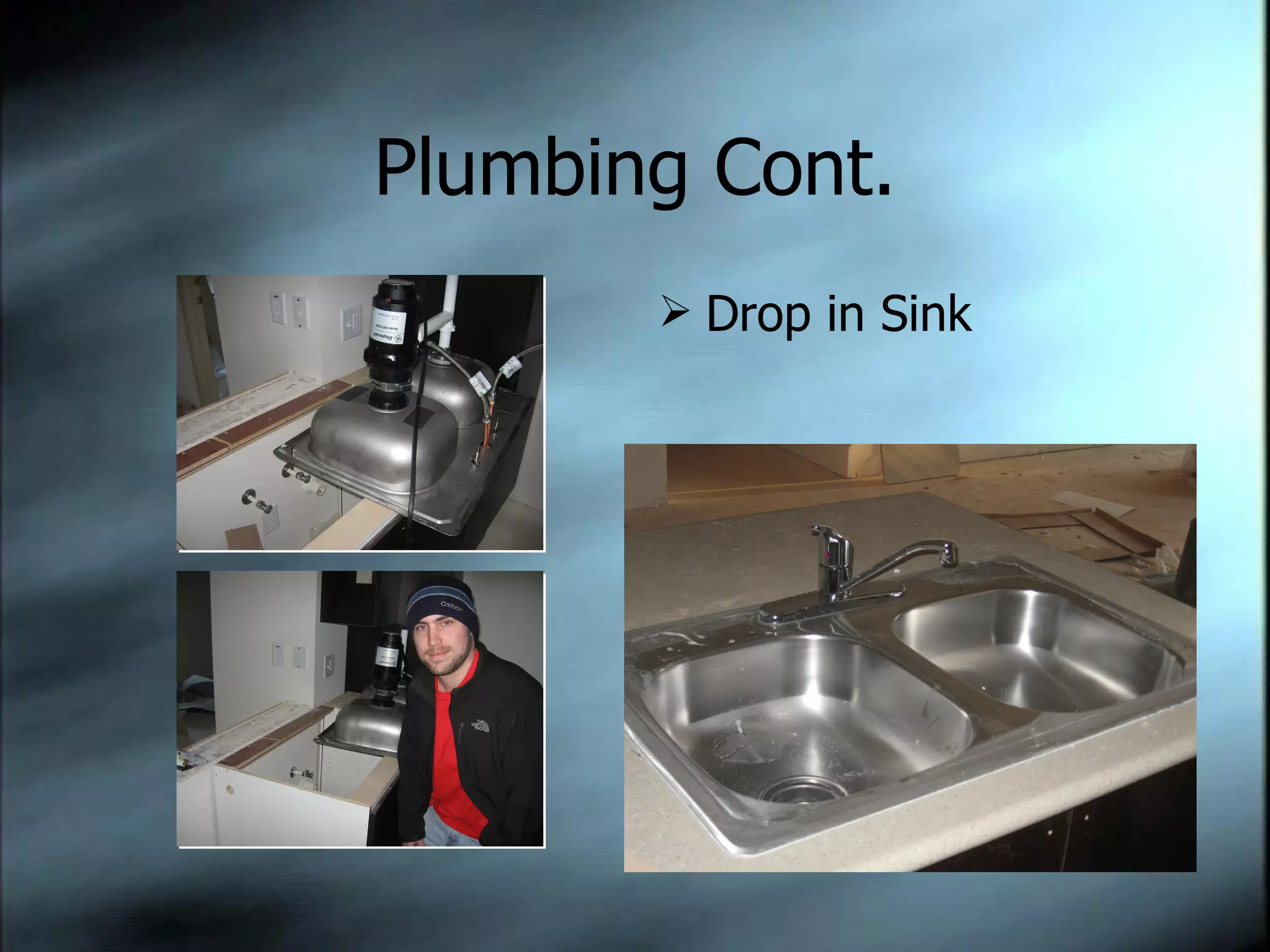
Plumbing Cont. Drop in Sink
Plumbing Cont. VTR-vent through roof is a vent that releases waste gases from the plumbing system out of the building. Framed in Manufactured Tub
Plywood Veneer-thin strips of wood sheets created by “unrolling” a log. Plywood is several veneer sheets pressed together in overlapping grains to create this 6x8 foot sheet.
Radiant Barrier Reflective foil placed in roofs or walls to protect against the passage of infrared energy.
Rebar 5/8” diameter rebar Also known as #5 The deformations help grip the concrete that it is reinforcing.
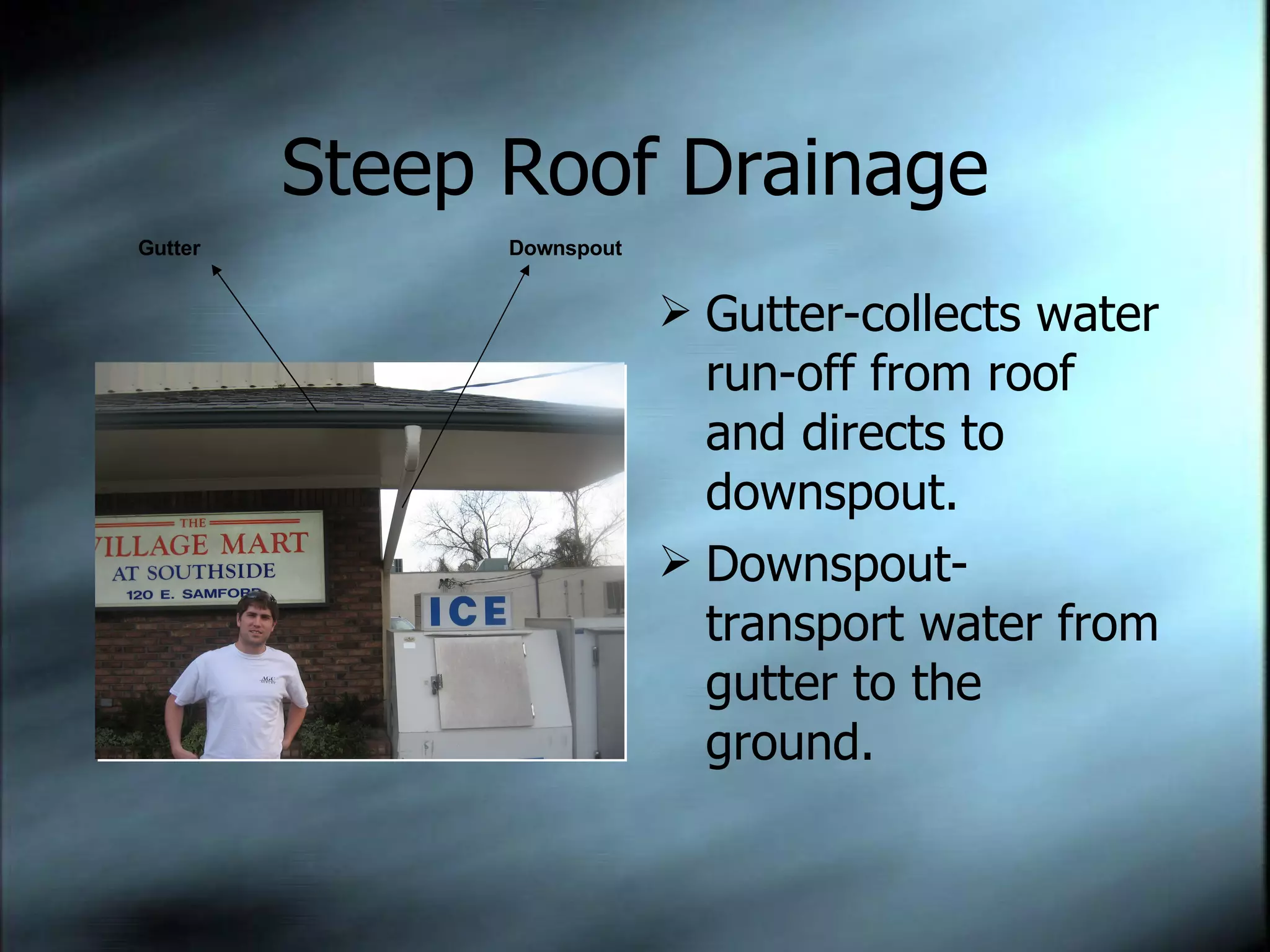
Steep Roof Drainage Gutter-collects water run-off from roof and directs to downspout. Downspout-transport water from gutter to the ground. Gutter Downspout
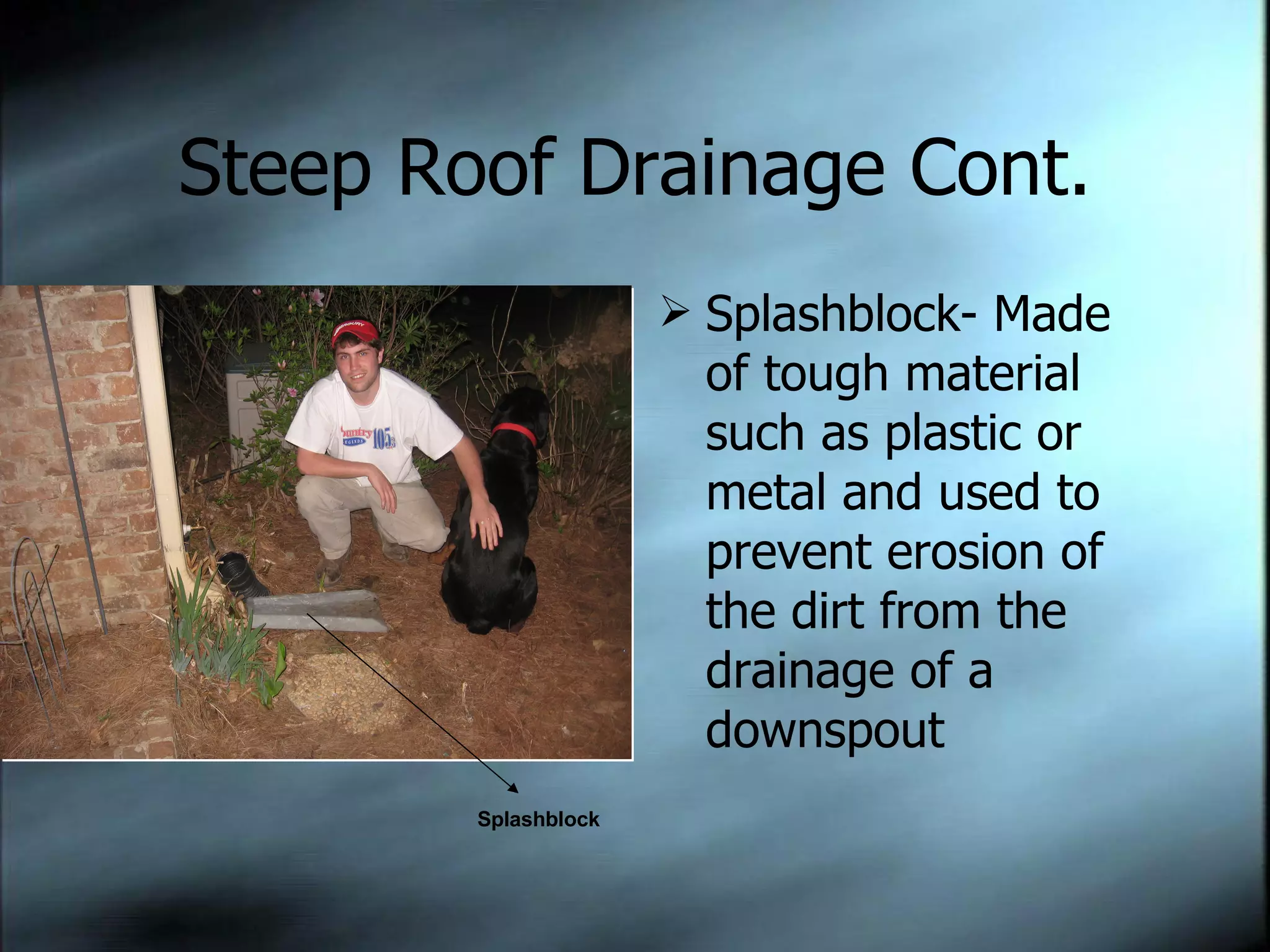
Steep Roof Drainage Cont. Splashblock- Made of tough material such as plastic or metal and used to prevent erosion of the dirt from the drainage of a downspout Splashblock
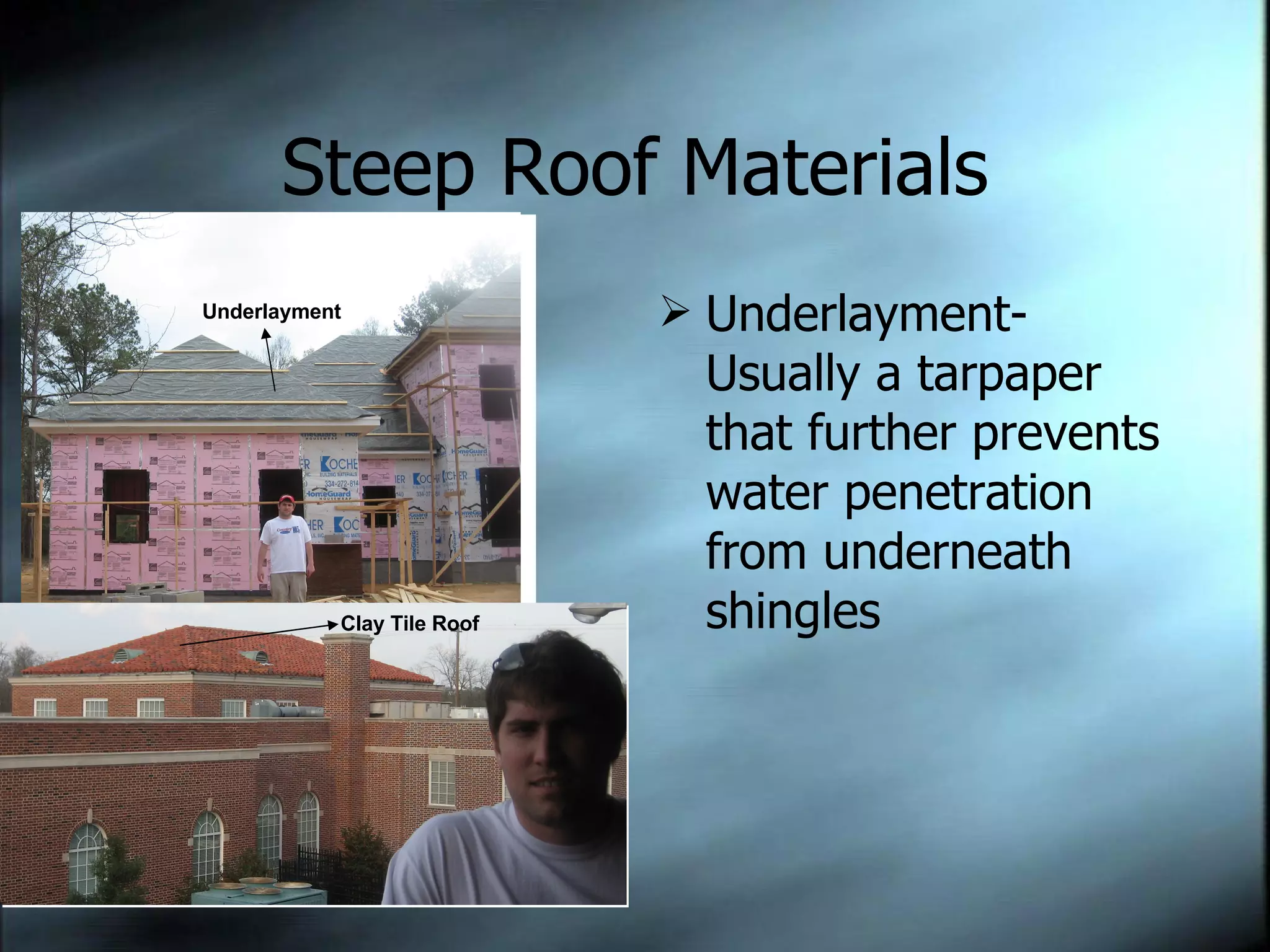
Steep Roof Materials Underlayment-Usually a tarpaper that further prevents water penetration from underneath shingles Underlayment Clay Tile Roof
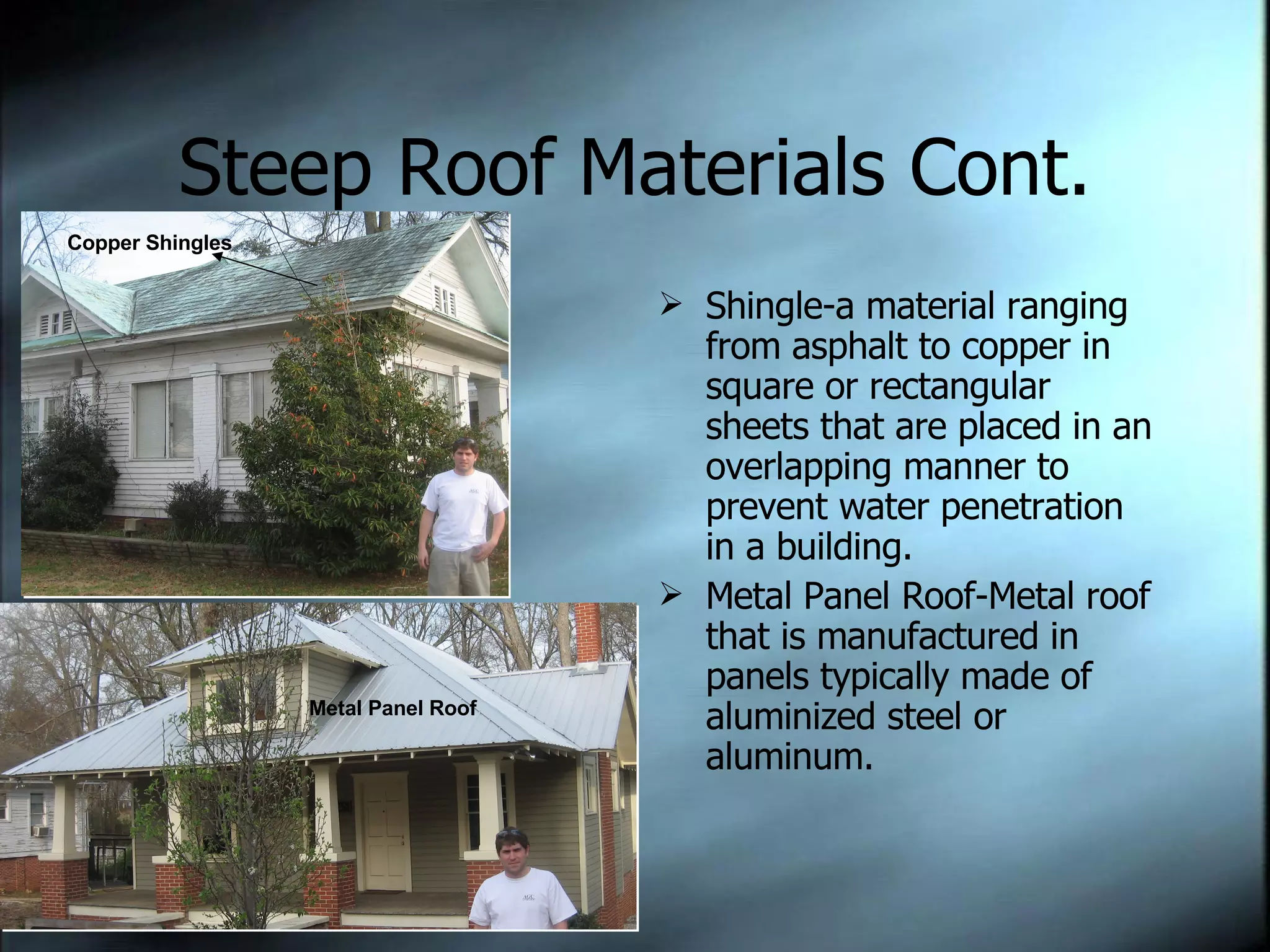
Steep Roof Materials Cont. Shingle-a material ranging from asphalt to copper in square or rectangular sheets that are placed in an overlapping manner to prevent water penetration in a building. Metal Panel Roof-Metal roof that is manufactured in panels typically made of aluminized steel or aluminum.  Copper Shingles Metal Panel Roof
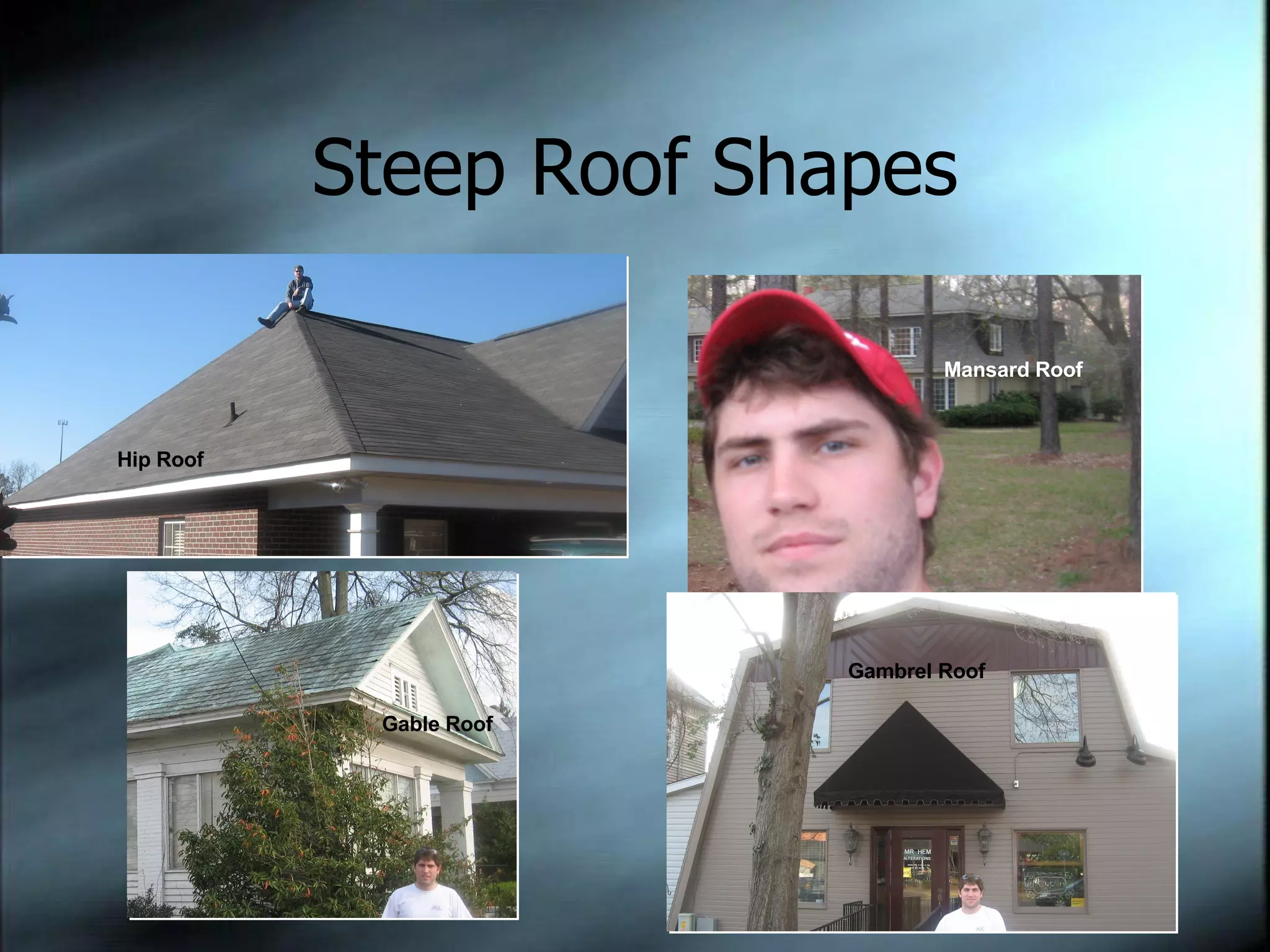
Steep Roof Shapes Hip Roof Gable Roof Mansard Roof Gambrel Roof
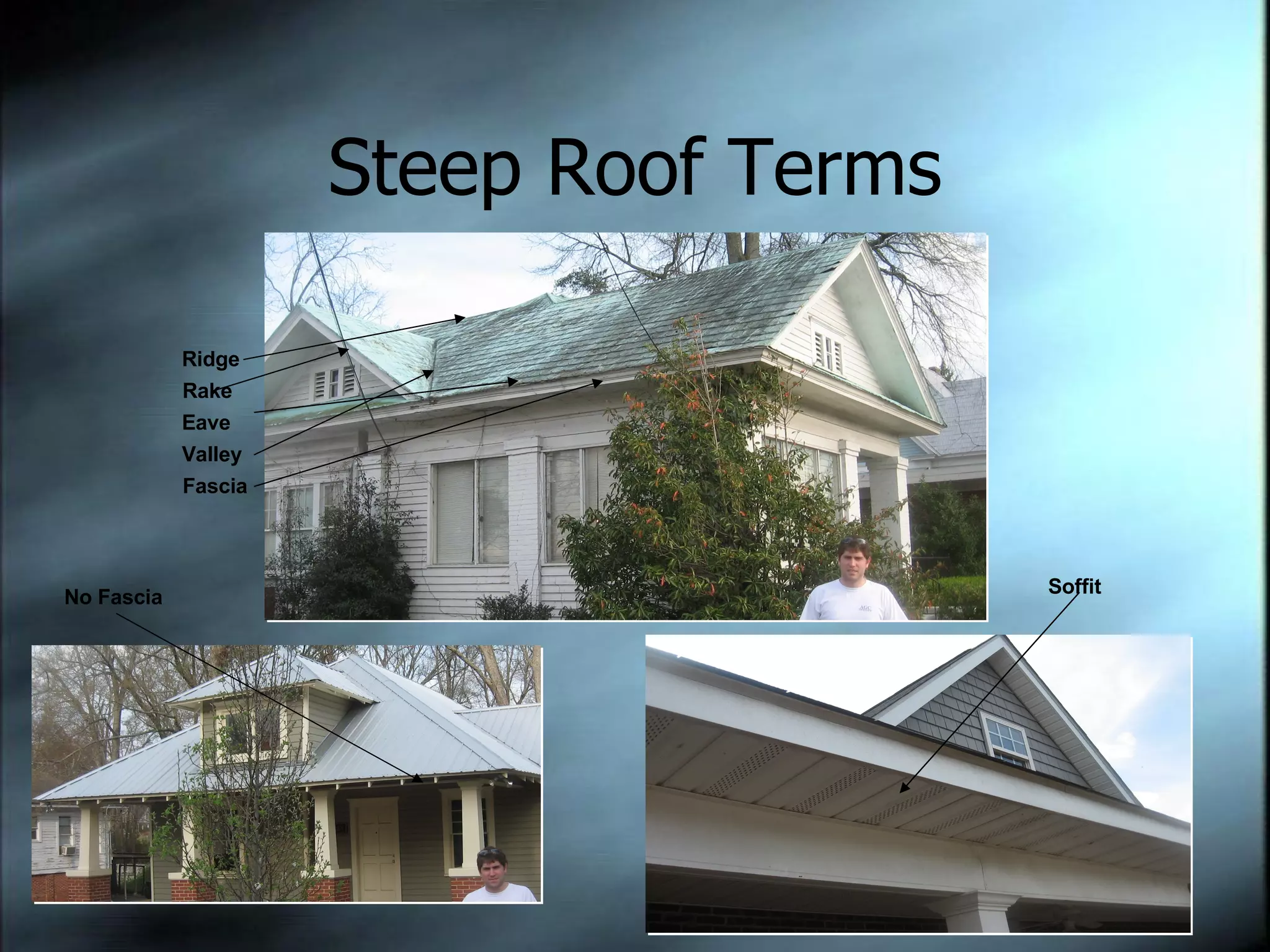
Steep Roof Terms Eave Valley Rake Fascia Ridge No Fascia Soffit
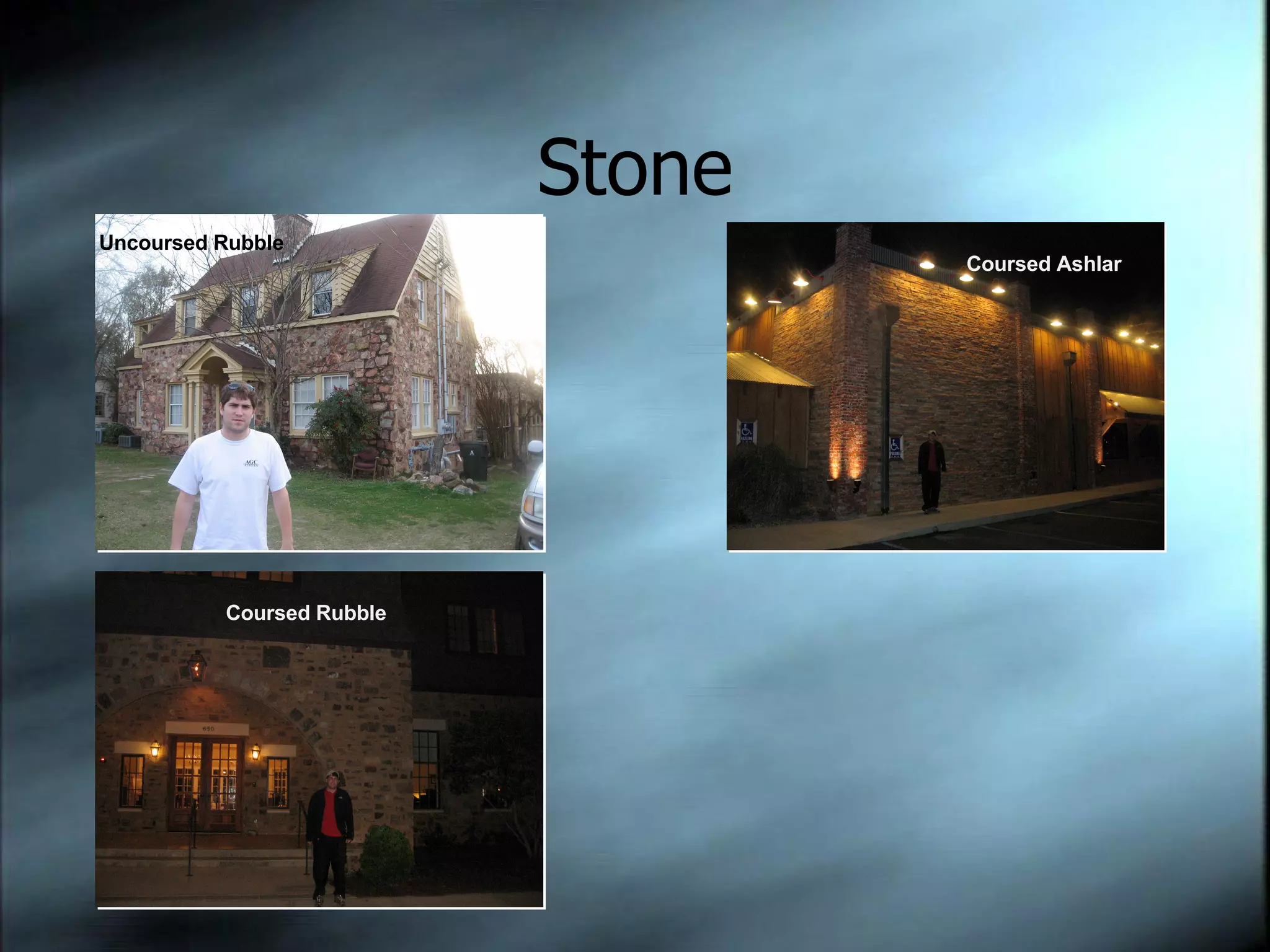
Stone Uncoursed Rubble Coursed Ashlar Coursed Rubble
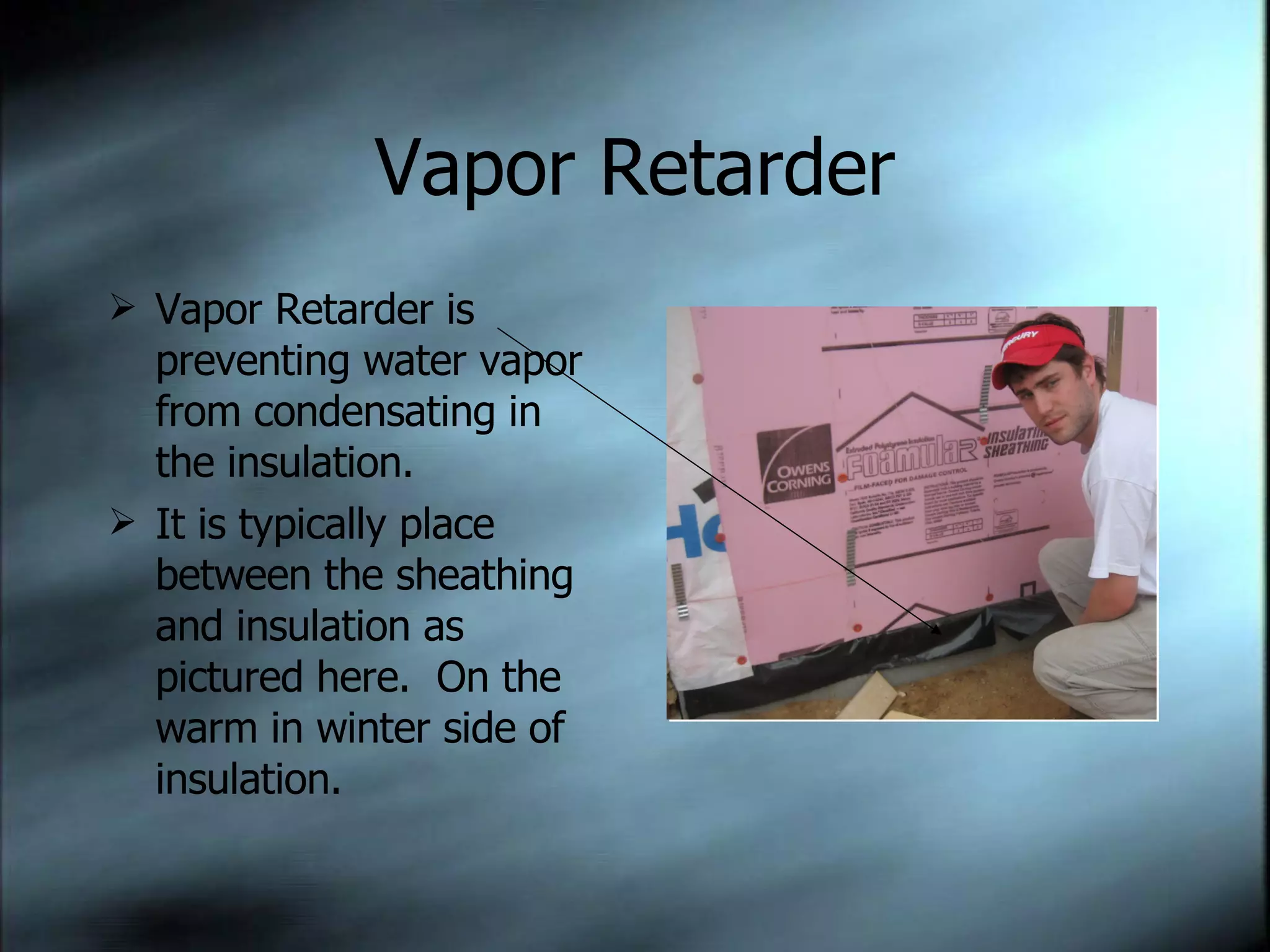
Vapor Retarder Vapor Retarder is preventing water vapor from condensating in the insulation. It is typically place between the sheathing and insulation as pictured here.  On the warm in winter side of insulation.
Waterproofing Waterproofing is typically placed on the exterior side of masonry that is below grade to prevent leaks. This is a liquid applied waterproofing.  It is typically brushed onto the masonry generously. Advantages-because it is a liquid it fills all the gaps and it has no seams like and adhesive paper or tarpaper would. Disadvantage-It is more costly than tarpaper.
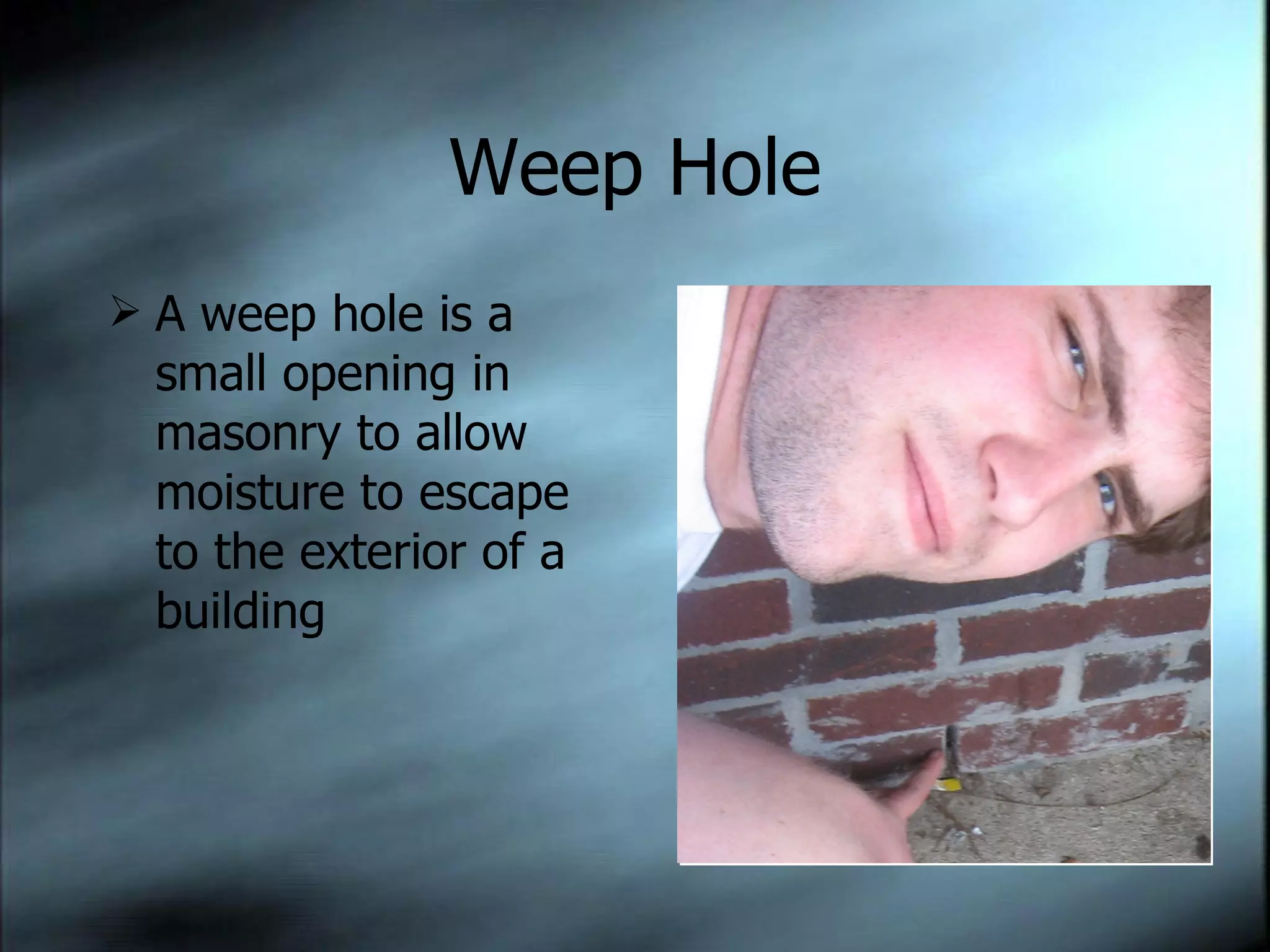
Weep Hole A weep hole is a small opening in masonry to allow moisture to escape to the exterior of a building
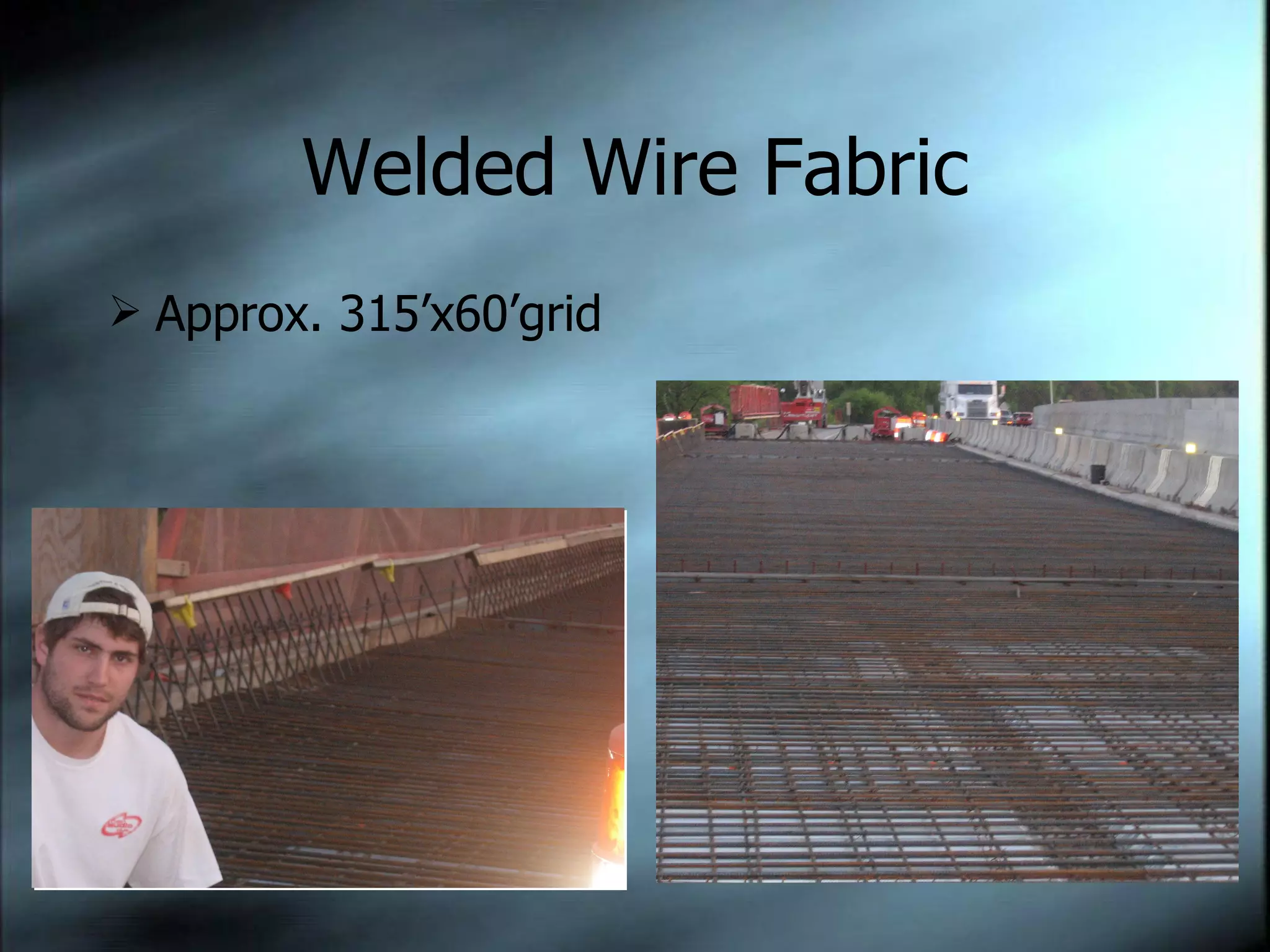
Welded Wire Fabric Approx. 315’x60’grid
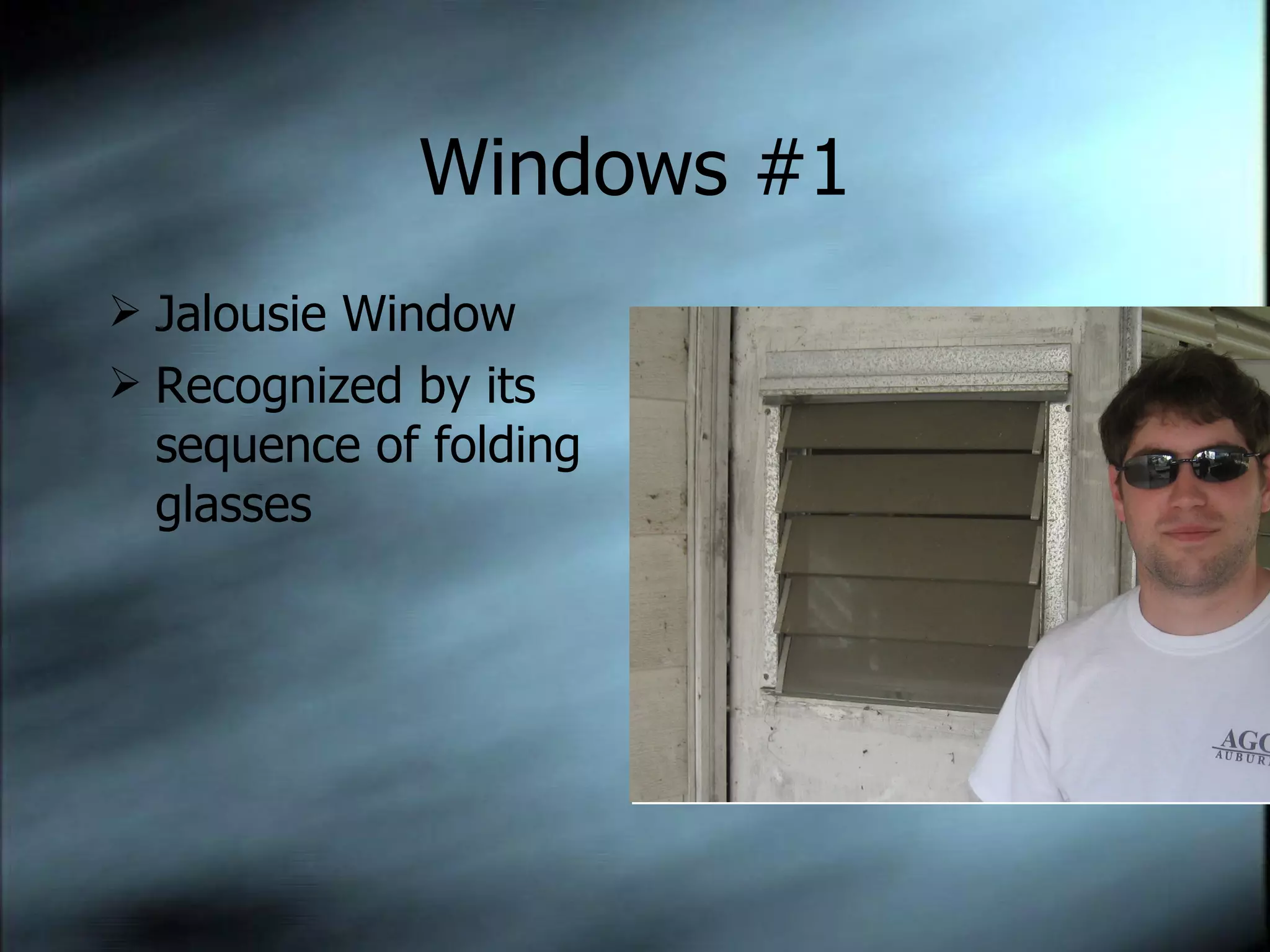
Windows #1 Jalousie Window Recognized by its sequence of folding glasses
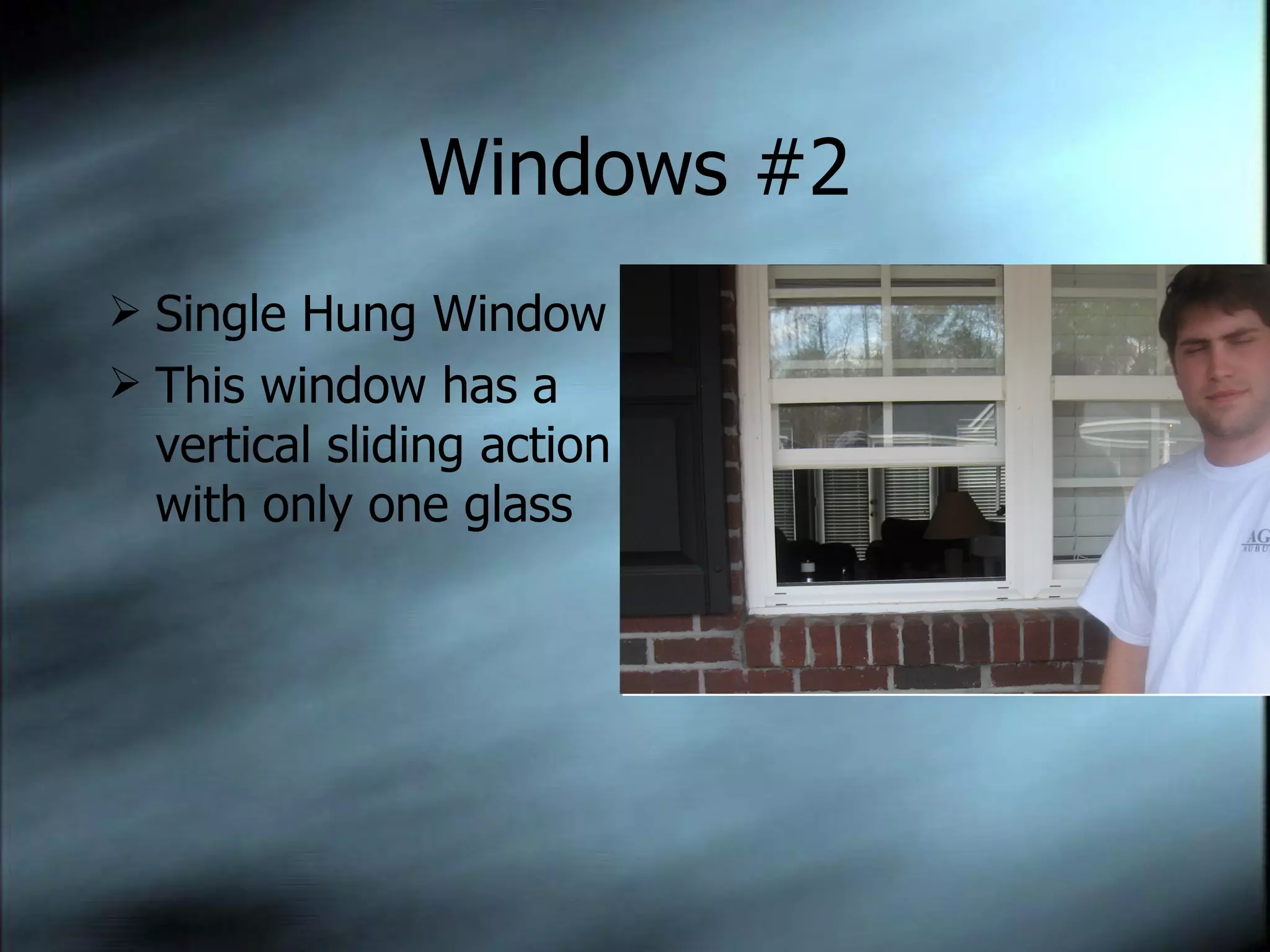
Windows #2 Single Hung Window This window has a vertical sliding action with only one glass
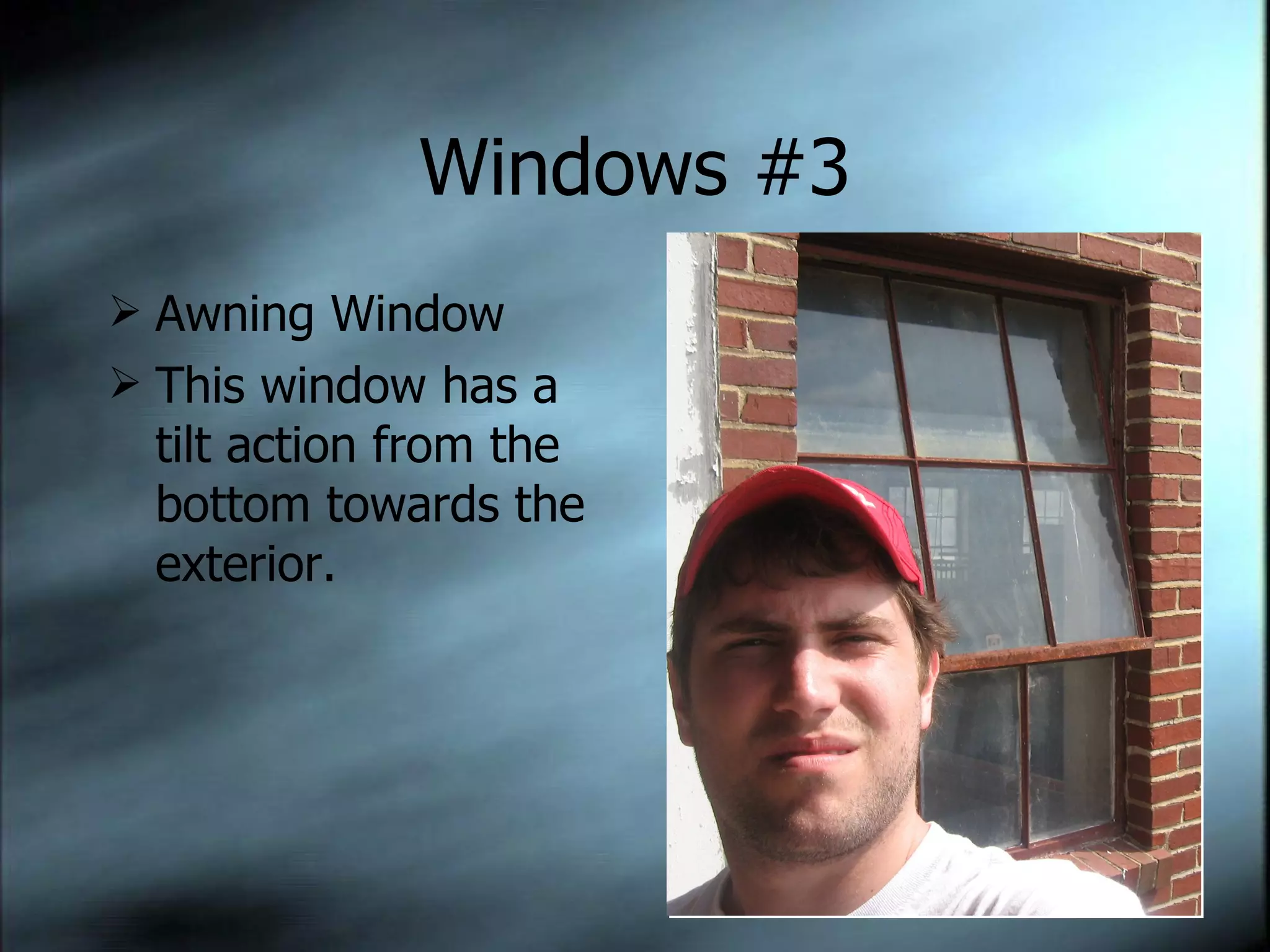
Windows #3 Awning Window This window has a tilt action from the bottom towards the exterior.

Visual Dictionary-Blocking

  • 1.
    Air Barrier PaperWhite polyolefin wrap that prevents air infiltration into the building. This helps reduce the air-change per hour of the building
  • 2.
    Attic Ventilation Soffitvent Ridge Vent Gable Vent Roof Turbine Soffit vent allows air flow into attic but prevents insects and other animals. The Gable and Ridge vent are used to expell air from the attic while keeping pests out as well The roof turbine exhausts hot air from the attic.
  • 3.
  • 4.
    Backhoe A pieceof excavating equipment consisting of an arm with digging bucket usually mounted on the rear of a front end loader. This picture shows a 24 inch bucket Used for trenching and other sitework on a construction site. Backhoe End
  • 5.
    Batter Boards Temporaryframe erected on the corners of an excavation. Used to lay out foundation plane lines with twine or other guides.
  • 6.
    Brick Arches RomanArch Parabolic Arch Arch with Keystone
  • 7.
    Brick Arches Cont.Centering -Support for an arch prior to its completion. It is used to hold up the bricks until the keystone can be placed to hold the weight. In this case the centering (a steel angle) has been left underneathe the arch instead of being removed like a true arch.
  • 8.
    Brick Bonds RunningBond-stretchers are laid next to each other and the head joints are centered on the bricks in the courses above and below them Flemish Bond-Pattern of stretcher and header with the header centered on the stretcher on the courses above and below it. Running Bond Flemish Bond
  • 9.
    Brick Bonds Cont.Rowlocks Soldiers Headers Headers Sailors Sailors
  • 10.
    Brick Bonds Cont.Rowlock Stretcher
  • 11.
    Brick Sizes ModularBrick 2 1/4 x 7 5/8 x 3 5/8 Norman Cored Brick 2-1/4 x 3-1/2 x 11-5/8
  • 12.
    Bulldozer Heavy pieceof construction equipment with a blade used to push large quantities of earth to desired positions
  • 13.
    Cladding Brick CladStructure EFIS Clad Structure Stone Cladding Un-coursed Rubble Wood Board Clad Structure
  • 14.
    Cladding Cont. WoodShingle Wood Shingles- Purposely cut pieces of wood used in an overlapping manner to create shingles. Wood Shake-Pieces of wood that are simply split which gives it a rougher texture than wood shingles.
  • 15.
    Code Requirements Egresswindow code requirements: Area-5.7 sq. ft. (min.) Width-20 inches (min.) Height-24 inches(min.) Sill height-44 inches (max.) Shown window meets requirements. 22” 35” Wide 30” Tall
  • 16.
    Code Requirements Cont.Stairs shown meet requirements 2(riser height)+tread width=25 or 24 inches Tread Width should=12 or 13 inches Code Requirements- Rise-7.5 inches (max.) Run-10 inches (min.) This stair does meet code Rise-6 inches Run-12 3/8 inches
  • 17.
    Concrete Joints IsolationJoint-A crease that separates load bearing concrete from other concrete. Here a column foundation is isolated from a slab on grade. Control Joint-Crack or crease purposely put in concrete to control cracking as concrete shrinks.
  • 18.
    Concrete Masonry Unit3 Brick courses Equal one CMU course 4” 8” Concrete Masonry Unit (CMU)-preformed concrete blocks with nominal dimensions of 8”x8”x16” which typically used for foundations, retaining walls, and load bearing as well as non-load bearing walls in commercial construction. Decorative CMU-Ribbed Face Unit 1 CMU=3 Brick Courses
  • 19.
    Decorative Concrete MasonryUnits Ribbed Split Faced Block Split Block
  • 20.
    Doors Exterior FlushDoor Top Rail Stile Panel Lock Rail Bottom Rail Transom Sidelight
  • 21.
    Electrical Components Undergroundtransformer box-This unit is used to step down underground high-voltage lines to low voltage that can be used by a building. Service Head-accepts incoming wires while preventing moisture from entering the conduit. Underground Transformer Box Service Head
  • 22.
    Electrical Components Cont.Service Meter-used to measure the amount of electricity used by the building. Service Panel-divides electrical service needs into separate sections for the building. Service panel Service Meter
  • 23.
    Electrical Components Cont.Duplex Receptacle-used as common electrical outlet for all appliance needs. Duplex Receptacle
  • 24.
    Framing Elements #1Anchor Bolts #2 Sill Plate
  • 25.
    Framing Elements Cont.#3 Floor Joists #4 Subflooring
  • 26.
    Framing Elements Cont.#5 Sole Plate #6 Studs
  • 27.
    Framing Elements Cont.#7 Top Plate #8 Ceiling Joist
  • 28.
    Framing Elements Cont.#9 Rafter #10 Roof Decking
  • 29.
    Framing Elements Cont.#11 Sheathing #12 Stringers
  • 30.
    Front End LoaderFront End Loader-Heavy construction equipment with large front bucket used to move large quantities of earth rather than push or excavate like a bulldozer or backhoe
  • 31.
    Gypsum Board Interiorfacing panels with a gypsum core and two paper walls
  • 32.
    Heat Pump Compressor-Bringingoutside air in to either heat or cool it for the climate control of the building. Advantage-these systems can rapidly heat or cool a building. Disadvantage-creates drafts in the building also the exterior hardware is very noisy.
  • 33.
    Heat Pump Cont.Air Handling Unit- This product has a fan which powers the treated air either from the heating or cooling element through the ductwork and into the various rooms of the building.
  • 34.
    Insulation Rigid BoardInsulation Foam Insulation Loose Fill Insulation Batt Insulation Insulation is used to keep the interior climate of a building independent of the exterior by providing a shield between air exchange and temperature variation.
  • 35.
    Lintel Lintel-Horizontal memberabove an opening such as a window or door that holds the weight of material above the opening. Angled Steel Lintel
  • 36.
    Mortar Tooled Joint,1/2” Thick on Residential Home used with type N mortar Troweled Joint, 1/2” thick on Residential Home used with type N mortar Concave Joint “ V” Joint
  • 37.
    Oriented Strand BoardThis a manufactured wood product but it is not made with veneered wood pieces instead it is comprised of strands of wood laid in a uniform direction then tightly pressed together layer upon layer to create this 6 foot x 8 foot piece.
  • 38.
    Paul Rudolph’s RecordHouse in Auburn
  • 39.
    Plumbing Lavatory-used inbathrooms to wash hands. Typically uses a 1- 1/2” “U” pipe to drain water. Water Closet
  • 40.
  • 41.
    Plumbing Cont. VTR-ventthrough roof is a vent that releases waste gases from the plumbing system out of the building. Framed in Manufactured Tub
  • 42.
    Plywood Veneer-thin stripsof wood sheets created by “unrolling” a log. Plywood is several veneer sheets pressed together in overlapping grains to create this 6x8 foot sheet.
  • 43.
    Radiant Barrier Reflectivefoil placed in roofs or walls to protect against the passage of infrared energy.
  • 44.
    Rebar 5/8” diameterrebar Also known as #5 The deformations help grip the concrete that it is reinforcing.
  • 45.
    Steep Roof DrainageGutter-collects water run-off from roof and directs to downspout. Downspout-transport water from gutter to the ground. Gutter Downspout
  • 46.
    Steep Roof DrainageCont. Splashblock- Made of tough material such as plastic or metal and used to prevent erosion of the dirt from the drainage of a downspout Splashblock
  • 47.
    Steep Roof MaterialsUnderlayment-Usually a tarpaper that further prevents water penetration from underneath shingles Underlayment Clay Tile Roof
  • 48.
    Steep Roof MaterialsCont. Shingle-a material ranging from asphalt to copper in square or rectangular sheets that are placed in an overlapping manner to prevent water penetration in a building. Metal Panel Roof-Metal roof that is manufactured in panels typically made of aluminized steel or aluminum. Copper Shingles Metal Panel Roof
  • 49.
    Steep Roof ShapesHip Roof Gable Roof Mansard Roof Gambrel Roof
  • 50.
    Steep Roof TermsEave Valley Rake Fascia Ridge No Fascia Soffit
  • 51.
    Stone Uncoursed RubbleCoursed Ashlar Coursed Rubble
  • 52.
    Vapor Retarder VaporRetarder is preventing water vapor from condensating in the insulation. It is typically place between the sheathing and insulation as pictured here. On the warm in winter side of insulation.
  • 53.
    Waterproofing Waterproofing istypically placed on the exterior side of masonry that is below grade to prevent leaks. This is a liquid applied waterproofing. It is typically brushed onto the masonry generously. Advantages-because it is a liquid it fills all the gaps and it has no seams like and adhesive paper or tarpaper would. Disadvantage-It is more costly than tarpaper.
  • 54.
    Weep Hole Aweep hole is a small opening in masonry to allow moisture to escape to the exterior of a building
  • 55.
    Welded Wire FabricApprox. 315’x60’grid
  • 56.
    Windows #1 JalousieWindow Recognized by its sequence of folding glasses
  • 57.
    Windows #2 SingleHung Window This window has a vertical sliding action with only one glass
  • 58.
    Windows #3 AwningWindow This window has a tilt action from the bottom towards the exterior.