Visual DictionaryBSCI 2300April 26, 2010
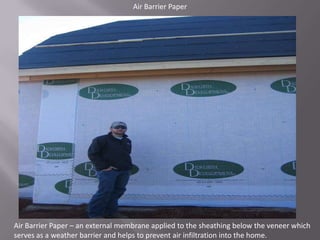
Air Barrier PaperAir Barrier Paper – an external membrane applied to the sheathing below the veneer which serves as a weather barrier and helps to prevent air infiltration into the home.
Attic VentilationAttic Ventilation – Serves to allow water vapor to escape and to allow the hot attic air to escape by providing an intake at the eaves through the soffit vents which allows the warmer air to escape through the roof vents.
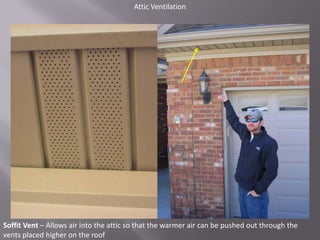
Attic VentilationSoffit Vent – Allows air into the attic so that the warmer air can be pushed out through the vents placed higher on the roof
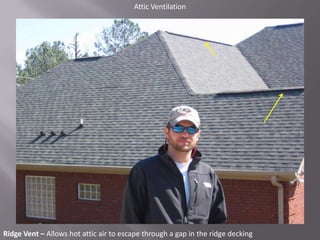
Attic VentilationRidge Vent – Allows hot attic air to escape through a gap in the ridge decking
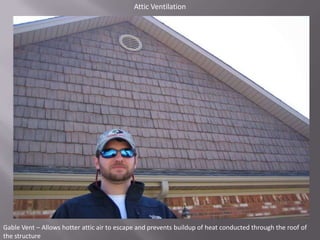
Attic VentilationGable Vent – Allows hotter attic air to escape and prevents buildup of heat conducted through the roof of the structure
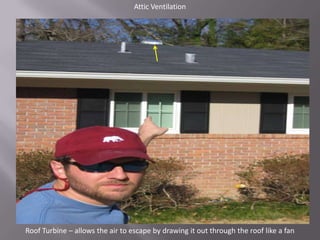
Attic VentilationRoof Turbine – allows the air to escape by drawing it out through the roof like a fan
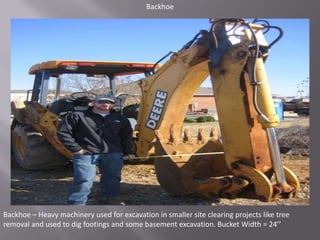
BackhoeBackhoe – Heavy machinery used for excavation in smaller site clearing projects like tree removal and used to dig footings and some basement excavation. Bucket Width = 24’’
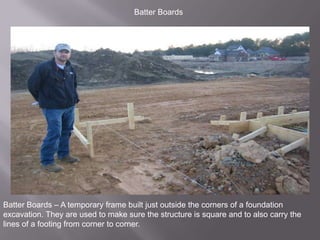
Batter BoardsBatter Boards – A temporary frame built just outside the corners of a foundation excavation. They are used to make sure the structure is square and to also carry the lines of a footing from corner to corner.
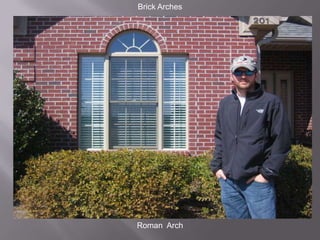
Brick ArchesRoman  Arch
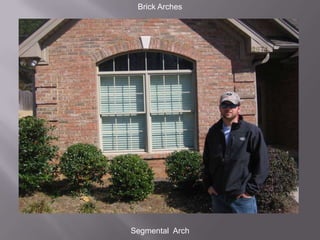
Brick ArchesSegmental  Arch
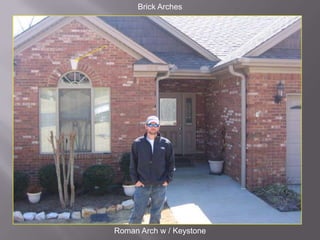
Brick ArchesRoman Arch w / Keystone
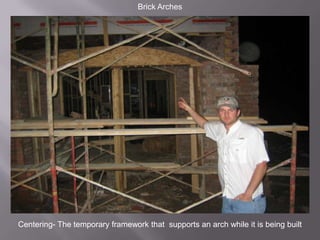
Brick ArchesCentering- The temporary framework that  supports an arch while it is being built
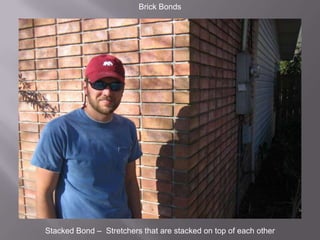
Brick BondsStacked Bond –  Stretchers that are stacked on top of each other
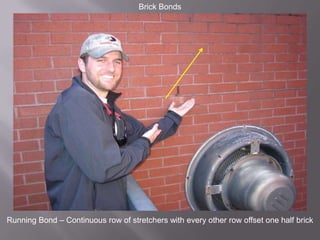
Brick BondsRunning Bond – Continuous row of stretchers with every other row offset one half brick
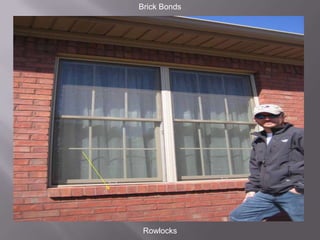
Brick BondsRowlocks
Brick BondsHeaders
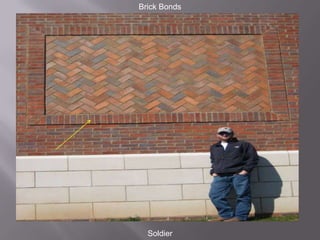
Brick BondsSoldier
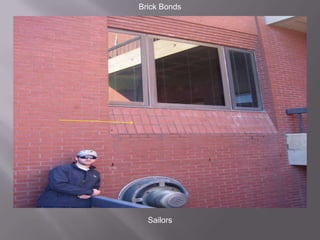
Brick BondsSailors
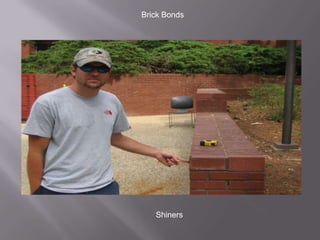
Brick BondsShiners
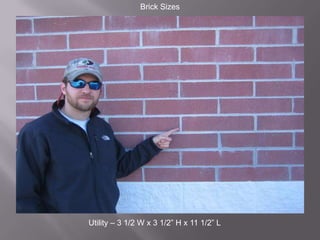
Brick SizesUtility – 3 1/2 Wx 3 1/2” Hx 11 1/2” L
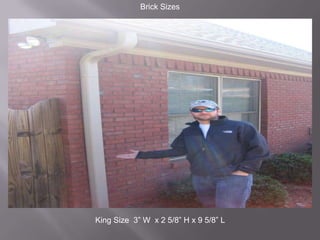
Brick SizesKing Size  3” W  x 2 5/8” Hx 9 5/8” L
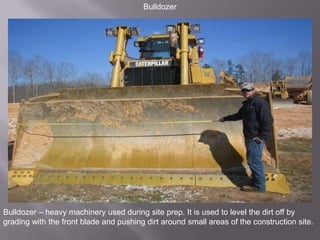
BulldozerBulldozer – heavy machinery used during site prep. It is used to level the dirt off by grading with the front blade and pushing dirt around small areas of the construction site.
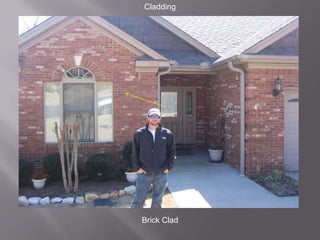
CladdingBrick Clad
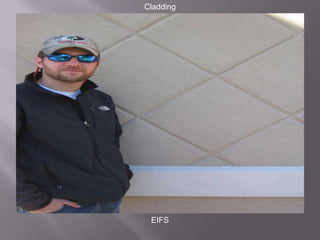
CladdingEIFS
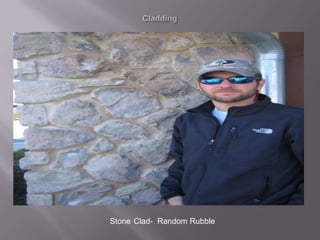
CladdingStoneClad-  Random Rubble
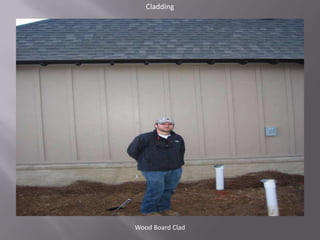
CladdingWood Board Clad
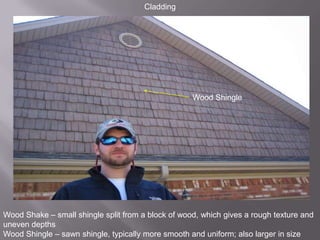
CladdingWood ShingleWood Shake – small shingle split from a block of wood, which gives a rough texture and uneven depthsWood Shingle – sawn shingle, typically more smooth and uniform; also larger in size
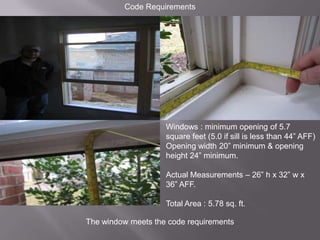
Code RequirementsWindows : minimum opening of 5.7 square feet (5.0 if sill is less than 44” AFF)Opening width 20” minimum & opening height 24” minimum.Actual Measurements – 26” h x 32” w x 36” AFF.Total Area : 5.78 sq. ft.The window meets the code requirements
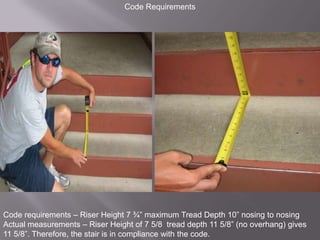
Code RequirementsCode requirements – Riser Height 7 ¾” maximum Tread Depth 10” nosing to nosingActual measurements – Riser Height of 7 5/8  tread depth 11 5/8” (no overhang) gives 11 5/8”. Therefore, the stair is in compliance with the code.
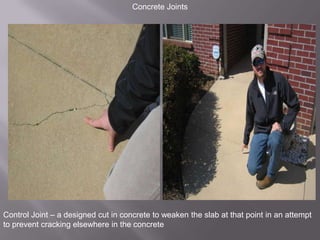
Concrete JointsControl Joint – a designed cut in concrete to weaken the slab at that point in an attempt to prevent cracking elsewhere in the concrete
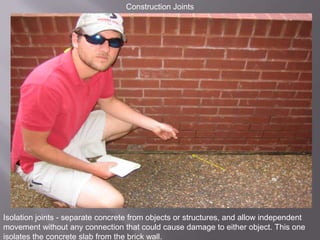
Construction JointsIsolation joints - separate concrete from objects or structures, and allow independent movement without any connection that could cause damage to either object. This one isolates the concrete slab from the brick wall.
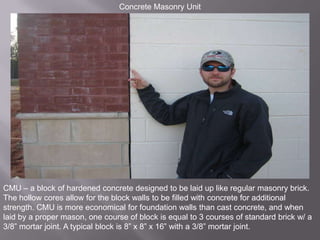
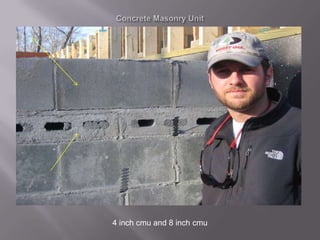
Concrete Masonry UnitCMU – a block of hardened concrete designed to be laid up like regular masonry brick. The hollow cores allow for the block walls to be filled with concrete for additional strength. CMU is more economical for foundation walls than cast concrete, and when laid by a proper mason, one course of block is equal to 3 courses of standard brick w/ a 3/8” mortar joint. A typical block is 8” x 8” x 16” with a 3/8” mortar joint.
ConcreteMasonryUnit4 inch cmu and 8 inch cmu
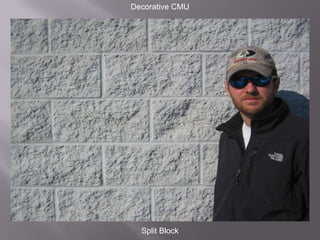
Decorative CMUSplit Block
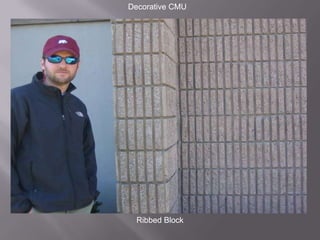
Decorative CMURibbed Block
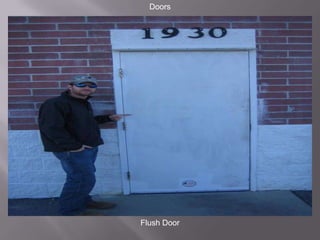
DoorsFlush Door
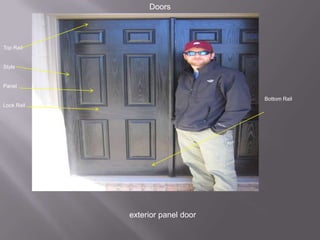
DoorsTop RailStylePanelLock RailBottom Rail exterior panel door
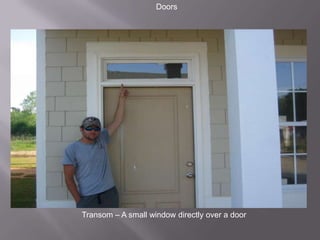
DoorsTransom – A small window directly over a door
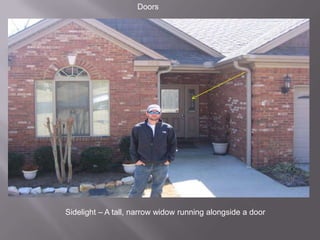
DoorsSidelight – A tall, narrow widow running alongside a door
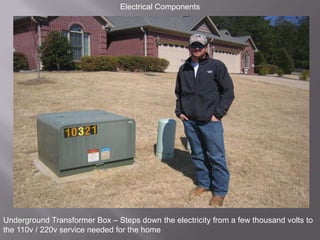
Electrical ComponentsUnderground Transformer Box – Steps down the electricity from a few thousand volts to the 110v / 220v service needed for the home
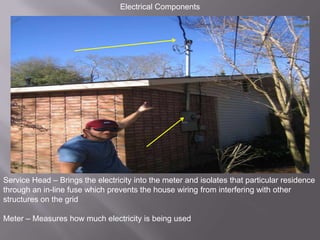
Electrical ComponentsService Head – Brings the electricity into the meter and isolates that particular residence through an in-line fuse which prevents the house wiring from interfering with other structures on the gridMeter – Measures how much electricity is being used
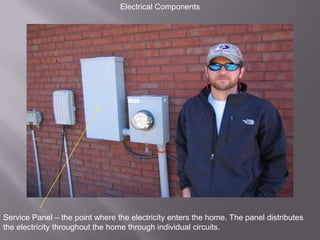
Electrical ComponentsService Panel – the point where the electricity enters the home. The panel distributes the electricity throughout the home through individual circuits.
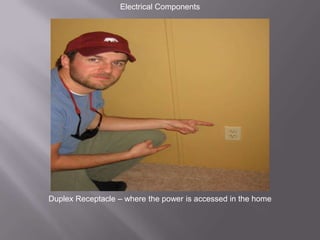
Electrical ComponentsDuplex Receptacle – where the power is accessed in the home
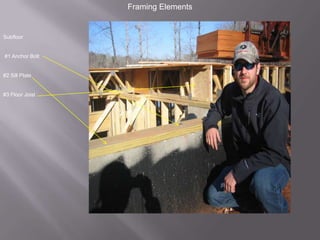
Framing ElementsSubfloor#1 Anchor Bolt#2 Sill Plate#3 Floor Joist
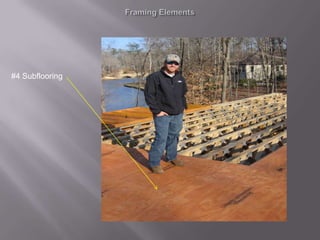
FramingElements#4 Subflooring
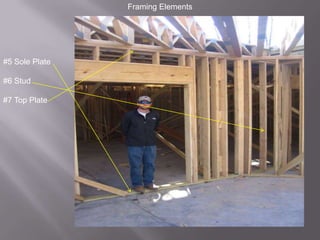
Framing Elements#5 Sole Plate#6 Stud#7 Top Plate
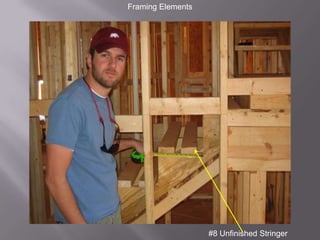
Framing Elements#8 Unfinished Stringer
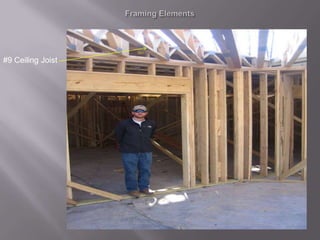
Framing Elements#9 Ceiling Joist
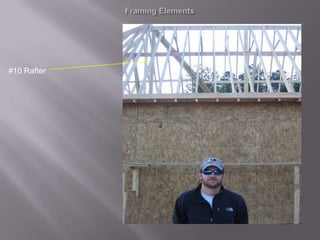
Framing Elements#10 Rafter
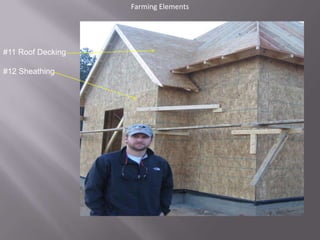
Farming Elements#11 Roof Decking#12 Sheathing
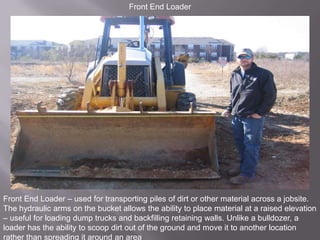
Front End LoaderFront End Loader – used for transporting piles of dirt or other material across a jobsite. The hydraulic arms on the bucket allows the ability to place material at a raised elevation – useful for loading dump trucks and backfilling retaining walls. Unlike a bulldozer, a loader has the ability to scoop dirt out of the ground and move it to another location rather than spreading it around an area
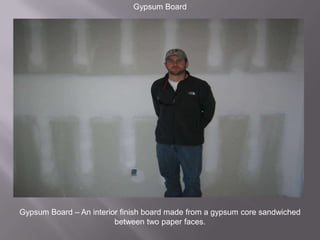
Gypsum BoardGypsum Board – An interior finish board made from a gypsum core sandwiched between two paper faces.
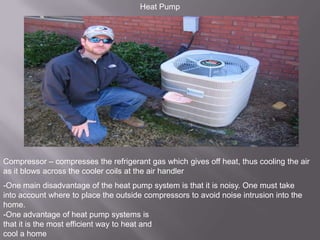
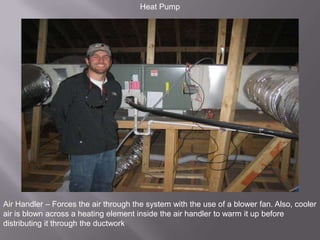
Heat PumpCompressor – compresses the refrigerant gas which gives off heat, thus cooling the air as it blows across the cooler coils at the air handler-One main disadvantage of the heat pump system is that it is noisy. One must take into account where to place the outside compressors to avoid noise intrusion into the home. -One advantage of heat pump systems is that it is the most efficient way to heat and cool a home
Heat PumpAir Handler – Forces the air through the system with the use of a blower fan. Also, cooler air is blown across a heating element inside the air handler to warm it up before distributing it through the ductwork
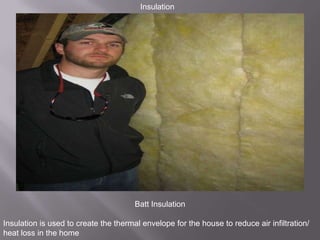
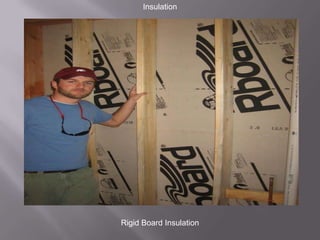
InsulationBatt InsulationInsulation is used to create the thermal envelope for the house to reduce air infiltration/ heat loss in the home
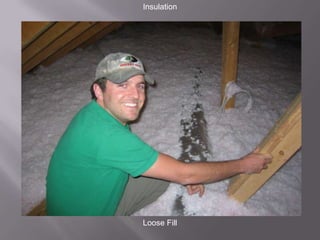
InsulationLoose Fill
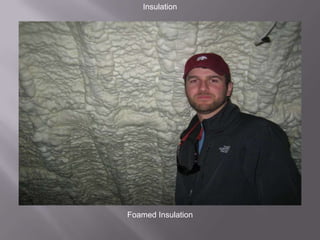
InsulationFoamed Insulation
InsulationRigid Board Insulation
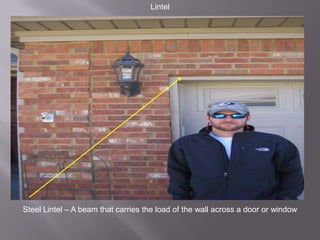
LintelSteel Lintel – A beam that carries the load of the wall across a door or window
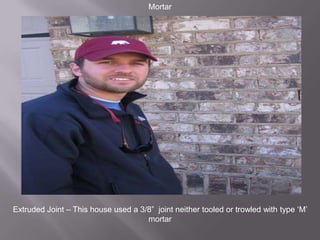
MortarExtruded Joint – This house used a 3/8”  joint neither tooled or trowledwith type ‘M’ mortar
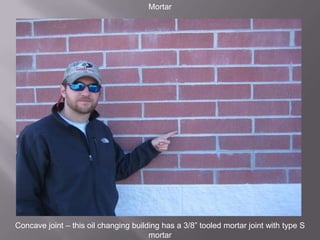
MortarConcave joint – this oil changing building has a 3/8” tooled mortar joint with type S mortar
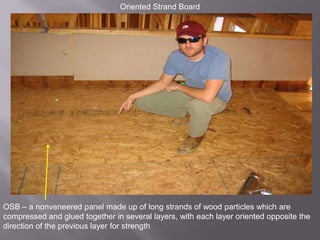
Oriented Strand BoardOSB – a nonveneered panel made up of long strands of wood particles which are compressed and glued together in several layers, with each layer oriented opposite the direction of the previous layer for strength
PlumbingLavatory – uses 1 ½” drain pipe
PlumbingWater Closet – uses 3” pipe to drain
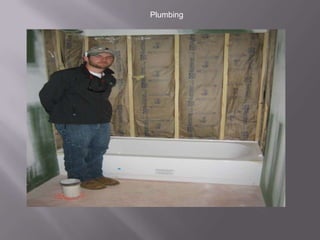
Plumbing
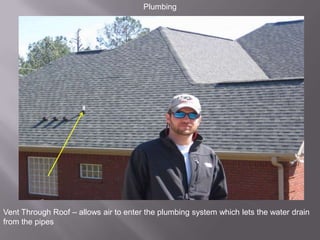
PlumbingVent Through Roof – allows air to enter the plumbing system which lets the water drain from the pipes
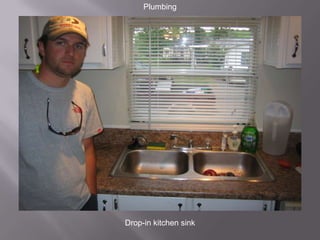
PlumbingDrop-in kitchen sink
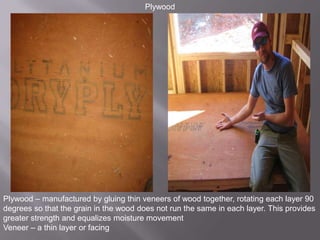
PlywoodPlywood – manufactured by gluing thin veneers of wood together, rotating each layer 90 degrees so that the grain in the wood does not run the same in each layer. This provides greater strength and equalizes moisture movementVeneer – a thin layer or facing
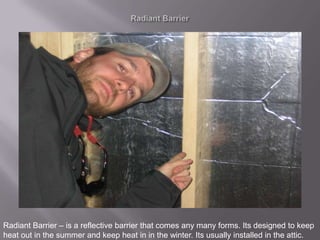
RadiantBarrierRadiant Barrier – is a reflective barrier that comes any many forms. Its designed to keep heat out in the summer and keep heat in in the winter. Its usually installed in the attic.
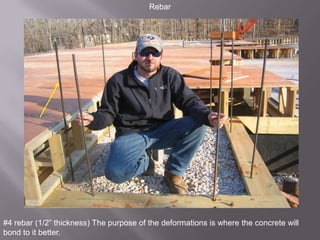
Rebar#4 rebar (1/2” thickness) The purpose of the deformations is where the concrete will bond to it better.
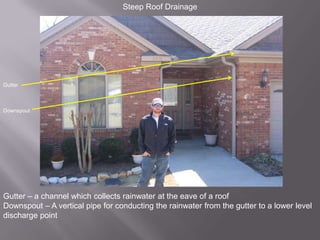
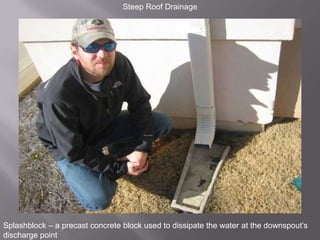
Steep Roof DrainageGutterDownspoutGutter – a channel which collects rainwater at the eave of a roofDownspout – A vertical pipe for conducting the rainwater from the gutter to a lower level discharge point
Steep Roof DrainageSplashblock – a precast concrete block used to dissipate the water at the downspout’s discharge point
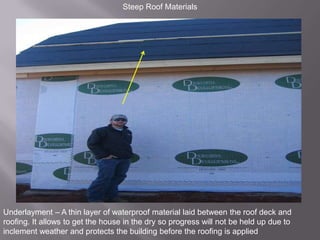
Steep Roof MaterialsUnderlayment – A thin layer of waterproof material laid between the roof deck and roofing. It allows to get the house in the dry so progress will not be held up due to inclement weather and protects the building before the roofing is applied
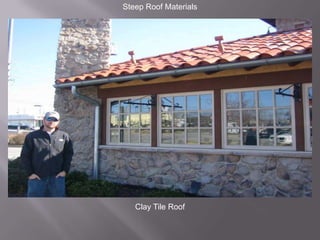
Steep Roof MaterialsClay Tile Roof
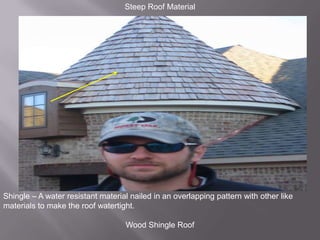
Steep Roof MaterialShingle – A water resistant material nailed in an overlapping pattern with other like materials to make the roof watertight.Wood Shingle Roof
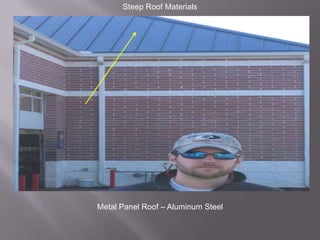
Steep Roof MaterialsMetal Panel Roof – Aluminum Steel
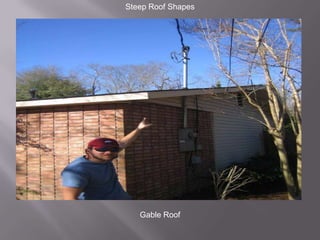
Steep Roof ShapesGable Roof
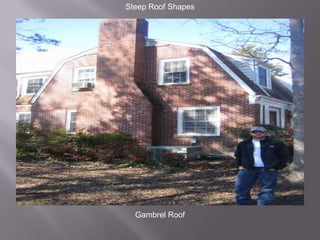
Steep Roof ShapesGambrel Roof
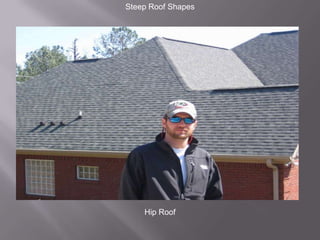
Steep Roof ShapesHip Roof
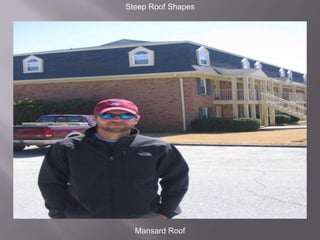
Steep Roof ShapesMansard Roof
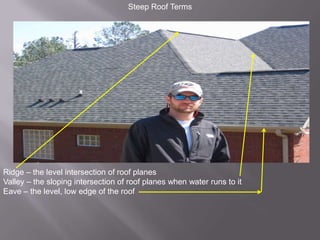
Steep Roof TermsRidge – the level intersection of roof planesValley – the sloping intersection of roof planes when water runs to itEave – the level, low edge of the roof
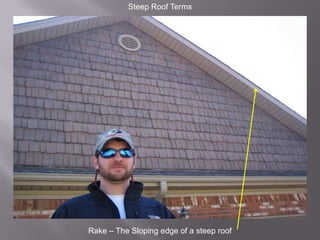
Steep Roof TermsRake – The Sloping edge of a steep roof
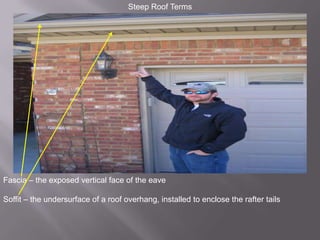
Steep Roof TermsFascia – the exposed vertical face of the eaveSoffit – the undersurface of a roof overhang, installed to enclose the rafter tails
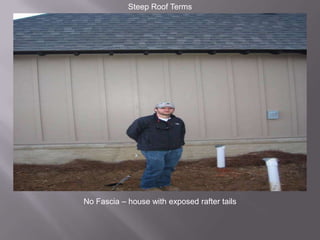
Steep Roof TermsNo Fascia – house with exposed rafter tails
StoneRandom Rubble Pattern
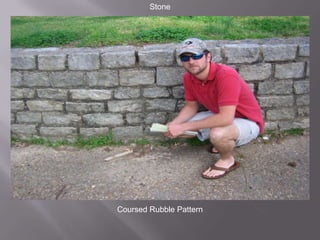
StoneCoursed Rubble Pattern
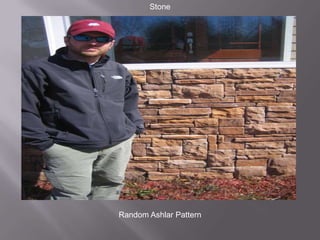
StoneRandom Ashlar Pattern
StoneCoursed Ashlar
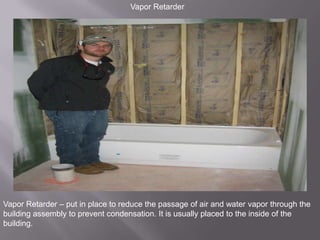
Vapor RetarderVapor Retarder – put in place to reduce the passage of air and water vapor through the building assembly to prevent condensation. It is usually placed to the inside of the building.
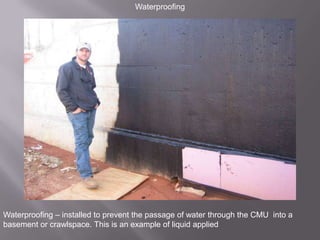
WaterproofingWaterproofing – installed to prevent the passage of water through the CMU  into a basement or crawlspace. This is an example of liquid applied
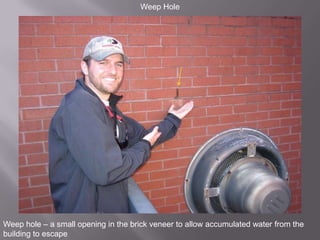
Weep HoleWeep hole – a small opening in the brick veneer to allow accumulated water from the building to escape
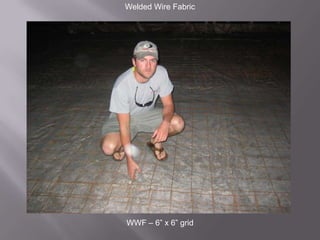
Welded Wire FabricWWF – 6” x 6” grid
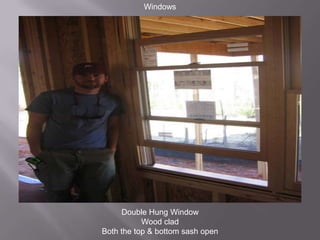
WindowsDouble Hung WindowWood cladBoth the top & bottom sash open
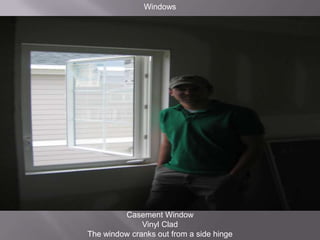
WindowsCasement WindowVinyl CladThe window cranks out from a side hinge
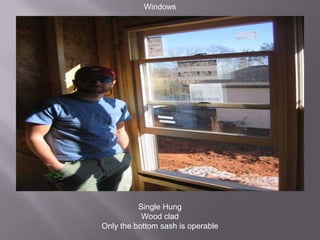
WindowsSingle HungWood cladOnly the bottom sash is operable

sp10weldedwirefabric