Chapter-
PLANTS
BY: Ms. Neha Gambhir Grover
Class V
Day wise topics
 Day 1 – How do plants prepare food?/
Process of Photosynthesis
 Day 2 – Insectivorous Plants
 Day 3 – Reproduction in plants and seed
structure
 Day 4 – Seed germination
 Day 5 – Vegetative Reproduction
 Day 6 – Seed Dispersal
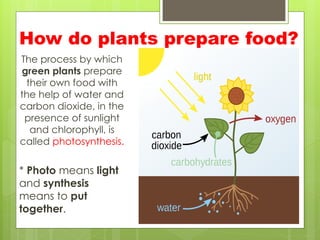
How do plants prepare food?
The process by which
green plants prepare
their own food with
the help of water and
carbon dioxide, in the
presence of sunlight
and chlorophyll, is
called photosynthesis.
* Photo means light
and synthesis
means to put
together.
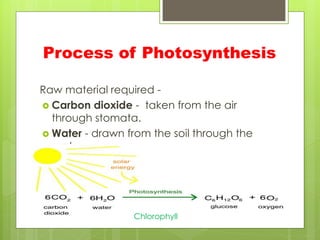
Process of Photosynthesis
Raw material required -
 Carbon dioxide - taken from the air
through stomata.
 Water - drawn from the soil through the
roots
Chlorophyll
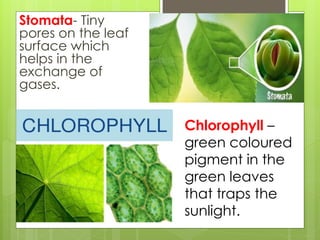
Stomata- Tiny
pores on the leaf
surface which
helps in the
exchange of
gases.
Chlorophyll –
green coloured
pigment in the
green leaves
that traps the
sunlight.
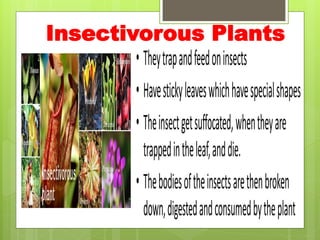
Insectivorous Plants
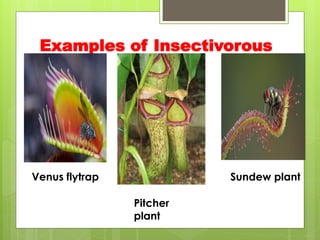
Examples of Insectivorous
Plants
Venus flytrap
Pitcher
plant
Sundew plant
- The process by which a living
thing produces more of its own kind,
is called reproduction.
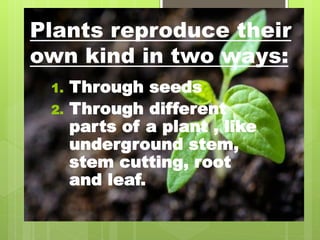
Plants reproduce their
own kind in two ways:
1. Through seeds
2. Through different
parts of a plant , like
underground stem,
stem cutting, root
and leaf.
REPRODUCTION
THROUGH SEEDS
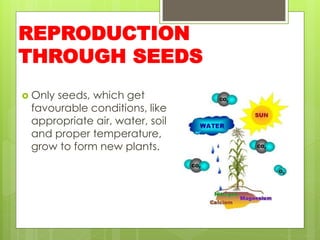
 Only seeds, which get
favourable conditions, like
appropriate air, water, soil
and proper temperature,
grow to form new plants.
STRUCTURE OF A
SEED
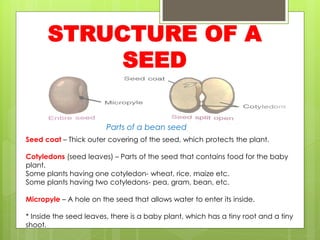
Seed coat – Thick outer covering of the seed, which protects the plant.
Cotyledons (seed leaves) – Parts of the seed that contains food for the baby
plant.
Some plants having one cotyledon- wheat, rice, maize etc.
Some plants having two cotyledons- pea, gram, bean, etc.
Micropyle – A hole on the seed that allows water to enter its inside.
* Inside the seed leaves, there is a baby plant, which has a tiny root and a tiny
shoot.
Parts of a bean seed
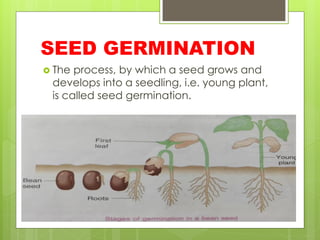
SEED GERMINATION
 The process, by which a seed grows and
develops into a seedling, i.e. young plant,
is called seed germination.
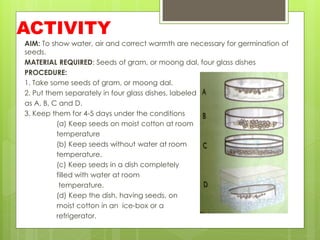
ACTIVITY
AIM: To show water, air and correct warmth are necessary for germination of
seeds.
MATERIAL REQUIRED: Seeds of gram, or moong dal, four glass dishes
PROCEDURE:
1. Take some seeds of gram, or moong dal.
2. Put them separately in four glass dishes, labeled
as A, B, C and D.
3. Keep them for 4-5 days under the conditions
(a) Keep seeds on moist cotton at room
temperature
(b) Keep seeds without water at room
temperature.
(c) Keep seeds in a dish completely
filled with water at room
temperature.
(d) Keep the dish, having seeds, on
moist cotton in an ice-box or a
refrigerator.
OBSERVATION:
After 4-5 days, we will observe that the seeds, present
in the glass dishes B, C, and D, have not germinated.
The seeds of dish A show good germination. It is due
to the fact that in dish A, there is appropriate amount
of water, air and warmth needed for germination. In
the other glass dishes, one, or other, of these
favourable conditions, is missing.
CONCLUSION:
Appropriate amount of water, air and correct
warmth are necessary for germination of seeds.
 The type of reproduction, in which a new a
new plant arises from some part of a plant,
without the involvement of seeds, is called
vegetative reproduction.
 It is of great importance because –
(a) It is an easier and faster method of
increasing the number of the same plant.
(b) It also helps to grow plants, like banana,
which bear no seeds.
Different parts of a
plant, involved in the
process of vegetative
reproduction
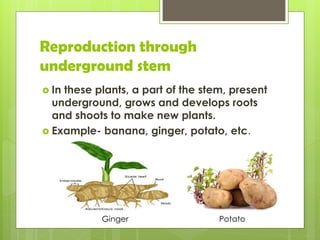
Reproduction through
underground stem
 In these plants, a part of the stem, present
underground, grows and develops roots
and shoots to make new plants.
 Example- banana, ginger, potato, etc.
Ginger Potato
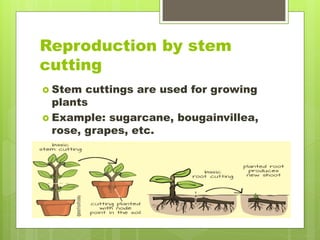
Reproduction by stem
cutting
 Stem cuttings are used for growing
plants
 Example: sugarcane, bougainvillea,
rose, grapes, etc.
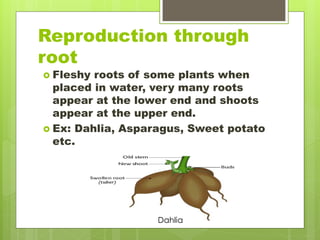
Reproduction through
root
 Fleshy roots of some plants when
placed in water, very many roots
appear at the lower end and shoots
appear at the upper end.
 Ex: Dahlia, Asparagus, Sweet potato
etc.
Dahlia
Reproduction through
leaf
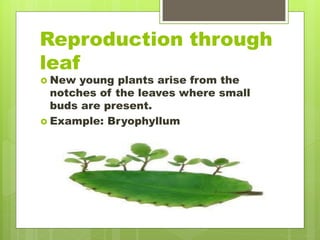
 New young plants arise from the
notches of the leaves where small
buds are present.
 Example: Bryophyllum
SEED DISPERSAL
 The process of transfer of seeds, to
different places, is called seed
dispersal.
 Importance- to avoid struggle to get
sufficient air, water, sunlight and
nutrients
Ways/ Agents of Seed
Dispersal
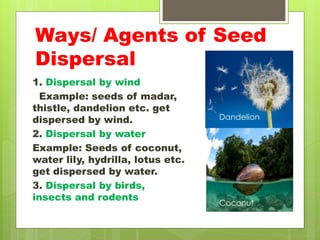
1. Dispersal by wind
Example: seeds of madar,
thistle, dandelion etc. get
dispersed by wind.
2. Dispersal by water
Example: Seeds of coconut,
water lily, hydrilla, lotus etc.
get dispersed by water.
3. Dispersal by birds,
insects and rodents
Dandelion
Coconut
Ways/ Agents of Seed
Dispersal
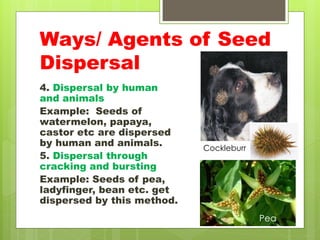
4. Dispersal by human
and animals
Example: Seeds of
watermelon, papaya,
castor etc are dispersed
by human and animals.
5. Dispersal through
cracking and bursting
Example: Seeds of pea,
ladyfinger, bean etc. get
dispersed by this method.
Cockleburr
Pea
Links of videos for better
understanding of the
chapter
 https://youtu.be/yHVhM-pLRXk
 https://youtu.be/0qagYpTD1H4
 https://youtu.be/6L5OHNUPzHE
 https://youtu.be/itQZyr7EqNQ
 https://youtu.be/ro8Z9qIlWjM
 https://youtu.be/itQZyr7EqNQ
 https://youtu.be/JOUFNcNSoko
Thank You

Plants , class V

  • 1.
    Chapter- PLANTS BY: Ms. NehaGambhir Grover Class V
  • 2.
    Day wise topics Day 1 – How do plants prepare food?/ Process of Photosynthesis  Day 2 – Insectivorous Plants  Day 3 – Reproduction in plants and seed structure  Day 4 – Seed germination  Day 5 – Vegetative Reproduction  Day 6 – Seed Dispersal
  • 3.
    How do plantsprepare food? The process by which green plants prepare their own food with the help of water and carbon dioxide, in the presence of sunlight and chlorophyll, is called photosynthesis. * Photo means light and synthesis means to put together.
  • 4.
    Process of Photosynthesis Rawmaterial required -  Carbon dioxide - taken from the air through stomata.  Water - drawn from the soil through the roots Chlorophyll
  • 5.
    Stomata- Tiny pores onthe leaf surface which helps in the exchange of gases. Chlorophyll – green coloured pigment in the green leaves that traps the sunlight.
  • 6.
  • 7.
    Examples of Insectivorous Plants Venusflytrap Pitcher plant Sundew plant
  • 8.
    - The processby which a living thing produces more of its own kind, is called reproduction.
  • 9.
    Plants reproduce their ownkind in two ways: 1. Through seeds 2. Through different parts of a plant , like underground stem, stem cutting, root and leaf.
  • 10.
    REPRODUCTION THROUGH SEEDS  Onlyseeds, which get favourable conditions, like appropriate air, water, soil and proper temperature, grow to form new plants.
  • 11.
    STRUCTURE OF A SEED Seedcoat – Thick outer covering of the seed, which protects the plant. Cotyledons (seed leaves) – Parts of the seed that contains food for the baby plant. Some plants having one cotyledon- wheat, rice, maize etc. Some plants having two cotyledons- pea, gram, bean, etc. Micropyle – A hole on the seed that allows water to enter its inside. * Inside the seed leaves, there is a baby plant, which has a tiny root and a tiny shoot. Parts of a bean seed
  • 12.
    SEED GERMINATION  Theprocess, by which a seed grows and develops into a seedling, i.e. young plant, is called seed germination.
  • 13.
    ACTIVITY AIM: To showwater, air and correct warmth are necessary for germination of seeds. MATERIAL REQUIRED: Seeds of gram, or moong dal, four glass dishes PROCEDURE: 1. Take some seeds of gram, or moong dal. 2. Put them separately in four glass dishes, labeled as A, B, C and D. 3. Keep them for 4-5 days under the conditions (a) Keep seeds on moist cotton at room temperature (b) Keep seeds without water at room temperature. (c) Keep seeds in a dish completely filled with water at room temperature. (d) Keep the dish, having seeds, on moist cotton in an ice-box or a refrigerator.
  • 14.
    OBSERVATION: After 4-5 days,we will observe that the seeds, present in the glass dishes B, C, and D, have not germinated. The seeds of dish A show good germination. It is due to the fact that in dish A, there is appropriate amount of water, air and warmth needed for germination. In the other glass dishes, one, or other, of these favourable conditions, is missing. CONCLUSION: Appropriate amount of water, air and correct warmth are necessary for germination of seeds.
  • 15.
     The typeof reproduction, in which a new a new plant arises from some part of a plant, without the involvement of seeds, is called vegetative reproduction.  It is of great importance because – (a) It is an easier and faster method of increasing the number of the same plant. (b) It also helps to grow plants, like banana, which bear no seeds.
  • 16.
    Different parts ofa plant, involved in the process of vegetative reproduction
  • 17.
    Reproduction through underground stem In these plants, a part of the stem, present underground, grows and develops roots and shoots to make new plants.  Example- banana, ginger, potato, etc. Ginger Potato
  • 18.
    Reproduction by stem cutting Stem cuttings are used for growing plants  Example: sugarcane, bougainvillea, rose, grapes, etc.
  • 19.
    Reproduction through root  Fleshyroots of some plants when placed in water, very many roots appear at the lower end and shoots appear at the upper end.  Ex: Dahlia, Asparagus, Sweet potato etc. Dahlia
  • 20.
    Reproduction through leaf  Newyoung plants arise from the notches of the leaves where small buds are present.  Example: Bryophyllum
  • 21.
    SEED DISPERSAL  Theprocess of transfer of seeds, to different places, is called seed dispersal.  Importance- to avoid struggle to get sufficient air, water, sunlight and nutrients
  • 22.
    Ways/ Agents ofSeed Dispersal 1. Dispersal by wind Example: seeds of madar, thistle, dandelion etc. get dispersed by wind. 2. Dispersal by water Example: Seeds of coconut, water lily, hydrilla, lotus etc. get dispersed by water. 3. Dispersal by birds, insects and rodents Dandelion Coconut
  • 23.
    Ways/ Agents ofSeed Dispersal 4. Dispersal by human and animals Example: Seeds of watermelon, papaya, castor etc are dispersed by human and animals. 5. Dispersal through cracking and bursting Example: Seeds of pea, ladyfinger, bean etc. get dispersed by this method. Cockleburr Pea
  • 24.
    Links of videosfor better understanding of the chapter  https://youtu.be/yHVhM-pLRXk  https://youtu.be/0qagYpTD1H4  https://youtu.be/6L5OHNUPzHE  https://youtu.be/itQZyr7EqNQ  https://youtu.be/ro8Z9qIlWjM  https://youtu.be/itQZyr7EqNQ  https://youtu.be/JOUFNcNSoko
  • 25.