Planning
&
Planning Process
Meaning of Planning
 Planning is ascertaining prior to what to do and how to do. It is one of the primary
managerial duties. Before doing something, the manager/Leader must form an opinion
on how to work on a specific job. Hence, planning is firmly correlated with discovery
and creativity. But the manager would first have to set goals.
 Planning is an essential step what managers at all levels take. It requires making
decisions since it includes selecting a choice from alternative ways of performance.
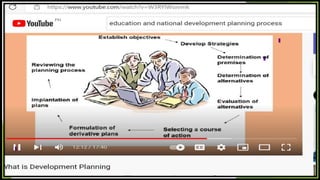
 https://www.youtube.com/watch?v=ciIoa8bHXtU
Planning Process
 (1) Setting Objectives
 (2) Developing Planning Premises
 (3) Identifying Alternative Courses of Action
 (4) Evaluating Alternative Course of Action
 (5) Selecting One Best Alternative
 (6) Implementing the Plan
 (7) Follow Up Action
(1) Setting Objectives
 This is the primary step in the process of planning which specifies the objective of an
organisation, i.e. what an organisation wants to achieve.
• The planning process begins with the setting of objectives.
 Objectives are end results which the management wants to achieve by its operations.
 Objectives are specific and are measurable in terms of units.
 Objectives are set for the organisation as a whole for all departments, and then departments
set their own objectives within the framework of organisational objectives.
(2) Developing Planning Premises
 Planning is essentially focused on the future, and there are certain events which are
expected to affect the policy formation.
 Their understanding and fair assessment are necessary for effective planning.
 Such events are the assumptions on the basis of which plans are drawn and are
known as planning premises.
(3) Identifying Alternative Courses of Action
 Once objectives are set, assumptions are made.
 Then the next step is to act upon them.
 There may be many ways to act and achieve objectives.
 All the alternative courses of action should be identified.
(4) Evaluating Alternative Course of Action
 In this step, the positive and negative aspects of each alternative need to be
evaluated in the light of objectives to be achieved.
 Every alternative is evaluated in terms of lower cost, lower risks, and higher
returns, within the planning premises and within the availability of capital.
(5) Selecting One Best Alternative
 The best plan, which is the most profitable plan and with minimum
negative effects, is adopted and implemented.
 In such cases, the manager’s experience and judgement play an
important role in selecting the best alternative.
(6) Implementing the Plan
 This is the step where other managerial functions come into the picture.
 This step is concerned with “DOING WHAT IS REQUIRED”.
 In this step, managers communicate the plan to the employees clearly to help
convert the plans into action.
 This step involves allocating the resources, organising for labour and purchase of
machinery.
(7) Follow Up Action
 Monitoring the plan constantly and taking feedback at regular
intervals is called follow-up.
 Monitoring of plans is very important to ensure that the plans are
being implemented according to the schedule.
 Regular checks and comparisons of the results with set standards are
done to ensure that objectives are achieved.
References
 file:///C:/Users/User/Desktop/CEM%20201/CEM-201-601-Course-Outline.pdf
 Steps In Educational Planning – YouTube
 Planning (slideshare.net)
 https://www.youtube.com/watch?v=ciIoa8bHXtU
 Planning - Process & Components - YouTube
Thank You and Godbless! 
Prepared By:
Dwight Mhyr Asis Brozo

Planning & Planning Proces.pptx

  • 1.
  • 2.
    Meaning of Planning Planning is ascertaining prior to what to do and how to do. It is one of the primary managerial duties. Before doing something, the manager/Leader must form an opinion on how to work on a specific job. Hence, planning is firmly correlated with discovery and creativity. But the manager would first have to set goals.  Planning is an essential step what managers at all levels take. It requires making decisions since it includes selecting a choice from alternative ways of performance.  https://www.youtube.com/watch?v=ciIoa8bHXtU
  • 3.
    Planning Process  (1)Setting Objectives  (2) Developing Planning Premises  (3) Identifying Alternative Courses of Action  (4) Evaluating Alternative Course of Action  (5) Selecting One Best Alternative  (6) Implementing the Plan  (7) Follow Up Action
  • 5.
    (1) Setting Objectives This is the primary step in the process of planning which specifies the objective of an organisation, i.e. what an organisation wants to achieve. • The planning process begins with the setting of objectives.  Objectives are end results which the management wants to achieve by its operations.  Objectives are specific and are measurable in terms of units.  Objectives are set for the organisation as a whole for all departments, and then departments set their own objectives within the framework of organisational objectives.
  • 6.
    (2) Developing PlanningPremises  Planning is essentially focused on the future, and there are certain events which are expected to affect the policy formation.  Their understanding and fair assessment are necessary for effective planning.  Such events are the assumptions on the basis of which plans are drawn and are known as planning premises.
  • 7.
    (3) Identifying AlternativeCourses of Action  Once objectives are set, assumptions are made.  Then the next step is to act upon them.  There may be many ways to act and achieve objectives.  All the alternative courses of action should be identified.
  • 8.
    (4) Evaluating AlternativeCourse of Action  In this step, the positive and negative aspects of each alternative need to be evaluated in the light of objectives to be achieved.  Every alternative is evaluated in terms of lower cost, lower risks, and higher returns, within the planning premises and within the availability of capital.
  • 9.
    (5) Selecting OneBest Alternative  The best plan, which is the most profitable plan and with minimum negative effects, is adopted and implemented.  In such cases, the manager’s experience and judgement play an important role in selecting the best alternative.
  • 10.
    (6) Implementing thePlan  This is the step where other managerial functions come into the picture.  This step is concerned with “DOING WHAT IS REQUIRED”.  In this step, managers communicate the plan to the employees clearly to help convert the plans into action.  This step involves allocating the resources, organising for labour and purchase of machinery.
  • 11.
    (7) Follow UpAction  Monitoring the plan constantly and taking feedback at regular intervals is called follow-up.  Monitoring of plans is very important to ensure that the plans are being implemented according to the schedule.  Regular checks and comparisons of the results with set standards are done to ensure that objectives are achieved.
  • 12.
    References  file:///C:/Users/User/Desktop/CEM%20201/CEM-201-601-Course-Outline.pdf  StepsIn Educational Planning – YouTube  Planning (slideshare.net)  https://www.youtube.com/watch?v=ciIoa8bHXtU  Planning - Process & Components - YouTube
  • 13.
    Thank You andGodbless!  Prepared By: Dwight Mhyr Asis Brozo