Areas of need set out in the  SEN Code of Practice Planning for students with behavioural, emotional and  social difficulties Special educational  needs and/or disabilities Training toolkit Session 12
Learning outcomes You will: know how to build into your day-to-day planning appropriate opportunities for behavioural, social and emotional learning for students with BESD be familiar with some teaching styles and approaches for students with BESD  know how to remove barriers for students with BESD  know how to annotate planning to take account of learning objectives, teaching approaches and modifications/adjustments for students with BESD know how to link day-to-day planning to students’ targets
Learning outcomes You will know how to: identify appropriate learning objectives for  students with BESD build work on these objectives into your  day-to-day planning Activity 1
Learning objectives and BESD For academic subjects, these may be the same as those set for the whole class Students are likely to need additional work on behavioural, social and emotional learning objectives
Learning outcomes You will: be familiar with some of the teaching styles and approaches that are appropriate for students with BESD understand how to build these into your lesson planning Activity 2
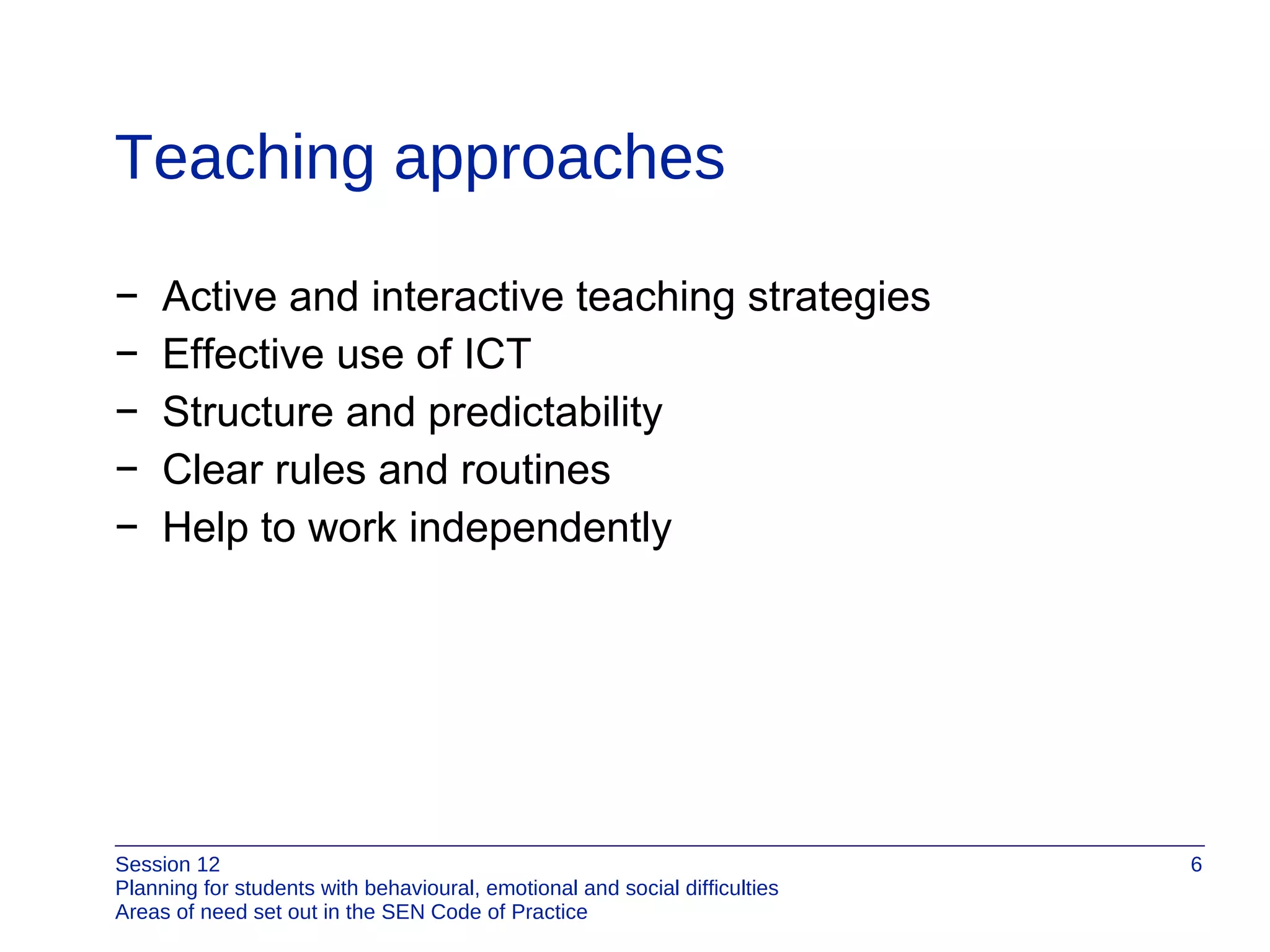
Teaching approaches Active and interactive teaching strategies Effective use of ICT Structure and predictability Clear rules and routines Help to work independently
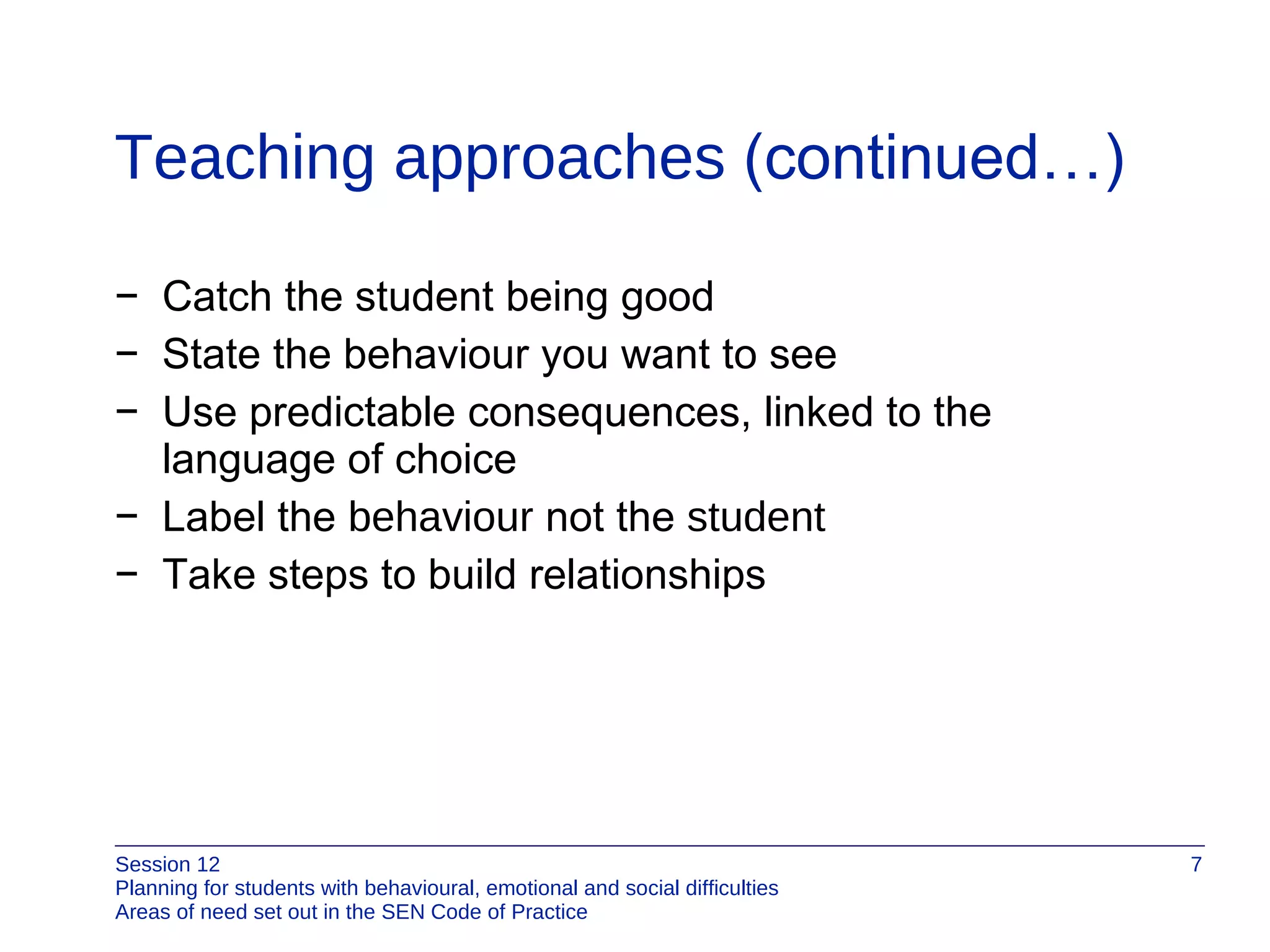
Teaching approaches  (continued…) Catch the student being good State the behaviour you want to see Use predictable consequences, linked to the  language of choice Label the  behaviour  not the  student Take steps to build relationships
Learning outcomes You will: be familiar with some of the strategies to remove barriers for students with BESD understand how to build these into your lesson planning Activity 3
Strategies to remove barriers Help the student manage stress, anxiety and anger Provide opportunities to be active and take breaks Give students individual workstations Use support from other students Use support from additional adults Strengthen home-school links Provide a curriculum that is interesting and relevant
Learning outcomes You will know how to: annotate your planning to take account of students  with BESD link your planning to students’ targets Activity 4
Effective planning for students with SEN and/or disabilities Effective planning will: be incorporated into your usual planning format include personal targets wherever possible draw on the three principles of inclusion involve collaboration
Learning outcomes You will: reflect on the session identify key points of action to consolidate and apply  your learning Activity 5
Key learning points Behavioural, emotional and social difficulties have  multiple causes They often arise when a student’s basic needs  are not met Understanding the antecedents and consequences  of specific behaviours can help teachers develop effective strategies
Key learning points  (continued…) Students with BESD often require a multi-agency response Teachers should plan appropriate learning objectives and teaching approaches, and make modifications/adjustments to remove barriers, so  that students can succeed in school and develop behavioural, social and emotional skills

Planning For Students With Behavioural, Emotional And Social Difficulties - Session Twelve

  • 1.
    Areas of needset out in the SEN Code of Practice Planning for students with behavioural, emotional and social difficulties Special educational needs and/or disabilities Training toolkit Session 12
  • 2.
    Learning outcomes Youwill: know how to build into your day-to-day planning appropriate opportunities for behavioural, social and emotional learning for students with BESD be familiar with some teaching styles and approaches for students with BESD know how to remove barriers for students with BESD know how to annotate planning to take account of learning objectives, teaching approaches and modifications/adjustments for students with BESD know how to link day-to-day planning to students’ targets
  • 3.
    Learning outcomes Youwill know how to: identify appropriate learning objectives for students with BESD build work on these objectives into your day-to-day planning Activity 1
  • 4.
    Learning objectives andBESD For academic subjects, these may be the same as those set for the whole class Students are likely to need additional work on behavioural, social and emotional learning objectives
  • 5.
    Learning outcomes Youwill: be familiar with some of the teaching styles and approaches that are appropriate for students with BESD understand how to build these into your lesson planning Activity 2
  • 6.
    Teaching approaches Activeand interactive teaching strategies Effective use of ICT Structure and predictability Clear rules and routines Help to work independently
  • 7.
    Teaching approaches (continued…) Catch the student being good State the behaviour you want to see Use predictable consequences, linked to the language of choice Label the behaviour not the student Take steps to build relationships
  • 8.
    Learning outcomes Youwill: be familiar with some of the strategies to remove barriers for students with BESD understand how to build these into your lesson planning Activity 3
  • 9.
    Strategies to removebarriers Help the student manage stress, anxiety and anger Provide opportunities to be active and take breaks Give students individual workstations Use support from other students Use support from additional adults Strengthen home-school links Provide a curriculum that is interesting and relevant
  • 10.
    Learning outcomes Youwill know how to: annotate your planning to take account of students with BESD link your planning to students’ targets Activity 4
  • 11.
    Effective planning forstudents with SEN and/or disabilities Effective planning will: be incorporated into your usual planning format include personal targets wherever possible draw on the three principles of inclusion involve collaboration
  • 12.
    Learning outcomes Youwill: reflect on the session identify key points of action to consolidate and apply your learning Activity 5
  • 13.
    Key learning pointsBehavioural, emotional and social difficulties have multiple causes They often arise when a student’s basic needs are not met Understanding the antecedents and consequences of specific behaviours can help teachers develop effective strategies
  • 14.
    Key learning points (continued…) Students with BESD often require a multi-agency response Teachers should plan appropriate learning objectives and teaching approaches, and make modifications/adjustments to remove barriers, so that students can succeed in school and develop behavioural, social and emotional skills