Communication PIC-Microcontroller Lab
         Course by JAOM Center, Feb. 2013


PIC Microcontroller Review


               Instructor:
              Mohsen Sarakbi
Definitions of Control Systems

 A control system is a collection of components working
  together under the direction of some machine intelligence.

 In most cases, electronic circuits provide the intelligence, and
  electromechanical components such as sensors and motors
  provide the interface to the physical world.
Parts of Control System
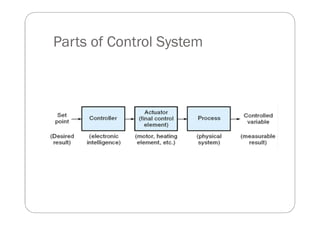
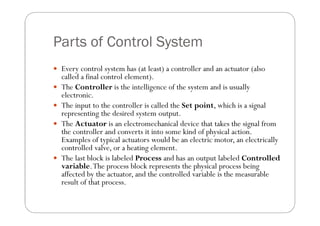
 Every control system has (at least) a controller and an actuator (also
    called a final control element).
   The Controller is the intelligence of the system and is usually
    electronic.
   The input to the controller is called the Set point, which is a signal
    representing the desired system output.
   The Actuator is an electromechanical device that takes the signal from
    the controller and converts it into some kind of physical action.
    Examples of typical actuators would be an electric motor, an electrically
    controlled valve, or a heating element.
   The last block is labeled Process and has an output labeled Controlled
    variable. The process block represents the physical process being
    affected by the actuator, and the controlled variable is the measurable
    result of that process.
Control System Classifications
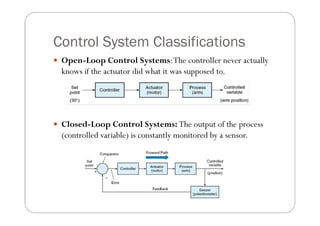
 Open-Loop Control Systems:The controller never actually
  knows if the actuator did what it was supposed to.


 Closed-Loop Control Systems: The output of the process
  (controlled variable) is constantly monitored by a sensor.
Microcontrollers
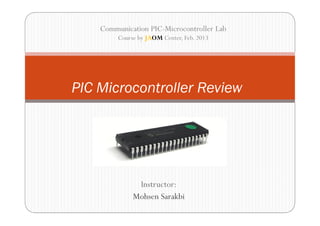
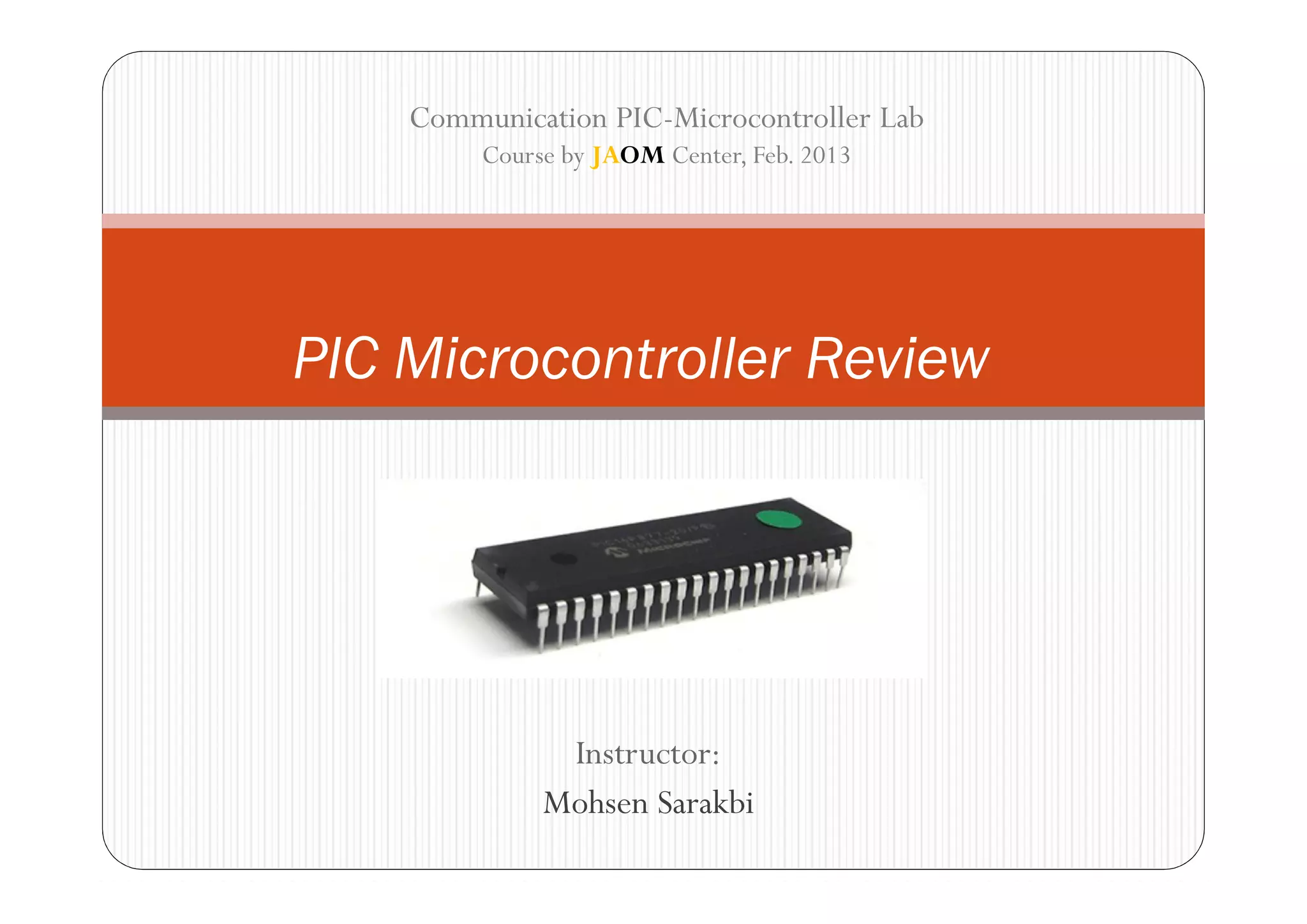
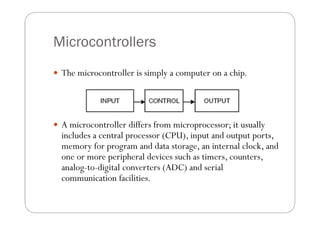
 The microcontroller is simply a computer on a chip.


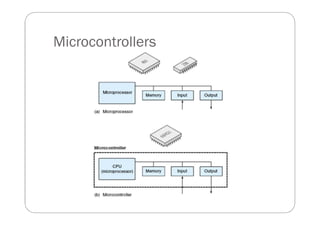
 A microcontroller differs from microprocessor; it usually
  includes a central processor (CPU), input and output ports,
  memory for program and data storage, an internal clock, and
  one or more peripheral devices such as timers, counters,
  analog-to-digital converters (ADC) and serial
  communication facilities.
Microcontrollers
PIC Microcontrollers

 PIC is the name for the Microchip microcontroller (MCU)
  family, consisting of a microprocessor, I/O ports, timers and
  other internal, integrated hardware. The main advantages are
  low external part count, a wide range of chip sizes great
  availability of compilers and source code and easy
  programming.

 In our course we’ll use the Microchip products (PIC16F877A)
  microcontroller.
PIC16F877A Features

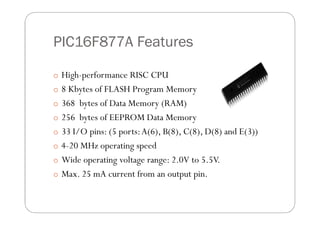
o High-performance RISC CPU
o 8 Kbytes of FLASH Program Memory
o 368 bytes of Data Memory (RAM)
o 256 bytes of EEPROM Data Memory
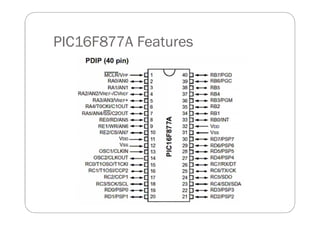
o 33 I/O pins: (5 ports: A(6), B(8), C(8), D(8) and E(3))
o 4-20 MHz operating speed
o Wide operating voltage range: 2.0V to 5.5V.
o Max. 25 mA current from an output pin.
PIC16F877A Features
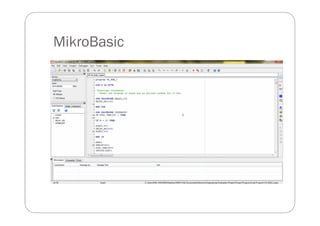
MikroBasic
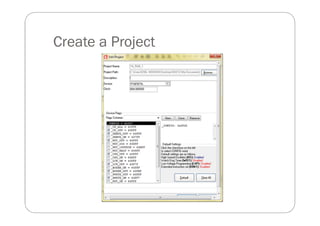
Create a Project
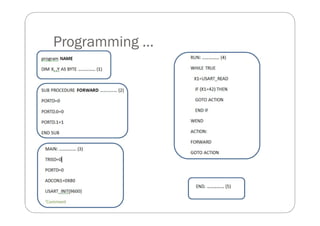
Programming …
PIC Lab

 ON/OFF LED
 IF Statements & Loops (WHILE & FOR)
 Procedures
 LCD
 USART TX/RX
 Analog input (Temp on LCD)


 Combined Scenario ..
PIC microcontroller review

PIC microcontroller review

  • 1.
    Communication PIC-Microcontroller Lab Course by JAOM Center, Feb. 2013 PIC Microcontroller Review Instructor: Mohsen Sarakbi
  • 2.
    Definitions of ControlSystems  A control system is a collection of components working together under the direction of some machine intelligence.  In most cases, electronic circuits provide the intelligence, and electromechanical components such as sensors and motors provide the interface to the physical world.
  • 3.
  • 4.
    Parts of ControlSystem  Every control system has (at least) a controller and an actuator (also called a final control element).  The Controller is the intelligence of the system and is usually electronic.  The input to the controller is called the Set point, which is a signal representing the desired system output.  The Actuator is an electromechanical device that takes the signal from the controller and converts it into some kind of physical action. Examples of typical actuators would be an electric motor, an electrically controlled valve, or a heating element.  The last block is labeled Process and has an output labeled Controlled variable. The process block represents the physical process being affected by the actuator, and the controlled variable is the measurable result of that process.
  • 5.
    Control System Classifications Open-Loop Control Systems:The controller never actually knows if the actuator did what it was supposed to.  Closed-Loop Control Systems: The output of the process (controlled variable) is constantly monitored by a sensor.
  • 6.
    Microcontrollers  The microcontrolleris simply a computer on a chip.  A microcontroller differs from microprocessor; it usually includes a central processor (CPU), input and output ports, memory for program and data storage, an internal clock, and one or more peripheral devices such as timers, counters, analog-to-digital converters (ADC) and serial communication facilities.
  • 7.
  • 8.
    PIC Microcontrollers  PICis the name for the Microchip microcontroller (MCU) family, consisting of a microprocessor, I/O ports, timers and other internal, integrated hardware. The main advantages are low external part count, a wide range of chip sizes great availability of compilers and source code and easy programming.  In our course we’ll use the Microchip products (PIC16F877A) microcontroller.
  • 9.
    PIC16F877A Features o High-performanceRISC CPU o 8 Kbytes of FLASH Program Memory o 368 bytes of Data Memory (RAM) o 256 bytes of EEPROM Data Memory o 33 I/O pins: (5 ports: A(6), B(8), C(8), D(8) and E(3)) o 4-20 MHz operating speed o Wide operating voltage range: 2.0V to 5.5V. o Max. 25 mA current from an output pin.
  • 10.
  • 11.
  • 12.
  • 13.
  • 14.
    PIC Lab  ON/OFFLED  IF Statements & Loops (WHILE & FOR)  Procedures  LCD  USART TX/RX  Analog input (Temp on LCD)  Combined Scenario ..