Unit 2 Part 1
Friction
Momentum
Work
Lab 1
Dr. Paul H. Comitz
pcomitz@live.com
Agenda
 Friction
 Momentum
 Work
 HW 1 due tonight
 Unit 2 hw will be distributed next week
 Lab Manual #3 (labeled lab 2 on LMS)
 Summary
 As time allows
 Learning how to learn Study Tips
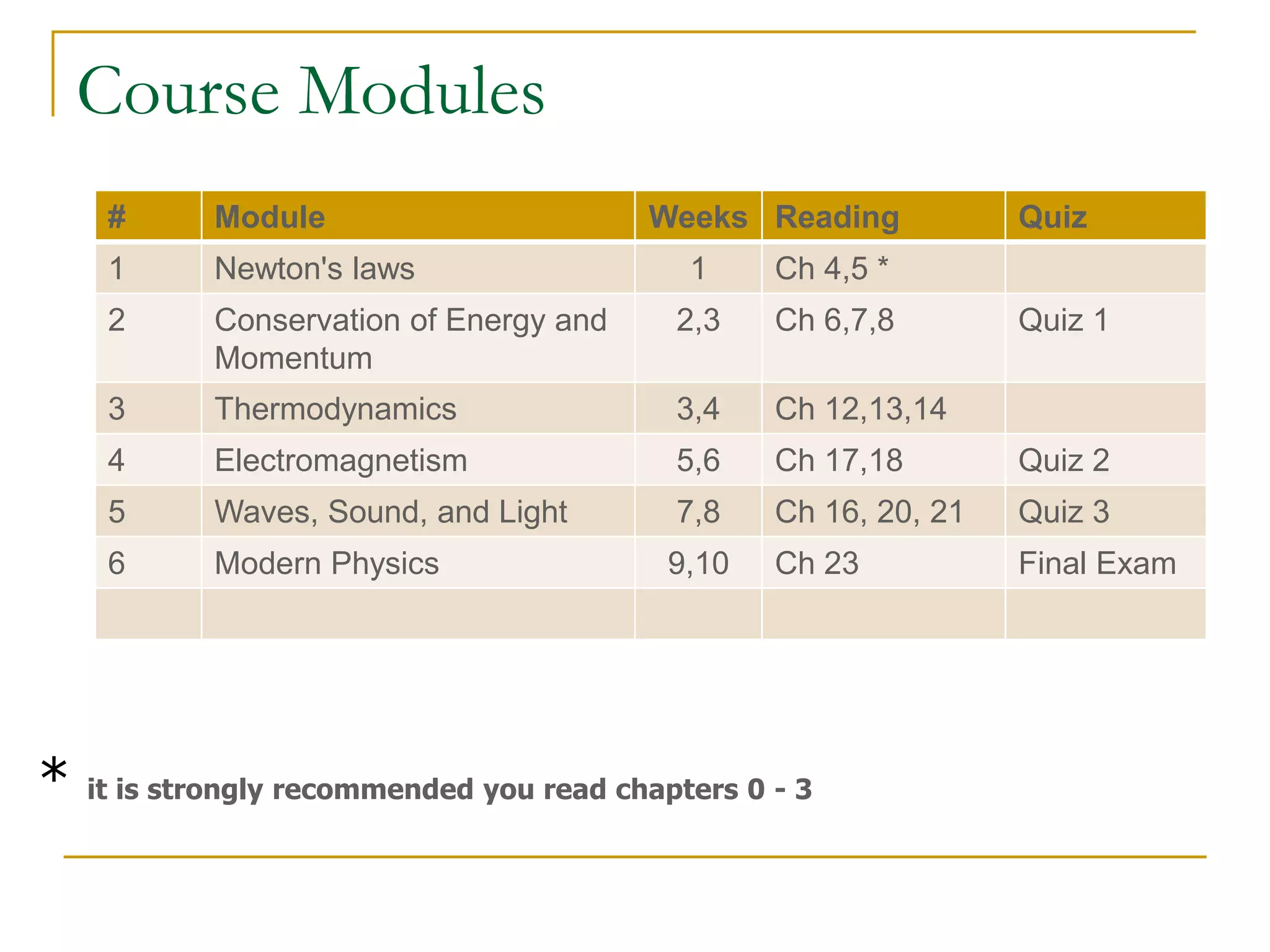
Course Modules
# Module Weeks Reading Quiz
1 Newton's laws 1 Ch 4,5 *
2 Conservation of Energy and
Momentum
2,3 Ch 6,7,8 Quiz 1
3 Thermodynamics 3,4 Ch 12,13,14
4 Electromagnetism 5,6 Ch 17,18 Quiz 2
5 Waves, Sound, and Light 7,8 Ch 16, 20, 21 Quiz 3
6 Modern Physics 9,10 Ch 23 Final Exam
* it is strongly recommended you read chapters 0 - 3
Module 1
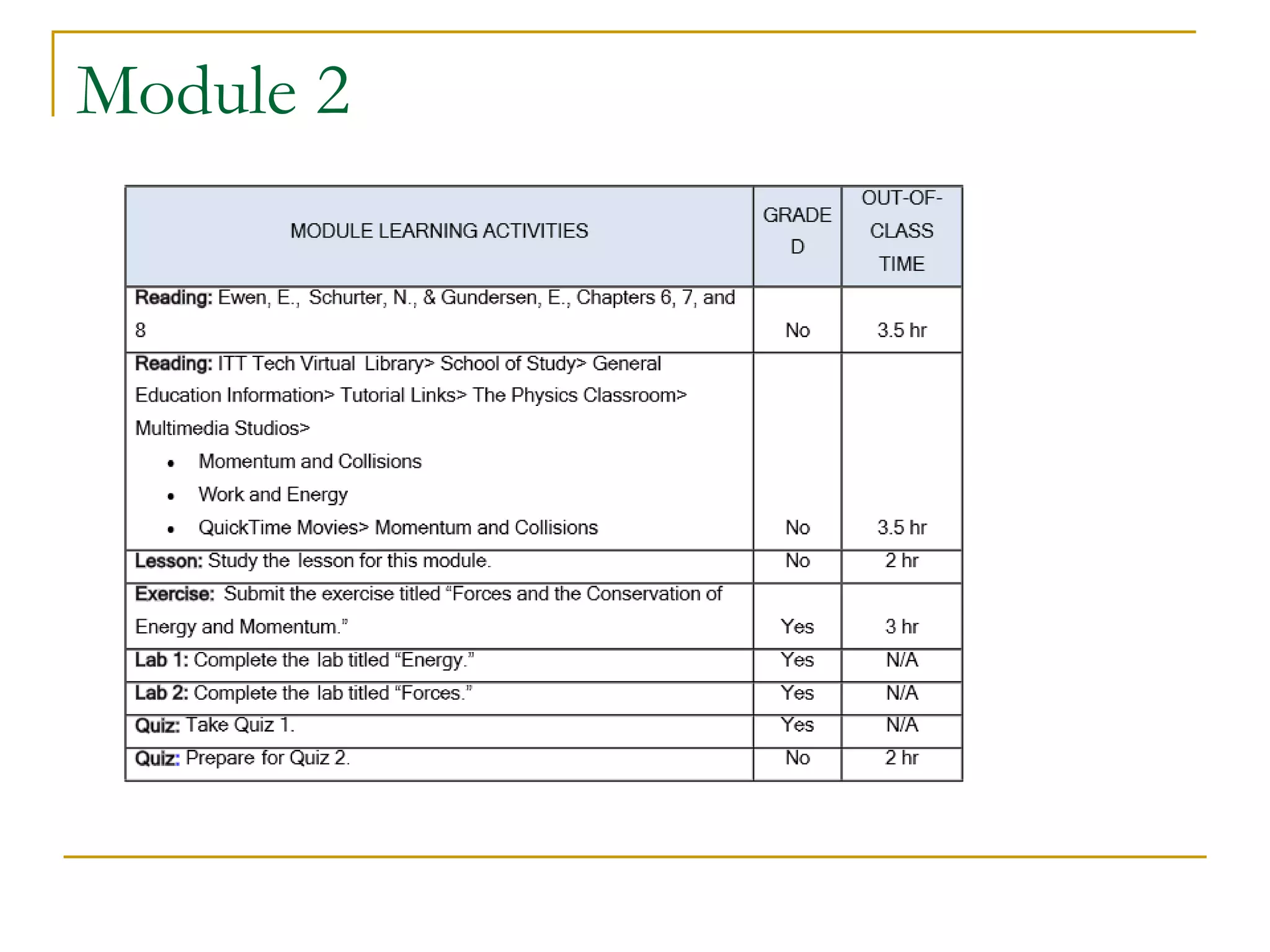
Module 2
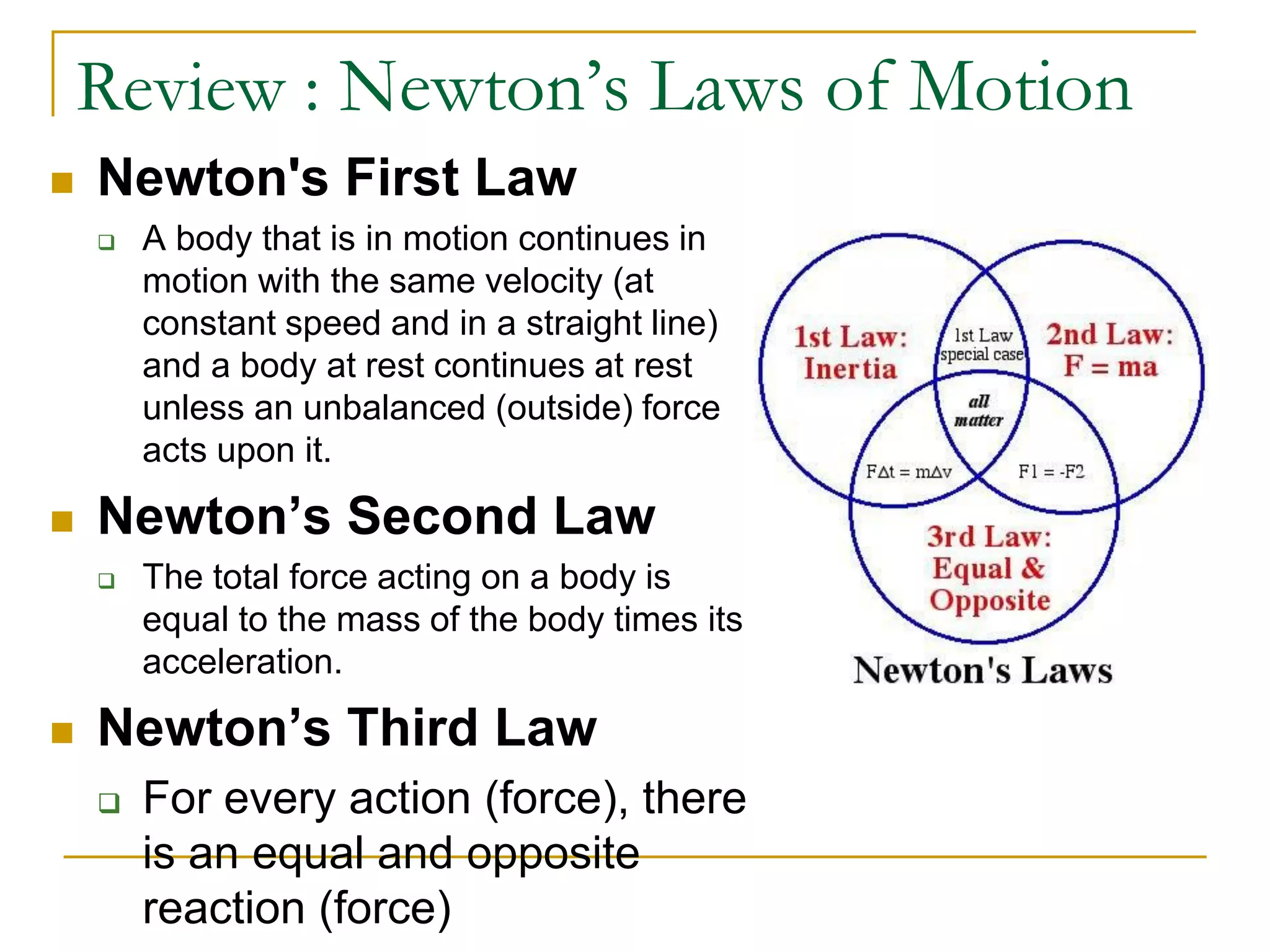
Review : Newton’s Laws of Motion
 Newton's First Law
 A body that is in motion continues in
motion with the same velocity (at
constant speed and in a straight line)
and a body at rest continues at rest
unless an unbalanced (outside) force
acts upon it.
 Newton’s Second Law
 The total force acting on a body is
equal to the mass of the body times its
acceleration.
 Newton’s Third Law
 For every action (force), there
is an equal and opposite
reaction (force)
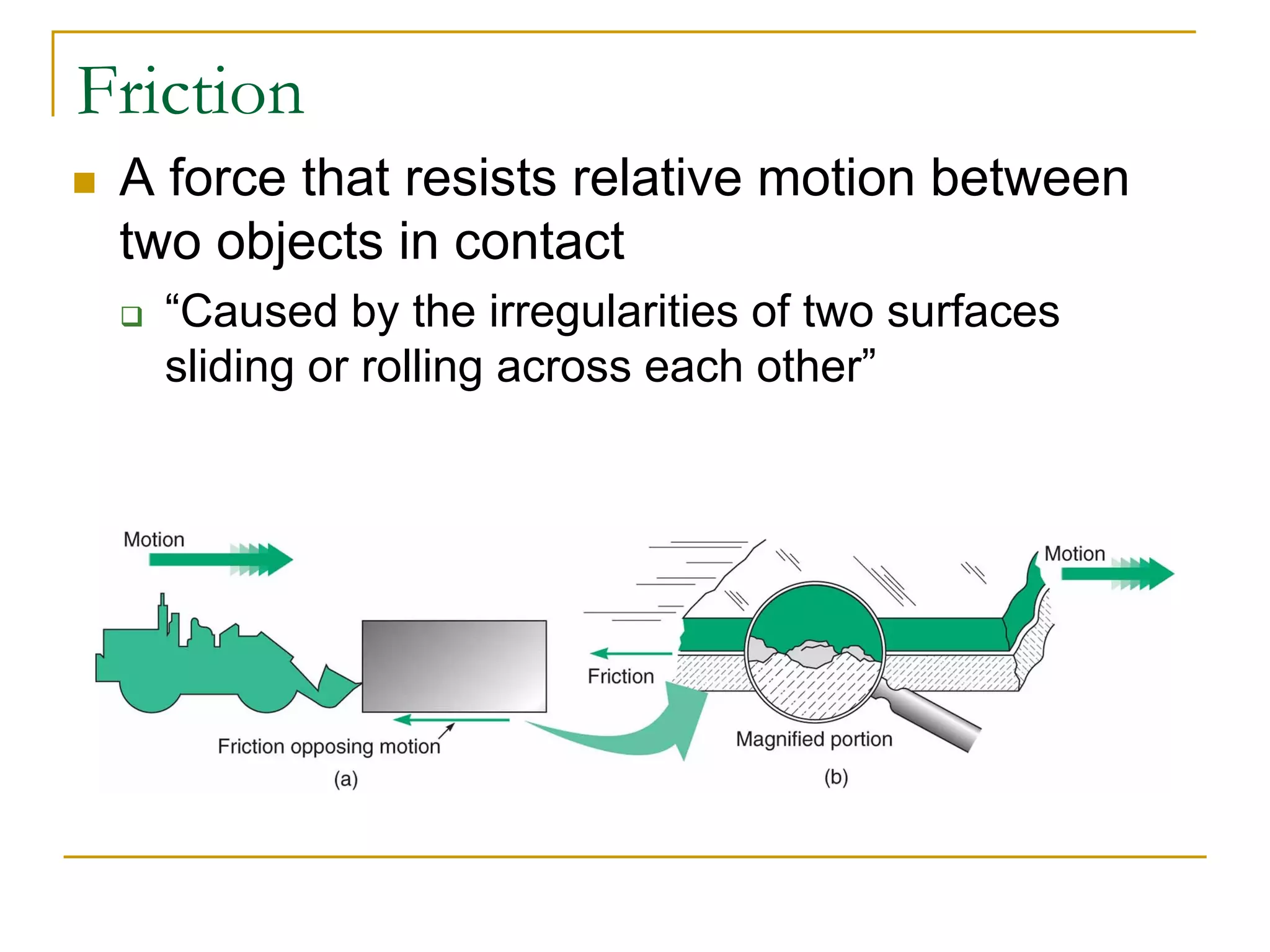
Friction
 A force that resists relative motion between
two objects in contact
 “Caused by the irregularities of two surfaces
sliding or rolling across each other”
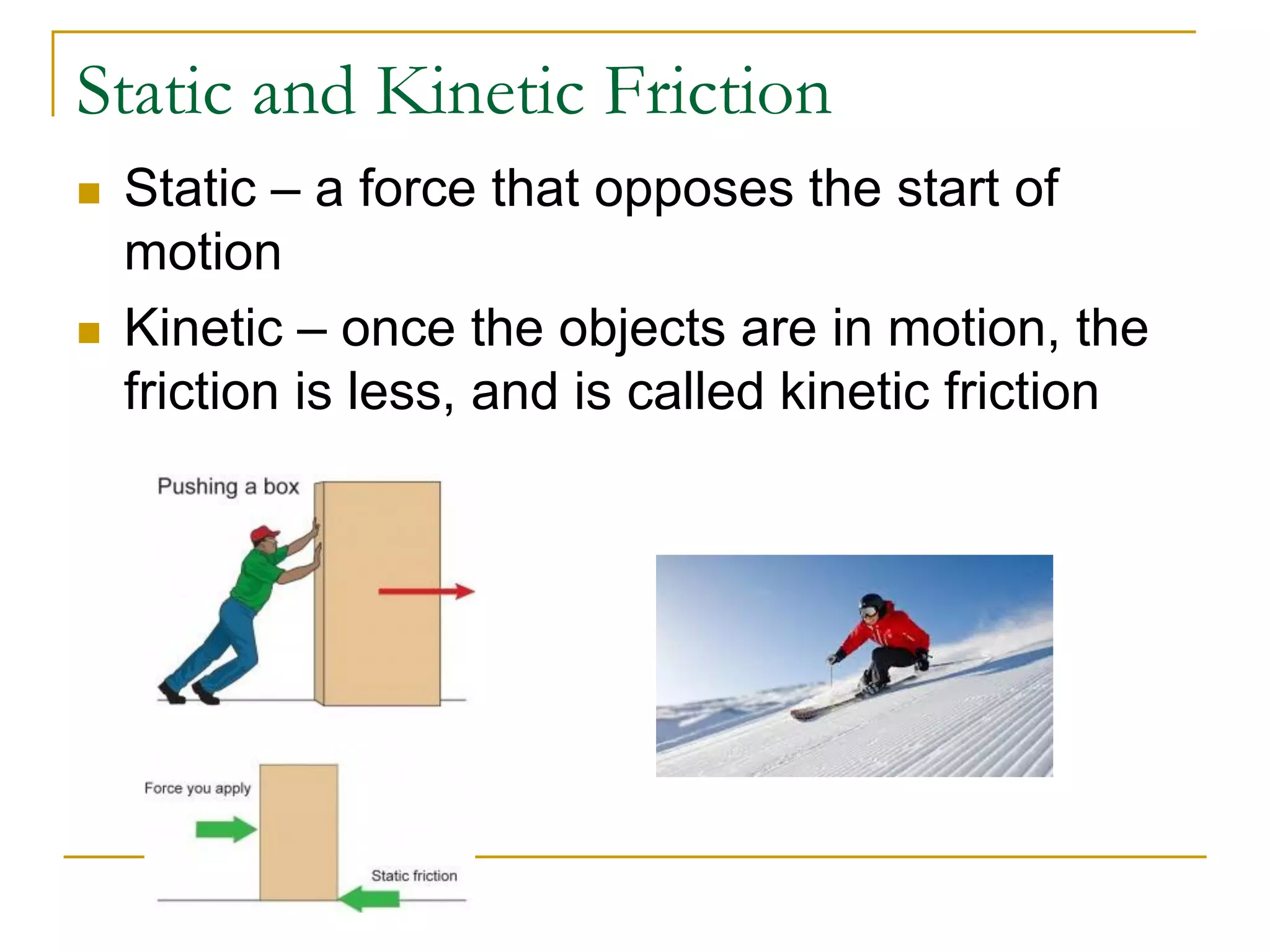
Static and Kinetic Friction
 Static – a force that opposes the start of
motion
 Kinetic – once the objects are in motion, the
friction is less, and is called kinetic friction
Friction
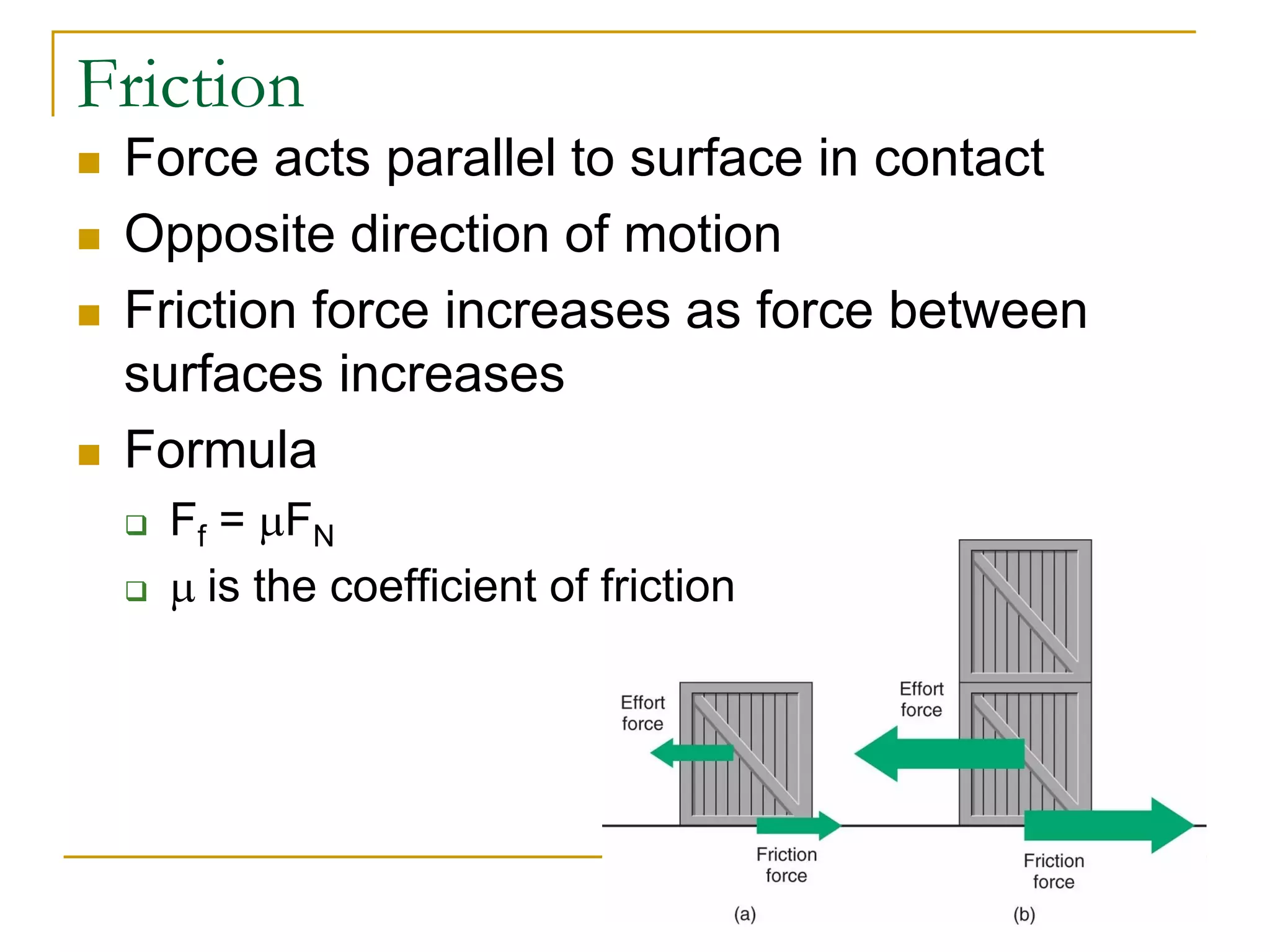
 Force acts parallel to surface in contact
 Opposite direction of motion
 Friction force increases as force between
surfaces increases
 Formula
 Ff = mFN
 m is the coefficient of friction
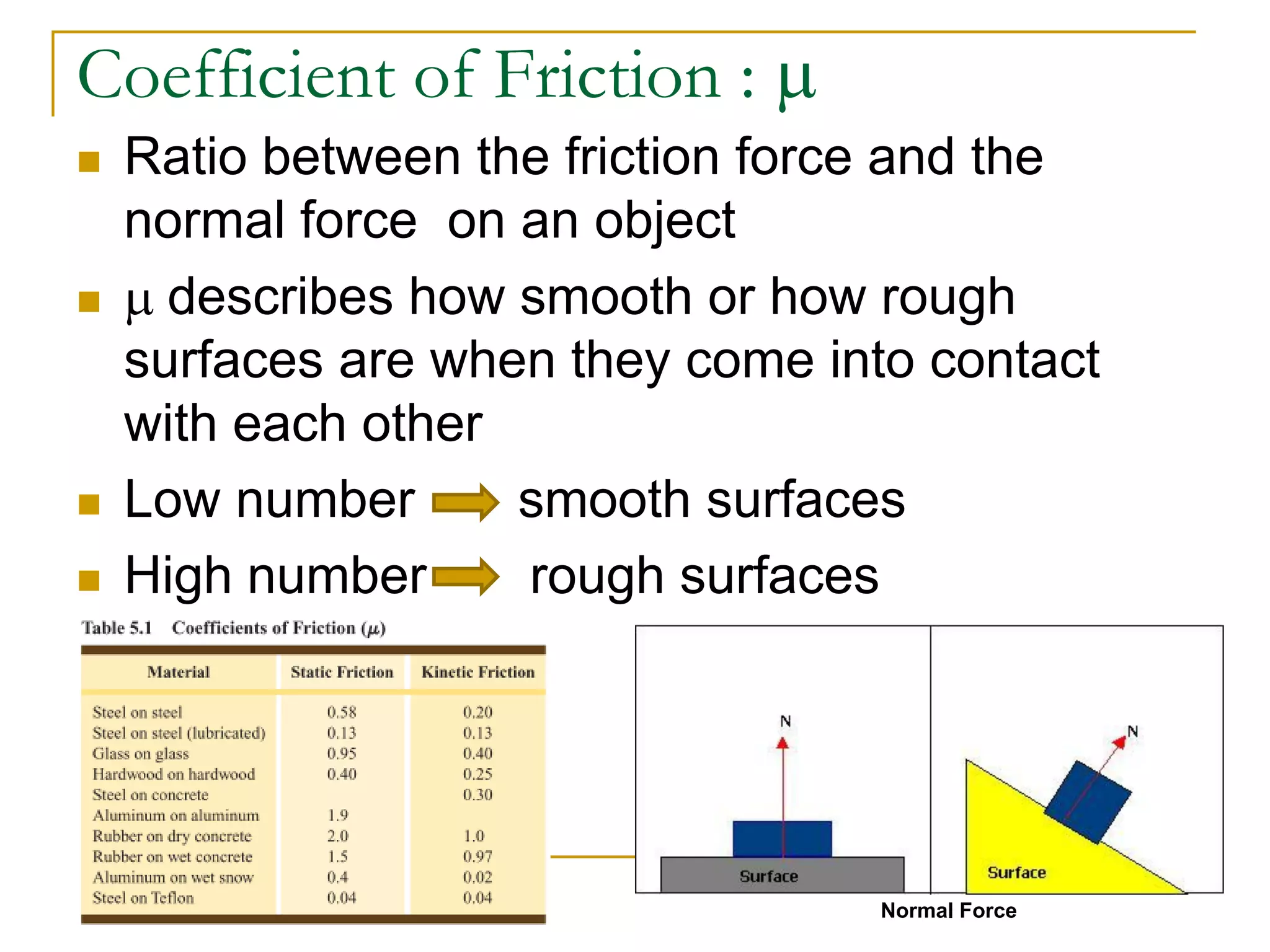
Coefficient of Friction : m
 Ratio between the friction force and the
normal force on an object
 m describes how smooth or how rough
surfaces are when they come into contact
with each other
 Low number smooth surfaces
 High number rough surfaces
Normal Force
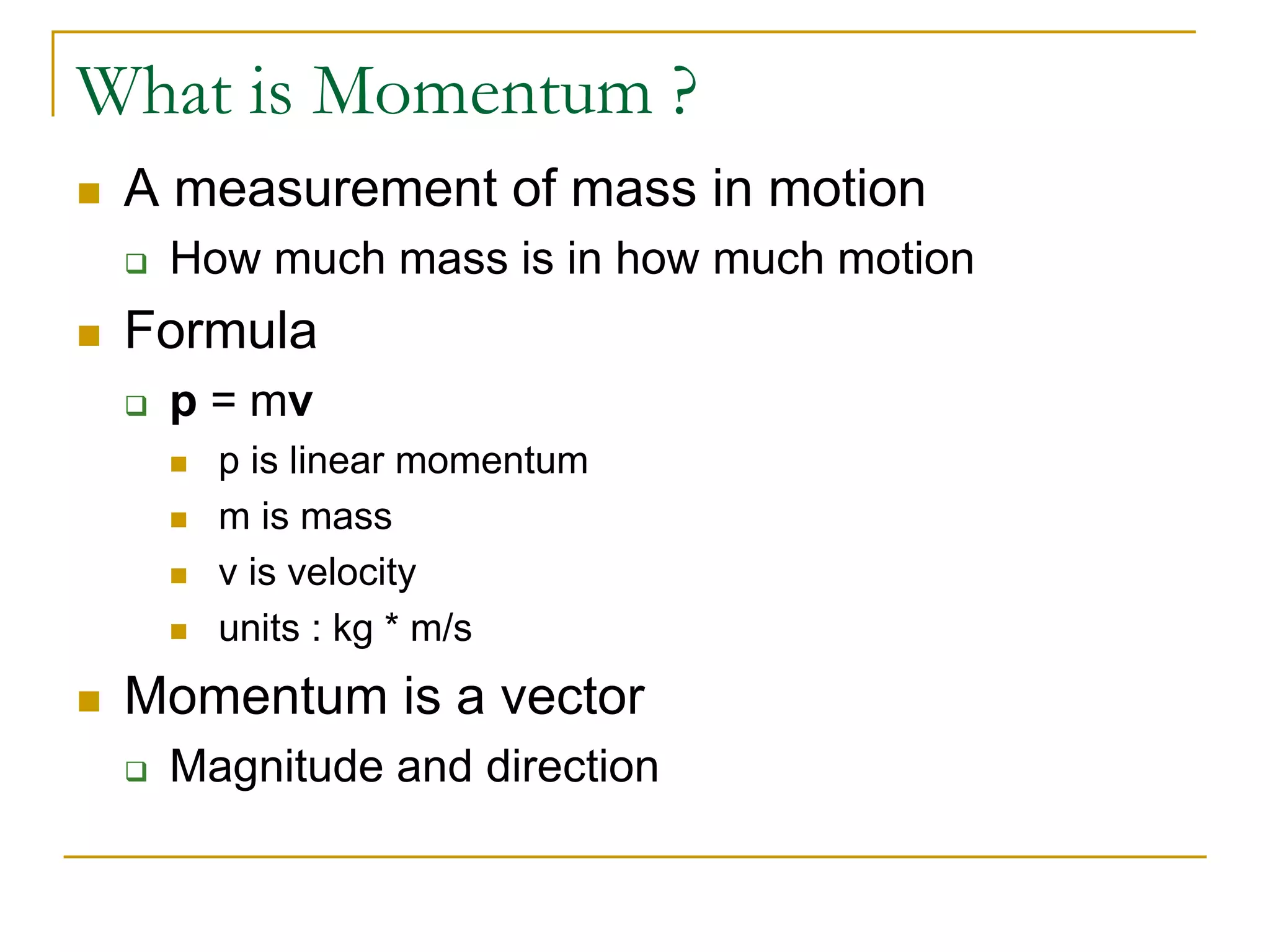
What is Momentum ?
 A measurement of mass in motion
 How much mass is in how much motion
 Formula
 p = mv
 p is linear momentum
 m is mass
 v is velocity
 units : kg * m/s
 Momentum is a vector
 Magnitude and direction
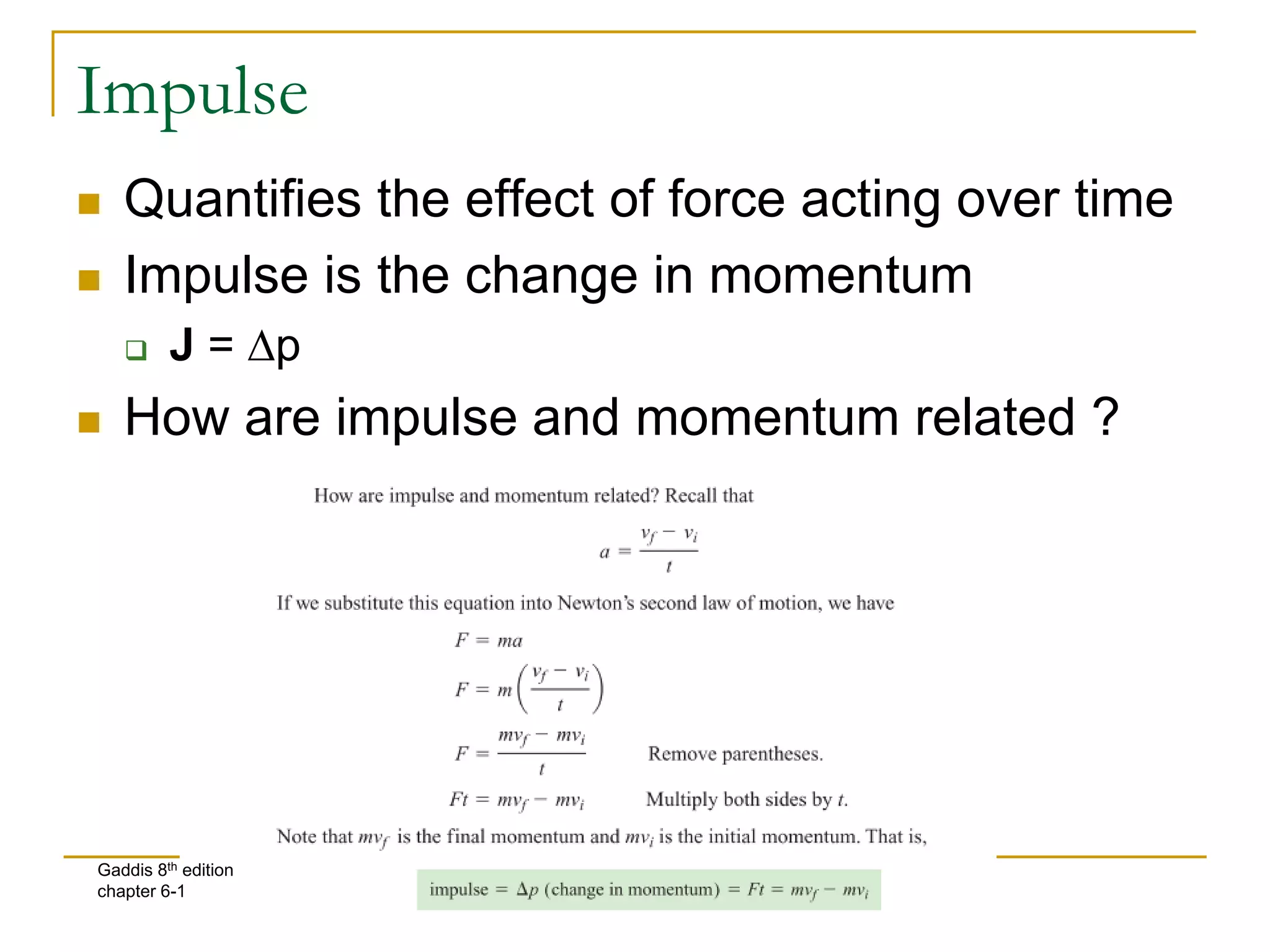
Impulse
 Quantifies the effect of force acting over time
 Impulse is the change in momentum
 J = Dp
 How are impulse and momentum related ?
Gaddis 8th edition
chapter 6-1
Conservation of momentum
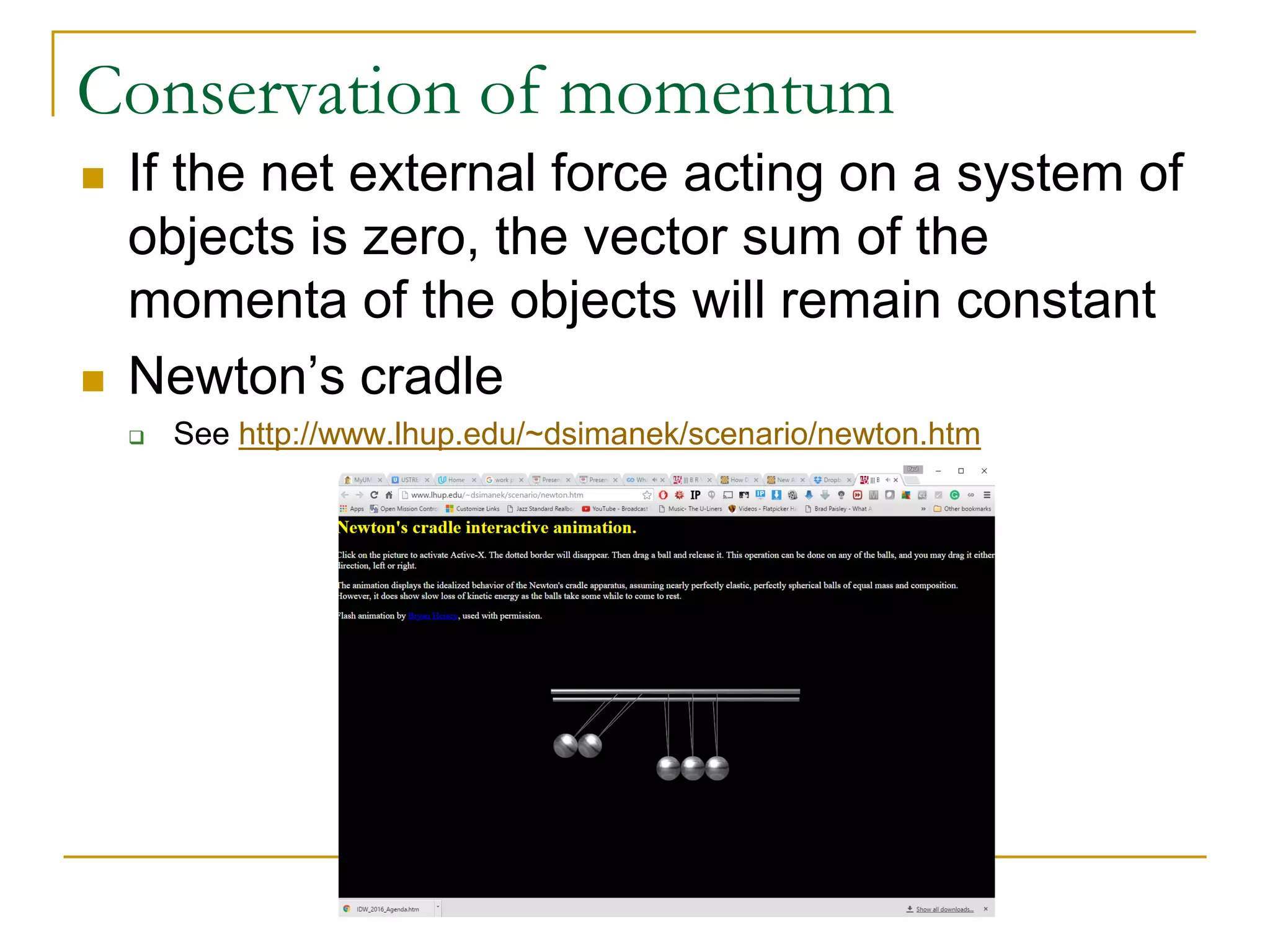
 If the net external force acting on a system of
objects is zero, the vector sum of the
momenta of the objects will remain constant
 Newton’s cradle
 See http://www.lhup.edu/~dsimanek/scenario/newton.htm
Work
 In Physics work means something different
than a task requiring physical or mental effort
 Work is done on an object when a force causes a
displacement of the object
 Work is the product of force in the direction of
displacement
 W = F*s (s is displacement)
 Work = Newton x meters = N * m
 1 N m = 1 joule (pronounced jewel)
 US Units : feet * pounds = foot pound
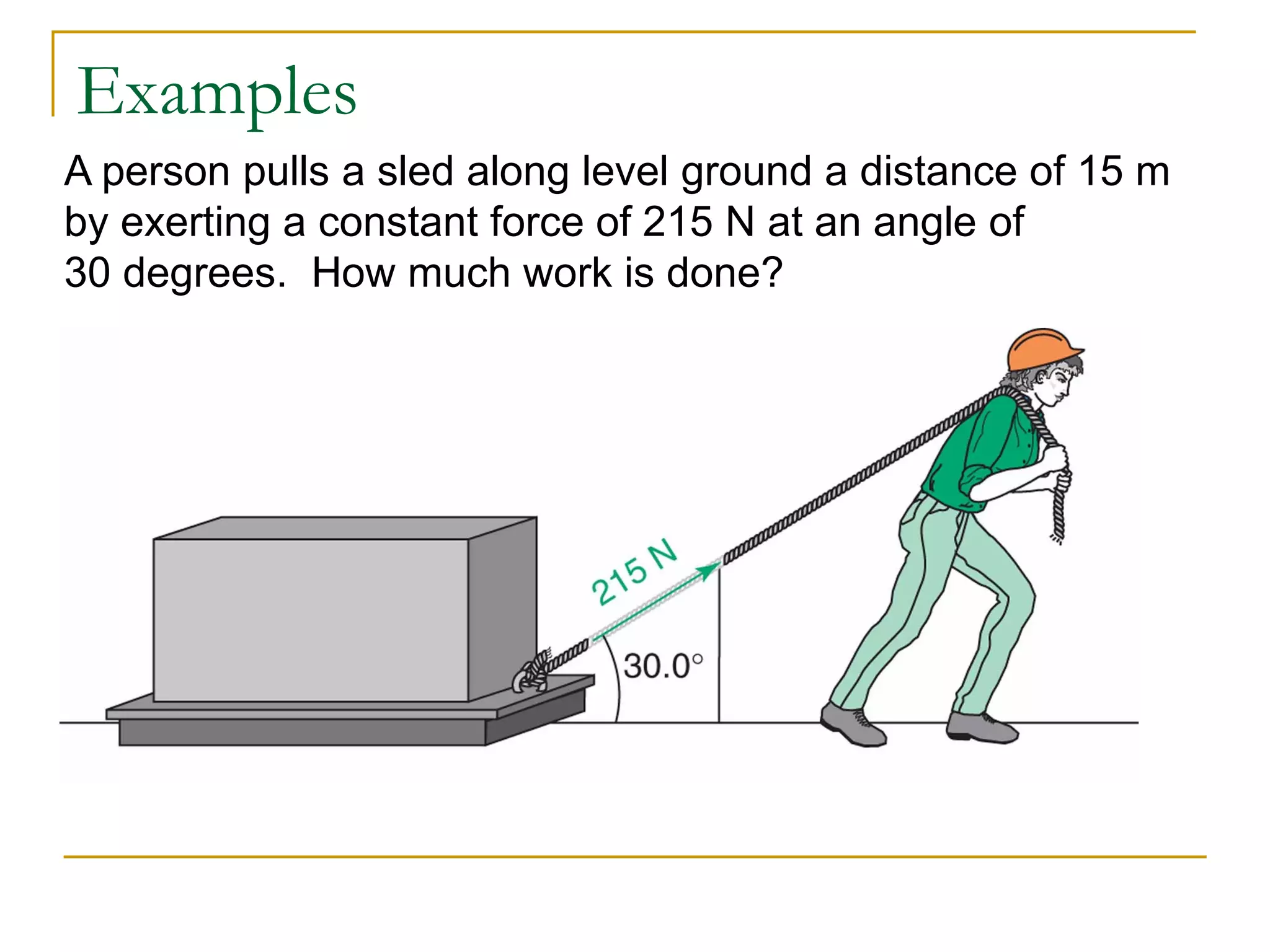
Examples
A person pulls a sled along level ground a distance of 15 m
by exerting a constant force of 215 N at an angle of
30 degrees. How much work is done?
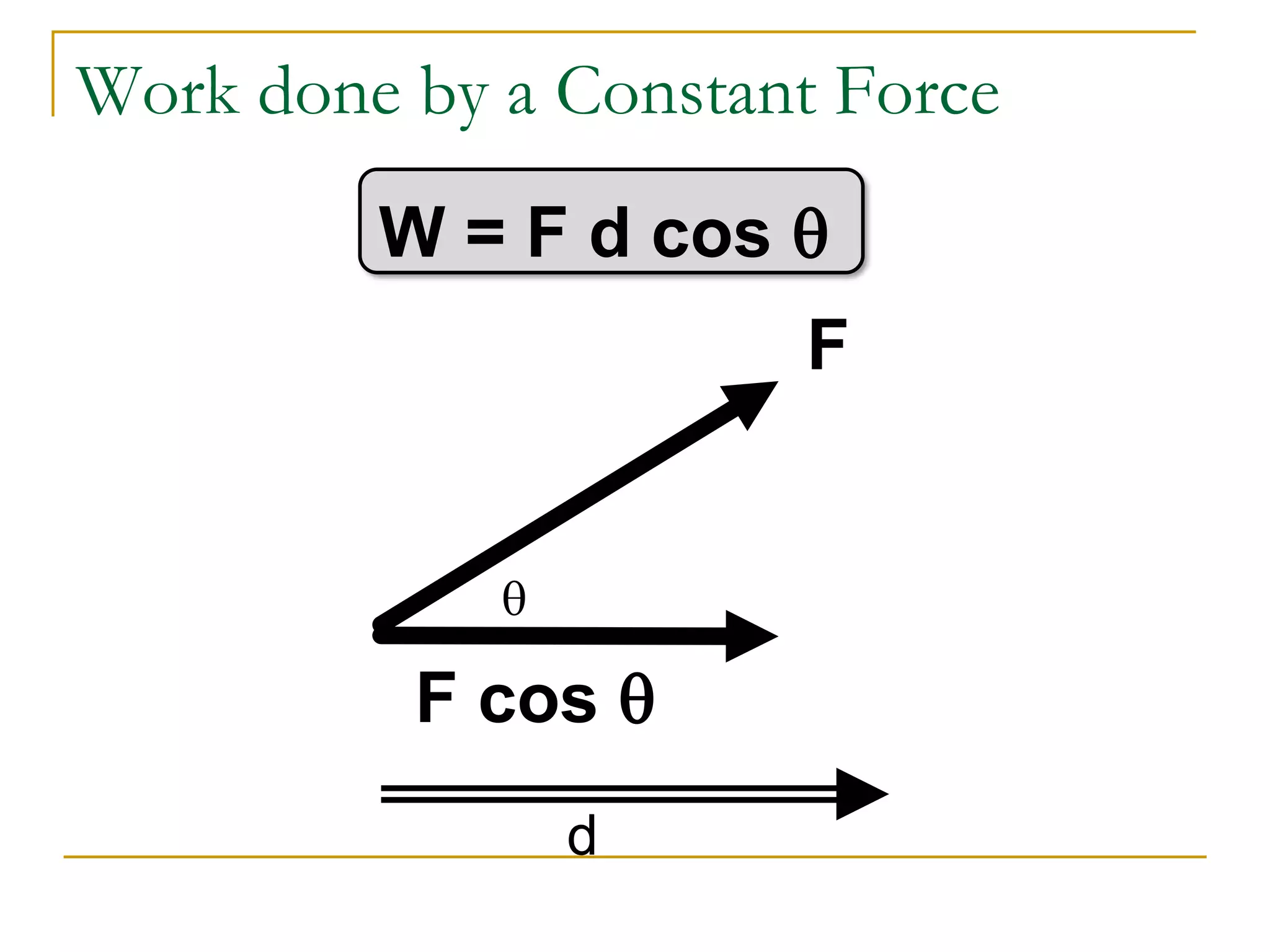
Work done by a Constant Force
W = F d cos q
q
F
F cos q
d
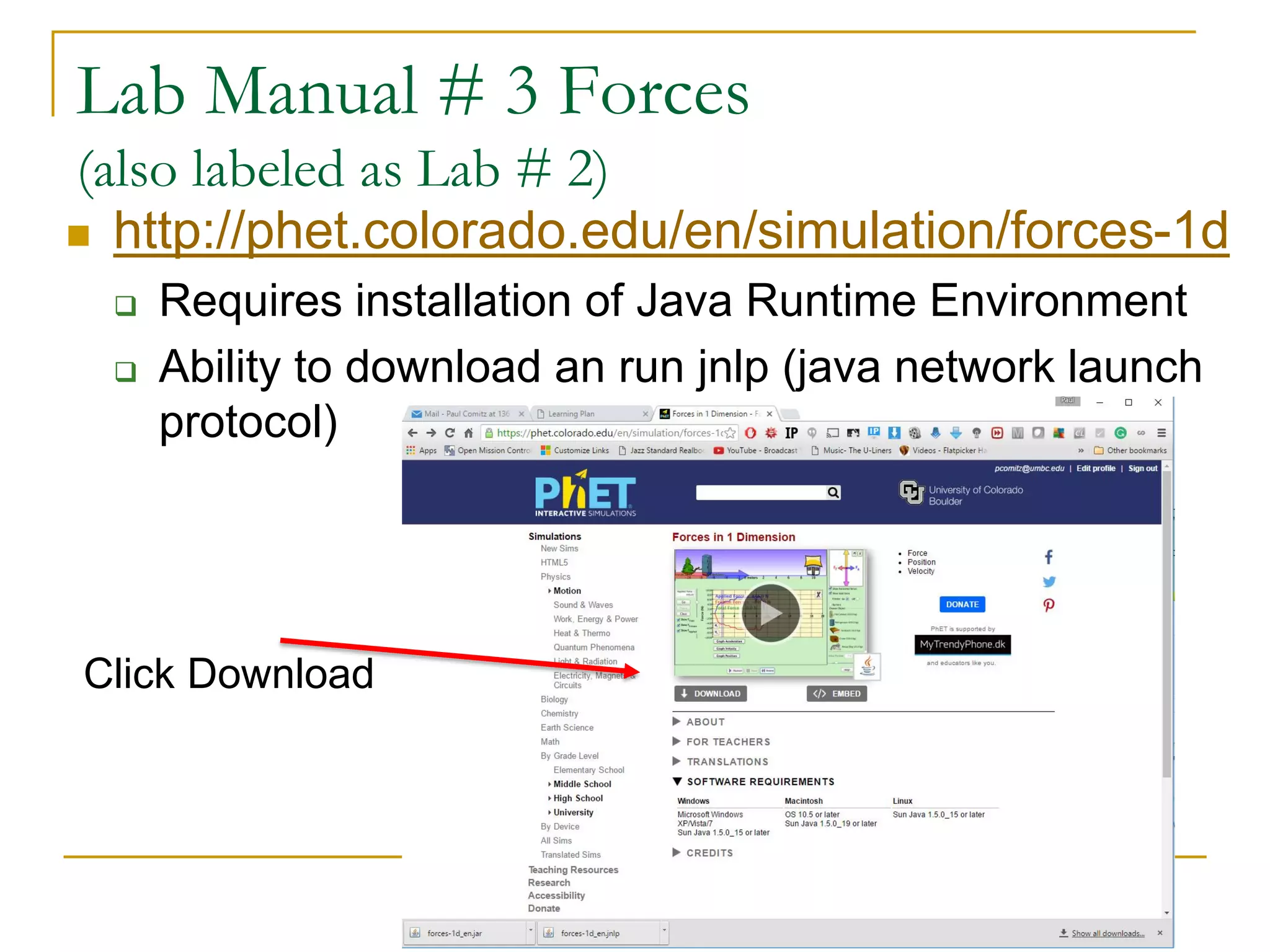
Lab Manual # 3 Forces
(also labeled as Lab # 2)
 http://phet.colorado.edu/en/simulation/forces-1d
 Requires installation of Java Runtime Environment
 Ability to download an run jnlp (java network launch
protocol)
Click Download
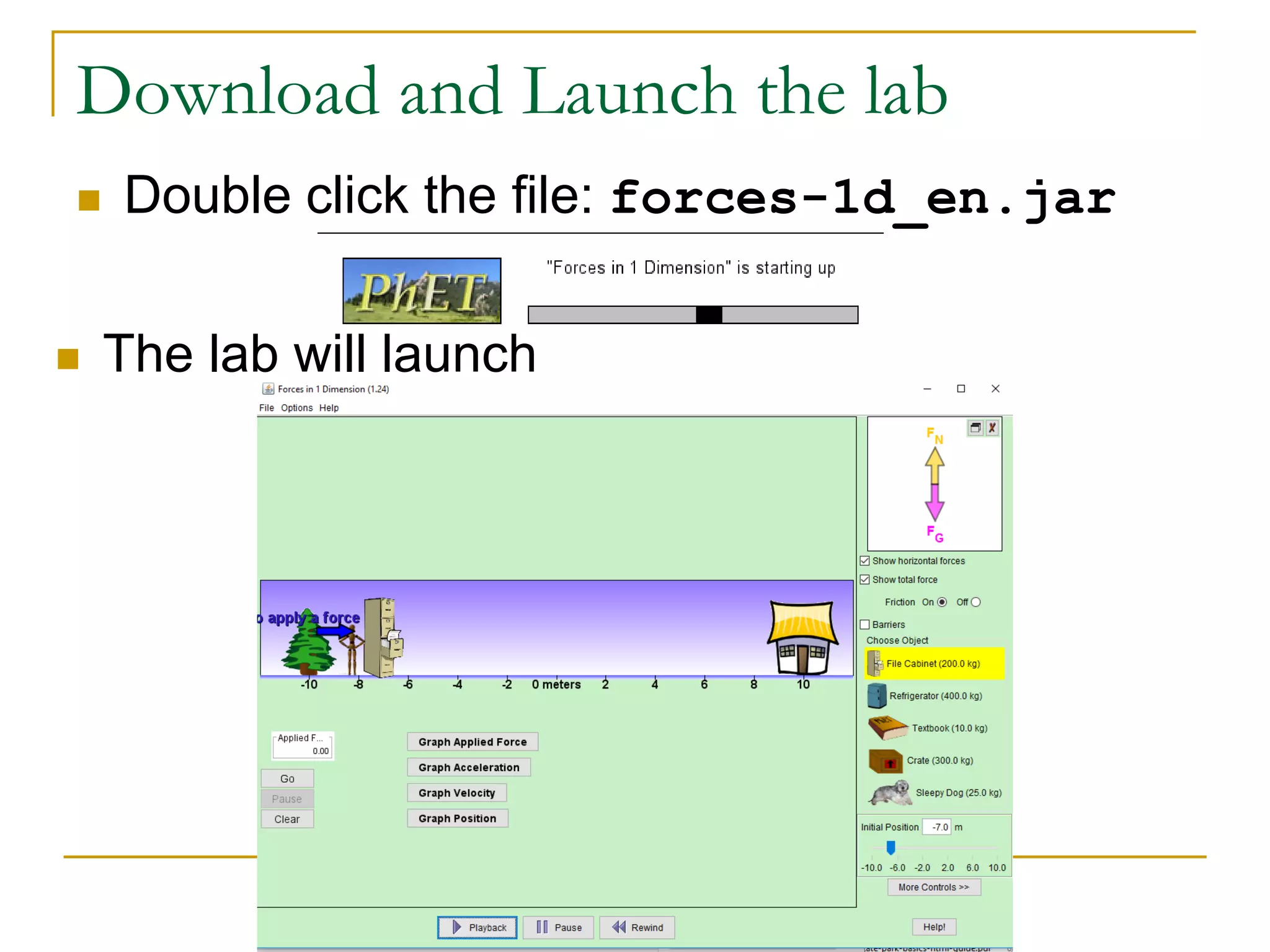
Download and Launch the lab
 Double click the file: forces-1d_en.jar
 The lab will launch
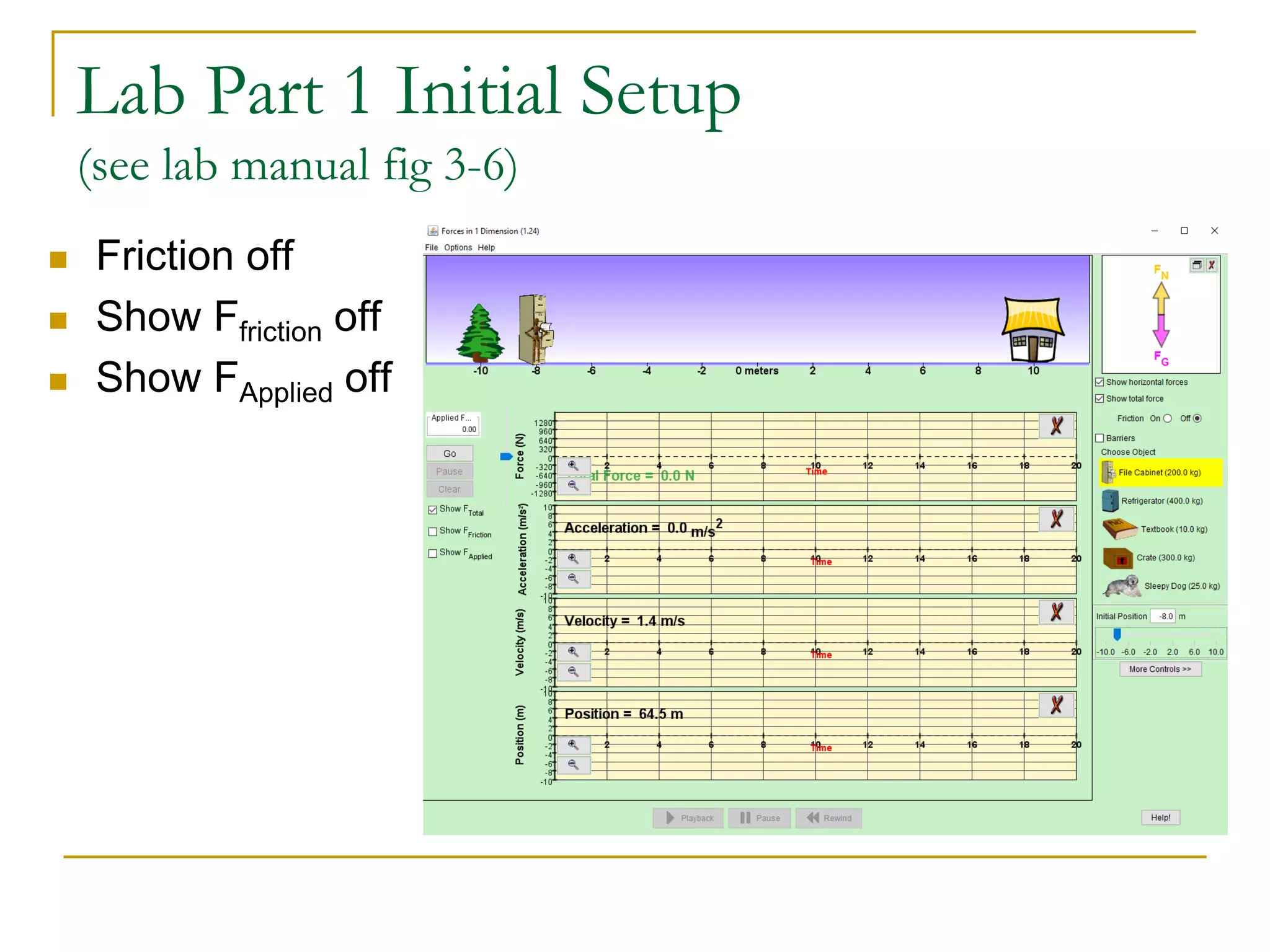
Lab Part 1 Initial Setup
(see lab manual fig 3-6)
 Friction off
 Show Ffriction off
 Show FApplied off
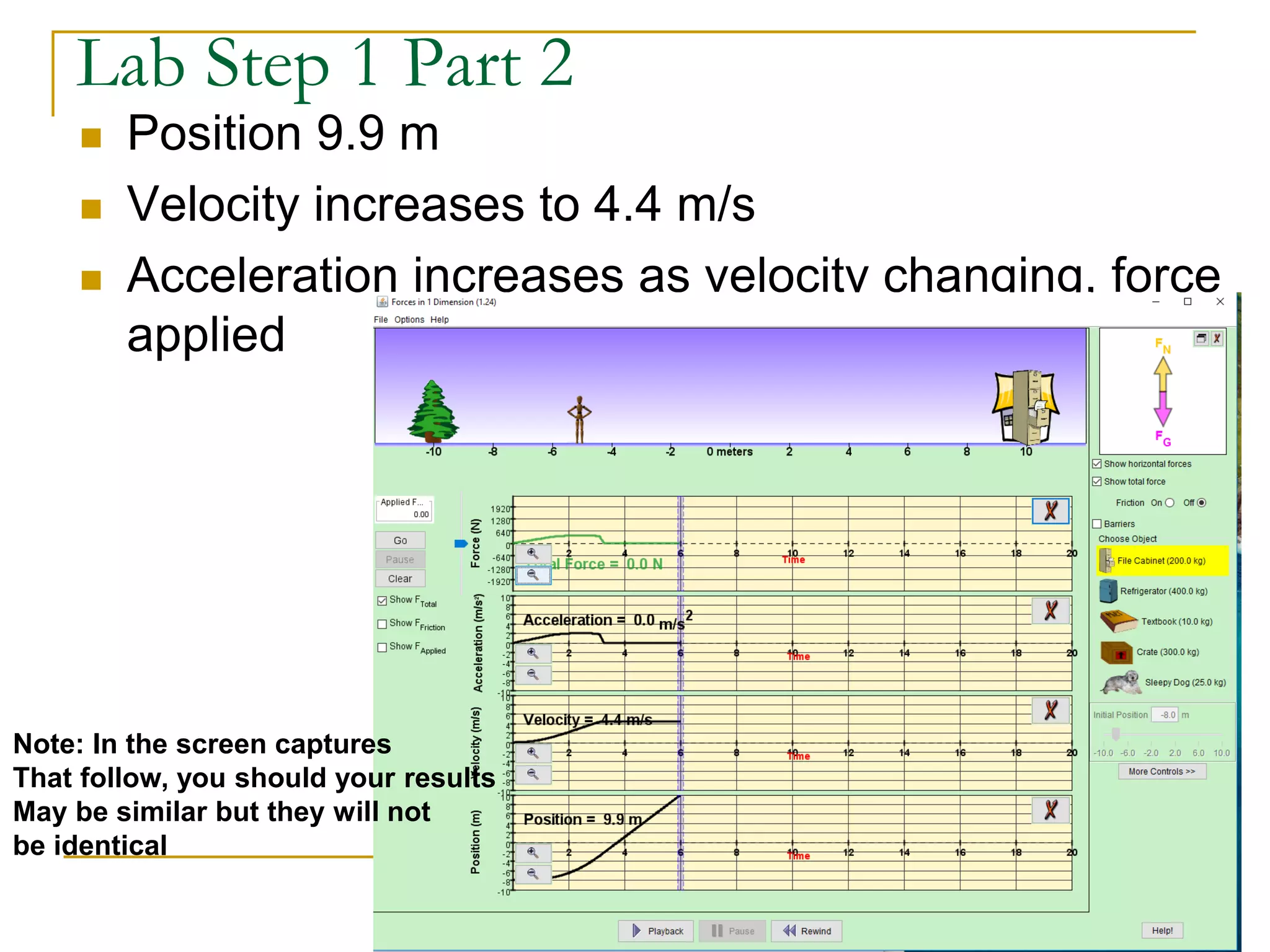
Lab Step 1 Part 2
 Position 9.9 m
 Velocity increases to 4.4 m/s
 Acceleration increases as velocity changing, force
applied
Note: In the screen captures
That follow, you should your results
May be similar but they will not
be identical
Lab Step 3
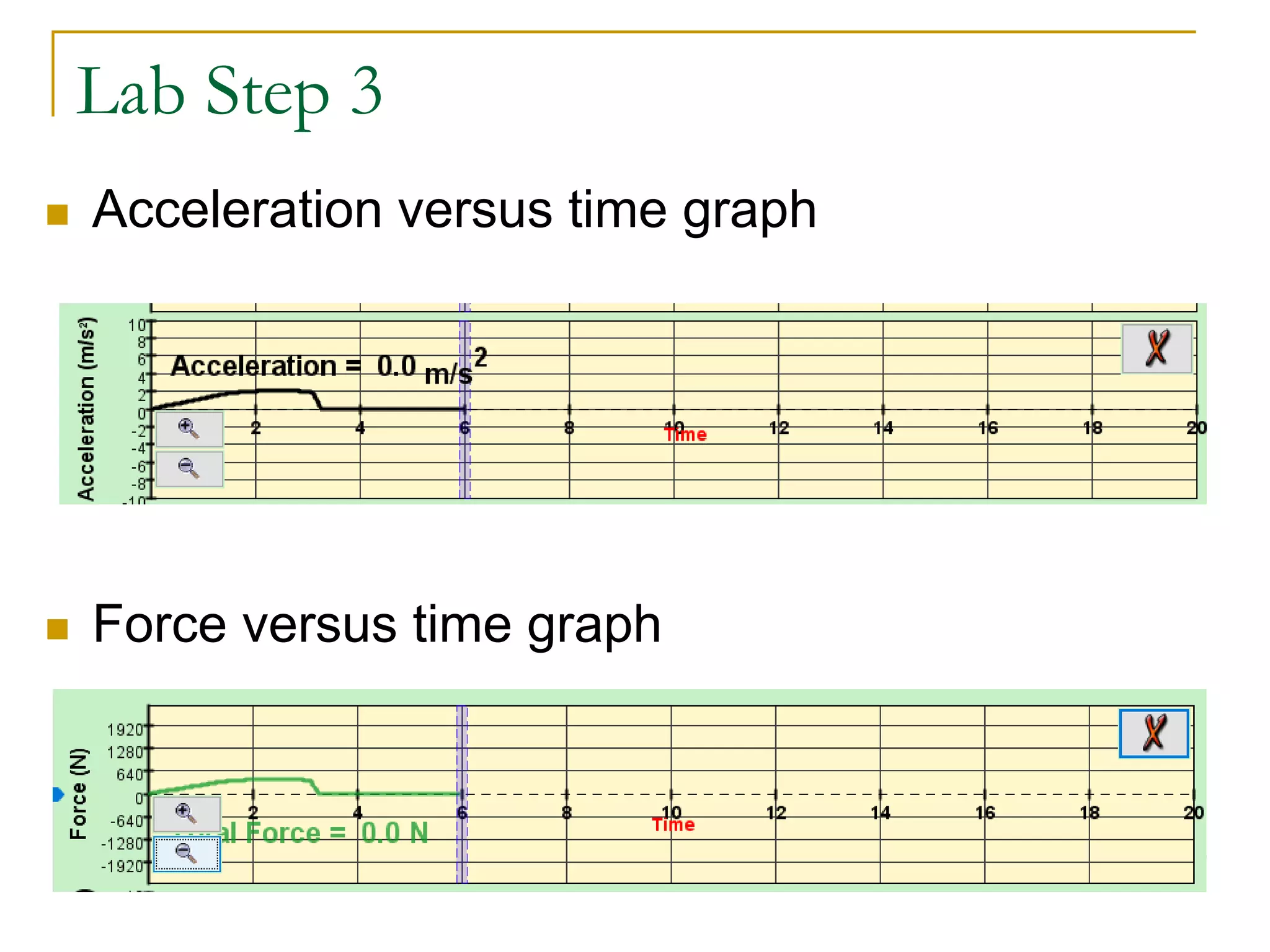
 Acceleration versus time graph
 Force versus time graph
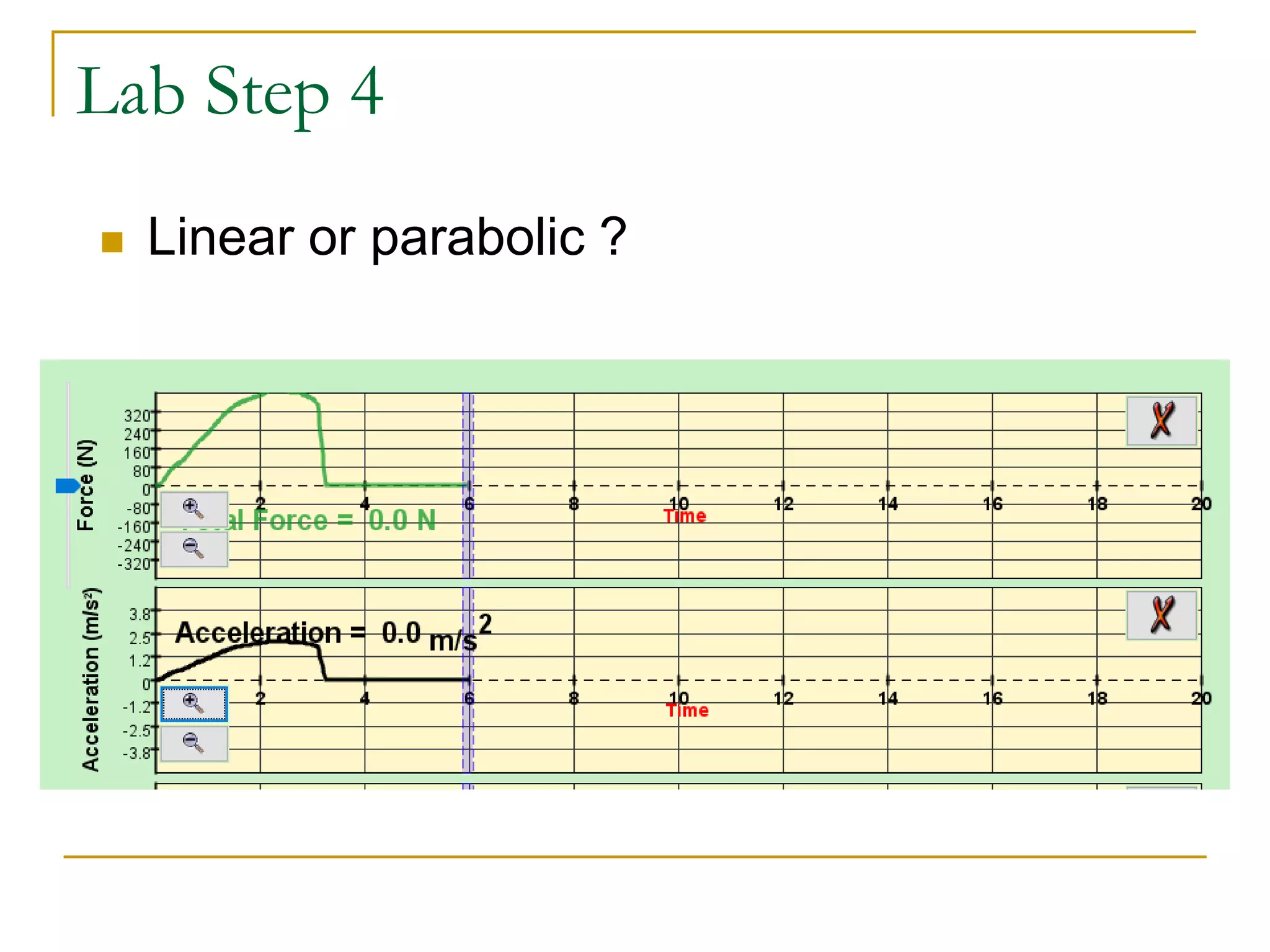
Lab Step 4
 Linear or parabolic ?
Lab Step 4b
 Newton's Second Law. "If the net force on an
object is not zero, the object will accelerate.
The direction of the acceleration is the same
as the direction of the net force. The
magnitude of the acceleration is
directly proportional to the net force
applied, and inversely proportional to the
mass of the object.
Lab Step 4c/d
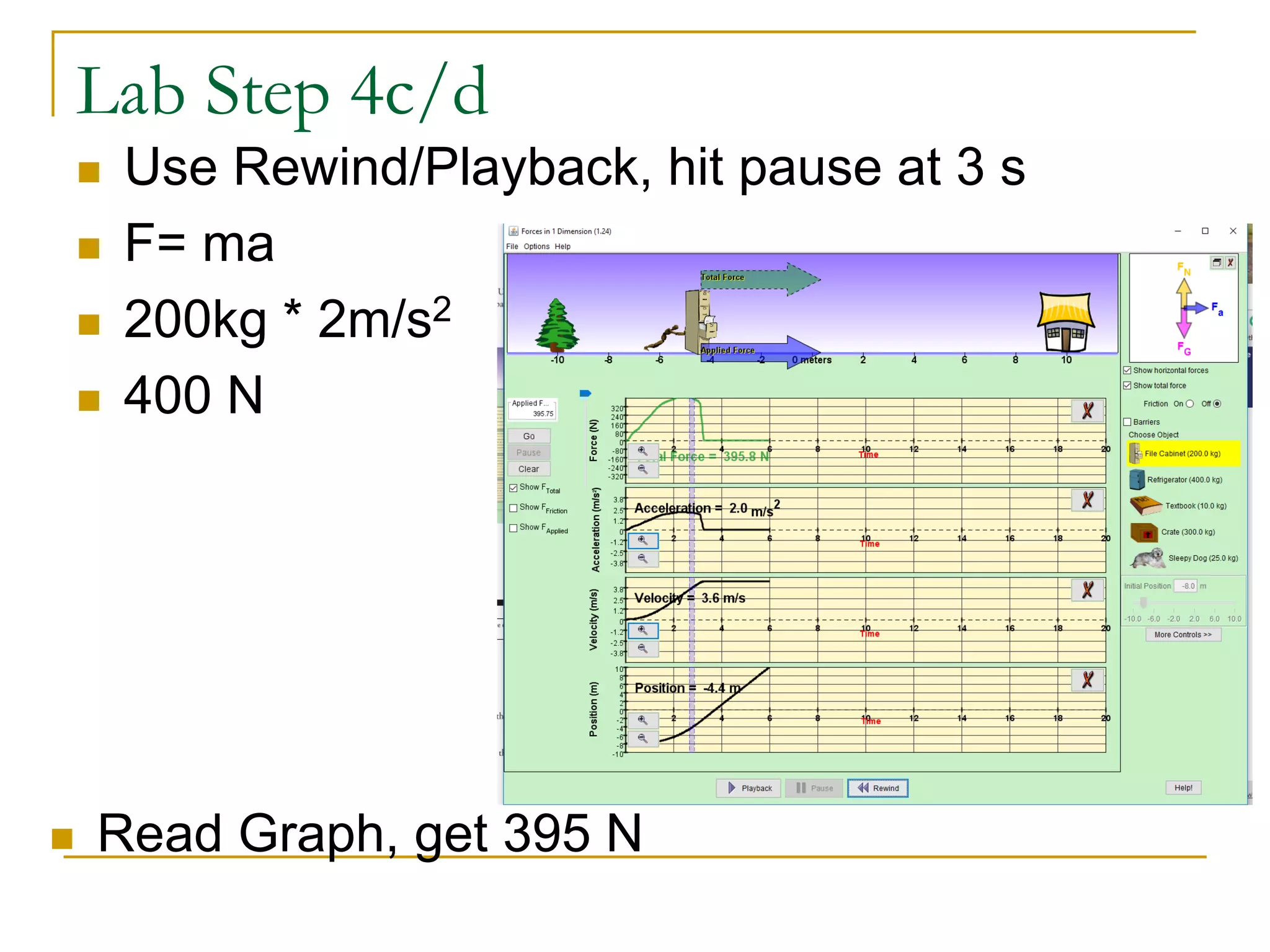
 Use Rewind/Playback, hit pause at 3 s
 F= ma
 200kg * 2m/s2
 400 N
 Read Graph, get 395 N
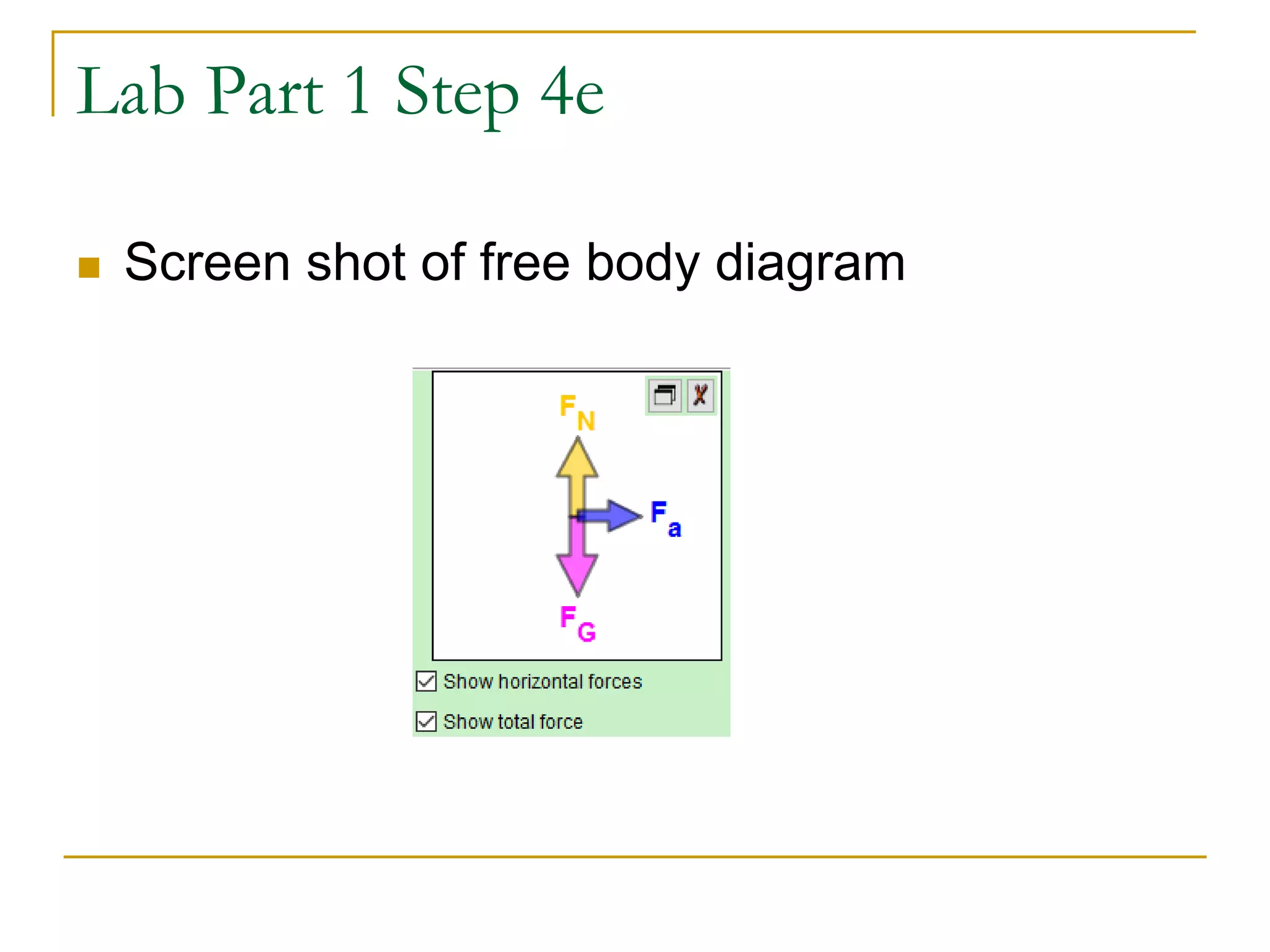
Lab Part 1 Step 4e
 Screen shot of free body diagram
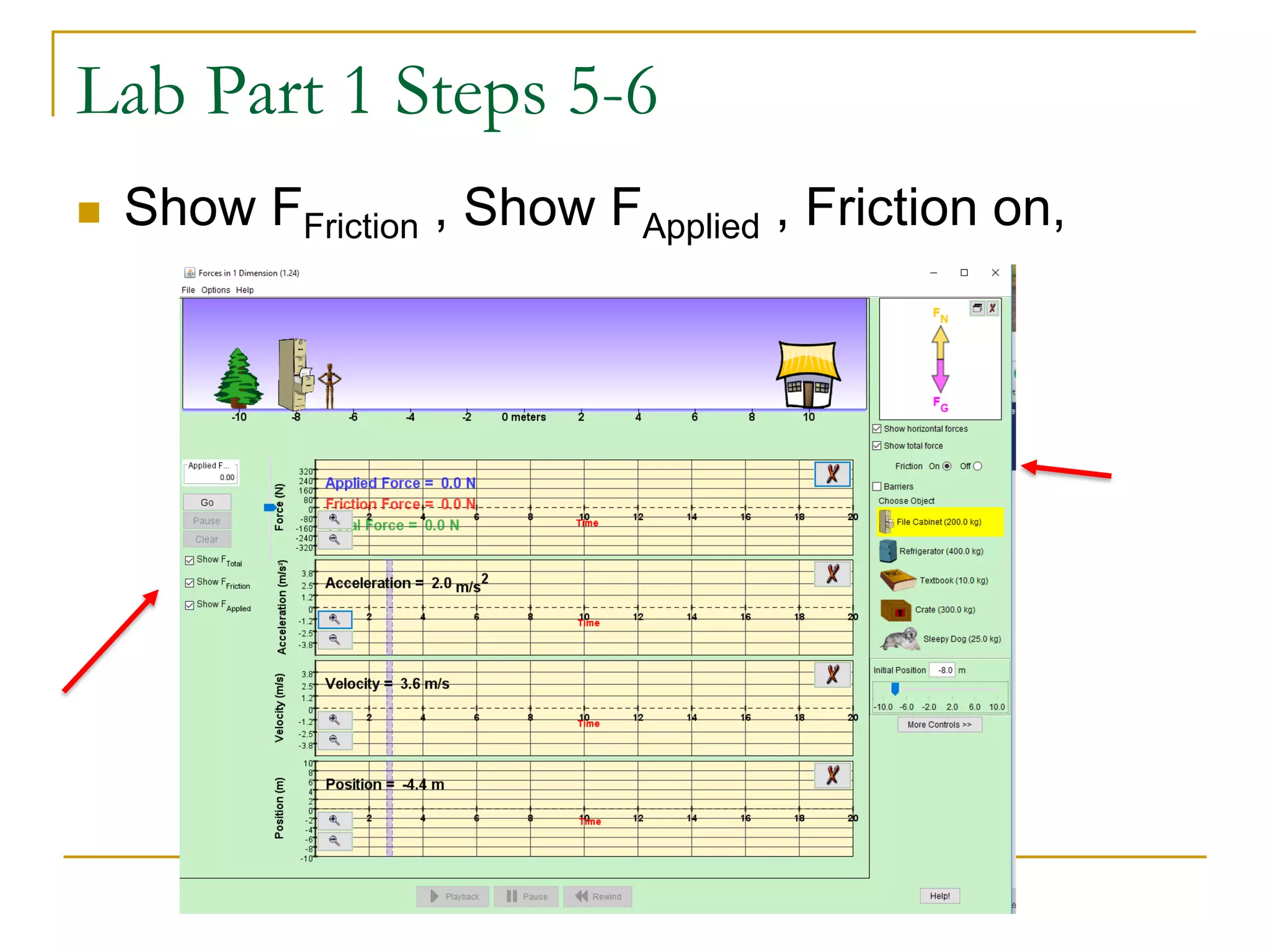
Lab Part 1 Steps 5-6
 Show FFriction , Show FApplied , Friction on,
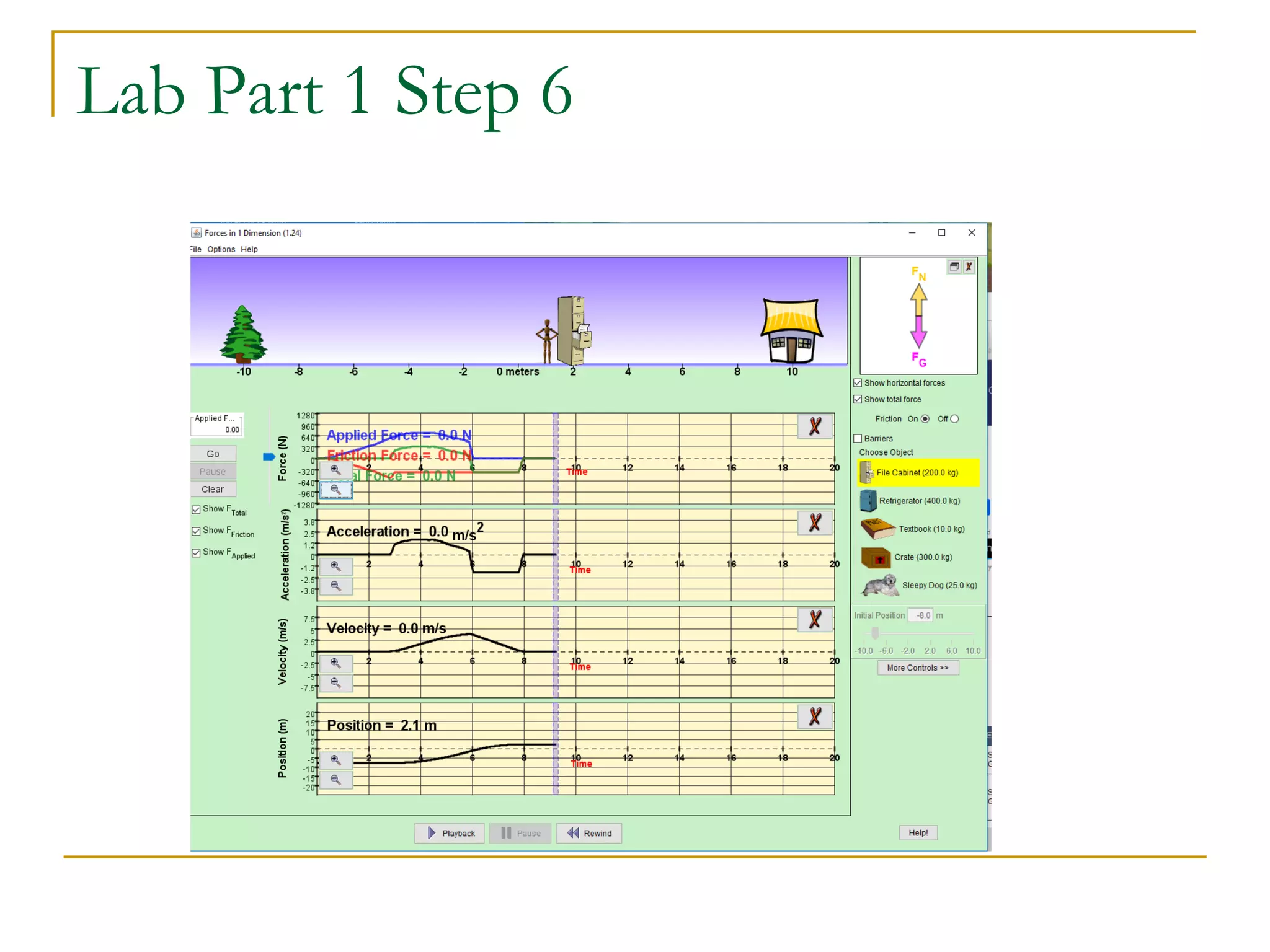
Lab Part 1 Step 6
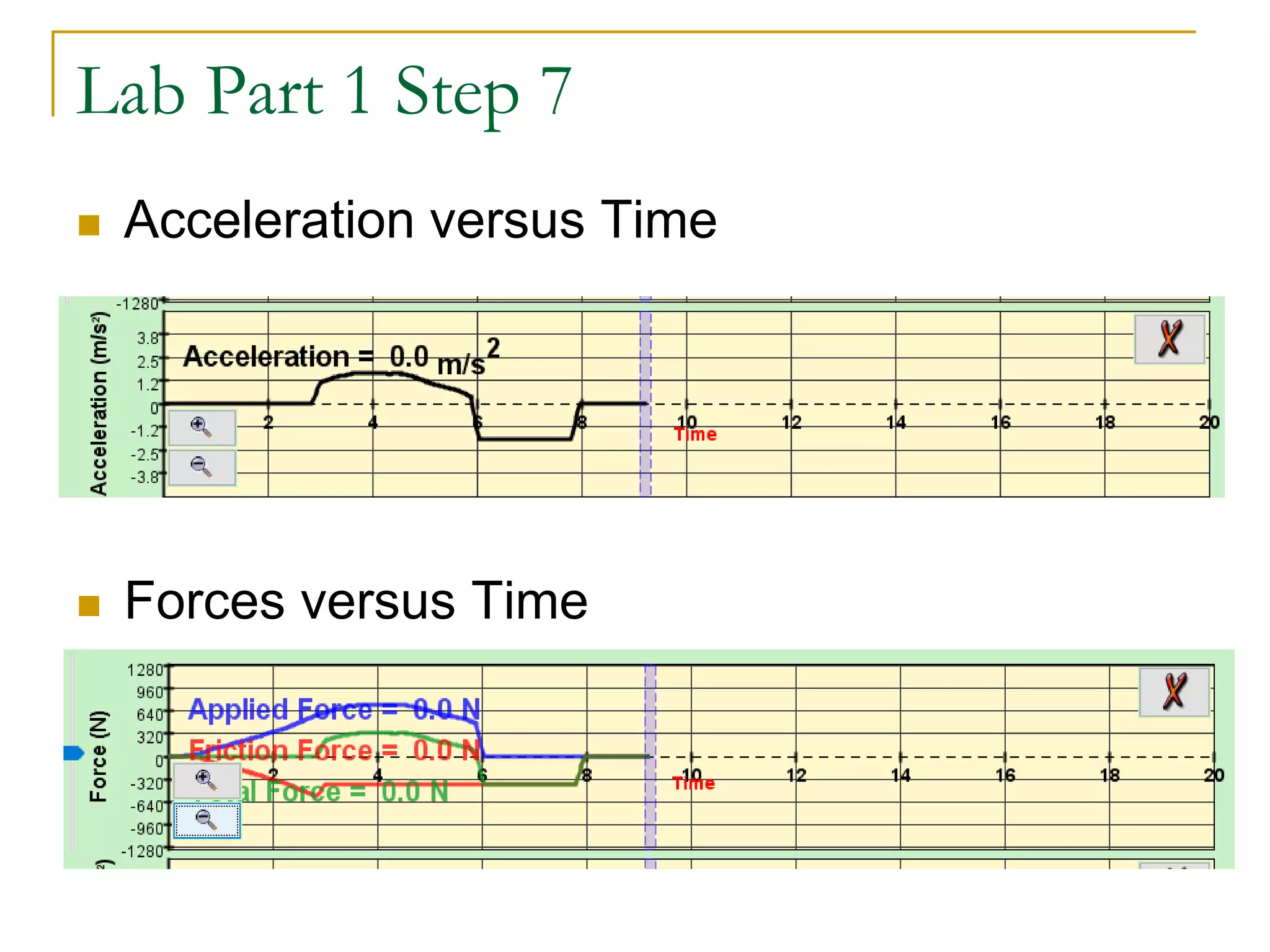
Lab Part 1 Step 7
 Acceleration versus Time
 Forces versus Time
Lab Part 1 Step 8
 A. linear or parabolic
 B. Order the forces from greatest to highest
 C. FTotal
 D. Acceleration
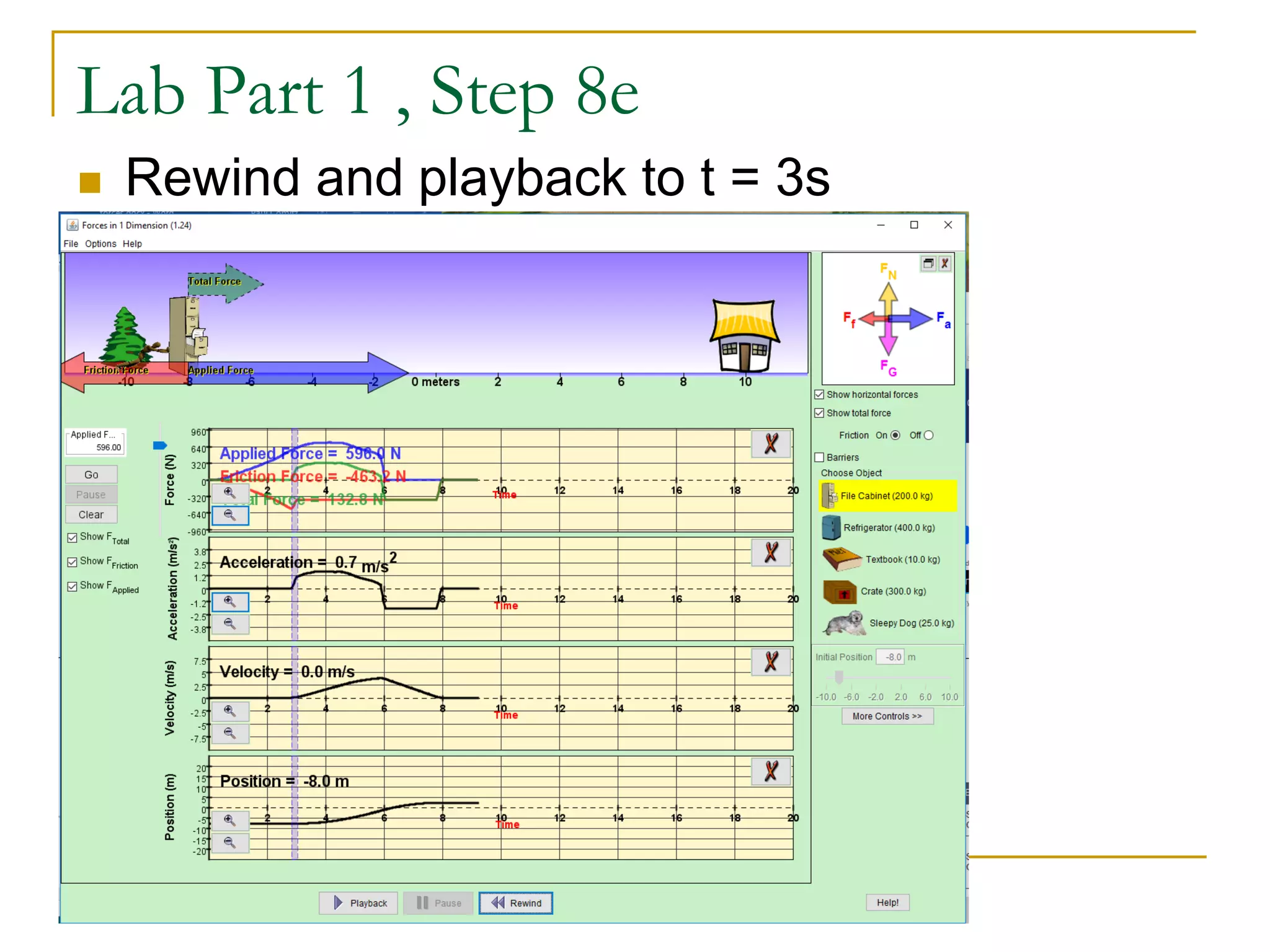
Lab Part 1 , Step 8e
 Rewind and playback to t = 3s
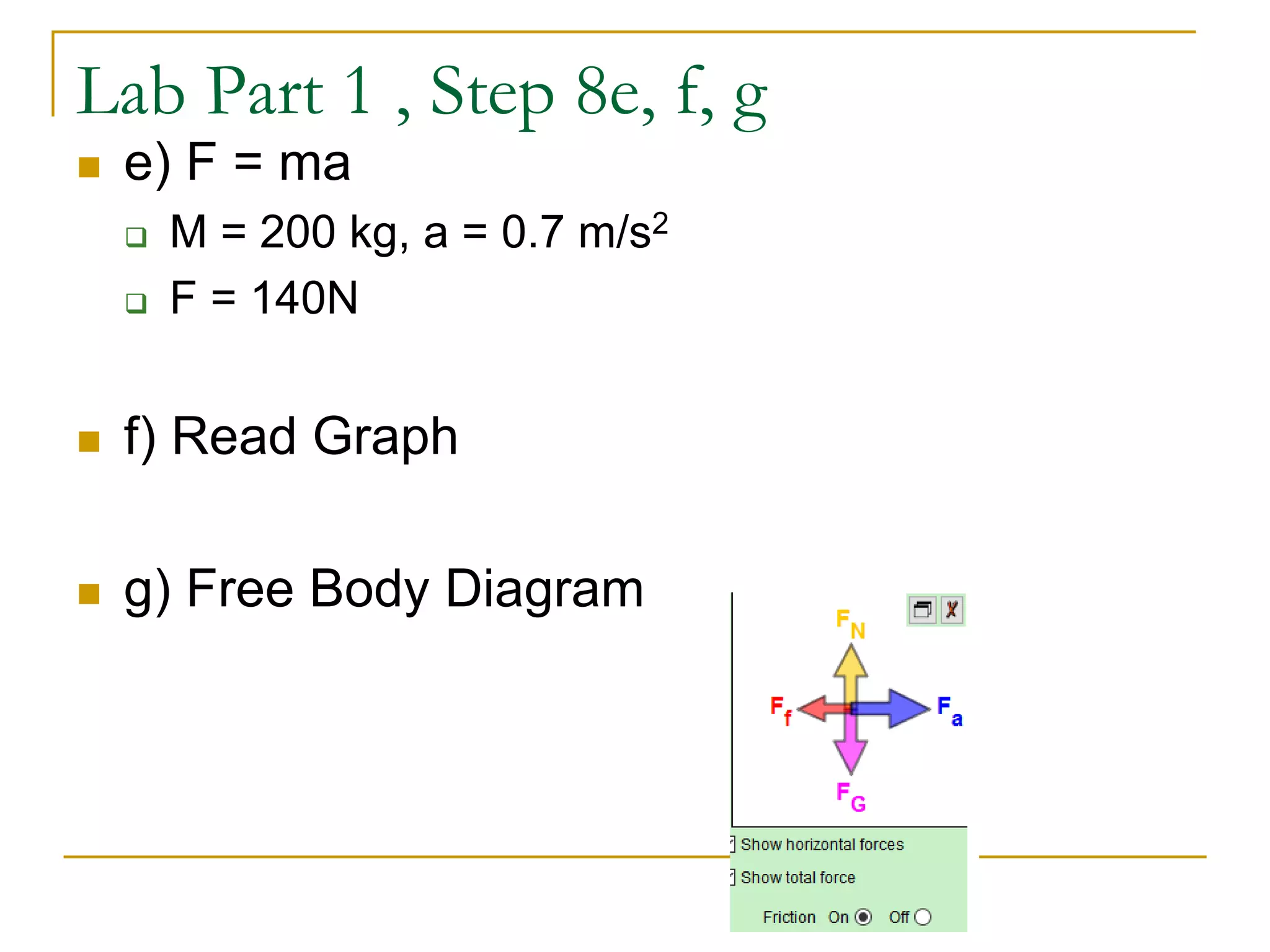
Lab Part 1 , Step 8e, f, g
 e) F = ma
 M = 200 kg, a = 0.7 m/s2
 F = 140N
 f) Read Graph
 g) Free Body Diagram
Part 2 and Questions
 For part 2 , select a different object and
perform the indicated steps
 Answer the question s
 Submit the Physics Lab Student Answer
Sheet
 Download from LMS

Physics Week 2 Friction, Momentum, Work

  • 1.
    Unit 2 Part1 Friction Momentum Work Lab 1 Dr. Paul H. Comitz pcomitz@live.com
  • 2.
    Agenda  Friction  Momentum Work  HW 1 due tonight  Unit 2 hw will be distributed next week  Lab Manual #3 (labeled lab 2 on LMS)  Summary  As time allows  Learning how to learn Study Tips
  • 3.
    Course Modules # ModuleWeeks Reading Quiz 1 Newton's laws 1 Ch 4,5 * 2 Conservation of Energy and Momentum 2,3 Ch 6,7,8 Quiz 1 3 Thermodynamics 3,4 Ch 12,13,14 4 Electromagnetism 5,6 Ch 17,18 Quiz 2 5 Waves, Sound, and Light 7,8 Ch 16, 20, 21 Quiz 3 6 Modern Physics 9,10 Ch 23 Final Exam * it is strongly recommended you read chapters 0 - 3
  • 4.
  • 5.
  • 6.
    Review : Newton’sLaws of Motion  Newton's First Law  A body that is in motion continues in motion with the same velocity (at constant speed and in a straight line) and a body at rest continues at rest unless an unbalanced (outside) force acts upon it.  Newton’s Second Law  The total force acting on a body is equal to the mass of the body times its acceleration.  Newton’s Third Law  For every action (force), there is an equal and opposite reaction (force)
  • 7.
    Friction  A forcethat resists relative motion between two objects in contact  “Caused by the irregularities of two surfaces sliding or rolling across each other”
  • 8.
    Static and KineticFriction  Static – a force that opposes the start of motion  Kinetic – once the objects are in motion, the friction is less, and is called kinetic friction
  • 9.
    Friction  Force actsparallel to surface in contact  Opposite direction of motion  Friction force increases as force between surfaces increases  Formula  Ff = mFN  m is the coefficient of friction
  • 10.
    Coefficient of Friction: m  Ratio between the friction force and the normal force on an object  m describes how smooth or how rough surfaces are when they come into contact with each other  Low number smooth surfaces  High number rough surfaces Normal Force
  • 11.
    What is Momentum?  A measurement of mass in motion  How much mass is in how much motion  Formula  p = mv  p is linear momentum  m is mass  v is velocity  units : kg * m/s  Momentum is a vector  Magnitude and direction
  • 12.
    Impulse  Quantifies theeffect of force acting over time  Impulse is the change in momentum  J = Dp  How are impulse and momentum related ? Gaddis 8th edition chapter 6-1
  • 13.
    Conservation of momentum If the net external force acting on a system of objects is zero, the vector sum of the momenta of the objects will remain constant  Newton’s cradle  See http://www.lhup.edu/~dsimanek/scenario/newton.htm
  • 14.
    Work  In Physicswork means something different than a task requiring physical or mental effort  Work is done on an object when a force causes a displacement of the object  Work is the product of force in the direction of displacement  W = F*s (s is displacement)  Work = Newton x meters = N * m  1 N m = 1 joule (pronounced jewel)  US Units : feet * pounds = foot pound
  • 15.
    Examples A person pullsa sled along level ground a distance of 15 m by exerting a constant force of 215 N at an angle of 30 degrees. How much work is done?
  • 16.
    Work done bya Constant Force W = F d cos q q F F cos q d
  • 17.
    Lab Manual #3 Forces (also labeled as Lab # 2)  http://phet.colorado.edu/en/simulation/forces-1d  Requires installation of Java Runtime Environment  Ability to download an run jnlp (java network launch protocol) Click Download
  • 18.
    Download and Launchthe lab  Double click the file: forces-1d_en.jar  The lab will launch
  • 19.
    Lab Part 1Initial Setup (see lab manual fig 3-6)  Friction off  Show Ffriction off  Show FApplied off
  • 20.
    Lab Step 1Part 2  Position 9.9 m  Velocity increases to 4.4 m/s  Acceleration increases as velocity changing, force applied Note: In the screen captures That follow, you should your results May be similar but they will not be identical
  • 21.
    Lab Step 3 Acceleration versus time graph  Force versus time graph
  • 22.
    Lab Step 4 Linear or parabolic ?
  • 23.
    Lab Step 4b Newton's Second Law. "If the net force on an object is not zero, the object will accelerate. The direction of the acceleration is the same as the direction of the net force. The magnitude of the acceleration is directly proportional to the net force applied, and inversely proportional to the mass of the object.
  • 24.
    Lab Step 4c/d Use Rewind/Playback, hit pause at 3 s  F= ma  200kg * 2m/s2  400 N  Read Graph, get 395 N
  • 25.
    Lab Part 1Step 4e  Screen shot of free body diagram
  • 26.
    Lab Part 1Steps 5-6  Show FFriction , Show FApplied , Friction on,
  • 27.
    Lab Part 1Step 6
  • 28.
    Lab Part 1Step 7  Acceleration versus Time  Forces versus Time
  • 29.
    Lab Part 1Step 8  A. linear or parabolic  B. Order the forces from greatest to highest  C. FTotal  D. Acceleration
  • 30.
    Lab Part 1, Step 8e  Rewind and playback to t = 3s
  • 31.
    Lab Part 1, Step 8e, f, g  e) F = ma  M = 200 kg, a = 0.7 m/s2  F = 140N  f) Read Graph  g) Free Body Diagram
  • 32.
    Part 2 andQuestions  For part 2 , select a different object and perform the indicated steps  Answer the question s  Submit the Physics Lab Student Answer Sheet  Download from LMS