1
 Phonetics and phonology .
 Accents and Dialect .
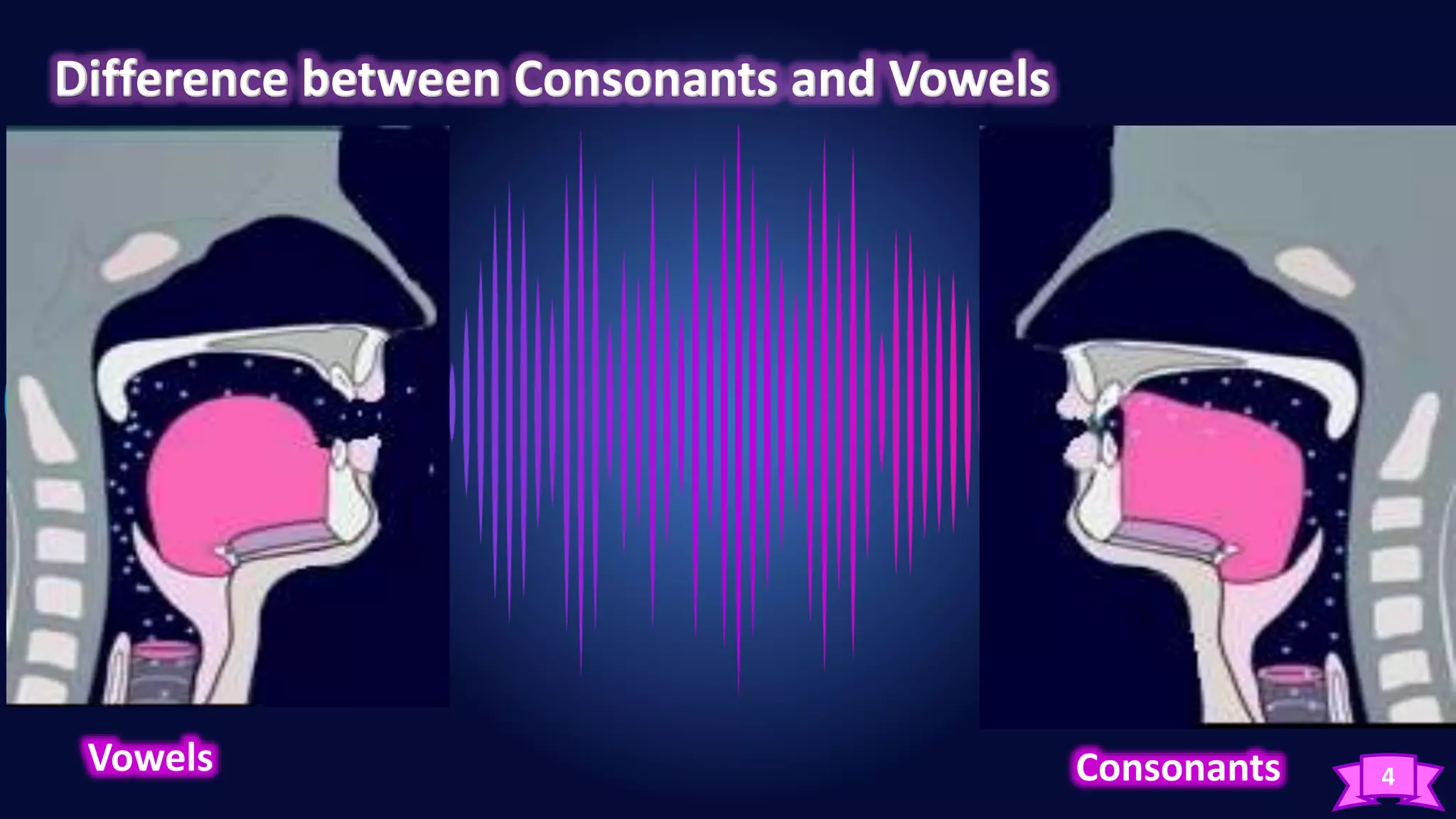
 Difference between Consonants and Vowels.
 Phonetics ’ Criterias .
 The International Phonetic Alphabet Chart.
 Vowels .
 English Short Vowels Charts .
2
Phonology : is the scientific study of the sound system in a particular
language. It is the study of the abstract side of the sound in a language. It
is the concrete realization of phonetics .
Phonetics : is the science which studies the characteristics of human sound
making, especially those sounds used in speech, and provides methods for
their description, classification and transcription . (Crystal, 2003, p : 236 )
3
Accents : - They are pronounced differently by people from different
geographical places , from different social classes , of different ages and
different educational backgrounds . ( Pronunciation differences only )
Dialect : - is a variety of a language which is different from others not
just in pronunciation but also in such matters as vocabulary , grammar
and word order .(Peter Roach,2000, p : 2)
4
Vowels Consonants
5
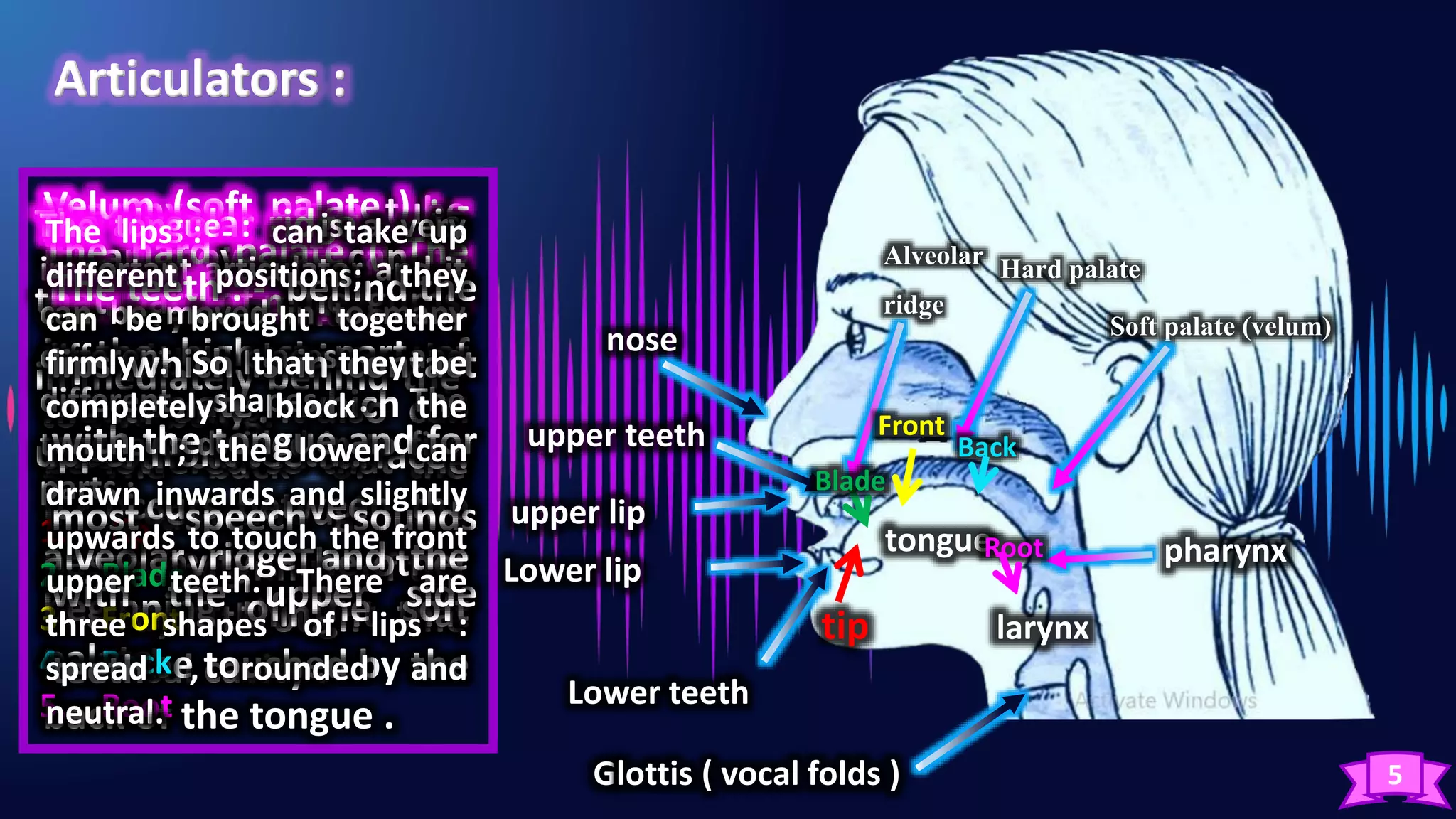
Glottis ( vocal folds )
larynx
pharynx
Soft palate (velum)
Hard palate
Alveolar
ridge
tongue
Lower teeth
upper teeth
upper lip
Lower lip
nose
Pharynx : - is a tube
which begins just above
the larynx , and at its
top end it is divided in
to two being:
1. The back of the
mouth .
2. The Beginning of the
way through the
nasal cavity .
Velum (soft palate ) : -
it can move ,it can be
raised so that it forces
the air to go into the
mouth only . It also can
be lowered so that the
air goes through the
nasal cavity . The other
important thing it that
it can be touched by the
back of the tongue .
The hard palate ( The
roof of the mouth ) : -
is the highest part of
the palate which is
smooth curved surface .
It occurs between the
alveolar ridge and the
beginning of the soft
palate.
The alveolar ridge : - is
that part of the gums
immediately behind the
upper front teeth .
The tongue : - is a very
important articulator and it
can be moved in to many
different places and
different shapes . The
tongue is divided in to five
parts :
1. tip
2. Blade
3. Front
4. Back
5. Root
tip
Front
Blade
Back
Root
The teeth : - behind the
lips which is in contact
with the tongue and for
most speech sounds
with the upper side
teeth
The lips : - can take up
different positions; they
can be brought together
firmly . So that they be
completely block the
mouth ; the lower can
drawn inwards and slightly
upwards to touch the front
upper teeth. There are
three shapes of lips :
spread , rounded and
neutral.
6
 Voicing .
 Place of Articulation .
 Manner of Articulation .
Voicing
Voiced ( + v )
Voiceless ( - v )
Place of Articulation
 Bilabial
 Labiodental
 Dental (interdental)
 Alveolar
 Palatal
 Velar
 glottal
Manner of Articulation
 Stops
 Fricatives
 Affricates
 Nasals
 Liquids
 Glides
7
Complete clousure and then sudden
release
/t / , / d/ ,
/ p / , / b/ , /k/ , /g /
8
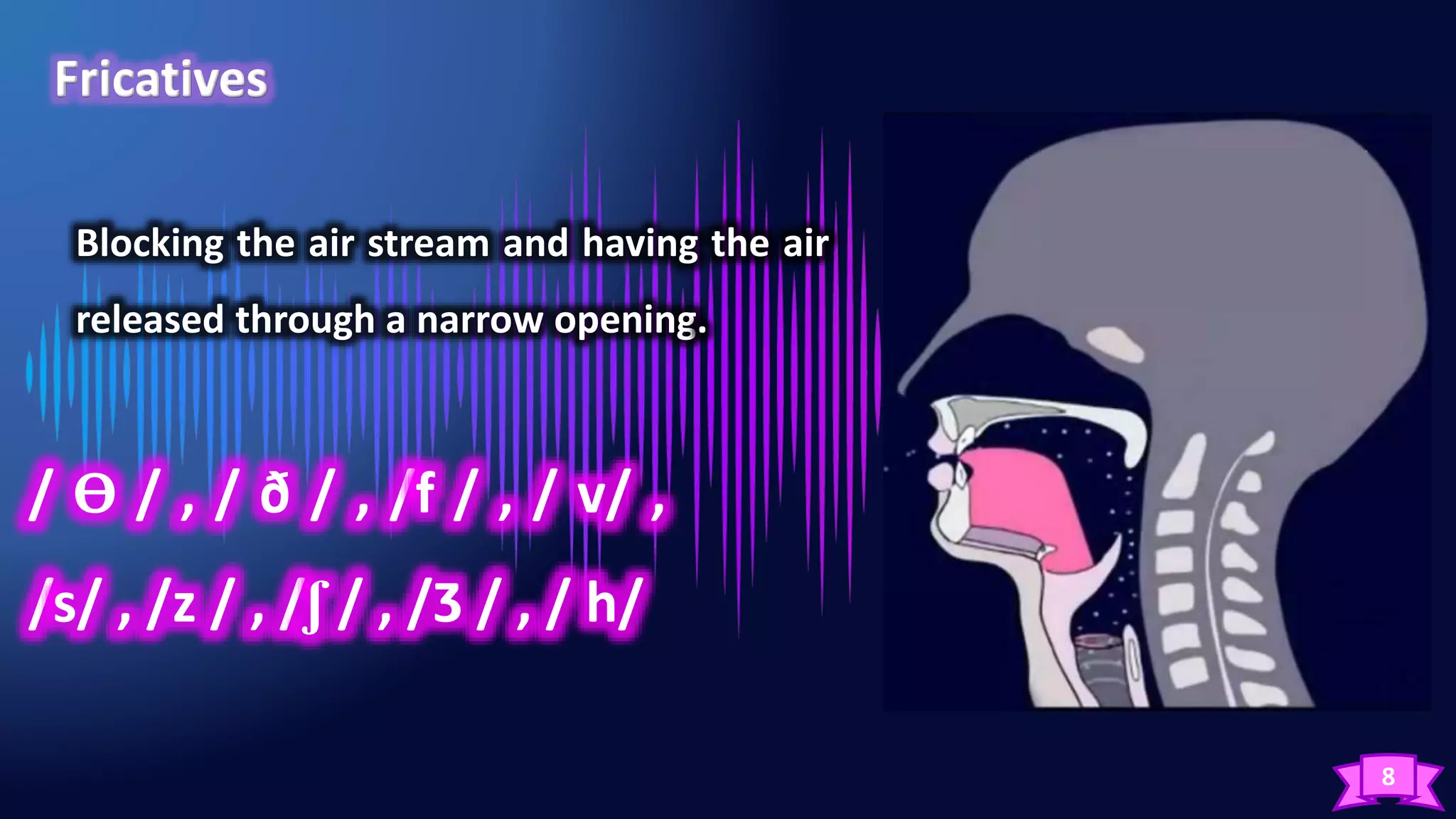
Blocking the air stream and having the air
released through a narrow opening.
/ Ѳ / , / ð / , /f / , / v/ ,
/s/ , /z / , /ʃ / , /Ȝ / , / h/
9
A combination of stops and fricatives
the stop released slowly the fricative is
heard
/ t ʃ / , /dȜ /
10
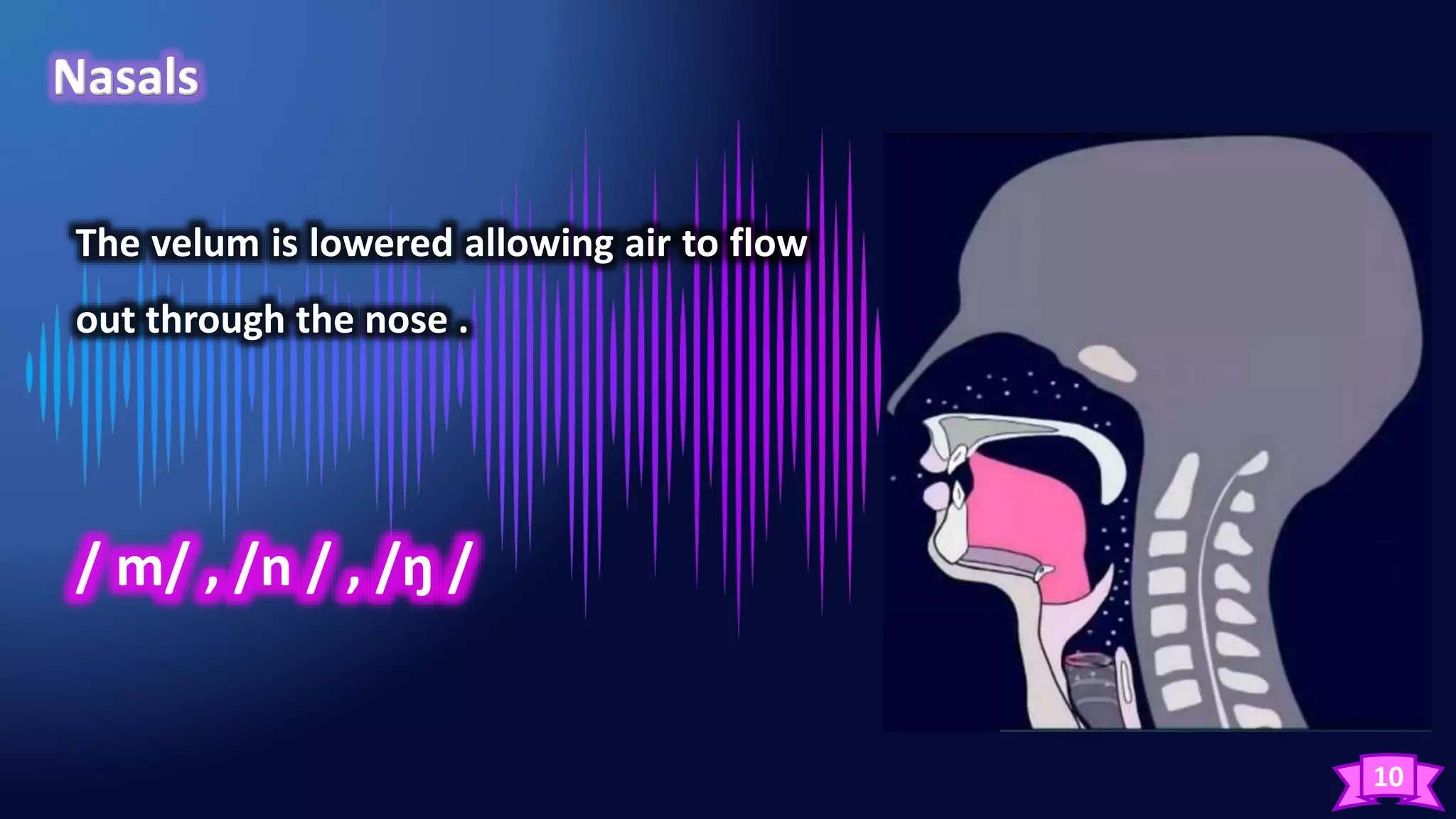
The velum is lowered allowing air to flow
out through the nose .
/ m/ , /n / , /ŋ /
11
Letting the air stream flow around the
sides of the tongue as it makes contacts
with the alveolar ridge .
/ l/ , /r /
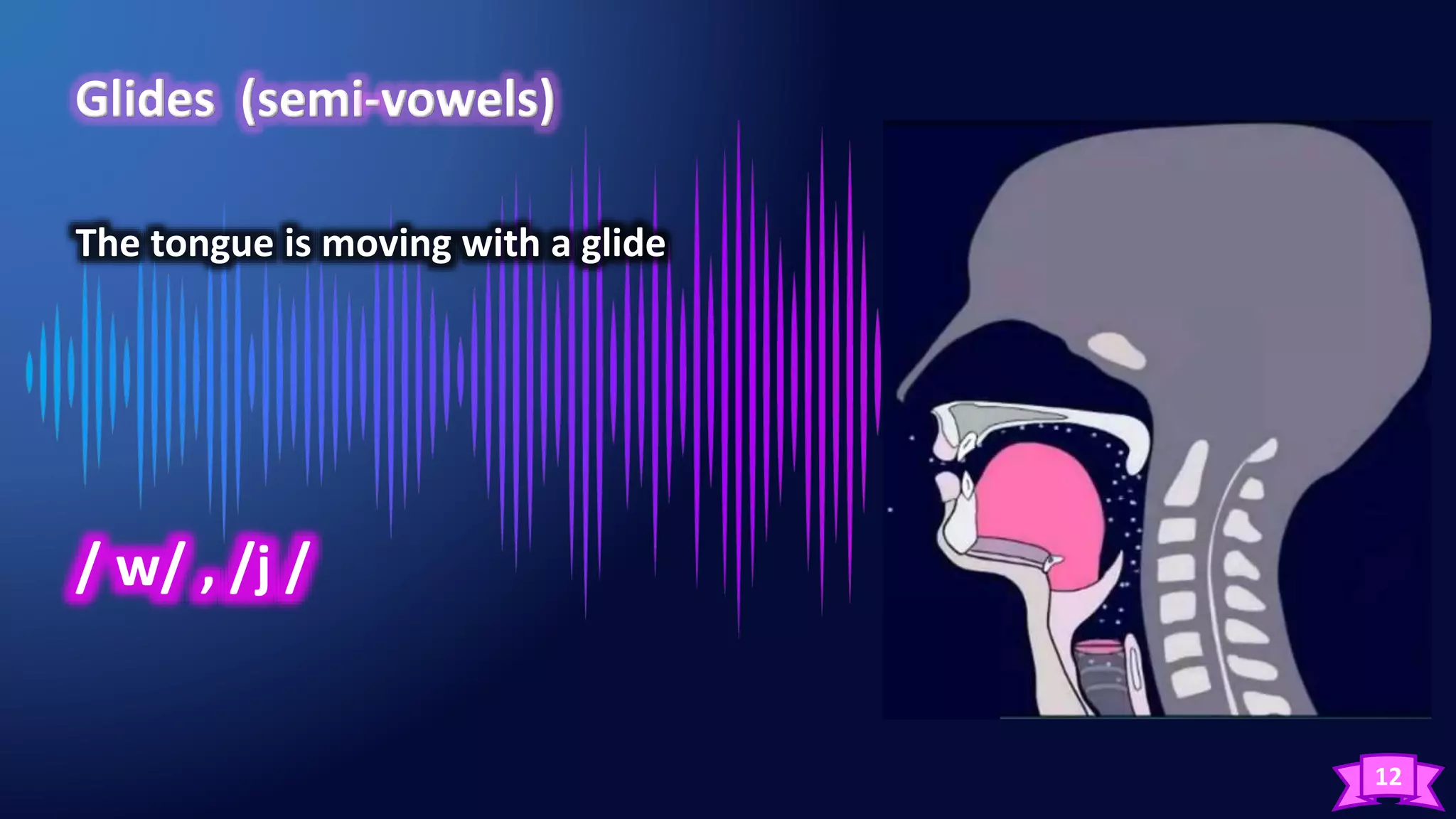
12
The tongue is moving with a glide
/ w/ , /j /
13
- v t p f  s ʃ k t̠ʃ
+ v d b v ð z Ȝ g dȜ
Place
of
Articulation
Manner of
Articulation
Stops
Bilabial
Alveolar
Stops
Labiodental
Fricatives Fricatives
Dental
Fricatives
Alveolar
Fricatives
Alveo -
Palatal
Velar
Stops Affricates
Alveo -
Palatal
14
- v
m n ŋ w j
h
+ v l,r
Place
of
Articulation
Manner of
Articulation
Alveolar
Lateral
Bilabial
Nasals
Alveolar
Nasals Nasals
Velar
Glides
Bilabial
Glides
Palatal
Fricatives
Glottal
15
Vowels : are sounds in which there is no obstruction to the flow of air as
it passes from the larynx to the lips ( /a / , / e / , / i / , / u/ , /o /.
 Place of articulation , manner of articulation and voicing are not
useful when trying to describe vowels .
 Vowels are all made in the mouth (place) .
 With little or no air flow constriction ( manner )
 And are always voiced in English .
16
Vowel sounds are classified in terms of :
 Tongue height .
 Tongue backness .
 lip rounding .
 Tenseness .
[i] [] [æ]
[i] [u]
17
Short vowels are only relatively short ; as they have a single perceived
auditory quality. Sound Example
ɪ
æ
ʊ
ɒ
ʌ
e
ə
ship
hat
foot
socks
cup
bed
Teacher
18
 David Crystal, 2003 , A Dictionary of Linguistics & Phonology, 5 th ed . ,
UK , Blackwell .
 Peter Roach , 2000 , English Phonetics & Phonology , 3th ed . , UK
Cambridge .
Thank you

Phonology

  • 2.
    1  Phonetics andphonology .  Accents and Dialect .  Difference between Consonants and Vowels.  Phonetics ’ Criterias .  The International Phonetic Alphabet Chart.  Vowels .  English Short Vowels Charts .
  • 3.
    2 Phonology : isthe scientific study of the sound system in a particular language. It is the study of the abstract side of the sound in a language. It is the concrete realization of phonetics . Phonetics : is the science which studies the characteristics of human sound making, especially those sounds used in speech, and provides methods for their description, classification and transcription . (Crystal, 2003, p : 236 )
  • 4.
    3 Accents : -They are pronounced differently by people from different geographical places , from different social classes , of different ages and different educational backgrounds . ( Pronunciation differences only ) Dialect : - is a variety of a language which is different from others not just in pronunciation but also in such matters as vocabulary , grammar and word order .(Peter Roach,2000, p : 2)
  • 5.
  • 6.
    5 Glottis ( vocalfolds ) larynx pharynx Soft palate (velum) Hard palate Alveolar ridge tongue Lower teeth upper teeth upper lip Lower lip nose Pharynx : - is a tube which begins just above the larynx , and at its top end it is divided in to two being: 1. The back of the mouth . 2. The Beginning of the way through the nasal cavity . Velum (soft palate ) : - it can move ,it can be raised so that it forces the air to go into the mouth only . It also can be lowered so that the air goes through the nasal cavity . The other important thing it that it can be touched by the back of the tongue . The hard palate ( The roof of the mouth ) : - is the highest part of the palate which is smooth curved surface . It occurs between the alveolar ridge and the beginning of the soft palate. The alveolar ridge : - is that part of the gums immediately behind the upper front teeth . The tongue : - is a very important articulator and it can be moved in to many different places and different shapes . The tongue is divided in to five parts : 1. tip 2. Blade 3. Front 4. Back 5. Root tip Front Blade Back Root The teeth : - behind the lips which is in contact with the tongue and for most speech sounds with the upper side teeth The lips : - can take up different positions; they can be brought together firmly . So that they be completely block the mouth ; the lower can drawn inwards and slightly upwards to touch the front upper teeth. There are three shapes of lips : spread , rounded and neutral.
  • 7.
    6  Voicing . Place of Articulation .  Manner of Articulation . Voicing Voiced ( + v ) Voiceless ( - v ) Place of Articulation  Bilabial  Labiodental  Dental (interdental)  Alveolar  Palatal  Velar  glottal Manner of Articulation  Stops  Fricatives  Affricates  Nasals  Liquids  Glides
  • 8.
    7 Complete clousure andthen sudden release /t / , / d/ , / p / , / b/ , /k/ , /g /
  • 9.
    8 Blocking the airstream and having the air released through a narrow opening. / Ѳ / , / ð / , /f / , / v/ , /s/ , /z / , /ʃ / , /Ȝ / , / h/
  • 10.
    9 A combination ofstops and fricatives the stop released slowly the fricative is heard / t ʃ / , /dȜ /
  • 11.
    10 The velum islowered allowing air to flow out through the nose . / m/ , /n / , /ŋ /
  • 12.
    11 Letting the airstream flow around the sides of the tongue as it makes contacts with the alveolar ridge . / l/ , /r /
  • 13.
    12 The tongue ismoving with a glide / w/ , /j /
  • 14.
    13 - v tp f  s ʃ k t̠ʃ + v d b v ð z Ȝ g dȜ Place of Articulation Manner of Articulation Stops Bilabial Alveolar Stops Labiodental Fricatives Fricatives Dental Fricatives Alveolar Fricatives Alveo - Palatal Velar Stops Affricates Alveo - Palatal
  • 15.
    14 - v m nŋ w j h + v l,r Place of Articulation Manner of Articulation Alveolar Lateral Bilabial Nasals Alveolar Nasals Nasals Velar Glides Bilabial Glides Palatal Fricatives Glottal
  • 16.
    15 Vowels : aresounds in which there is no obstruction to the flow of air as it passes from the larynx to the lips ( /a / , / e / , / i / , / u/ , /o /.  Place of articulation , manner of articulation and voicing are not useful when trying to describe vowels .  Vowels are all made in the mouth (place) .  With little or no air flow constriction ( manner )  And are always voiced in English .
  • 17.
    16 Vowel sounds areclassified in terms of :  Tongue height .  Tongue backness .  lip rounding .  Tenseness . [i] [] [æ] [i] [u]
  • 18.
    17 Short vowels areonly relatively short ; as they have a single perceived auditory quality. Sound Example ɪ æ ʊ ɒ ʌ e ə ship hat foot socks cup bed Teacher
  • 19.
    18  David Crystal,2003 , A Dictionary of Linguistics & Phonology, 5 th ed . , UK , Blackwell .  Peter Roach , 2000 , English Phonetics & Phonology , 3th ed . , UK Cambridge .
  • 20.