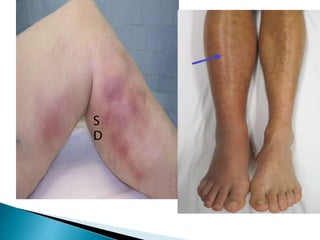
 Phlebitis –inflammation of vein
 Thrombophlebitis – a blood clot in the vein
cause the inflammation. Thrombophlebitis
usually occurs in leg veins,but it may occur in
arm. The thrombus (clot) in the vein causes
pain and irritation and may block blood flow
in the veins.
 Phlebitis can occur in both the
surface(superficial) or deep veins
 Superficial phlebitis affects veins on the skin
surface.The condition is rarely serious and, with
proper care, usually resolves rapidly.
 Sometimes people with superficial phlebitis also
get deep vein thrombophlebitis, so a medical
evaluation is necessary.
 Deep vein thrombophlebitis affects the larger
blood vessels deep in the legs. Blood clots(thrombi)
can form, which may break off and travel to the
lungs.This is a potentiall life-threatening condition
called pulmonary embolism
 Phlebitis may occur spontaneously or as a
complication of a medical procedure. Local
trauma and injury to a vein also increase the
risk of forming a blood clot
 Superficial phlebitis
 There is usually a slow onset of a tender red area
along the superficial veins on the skin.
 The area may feel hard,warm and tender.The skin
around the vein may be itchy and swollen
 The area begin to throb or burn
 Symptoms may be worse when the leg is
lowered,especially when first getting out in bed in
the morning.
 A low-grade fever may occur
 Sometimes phlebitis may occur at the site
where a peripheral IV line was started.The
sorrounding area may be sore and tender
along the vein.
 If an infection is present,symptoms may
include redness,pain,swelling,or breakdown
of the skin.
 Thrombophebitis migrains can be a non-
metastatic manifestation of malignacies such
as pancreatic carcinoma
 Deep vein thrombophlebitis
 This can be similar in presentation to
superficial phlebitis, but some people may have
no symptoms
 The classic signs and symptoms include
redness, warmth, swelling and pain in the leg
 One may have pain and swelling throughout
the entire limb
 In general, treatment may include support
stockings and wraos to reduce discomfort as
well as medications such as:
 Analgesics
 Antibiotis(if infection is present)
 Anticoagulants(blood thinners) to prevent
new clots from forming
 Elevate the affected area to reduce swelling.
 Keep pressure off of the area to reduce pain
and decrease the risk of further damage.
 Apply moist heat to reduce inflammation and
pain.
 Surgical removal, stripping, or bypass of the
vein is rarely needed but may be
recommended in some situations
S
D

PHLEBITIS AND THROMBOPHLEBITIS.pptx

  • 2.
     Phlebitis –inflammationof vein  Thrombophlebitis – a blood clot in the vein cause the inflammation. Thrombophlebitis usually occurs in leg veins,but it may occur in arm. The thrombus (clot) in the vein causes pain and irritation and may block blood flow in the veins.  Phlebitis can occur in both the surface(superficial) or deep veins
  • 3.
     Superficial phlebitisaffects veins on the skin surface.The condition is rarely serious and, with proper care, usually resolves rapidly.  Sometimes people with superficial phlebitis also get deep vein thrombophlebitis, so a medical evaluation is necessary.  Deep vein thrombophlebitis affects the larger blood vessels deep in the legs. Blood clots(thrombi) can form, which may break off and travel to the lungs.This is a potentiall life-threatening condition called pulmonary embolism
  • 4.
     Phlebitis mayoccur spontaneously or as a complication of a medical procedure. Local trauma and injury to a vein also increase the risk of forming a blood clot
  • 5.
     Superficial phlebitis There is usually a slow onset of a tender red area along the superficial veins on the skin.  The area may feel hard,warm and tender.The skin around the vein may be itchy and swollen  The area begin to throb or burn  Symptoms may be worse when the leg is lowered,especially when first getting out in bed in the morning.  A low-grade fever may occur
  • 6.
     Sometimes phlebitismay occur at the site where a peripheral IV line was started.The sorrounding area may be sore and tender along the vein.  If an infection is present,symptoms may include redness,pain,swelling,or breakdown of the skin.
  • 7.
     Thrombophebitis migrainscan be a non- metastatic manifestation of malignacies such as pancreatic carcinoma
  • 8.
     Deep veinthrombophlebitis  This can be similar in presentation to superficial phlebitis, but some people may have no symptoms  The classic signs and symptoms include redness, warmth, swelling and pain in the leg  One may have pain and swelling throughout the entire limb
  • 9.
     In general,treatment may include support stockings and wraos to reduce discomfort as well as medications such as:  Analgesics  Antibiotis(if infection is present)  Anticoagulants(blood thinners) to prevent new clots from forming
  • 10.
     Elevate theaffected area to reduce swelling.  Keep pressure off of the area to reduce pain and decrease the risk of further damage.  Apply moist heat to reduce inflammation and pain.  Surgical removal, stripping, or bypass of the vein is rarely needed but may be recommended in some situations
  • 11.