What are the different phases of Globalization in history?
(Use Pacific examples to demonstrate your points where
capable)
What are the Bretton Woods Institutions and what are the
agreement that facilitated International Trade after the
2nd World War?
*
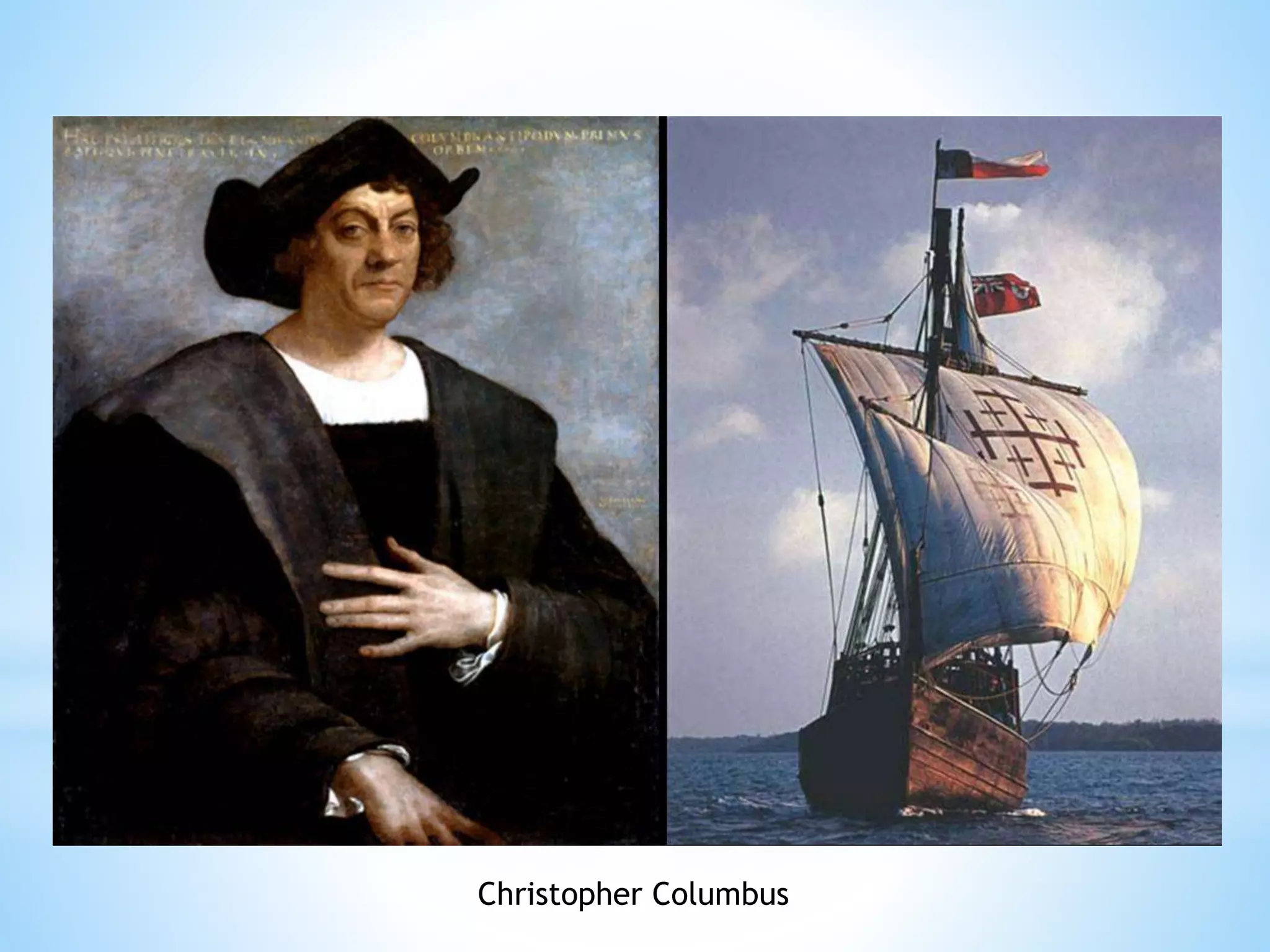
Christopher Columbus
*
*Begins in 1492 to about 1800
*Exploration by adventures
*Significant names that relate to this events-
Christopher Columbus
*Colonies are the result of expansion, when land
is in demand to gain power
*Eg: The German who colonized and had their
influence on the northern part of PNG: the
Momase region and NGI region
*
*1800-1940
*Expansion of international trade
*Peaked in 1870’s -1880
*Encouraged by
* Development of Transport
* steam engines and railroads
* Increase in electricity and steel production
* Liberalization environment in the 19th century
*National companies decided to expand activities and sell
products externally
*However the expansion of national economies collapsed
when WWI began and during the economical crisis in WW2
*catastrophic economic event of the “Great Depression”
*
* 1950-1980
* Liberalization of International Trade under the General Agreement on Tariffs and
Trade (GATT)
* GATT was part of the economic recovery plan after WWII
* To create optimal environment for expansion of International Trade through
reduction of tariffs.
* 1st of Jan 1948; 23 countries signed the agreement.
* Australia, Belgium, Brazil, Burma, Canada, Ceylon, Chile, the Republic of China,
Cuba, the Czechoslovak Republic, France, India, Lebanon, Luxembourg,
Netherlands, New Zealand, Norway, Pakistan, Southern Rhodesia, Syria, South
Africa, the United Kingdom, and the United States.
* The difference between the development degrees of countries appeared
*
*1980-present day
*accentuated development of the telecommunications and
huge progresses in the exploration of the cosmic space
*a.k.a economy without borders
*Jan 1995 World Trade Organization
*World Trade Organization (WTO) successor of GATT.
* is the only international organization that establish the
legal bases in the trades between the countries
*Main goal: achieve maximal liberty for the commercial
flows without undesirable secondary effects.
*
*International Monetary Fund
*World Bank
*International Trade Organization (ITO)
*aims were to
*help rebuild the devastated postwar economy and
* to promote international economic cooperation
*
*General Agreement on tariffs and trade (GATT)
*
* harbert.auburn.edu/~cegieca/7220/Lecture3.pp retrieved 29/03/15
* Dominguez, K. M. (2006). International Finance and the Breton Woods Institutions. IPE Workshop on International
Policy.
* Retrieved from 15th March 2015 http://www.brettonwoodsproject.org/2005/08/art-320747/
* Retrieved from 10th March 2015 https://www.scribd.com/doc/.../Globalization-and-Its-Various-Phases
* Retrieved from 10th March 2015 http://www.referenceforbusiness.com/management/Ex-Gov/Free-Trade-
Agreements-and-Trading-Blocs.html#ixzz3TwJ0zi2y
* Brooks, I., Weatherson, J., & Wilkinson, G. (n.d.). Globalization challenges and changes
* Firth, S. (2000). The Pacific Islands and the Globalization Agenda. The contemporary Pacific, 12.
Retrieved March 23, 2015, from
http://unpan1.un.org/intradoc/groups/public/documents/APCITY/UNPAN017598.pdf
* Three phases of Globaliation. Retrieved March 31, 2015, from
https://radjenovicsasa.wordpress.com/2013/09/09/three-phases-of-globalization/
* Bretton Wood Project. (2005, August 23). Retrieved March 31, 2015, from Bretton Wood Project website:
http://www.brettonwoodsproject.org/2005/08/art-320747/
* Friedman, T. L. (2005). The World is Flat: A Brief History of the Twenty-First Century.
* Stephey, M. J. (2008, October 21). Time. Retrieved March 31, 2015, from Time website:
http://content.time.com/time/business/article/0,8599,1852254,00.html
* Rădescu, O. -D. (2015, March 31). THE PROCESS OF GLOBALIZATION IN THE WORLD ECONOMY. Moldova, Moldova. Retrieved
March 31, 2015 http://www.jaes.reprograph.ro/articles/radescu.pdf

Phases of globalization(1)

  • 1.
    What are thedifferent phases of Globalization in history? (Use Pacific examples to demonstrate your points where capable) What are the Bretton Woods Institutions and what are the agreement that facilitated International Trade after the 2nd World War? *
  • 2.
  • 3.
    * *Begins in 1492to about 1800 *Exploration by adventures *Significant names that relate to this events- Christopher Columbus *Colonies are the result of expansion, when land is in demand to gain power *Eg: The German who colonized and had their influence on the northern part of PNG: the Momase region and NGI region
  • 4.
    * *1800-1940 *Expansion of internationaltrade *Peaked in 1870’s -1880 *Encouraged by * Development of Transport * steam engines and railroads * Increase in electricity and steel production * Liberalization environment in the 19th century *National companies decided to expand activities and sell products externally *However the expansion of national economies collapsed when WWI began and during the economical crisis in WW2 *catastrophic economic event of the “Great Depression”
  • 5.
    * * 1950-1980 * Liberalizationof International Trade under the General Agreement on Tariffs and Trade (GATT) * GATT was part of the economic recovery plan after WWII * To create optimal environment for expansion of International Trade through reduction of tariffs. * 1st of Jan 1948; 23 countries signed the agreement. * Australia, Belgium, Brazil, Burma, Canada, Ceylon, Chile, the Republic of China, Cuba, the Czechoslovak Republic, France, India, Lebanon, Luxembourg, Netherlands, New Zealand, Norway, Pakistan, Southern Rhodesia, Syria, South Africa, the United Kingdom, and the United States. * The difference between the development degrees of countries appeared
  • 6.
    * *1980-present day *accentuated developmentof the telecommunications and huge progresses in the exploration of the cosmic space *a.k.a economy without borders *Jan 1995 World Trade Organization *World Trade Organization (WTO) successor of GATT. * is the only international organization that establish the legal bases in the trades between the countries *Main goal: achieve maximal liberty for the commercial flows without undesirable secondary effects.
  • 7.
    * *International Monetary Fund *WorldBank *International Trade Organization (ITO) *aims were to *help rebuild the devastated postwar economy and * to promote international economic cooperation
  • 8.
    * *General Agreement ontariffs and trade (GATT)
  • 9.
    * * harbert.auburn.edu/~cegieca/7220/Lecture3.pp retrieved29/03/15 * Dominguez, K. M. (2006). International Finance and the Breton Woods Institutions. IPE Workshop on International Policy. * Retrieved from 15th March 2015 http://www.brettonwoodsproject.org/2005/08/art-320747/ * Retrieved from 10th March 2015 https://www.scribd.com/doc/.../Globalization-and-Its-Various-Phases * Retrieved from 10th March 2015 http://www.referenceforbusiness.com/management/Ex-Gov/Free-Trade- Agreements-and-Trading-Blocs.html#ixzz3TwJ0zi2y * Brooks, I., Weatherson, J., & Wilkinson, G. (n.d.). Globalization challenges and changes * Firth, S. (2000). The Pacific Islands and the Globalization Agenda. The contemporary Pacific, 12. Retrieved March 23, 2015, from http://unpan1.un.org/intradoc/groups/public/documents/APCITY/UNPAN017598.pdf * Three phases of Globaliation. Retrieved March 31, 2015, from https://radjenovicsasa.wordpress.com/2013/09/09/three-phases-of-globalization/ * Bretton Wood Project. (2005, August 23). Retrieved March 31, 2015, from Bretton Wood Project website: http://www.brettonwoodsproject.org/2005/08/art-320747/ * Friedman, T. L. (2005). The World is Flat: A Brief History of the Twenty-First Century. * Stephey, M. J. (2008, October 21). Time. Retrieved March 31, 2015, from Time website: http://content.time.com/time/business/article/0,8599,1852254,00.html * Rădescu, O. -D. (2015, March 31). THE PROCESS OF GLOBALIZATION IN THE WORLD ECONOMY. Moldova, Moldova. Retrieved March 31, 2015 http://www.jaes.reprograph.ro/articles/radescu.pdf

Editor's Notes

  • #5 Involved in this was the European imperial powers, the colonies and the USA. As a result, exports doubled and foreign capital tripled in these countries Faced with incoherent economical policies, high unemployment rates Nations were forced to develop protective measures that slowed economic growth. Eg. Tariffs and quotes
  • #6 States with powerful economies developed without precedent while Those on with less powerful economies did not have the opportunity to benefit from the capital flow