INTERNATIONAL TRADE By Group 6 – LS 403 (SY 2010-2011)
//SUBTOPICS IMPORTANCE *DOMESTIC  TRADE DEFINITION BASES PROBLEMS PROGRAMS / SOLUTIONS
 
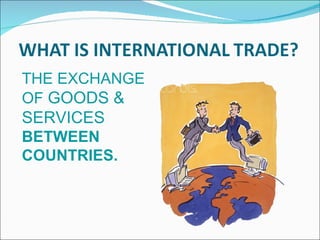
THE EXCHANGE  OF  GOODS &  SERVICES  BETWEEN COUNTRIES.
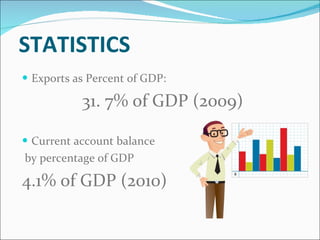
STATISTICS Exports as Percent of GDP: 31. 7% of GDP (2009) Current account balance by percentage of GDP 4.1% of GDP (2010)
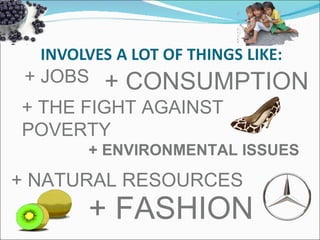
+ JOBS + CONSUMPTION + THE FIGHT AGAINST POVERTY + ENVIRONMENTAL ISSUES + NATURAL RESOURCES + FASHION
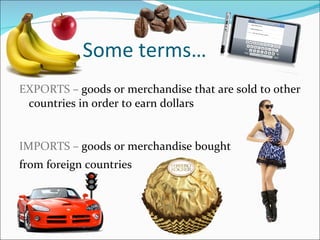
EXPORTS –  goods or merchandise that are sold to other countries in order to earn dollars IMPORTS –  goods or merchandise  bought  from foreign countries Some terms…
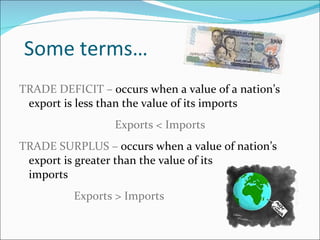
Some terms… TRADE DEFICIT –  occurs when a value of a nation’s export is less than the value of its imports Exports < Imports TRADE SURPLUS –  occurs when a value of nation’s export is greater than the value of its  imports   Exports > Imports
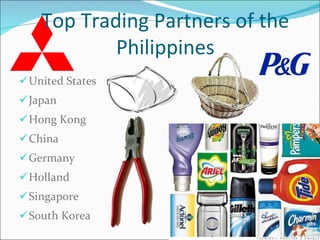
United States Japan Hong Kong China Germany Holland Singapore South Korea Top Trading Partners of the Philippines
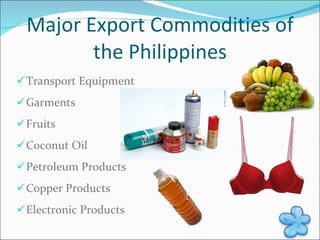
Major Export Commodities of the Philippines Transport Equipment Garments Fruits Coconut Oil Petroleum Products Copper Products Electronic Products
 
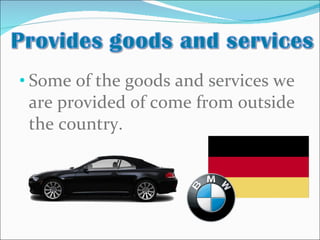
Some of the goods and services we are provided of come from outside the country.
Create jobs  International trade also motivates workers to produce  the goods or  services better
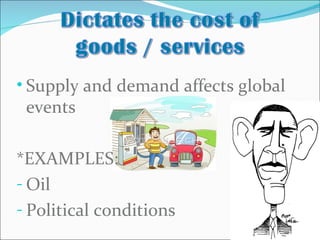
Supply and demand affects global events *EXAMPLES: Oil Political conditions
“ Globalization  is the integration of economies and cultures through a global network of political ideas through communication, transportation and  trade.”
 
 
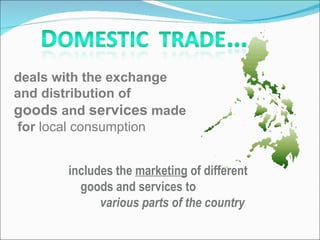
deals with the exchange  and distribution of  goods  and  services  made  for  local consumption includes the  marketing  of different goods and services to  various parts of the country
“ middlemen” Rounding up  and  movement   of PRODUCTS within the country are made possible by them.
CONNECTS  THE  PRODUCERS   AND THE  CONSUMERS producers consumers middleman
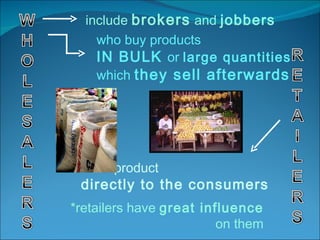
include  brokers  and  jobbers  who buy products  IN BULK  or  large quantities  which  they sell afterwards sell the product  directly to the consumers *retailers have  great influence  on them
“ middlemen”    The prices of products  GO HIGHER  because of the  PROFIT  they need. Without middlemen, it would be  HARD   to get goods and  services  easier and quicker .
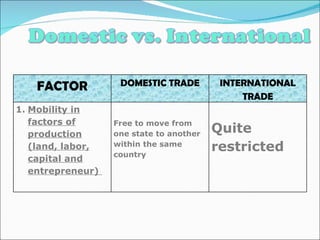
FACTOR DOMESTIC TRADE INTERNATIONAL TRADE Mobility in factors of production (land, labor, capital and entrepreneur)  Free to move from one state to another within the same country Quite restricted
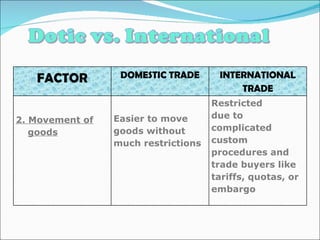
FACTOR DOMESTIC TRADE INTERNATIONAL TRADE 2. Movement of goods Easier to move goods without much restrictions  Restricted  due to complicated custom procedures and trade buyers like tariffs, quotas, or embargo
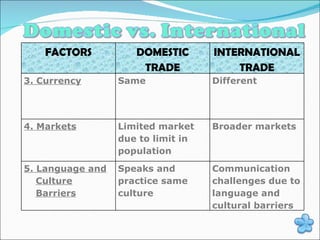
FACTORS DOMESTIC TRADE INTERNATIONAL TRADE 3. Currency Same Different 4. Markets Limited market due to limit in population Broader markets 5. Language and Culture Barriers Speaks and practice same culture Communication challenges due to language and cultural barriers
 
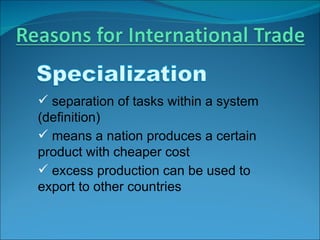
separation of tasks within a system (definition) means a nation produces a certain product with cheaper cost excess production can be used to export to other countries
 
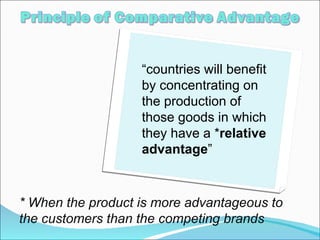
“ countries will benefit by concentrating on the production of those goods in which they have a * relative advantage ” * When the product is more advantageous to the customers than the competing brands
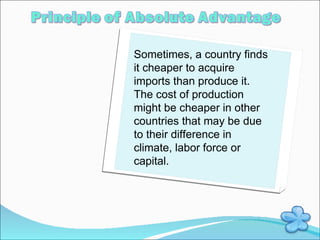
Sometimes, a country finds it cheaper to acquire imports than produce it. The cost of production might be cheaper in other countries that may be due to their difference in climate, labor force or capital.
 
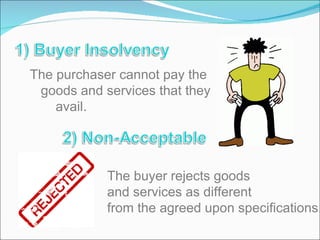
The purchaser cannot pay the  goods and services that they  avail. The buyer rejects goods and services as different  from the agreed upon specifications.
Because of the trust given by a country to its buyer, it allows to take of possession of goods prior to payment. A change in rules within a country that may cause problems during transaction.
Intervention is a governmental action to prevent a transaction being completed. It is done in order to block goods coming from other places that must not enter the country’s territory. When a country changes its leader(s), it can result to change in transactions and prices due to the interference of the new government system.
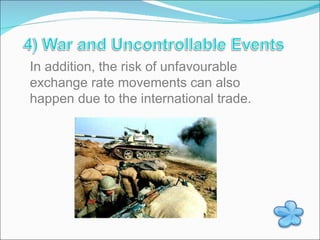
In addition, the risk of unfavourable exchange rate movements can also happen due to the international trade.
 
is an economic policy of controlling or restraining trade between nations through methods such as   tariffs and quotas also through government regulations and laws designed to  discourage imports  and to  prevent foreign domination  of domestic markets and companies
charges imposed on the price of imports causes an increase in the revenue of the government encourages demand for domestic products demand for imports decrease
Revenue Tariffs a set of rates designed primarily to raise money for the government Protective Tariffs intended to artificially inflate prices of imports and protect domestic industries from foreign competition
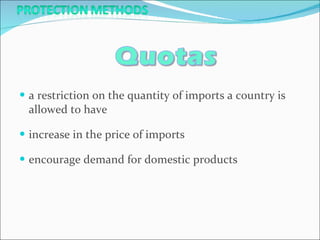
a restriction on the quantity of imports a country is allowed to have increase in the price of imports encourage demand for domestic products
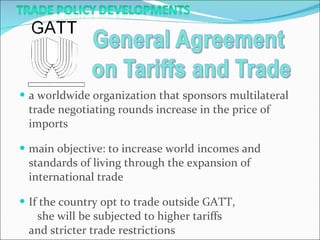
a worldwide organization that sponsors multilateral trade negotiating rounds increase in the price of imports main objective: to increase world incomes and standards of living through the expansion of international trade If the country opt to trade outside GATT,  she will be subjected to higher tariffs  and stricter trade restrictions
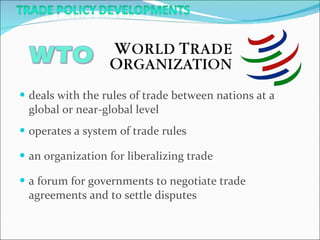
deals with the rules of trade between nations at a global or near-global level  operates a system of trade rules an organization for liberalizing trade  a forum for governments to negotiate trade agreements and to settle disputes
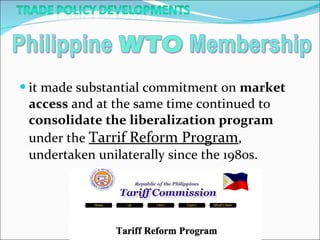
it made substantial commitment on  market access  and at the same time continued to  consolidate the liberalization program  under the  Tarrif Reform Program , undertaken unilaterally since the 1980s.
is the review/restructuring of the Philippine tariff system by the government  undertaken on a continuing basis to make the tariff structure responsive to the needs of the economy changing patterns in trade and advancements in technology are taken into account
an agency under the Embassy of the Philippines and the DTI provides commercial representation for the Philippines to foreign countries Located in the world's major cities in North America, Europe, Middle East and Asia
Our mandate:  To promote and develop the growth of Philippine products and services in the world market; promote inward foreign investments;  provide commercial intelligence to government and industry sectors; and assist in bilateral and multilateral trade and economic negotiations.
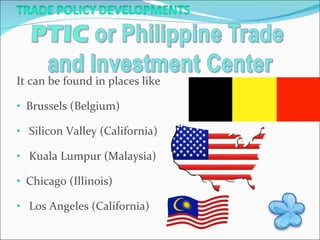
It can be found in places like  Brussels (Belgium) Silicon Valley (California) Kuala Lumpur (Malaysia) Chicago (Illinois) Los Angeles (California)

International trade ppt

  • 1.
    INTERNATIONAL TRADE ByGroup 6 – LS 403 (SY 2010-2011)
  • 2.
    //SUBTOPICS IMPORTANCE *DOMESTIC TRADE DEFINITION BASES PROBLEMS PROGRAMS / SOLUTIONS
  • 3.
  • 4.
    THE EXCHANGE OF GOODS & SERVICES BETWEEN COUNTRIES.
  • 5.
    STATISTICS Exports asPercent of GDP: 31. 7% of GDP (2009) Current account balance by percentage of GDP 4.1% of GDP (2010)
  • 6.
    + JOBS +CONSUMPTION + THE FIGHT AGAINST POVERTY + ENVIRONMENTAL ISSUES + NATURAL RESOURCES + FASHION
  • 7.
    EXPORTS – goods or merchandise that are sold to other countries in order to earn dollars IMPORTS – goods or merchandise bought from foreign countries Some terms…
  • 8.
    Some terms… TRADEDEFICIT – occurs when a value of a nation’s export is less than the value of its imports Exports < Imports TRADE SURPLUS – occurs when a value of nation’s export is greater than the value of its imports Exports > Imports
  • 9.
    United States JapanHong Kong China Germany Holland Singapore South Korea Top Trading Partners of the Philippines
  • 10.
    Major Export Commoditiesof the Philippines Transport Equipment Garments Fruits Coconut Oil Petroleum Products Copper Products Electronic Products
  • 11.
  • 12.
    Some of thegoods and services we are provided of come from outside the country.
  • 13.
    Create jobs International trade also motivates workers to produce the goods or services better
  • 14.
    Supply and demandaffects global events *EXAMPLES: Oil Political conditions
  • 15.
    “ Globalization is the integration of economies and cultures through a global network of political ideas through communication, transportation and trade.”
  • 16.
  • 17.
  • 18.
    deals with theexchange and distribution of goods and services made for local consumption includes the marketing of different goods and services to various parts of the country
  • 19.
    “ middlemen” Roundingup and movement of PRODUCTS within the country are made possible by them.
  • 20.
    CONNECTS THE PRODUCERS AND THE CONSUMERS producers consumers middleman
  • 21.
    include brokers and jobbers who buy products IN BULK or large quantities which they sell afterwards sell the product directly to the consumers *retailers have great influence on them
  • 22.
    “ middlemen”  The prices of products GO HIGHER because of the PROFIT they need. Without middlemen, it would be HARD to get goods and services easier and quicker .
  • 23.
    FACTOR DOMESTIC TRADEINTERNATIONAL TRADE Mobility in factors of production (land, labor, capital and entrepreneur) Free to move from one state to another within the same country Quite restricted
  • 24.
    FACTOR DOMESTIC TRADEINTERNATIONAL TRADE 2. Movement of goods Easier to move goods without much restrictions Restricted due to complicated custom procedures and trade buyers like tariffs, quotas, or embargo
  • 25.
    FACTORS DOMESTIC TRADEINTERNATIONAL TRADE 3. Currency Same Different 4. Markets Limited market due to limit in population Broader markets 5. Language and Culture Barriers Speaks and practice same culture Communication challenges due to language and cultural barriers
  • 26.
  • 27.
    separation of taskswithin a system (definition) means a nation produces a certain product with cheaper cost excess production can be used to export to other countries
  • 28.
  • 29.
    “ countries willbenefit by concentrating on the production of those goods in which they have a * relative advantage ” * When the product is more advantageous to the customers than the competing brands
  • 30.
    Sometimes, a countryfinds it cheaper to acquire imports than produce it. The cost of production might be cheaper in other countries that may be due to their difference in climate, labor force or capital.
  • 31.
  • 32.
    The purchaser cannotpay the goods and services that they avail. The buyer rejects goods and services as different from the agreed upon specifications.
  • 33.
    Because of thetrust given by a country to its buyer, it allows to take of possession of goods prior to payment. A change in rules within a country that may cause problems during transaction.
  • 34.
    Intervention is agovernmental action to prevent a transaction being completed. It is done in order to block goods coming from other places that must not enter the country’s territory. When a country changes its leader(s), it can result to change in transactions and prices due to the interference of the new government system.
  • 35.
    In addition, therisk of unfavourable exchange rate movements can also happen due to the international trade.
  • 36.
  • 37.
    is an economicpolicy of controlling or restraining trade between nations through methods such as tariffs and quotas also through government regulations and laws designed to discourage imports and to prevent foreign domination of domestic markets and companies
  • 38.
    charges imposed onthe price of imports causes an increase in the revenue of the government encourages demand for domestic products demand for imports decrease
  • 39.
    Revenue Tariffs aset of rates designed primarily to raise money for the government Protective Tariffs intended to artificially inflate prices of imports and protect domestic industries from foreign competition
  • 40.
    a restriction onthe quantity of imports a country is allowed to have increase in the price of imports encourage demand for domestic products
  • 41.
    a worldwide organizationthat sponsors multilateral trade negotiating rounds increase in the price of imports main objective: to increase world incomes and standards of living through the expansion of international trade If the country opt to trade outside GATT, she will be subjected to higher tariffs and stricter trade restrictions
  • 42.
    deals with therules of trade between nations at a global or near-global level operates a system of trade rules an organization for liberalizing trade a forum for governments to negotiate trade agreements and to settle disputes
  • 43.
    it made substantialcommitment on market access and at the same time continued to consolidate the liberalization program under the Tarrif Reform Program , undertaken unilaterally since the 1980s.
  • 44.
    is the review/restructuringof the Philippine tariff system by the government undertaken on a continuing basis to make the tariff structure responsive to the needs of the economy changing patterns in trade and advancements in technology are taken into account
  • 45.
    an agency underthe Embassy of the Philippines and the DTI provides commercial representation for the Philippines to foreign countries Located in the world's major cities in North America, Europe, Middle East and Asia
  • 46.
    Our mandate: To promote and develop the growth of Philippine products and services in the world market; promote inward foreign investments; provide commercial intelligence to government and industry sectors; and assist in bilateral and multilateral trade and economic negotiations.
  • 47.
    It can befound in places like Brussels (Belgium) Silicon Valley (California) Kuala Lumpur (Malaysia) Chicago (Illinois) Los Angeles (California)