ME8491--ENGINEERING
METALLURGY
UNIT I --ALLOYS AND PHASE
DIAGRAMS
Constitution of alloys – Solid solutions,
substitutional and interstitial – phase diagrams,
Isomorphous, eutectic, eutectoid, peritectic, and
peritectoid reactions, Iron – carbon equilibrium
diagram. Classification of steel and cast Iron
microstructure, properties and application.
UNIT-I
CONSTITUTION OF ALLOY
AND PHASE DIAGRAMS
IMPURITIES IN SOLIDS
• Impurities are always present in all materials.
ALLOY:
• It is a mixture of two or more metals. Metal and
a non metal.
SOLID vs LIQUID SOLUTON
HUME ROTHERY’S RULES
• The solute and solvent follows the following
general rules:
1. Size factor (similar size)
2. Crystal structure(same crystal structure)
3. Valence (same valence)
4. Electronegativity (approximately same electro
negativity)
TYPES OF SOLID SOLUTIONS
1. Substitutional solid solutions
(mixture of two elements, substitute for a
parent element)
a) Random b)Ordered
2.Interstital solid solutions
(the solute atom fit in to the space between
solvent and parent atom)
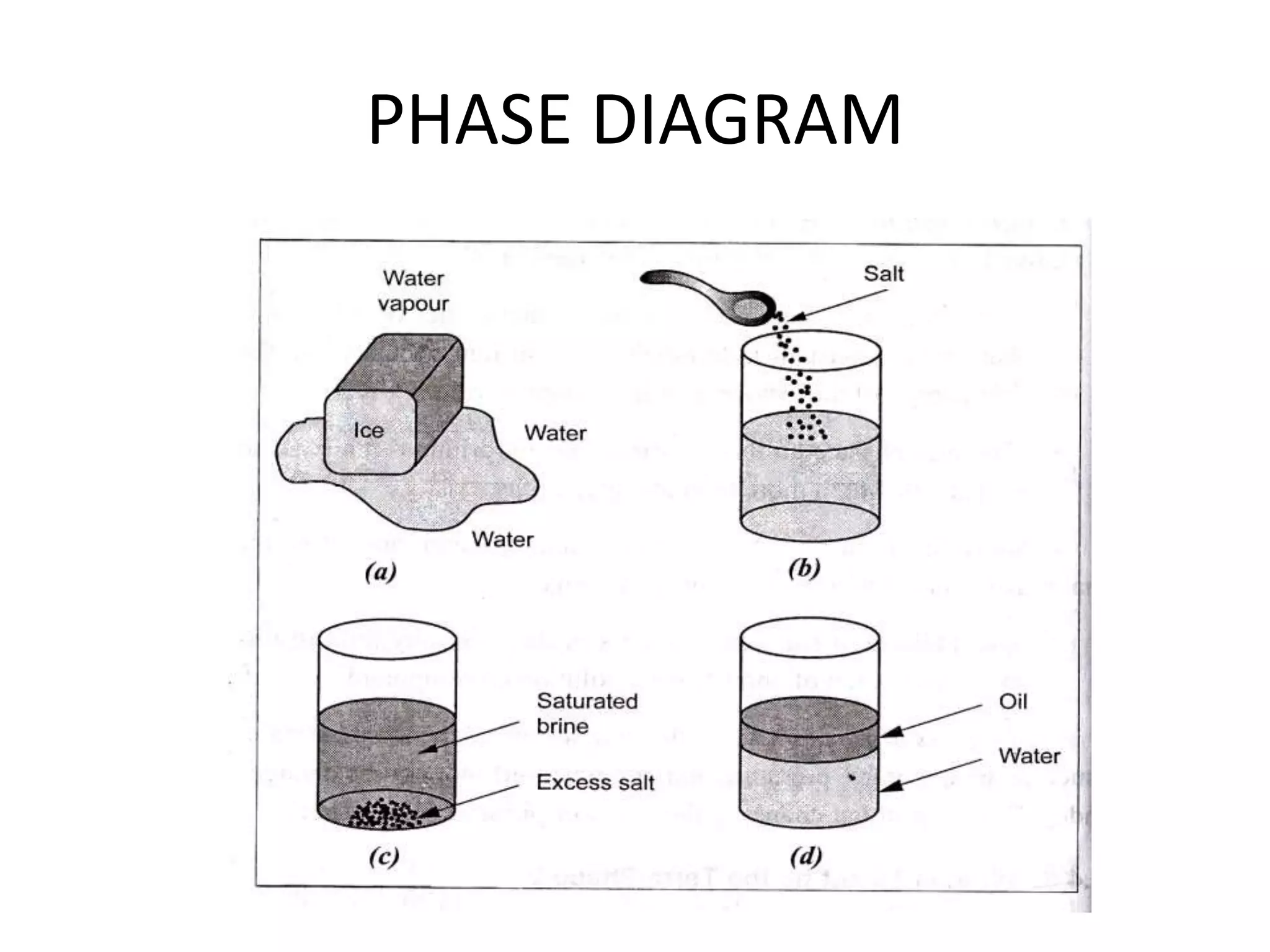
PHASE DIAGRAM
PHASE DIAGRAM OF PURE SUBSTANCE
(ONE COMPONENT PHASE DIAGRAM)
GIBBS PHASE RULE
• F=C-P+2
• Where, c= number of components
• P= number of phases
PHASE DIAGRAM FOR PARTIALLY SOLID
SOLUTION (16 mark)
• SIX PHASES IN THE REGION
1. LIQUID PHASE
2. ALPHA SOLID SOLUTION PHASE
3. BETA SOLID SOLUTION PHASE
4. ALPHA + LIQUID PHASE
5. BETA + LIQUID PHASE
6. ALPHA + BETA SOLID SOLUTION PHASE (eutectic
point)
PHASE DIAGRAM FOR PARTIALLY SOLID
SOLUTION

Phase diagram

  • 1.
  • 2.
    UNIT I --ALLOYSAND PHASE DIAGRAMS Constitution of alloys – Solid solutions, substitutional and interstitial – phase diagrams, Isomorphous, eutectic, eutectoid, peritectic, and peritectoid reactions, Iron – carbon equilibrium diagram. Classification of steel and cast Iron microstructure, properties and application.
  • 3.
  • 4.
    IMPURITIES IN SOLIDS •Impurities are always present in all materials. ALLOY: • It is a mixture of two or more metals. Metal and a non metal.
  • 5.
  • 6.
    HUME ROTHERY’S RULES •The solute and solvent follows the following general rules: 1. Size factor (similar size) 2. Crystal structure(same crystal structure) 3. Valence (same valence) 4. Electronegativity (approximately same electro negativity)
  • 7.
    TYPES OF SOLIDSOLUTIONS 1. Substitutional solid solutions (mixture of two elements, substitute for a parent element) a) Random b)Ordered 2.Interstital solid solutions (the solute atom fit in to the space between solvent and parent atom)
  • 10.
  • 11.
    PHASE DIAGRAM OFPURE SUBSTANCE (ONE COMPONENT PHASE DIAGRAM)
  • 12.
    GIBBS PHASE RULE •F=C-P+2 • Where, c= number of components • P= number of phases
  • 13.
    PHASE DIAGRAM FORPARTIALLY SOLID SOLUTION (16 mark) • SIX PHASES IN THE REGION 1. LIQUID PHASE 2. ALPHA SOLID SOLUTION PHASE 3. BETA SOLID SOLUTION PHASE 4. ALPHA + LIQUID PHASE 5. BETA + LIQUID PHASE 6. ALPHA + BETA SOLID SOLUTION PHASE (eutectic point)
  • 14.
    PHASE DIAGRAM FORPARTIALLY SOLID SOLUTION