Prepared by: Ms. Archana Vanjari
Designation: Assistant Professor
HOSPITAL AND ITS
ORGANIZATION
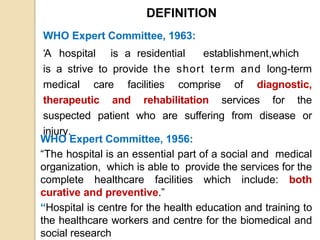
WHO Expert Committee, 1963:
‘A hospital is a residential establishment,which
is a strive to provide the short term and long-term
medical care facilities comprise of diagnostic,
therapeutic and rehabilitation services for the
suspected patient who are suffering from disease or
injury.
DEFINITION
WHO Expert Committee, 1956:
“The hospital is an essential part of a social and medical
organization, which is able to provide the services for the
complete healthcare facilities which include: both
curative and preventive.”
“Hospital is centre for the health education and training to
the healthcare workers and centre for the biomedical and
social research
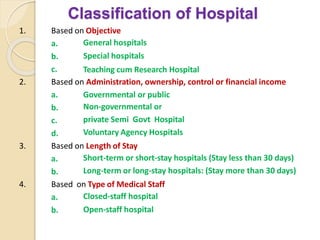
Classification of Hospital
1. Based on Objective
a.
b.
c.
General hospitals
Special hospitals
Teaching cum Research Hospital
2. Based on Administration, ownership, control or financial income
a.
b.
c.
d.
Governmental or public
Non-governmental or
private Semi Govt Hospital
Voluntary Agency Hospitals
3. Based on Length of Stay
a.
b.
Short-term or short-stay hospitals (Stay less than 30 days)
Long-term or long-stay hospitals: (Stay more than 30 days)
4. Based on Type of Medical Staff
a.
b.
Closed-staff hospital
Open-staff hospital
5. Based on bed capacity (Size)
a.
b.
c.
Small hospital (Upto 100 beds)
Medium hospital (More than 100 to less than 300 beds)
Large hospital (More than 300 beds)
6. Based on type of care:
a.
b.
c.
Primary Care
Secondary Care
Tertiary Care
7. Based on teaching affiliation:
a.
b.
Teaching hospital
Non-teaching hospital
8. Based on system of medicine
a.
b.
c.
d.
e.
Allopathic hospital
Ayurvedic hospital
Homeopathic hospital
Unani hospital
Hospitals of other system of medicine
9. Based on regionality
a.
b.
c.
Regional
District
Upazilha Health Complex
d. Union Health and Family Welfare Centres
e. Community Clinics
10. As per WHO Classification:
a.
b.
c.
Regional Hospital
Intermediate/ District
Hospital Rural Hospital
Type I: On Clinical Basis
1. Medicines
• Pediatrics
• Psychiatric and nervous diseases
• General medicines
2. Surgery
• Orthopaedic
• Gynaecology
• ENT
3. Maternity
• Short-term
• Long-term
Type II: On Non-Clinical Basis
1. Governmental
• Army Hospitals
• Navy Hospitals
• City Hospitals
• Civil Hospitals
• AIIMS/PGI
2. Non-Governmental
a) Private Hospitals for profit
b) Non-profit:
 Church Hospitals
 Community Hospitals
 Charitable Hospitals
Type III: On the basis of Size
1. Large: 1000 and above beds
2. Medium: between 500-1000
beds
3. Small: between 100-500 beds
4. Very small: less than 100 beds
Type IV: On the basis of Cost
5. Elite Hospitals
6. Budget Hospitals
Type III: On the basis of System of
Medicine
1. Allopathic Medicines
2. Ayurvedic Medicines
3. Homeopathic Medicines
4. Unani Medicines
CLASSIFICATION BASED ON CLINICAL AND NON-CLINICAL
BASIS
• Diagnosis and treatment of disease
• Patient care
• Medical education and training
• Prevention of disease and promotion of health
• Outpatient and inpatient services
Every hospital must have medical staff responsible for all
medical care to be provided to the patients as per ethics
conduct and professional practices to their membership.
The frame work of the medical staff varies from hospital to
hospital.
(A) Associated Medical services:
 In addition to the medical staff involved in diagnosis and
treatment.
 Such associated Medical services are as below:
1. Pathology and Clinical Biochemistry Services
2. Radiology
3. Blood Bank
4. Medical-Social Service Department
5. Anaesthesia Services
(B) Supportive Paramedical Services:
Nursing department, dietary services, laboratory services,
medical record department, pharmaceutical services are some
of the supportive paramedical services without which the
clinical departments cannot even function.
Some other important non-clinical services includes
maintenance and engineering departments.
 To advise the governing body on medical affairs.
To accept accountability for the quality of care rendered to
patients in the hospital.
 To request, review and act upon reports of medical
staff
committees.
To scrutinize the professional ethics of its members and to
initiate corrective action as indicated.
 To develop, implement, and review medical staff policies.
 To recommend action to the administrator on all
medical
administrative matters.
 To assure the medical services at personal and organisational
level.
Thank you

Pharmacy Practice Unit I.pptx

  • 1.
    Prepared by: Ms.Archana Vanjari Designation: Assistant Professor HOSPITAL AND ITS ORGANIZATION
  • 2.
    WHO Expert Committee,1963: ‘A hospital is a residential establishment,which is a strive to provide the short term and long-term medical care facilities comprise of diagnostic, therapeutic and rehabilitation services for the suspected patient who are suffering from disease or injury. DEFINITION WHO Expert Committee, 1956: “The hospital is an essential part of a social and medical organization, which is able to provide the services for the complete healthcare facilities which include: both curative and preventive.” “Hospital is centre for the health education and training to the healthcare workers and centre for the biomedical and social research
  • 3.
    Classification of Hospital 1.Based on Objective a. b. c. General hospitals Special hospitals Teaching cum Research Hospital 2. Based on Administration, ownership, control or financial income a. b. c. d. Governmental or public Non-governmental or private Semi Govt Hospital Voluntary Agency Hospitals 3. Based on Length of Stay a. b. Short-term or short-stay hospitals (Stay less than 30 days) Long-term or long-stay hospitals: (Stay more than 30 days) 4. Based on Type of Medical Staff a. b. Closed-staff hospital Open-staff hospital
  • 4.
    5. Based onbed capacity (Size) a. b. c. Small hospital (Upto 100 beds) Medium hospital (More than 100 to less than 300 beds) Large hospital (More than 300 beds) 6. Based on type of care: a. b. c. Primary Care Secondary Care Tertiary Care 7. Based on teaching affiliation: a. b. Teaching hospital Non-teaching hospital 8. Based on system of medicine a. b. c. d. e. Allopathic hospital Ayurvedic hospital Homeopathic hospital Unani hospital Hospitals of other system of medicine
  • 5.
    9. Based onregionality a. b. c. Regional District Upazilha Health Complex d. Union Health and Family Welfare Centres e. Community Clinics 10. As per WHO Classification: a. b. c. Regional Hospital Intermediate/ District Hospital Rural Hospital
  • 6.
    Type I: OnClinical Basis 1. Medicines • Pediatrics • Psychiatric and nervous diseases • General medicines 2. Surgery • Orthopaedic • Gynaecology • ENT 3. Maternity • Short-term • Long-term Type II: On Non-Clinical Basis 1. Governmental • Army Hospitals • Navy Hospitals • City Hospitals • Civil Hospitals • AIIMS/PGI 2. Non-Governmental a) Private Hospitals for profit b) Non-profit:  Church Hospitals  Community Hospitals  Charitable Hospitals Type III: On the basis of Size 1. Large: 1000 and above beds 2. Medium: between 500-1000 beds 3. Small: between 100-500 beds 4. Very small: less than 100 beds Type IV: On the basis of Cost 5. Elite Hospitals 6. Budget Hospitals Type III: On the basis of System of Medicine 1. Allopathic Medicines 2. Ayurvedic Medicines 3. Homeopathic Medicines 4. Unani Medicines CLASSIFICATION BASED ON CLINICAL AND NON-CLINICAL BASIS
  • 7.
    • Diagnosis andtreatment of disease • Patient care • Medical education and training • Prevention of disease and promotion of health • Outpatient and inpatient services
  • 9.
    Every hospital musthave medical staff responsible for all medical care to be provided to the patients as per ethics conduct and professional practices to their membership. The frame work of the medical staff varies from hospital to hospital. (A) Associated Medical services:  In addition to the medical staff involved in diagnosis and treatment.  Such associated Medical services are as below: 1. Pathology and Clinical Biochemistry Services 2. Radiology 3. Blood Bank 4. Medical-Social Service Department 5. Anaesthesia Services
  • 10.
    (B) Supportive ParamedicalServices: Nursing department, dietary services, laboratory services, medical record department, pharmaceutical services are some of the supportive paramedical services without which the clinical departments cannot even function. Some other important non-clinical services includes maintenance and engineering departments.
  • 11.
     To advisethe governing body on medical affairs. To accept accountability for the quality of care rendered to patients in the hospital.  To request, review and act upon reports of medical staff committees. To scrutinize the professional ethics of its members and to initiate corrective action as indicated.  To develop, implement, and review medical staff policies.  To recommend action to the administrator on all medical administrative matters.  To assure the medical services at personal and organisational level.
  • 12.