
Hospital
Formulary
Ravinandan A P
Assistant Professor
Sree Siddaganga College of Pharmacy
Tumkur-02
Definition
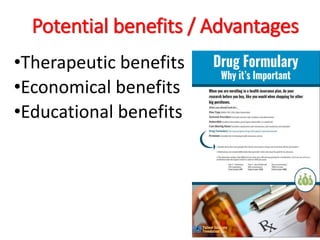
•Formulary is a continually revised
compilation of pharmaceuticals
that reflects the current clinical
judgment of the medical staff
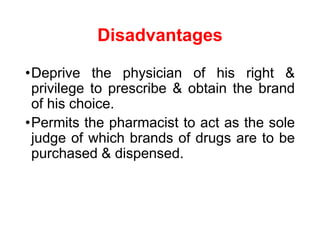
Potential benefits / Advantages
•Therapeutic benefits
•Economical benefits
•Educational benefits
Disadvantages
•Deprive the physician of his right &
privilege to prescribe & obtain the brand
of his choice.
•Permits the pharmacist to act as the sole
judge of which brands of drugs are to be
purchased & dispensed.
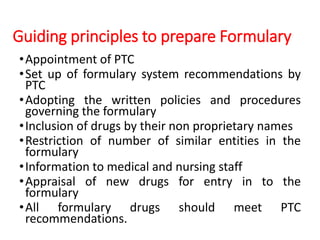
Guiding principles to prepare Formulary
•Appointment of PTC
•Set up of formulary system recommendations by
PTC
•Adopting the written policies and procedures
governing the formulary
•Inclusion of drugs by their non proprietary names
•Restriction of number of similar entities in the
formulary
•Information to medical and nursing staff
•Appraisal of new drugs for entry in to the
formulary
•All formulary drugs should meet PTC
recommendations.
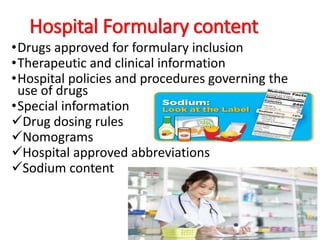
Hospital Formulary content
•Drugs approved for formulary inclusion
•Therapeutic and clinical information
•Hospital policies and procedures governing the
use of drugs
•Special information
Drug dosing rules
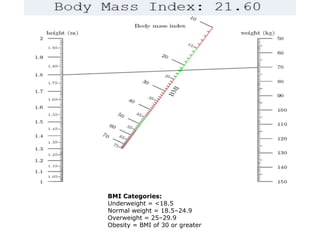
Nomograms
Hospital approved abbreviations
Sodium content
BMI Categories:
Underweight = <18.5
Normal weight = 18.5–24.9
Overweight = 25–29.9
Obesity = BMI of 30 or greater
Parts of Hospital Formulary
Hospital Policies and Procedures
Drug product listing
Special information
Hospital Policies and Procedures
•Formulary policies and procedures
•Brief description of hospital PTC
•Hospital regulations governing the
prescribing, dispensing and administration
of drugs.
•Pharmacy operating procedures
•Information about the technique to use the
formulary
Drug product listing
Heart of the formulary
•Consist of one or more descriptive entries
•One or more index
•Formulary item entries: Alphabetically by
generic name Alphabetically within
therapeutic class
•Type of information: Dosage form, strength,
packaging Active ingredients
Adult/paediatric dose Route of
administration, Cost
•Indexes to the drug products listing: Generic
name/brand name Therapeutic
/pharmacological index
Entries
•Alphabetically by generic name with
synonyms and brand names
•Alphabetically within the therapeutic class
•A combination of the both
Type of information
•Generic name of the basic drug entity
•Combination products
•Generic, common or trade name
•Synonyms
•Directions for use
•Dose, dosage form, strength, packaging and size
•Formulation of combination product and category
•Number of formulation.
Additional information
•Usual adult or pediatric dosage range
•Special precautions
“Do not administer through IV” or
“Refrigerate”
•Control substances symbol
•Cost information
Special Information
•Nutritional products listing
•Tables of equivalent dosages and similar drugs
•List of hospital abbreviations
•Rules for calculating pediatric dosage forms
•Table of sodium content in antacids
•List of sugar free drug products
Format & Appearance
Visually attractive, easily readable and professional in
appearance. A typical formulary must have the following
composition;
•Title page
•Names and Titles of the PTC members
•Table of contents
•Information on hospital policies and procedures
PTC of XYZ hospital
Objectives and operation of the hospital formulary
system
hospital regulations & procedures for prescribing &
dispensing the drugs
Hospital pharmacy services and procedures
How to use formulary
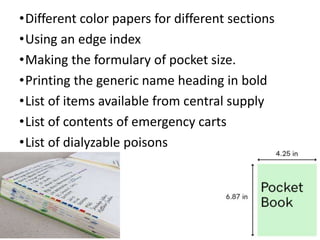
•Different color papers for different sections
•Using an edge index
•Making the formulary of pocket size.
•Printing the generic name heading in bold
•List of items available from central supply
•List of contents of emergency carts
•List of dialyzable poisons
•Pharmacokinetic dosing and monitoring
information
•Metric conversion scales and tables
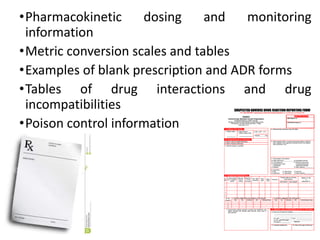
•Examples of blank prescription and ADR forms
•Tables of drug interactions and drug
incompatibilities
•Poison control information
FORMULARY vs DRUG LIST FORMULARY
DRUG LIST
FORMULARY
• Listing of drugs by their
generic names followed by
information on strength,
form, posology, toxicology,
use & recommended
quantity to be dispensed.
• Prepared locally by its own
clinical staff.
• Information provided is
subject to local needs and
desires. Generic names
followed by data on strength
& form.
DRUG LIST
FORMULARY
• Generic name followed by
strength & form
• Prepared by country’s
outstanding clinicians,
pharmacologists and
pharmacists.
• According to their
pharmacological actions /
properties.
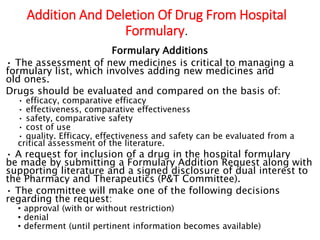
Addition And Deletion Of Drug From Hospital
Formulary.
Formulary Additions
• The assessment of new medicines is critical to managing a
formulary list, which involves adding new medicines and
old ones.
Drugs should be evaluated and compared on the basis of:
• efficacy, comparative efficacy
• effectiveness, comparative effectiveness
• safety, comparative safety
• cost of use
• quality. Efficacy, effectiveness and safety can be evaluated from a
critical assessment of the literature.
• A request for inclusion of a drug in the hospital formulary
be made by submitting a Formulary Addition Request along with
supporting literature and a signed disclosure of dual interest to
the Pharmacy and Therapeutics (P&T Committee).
• The committee will make one of the following decisions
regarding the request:
• approval (with or without restriction)
• denial
• deferment (until pertinent information becomes available)
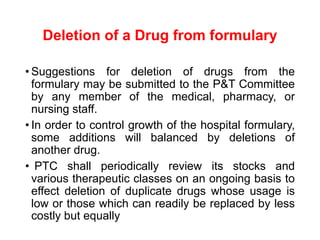
Deletion of a Drug from formulary
• Suggestions for deletion of drugs from the
formulary may be submitted to the P&T Committee
by any member of the medical, pharmacy, or
nursing staff.
• In order to control growth of the hospital formulary,
some additions will balanced by deletions of
another drug.
• PTC shall periodically review its stocks and
various therapeutic classes on an ongoing basis to
effect deletion of duplicate drugs whose usage is
low or those which can readily be replaced by less
costly but equally
THANK YOU

Hospital Formulary.ppt

  • 1.
    Hospital Formulary Ravinandan A P AssistantProfessor Sree Siddaganga College of Pharmacy Tumkur-02
  • 2.
    Definition •Formulary is acontinually revised compilation of pharmaceuticals that reflects the current clinical judgment of the medical staff
  • 3.
    Potential benefits /Advantages •Therapeutic benefits •Economical benefits •Educational benefits
  • 4.
    Disadvantages •Deprive the physicianof his right & privilege to prescribe & obtain the brand of his choice. •Permits the pharmacist to act as the sole judge of which brands of drugs are to be purchased & dispensed.
  • 5.
    Guiding principles toprepare Formulary •Appointment of PTC •Set up of formulary system recommendations by PTC •Adopting the written policies and procedures governing the formulary •Inclusion of drugs by their non proprietary names •Restriction of number of similar entities in the formulary •Information to medical and nursing staff •Appraisal of new drugs for entry in to the formulary •All formulary drugs should meet PTC recommendations.
  • 6.
    Hospital Formulary content •Drugsapproved for formulary inclusion •Therapeutic and clinical information •Hospital policies and procedures governing the use of drugs •Special information Drug dosing rules Nomograms Hospital approved abbreviations Sodium content
  • 7.
    BMI Categories: Underweight =<18.5 Normal weight = 18.5–24.9 Overweight = 25–29.9 Obesity = BMI of 30 or greater
  • 8.
    Parts of HospitalFormulary Hospital Policies and Procedures Drug product listing Special information
  • 9.
    Hospital Policies andProcedures •Formulary policies and procedures •Brief description of hospital PTC •Hospital regulations governing the prescribing, dispensing and administration of drugs. •Pharmacy operating procedures •Information about the technique to use the formulary
  • 10.
    Drug product listing Heartof the formulary •Consist of one or more descriptive entries •One or more index •Formulary item entries: Alphabetically by generic name Alphabetically within therapeutic class •Type of information: Dosage form, strength, packaging Active ingredients Adult/paediatric dose Route of administration, Cost •Indexes to the drug products listing: Generic name/brand name Therapeutic /pharmacological index
  • 11.
    Entries •Alphabetically by genericname with synonyms and brand names •Alphabetically within the therapeutic class •A combination of the both
  • 12.
    Type of information •Genericname of the basic drug entity •Combination products •Generic, common or trade name •Synonyms •Directions for use •Dose, dosage form, strength, packaging and size •Formulation of combination product and category •Number of formulation.
  • 13.
    Additional information •Usual adultor pediatric dosage range •Special precautions “Do not administer through IV” or “Refrigerate” •Control substances symbol •Cost information
  • 14.
    Special Information •Nutritional productslisting •Tables of equivalent dosages and similar drugs •List of hospital abbreviations •Rules for calculating pediatric dosage forms •Table of sodium content in antacids •List of sugar free drug products
  • 15.
    Format & Appearance Visuallyattractive, easily readable and professional in appearance. A typical formulary must have the following composition; •Title page •Names and Titles of the PTC members •Table of contents •Information on hospital policies and procedures PTC of XYZ hospital Objectives and operation of the hospital formulary system hospital regulations & procedures for prescribing & dispensing the drugs Hospital pharmacy services and procedures How to use formulary
  • 16.
    •Different color papersfor different sections •Using an edge index •Making the formulary of pocket size. •Printing the generic name heading in bold •List of items available from central supply •List of contents of emergency carts •List of dialyzable poisons
  • 17.
    •Pharmacokinetic dosing andmonitoring information •Metric conversion scales and tables •Examples of blank prescription and ADR forms •Tables of drug interactions and drug incompatibilities •Poison control information
  • 18.
    FORMULARY vs DRUGLIST FORMULARY DRUG LIST FORMULARY • Listing of drugs by their generic names followed by information on strength, form, posology, toxicology, use & recommended quantity to be dispensed. • Prepared locally by its own clinical staff. • Information provided is subject to local needs and desires. Generic names followed by data on strength & form. DRUG LIST FORMULARY • Generic name followed by strength & form • Prepared by country’s outstanding clinicians, pharmacologists and pharmacists. • According to their pharmacological actions / properties.
  • 19.
    Addition And DeletionOf Drug From Hospital Formulary. Formulary Additions • The assessment of new medicines is critical to managing a formulary list, which involves adding new medicines and old ones. Drugs should be evaluated and compared on the basis of: • efficacy, comparative efficacy • effectiveness, comparative effectiveness • safety, comparative safety • cost of use • quality. Efficacy, effectiveness and safety can be evaluated from a critical assessment of the literature. • A request for inclusion of a drug in the hospital formulary be made by submitting a Formulary Addition Request along with supporting literature and a signed disclosure of dual interest to the Pharmacy and Therapeutics (P&T Committee). • The committee will make one of the following decisions regarding the request: • approval (with or without restriction) • denial • deferment (until pertinent information becomes available)
  • 20.
    Deletion of aDrug from formulary • Suggestions for deletion of drugs from the formulary may be submitted to the P&T Committee by any member of the medical, pharmacy, or nursing staff. • In order to control growth of the hospital formulary, some additions will balanced by deletions of another drug. • PTC shall periodically review its stocks and various therapeutic classes on an ongoing basis to effect deletion of duplicate drugs whose usage is low or those which can readily be replaced by less costly but equally
  • 21.