We
                Fri lcom
                   en
                      ds e


  Let’s learn

PHARMACOLOGY
PHARMACOLOGY


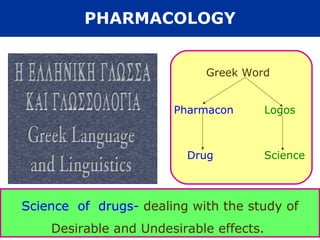
                            Greek Word


                       Pharmacon         Logos


                         Drug        Science


Science of drugs- dealing with the study of
    Desirable and Undesirable effects.
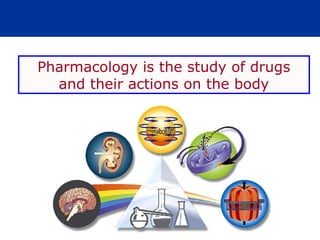
Pharmacology is the study of drugs
  and their actions on the body
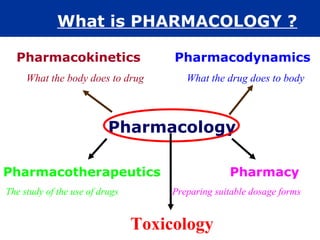
What is PHARMACOLOGY ?

  Pharmacokinetics                   Pharmacodynamics
     What the body does to drug         What the drug does to body


                          Pharmacology

Pharmacotherapeutics                              Pharmacy
The study of the use of drugs        Preparing suitable dosage forms


                                Toxicology
PHARMACO THERAPEUTICS


      It is a branch of medicine
      concerned with the cure of
      disease or relief of symptoms
       and induces drug treatment.
PHARMACY

It is the science of:

 •Identification
 •Selection
 •Preservation
 •Standardization
 •Compounding,      and
 •Dispensing     of medicinal substances
PHARMACOPOEIA

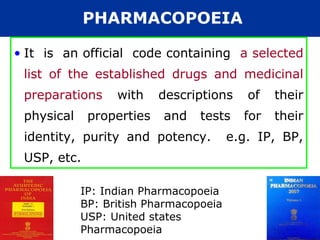
• It is an official code containing a selected
 list of the established drugs and medicinal
 preparations     with    descriptions     of   their
 physical    properties   and    tests    for   their
 identity, purity and potency.          e.g. IP, BP,
 USP, etc.

            IP: Indian Pharmacopoeia
            BP: British Pharmacopoeia
            USP: United states
            Pharmacopoeia
DRUG


“ Drug is any substance or product that is used
or   is   intended   to   be      used   to   modify
physiological systems or pathological states for
the benefit of the recipient .”
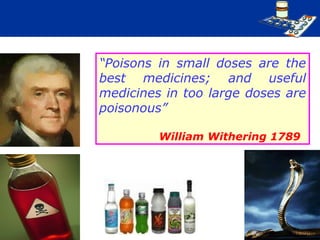
“Poisons in small doses are the
best medicines; and useful
medicines in too large doses are
poisonous”

         William Withering 1789
DRUG NAMES


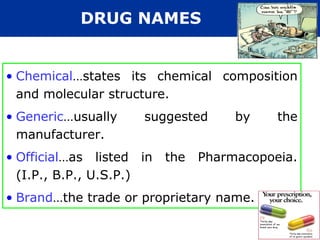
• Chemical…states its chemical composition
  and molecular structure.
• Generic…usually    suggested       by    the
  manufacturer.
• Official…as listed in   the   Pharmacopoeia.
  (I.P., B.P., U.S.P.)
• Brand…the trade or proprietary name.
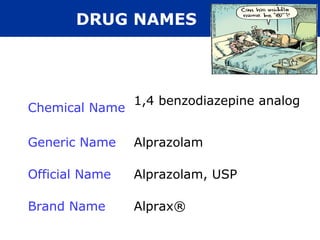
DRUG NAMES


                1,4 benzodiazepine analog
Chemical Name

Generic Name    Alprazolam

Official Name   Alprazolam, USP

Brand Name      Alprax®
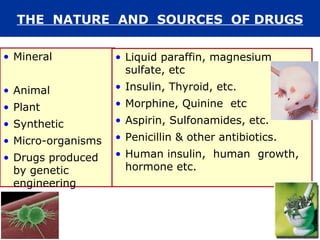
THE NATURE AND SOURCES OF DRUGS

• Mineral           • Liquid paraffin, magnesium
                      sulfate, etc
• Animal            • Insulin, Thyroid, etc.
• Plant             • Morphine, Quinine etc
• Synthetic         • Aspirin, Sulfonamides, etc.
• Micro-organisms   • Penicillin & other antibiotics.
• Drugs produced    • Human insulin, human growth,
  by genetic          hormone etc.
  engineering
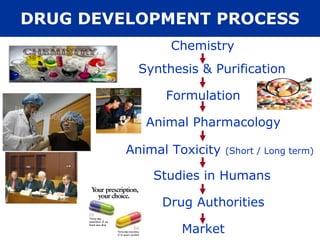
DRUG DEVELOPMENT PROCESS
                Chemistry
          Synthesis & Purification

               Formulation

            Animal Pharmacology

         Animal Toxicity   (Short / Long term)

             Studies in Humans

              Drug Authorities

                 Market
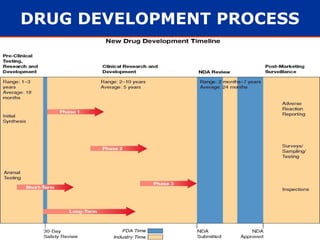
DRUG DEVELOPMENT PROCESS
DOSE Vs DOSAGE
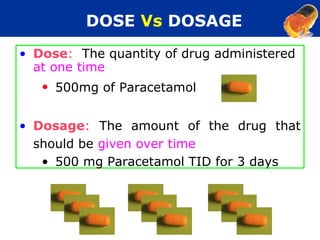
• Dose: The quantity of drug administered
  at one time
   • 500mg of Paracetamol


• Dosage: The amount of the drug that
  should be given over time
   • 500 mg Paracetamol TID for 3 days
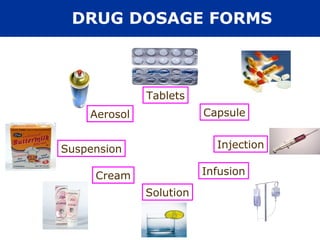
DRUG DOSAGE FORMS


              Tablets
    Aerosol              Capsule


Suspension                 Injection

     Cream               Infusion

              Solution
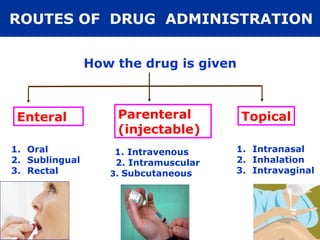
ROUTES OF DRUG ADMINISTRATION


                How the drug is given


 Enteral            Parenteral          Topical
                    (injectable)
1. Oral             1. Intravenous     1. Intranasal
2. Sublingual       2. Intramuscular   2. Inhalation
3. Rectal          3. Subcutaneous     3. Intravaginal
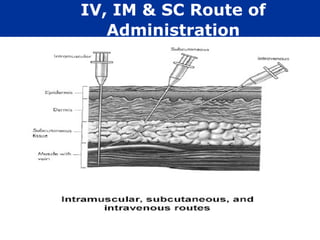
IV, IM & SC Route of
   Administration
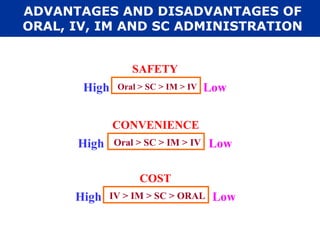
ADVANTAGES AND DISADVANTAGES OF
ORAL, IV, IM AND SC ADMINISTRATION


                  SAFETY
       High   Oral > SC > IM > IV   Low

              CONVENIENCE
      High    Oral > SC > IM > IV   Low

                   COST
      High   IV > IM > SC > ORAL     Low
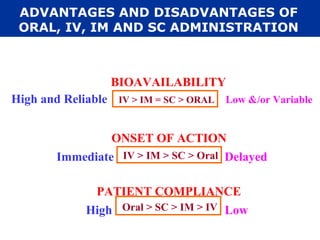
ADVANTAGES AND DISADVANTAGES OF
 ORAL, IV, IM AND SC ADMINISTRATION


                    BIOAVAILABILITY
High and Reliable    IV > IM = SC > ORAL   Low &/or Variable


                 ONSET OF ACTION
        Immediate IV > IM > SC > Oral Delayed

              PATIENT COMPLIANCE
             High Oral > SC > IM > IV Low
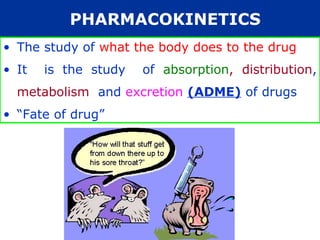
PHARMACOKINETICS
• The study of what the body does to the drug
• It   is the study   of absorption, distribution,
  metabolism and excretion (ADME) of drugs
• “Fate of drug”
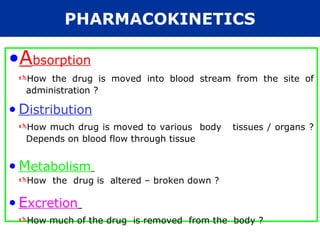
PHARMACOKINETICS

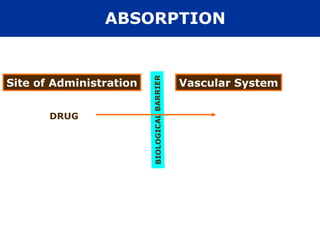
•Absorption
 How the drug is moved into blood stream from the site of
  administration ?

• Distribution
 How much drug is moved to various body    tissues / organs ?
  Depends on blood flow through tissue


• Metabolism
 How the drug is altered – broken down ?

• Excretion
 How much of the drug is removed from the body ?
ABSORPTION


                         BIOLOGICAL BARRIER
Site of Administration                        Vascular System


       DRUG
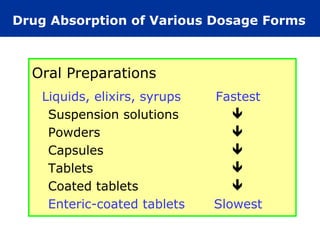
Drug Absorption of Various Dosage Forms


  Oral Preparations
   Liquids, elixirs, syrups   Fastest
    Suspension solutions         
    Powders                      
    Capsules                     
    Tablets                      
    Coated tablets               
    Enteric-coated tablets    Slowest
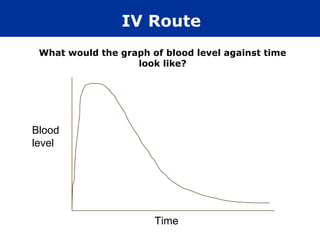
IV Route
 What would the graph of blood level against time
                   look like?


Blood
level


                       Time
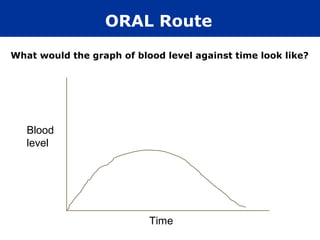
ORAL Route
What would the graph of blood level against time look like?


   Blood
   level


                           Time
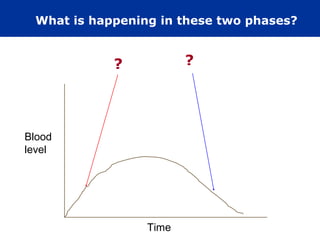
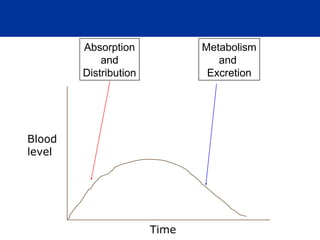
What is happening in these two phases?


            ?           ?


Blood
level


                 Time
Absorption            Metabolism
            and                  and
        Distribution           Excretion


Blood
level


                       Time
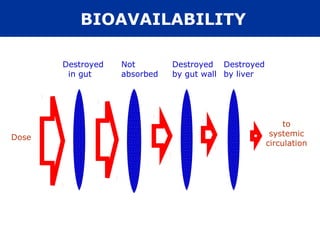
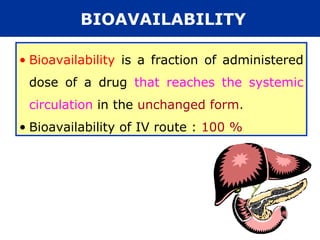
BIOAVAILABILITY

• Bioavailability is a fraction of administered
 dose of a drug that reaches the systemic
 circulation in the unchanged form.
• Bioavailability of IV route : 100 %
BIOAVAILABILITY

       Destroyed   Not        Destroyed Destroyed
        in gut     absorbed   by gut wall by liver


                                                          to
Dose                                                  systemic
                                                     circulation
BIOAVAILABILITY

Factors influencing bioavailability
  • Dosage forms
  • Chemical form
  • Dissolution & Absorption of drug
  • Route of administration
  • Presence of food/drugs in GI tract
  • First pass effect
  • Extent of drug metabolism before reaching
    systemic circulation
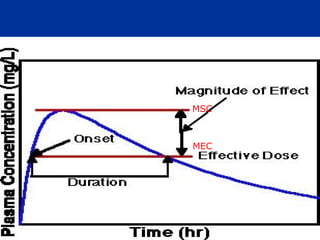
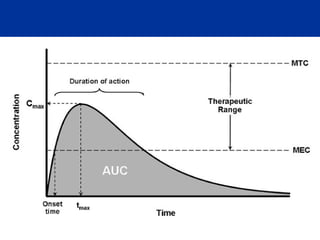
MSC


MEC
Concept of Critical Threshold

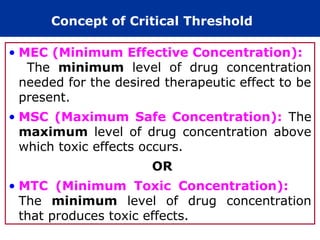
• MEC (Minimum Effective Concentration):
   The minimum level of drug concentration
  needed for the desired therapeutic effect to be
  present.
• MSC (Maximum Safe Concentration): The
  maximum level of drug concentration above
  which toxic effects occurs.
                       OR
• MTC (Minimum Toxic Concentration):
  The minimum level of drug concentration
  that produces toxic effects.
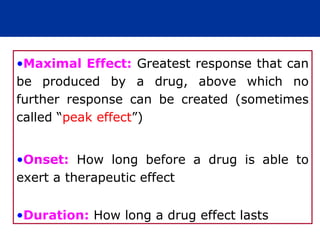
•Maximal Effect: Greatest response that can
be produced by a drug, above which no
further response can be created (sometimes
called “peak effect”)


•Onset: How long before a drug is able to
exert a therapeutic effect


•Duration: How long a drug effect lasts
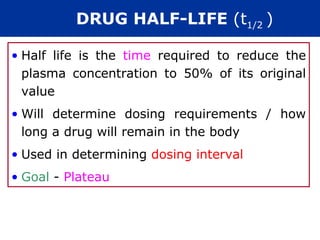
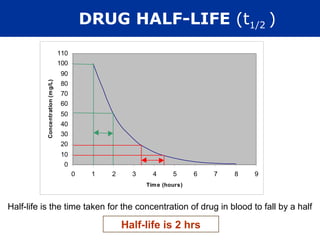
DRUG HALF-LIFE (t1/2 )

• Half life is the time required to reduce the
  plasma concentration to 50% of its original
  value
• Will determine dosing requirements / how
  long a drug will remain in the body
• Used in determining dosing interval
• Goal - Plateau
DRUG HALF-LIFE (t1/2 )
                                  110
                                  100
                                  90
          Concentration (m g/L)


                                  80
                                  70
                                  60
                                  50
                                  40
                                  30
                                  20
                                  10
                                   0
                                        0    1   2     3     4      5      6   7   8   9
                                                           Tim e (hours)


Half-life is the time taken for the concentration of drug in blood to fall by a half

                                                     Half-life is 2 hrs
DRUG HALF-LIFE (t1/2 )

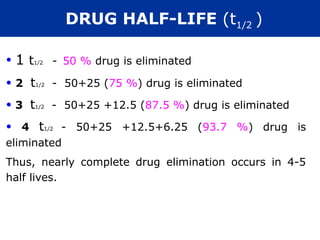
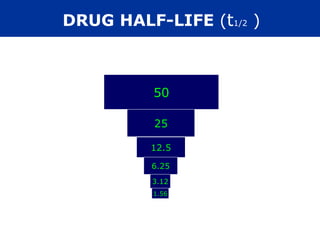
•   1t   1/2   - 50 % drug is eliminated

• 2 t1/2 - 50+25 (75 %) drug is eliminated

• 3 t1/2 - 50+25 +12.5 (87.5 %) drug is eliminated

• 4 t1/2 - 50+25 +12.5+6.25 (93.7 %) drug is
eliminated
Thus, nearly complete drug elimination occurs in 4-5
half lives.
DRUG HALF-LIFE (t1/2 )


          50

          25

         12.5

         6.25
         3.12
          1.56
Cmax & Tmax
                                   Cmax

          not art nec no C


                                Tmax

                                       Time

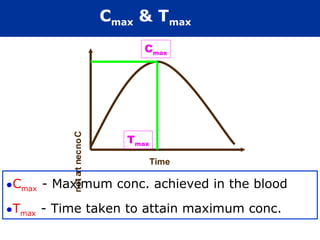
•Cmax - Maximum conc. achieved in the blood
           i


•Tmax - Time taken to attain maximum conc.
AUC (Area Under Curve)


                     AUC


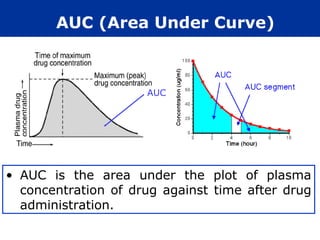
• AUC is the area under the plot of plasma
  concentration of drug against time after drug
  administration.
DISTRIBUTION


Distribution is a branch of pharmacokinetics
which describes the reversible transfer of drug
from one location to another within the body.
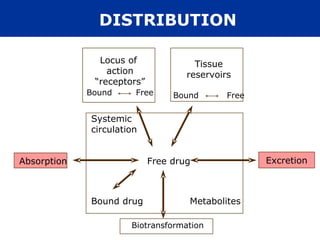
DISTRIBUTION

               Locus of               Tissue
                 action             reservoirs
              “receptors”
             Bound     Free      Bound       Free

             Systemic
             circulation


Absorption                  Free drug               Excretion
                                                    Excretion


             Bound drug             Metabolites

                      Biotransformation
Plasma- Protein Binding
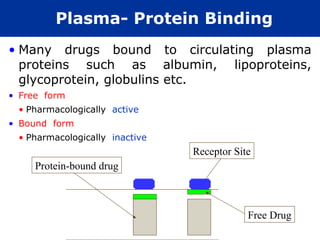
• Many drugs bound to circulating plasma
  proteins such as albumin, lipoproteins,
  glycoprotein, globulins etc.
• Free form
 • Pharmacologically active
• Bound form
 • Pharmacologically inactive
                                Receptor Site
     Protein-bound drug


                                            Free Drug
Protein Binding

• Drugs can bind with proteins

• Acts as temporary store of drug

• Prolongs it’s action

• Cause prolonged low level of drugs

• Slowly released from bound reservoir

• Delays metabolism

• Delays excretion

• Decreases its entry into CNS
Dosing

• Dosing Interval - How often the drug
  should be given


• Loading dose – Which puts the plasma
  concentration in the therapeutic range


• Maintenance dose - Routine smaller doses
  to maintain the steady state (Plateau)
METABOLISM
   Metabolism = change / biotransformation
   The conversion from one chemical form to another

Site of drug biotransformation
     • Liver - cytochrome P450 pathways OR microsomal
       P450 pathways are used to metabolize most
       agents
     • Enzymatic alteration of drug structure


    Effect of metabolism
     80% of drugs become inactive

     Inactive drug becomes active: Prodrug

     Some drugs do not get metabolised at all
METABOLISM

   Majority of drugs are metabolized in liver by
    enzymes – Cytochrome P 450


   Drugs may induce (activate) or inhibit these
    enzymes


           Drug – Drug interactions
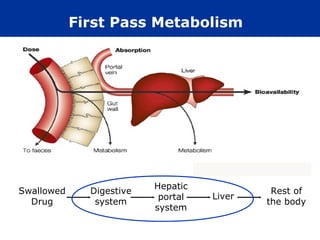
First Pass Metabolism


The first-pass metabolism (also known as first-pass
effect or presystemic metabolism) is a phenomenon of
drug metabolism whereby the concentration of a drug
is greatly reduced before it reaches the systemic
circulation.
First Pass Metabolism


                          Hepatic
Swallowed     Digestive                      Rest of
                           portal   Liver
  Drug         system                       the body
                          system
First Pass Metabolism


Systems that affect the first pass effect of the drug,

   •   Enzymes of the gastro intestinal lumen
   •   Gut wall enzyme
   •   Bacterial enzymes
   •   Hepatic enzymes
First Pass Metabolism

Effect of first pass metabolism
 Part of administered dose made inactive
  ↓ bioavailability
 Drug converted into its active form


• Nitroglycerin when given orally
 • Totally   inactivated in the liver
 • 100% first pass effect
 • Always given sublingually
Prodrug

 Administered           in an inactive form
 After   administration converted into their active form
  usually    in liver


 Designed      to improve bioavailability
 Examples
  Enalapril   – Enalaprilate
  Ramipril    - Ramiprilate
METABOLISM

Factors affecting metabolism :


1.   Age – Children / Elderly
2.   Disease condition – e.g. Liver disease
3.   Induction of drug metabolizing enzymes
4.   First-pass effect – Nitroglycerin
5.   Competition between drugs
6.   Genetics
7.   Environment e.g. Smoking
Excretion
Drugs &/or its metabolites        are   irreversibly
eliminated from the body

     • Elimination of the drug
      • Unchanged (Parent form)
      • Metabolites


     • Routes of excretion
      • Kidneys – Urine
      • GIT – Stools
      • Skin - Perspiration
      • Eyes - Tears
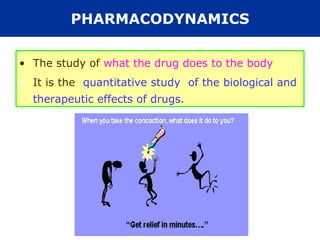
PHARMACODYNAMICS


• The study of what the drug does to the body
• It is the quantitative study of the biological and
  therapeutic effects of drugs.
PHARMACODYNAMICS


Drug actions:
• The cellular processes involved in the drug
  and cell interaction


Drug effect:
• The physiologic reaction of the body to the
  drug
PHARMACODYNAMICS

Onset
• The time it takes for the drug to elicit a
  therapeutic response
Peak
• The time it takes for a drug to reach its
  maximum therapeutic response
Duration
• The time a drug concentration is sufficient
  to elicit therapeutic response
Four targets of drug action on cells

 • Receptors
  • Ach receptors / Epinephrine receptors
 • Ion Channels
  •Voltage gated Na+ / K+ / Ca++
 • Enzymes
  •Cyclooxygenase / Acetylcholine esterase
 • Carriers
  •Na+/ K+ pump / Proton Pump
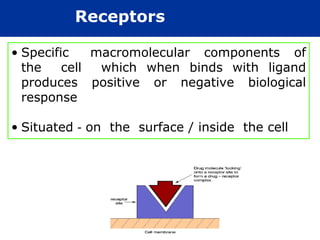
Receptors

• Specific    macromolecular components of
  the    cell  which when binds with ligand
  produces positive or negative biological
  response

• Situated - on the surface / inside the cell
• Affinity: Inherent ability of the drug to bind with the
  receptor

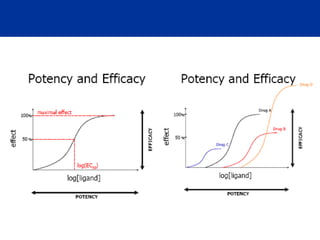
• Efficacy (Intrinsic activity): Inherent ability of the
  drug to induce a physiological response

• Potency: An expression of the activity of the drug, in
  terms of the concentration or amount needed to
  produce a defined effect
What drug can do?

All that drugs can do is,
• Mimic the physiological activity of the
  body’s own molecules


• Block the physiological   activity   of   the
  body’s own molecules
Drug at Receptor

• Agonist : It activates a receptor to produce an
  effect similar to that of the physiological signal
  molecule
• Antagonist : It prevents the action of an agonist
  on a receptor but does not have any effect of its
  own
• Partial agonist : It activates a receptor to produce
  sub maximal effect but antagonizes the action of
  full agonist.
Agonist v/s Antagonist

• Drug + Receptor  EFFECT


• Drug + Receptor  Maximum Effect
 • Drug = complete or full agonist


• Drug + Receptor  Less than maximal effect
 • Drug = partial agonist


• Drug + Receptor  Block effect
 • Drug = Antagonist
Effects of combination of drug


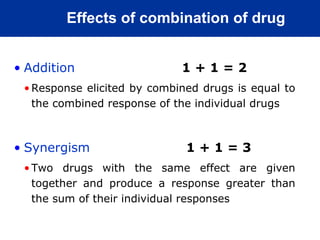
• Addition                   1+1=2
 • Response elicited by combined drugs is equal to
   the combined response of the individual drugs


• Synergism                   1+1=3
 • Two drugs with the same effect are given
   together and produce a response greater than
   the sum of their individual responses
Effects of combination of drug


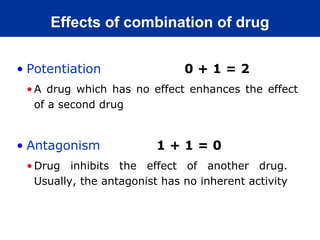
• Potentiation                 0+1=2
 • A drug which has no effect enhances the effect
   of a second drug


• Antagonism             1+1=0
 • Drug inhibits the effect of another drug.
   Usually, the antagonist has no inherent activity
Factors affecting drug response

• Pharmacological
 •Dose & Route of administration
 •Duration of treatment
 •Co-administration of other drugs
• Individual
 •Age & Weight
 •Gender
 •Pathology
 •Diet
Indication & Contraindication
• Indication:
 A clinical circumstance indicating that the
 use of a particular intervention would be
 appropriate


• Contraindication:
 Any condition which renders a particular
 line of treatment improper or undesirable.
Adverse drug reaction

What does the term adverse reaction refer to?


A. A life-threatening response to a drug
B. A drug-induced allergy
C. A harmful, noxious, unintended & undesirable
   response to a drug
D. An unpredictable response to a drug
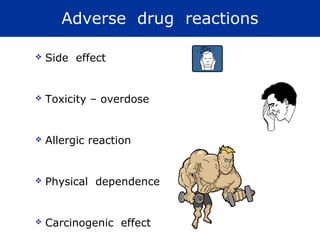
Adverse drug reactions

   Side effect


   Toxicity – overdose


   Allergic reaction


   Physical dependence


   Carcinogenic effect
Adverse drug reactions: Definitions

• Side Effect
 • Unavoidable unintended pharmacodynamic effects that occur
   at a therapeutic dose
  • Dryness of mouth with Atropine


• Toxic effects
 • Result of excessive pharmacological action of the drug due
   to overdosage or prolonged use
  • Hepatic necrosis from paracetamol overdosage


• Drug intolerance
 • Toxic effects of a drug in an individual at therapeutic doses
  • Vomiting with a single dose of salicylate

• Drug tolerance
 • Decreased response to the same amount of drug after repeated
   administration
Adverse drug reactions: Definitions


• Cross Tolerance
 • Tolerance for a drug that develops after administration of a
   different drug


• Tachyphylaxis
 • Rapidly occurring tolerance to a drug.


• Cumulative effect
 • Increased effectiveness when a drug is given in several doses.


• Drug dependence
 • The patient becomes accustomed to the drug’s presence in his
   body.
Adverse drug reactions: Definitions

• Idiosyncrasy
   • Drug effect unique to an individual,
     A. a toxic reaction
     B. an allergic reaction
     C. a reaction peculiar to the patient
     D. an anaphylactic reaction


• Drug allergy
 • Immunologically mediated reaction
 • Symptoms unrelated to pharmacodynamic profile of drug
 • Independent of dosage
     E.g. Penicillin


• Drug withdrawal symptoms
 • Functional disturbances induced by a drug Persists even after
   offending drug has been withdrawn
Adverse drug reactions: Definitions

• Teratogenecity – induce birth defect
 • Capacity of a drug to cause foetal abnormalities

  • Thalidomide

• Mutagenic Effect
 • Mutagenesis involves alteration of the genotype by
  modification of the DNA

 • Mutation   is carried to   the   next generations

• Photosensitivity
 • Cutaneous reaction resulting from drug induced sensitization
  of the skin to UV radiation

 • Quinolones
Drug Safety–Therapeutic Window

• Therapeutic Index (or Window) measures “how safe a
  drug is” or “Margin of safety”


• High therapeutic index = safe


• Low therapeutic index = not so safe


   The larger the ratio, the safer the drug
Therapeutic Index/Ratio
• Therapeutic Index/Ratio: Is the ratio between lethal
  dose (LD) and effective dose (ED) this is useful
  measure of safety and efficacy of any drug.


• Lethal dose: The amount of the drug which kills
  subjects when it is administered is called lethal dose


• Effective dose: The amount of the drug which
  removes sign & symptoms of subjects when it is
  administered
PLACEBO:


Drug devoid of intrinsic pharmacological activity and
it works by psychological means.
USES :   ??????
PHASES OF CLINICAL
          DEVELOPMENT

• Phase 1: Clinical pharmacology
• Phase 2: Clinical investigation
• Phase 3: Formal therapeutic trials
• Phase 4: Post licensing (marketing)
  studies
Pregnancy Considerations

• Increased maternal HR, CO and blood volume
 • May affect absorption, distribution, effectiveness

• Drugs may cross placenta
• Drugs may cross into breast milk
• Tertatogens
Pregnancy Categories

• A: controlled studies in pregnancy (<1 %).
• B: animal studies show no risk; Inadequate
  human data.
• C: animal studies show risk, inadequate
  human data.
• D: human data show risk, benefit may
  outweigh risk.
• X: animal or human data positive for risk. Use
  unwarranted.
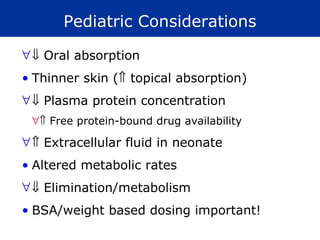
Pediatric Considerations

∀ ⇓ Oral absorption
• Thinner skin (⇑ topical absorption)
∀ ⇓ Plasma protein concentration
 ∀⇑ Free protein-bound drug availability

∀ ⇑ Extracellular fluid in neonate
• Altered metabolic rates
∀ ⇓ Elimination/metabolism
• BSA/weight based dosing important!
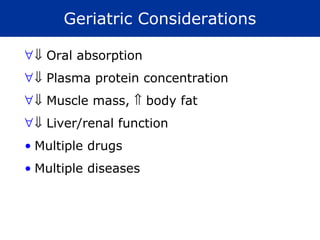
Geriatric Considerations

∀ ⇓ Oral absorption
∀ ⇓ Plasma protein concentration
∀ ⇓ Muscle mass, ⇑ body fat
∀ ⇓ Liver/renal function
• Multiple drugs
• Multiple diseases
FUNDAMENTALS OF PHARMACOLOGY

• The rational pharmacological treatment of
  any patient requires adequate knowledge
  about :
 The disease process,
 Pharmacodynamic properties       of     the
 drug(s) selected, and
 The individual’s handling   of the    drug(s)
 [pharmacokinetics].
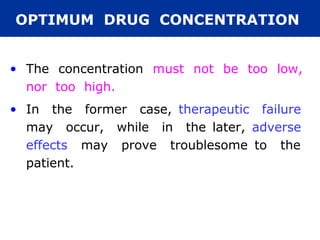
OPTIMUM DRUG CONCENTRATION


• The concentration must not be too low,
  nor too high.
• In the former case, therapeutic failure
  may occur, while in the later, adverse
  effects may prove troublesome to the
  patient.
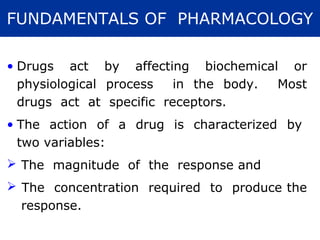
FUNDAMENTALS OF PHARMACOLOGY

• Drugs act by affecting biochemical or
  physiological process   in the body. Most
  drugs act at specific receptors.
• The action of a drug is characterized by
  two variables:
 The magnitude of the response and
 The concentration required to produce the
  response.
FUNDAMENTALS OF PHARMACOLOGY
• A specific drug acts only at one receptor
  but may produce multiple effects due to the
   location of the receptor in various organs.
• A selective drug acts on one receptor in a
  particular tissue    at  concentrations  that
  produce little effect on the receptor in other
  organs.
• Most drugs have multiple actions and it is
  usually preferable to use more specific or
  more selective agents
THANK
YOU

Pharmacology

  • 1.
    We Fri lcom en ds e Let’s learn PHARMACOLOGY
  • 3.
    PHARMACOLOGY Greek Word Pharmacon Logos Drug Science Science of drugs- dealing with the study of Desirable and Undesirable effects.
  • 4.
    Pharmacology is thestudy of drugs and their actions on the body
  • 5.
    What is PHARMACOLOGY? Pharmacokinetics Pharmacodynamics What the body does to drug What the drug does to body Pharmacology Pharmacotherapeutics Pharmacy The study of the use of drugs Preparing suitable dosage forms Toxicology
  • 6.
    PHARMACO THERAPEUTICS It is a branch of medicine concerned with the cure of disease or relief of symptoms and induces drug treatment.
  • 7.
    PHARMACY It is thescience of: •Identification •Selection •Preservation •Standardization •Compounding, and •Dispensing of medicinal substances
  • 8.
    PHARMACOPOEIA • It isan official code containing a selected list of the established drugs and medicinal preparations with descriptions of their physical properties and tests for their identity, purity and potency. e.g. IP, BP, USP, etc. IP: Indian Pharmacopoeia BP: British Pharmacopoeia USP: United states Pharmacopoeia
  • 9.
    DRUG “ Drug isany substance or product that is used or is intended to be used to modify physiological systems or pathological states for the benefit of the recipient .”
  • 10.
    “Poisons in smalldoses are the best medicines; and useful medicines in too large doses are poisonous” William Withering 1789
  • 11.
    DRUG NAMES • Chemical…statesits chemical composition and molecular structure. • Generic…usually suggested by the manufacturer. • Official…as listed in the Pharmacopoeia. (I.P., B.P., U.S.P.) • Brand…the trade or proprietary name.
  • 12.
    DRUG NAMES 1,4 benzodiazepine analog Chemical Name Generic Name Alprazolam Official Name Alprazolam, USP Brand Name Alprax®
  • 13.
    THE NATURE ANDSOURCES OF DRUGS • Mineral • Liquid paraffin, magnesium sulfate, etc • Animal • Insulin, Thyroid, etc. • Plant • Morphine, Quinine etc • Synthetic • Aspirin, Sulfonamides, etc. • Micro-organisms • Penicillin & other antibiotics. • Drugs produced • Human insulin, human growth, by genetic hormone etc. engineering
  • 14.
    DRUG DEVELOPMENT PROCESS Chemistry Synthesis & Purification Formulation Animal Pharmacology Animal Toxicity (Short / Long term) Studies in Humans Drug Authorities Market
  • 15.
  • 16.
    DOSE Vs DOSAGE •Dose: The quantity of drug administered at one time • 500mg of Paracetamol • Dosage: The amount of the drug that should be given over time • 500 mg Paracetamol TID for 3 days
  • 17.
    DRUG DOSAGE FORMS Tablets Aerosol Capsule Suspension Injection Cream Infusion Solution
  • 18.
    ROUTES OF DRUGADMINISTRATION How the drug is given Enteral Parenteral Topical (injectable) 1. Oral 1. Intravenous 1. Intranasal 2. Sublingual 2. Intramuscular 2. Inhalation 3. Rectal 3. Subcutaneous 3. Intravaginal
  • 19.
    IV, IM &SC Route of Administration
  • 20.
    ADVANTAGES AND DISADVANTAGESOF ORAL, IV, IM AND SC ADMINISTRATION SAFETY High Oral > SC > IM > IV Low CONVENIENCE High Oral > SC > IM > IV Low COST High IV > IM > SC > ORAL Low
  • 21.
    ADVANTAGES AND DISADVANTAGESOF ORAL, IV, IM AND SC ADMINISTRATION BIOAVAILABILITY High and Reliable IV > IM = SC > ORAL Low &/or Variable ONSET OF ACTION Immediate IV > IM > SC > Oral Delayed PATIENT COMPLIANCE High Oral > SC > IM > IV Low
  • 22.
    PHARMACOKINETICS • The studyof what the body does to the drug • It is the study of absorption, distribution, metabolism and excretion (ADME) of drugs • “Fate of drug”
  • 23.
    PHARMACOKINETICS •Absorption How thedrug is moved into blood stream from the site of administration ? • Distribution How much drug is moved to various body tissues / organs ? Depends on blood flow through tissue • Metabolism How the drug is altered – broken down ? • Excretion How much of the drug is removed from the body ?
  • 24.
    ABSORPTION BIOLOGICAL BARRIER Site of Administration Vascular System DRUG
  • 25.
    Drug Absorption ofVarious Dosage Forms Oral Preparations Liquids, elixirs, syrups Fastest Suspension solutions  Powders  Capsules  Tablets  Coated tablets  Enteric-coated tablets Slowest
  • 26.
    IV Route Whatwould the graph of blood level against time look like? Blood level Time
  • 27.
    ORAL Route What wouldthe graph of blood level against time look like? Blood level Time
  • 28.
    What is happeningin these two phases? ? ? Blood level Time
  • 29.
    Absorption Metabolism and and Distribution Excretion Blood level Time
  • 30.
    BIOAVAILABILITY • Bioavailability isa fraction of administered dose of a drug that reaches the systemic circulation in the unchanged form. • Bioavailability of IV route : 100 %
  • 31.
    BIOAVAILABILITY Destroyed Not Destroyed Destroyed in gut absorbed by gut wall by liver to Dose systemic circulation
  • 32.
    BIOAVAILABILITY Factors influencing bioavailability • Dosage forms • Chemical form • Dissolution & Absorption of drug • Route of administration • Presence of food/drugs in GI tract • First pass effect • Extent of drug metabolism before reaching systemic circulation
  • 33.
  • 35.
    Concept of CriticalThreshold • MEC (Minimum Effective Concentration): The minimum level of drug concentration needed for the desired therapeutic effect to be present. • MSC (Maximum Safe Concentration): The maximum level of drug concentration above which toxic effects occurs. OR • MTC (Minimum Toxic Concentration): The minimum level of drug concentration that produces toxic effects.
  • 36.
    •Maximal Effect: Greatestresponse that can be produced by a drug, above which no further response can be created (sometimes called “peak effect”) •Onset: How long before a drug is able to exert a therapeutic effect •Duration: How long a drug effect lasts
  • 37.
    DRUG HALF-LIFE (t1/2) • Half life is the time required to reduce the plasma concentration to 50% of its original value • Will determine dosing requirements / how long a drug will remain in the body • Used in determining dosing interval • Goal - Plateau
  • 38.
    DRUG HALF-LIFE (t1/2) 110 100 90 Concentration (m g/L) 80 70 60 50 40 30 20 10 0 0 1 2 3 4 5 6 7 8 9 Tim e (hours) Half-life is the time taken for the concentration of drug in blood to fall by a half Half-life is 2 hrs
  • 39.
    DRUG HALF-LIFE (t1/2) • 1t 1/2 - 50 % drug is eliminated • 2 t1/2 - 50+25 (75 %) drug is eliminated • 3 t1/2 - 50+25 +12.5 (87.5 %) drug is eliminated • 4 t1/2 - 50+25 +12.5+6.25 (93.7 %) drug is eliminated Thus, nearly complete drug elimination occurs in 4-5 half lives.
  • 40.
    DRUG HALF-LIFE (t1/2) 50 25 12.5 6.25 3.12 1.56
  • 41.
    Cmax & Tmax Cmax not art nec no C Tmax Time •Cmax - Maximum conc. achieved in the blood i •Tmax - Time taken to attain maximum conc.
  • 42.
    AUC (Area UnderCurve) AUC • AUC is the area under the plot of plasma concentration of drug against time after drug administration.
  • 43.
    DISTRIBUTION Distribution is abranch of pharmacokinetics which describes the reversible transfer of drug from one location to another within the body.
  • 44.
    DISTRIBUTION Locus of Tissue action reservoirs “receptors” Bound Free Bound Free Systemic circulation Absorption Free drug Excretion Excretion Bound drug Metabolites Biotransformation
  • 45.
    Plasma- Protein Binding •Many drugs bound to circulating plasma proteins such as albumin, lipoproteins, glycoprotein, globulins etc. • Free form • Pharmacologically active • Bound form • Pharmacologically inactive Receptor Site Protein-bound drug Free Drug
  • 46.
    Protein Binding • Drugscan bind with proteins • Acts as temporary store of drug • Prolongs it’s action • Cause prolonged low level of drugs • Slowly released from bound reservoir • Delays metabolism • Delays excretion • Decreases its entry into CNS
  • 47.
    Dosing • Dosing Interval- How often the drug should be given • Loading dose – Which puts the plasma concentration in the therapeutic range • Maintenance dose - Routine smaller doses to maintain the steady state (Plateau)
  • 48.
    METABOLISM  Metabolism = change / biotransformation  The conversion from one chemical form to another Site of drug biotransformation • Liver - cytochrome P450 pathways OR microsomal P450 pathways are used to metabolize most agents • Enzymatic alteration of drug structure  Effect of metabolism  80% of drugs become inactive  Inactive drug becomes active: Prodrug  Some drugs do not get metabolised at all
  • 49.
    METABOLISM  Majority of drugs are metabolized in liver by enzymes – Cytochrome P 450  Drugs may induce (activate) or inhibit these enzymes Drug – Drug interactions
  • 50.
    First Pass Metabolism Thefirst-pass metabolism (also known as first-pass effect or presystemic metabolism) is a phenomenon of drug metabolism whereby the concentration of a drug is greatly reduced before it reaches the systemic circulation.
  • 51.
    First Pass Metabolism Hepatic Swallowed Digestive Rest of portal Liver Drug system the body system
  • 52.
    First Pass Metabolism Systemsthat affect the first pass effect of the drug, • Enzymes of the gastro intestinal lumen • Gut wall enzyme • Bacterial enzymes • Hepatic enzymes
  • 53.
    First Pass Metabolism Effectof first pass metabolism Part of administered dose made inactive ↓ bioavailability Drug converted into its active form • Nitroglycerin when given orally • Totally inactivated in the liver • 100% first pass effect • Always given sublingually
  • 54.
    Prodrug  Administered in an inactive form  After administration converted into their active form  usually in liver  Designed to improve bioavailability  Examples  Enalapril – Enalaprilate  Ramipril - Ramiprilate
  • 55.
    METABOLISM Factors affecting metabolism: 1. Age – Children / Elderly 2. Disease condition – e.g. Liver disease 3. Induction of drug metabolizing enzymes 4. First-pass effect – Nitroglycerin 5. Competition between drugs 6. Genetics 7. Environment e.g. Smoking
  • 56.
    Excretion Drugs &/or itsmetabolites are irreversibly eliminated from the body • Elimination of the drug • Unchanged (Parent form) • Metabolites • Routes of excretion • Kidneys – Urine • GIT – Stools • Skin - Perspiration • Eyes - Tears
  • 57.
    PHARMACODYNAMICS • The studyof what the drug does to the body • It is the quantitative study of the biological and therapeutic effects of drugs.
  • 58.
    PHARMACODYNAMICS Drug actions: • Thecellular processes involved in the drug and cell interaction Drug effect: • The physiologic reaction of the body to the drug
  • 59.
    PHARMACODYNAMICS Onset • The timeit takes for the drug to elicit a therapeutic response Peak • The time it takes for a drug to reach its maximum therapeutic response Duration • The time a drug concentration is sufficient to elicit therapeutic response
  • 60.
    Four targets ofdrug action on cells • Receptors • Ach receptors / Epinephrine receptors • Ion Channels •Voltage gated Na+ / K+ / Ca++ • Enzymes •Cyclooxygenase / Acetylcholine esterase • Carriers •Na+/ K+ pump / Proton Pump
  • 61.
    Receptors • Specific macromolecular components of the cell which when binds with ligand produces positive or negative biological response • Situated - on the surface / inside the cell
  • 62.
    • Affinity: Inherentability of the drug to bind with the receptor • Efficacy (Intrinsic activity): Inherent ability of the drug to induce a physiological response • Potency: An expression of the activity of the drug, in terms of the concentration or amount needed to produce a defined effect
  • 64.
    What drug cando? All that drugs can do is, • Mimic the physiological activity of the body’s own molecules • Block the physiological activity of the body’s own molecules
  • 65.
    Drug at Receptor •Agonist : It activates a receptor to produce an effect similar to that of the physiological signal molecule • Antagonist : It prevents the action of an agonist on a receptor but does not have any effect of its own • Partial agonist : It activates a receptor to produce sub maximal effect but antagonizes the action of full agonist.
  • 66.
    Agonist v/s Antagonist •Drug + Receptor  EFFECT • Drug + Receptor  Maximum Effect • Drug = complete or full agonist • Drug + Receptor  Less than maximal effect • Drug = partial agonist • Drug + Receptor  Block effect • Drug = Antagonist
  • 67.
    Effects of combinationof drug • Addition 1+1=2 • Response elicited by combined drugs is equal to the combined response of the individual drugs • Synergism 1+1=3 • Two drugs with the same effect are given together and produce a response greater than the sum of their individual responses
  • 68.
    Effects of combinationof drug • Potentiation 0+1=2 • A drug which has no effect enhances the effect of a second drug • Antagonism 1+1=0 • Drug inhibits the effect of another drug. Usually, the antagonist has no inherent activity
  • 69.
    Factors affecting drugresponse • Pharmacological •Dose & Route of administration •Duration of treatment •Co-administration of other drugs • Individual •Age & Weight •Gender •Pathology •Diet
  • 70.
    Indication & Contraindication •Indication: A clinical circumstance indicating that the use of a particular intervention would be appropriate • Contraindication: Any condition which renders a particular line of treatment improper or undesirable.
  • 71.
    Adverse drug reaction Whatdoes the term adverse reaction refer to? A. A life-threatening response to a drug B. A drug-induced allergy C. A harmful, noxious, unintended & undesirable response to a drug D. An unpredictable response to a drug
  • 72.
    Adverse drug reactions  Side effect  Toxicity – overdose  Allergic reaction  Physical dependence  Carcinogenic effect
  • 73.
    Adverse drug reactions:Definitions • Side Effect • Unavoidable unintended pharmacodynamic effects that occur at a therapeutic dose • Dryness of mouth with Atropine • Toxic effects • Result of excessive pharmacological action of the drug due to overdosage or prolonged use • Hepatic necrosis from paracetamol overdosage • Drug intolerance • Toxic effects of a drug in an individual at therapeutic doses • Vomiting with a single dose of salicylate • Drug tolerance • Decreased response to the same amount of drug after repeated administration
  • 74.
    Adverse drug reactions:Definitions • Cross Tolerance • Tolerance for a drug that develops after administration of a different drug • Tachyphylaxis • Rapidly occurring tolerance to a drug. • Cumulative effect • Increased effectiveness when a drug is given in several doses. • Drug dependence • The patient becomes accustomed to the drug’s presence in his body.
  • 75.
    Adverse drug reactions:Definitions • Idiosyncrasy • Drug effect unique to an individual, A. a toxic reaction B. an allergic reaction C. a reaction peculiar to the patient D. an anaphylactic reaction • Drug allergy • Immunologically mediated reaction • Symptoms unrelated to pharmacodynamic profile of drug • Independent of dosage E.g. Penicillin • Drug withdrawal symptoms • Functional disturbances induced by a drug Persists even after offending drug has been withdrawn
  • 76.
    Adverse drug reactions:Definitions • Teratogenecity – induce birth defect • Capacity of a drug to cause foetal abnormalities • Thalidomide • Mutagenic Effect • Mutagenesis involves alteration of the genotype by modification of the DNA • Mutation is carried to the next generations • Photosensitivity • Cutaneous reaction resulting from drug induced sensitization of the skin to UV radiation • Quinolones
  • 77.
    Drug Safety–Therapeutic Window •Therapeutic Index (or Window) measures “how safe a drug is” or “Margin of safety” • High therapeutic index = safe • Low therapeutic index = not so safe The larger the ratio, the safer the drug
  • 78.
    Therapeutic Index/Ratio • TherapeuticIndex/Ratio: Is the ratio between lethal dose (LD) and effective dose (ED) this is useful measure of safety and efficacy of any drug. • Lethal dose: The amount of the drug which kills subjects when it is administered is called lethal dose • Effective dose: The amount of the drug which removes sign & symptoms of subjects when it is administered
  • 79.
    PLACEBO: Drug devoid ofintrinsic pharmacological activity and it works by psychological means. USES : ??????
  • 80.
    PHASES OF CLINICAL DEVELOPMENT • Phase 1: Clinical pharmacology • Phase 2: Clinical investigation • Phase 3: Formal therapeutic trials • Phase 4: Post licensing (marketing) studies
  • 81.
    Pregnancy Considerations • Increasedmaternal HR, CO and blood volume • May affect absorption, distribution, effectiveness • Drugs may cross placenta • Drugs may cross into breast milk • Tertatogens
  • 82.
    Pregnancy Categories • A:controlled studies in pregnancy (<1 %). • B: animal studies show no risk; Inadequate human data. • C: animal studies show risk, inadequate human data. • D: human data show risk, benefit may outweigh risk. • X: animal or human data positive for risk. Use unwarranted.
  • 83.
    Pediatric Considerations ∀ ⇓Oral absorption • Thinner skin (⇑ topical absorption) ∀ ⇓ Plasma protein concentration ∀⇑ Free protein-bound drug availability ∀ ⇑ Extracellular fluid in neonate • Altered metabolic rates ∀ ⇓ Elimination/metabolism • BSA/weight based dosing important!
  • 84.
    Geriatric Considerations ∀ ⇓Oral absorption ∀ ⇓ Plasma protein concentration ∀ ⇓ Muscle mass, ⇑ body fat ∀ ⇓ Liver/renal function • Multiple drugs • Multiple diseases
  • 85.
    FUNDAMENTALS OF PHARMACOLOGY •The rational pharmacological treatment of any patient requires adequate knowledge about :  The disease process,  Pharmacodynamic properties of the drug(s) selected, and  The individual’s handling of the drug(s) [pharmacokinetics].
  • 86.
    OPTIMUM DRUG CONCENTRATION •The concentration must not be too low, nor too high. • In the former case, therapeutic failure may occur, while in the later, adverse effects may prove troublesome to the patient.
  • 87.
    FUNDAMENTALS OF PHARMACOLOGY •Drugs act by affecting biochemical or physiological process in the body. Most drugs act at specific receptors. • The action of a drug is characterized by two variables:  The magnitude of the response and  The concentration required to produce the response.
  • 88.
    FUNDAMENTALS OF PHARMACOLOGY •A specific drug acts only at one receptor but may produce multiple effects due to the location of the receptor in various organs. • A selective drug acts on one receptor in a particular tissue at concentrations that produce little effect on the receptor in other organs. • Most drugs have multiple actions and it is usually preferable to use more specific or more selective agents
  • 89.

Editor's Notes

  • #90 Insert a picture of one of the geographic features of your country.