Scope Of Pharmacology
Dr.Ankita Jire
Jr 1
Dept of Pharmacology
GMC Nagpur
GUIDED BY
DR. V. M. Motghare
Professor & Head
Dept Of Pharmacology
DR. Chaitali Bajait
Assistant Professor
Dept Of Pharmacology
Overview
Introduction
Past-History
Materia medica
Pharmacy
Present-Academics
Research
Industries
Special Domains
 Future- Proteomics
Pharmacogenomics &
pharmacogenetics
Bioinformatics
Nanomedicine
Summary
Introduction
• Definition:
“Pharmacology- study of substances that interact
with living systems through chemical processes, by
binding to regulatory molecules and activating or
inhibiting normal body processes.”
SCOPE:
An area in which something
– Acts OR
– Operates OR
– Has power OR Control
Past.....
History
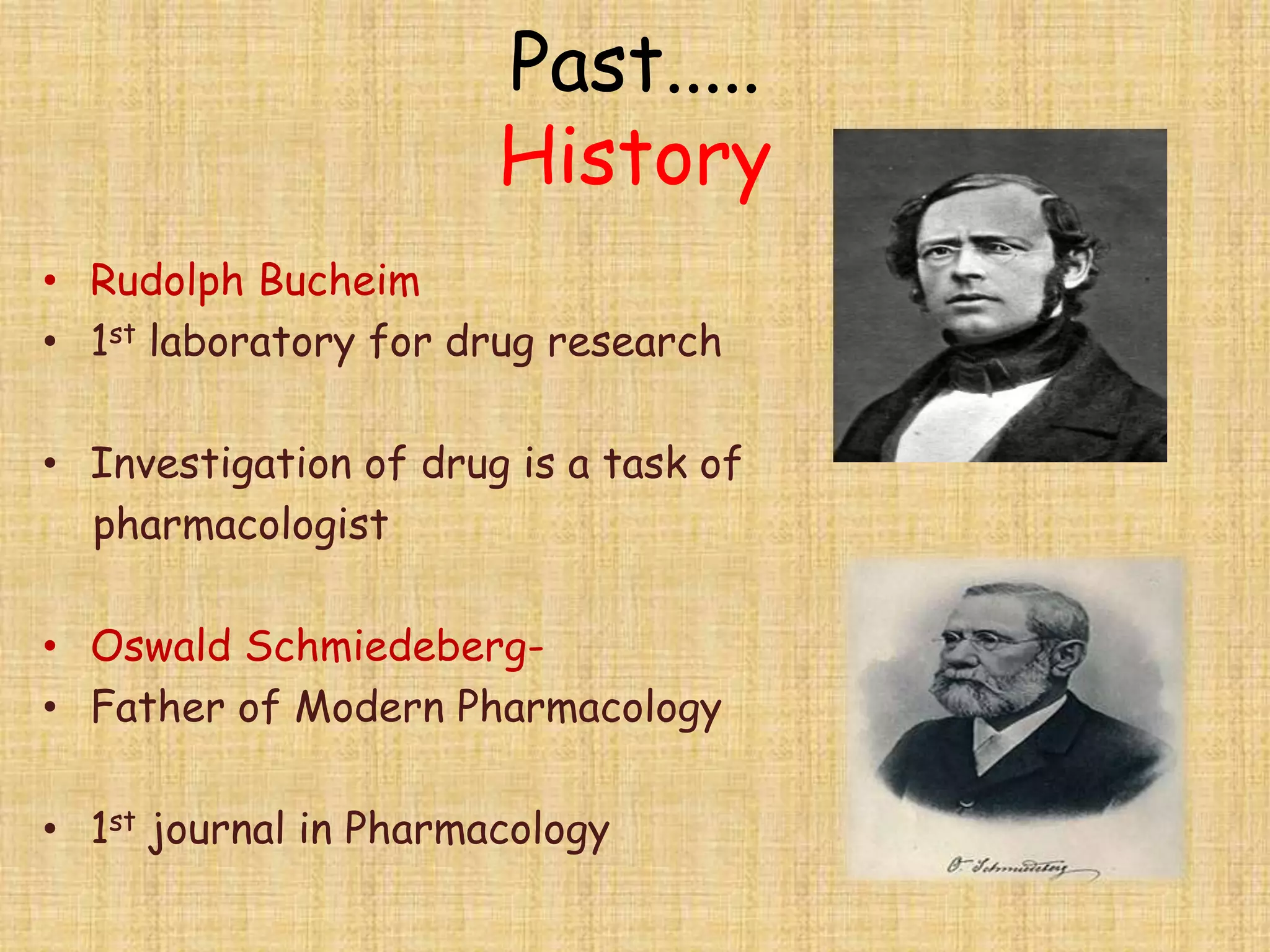
• Rudolph Bucheim
• 1st laboratory for drug research
• Investigation of drug is a task of
pharmacologist
• Oswald Schmiedeberg-
• Father of Modern Pharmacology
• 1st journal in Pharmacology
Materia medica
• Book contaning names of
herbs and medicine prepared fom it
• Dioscorides –Father of materia
medica
• Methods for purifying active
agents from crude materials were
absent hence real understanding of
mechanism of action was absent
Pharmacy
• Science and technique of preparing and dispencing drugs
• Includes collection,identification,purification,
isolation, synthesis, standerdization and quality control of
medicinal substances
• Pharmacology is an essential
component in the study of pharmacy
Present
Universe of Pharmacology
Special
Domains
Research
AcademicsIndustries
• Stages of drug development
Drug discovery phase
Preclinical phase
Clinical trial phase
Research
Drug discovery phase
1.Random screening
2.Serendipity (Happy observation ,by chance)
3.Rational drug designing
4.Designing of a prodrug or active metabolite as a drug
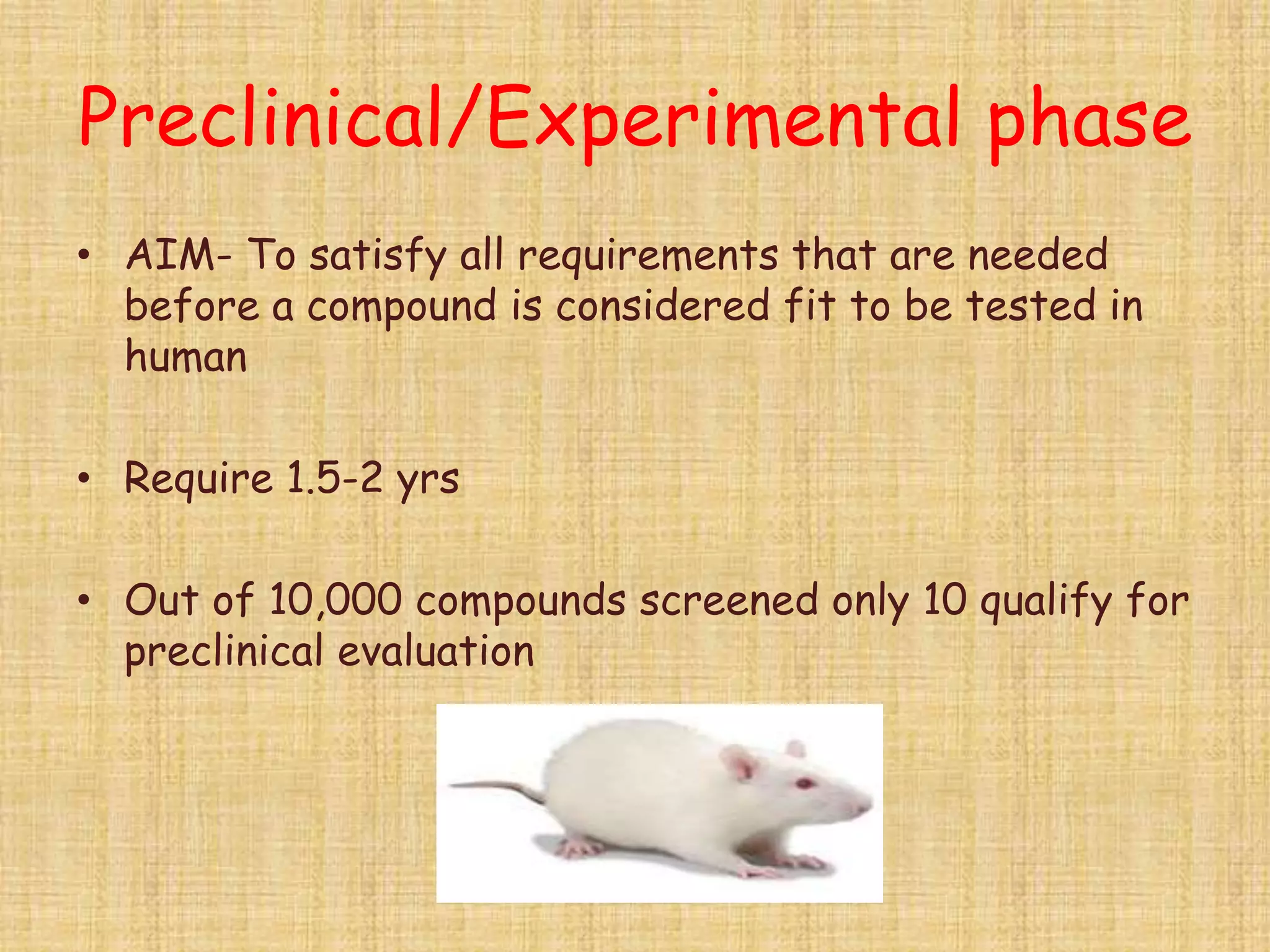
Preclinical/Experimental phase
• AIM- To satisfy all requirements that are needed
before a compound is considered fit to be tested in
human
• Require 1.5-2 yrs
• Out of 10,000 compounds screened only 10 qualify for
preclinical evaluation
• Deals with effect of various pharmacological agents
on different animal species
• Aims:
• Find out the therapeutic agent suitable for human use
• Study of toxicity of the drugs
• Study the mechanism and site of action of drugs
Done by –
1)In Vitro Study-Receptor characterization
Enzyme inhibition
Cytokine activity
2)In Vivo Study-Animal experiments
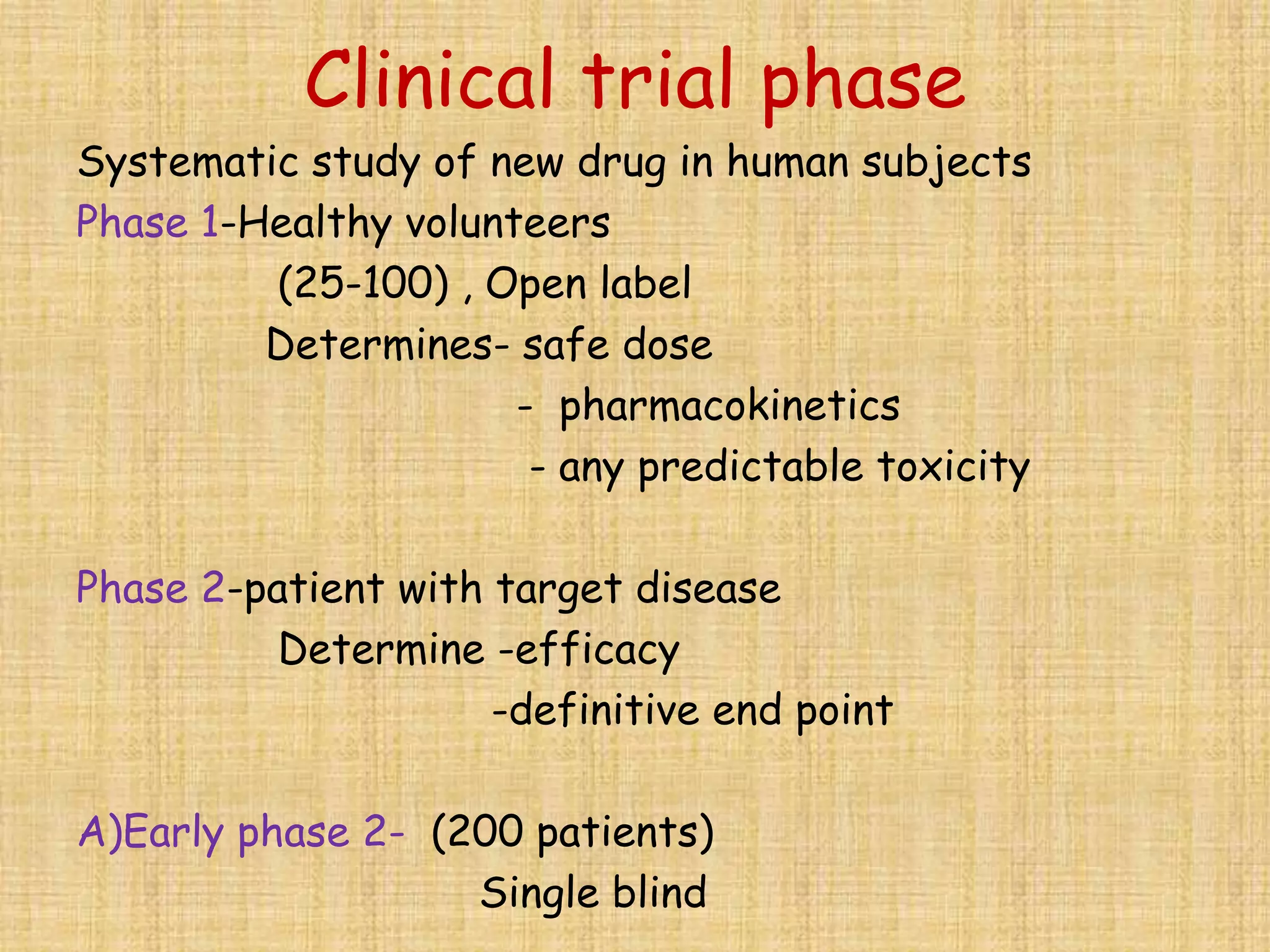
Clinical trial phase
Systematic study of new drug in human subjects
Phase 1-Healthy volunteers
(25-100) , Open label
Determines- safe dose
- pharmacokinetics
- any predictable toxicity
Phase 2-patient with target disease
Determine -efficacy
-definitive end point
A)Early phase 2- (200 patients)
Single blind
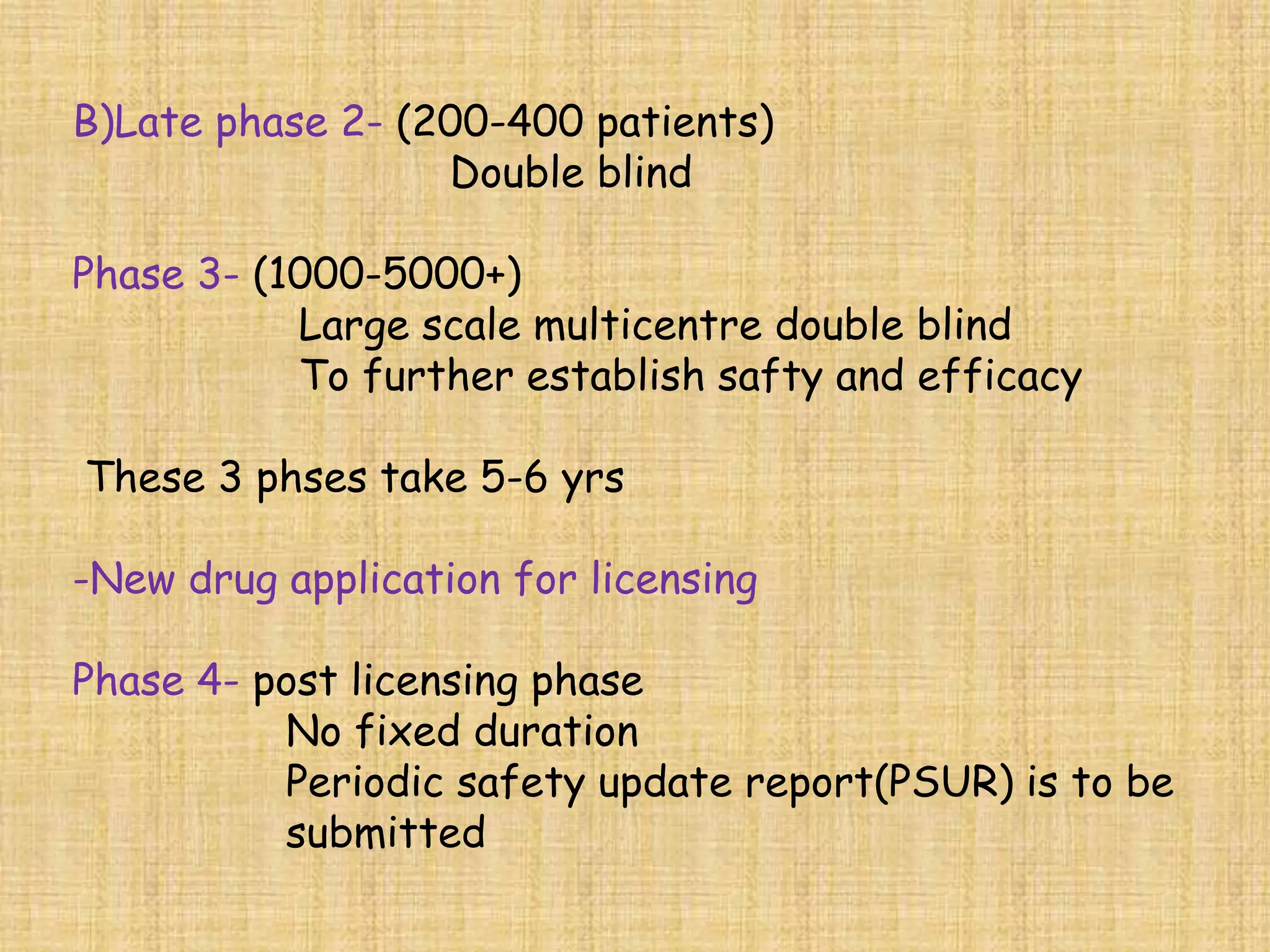
B)Late phase 2- (200-400 patients)
Double blind
Phase 3- (1000-5000+)
Large scale multicentre double blind
To further establish safty and efficacy
These 3 phses take 5-6 yrs
-New drug application for licensing
Phase 4- post licensing phase
No fixed duration
Periodic safety update report(PSUR) is to be
submitted
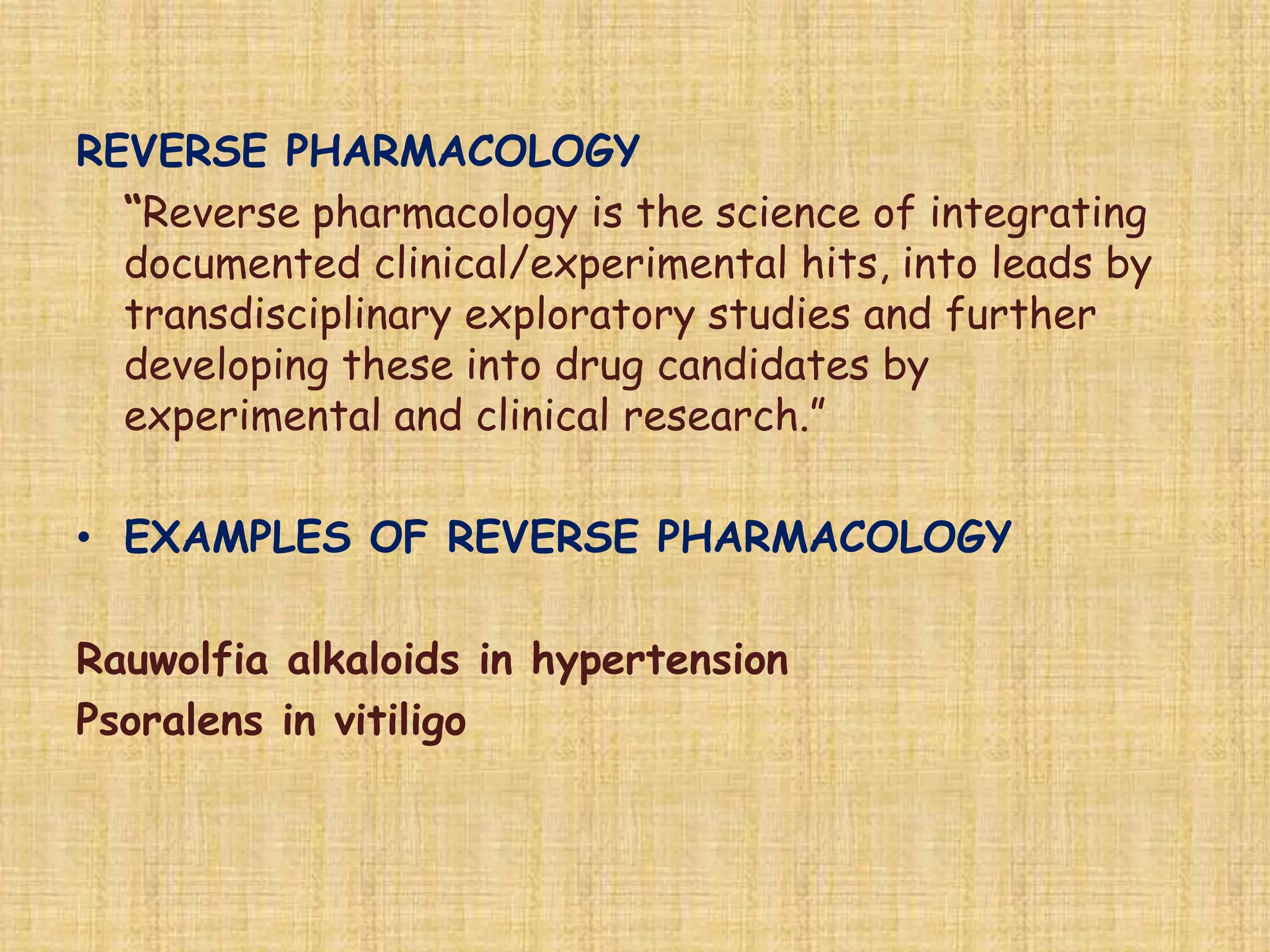
REVERSE PHARMACOLOGY
“Reverse pharmacology is the science of integrating
documented clinical/experimental hits, into leads by
transdisciplinary exploratory studies and further
developing these into drug candidates by
experimental and clinical research.”
• EXAMPLES OF REVERSE PHARMACOLOGY
Rauwolfia alkaloids in hypertension
Psoralens in vitiligo
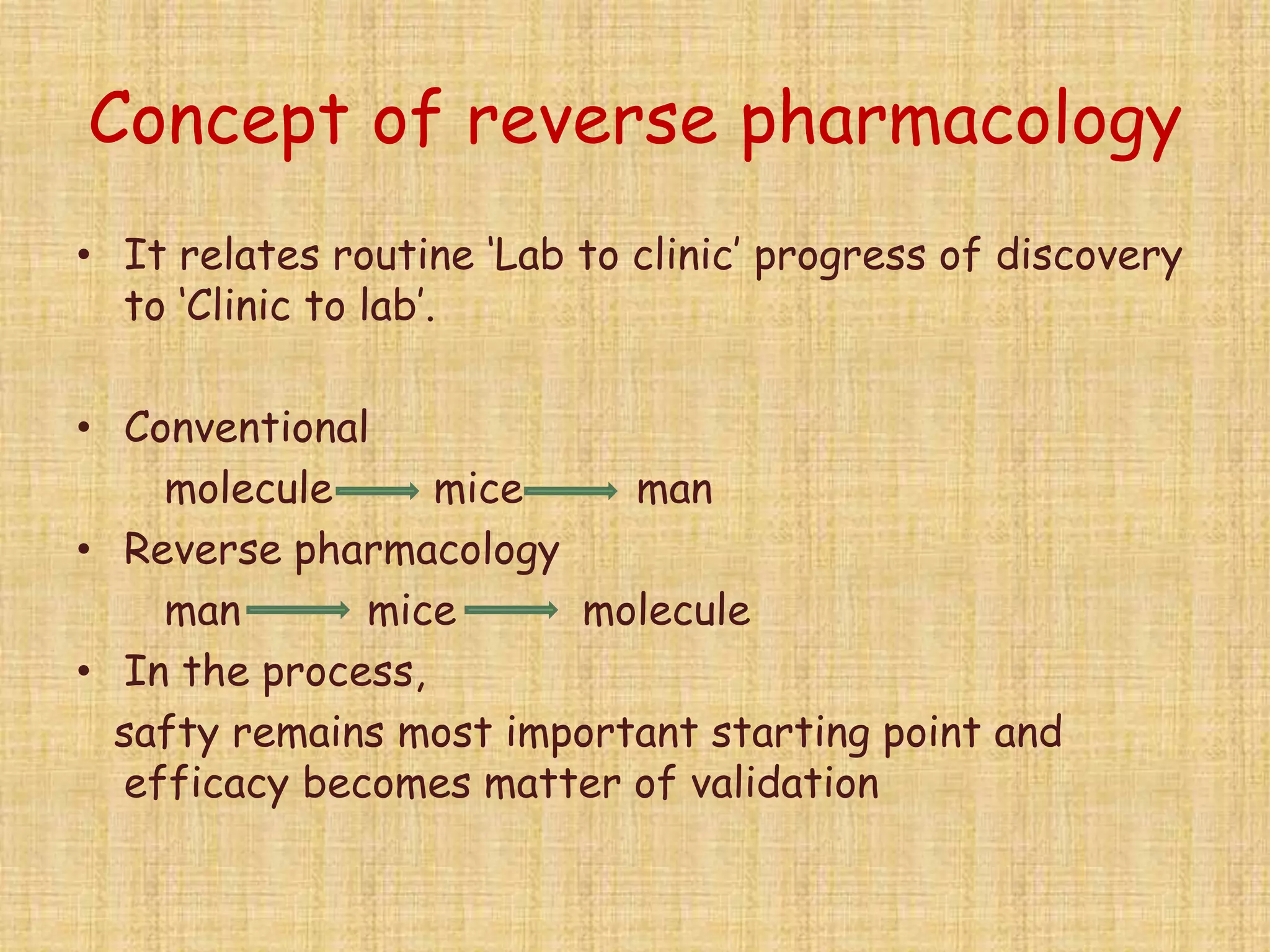
Concept of reverse pharmacology
• It relates routine ‘Lab to clinic’ progress of discovery
to ‘Clinic to lab’.
• Conventional
molecule mice man
• Reverse pharmacology
man mice molecule
• In the process,
safty remains most important starting point and
efficacy becomes matter of validation
Academics
• Undergraduate education
-Introduction to drugs
-Mechanisms of actions
-Prescription writing
- Pharmaceutical preparations
-Identification of Adverse drug
reactions
• Postgraduate education
•Basic research
•Experimental pharmacology
•pharmacokinetics - dynamics
•Pharmacovigilance
•Clinical pharmacology
•Therapeutic drug monitoring
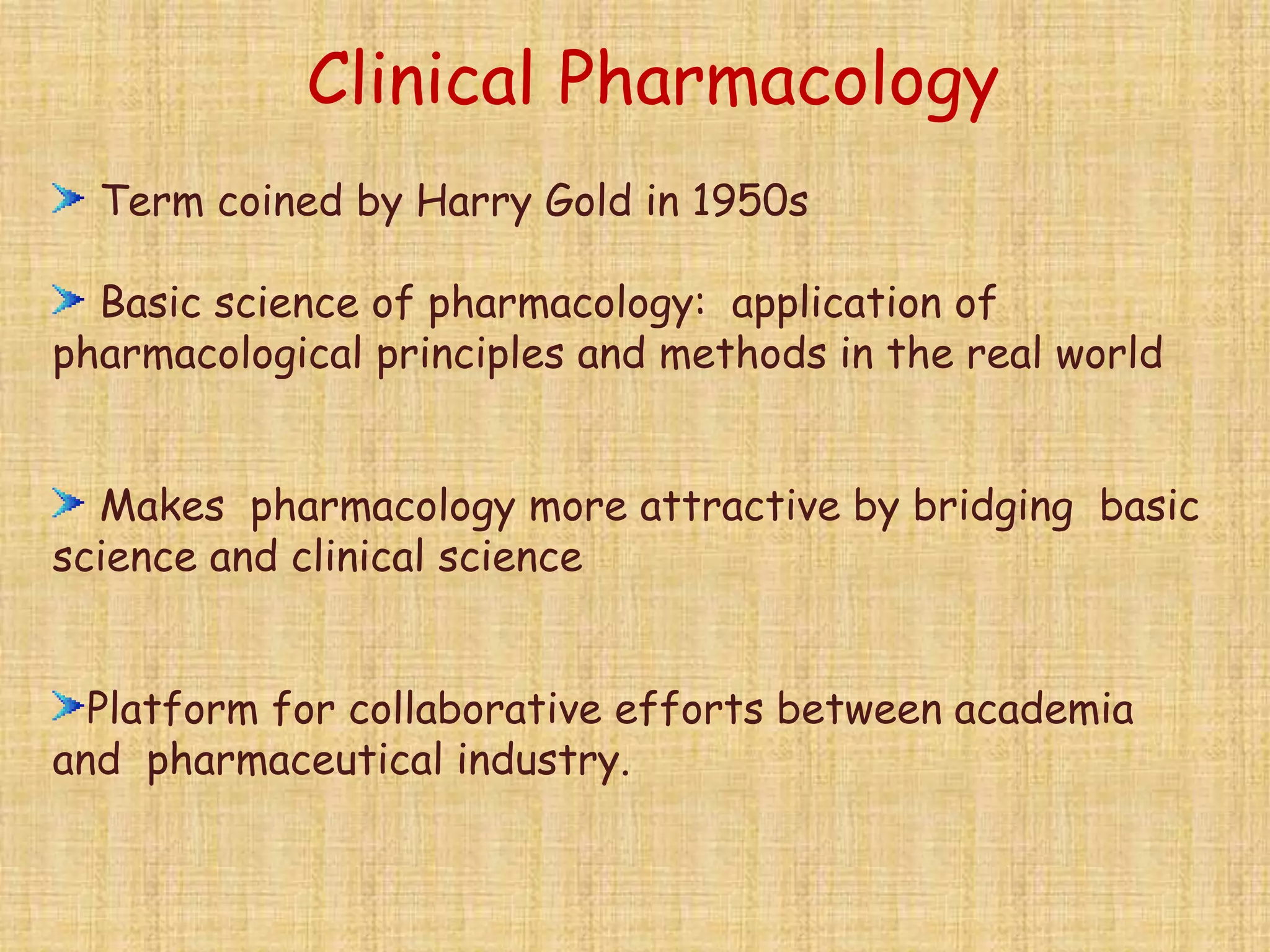
Term coined by Harry Gold in 1950s
Basic science of pharmacology: application of
pharmacological principles and methods in the real world
Makes pharmacology more attractive by bridging basic
science and clinical science
Platform for collaborative efforts between academia
and pharmaceutical industry.
Clinical Pharmacology
Frontiers of clinical
pharmacology
Clinical trials
BA/BE studies
Prescription audit
Antibiotic stewardship
Drug use survey
Rational use of medicines
TDM service
•BA/BE studies-
Bioavailability-Helps us deciding dose
Bioequivalent: Two drugs expected to be same for all
intents & purposes
•Prescription audit: To develop a list of essential drugs
Rational use of drugs
•Antibiotic stewardship
A set of coordinated strategies to improve the use
of antimicrobial medications
o enhancing patient health outcomes,
oreducing resistance to antibiotics,
o decreasing unnecessary costs.
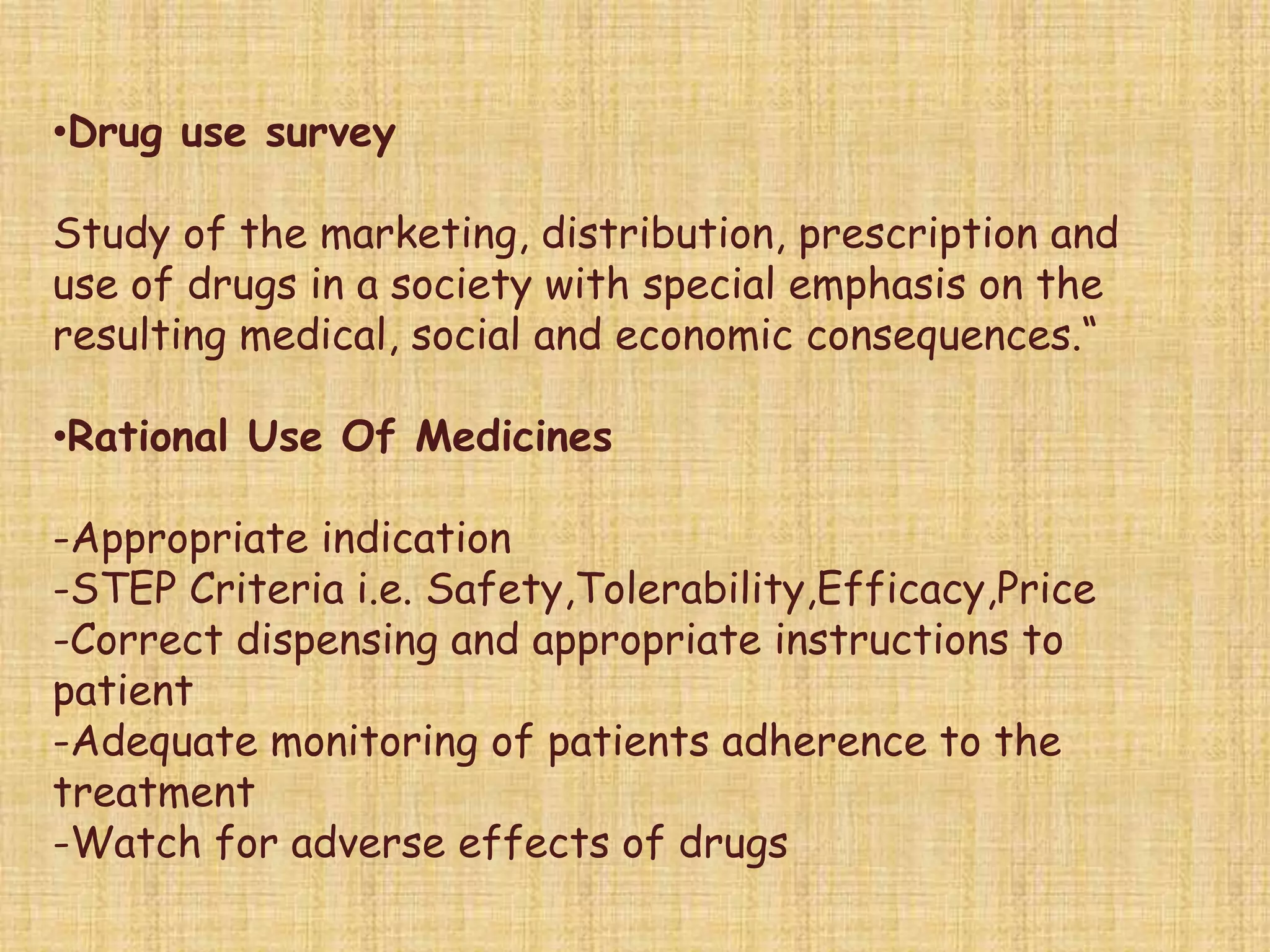
•Drug use survey
Study of the marketing, distribution, prescription and
use of drugs in a society with special emphasis on the
resulting medical, social and economic consequences.“
•Rational Use Of Medicines
-Appropriate indication
-STEP Criteria i.e. Safety,Tolerability,Efficacy,Price
-Correct dispensing and appropriate instructions to
patient
-Adequate monitoring of patients adherence to the
treatment
-Watch for adverse effects of drugs
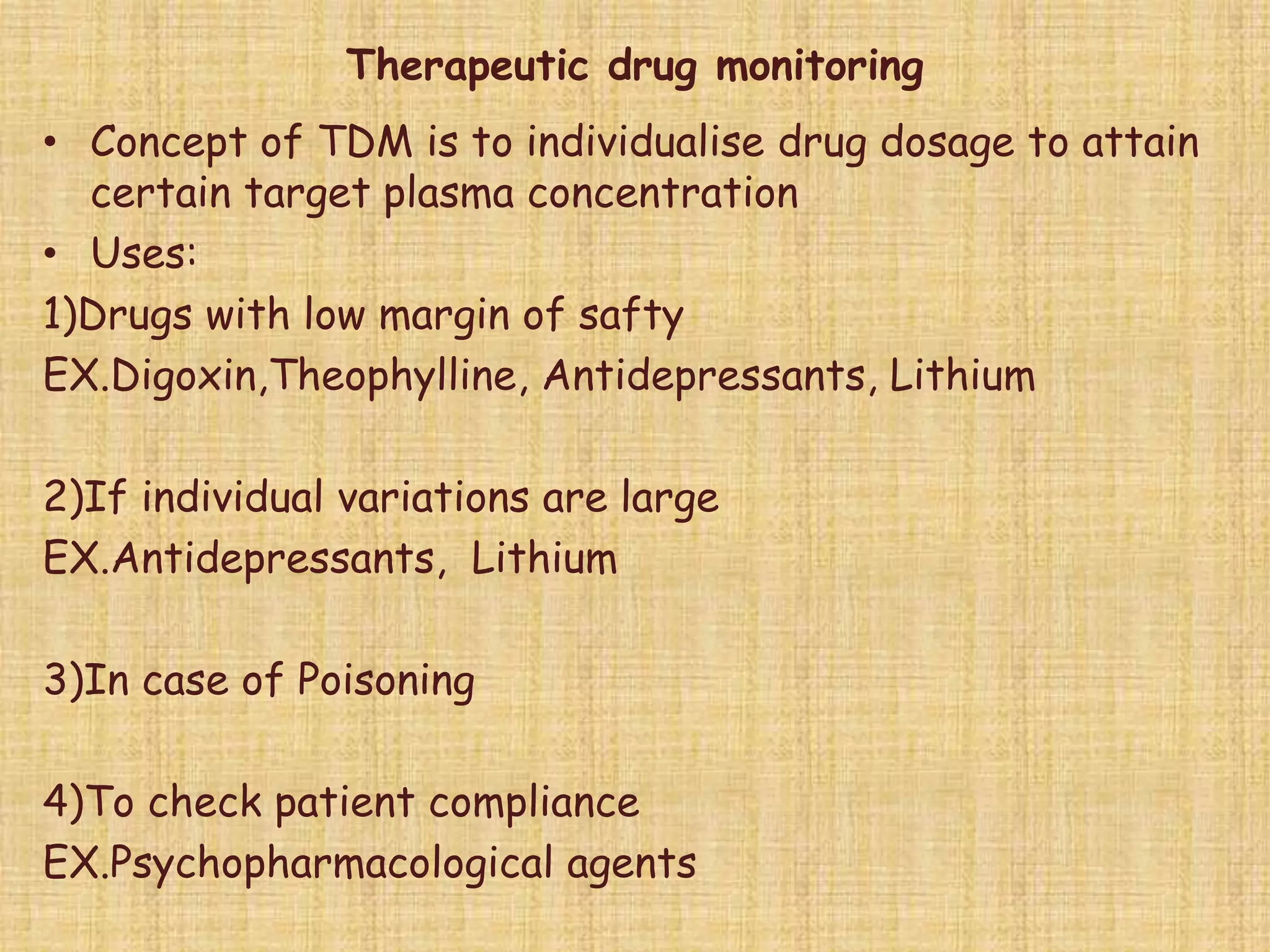
Therapeutic drug monitoring
• Concept of TDM is to individualise drug dosage to attain
certain target plasma concentration
• Uses:
1)Drugs with low margin of safty
EX.Digoxin,Theophylline, Antidepressants, Lithium
2)If individual variations are large
EX.Antidepressants, Lithium
3)In case of Poisoning
4)To check patient compliance
EX.Psychopharmacological agents
Clinical Pharmacology:
Making Its Heartbeats Felt
• By this time the busy clinicians have started
understanding the different approach of a clinical
pharmacologist in answering several drug and
therapeutics related questions.
• The need for generating local treatment guidelines had
long been realized by our fellow clinicians.
• The first such guideline, which was generated in the
institute by WHO ;For the management of community-
acquired pneumonia, clinical pharmacologists were
invited as a part of the team of experts
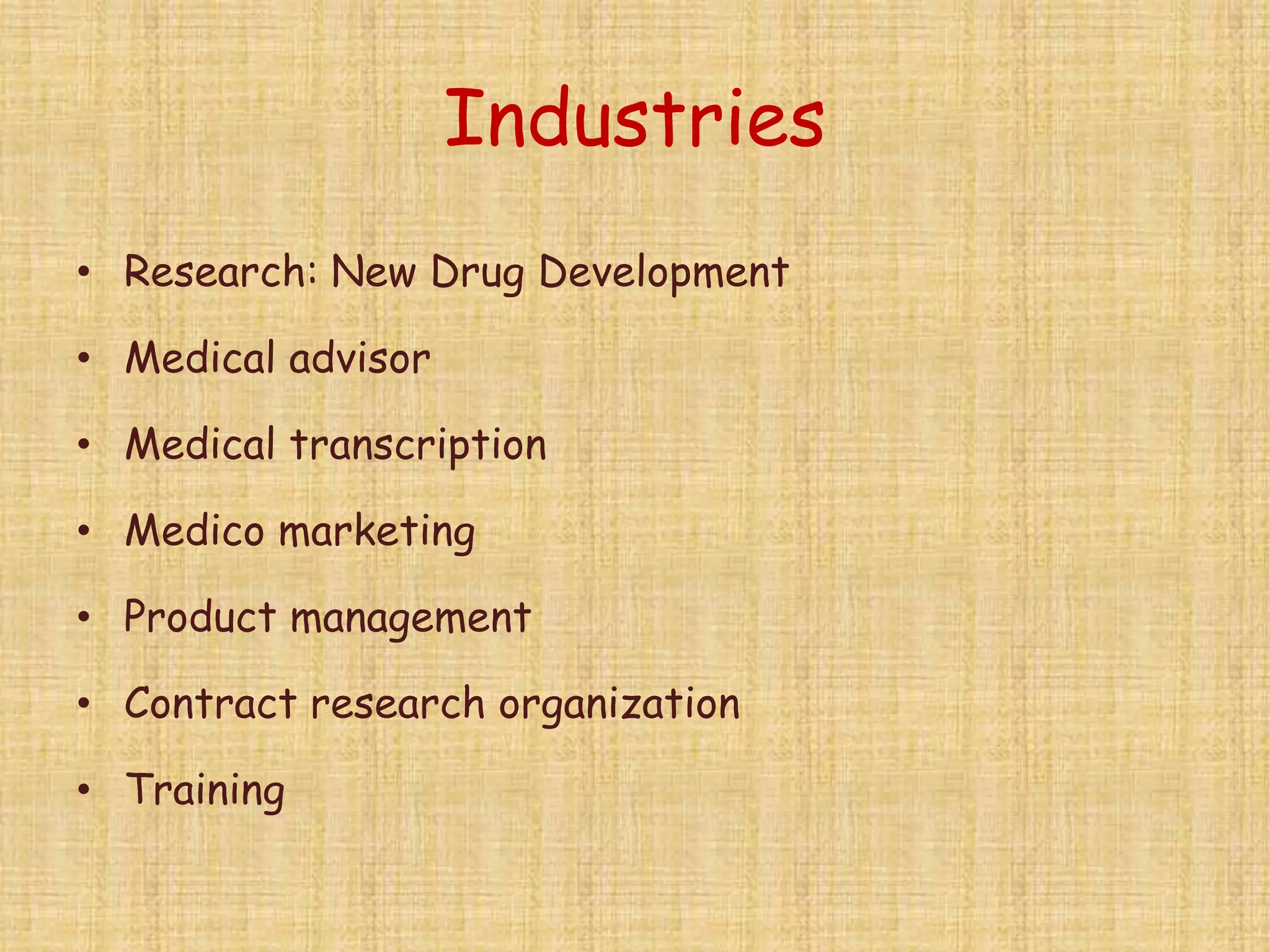
Industries
• Research: New Drug Development
• Medical advisor
• Medical transcription
• Medico marketing
• Product management
• Contract research organization
• Training
Medical Advisor
1.The analysis of the health of populations.
2. The evaluation of primary care services.
3. Planning of services.
4. Advice on effective prescribing
5.Education for general practitioners.
Medical transcription
The process of transcription or converting voice-
recorded reports as dictated by physicians and/or
other healthcare professionals, into text format.
Medico-marketing
• Business of advertising or otherwise promoting the
sale of pharmaceuticals or drugs
Contract research organization(CRO)
• A service organization that provides support to the
pharmaceutical and biotechnology industries in the
form of outsourced pharmaceutical research services
(for both drugs and medical devices).
• CROs specifically provide clinical-study and clinical-
trial support for drugs and/or medical devices.
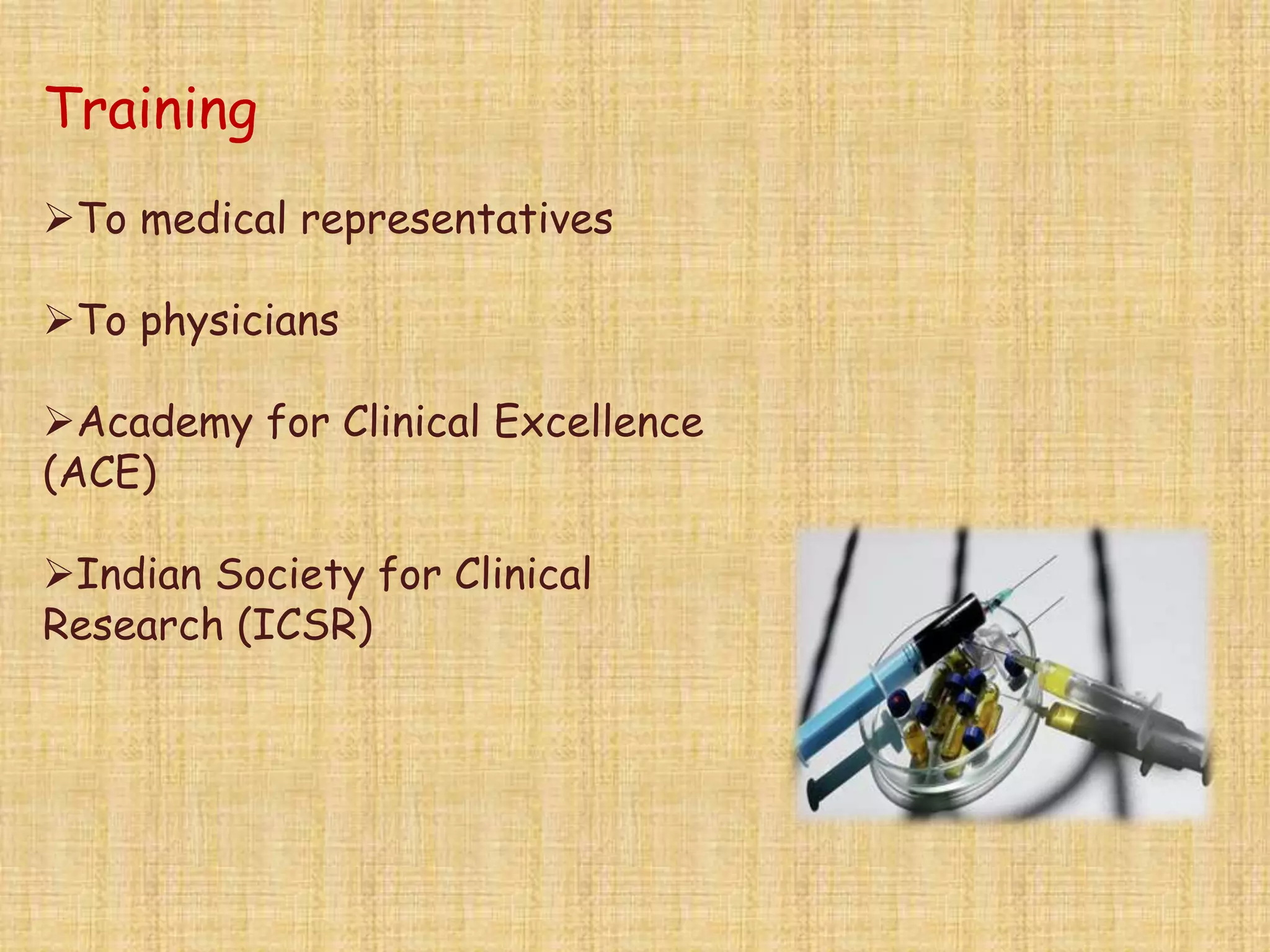
Training
To medical representatives
To physicians
Academy for Clinical Excellence
(ACE)
Indian Society for Clinical
Research (ICSR)
Special Domains
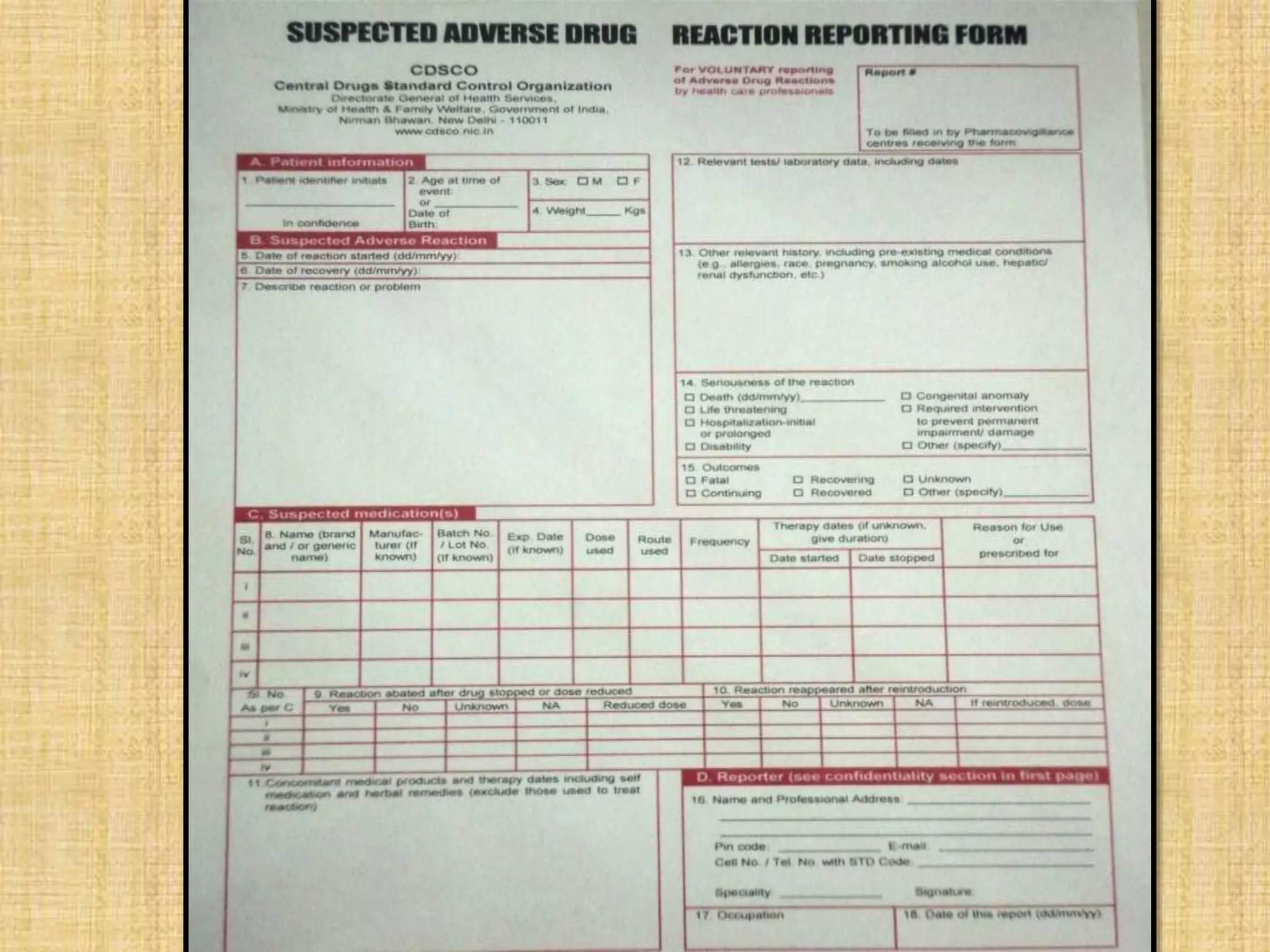
• Pharmacovigilance
• Pharmacoeconomics
• Pharmacoepidemiology
• Chronopharmacology
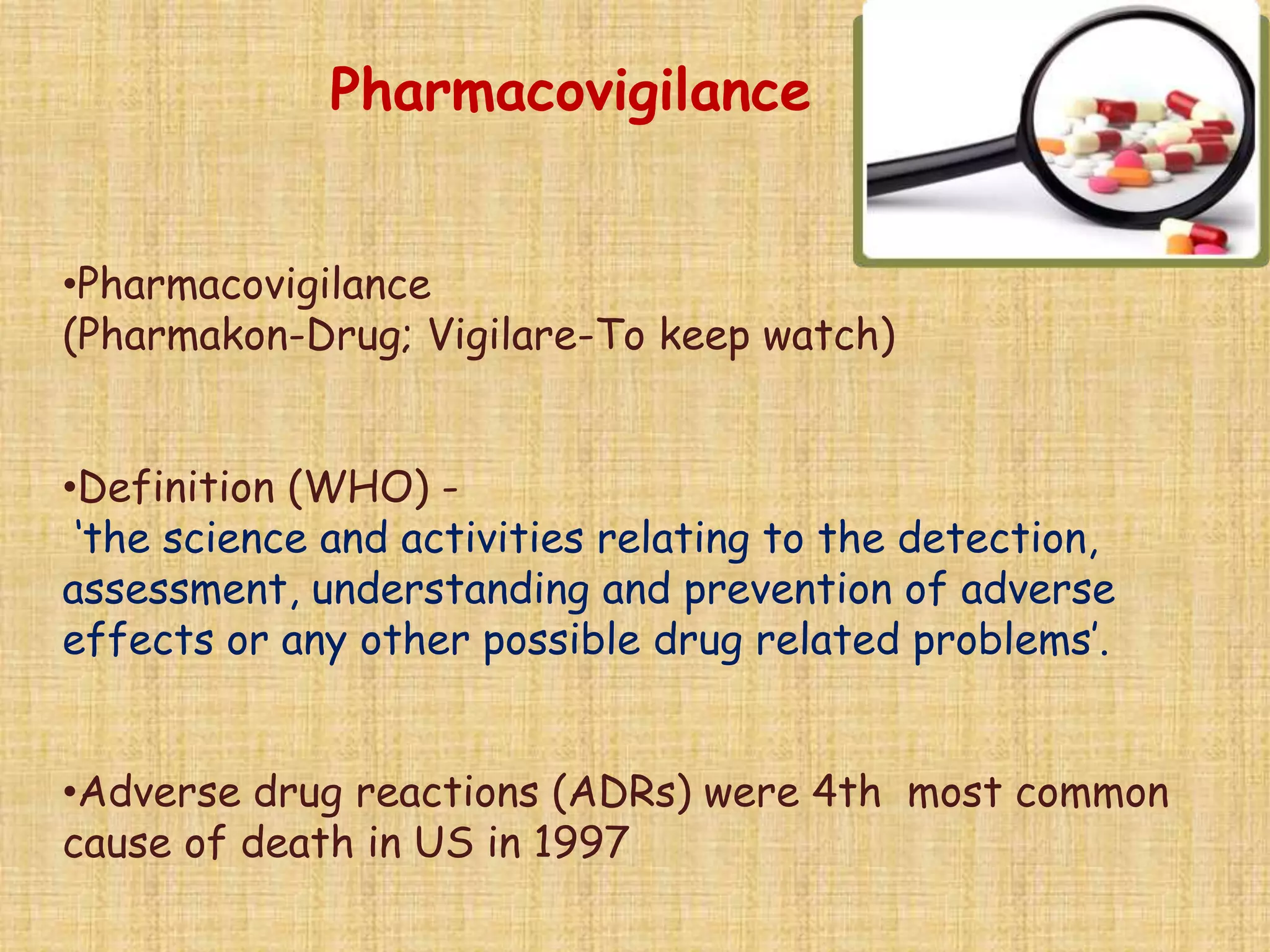
Pharmacovigilance
•Pharmacovigilance
(Pharmakon-Drug; Vigilare-To keep watch)
•Definition (WHO) -
‘the science and activities relating to the detection,
assessment, understanding and prevention of adverse
effects or any other possible drug related problems’.
•Adverse drug reactions (ADRs) were 4th most common
cause of death in US in 1997
•The role of pharmacovigilance can be divided into
three main areas:
. To identify, quantify and document drug-related
problems
To contribute to reduce the risk of drug-related
problems in healthcare systems.
To increase knowledge and understanding of
factors and mechanisms which are responsible for
drug-related injuries
Pharmacovigilance Programme of
India (PvPI)
• WHO established its Programme for International Drug
Monitoring in response to the thalidomide disaster
detected in 1961.
• Uppsala andWHO together promotes Pharmacovigilance at
the country level.
• At the end of 2010, 134 countries were part of the WHO
Pharmacovigilance Programme.
• The programme is coordinated by The Indian
Pharmacopoeia Commission (IPC) located at Ghaziabad.
ADR reporting through Vigiflow
• Vigiflow is web based Individual Case Safty
Report(ICSR) management system that is specially
designed for use by national centres in the WHO
programme for International drug monitoring
• Vigiflow 5.1(Released on 14 june 2013)
• Subscription for vigiflow is free in India
Pharmacoeconomics
• Pharmacoeconomics is a branch of health economics
which particularly focuses upon the costs and
benefits of drug therapy
• It is an innovative method that aims to decrease
health expenditures, while optimising healthcare
results.
Involves two major methodologies
Cost Analysis Cost Outcome
Cost Analysis- Considers costs of providing healthcare
products or services
Cost Outcome-
Cost Minimization Analysis
Cost Effectiveness Analysis
Cost Benefit Analysis
Cost Utility Analysis
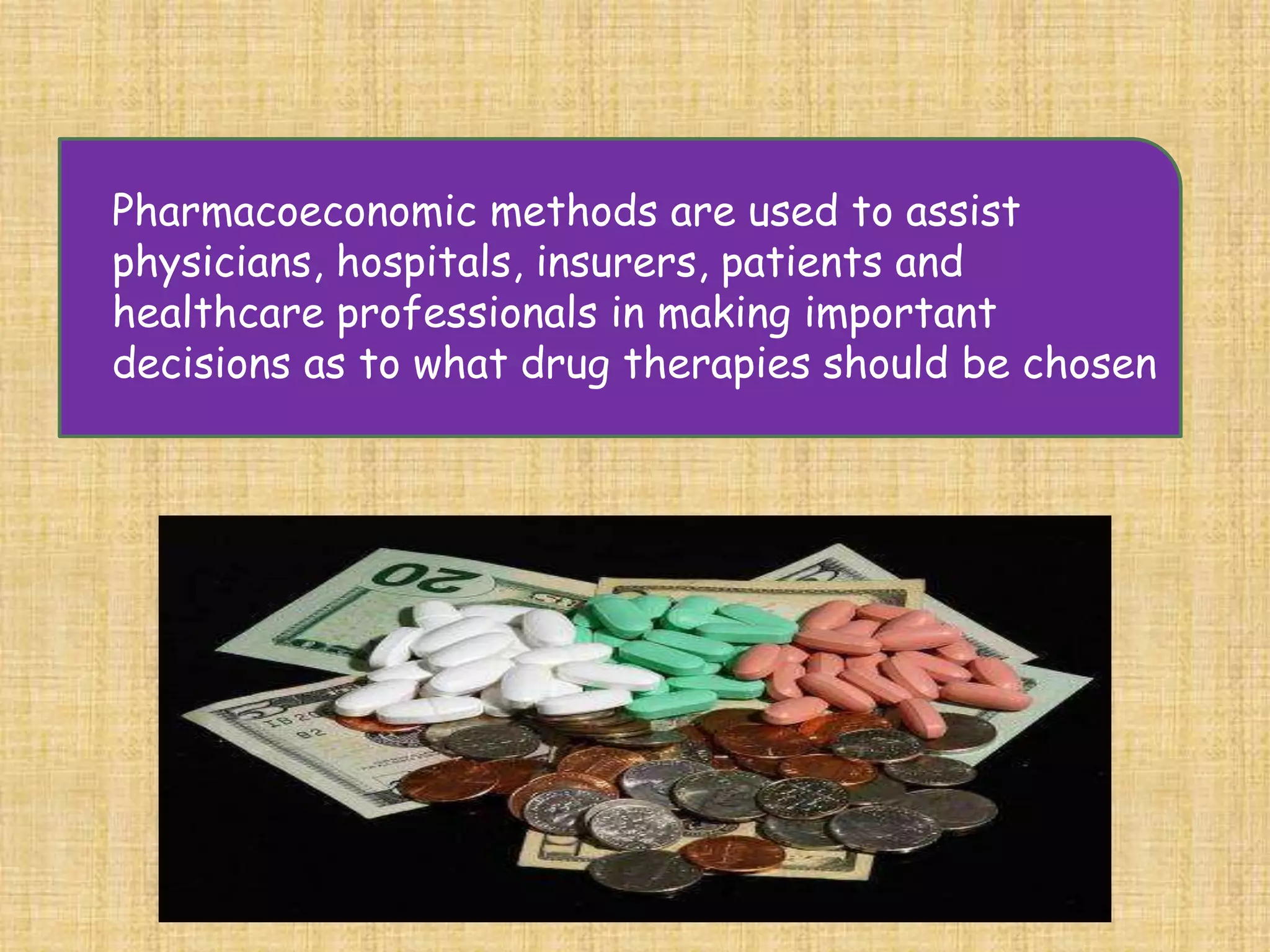
Pharmacoeconomic methods are used to assist
physicians, hospitals, insurers, patients and
healthcare professionals in making important
decisions as to what drug therapies should be chosen
•Pharmacoeconomics is used to determine which
drug should be included in the formulary by
choosing the most effective treatment at the lowest
price.
•It has been found that 86% of hospital
pharmacists indicate that pharmacoeconomic data is
used in formulary decision-making
•Pharmacoeconomic studies consider the total costs
incurred from the disease – both direct and indirect
costs
Pharmacoepidemiology
• Study of drugs among people
Pharmacon = Drugs
Epi = amongs
Demos = people
Logous = study
• Pharmacoepidemiology is study of use and effects of
drugs in large no. of persons
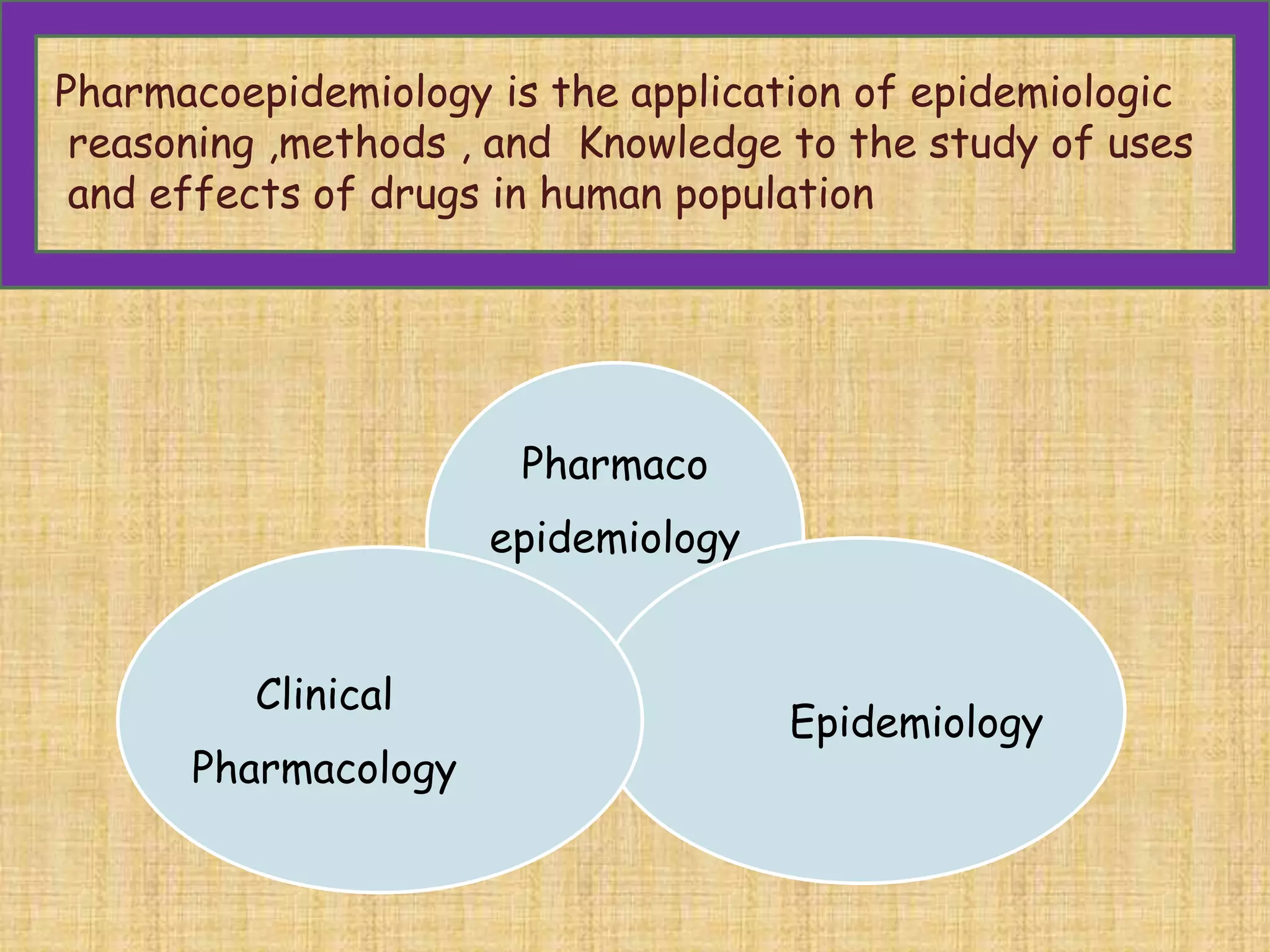
Pharmacoepidemiology is the application of epidemiologic
reasoning ,methods , and Knowledge to the study of uses
and effects of drugs in human population
Pharmaco
epidemiology
Epidemiology
Clinical
Pharmacology
•Pharmacoepidemiology Involves:
•Causality and incidence of ADRs
•Effectiveness of new drugs in defined population
•Pattern of prescribing in a particular health care
facility area
•Strategies to improve prescribing
•Economic impact of drug use
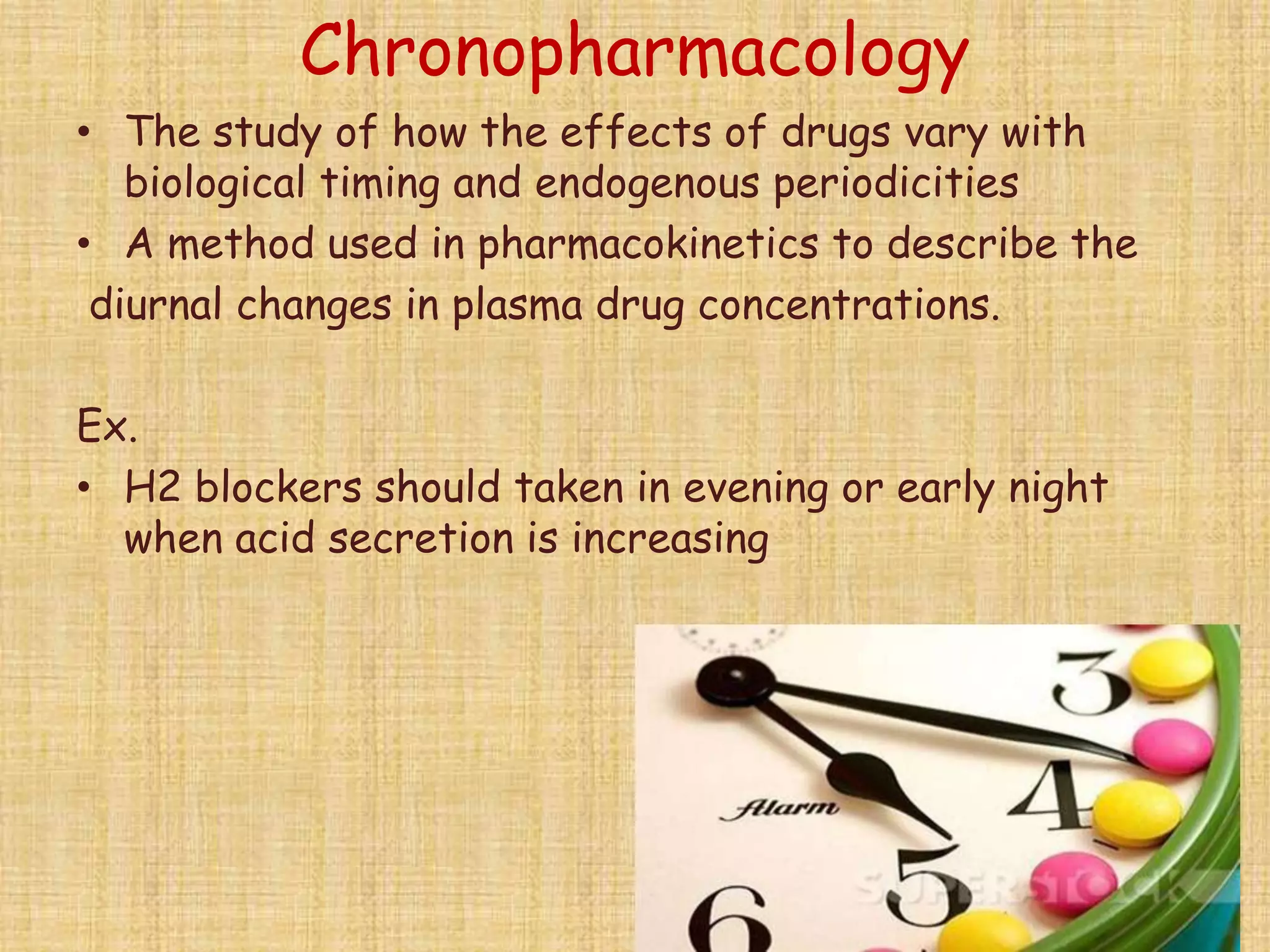
Chronopharmacology
• The study of how the effects of drugs vary with
biological timing and endogenous periodicities
• A method used in pharmacokinetics to describe the
diurnal changes in plasma drug concentrations.
Ex.
• H2 blockers should taken in evening or early night
when acid secretion is increasing
Glucocorticoids
• Major adverse effect — adrenocortical supression
• Significantly attenuated if correctly timed to
circadian rhythms.
• Best tolerated when ingested as a single daily dose in
the morning at start of the daily activity span
• Moderate dose in evening between dinner and
bedtime , risk of adrenocortical suppression is
heightened, even after a few days of treatment
Future….
• Proteomics
• Pharmacogenomics and pharmacogenetics
• Bioinformatics
• Nanomedicine
Proteomics
• Proteomics is the large-scale study of proteins,
particularly their structures and functions
• Proteomics is the study of the proteome—the
“PROTEin complement of the genOME
• Disease mechanism or drug effects both affect a
protein profile and, vice versa, characterising protein
profiles reveals information for the understanding of
disease and therapy.
Proteomics In Disease Treatment
• Many human diseases are caused by a normal protein
being modified improperly. This also can only be
detected in the proteome, not the genome.
• The targets of almost all medical drugs are proteins.
By identifying these proteins, proteomics aids the
progress in disease treatment.
Pharmacogenomics and
pharmacogenetics
• Pharmacogenomics is use of genetic information
to guide the choice of drug and dose ;on an
individual basis
• Analysis and comparison of the entire genome of
a single species or of multiple species
• A genome is the set of all genes possessed by an
organism
• Pharmacogenetics is study of genetic basis for
variability in drug response
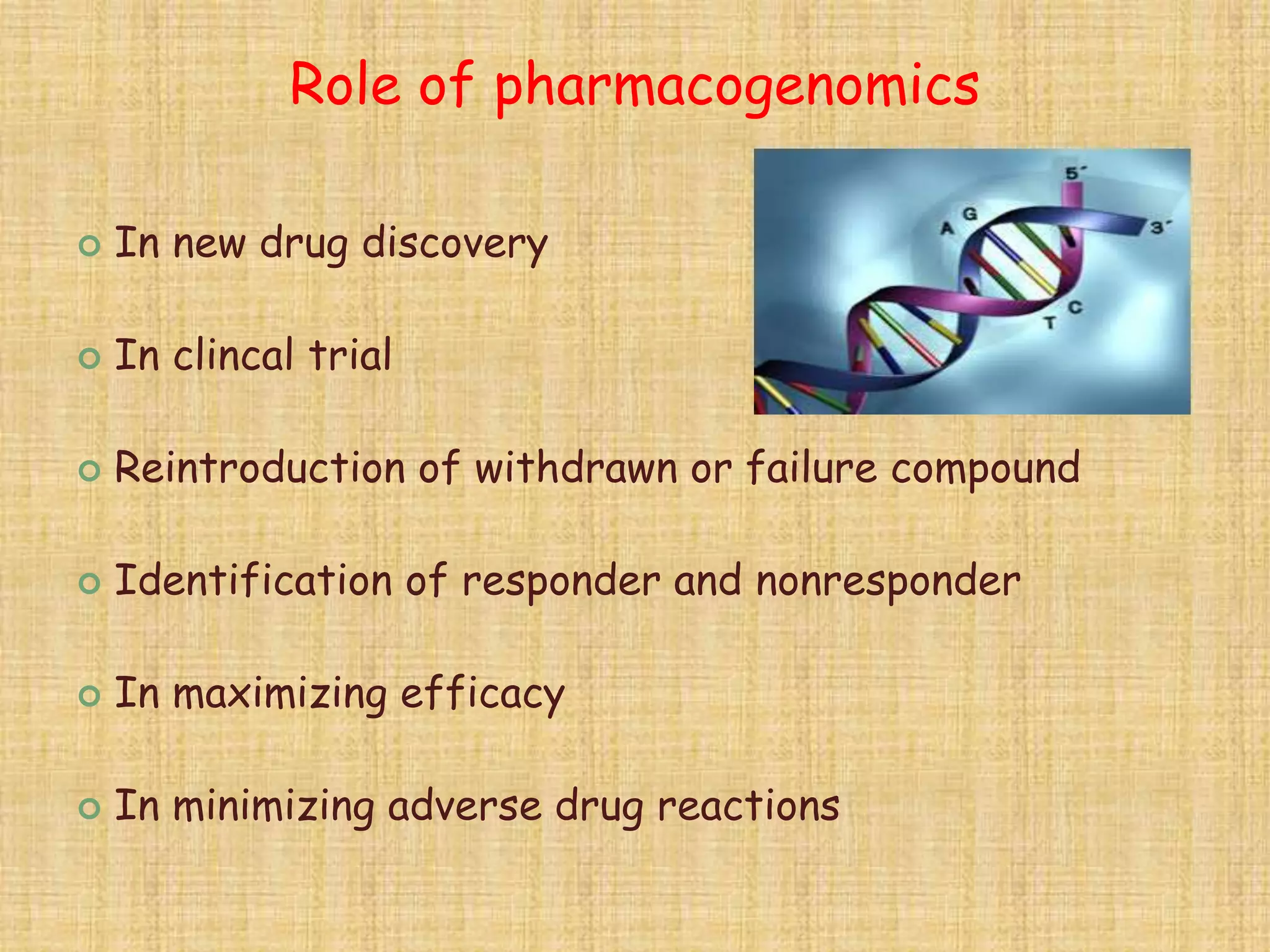
Role of pharmacogenomics
 In new drug discovery
 In clincal trial
 Reintroduction of withdrawn or failure compound
 Identification of responder and nonresponder
 In maximizing efficacy
 In minimizing adverse drug reactions
Future of pharmacogenetics
• Genetic/genomic interindividual variability may lead to
genotype-specific development of new drugs
• Once adequate genotype/phenotype studies have
been conducted, molecular diagnostic tests will be
developed that detect >95% of the important genetic
variants for the majority of polymorphisms
• Genetic tests have the advantage that they need
only be conducted once during an individual’s lifetime.
Bioinformatics
• Bioinformatics is the unified discipline formed from
the combination of biology, computer science, and
information technology
• The mathematical, statistical and computing
methods that aim to solve biological problems using
DNA and amino acid sequences and related
information
• The primary goal of
bioinformatics is to
increase the understanding of
biological processes
Nanomedicine
• Nanomedicine is defined as the monitoring,repair,
construction and control human biological systems at
the molecular level using engineered nanodevices and
nanostructures
• Nanomedicine offers delivery of potential drugs which
were previously beyond reach of microscale drugs due to
specific biological barriers.
•Current applications of nanotechnology in medicine range
from research involving diagnostic devices and drug
delivery vehicles to robots that can enter the body and
perform specific tasks.
•Nanopharmacology- Drug design and drug delivery to
selected targets to improve pharmacodynamics and
kinetic profiles toward safer and effective treatment
•Nanomedicine offers delivery of potential drugs which
were previously beyond reach of microscale drugs due to
specific biological barriers.
Summary
• Pharmacology is backbone of medicine
• For rational use of drugs in day to day clinical practice
knowledge of pharmacology becomes essential
• It has wide scope in Research,Academics,Industries
which opens us doors for opportunities in career
development
• With technology development,it is going to be more
advanced in future for tretment of patients
References
• Kshirsagar N, Kumar V. Clinical pharmacology: Prospects and
development in India. Indian J Pharmacol 2011;43:489-91.
• Lazarou J, Pomeranz BH, Corey PN. Incidence of adverse drug
reactions in hospitalized patients: a meta-analysis of prospective
studies. JAMA 1998;279:
1200-5.
• The importance of pharmacovigilance. Geneva: World Health
Organization; 2002.
• General pharmacology-Basic concepts(HL Sharma & KK
Sharma)2nd edition
• Basic And Clinical Pharmacology(Katzung)12th edition
• A report by,Dr Albert I Wertheimer and Nicole Chaney
Founding Director and Director of Research, Center for
Pharmaceutical Health Services Research,
Temple University
•Reverse Pharmacology And Registratiion Of Ayurvedic Drugs – by
Ashok D.B. Vaidya, Research Director, Kasturba Health Society, ICMR
Advanced Centre of Reverse Pharmacology.
•Robert Freitas, Nanomedicine 2, 1999, available at
http://www.foresight.org / Nanomedicine

Scope of pharmacology

  • 1.
    Scope Of Pharmacology Dr.AnkitaJire Jr 1 Dept of Pharmacology GMC Nagpur GUIDED BY DR. V. M. Motghare Professor & Head Dept Of Pharmacology DR. Chaitali Bajait Assistant Professor Dept Of Pharmacology
  • 2.
    Overview Introduction Past-History Materia medica Pharmacy Present-Academics Research Industries Special Domains Future- Proteomics Pharmacogenomics & pharmacogenetics Bioinformatics Nanomedicine Summary
  • 3.
    Introduction • Definition: “Pharmacology- studyof substances that interact with living systems through chemical processes, by binding to regulatory molecules and activating or inhibiting normal body processes.” SCOPE: An area in which something – Acts OR – Operates OR – Has power OR Control
  • 4.
    Past..... History • Rudolph Bucheim •1st laboratory for drug research • Investigation of drug is a task of pharmacologist • Oswald Schmiedeberg- • Father of Modern Pharmacology • 1st journal in Pharmacology
  • 5.
    Materia medica • Bookcontaning names of herbs and medicine prepared fom it • Dioscorides –Father of materia medica • Methods for purifying active agents from crude materials were absent hence real understanding of mechanism of action was absent
  • 6.
    Pharmacy • Science andtechnique of preparing and dispencing drugs • Includes collection,identification,purification, isolation, synthesis, standerdization and quality control of medicinal substances • Pharmacology is an essential component in the study of pharmacy
  • 7.
  • 8.
    • Stages ofdrug development Drug discovery phase Preclinical phase Clinical trial phase Research
  • 9.
    Drug discovery phase 1.Randomscreening 2.Serendipity (Happy observation ,by chance) 3.Rational drug designing 4.Designing of a prodrug or active metabolite as a drug
  • 10.
    Preclinical/Experimental phase • AIM-To satisfy all requirements that are needed before a compound is considered fit to be tested in human • Require 1.5-2 yrs • Out of 10,000 compounds screened only 10 qualify for preclinical evaluation
  • 11.
    • Deals witheffect of various pharmacological agents on different animal species • Aims: • Find out the therapeutic agent suitable for human use • Study of toxicity of the drugs • Study the mechanism and site of action of drugs
  • 12.
    Done by – 1)InVitro Study-Receptor characterization Enzyme inhibition Cytokine activity 2)In Vivo Study-Animal experiments
  • 13.
    Clinical trial phase Systematicstudy of new drug in human subjects Phase 1-Healthy volunteers (25-100) , Open label Determines- safe dose - pharmacokinetics - any predictable toxicity Phase 2-patient with target disease Determine -efficacy -definitive end point A)Early phase 2- (200 patients) Single blind
  • 14.
    B)Late phase 2-(200-400 patients) Double blind Phase 3- (1000-5000+) Large scale multicentre double blind To further establish safty and efficacy These 3 phses take 5-6 yrs -New drug application for licensing Phase 4- post licensing phase No fixed duration Periodic safety update report(PSUR) is to be submitted
  • 15.
    REVERSE PHARMACOLOGY “Reverse pharmacologyis the science of integrating documented clinical/experimental hits, into leads by transdisciplinary exploratory studies and further developing these into drug candidates by experimental and clinical research.” • EXAMPLES OF REVERSE PHARMACOLOGY Rauwolfia alkaloids in hypertension Psoralens in vitiligo
  • 16.
    Concept of reversepharmacology • It relates routine ‘Lab to clinic’ progress of discovery to ‘Clinic to lab’. • Conventional molecule mice man • Reverse pharmacology man mice molecule • In the process, safty remains most important starting point and efficacy becomes matter of validation
  • 17.
    Academics • Undergraduate education -Introductionto drugs -Mechanisms of actions -Prescription writing - Pharmaceutical preparations -Identification of Adverse drug reactions
  • 18.
    • Postgraduate education •Basicresearch •Experimental pharmacology •pharmacokinetics - dynamics •Pharmacovigilance •Clinical pharmacology •Therapeutic drug monitoring
  • 19.
    Term coined byHarry Gold in 1950s Basic science of pharmacology: application of pharmacological principles and methods in the real world Makes pharmacology more attractive by bridging basic science and clinical science Platform for collaborative efforts between academia and pharmaceutical industry. Clinical Pharmacology
  • 20.
    Frontiers of clinical pharmacology Clinicaltrials BA/BE studies Prescription audit Antibiotic stewardship Drug use survey Rational use of medicines TDM service
  • 21.
    •BA/BE studies- Bioavailability-Helps usdeciding dose Bioequivalent: Two drugs expected to be same for all intents & purposes •Prescription audit: To develop a list of essential drugs Rational use of drugs •Antibiotic stewardship A set of coordinated strategies to improve the use of antimicrobial medications o enhancing patient health outcomes, oreducing resistance to antibiotics, o decreasing unnecessary costs.
  • 22.
    •Drug use survey Studyof the marketing, distribution, prescription and use of drugs in a society with special emphasis on the resulting medical, social and economic consequences.“ •Rational Use Of Medicines -Appropriate indication -STEP Criteria i.e. Safety,Tolerability,Efficacy,Price -Correct dispensing and appropriate instructions to patient -Adequate monitoring of patients adherence to the treatment -Watch for adverse effects of drugs
  • 23.
    Therapeutic drug monitoring •Concept of TDM is to individualise drug dosage to attain certain target plasma concentration • Uses: 1)Drugs with low margin of safty EX.Digoxin,Theophylline, Antidepressants, Lithium 2)If individual variations are large EX.Antidepressants, Lithium 3)In case of Poisoning 4)To check patient compliance EX.Psychopharmacological agents
  • 24.
    Clinical Pharmacology: Making ItsHeartbeats Felt • By this time the busy clinicians have started understanding the different approach of a clinical pharmacologist in answering several drug and therapeutics related questions. • The need for generating local treatment guidelines had long been realized by our fellow clinicians. • The first such guideline, which was generated in the institute by WHO ;For the management of community- acquired pneumonia, clinical pharmacologists were invited as a part of the team of experts
  • 25.
    Industries • Research: NewDrug Development • Medical advisor • Medical transcription • Medico marketing • Product management • Contract research organization • Training
  • 26.
    Medical Advisor 1.The analysisof the health of populations. 2. The evaluation of primary care services. 3. Planning of services. 4. Advice on effective prescribing 5.Education for general practitioners. Medical transcription The process of transcription or converting voice- recorded reports as dictated by physicians and/or other healthcare professionals, into text format.
  • 27.
    Medico-marketing • Business ofadvertising or otherwise promoting the sale of pharmaceuticals or drugs Contract research organization(CRO) • A service organization that provides support to the pharmaceutical and biotechnology industries in the form of outsourced pharmaceutical research services (for both drugs and medical devices). • CROs specifically provide clinical-study and clinical- trial support for drugs and/or medical devices.
  • 28.
    Training To medical representatives Tophysicians Academy for Clinical Excellence (ACE) Indian Society for Clinical Research (ICSR)
  • 29.
    Special Domains • Pharmacovigilance •Pharmacoeconomics • Pharmacoepidemiology • Chronopharmacology
  • 30.
    Pharmacovigilance •Pharmacovigilance (Pharmakon-Drug; Vigilare-To keepwatch) •Definition (WHO) - ‘the science and activities relating to the detection, assessment, understanding and prevention of adverse effects or any other possible drug related problems’. •Adverse drug reactions (ADRs) were 4th most common cause of death in US in 1997
  • 31.
    •The role ofpharmacovigilance can be divided into three main areas: . To identify, quantify and document drug-related problems To contribute to reduce the risk of drug-related problems in healthcare systems. To increase knowledge and understanding of factors and mechanisms which are responsible for drug-related injuries
  • 32.
    Pharmacovigilance Programme of India(PvPI) • WHO established its Programme for International Drug Monitoring in response to the thalidomide disaster detected in 1961. • Uppsala andWHO together promotes Pharmacovigilance at the country level. • At the end of 2010, 134 countries were part of the WHO Pharmacovigilance Programme. • The programme is coordinated by The Indian Pharmacopoeia Commission (IPC) located at Ghaziabad.
  • 33.
    ADR reporting throughVigiflow • Vigiflow is web based Individual Case Safty Report(ICSR) management system that is specially designed for use by national centres in the WHO programme for International drug monitoring • Vigiflow 5.1(Released on 14 june 2013) • Subscription for vigiflow is free in India
  • 35.
    Pharmacoeconomics • Pharmacoeconomics isa branch of health economics which particularly focuses upon the costs and benefits of drug therapy • It is an innovative method that aims to decrease health expenditures, while optimising healthcare results. Involves two major methodologies Cost Analysis Cost Outcome
  • 36.
    Cost Analysis- Considerscosts of providing healthcare products or services Cost Outcome- Cost Minimization Analysis Cost Effectiveness Analysis Cost Benefit Analysis Cost Utility Analysis
  • 37.
    Pharmacoeconomic methods areused to assist physicians, hospitals, insurers, patients and healthcare professionals in making important decisions as to what drug therapies should be chosen
  • 38.
    •Pharmacoeconomics is usedto determine which drug should be included in the formulary by choosing the most effective treatment at the lowest price. •It has been found that 86% of hospital pharmacists indicate that pharmacoeconomic data is used in formulary decision-making •Pharmacoeconomic studies consider the total costs incurred from the disease – both direct and indirect costs
  • 39.
    Pharmacoepidemiology • Study ofdrugs among people Pharmacon = Drugs Epi = amongs Demos = people Logous = study • Pharmacoepidemiology is study of use and effects of drugs in large no. of persons
  • 40.
    Pharmacoepidemiology is theapplication of epidemiologic reasoning ,methods , and Knowledge to the study of uses and effects of drugs in human population Pharmaco epidemiology Epidemiology Clinical Pharmacology
  • 41.
    •Pharmacoepidemiology Involves: •Causality andincidence of ADRs •Effectiveness of new drugs in defined population •Pattern of prescribing in a particular health care facility area •Strategies to improve prescribing •Economic impact of drug use
  • 42.
    Chronopharmacology • The studyof how the effects of drugs vary with biological timing and endogenous periodicities • A method used in pharmacokinetics to describe the diurnal changes in plasma drug concentrations. Ex. • H2 blockers should taken in evening or early night when acid secretion is increasing
  • 43.
    Glucocorticoids • Major adverseeffect — adrenocortical supression • Significantly attenuated if correctly timed to circadian rhythms. • Best tolerated when ingested as a single daily dose in the morning at start of the daily activity span • Moderate dose in evening between dinner and bedtime , risk of adrenocortical suppression is heightened, even after a few days of treatment
  • 44.
    Future…. • Proteomics • Pharmacogenomicsand pharmacogenetics • Bioinformatics • Nanomedicine
  • 45.
    Proteomics • Proteomics isthe large-scale study of proteins, particularly their structures and functions • Proteomics is the study of the proteome—the “PROTEin complement of the genOME • Disease mechanism or drug effects both affect a protein profile and, vice versa, characterising protein profiles reveals information for the understanding of disease and therapy.
  • 46.
    Proteomics In DiseaseTreatment • Many human diseases are caused by a normal protein being modified improperly. This also can only be detected in the proteome, not the genome. • The targets of almost all medical drugs are proteins. By identifying these proteins, proteomics aids the progress in disease treatment.
  • 47.
    Pharmacogenomics and pharmacogenetics • Pharmacogenomicsis use of genetic information to guide the choice of drug and dose ;on an individual basis • Analysis and comparison of the entire genome of a single species or of multiple species • A genome is the set of all genes possessed by an organism • Pharmacogenetics is study of genetic basis for variability in drug response
  • 48.
    Role of pharmacogenomics In new drug discovery  In clincal trial  Reintroduction of withdrawn or failure compound  Identification of responder and nonresponder  In maximizing efficacy  In minimizing adverse drug reactions
  • 51.
    Future of pharmacogenetics •Genetic/genomic interindividual variability may lead to genotype-specific development of new drugs • Once adequate genotype/phenotype studies have been conducted, molecular diagnostic tests will be developed that detect >95% of the important genetic variants for the majority of polymorphisms • Genetic tests have the advantage that they need only be conducted once during an individual’s lifetime.
  • 52.
    Bioinformatics • Bioinformatics isthe unified discipline formed from the combination of biology, computer science, and information technology • The mathematical, statistical and computing methods that aim to solve biological problems using DNA and amino acid sequences and related information • The primary goal of bioinformatics is to increase the understanding of biological processes
  • 53.
    Nanomedicine • Nanomedicine isdefined as the monitoring,repair, construction and control human biological systems at the molecular level using engineered nanodevices and nanostructures • Nanomedicine offers delivery of potential drugs which were previously beyond reach of microscale drugs due to specific biological barriers.
  • 54.
    •Current applications ofnanotechnology in medicine range from research involving diagnostic devices and drug delivery vehicles to robots that can enter the body and perform specific tasks. •Nanopharmacology- Drug design and drug delivery to selected targets to improve pharmacodynamics and kinetic profiles toward safer and effective treatment •Nanomedicine offers delivery of potential drugs which were previously beyond reach of microscale drugs due to specific biological barriers.
  • 55.
    Summary • Pharmacology isbackbone of medicine • For rational use of drugs in day to day clinical practice knowledge of pharmacology becomes essential • It has wide scope in Research,Academics,Industries which opens us doors for opportunities in career development • With technology development,it is going to be more advanced in future for tretment of patients
  • 56.
    References • Kshirsagar N,Kumar V. Clinical pharmacology: Prospects and development in India. Indian J Pharmacol 2011;43:489-91. • Lazarou J, Pomeranz BH, Corey PN. Incidence of adverse drug reactions in hospitalized patients: a meta-analysis of prospective studies. JAMA 1998;279: 1200-5. • The importance of pharmacovigilance. Geneva: World Health Organization; 2002. • General pharmacology-Basic concepts(HL Sharma & KK Sharma)2nd edition • Basic And Clinical Pharmacology(Katzung)12th edition • A report by,Dr Albert I Wertheimer and Nicole Chaney Founding Director and Director of Research, Center for Pharmaceutical Health Services Research, Temple University
  • 57.
    •Reverse Pharmacology AndRegistratiion Of Ayurvedic Drugs – by Ashok D.B. Vaidya, Research Director, Kasturba Health Society, ICMR Advanced Centre of Reverse Pharmacology. •Robert Freitas, Nanomedicine 2, 1999, available at http://www.foresight.org / Nanomedicine