1
Pharmaceutical Microbiology
El-Hassan El-Sadek
Microbiology Research
Agenda
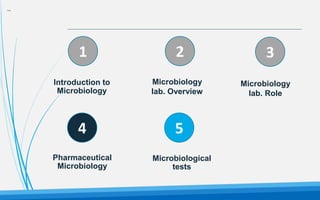
 Introduction to Microbiology
 Microbiology lab. Overview
 Microbiology Lab. Role
 Pharmaceutical Microbiology
 Microbiological tests for pharmaceuticals
By the end of the day you should be able to know:
one
3
2
1
5
4
Introduction to
Microbiology
Microbiology
lab. Overview
Microbiology
lab. Role
Pharmaceutical
Microbiology
Microbiological
tests
Introduction to
Microbiology
4
Section No. 1
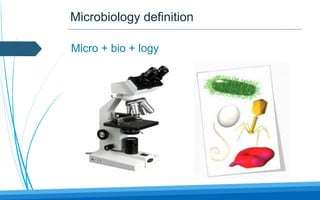
Microbiology definition
Micro + bio + logy
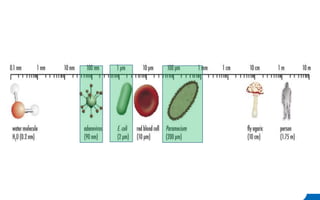
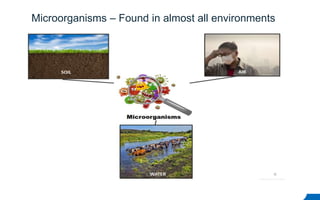
Microorganisms – Found in almost all environments
Protozoa Algae
Fungi
Viruses
Microbiology includes study of
Bacteria
Who is it?
Two
2
1
5
4
3
Introduction to
Microbiology
Microbiology
lab. Overview
Microbiology
lab. Role
Pharmaceutical
Microbiology
Microbiological
tests
Microbiology lab.
Overview
13
Section No. 2
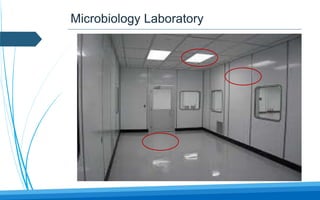
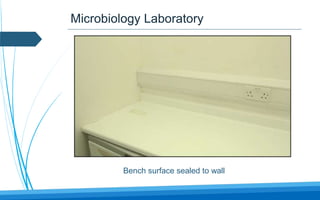
Microbiology Laboratory
Bench surface sealed to wall
Microbiology Laboratory
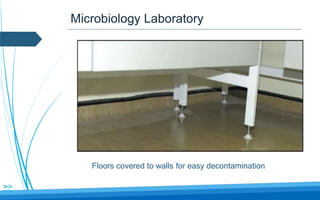
Floors covered to walls for easy decontamination
Microbiology Laboratory
>>
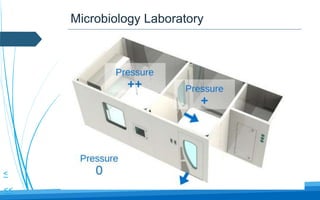
Microbiology Laboratory
Desing lab
Microbiology Laboratory
<
<<
Microbiology Laboratory
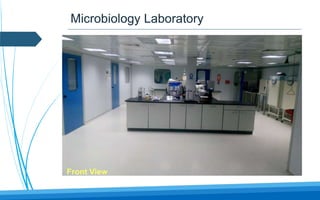
Front View
Microbiology Laboratory
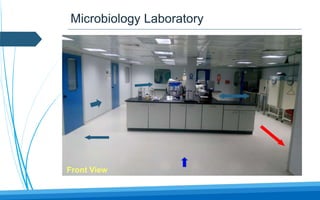
Front View
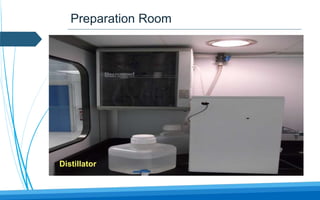
Preparation Room
Distillator
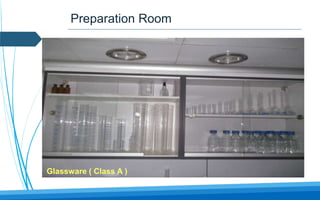
Preparation Room
Glassware ( Class A )
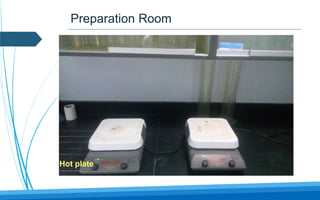
Preparation Room
Hot plate
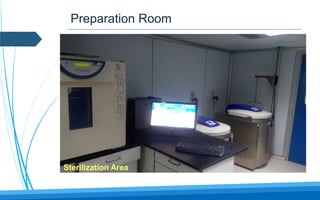
Preparation Room
Sterilization Area
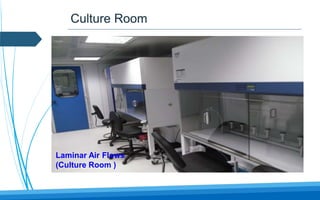
Culture Room
Laminar Air Flows
(Culture Room )
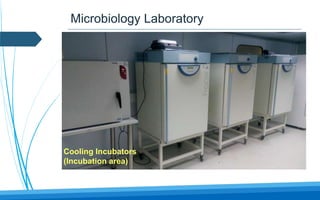
Microbiology Laboratory
Cooling Incubators
(Incubation area)
Three
2
1
5
4
3
Introduction to
Microbiology
Microbiology
lab. Overview
Microbiology
lab. Role
Pharmaceutical
Microbiology
Microbiological
tests
Microbiology lab.
Role
28
Section No. 3
Four
2
1
5
4
3
Introduction to
Microbiology
Microbiology
lab. Overview
Microbiology
lab. Role
Pharmaceutical
Microbiology
Microbiological
tests
Pharmaceutical
Microbiology
34
Section No. 4
Good Manufacturing Practice
Is a production and testing practice that helps to
ensure a quality product.
Good manufacturing practice (GMP) :
www.AssignmentPoint.co
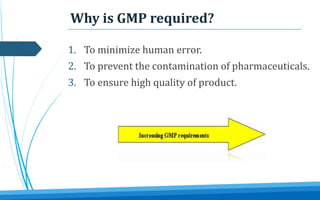
Why is GMP required?
1. To minimize human error.
2. To prevent the contamination of pharmaceuticals.
3. To ensure high quality of product.
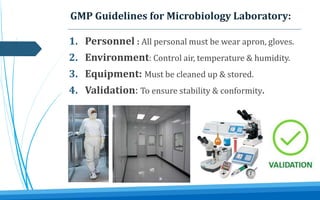
GMP Guidelines for Microbiology Laboratory:
1. Personnel : All personal must be wear apron, gloves.
2. Environment: Control air, temperature & humidity.
3. Equipment: Must be cleaned up & stored.
4. Validation: To ensure stability & conformity.
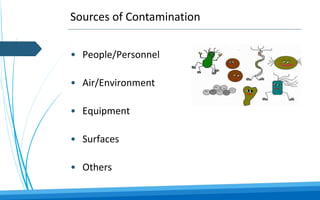
Sources of Contamination
• People/Personnel
• Air/Environment
• Equipment
• Surfaces
• Others
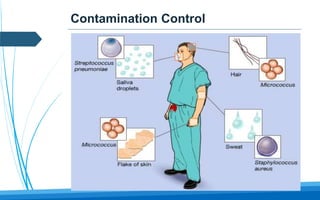
Contamination Control
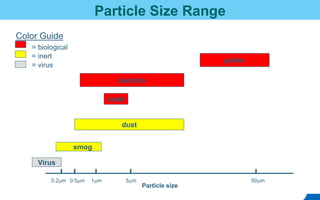
Particle Size Range
0.2mm 0.5mm 1mm 5mm 50mm
Virus
smog
mold
dust
bacteria
pollen
Particle size
Color Guide
= biological
= inert
= virus
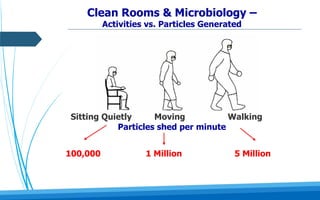
Clean Rooms & Microbiology –
Activities vs. Particles Generated
Sitting Quietly Moving Walking
Particles shed per minute
100,000 1 Million 5 Million
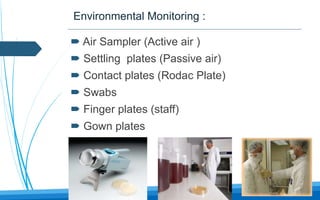
Environmental Monitoring :
 Air Sampler (Active air )
 Settling plates (Passive air)
 Contact plates (Rodac Plate)
 Swabs
 Finger plates (staff)
 Gown plates
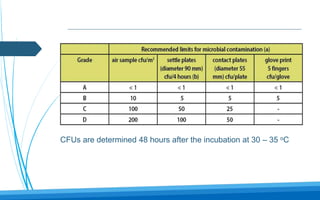
CFUs are determined 48 hours after the incubation at 30 – 35 oC
Five
2
1
5
4
3
Introduction to
Microbiology
Microbiology
lab. Overview
Microbiology
lab. Role
Pharmaceutical
Microbiology
Microbiological
tests
Microbiological tests
for pharmaceuticals 46
Section No. 5
Microbiological Test Methods
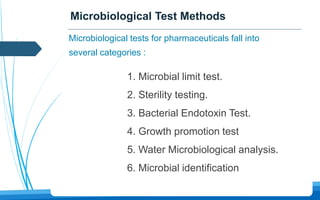
1. Microbial limit test.
2. Sterility testing.
3. Bacterial Endotoxin Test.
4. Growth promotion test
5. Water Microbiological analysis.
6. Microbial identification
Microbiological tests for pharmaceuticals fall into
several categories :
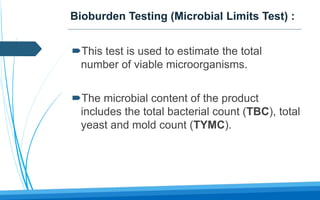
Bioburden Testing (Microbial Limits Test) :
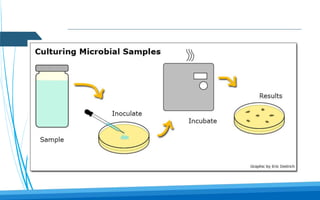
This test is used to estimate the total
number of viable microorganisms.
The microbial content of the product
includes the total bacterial count (TBC), total
yeast and mold count (TYMC).
Sterility Testing.
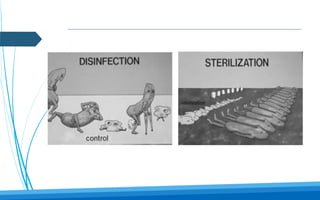
Disinfection or
Sterilization !!
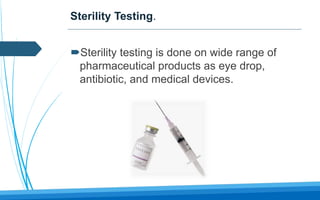
Sterility Testing.
Sterility testing is done on wide range of
pharmaceutical products as eye drop,
antibiotic, and medical devices.
Bacterial Endotoxin (LAL Testing)
Endotoxins are natural compounds released
by the cell wall of gram negative bacteria.
 that are potentially toxic to humans.
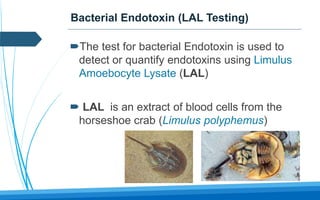
Bacterial Endotoxin (LAL Testing)
The test for bacterial Endotoxin is used to
detect or quantify endotoxins using Limulus
Amoebocyte Lysate (LAL)
 LAL is an extract of blood cells from the
horseshoe crab (Limulus polyphemus)
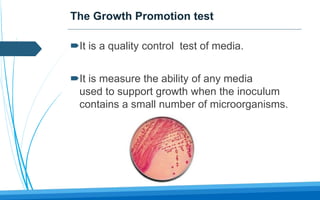
The Growth Promotion test
It is a quality control test of media.
It is measure the ability of any media
used to support growth when the inoculum
contains a small number of microorganisms.
Water Testing
 Water is one of the major supplies
consumed by the pharmaceutical industry.
 Total viable count is studied to rule out
microbial contamination.
Microbial identification
 E.COLI TEST
 SALMONELLA TEST
 PSEUDOMONAS AERUGONSA TEST
 STAPHYLOCOCCUS AURUES TEST
Detection, isolation and identification
of microorganism :
Thank you ..
59
 Linkedin :
https://www.linkedin.com/in/drHassan
 Email : Hassan.GoodTrue@Gmail.com
 Facebook: Elhassan Elsadek
 Facebook Page:
‫المياه‬ ‫ميكروبيولوجيا‬
–
‫الصادق‬ ‫الحسن‬
2/10/2019
59 keep in touch:

pharmaceuticalmicrobiology-190210072912.pdf