Introduction of Microorganisms
Presented by
Mr. Sujit Kakade
Assistant Professor
Pune District Education Association’s
Shankarrao Ursal College of Pharmaceutical Sciences
& Research Centre, Kharadi, Pune.
Definition of Microbiology:
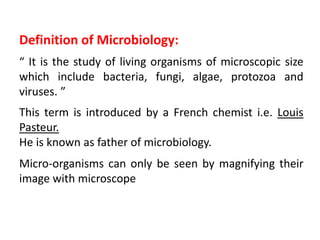
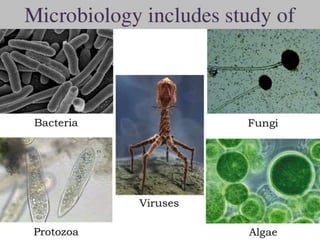
“ It is the study of living organisms of microscopic size
which include bacteria, fungi, algae, protozoa and
viruses. ”
This term is introduced by a French chemist i.e. Louis
Pasteur.
He is known as father of microbiology.
Micro-organisms can only be seen by magnifying their
image with microscope
Branches of Microbiology
A. Pure Science Branches:
Bacteriology:- study of bacteria
Micobiology :- study of fungi
Protozoology :- study of protozoa
Phycology :- study of algae
Parasitology:- study of parasites
Taxonomy :- study of classification
Genetics:- study of variations and Hereditary
Immunology :- study of mechanism in development of
resistance by body to infection
B. Applied Science Branches:
a) Medical microbiology: Study of causative agents of
infectious disease
b) Pharmaceutical microbiology: Study of M. O. which is
responsible for production of antibiotics, enzymes,
vitamins, vaccines and other pharmaceutical products.
c) Industrial microbiology: Study of M. O. which is
responsible for production of vitamins, amino acids,
alcoholic beverages and other substances.
d) Microbial Biotechnology: Study of scientific
manipulation of living M. O. based on genetic and
molecular level
e) Food microbiology: Study of M. O. relation to food
bioprocessing, food spoilage, food born diseases and
preservation of food product
f) Soil microbiology: Study of microbial flora and
interaction among soil M. O.
g) Agricultural microbiology: Study of M. O. and
relationship of M.O. and crops
h) Aquatic microbiology: Study of m.o. and their
activities into fresh and marine water.
i) Air microbiology: Study which deal with role of
aerospora in contamination and spoilage of food
and determination of plant and animal through air.
j) Epidemiology: Study which deal with consult with
monitoring, and spread of disease in community.
Application and Scope of Microbiology
1) Production of Antibiotic: 2/3rd of antibiotics are
produced from m.o. Pharmaceutical / industrial
microbiology concerned with isolation of antibiotics
producing m.o. from environment. E.g: soil, water, Mang
antibiotic isolated from natural m.o by process of
fermentation e.g: penicillin from penicillium species.
2) Diagnosis of disease and treatment: Different test are
used to detect infectious m. o. e.g: ELISA test and Widal
test.
Antimicrobial suitability testing is mainly used for
selection of antibiotics for treatment of microbial
infections.
3) Production of enzyme, vaccine, Organic solvents,
biosurfactants, alcoholic and other pharmaceutical
product:
Many microbial cell converts raw material or
substrate into valuable organic compound such as
butanol, ethanol etc microbial cell produce intracellular
and extra cellular enzyme those are imp for
pharmaceutical fermentation e.g: Amylase & Protease.
Different types of biosurfactants are synthesized by no.
of m. o. e.g: Acinotobacter.
4) Treatment of Industrial waste material:
• Microbial species are used for decomposition of
industrial waste material and organic components.
e.g: actinomycetes, fungi.
• Anaerobic bacteria decomposes of organic matter by
yielding simple organic molecule such as acid, alcohol,
glycerol and amines.
• Cynide is degraded by Streptomyces lavendulae.
5) Plant growth promotions:
Many microbial cell are present in soils play an important
role in soil fertility, herbicidal resistance, insect resistance,
change in protein, oil content, enhance the quality of
plant product. e.g: Rhizobium species, Azotobacter
species.
Many nitrogen fixing soil M.O. are usefull for providing
nitrogen for growth of plants, germination of seeds,
flavoring and fruiting of medicinal plants.
Rhizobacter bacteria may release various plant growth
promoting substances as secondary metabolites. (PGPR)
e.g: Pseudomonas
6) Sterile Product Preparations: It deals with the
preparations of sterile rooms, aseptic techniques, and
detection of microbes by sampling and testing of
different sterile preparations.
7) Sterilization: Different pharmaceutical products are
sterilized by killing of M.O.
The process of killing of M.O. is known as sterilization.
All the sterilization process may be validated by using
indicator.
A biological indicator preparation of M.O. usually
bacterial spores.
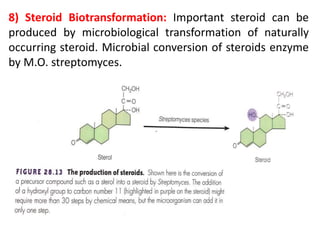
8) Steroid Biotransformation: Important steroid can be
produced by microbiological transformation of naturally
occurring steroid. Microbial conversion of steroids enzyme
by M.O. streptomyces.
9) Identification of Microorganisms: Two vital function of
microbiology and biotechnology are enumeration and
identification of M.O. found in product and Mfg.
environment.
10) Testing of Pharmaceuticals:
• Raw material and finished product:
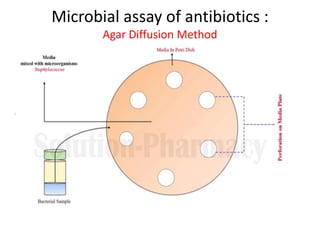
• Microbial assay of antibiotics :
• Evaluation of disinfectant :
• Antimicrobial preservative efficiency testing :
• Endotoxin testing :
• Test for support of the sterility assurance system:
Raw material and finished product:
•Tests for the detection of E. Coli, Salmonella species,
Psedomonas aeruginosa & Staphylococcus aureus in
the pharmaceutical raw material & in the finished
product.
•This test are mainly applied to raw material of natural &
biological origin such as starch, gum, gelatin, talc, etc.
Two test are performed
1. Total number of viable M.O. (Total Viable Count)
2. Exclusion of specific Pathogen.
e.g. Water is always tested for TVC & presence of E. Coli
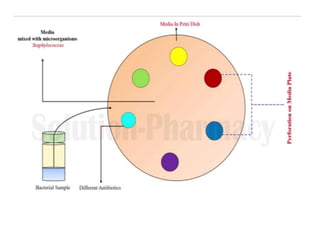
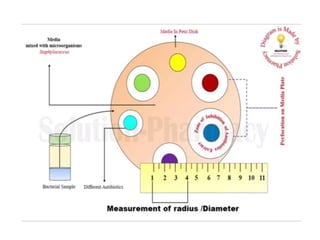
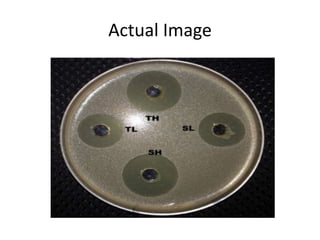
Microbial assay of antibiotics :
Agar Diffusion Method
Actual Image
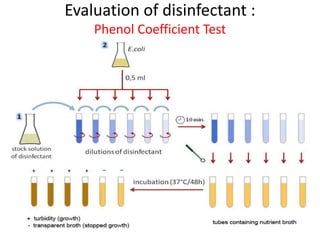
Evaluation of disinfectant :
Phenol Coefficient Test
Endotoxin testing
If bacterial endotoxins enter patients’ bloodstream in
sufficient concentrations, this can cause harmful
symptoms such as fever and septic shock and can be
fatal in the most severe cases.
Methods that can be used to detect bacterial endotoxins.
1. Rabbit Pyrogen Test (RPT)
2. Limulus Amebocyte Lysate (LAL)
Test for support of the sterility
assurance system:
Test for sterility:
Sterility Testing is used to demonstrate that a medicinal
product or medical device is sterile.
Test method
1. Direct inoculation method
2. Membrane filtration method
Bioburden Testing
Bioburden Testing is used to estimate the number of
microorganisms present in the product prior to
sterilization.
Bioburden Testing is used to for environmental
monitoring in aseptic areas are settle plates, contact
plates, swabs for surface.
This method provide an approximate guide to the true
microbiological state of a clean room, aseptic & laminar
air flow cabinet.
Introduction to microbiology

Introduction to microbiology

  • 1.
    Introduction of Microorganisms Presentedby Mr. Sujit Kakade Assistant Professor Pune District Education Association’s Shankarrao Ursal College of Pharmaceutical Sciences & Research Centre, Kharadi, Pune.
  • 2.
    Definition of Microbiology: “It is the study of living organisms of microscopic size which include bacteria, fungi, algae, protozoa and viruses. ” This term is introduced by a French chemist i.e. Louis Pasteur. He is known as father of microbiology. Micro-organisms can only be seen by magnifying their image with microscope
  • 5.
    Branches of Microbiology A.Pure Science Branches: Bacteriology:- study of bacteria Micobiology :- study of fungi Protozoology :- study of protozoa Phycology :- study of algae Parasitology:- study of parasites Taxonomy :- study of classification Genetics:- study of variations and Hereditary Immunology :- study of mechanism in development of resistance by body to infection
  • 6.
    B. Applied ScienceBranches: a) Medical microbiology: Study of causative agents of infectious disease b) Pharmaceutical microbiology: Study of M. O. which is responsible for production of antibiotics, enzymes, vitamins, vaccines and other pharmaceutical products. c) Industrial microbiology: Study of M. O. which is responsible for production of vitamins, amino acids, alcoholic beverages and other substances.
  • 7.
    d) Microbial Biotechnology:Study of scientific manipulation of living M. O. based on genetic and molecular level e) Food microbiology: Study of M. O. relation to food bioprocessing, food spoilage, food born diseases and preservation of food product f) Soil microbiology: Study of microbial flora and interaction among soil M. O. g) Agricultural microbiology: Study of M. O. and relationship of M.O. and crops
  • 8.
    h) Aquatic microbiology:Study of m.o. and their activities into fresh and marine water. i) Air microbiology: Study which deal with role of aerospora in contamination and spoilage of food and determination of plant and animal through air. j) Epidemiology: Study which deal with consult with monitoring, and spread of disease in community.
  • 9.
    Application and Scopeof Microbiology 1) Production of Antibiotic: 2/3rd of antibiotics are produced from m.o. Pharmaceutical / industrial microbiology concerned with isolation of antibiotics producing m.o. from environment. E.g: soil, water, Mang antibiotic isolated from natural m.o by process of fermentation e.g: penicillin from penicillium species. 2) Diagnosis of disease and treatment: Different test are used to detect infectious m. o. e.g: ELISA test and Widal test. Antimicrobial suitability testing is mainly used for selection of antibiotics for treatment of microbial infections.
  • 10.
    3) Production ofenzyme, vaccine, Organic solvents, biosurfactants, alcoholic and other pharmaceutical product: Many microbial cell converts raw material or substrate into valuable organic compound such as butanol, ethanol etc microbial cell produce intracellular and extra cellular enzyme those are imp for pharmaceutical fermentation e.g: Amylase & Protease. Different types of biosurfactants are synthesized by no. of m. o. e.g: Acinotobacter.
  • 11.
    4) Treatment ofIndustrial waste material: • Microbial species are used for decomposition of industrial waste material and organic components. e.g: actinomycetes, fungi. • Anaerobic bacteria decomposes of organic matter by yielding simple organic molecule such as acid, alcohol, glycerol and amines. • Cynide is degraded by Streptomyces lavendulae.
  • 12.
    5) Plant growthpromotions: Many microbial cell are present in soils play an important role in soil fertility, herbicidal resistance, insect resistance, change in protein, oil content, enhance the quality of plant product. e.g: Rhizobium species, Azotobacter species. Many nitrogen fixing soil M.O. are usefull for providing nitrogen for growth of plants, germination of seeds, flavoring and fruiting of medicinal plants. Rhizobacter bacteria may release various plant growth promoting substances as secondary metabolites. (PGPR) e.g: Pseudomonas
  • 13.
    6) Sterile ProductPreparations: It deals with the preparations of sterile rooms, aseptic techniques, and detection of microbes by sampling and testing of different sterile preparations. 7) Sterilization: Different pharmaceutical products are sterilized by killing of M.O. The process of killing of M.O. is known as sterilization. All the sterilization process may be validated by using indicator. A biological indicator preparation of M.O. usually bacterial spores.
  • 14.
    8) Steroid Biotransformation:Important steroid can be produced by microbiological transformation of naturally occurring steroid. Microbial conversion of steroids enzyme by M.O. streptomyces.
  • 15.
    9) Identification ofMicroorganisms: Two vital function of microbiology and biotechnology are enumeration and identification of M.O. found in product and Mfg. environment. 10) Testing of Pharmaceuticals: • Raw material and finished product: • Microbial assay of antibiotics : • Evaluation of disinfectant : • Antimicrobial preservative efficiency testing : • Endotoxin testing : • Test for support of the sterility assurance system:
  • 16.
    Raw material andfinished product: •Tests for the detection of E. Coli, Salmonella species, Psedomonas aeruginosa & Staphylococcus aureus in the pharmaceutical raw material & in the finished product. •This test are mainly applied to raw material of natural & biological origin such as starch, gum, gelatin, talc, etc. Two test are performed 1. Total number of viable M.O. (Total Viable Count) 2. Exclusion of specific Pathogen. e.g. Water is always tested for TVC & presence of E. Coli
  • 17.
    Microbial assay ofantibiotics : Agar Diffusion Method
  • 20.
  • 21.
    Evaluation of disinfectant: Phenol Coefficient Test
  • 22.
    Endotoxin testing If bacterialendotoxins enter patients’ bloodstream in sufficient concentrations, this can cause harmful symptoms such as fever and septic shock and can be fatal in the most severe cases. Methods that can be used to detect bacterial endotoxins. 1. Rabbit Pyrogen Test (RPT) 2. Limulus Amebocyte Lysate (LAL)
  • 23.
    Test for supportof the sterility assurance system: Test for sterility: Sterility Testing is used to demonstrate that a medicinal product or medical device is sterile. Test method 1. Direct inoculation method 2. Membrane filtration method
  • 24.
    Bioburden Testing Bioburden Testingis used to estimate the number of microorganisms present in the product prior to sterilization. Bioburden Testing is used to for environmental monitoring in aseptic areas are settle plates, contact plates, swabs for surface. This method provide an approximate guide to the true microbiological state of a clean room, aseptic & laminar air flow cabinet.